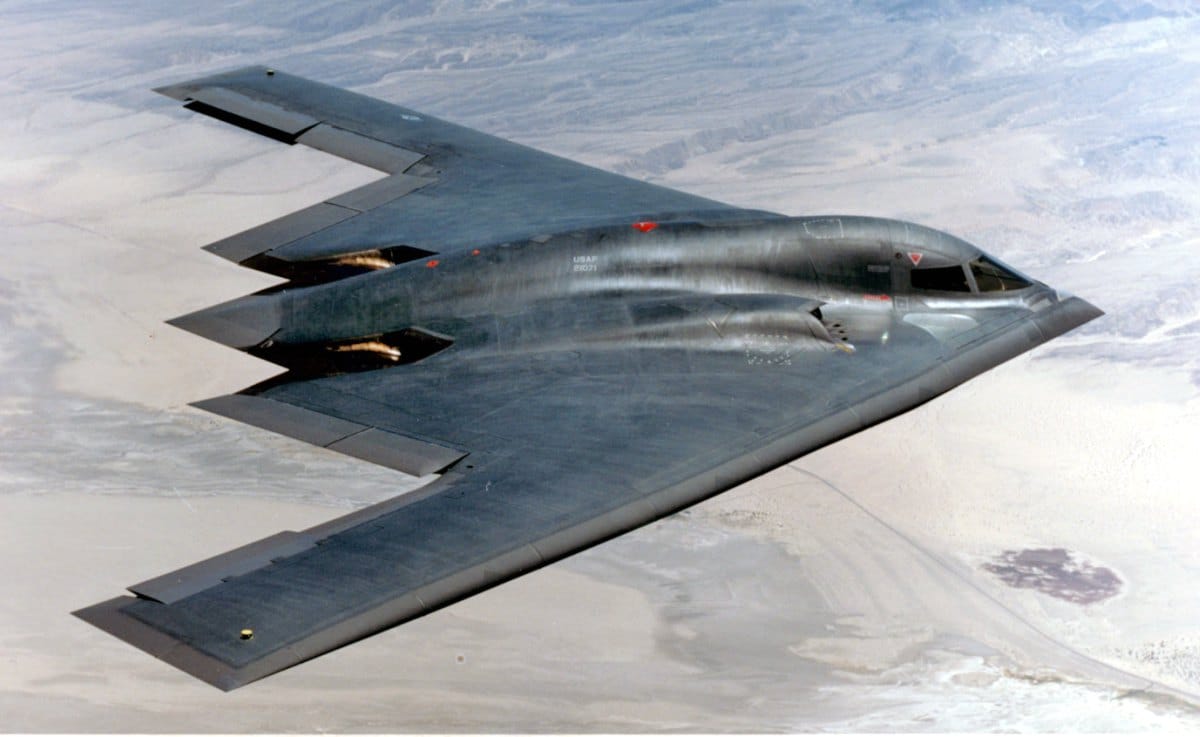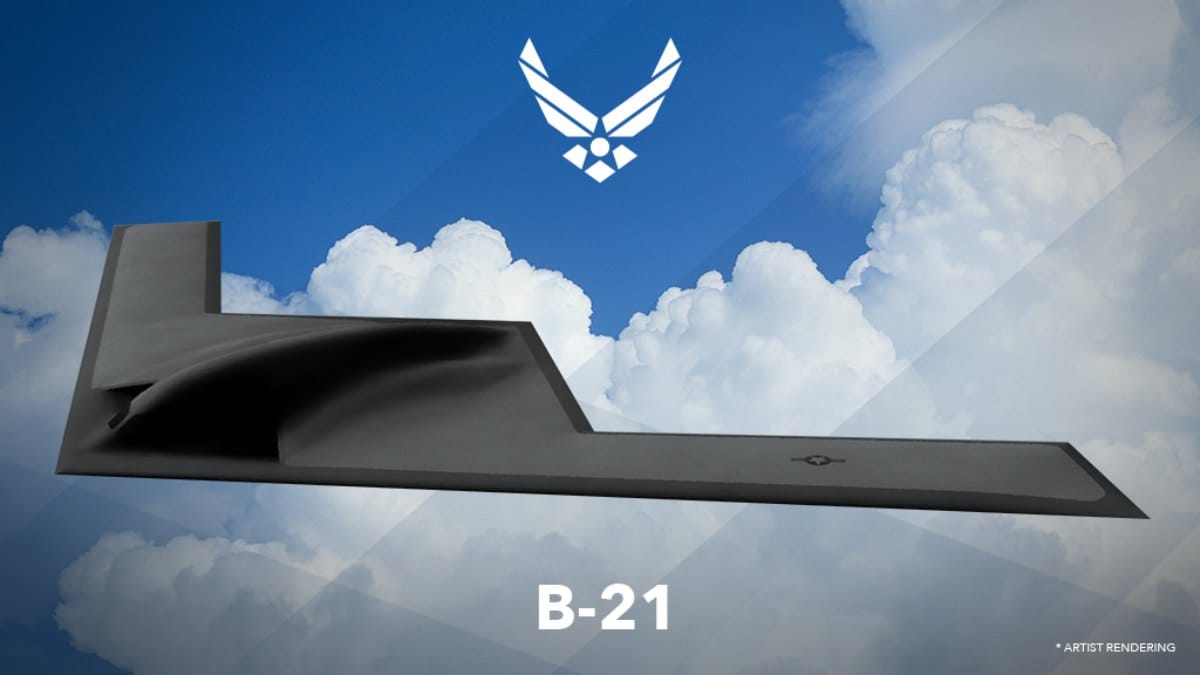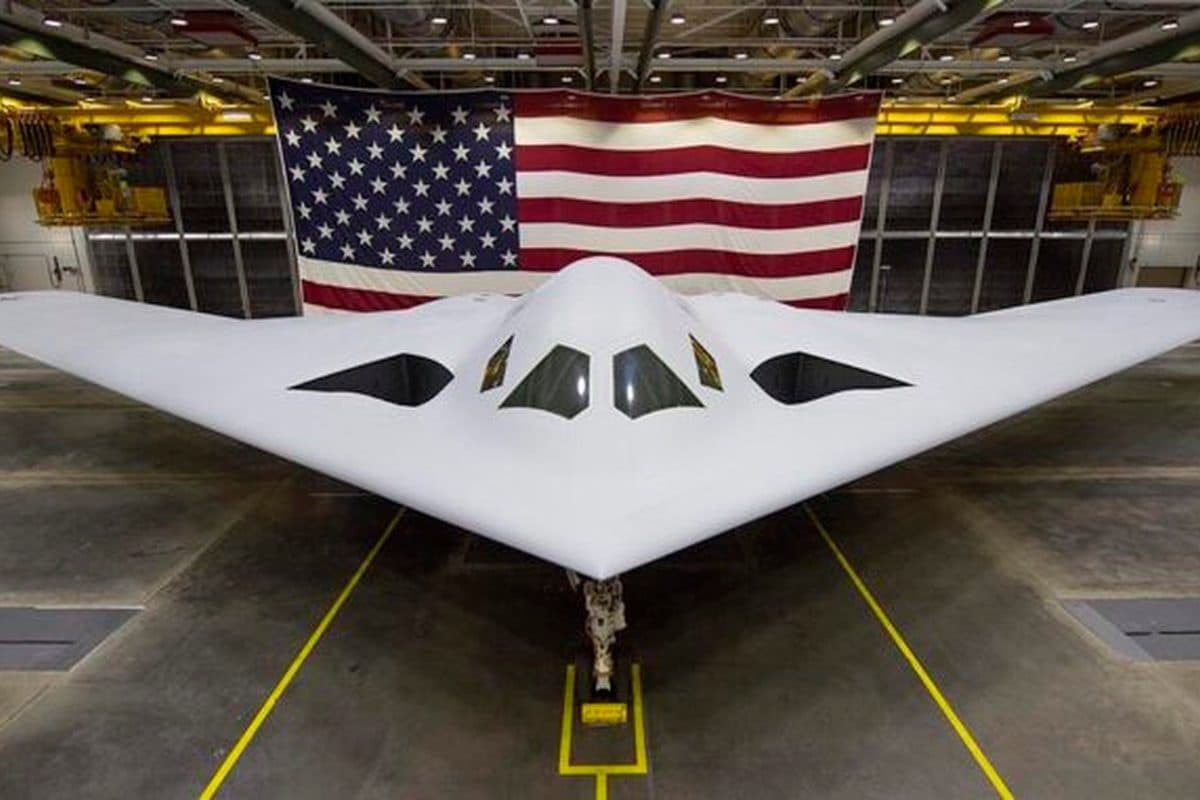

When the Air Force set out requirements to make a Long Range Strike Bomber (LRSB) for the 21st century, Northrup Grumman developed the B-21 Raider. The name of the bomber aircraft was introduced by one of the last surviving “Doolittle Raiders”, Richard E. Cole. At 101 years old, the retired lieutenant colonel introduced the naming structure of the B-21. When it comes to specifications, at this point the only available information is an artist’s rendering. In released artist renderings of the B-21 Raider, it appears to look extremely similar to the B-2 Spirit also produced by Northrup Grumman. The true specifications of this long-range strike bomber have not been formally published.
Uses
The B-21 Raider will be a manned aircraft. Air Force personnel overseeing the project have specified they want to have at least one human pilot “in the loop”, as this aircraft will be responsible for delivering nuclear payloads. Technologically, the B-21 Raider will serve other roles in the airspace such as command coordination, mission targeting, and communication. Because it is estimated to have similar characteristics as the B-2 Spirit, it will be able to stay in the air for long periods of time at altitudes approaching 80,000 feet. Strategically, this allows the B-21 Raider to detect any incoming surface-to-air or air-to-air threats and leave the battlespace before having to take emergency evasive maneuvers.
Design
The B-21 Raider is thought to incorporate similar design elements to other long-range stealth bombers such as the B-2. More specifically, it is said to adhere to the original concepts proposed forth for an Advanced Strategic Penetration Aircraft (ASPA). That’s the designation for an aircraft that is meant to push well past an enemy’s air defense grid before detection. This assures that should a conventional or nuclear payload be delivered, it would be done before an enemy has time to mobilize a response.
B-21 Raider Estimated Cost
What is currently known is that each B-21 Raider is estimated to cost up to $550 million dollars. Its jet design elements are extremely similar to the F-35 Lightning II, allowing for a reduced cost on those engines. Initial projections in vicinity of $550 million per aircraft will likely balloon as it finishes final design. The United States Air Force is looking to acquire up to a hundred of the B-21 Raiders for its fleet. If it is anything similar to the B-2 Spirit, it is expected to carry a payload in the vicinity of 40,000 pounds — nuclear or conventional.