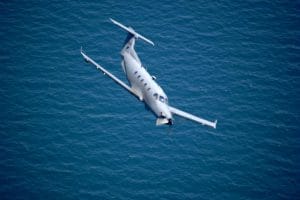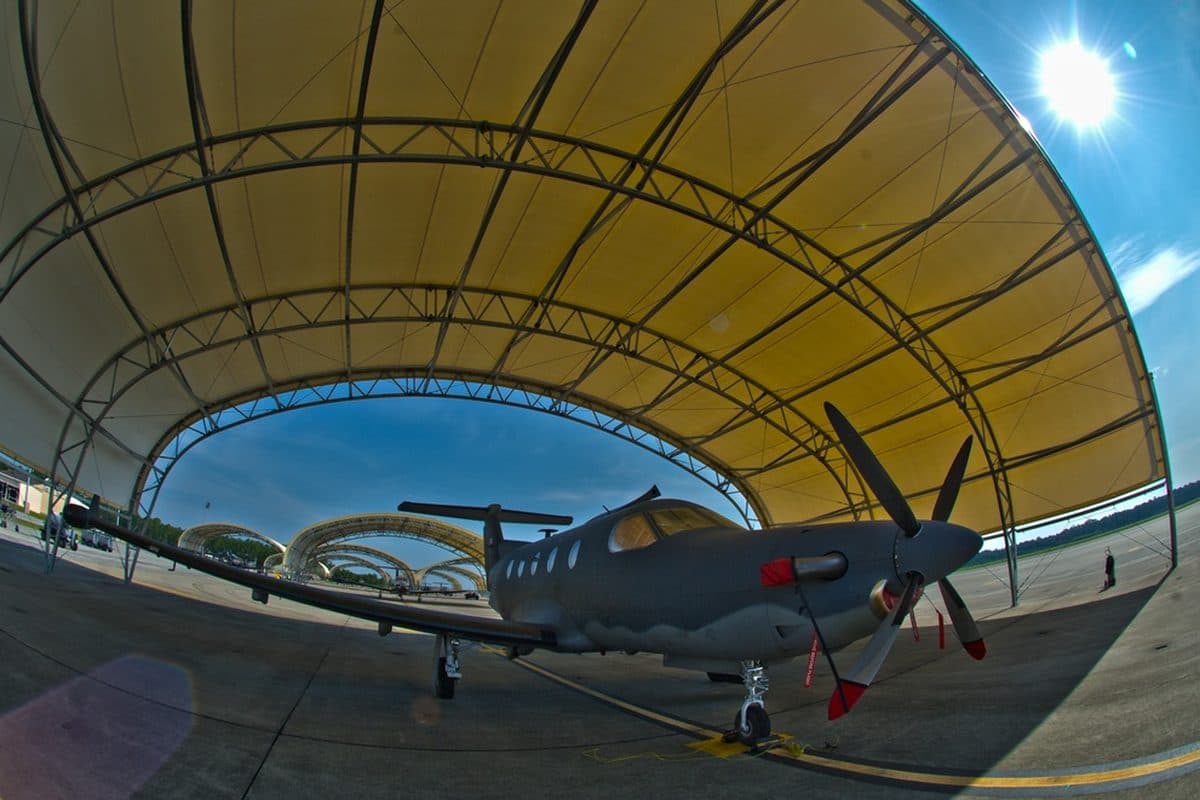

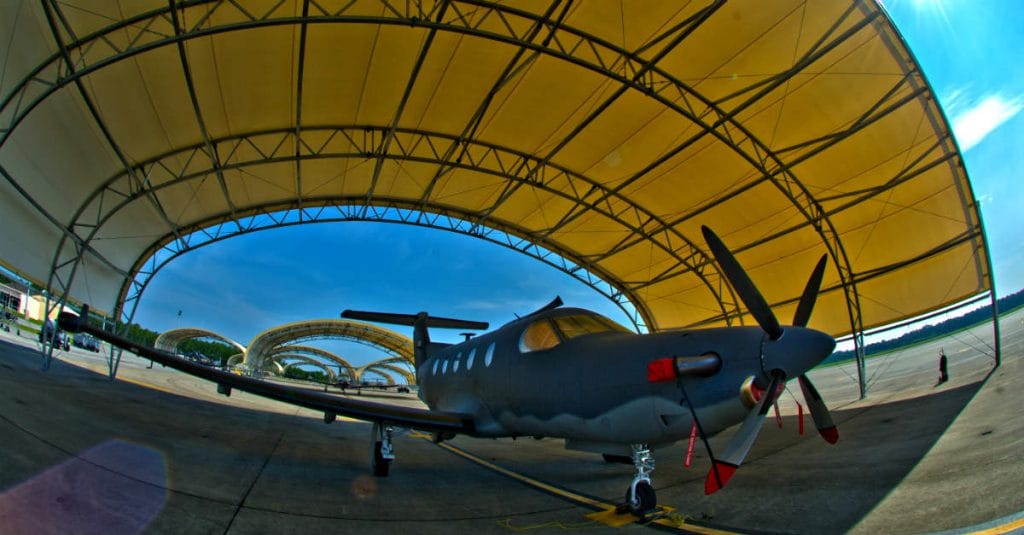
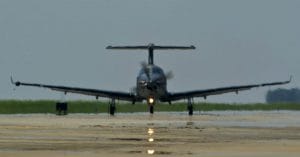
The U-28A is an example of Special Operations Command thinking “outside the box”. When the Air Force Special Operation Command identified the need for a limited number of specialized fixed wing aircraft, it bought a small fleet of heavily modified Pilatus PC-12s. They are better known by their designation in the Air Force as U-28As.
Versus waiting years through government procurement contracts to obtain a small fixed wing plane or use an existing model that may not meet mission requirements, the US Air Force opted to buy a plane off the shelf. The PC-12 is a civilian aircraft produced by Pilatus Aircraft out of Switzerland. It’s a single prop airplane capable of carrying up to nine passengers or 1,602 lbs (704 kg) of cargo. As the modified U-28A, this airplane serves a pivotal role in providing intelligence to Special Operations on the ground. The U-28A was developed as a result of Operation Enduring Freedom and Iraqi Freedom. Special Operations required on call/surge coverage for intelligence and ground support.
On-Call Services To SOCOM:
Not only can the U-28A carry mission essential signals and intelligence assets on board, it can also deliver critical payload and personnel. The U-28A can make extremely short take-offs and landings on rough, patchy runways. It can fly highly classified cargo nearly anywhere in the world in a relatively discrete manner. With only 28 U-28As active in the fleet, they can meet all the demands of Special Operations Command without having to maintain a number of large, unwieldy squadrons. In fact, that was the whole purpose behind maintaining an unconventional fleet of small and medium aircraft.
Intelligence Capabilities:
Intelligence, surveillance, and reconnaissance is playing an even more pivotal role in 21st century special operations. It’s known as ISR and more broadly as C3ISR – Command, Control, Coordination, Intelligence, Surveillance, Reconnaissance. That’s an alphabet soup version of the need to be able to dynamically adjust to last-minute changes in mission planning as well as to know what’s going on around the operators. That’s a tall order for the U-28A, but it appears to be holding well to its new role.