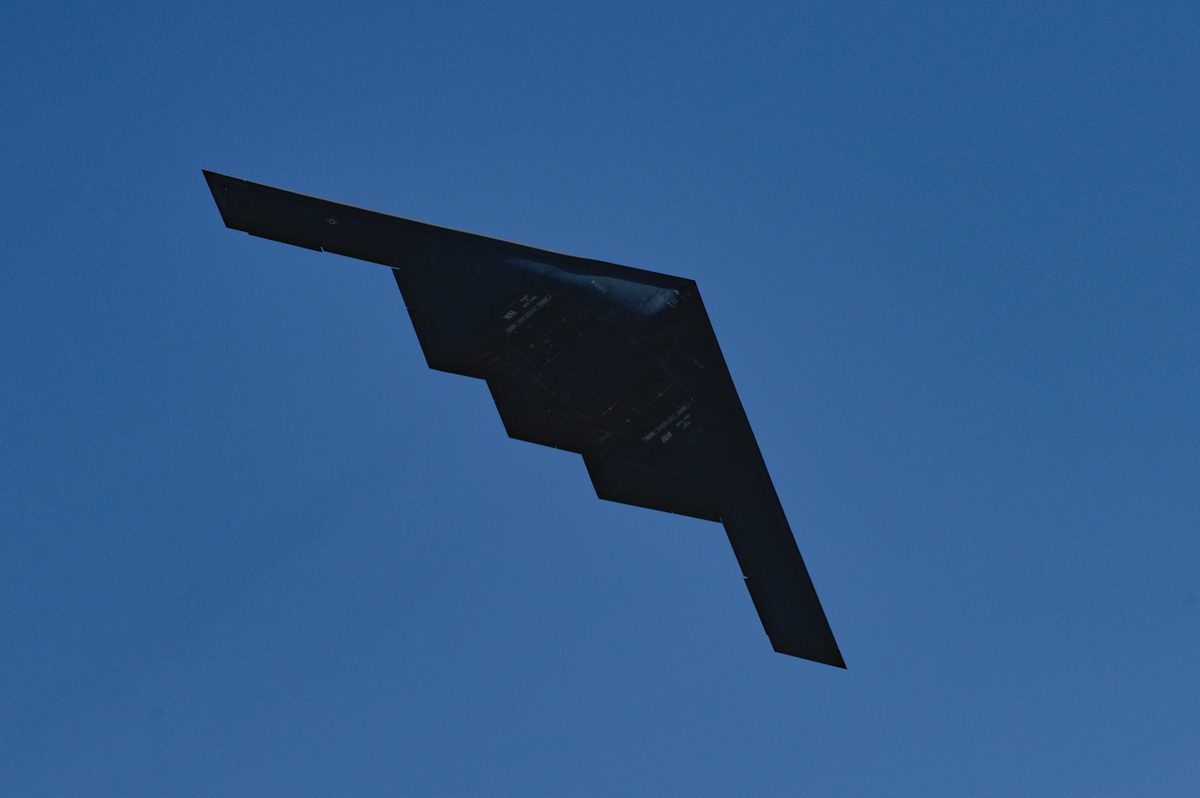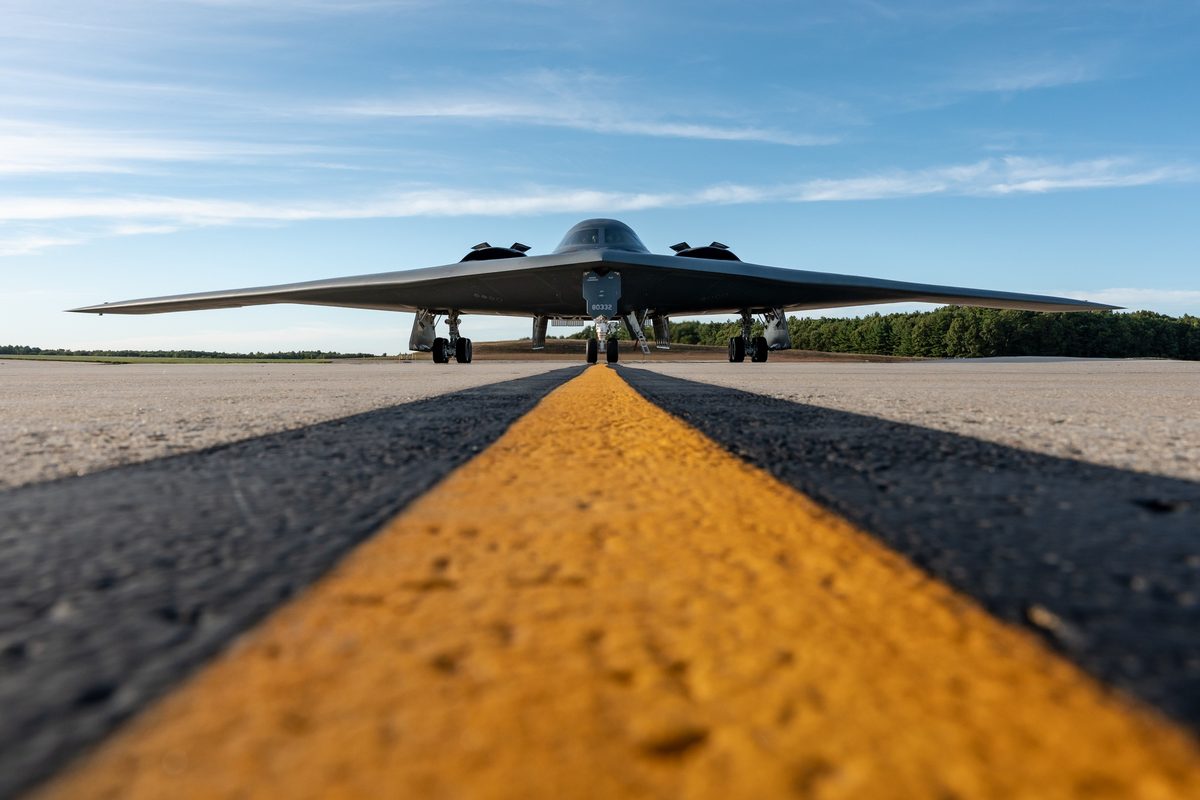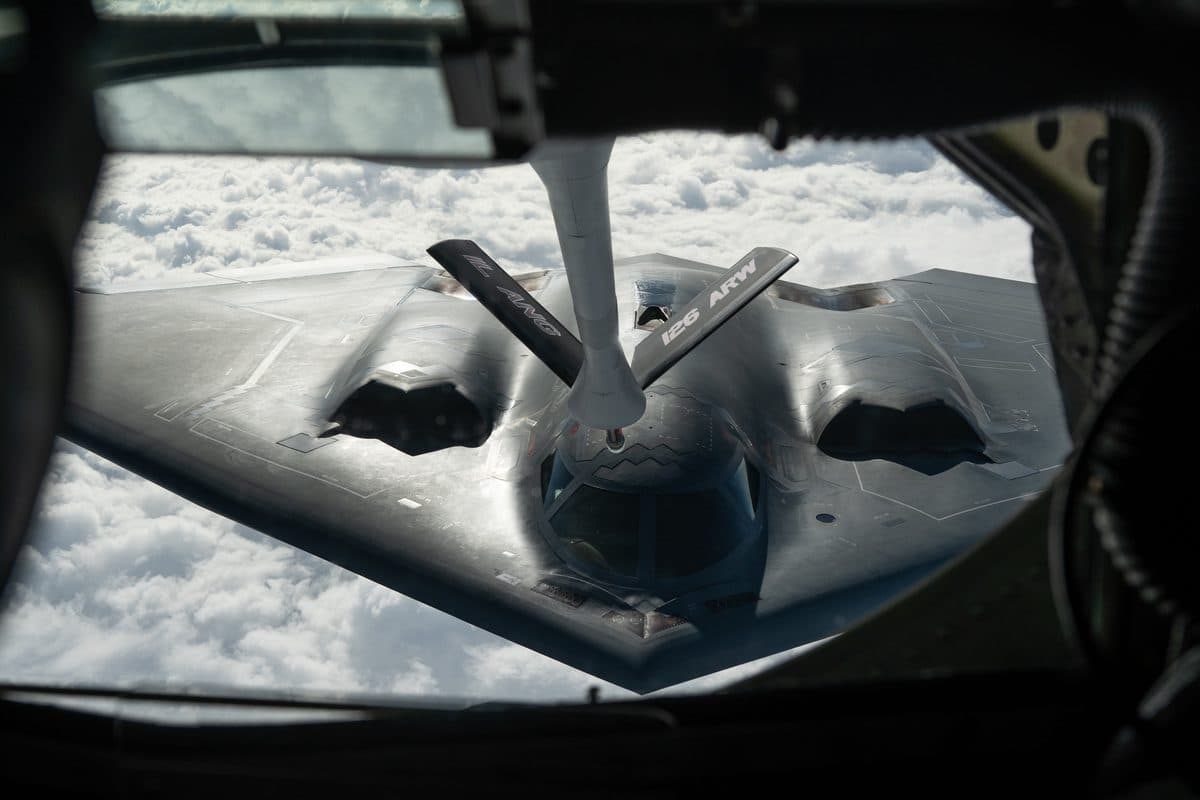

In a conventional air campaign, striking a single heavily defended target might require a package of 75 aircraft, fighters for air superiority, electronic warfare jets for jamming, SEAD aircraft to suppress enemy air defenses, tankers for refueling, and finally the bombers themselves. A single B-2 Spirit can do what that entire package does, alone, at night, without anyone on the ground knowing it was there until the bombs hit. That capability is why the United States Air Force spent $2.1 billion per aircraft, and why, three decades after the B-2 first flew, the service still considers it one of the most consequential investments in American military history.
The Most Expensive Aircraft Ever Built
The B-2 Spirit's price tag demands context. The $2.1 billion per-unit cost, roughly $44.75 billion for 21 aircraft in total program costs, was never the plan. The original 1981 program called for 132 bombers at a fraction of that cost. At full production volume, each B-2 would have cost closer to $500 million in today's dollars, expensive but comparable to other advanced military aircraft. What drove the price to $2.1 billion was a political decision: when the Cold War ended, Congress slashed the order from 132 to 21. The approximately $23 billion in development costs, stealth shaping research, radar-absorbent material development, fly-by-wire systems, and the revolutionary flying wing aerodynamics, had to be amortized across just 21 airframes instead of 132. Development cost per aircraft jumped from roughly $175 million to over $1 billion overnight.
The remaining production cost, approximately $1 billion per aircraft, reflects the extraordinary precision required to build a stealth bomber. Every surface on the B-2 is manufactured to tolerances measured in thousandths of an inch. The radar-absorbent material coatings must be applied with laboratory precision. The edges of every panel, door, and access point must maintain exact geometric relationships to deflect radar energy away from the transmitter. A conventional aircraft can tolerate minor surface imperfections. On the B-2, a misaligned panel edge can create a radar return visible from hundreds of miles away.
Flying Wing: The Shape That Disappears
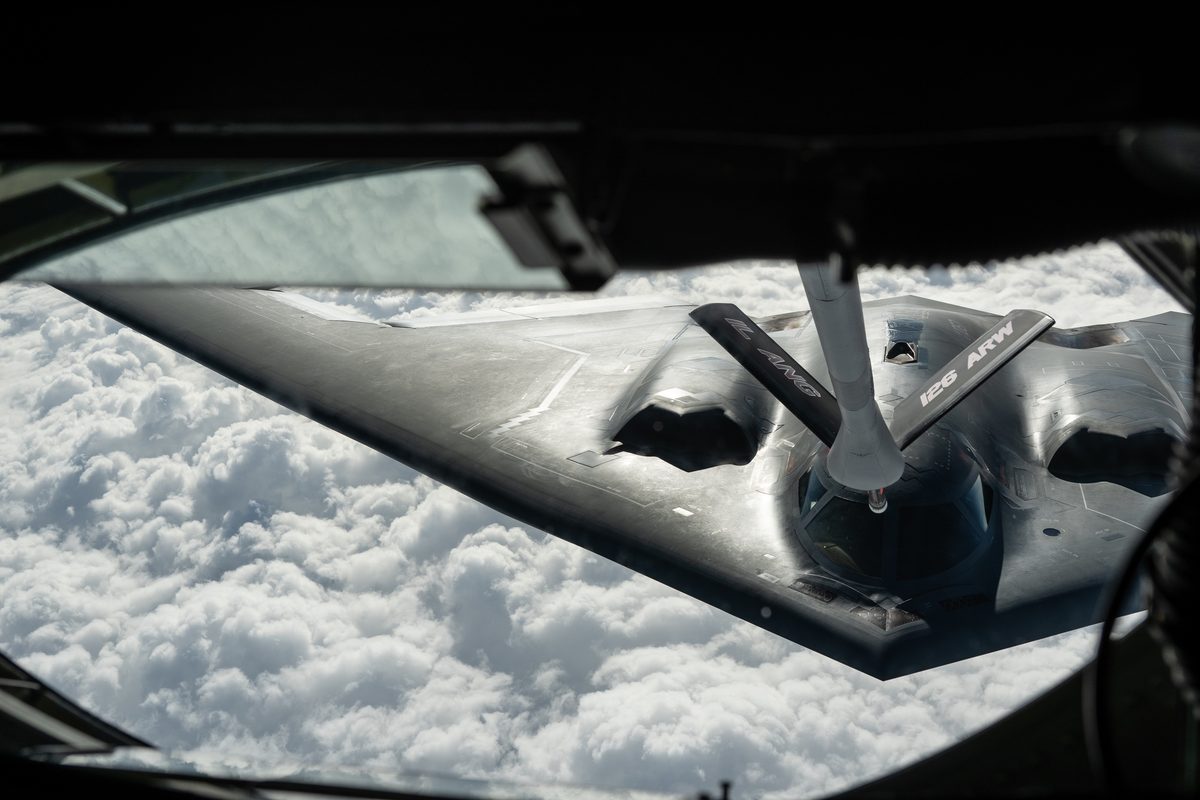
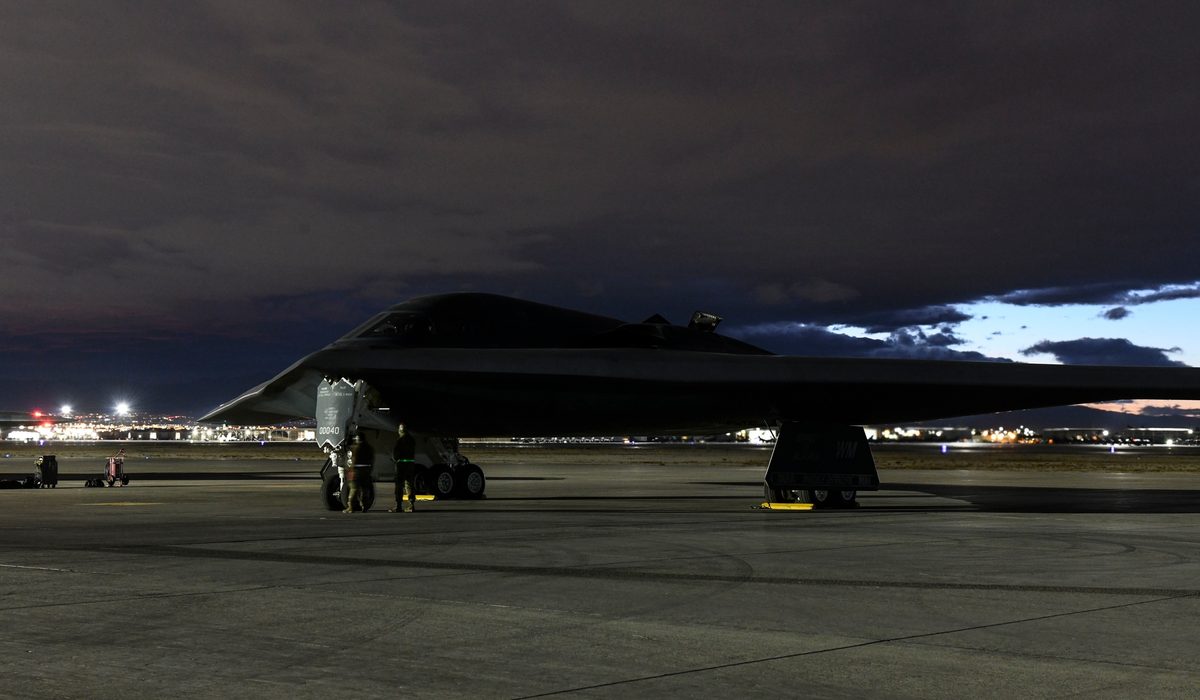
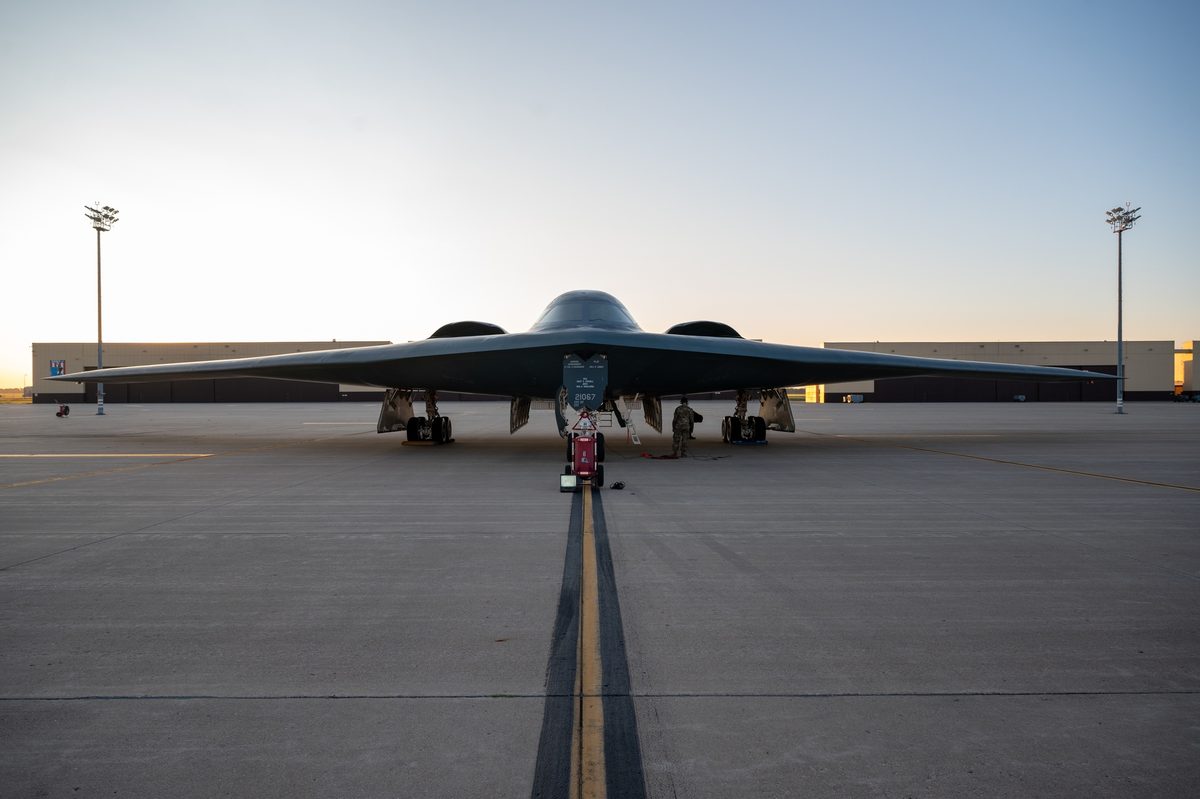
The B-2's flying wing design is not an aesthetic choice. It is the most efficient stealth shape ever engineered for a large aircraft. The flying wing eliminates the vertical tail surfaces, engine nacelle protrusions, and fuselage-wing junctions that create strong radar returns on conventional aircraft. Every exterior surface on the B-2 is a smooth, continuous curve that deflects incoming radar energy away from the transmitter rather than bouncing it straight back. The leading edges of the wings are swept at precisely 33 degrees, an angle calculated to redirect radar returns into narrow, predictable spikes that point away from the threat radar's receiver.