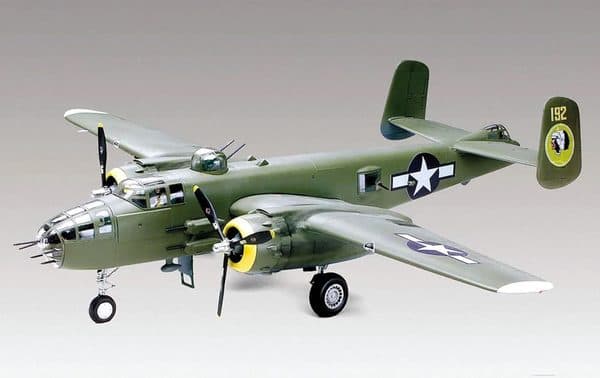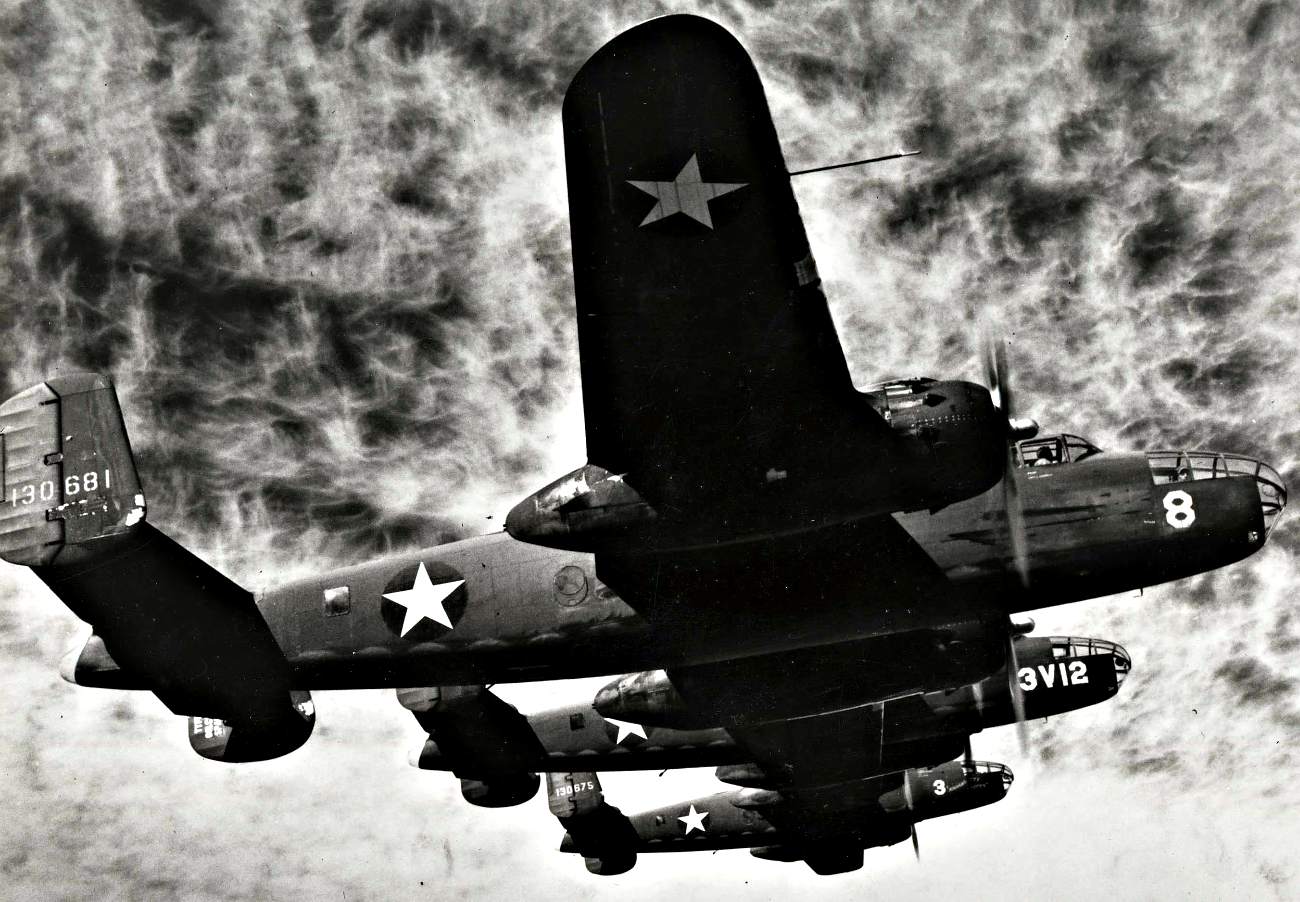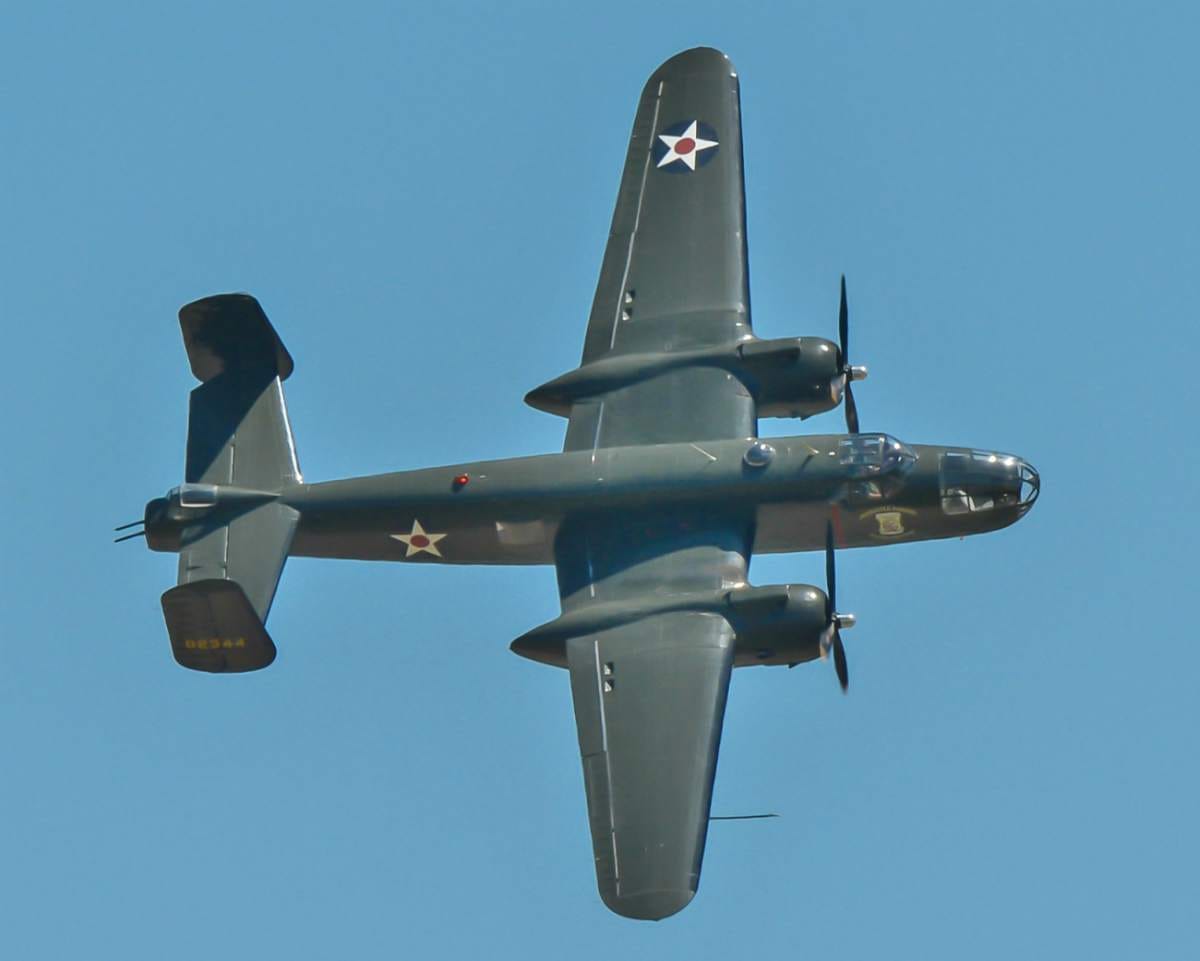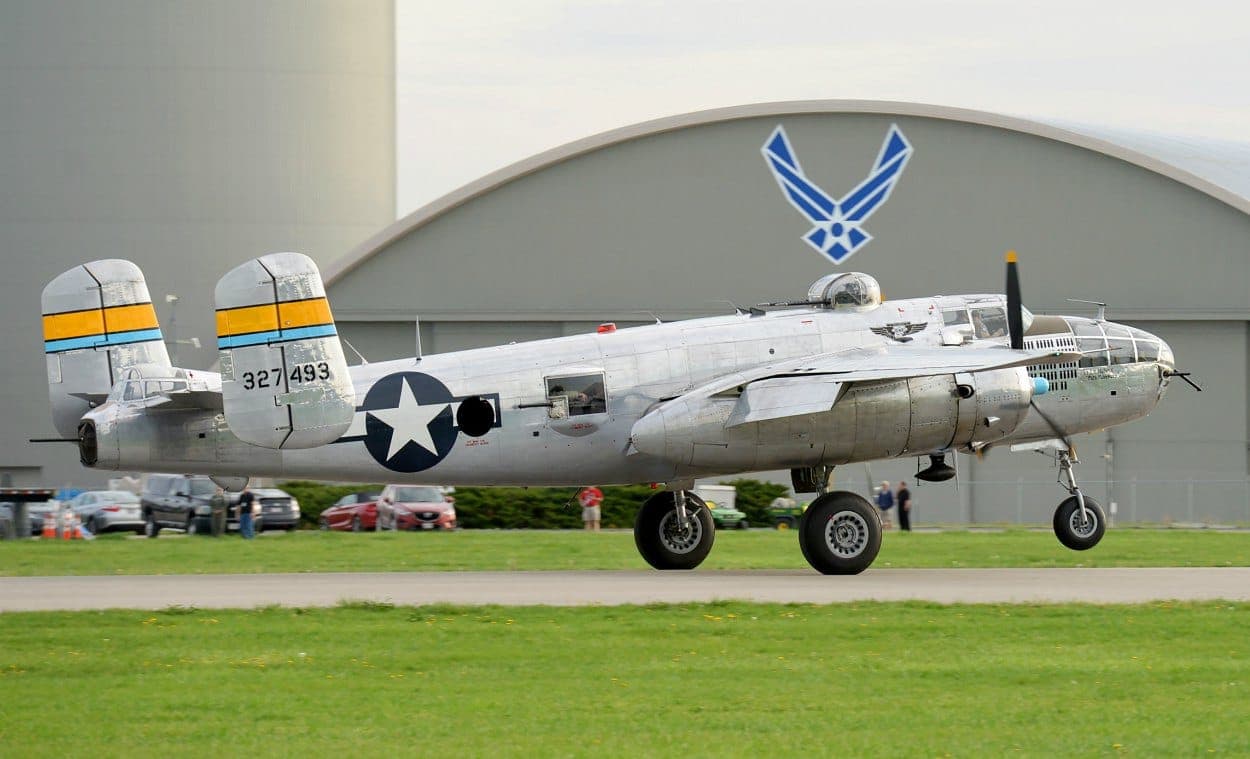

There is perhaps no aircraft more famous, especially during World War II, than the B-25. Its high-rate of production, versatility, and use by several Allied countries makes it one of the most recognizable aircraft in the world.
The North American B-25 Mitchell, named after Brigadier General William “Billy” Mitchell, was a twin-engine bomber. However, over time it became much more than just a bomber. The B-25 was a high-level and low-level bomber, submarine patrol and photo reconnaissance aircraft, and even a fighter. North American Aviation produced just under 10,000 B-25s in a six-year span from 1939-1945.
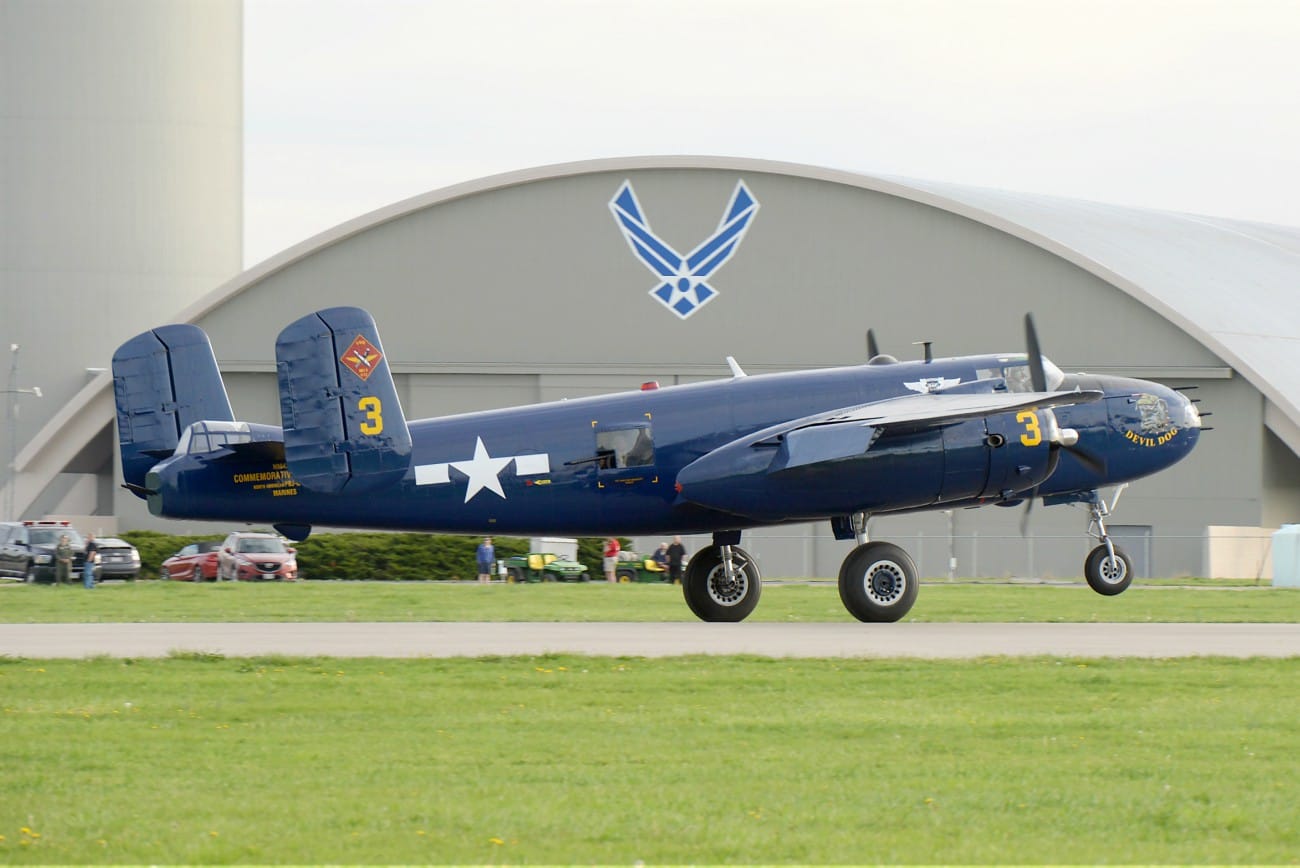
History of the B-25
The first B-25 flew in August of 1940 and the US Army Air Corps accepted its first five planes in February of 1941. From there, it was a race to produce as many as possible. North American Aviation totaled 9,816 B-25s between their two plants in California and Kansas.
The B-25 was originally the NA-40 in the mid-1930s before Wright R-2600 engines were added. The NA-40 was designed and built with France and the UK in mind. These countries had an immediate need for an aircraft with bombing capabilities, seeing as they were well into the war by then. But the European countries decided to purchase the Douglas DB-7 (used as the A-20 by the US) instead.