
Rotary-wing operations have long been a vital function in US missions around the world, but even the most flexible helicopters have their limits. This came to light tragically in 1980 during the Iran hostage crisis, when the failure of Operation Eagle Claw cost eight US lives. A lengthy process to find a new aircraft, one capable of vertical takeoff/landing while able to carry a significant payload in either material or personnel. After decades of political wrangling, a joint project by Bell Helicopter and Boeing Rotorcraft Systems produced the Bell Boeing V-22 Osprey. This new and nearly unique aircraft met all the requirements, albeit after a rough development process.
Innovation In Design:
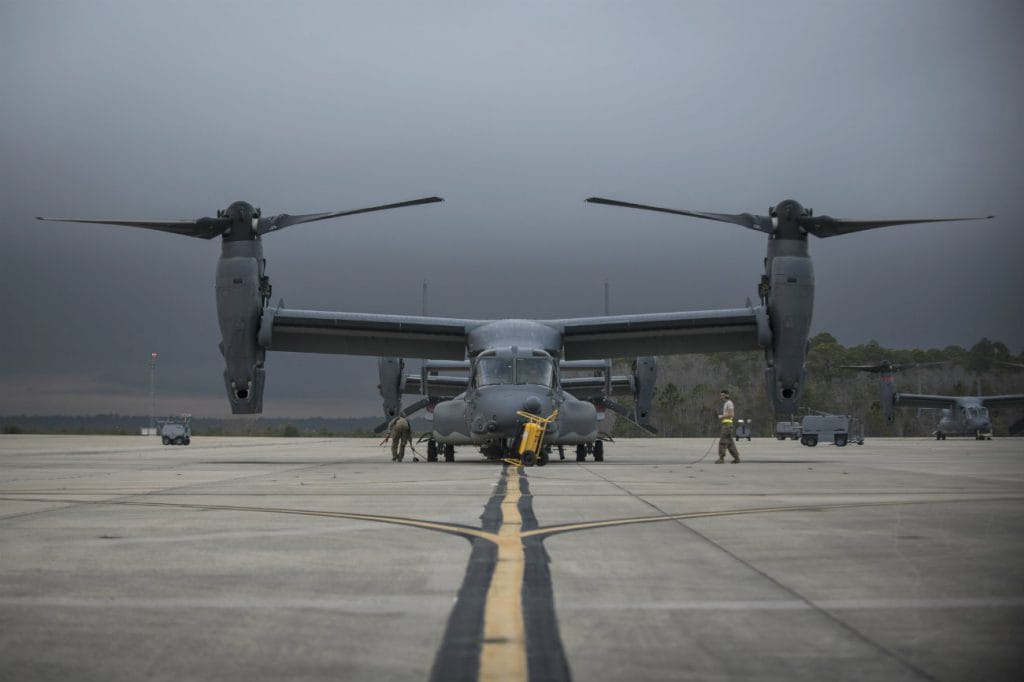
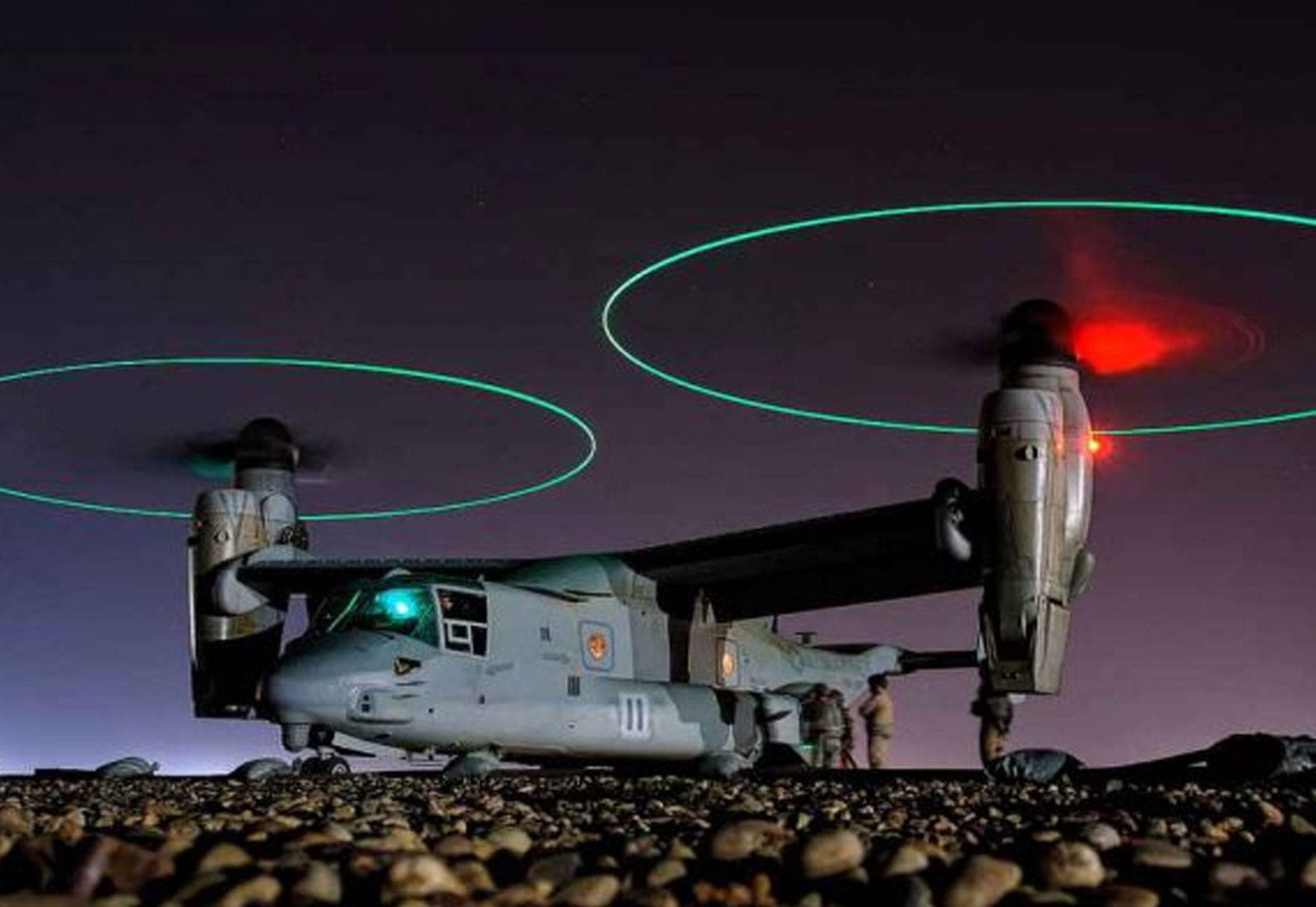
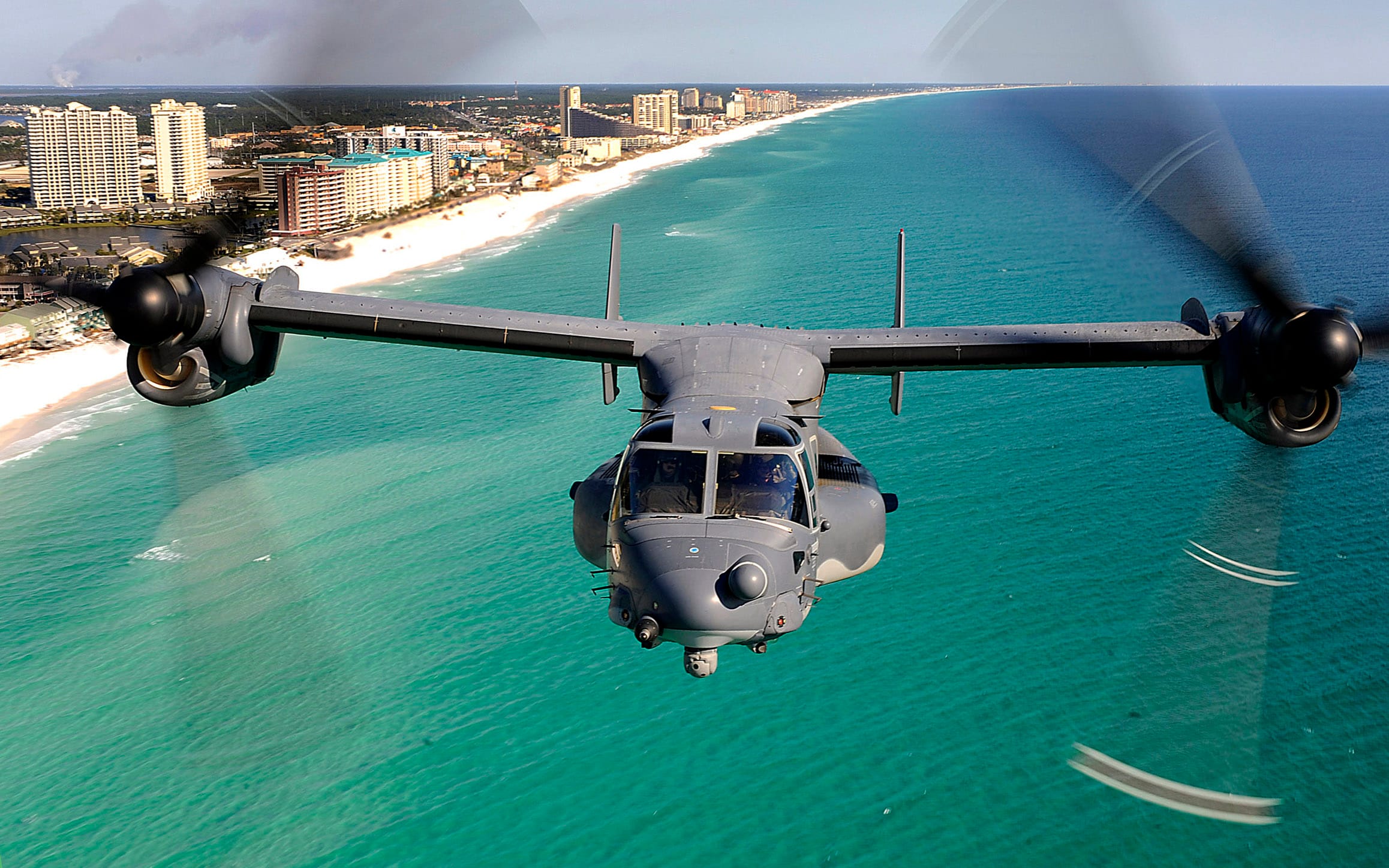
The V-22 Osprey is the world’s first production tiltrotor aircraft, which means - as the name suggests - the rotor can tilt to either a horizontal or vertical position. This enables the aircraft to function as either a helicopter or a fixed-wing aircraft, depending on mission and conditions. The advantages are obvious. This is a functional transport aircraft that can make use of the extended range and fuel efficiency of a fixed wing, while able to land on either conventional runways or helipads as needed.
Speed And Power:
This is accomplished via an innovative design. The engines are mounted in nacelles at the end of the wing. These power plants - twin Rolls-Royce T406 - were designed specifically for the Osprey project. Turboshaft engines with integral 14-stage high pressure axial compressors fire by annular combustors which support two stage high pressure turbines. In other words, the T406s can supply a great deal of power. These engines power unique three-bladed propeller/rotor design (proprotor). Each proprotor is 38 feet in diameter, and combined with the powerful engines, deliver big performance. The V-22 Osprey has a maximum speed of 316 mph and a rate of climb between 2,320 and 4,000 feet depending on the orientation of the proprotors. The service ceiling is an impressive 25,000 feet. The maximum range of over 1,000 miles and combat radius of 426 miles allow for operational flexibility.
Heavy-Lifting:
The real strength of the V-22 Osprey, however, is its payload capacity. The maximum takeoff weight of 60,500 lbs breaks down a bit further. In vertical takeoff mode, the max weight is 52,000 lbs while the maximum rolling takeoff weight is 57,000 lbs. This gives it a greater capacity than most helicopters, which combined with its extended range means that the V-22 Osprey can deliver a variety of payloads to where they are needed. From their first deployments in the Middle East to the present, the V-22 Osprey has been used to deliver cargo, resupply, and personnel in support of US and allied missions. Furthermore, the V-22 can also be used to carry paratroopers into battle, a unique advantage in the ever-shifting Global War on Terror.