Skip to content
April 22:First Poison Gas Attack at Ypres111yr ago

How Australia's Bushmaster Protected Troops From 100+ IED Strikes With Zero Fatalities

Marcus Webb · · 10 min read
Save
Share:
Bushmaster Protected Mobility Vehicle in operational use showing its distinctive armored design
Marcus Webb
Marcus Webb

Military Vehicles & Ground Systems Contributor

Marcus Webb writes about military ground vehicles, armored platforms, and the logistics of land warfare. His work covers everything from MRAPs and infantry carriers to the training pipelines that keep ground forces operational in contested environments.

One hundred IED blasts. Zero crew killed. That's the Bushmaster Protected Mobility Vehicle's record in Afghanistan — a survival rate so perfect that it sounds like marketing copy rather than operational data. But it's real. Australian, Dutch, and British troops riding in Bushmasters survived blast after blast that would have killed everyone inside a Humvee or a standard armored personnel carrier. The vehicle's V-shaped hull — a design feature that many dismissed as unnecessary when the Bushmaster entered service — turned out to be the most important piece of engineering on the vehicle. Every angle, every weld, every curve in that hull was designed to solve one problem: keep the blast energy from reaching the people inside.

The Design Philosophy: Protection First

The Bushmaster began life in the early 1990s as a project by Australian Defence Industries (later acquired by Thales Australia). The Australian Army wanted a vehicle that could transport infantry safely across the vast distances of the Australian outback — and through the mine-contaminated environments that Australian peacekeepers encountered in places like East Timor, Somalia, and later Afghanistan.

The design team, led by engineer Bronte Gould, made a fundamental decision early: protection would be the primary design requirement, not firepower, not speed, not payload. The Bushmaster would be built around keeping its occupants alive. This philosophy — protect first, fight second — was unusual at the time. Most military vehicle programs prioritized mobility and firepower, treating protection as a secondary consideration or an afterthought.
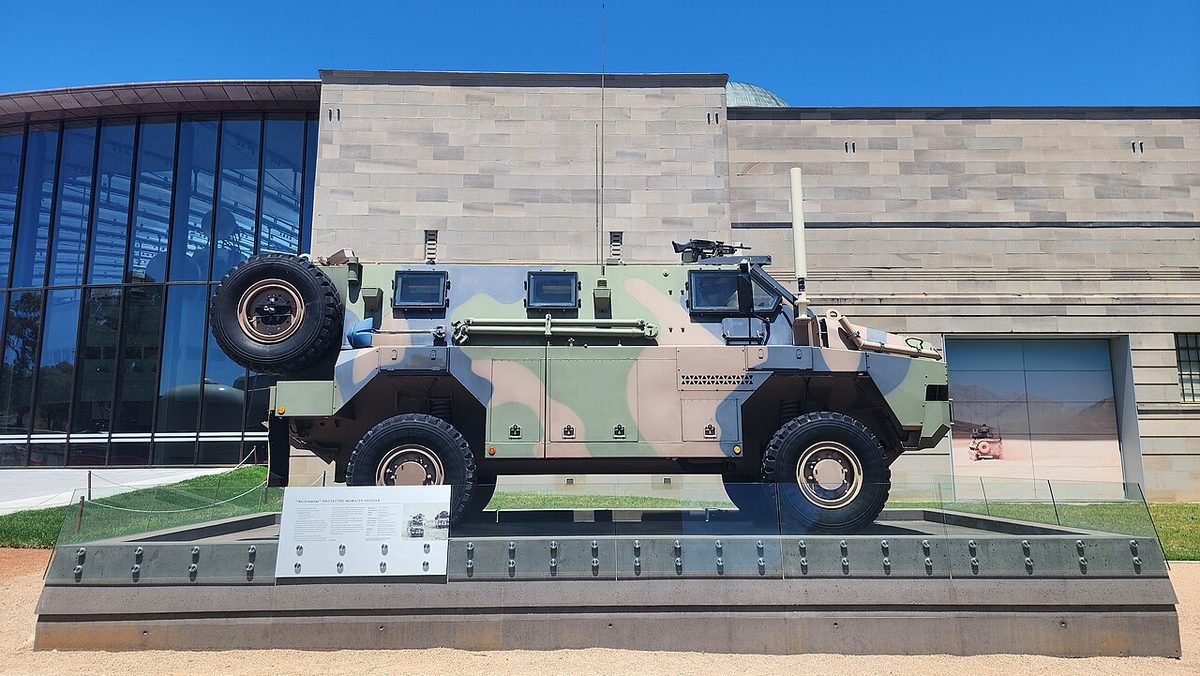
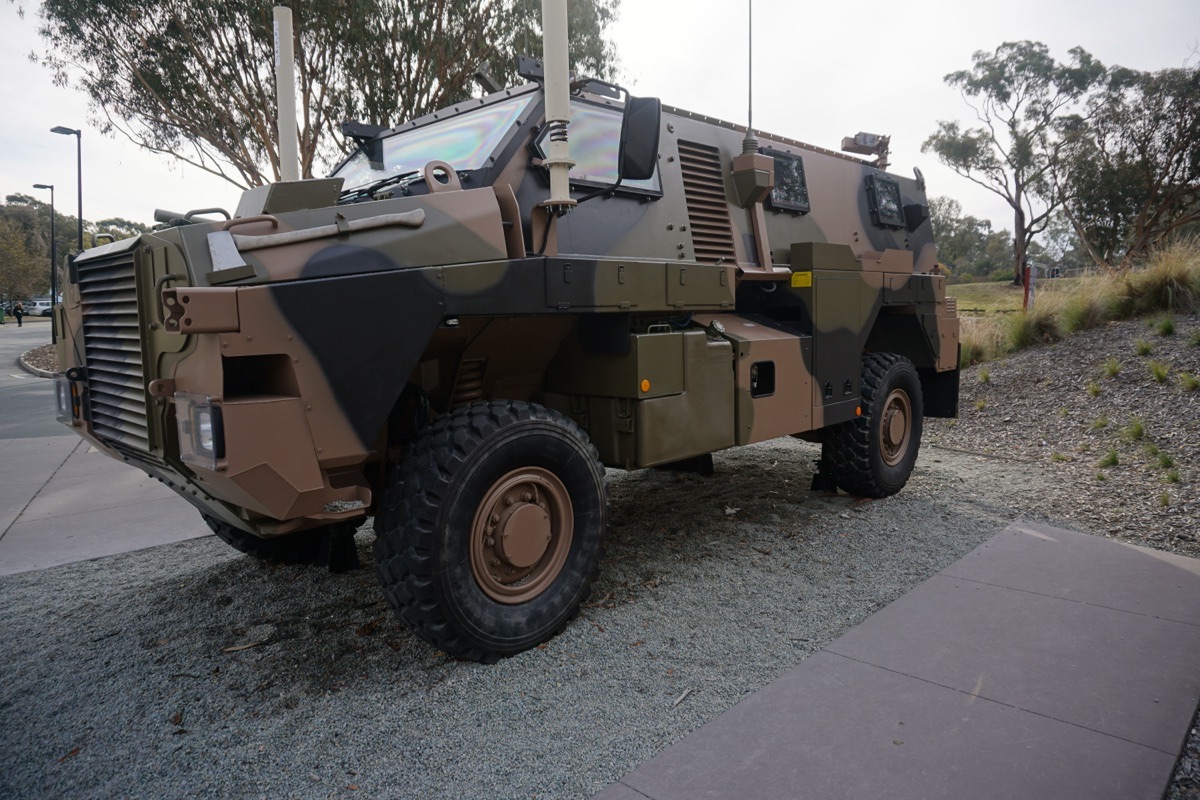
Australian Bushmaster PMV displayed at the Australian War Memorial representing its Afghanistan service
A Bushmaster PMV at the Australian War Memorial — these vehicles served extensively in Afghanistan where their mine protection proved critical. (Wikimedia Commons / Public Domain)

The contrast with American experience is instructive. When the U.S. invaded Iraq in 2003, its primary troop transport was the M998 Humvee — a vehicle designed for mobility behind the front lines, with minimal armor. As the insurgency intensified and IED attacks became the primary threat, Humvees proved tragically vulnerable. Thousands of American soldiers were killed or maimed in Humvees that offered almost no blast protection. The U.S. military scrambled to retrofit armor kits and eventually developed the MRAP (Mine-Resistant Ambush Protected) program — but only after years of casualties that might have been prevented with better-protected vehicles from the start.

Australia never made that mistake. The Bushmaster was designed with mine and IED protection built in from Day One.

The V-Hull: How Physics Saves Lives

The Bushmaster's most critical feature is its V-shaped hull. Understanding why it works requires understanding what an IED does to a vehicle.

When an explosive device detonates beneath a flat-bottomed vehicle, the blast wave hits the flat underside and transfers its energy directly upward — through the floor, into the crew compartment, and into the occupants. The flat surface acts like a piston, accelerating the floor upward into the crew. The effects are devastating: broken spines, shattered legs, traumatic brain injuries, and death from the acceleration forces alone, even before shrapnel penetrates the hull.

V-shaped hull design of a mine-resistant military vehicle showing the blast deflection geometry
The V-hull design principle — angled surfaces deflect blast energy outward and away from the crew compartment, dramatically reducing the forces transmitted to occupants. (Wikimedia Commons / Public Domain)

A V-shaped hull changes the physics. When the blast wave hits the angled surfaces, it is deflected outward and downward — away from the crew compartment. The V-shape splits the blast energy laterally, directing the majority of the force to the sides of the vehicle rather than up through the floor. The crew compartment, sitting above the V's apex, receives a fraction of the energy that a flat-bottomed vehicle would transmit.

The Bushmaster's V-hull is specifically shaped to maximize this deflection. The angle of the V, the height of the crew compartment above the ground, and the structural design of the hull all work together. The crew compartment is a separate monocoque structure — essentially a reinforced capsule — that is mounted to the chassis through energy-absorbing connections. When a blast occurs, the chassis and hull can deform and absorb energy without transmitting the full force to the capsule where the soldiers sit.

Crew seats are mounted to the hull walls or roof, not the floor. This is counterintuitive but critical: in a blast, the floor moves upward before the rest of the vehicle. If seats are bolted to the floor, occupants are accelerated violently upward. Seats mounted from the roof or walls experience less acceleration, and energy-absorbing seat mechanisms further reduce the forces transmitted to the occupant's spine.

By the Numbers

The Bushmaster weighs approximately 15 tonnes in combat configuration. It carries a driver, a vehicle commander, and up to eight passengers — typically an infantry section. Maximum speed is 100 km/h (62 mph) on roads. Range is approximately 800 kilometers (500 miles). It is powered by a Caterpillar 3126E turbocharged diesel engine producing 330 horsepower.

The armor provides protection against 7.62mm ball ammunition and overhead artillery fragmentation. The V-hull provides blast protection rated to survive anti-tank mines. The vehicle is tall — standing approximately 2.7 meters (8.9 feet) high — which some soldiers initially disliked because it makes the vehicle a larger visual target. But the height is deliberate: it increases the distance between the blast point and the crew compartment, giving the V-hull more space to deflect energy before it reaches the occupants.

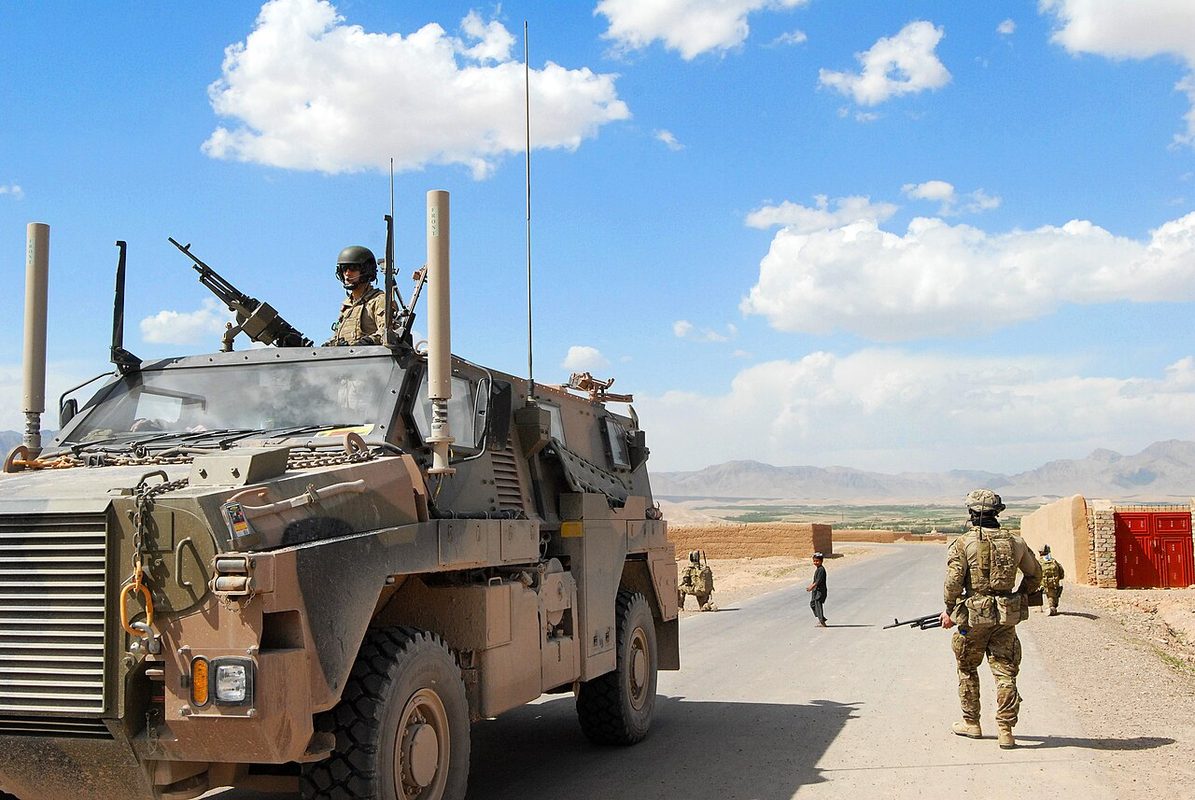
Bushmaster PMV on patrol in Tarin Kowt, Afghanistan showing the vehicle in operational conditions
A Bushmaster on patrol in Tarin Kowt, Afghanistan — where Australian forces relied on the vehicle for daily operations in one of the most heavily mined regions of the country. (Wikimedia Commons / Public Domain)

Combat Record: Afghanistan and Beyond

The Bushmaster's combat debut came in Iraq and Afghanistan, where Australian Defence Force personnel deployed it as their primary troop transport. In Afghanistan's Uruzgan Province — one of the most heavily mined areas in the country — Australian patrols operated Bushmasters daily on roads and tracks known to be seeded with IEDs.

The results were extraordinary. Over the course of Australia's deployment to Afghanistan, Bushmasters survived more than 100 IED strikes. In every single case, the crew survived. Soldiers were injured — concussions, broken bones, and hearing damage were common — but no one inside a Bushmaster was killed by an IED blast. The V-hull performed exactly as designed, deflecting blast energy away from the crew compartment with mechanical reliability.

The Dutch Army, which also operated Bushmasters in Afghanistan, reported similar results. The Netherlands purchased 98 Bushmasters specifically because of their mine protection capability, and Dutch soldiers credited the vehicle with saving numerous lives during their deployment in Uruzgan Province.

International Adoption

The Bushmaster's combat record attracted international buyers. As of 2026, the vehicle is in service with:

  • Australia: Over 1,000 vehicles in multiple variants (troop carrier, ambulance, command, mortar carrier, direct fire support)
  • Netherlands: 98 vehicles, deployed to Afghanistan
  • United Kingdom: 24 vehicles, used as protected patrol vehicles
  • Japan: Licensed production by Komatsu for the Japan Ground Self-Defense Force
  • Indonesia: Purchased for peacekeeping operations
  • Fiji: Donated by Australia
  • Jamaica: Donated by Australia
  • New Zealand: Purchased for NZDF operations
  • Ukraine: Donated by Australia for use in the conflict with Russia

Ukraine's use of Australian-donated Bushmasters has provided further validation of the vehicle's protection capability in a high-intensity conventional conflict — a more demanding environment than the counterinsurgency operations for which it was originally employed.

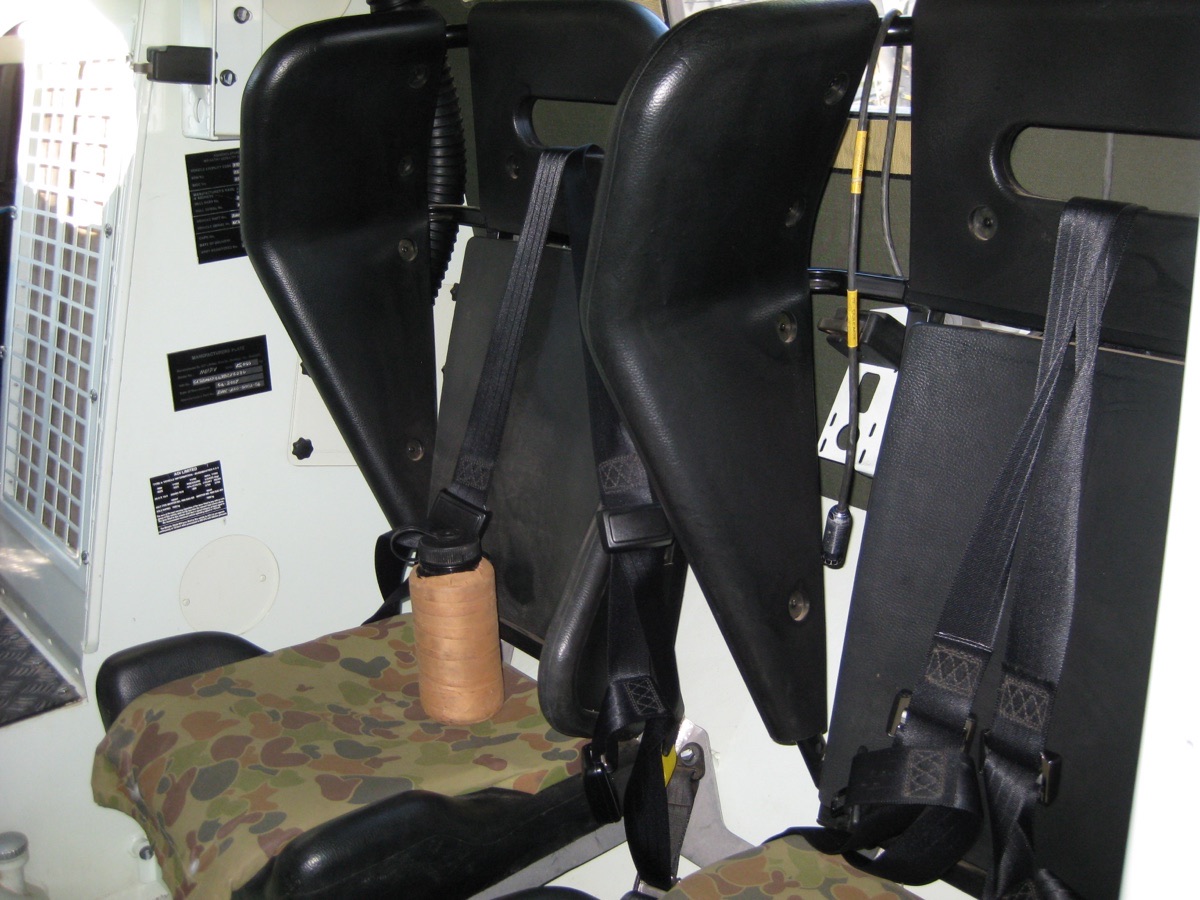
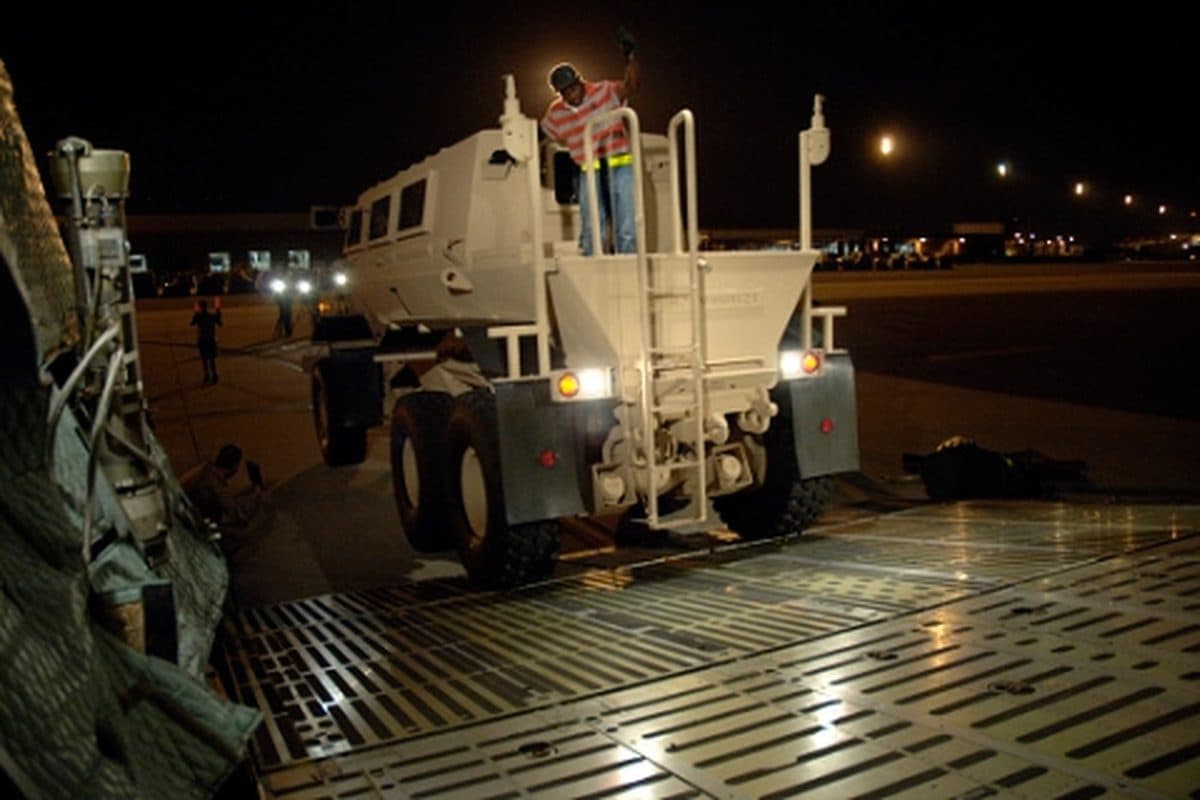
MRAP-type military vehicle showing mine-resistant design features used in modern protected vehicles
Modern mine-resistant vehicles like the Bushmaster incorporate blast-attenuating seats, V-hulls, and separated crew capsules that work together to protect occupants. (Wikimedia Commons / Public Domain)

Variants and Evolution

The Bushmaster has evolved well beyond its original troop transport role. Thales Australia has developed multiple variants, each optimized for a different mission while retaining the core V-hull protection design:

  • Bushmaster MR6: A six-wheeled variant with increased payload capacity and a larger crew compartment, designed for roles that require additional equipment — command posts, electronic warfare, or engineering support.
  • Bushmaster Ambulance: A medical evacuation variant with space for stretchers and medical equipment, providing protected casualty evacuation in IED-heavy environments.
  • Bushmaster Direct Fire: Armed with a turret-mounted weapon system, giving the Bushmaster organic firepower for convoy protection and patrol operations.
  • Bushmaster EW: Electronic warfare variant equipped with jamming and signals intelligence systems, taking advantage of the vehicle's protected interior to house sensitive electronic equipment.

The Australian Army has also invested in extending the Bushmaster's service life through a mid-life upgrade program. The upgrade includes improved engine performance, enhanced suspension, upgraded communications systems, and additional electronic countermeasures designed to defeat the radio-controlled IEDs and remotely triggered mines that represent the current threat environment. These upgrades ensure the Bushmaster remains operationally relevant through the 2030s and beyond.

Lessons From the Bushmaster

The Bushmaster's story carries a lesson that military procurement programs consistently fail to learn: protection saves more lives than any other single design feature. The vehicle is not fast — a Humvee is quicker. It is not heavily armed — it carries a single machine gun or remote weapon station. It is not stealthy, not low-profile, and not glamorous. It is a large, visible, moderately mobile armored box on wheels.

And it brought every single one of its soldiers home alive.

The American MRAP program, launched years after the Bushmaster entered service, eventually adopted many of the same design principles — V-hull, elevated crew compartment, energy-absorbing seats. But it came after thousands of American casualties in flat-bottomed Humvees that offered inadequate blast protection. The technology existed. The design principles were proven. The Australians had already built the vehicle. The failure was not engineering — it was the institutional resistance to prioritizing protection over other design requirements.

The Bushmaster proves a simple proposition: if you build a vehicle around the goal of keeping its occupants alive, and you accept compromises in speed, weight, and profile to achieve that goal, the vehicle will do exactly what it was designed to do. One hundred IED blasts. Zero fatalities. The math is the argument.

Share this article

Share:

Recommended

Ace of The Skies: Can You Identify These Military Aircraft Throughout The Years?
Test Yourself

Ace of The Skies: Can You Identify These Military Aircraft Throughout The Years?

Can you identify these aircraft?

Take the Quiz

On This Day in Military History

April 22

First Poison Gas Attack at Ypres (1915)

German forces released 168 tons of chlorine gas from 5,730 cylinders along a four-mile front near Ypres, Belgium. The yellowish-green cloud killed thousands of French and Algerian troops and opened a four-mile gap in the Allied line. Only the Canadian 1st Division's desperate stand prevented a complete breakthrough.

1944Allied Landings at Hollandia, New Guinea

1951Battle of Kapyong, Korea

See all 4 events on April 22

Get Military News & History in Your Inbox

Join thousands of readers receiving our weekly digest of military technology, history, and analysis.

Test Your Knowledge