
Arleigh Burke III vs Sejong the Great
SPY-6 next-gen radar vs maximum VLS firepower
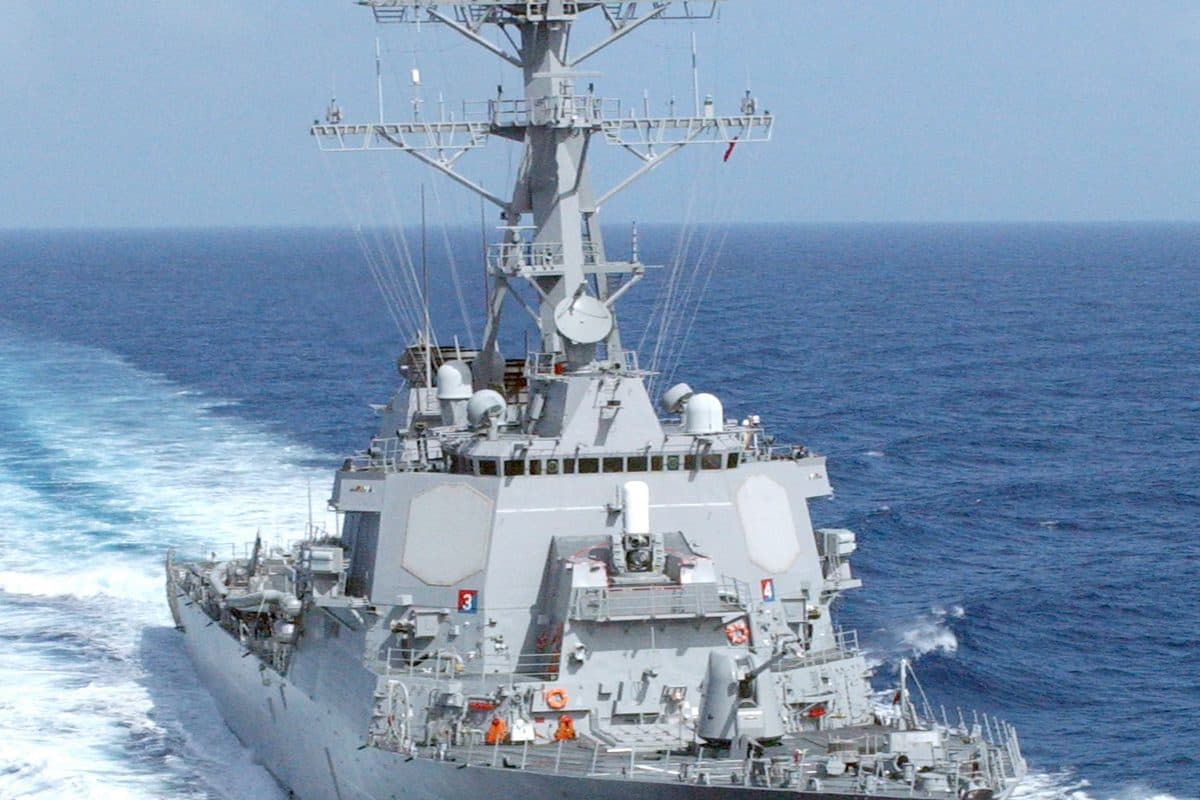
Arleigh Burke III
United States · In service 2024
The Arleigh Burke Flight III is the latest evolution of the US Navy's backbone surface combatant. It features the AN/SPY-6(V)1 AMDR radar, a massive upgrade over earlier Aegis variants, with significantly improved sensitivity for ballistic missile defense and air warfare.
Read full articleSejong the Great
South Korea · In service 2008
The Sejong the Great-class is South Korea's Aegis-equipped destroyer and one of the most heavily armed surface combatants in the world. With 128 VLS cells combining Mk 41 and Korean K-VLS, it carries a formidable mix of weapons for all warfare domains.
The Matchup
Both are Aegis-equipped destroyers, but the Sejong the Great packs 128 VLS cells, more than any other surface combatant in the Pacific. Does raw missile count outweigh the Burke III's newer radar technology?
Performance Radar
Rating Breakdown
Specifications
| Specification | Arleigh Burke III | Sejong the Great |
|---|---|---|
| Displacement | 9,800 tons (full load) | 11,000 tons (full load) |
| VLS Cells | 96 Mk 41 VLS cells | 128 total (80 Mk 41 + 48 K-VLS) |
| Main Gun | 1x 5-inch/62 Mk 45 Mod 4 | 1x 5-inch/62 Mk 45 Mod 4 |
| Speed | 30+ knots | 30 knots |
| Crew | 329 | 300 |
| Length | 509 ft (155 m) | 545 ft (166 m) |
| Beam | 66 ft (20 m) | 69 ft (21 m) |
| Radar | AN/SPY-6(V)1 AMDR AESA | AN/SPY-1D(V) (Aegis) |
| Unit Cost | $2.2B (FY2023) | $1.1B (estimated) |
Strengths & Weaknesses
Arleigh Burke III
Strengths
- + AN/SPY-6 radar offers 30x sensitivity improvement over SPY-1
- + Integrated air and missile defense capability
- + 96 VLS cells for Tomahawk, SM-2/3/6, ESSM, ASROC
- + Decades of proven Aegis Combat System maturity
Weaknesses
- - Very high unit cost approaching $2.2 billion
- - Hull design dating to 1980s limits growth potential
- - No integrated electric propulsion for future energy weapons
- - Large crew requirement compared to modern designs
Sejong the Great
Strengths
- + 128 VLS cells, among the most of any surface combatant
- + Dual VLS systems (Mk 41 + K-VLS) for maximum flexibility
- + Full Aegis Combat System with BMD capability
- + Indigenous Hyunmoo cruise missiles in K-VLS cells
Weaknesses
- - Older SPY-1D radar vs newer SPY-6 on Burke III
- - Large crew requirement for its class
- - Only 3 ships in class, limited fleet presence
- - Korean-specific weapons limit NATO interoperability
Verdict
The Burke III's SPY-6 radar represents a generational leap in detection capability, but the Sejong's 128 VLS cells and lower cost make it an impressive value proposition. Both are outstanding combatants for Pacific operations.