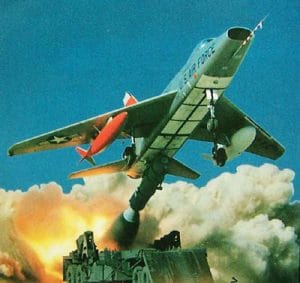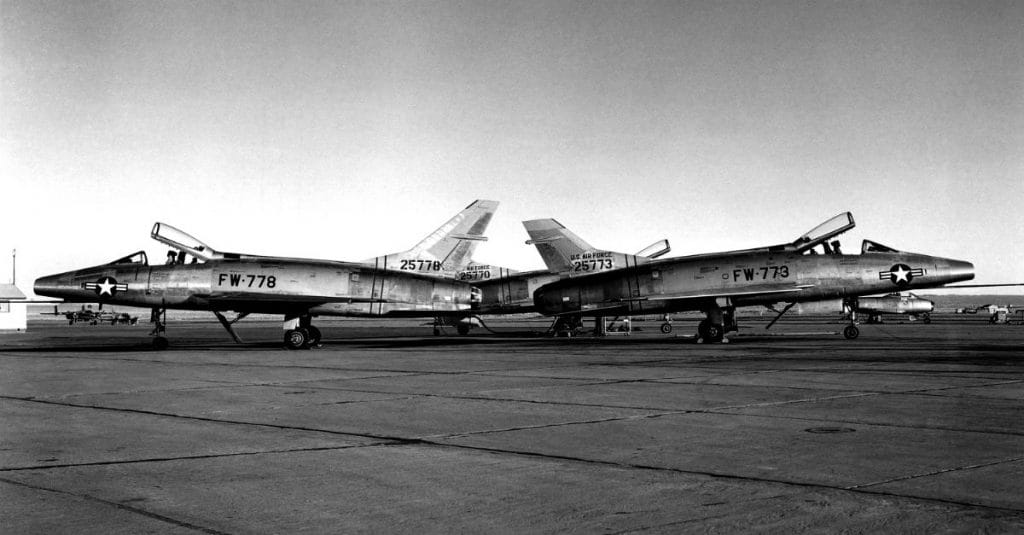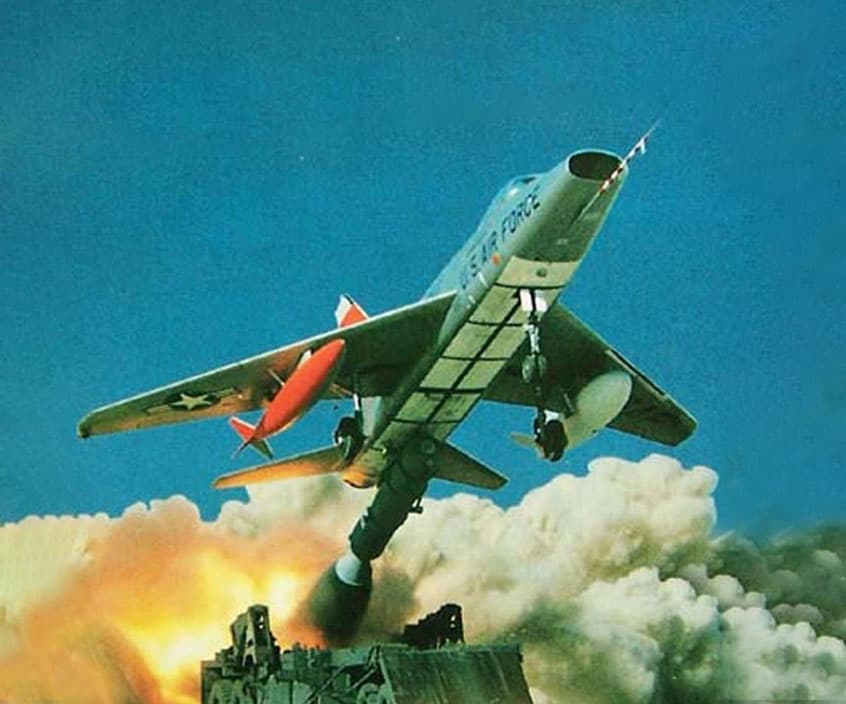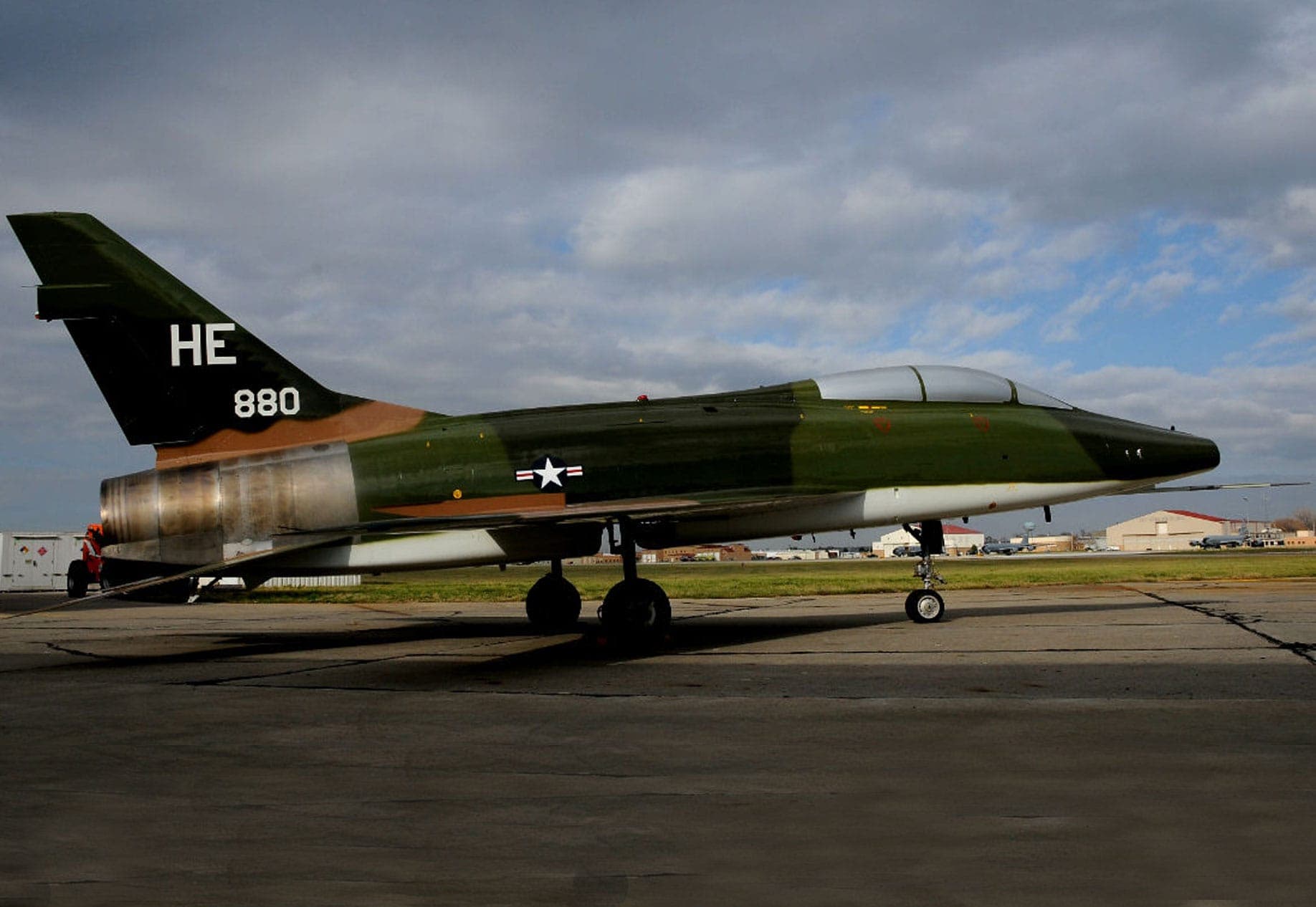

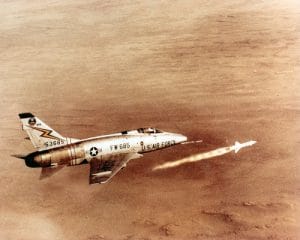
One of the first in many generation of American fighter-bomber jets, the North American F-100 Super Sabre was a single engine aircraft extensively used from 1954 to 1971 by the United States Air Force. The Super Sabre was the first American fighter jet to reach and exceed subsonic speeds, eventually reaching supersonic speeds by its last iteration.
Multirole Platform:
In combat operations, it could serve as either fighter escort or bomber. Notable roles during conflict periods also include forward air control (FAC) and striking extremely dangerous enemy anti-aircraft defenses. It was retired from active duty in the United States Air Force in 1971 after a record career of no losses to enemy fighter aircraft.
 The very name, F-100, gave rise to its most common moniker as the “Hun” but it quickly became apparent that this aircraft closely resembled it. Fast, dangerous, and unrivaled in the skies, the F-100 Super Sabre was utterly efficient in close air-to-air combat. Equipped with 20mm cannons and heat-seeking sidewinders, the Super Sabre was designed to close with its contemporary MiG counterparts and maneuver its way to victory.
Combat Service:
Over the course of the entire Vietnam War, the F-100 would never see a single loss due to air-to-air combat. Unfortunately, no aircraft during the Vietnam war would prove too stalwart against anti-aircraft ground fire. By the end of the F-100 Super Sabre’s role in Vietnam, 186 aircraft were lost almost exclusively to surface-to-air anti-aircraft fire. The only known air-to-air conflict arose towards the end of its tour in Vietnam. Two F-100s were escorting two F-105 Thunderchiefs when they encountered four North Vietnamese MiG-17s. The Thunderchiefs were assigned to the bombing run and the Super Sabres to escort. While accounts from a MiG-17 pilot after the war confirmed that three of his mates were shot down, the US Air Force never officially credited the F-100 Super Saber pilots with an air victory.