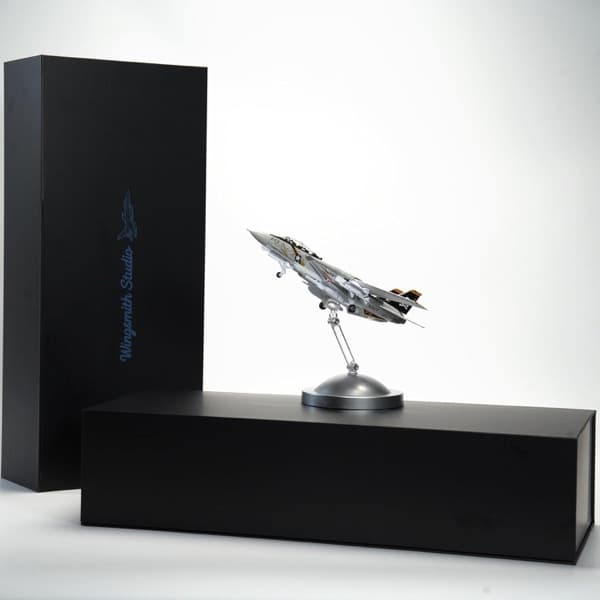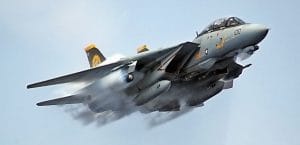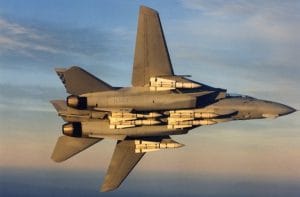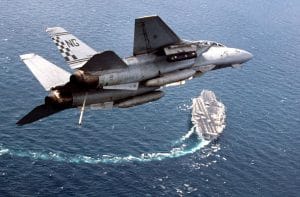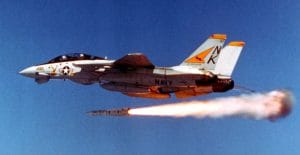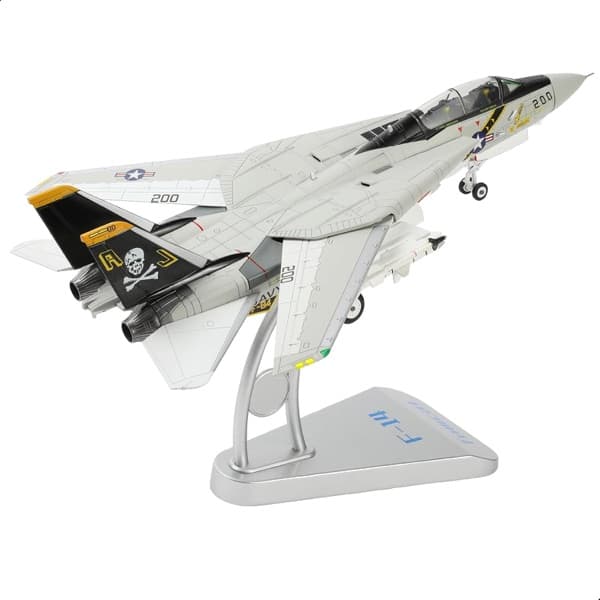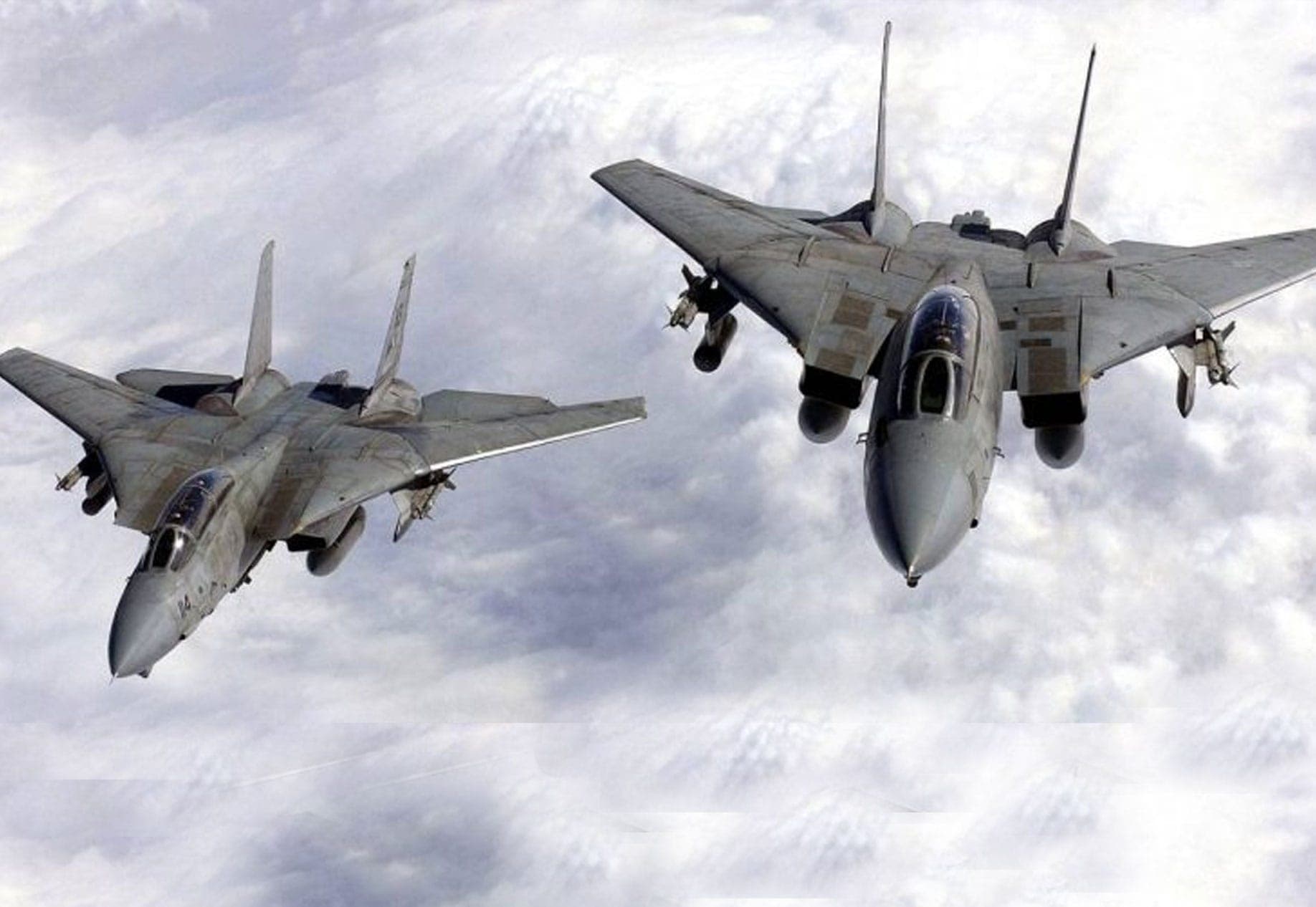

The F-14 Tomcat was produced by Northrup Grumman to be the United States Navy’s premier Fleet Air Defense (FAD). It was a two-seat, twin-engine fighter aircraft capable of long distance interception. One of its unique design features was a variable-swept wing which changed its aerodynamic profile. The F-14 Tomcat was also an ideal choice for extremely short take-offs and landings, making it possible to be deployed on board aircraft carriers. Since the F-14 Tomcat’s first deployment aboard the USS Enterprise in 1974, this fighter aircraft served the Navy until 2006. It was formally replaced by the F/A-18C Hornet and the F/A-18E/F Super Hornet.
Maneuverability:
Unique in its design in multiple ways, the aircraft handled amazingly well according to military avionics experts. The pilot, who sat in the front, had a very comprehensive view. A Radar Intercept Operator (RIO) sat in the rear. The RIO did not have duplicate capabilities such as a joystick, so he was very much dependent on the pilot to succeed. For loitering and landing, the variably swept wings maintain a 20º extension but extended out to 68º when the aircraft approached subsonic speeds. For stowage purposes on the aircraft carrier deck, the wings could be retracted up to 75º.

Avionics:
For the majority of its career, the F-14 did not have latent nightvision capability. Night vision goggles were issued to the pilot and radar and other technologies enabled night time operation, but the aircraft itself was not initially equipped with night vision capabilities. At a much later point in the F-14’s career, 82 US Navy F-14Bs were upgraded with a Sparrow Hawk Heads Up Display (HUD) and FV-3000 modular mission display system. This gave the F-14 a much greater degree of autonomy.