Michael Trent covers military aircraft, weapons systems, and defense technology with an emphasis on cost, maintenance, and real-world performance. He focuses less on specifications and more on how systems hold up once they are deployed, maintained, and operated at scale.
The F-15 Eagle and F-35 Lightning II represent two distinct eras of American air power - yet both remain in active service, often stationed on the same bases and flown by the same air forces. This has led to endless debate about which is "better," but that question misses the point entirely. These aircraft were designed for different threats, different doctrines, and different assumptions about how air combat works.
The F-15 emerged from the Vietnam War's hard lessons, where American fighters struggled against more maneuverable opponents. The result was an aircraft built for one purpose: unquestioned air superiority through speed, power, and overwhelming kinetic performance. The F-35, by contrast, was born in an era where radar and missile technology had fundamentally changed the nature of air combat. Its design prioritizes information, survivability, and the ability to operate where legacy aircraft cannot.
This article provides a complete, no-nonsense comparison of the F-15 and F-35 - not just specifications, but what those differences mean for real-world combat effectiveness. We examine design philosophy, mission suitability, survivability, and the strategic logic behind operating both aircraft simultaneously.
At a Glance: Quick Verdict
F-15 Advantages
Speed & raw performance
Payload capacity
Proven combat record
Lower operating costs
Mature logistics chain
F-35 Advantages
Stealth & survivability
Sensor fusion
Situational awareness
Networked warfare capability
First-day-of-war survivability
The F-15 dominates when speed, payload, and proven reliability matter most.
The F-35 excels when survivability, information dominance, and contested access are paramount.
Design Philosophy: Two Different Eras of Air Combat
The F-15 Philosophy: Kinetic Dominance
The F-15 Eagle was conceived in the late 1960s as America's response to the emerging Soviet MiG-25 threat and the frustrating air combat experience over Vietnam. American pilots had struggled with aircraft optimized for nuclear delivery rather than dogfighting, and the F-15 was designed to correct that mistake decisively.
The design philosophy was uncompromising: not a pound for air-to-ground. Every aspect of the original F-15 prioritized air superiority. Twin engines provided unprecedented thrust-to-weight ratio, enabling vertical climbs and sustained high-speed maneuvering. A large wing gave excellent turning performance at multiple speed regimes. The aircraft could fly faster than Mach 2.5 and reach altitudes where few threats could follow.
Situational awareness in the F-15 comes primarily from the pilot. The aircraft provides excellent visibility, a powerful radar, and the performance to capitalize on any advantage. The assumption is that a skilled pilot, given superior performance, will outfight any opponent. This pilot-centric approach has proven remarkably successful - the F-15 maintains an undefeated air-to-air combat record spanning decades.
Over time, the F-15 evolved. The F-15E Strike Eagle added formidable ground attack capability. Modern variants like the F-15EX incorporate advanced avionics, expanded weapons capacity, and updated sensors while retaining the platform's fundamental performance advantages. The Eagle has proven remarkably adaptable, remaining in production more than 50 years after its first flight. (See also: F-15 vs Su-27).
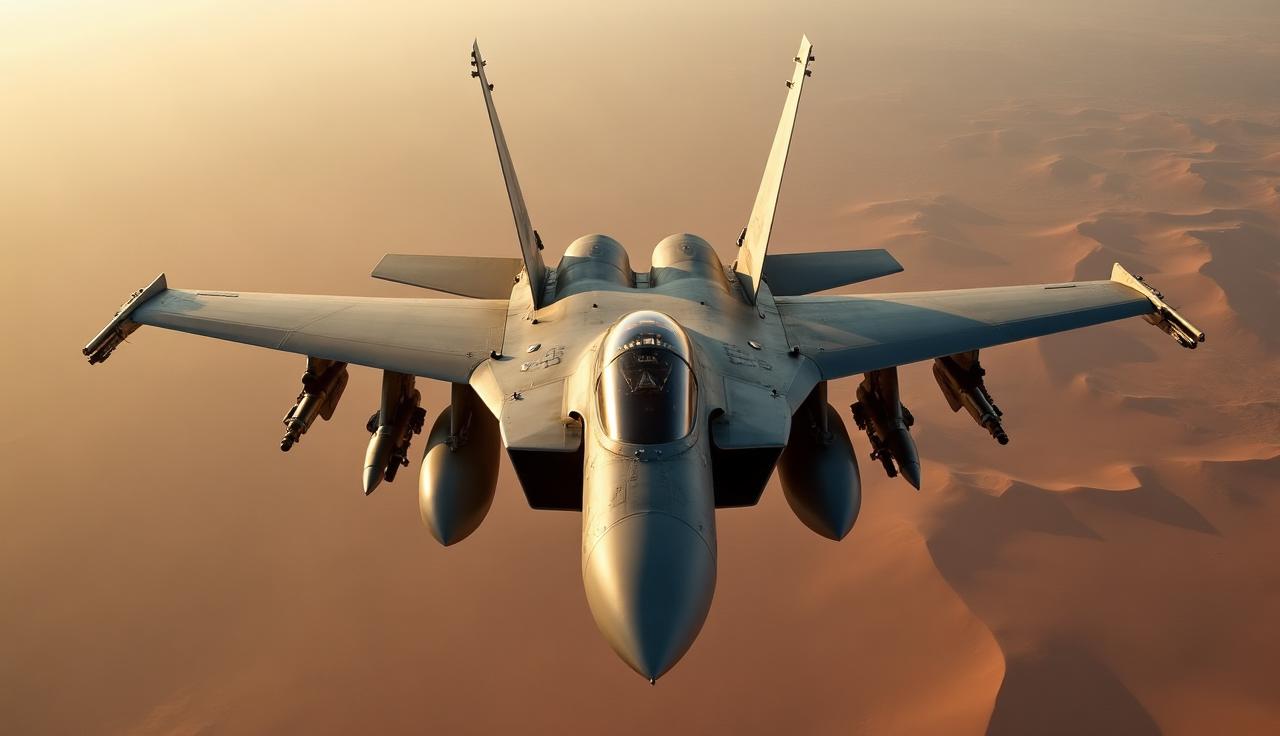
A U.S. Air Force F-15E Strike Eagle departs after being refueled over the U.S. Central Command area of responsibility (U.S. Air Force photo)
The F-35 Philosophy: Information Dominance
The F-35 Lightning II represents a fundamentally different approach to air combat. Rather than building the fastest or most maneuverable aircraft, Lockheed Martin designed a platform optimized for seeing first, understanding first, and acting first.
The F-35's core advantage is sensor fusion. The aircraft integrates data from its radar, electronic warfare systems, infrared sensors, and datalinks into a unified picture presented to the pilot. Where an F-15 pilot must mentally correlate information from multiple displays, the F-35 pilot sees a single, synthesized view of the battlespace. Threats are identified, tracked, and prioritized automatically.
Stealth is central to the F-35's survivability concept, but it's important to understand what stealth actually provides. The F-35 is not invisible to radar - no aircraft is. Instead, its reduced radar signature means enemy systems detect it at shorter ranges, giving the F-35 pilot more time to act or avoid engagement entirely. This detection advantage compounds with superior sensors to create asymmetric situational awareness.
The F-35 was also designed for networked warfare from the ground up. It shares targeting data with other aircraft, ships, and ground units in real-time, functioning as both a sensor platform and a shooter. In this doctrine, individual aircraft performance matters less than the collective capability of the networked force. (Related: F-22 Raptor vs F-35 Lightning II).
This approach reflects changed assumptions about modern combat. Against adversaries with advanced surface-to-air missiles and integrated air defense networks, raw speed and maneuverability provide limited protection. Survivability increasingly depends on being difficult to detect and target in the first place. (See also: Stealth vs speed in modern air combat).
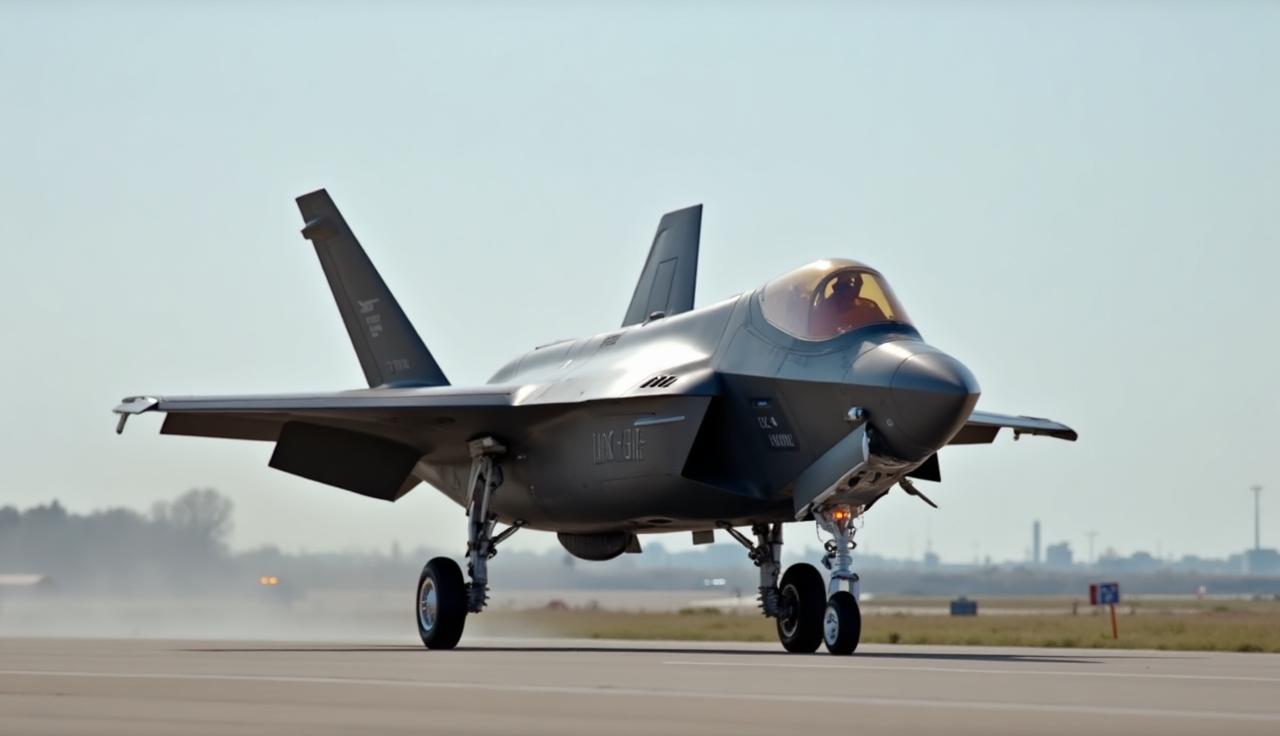
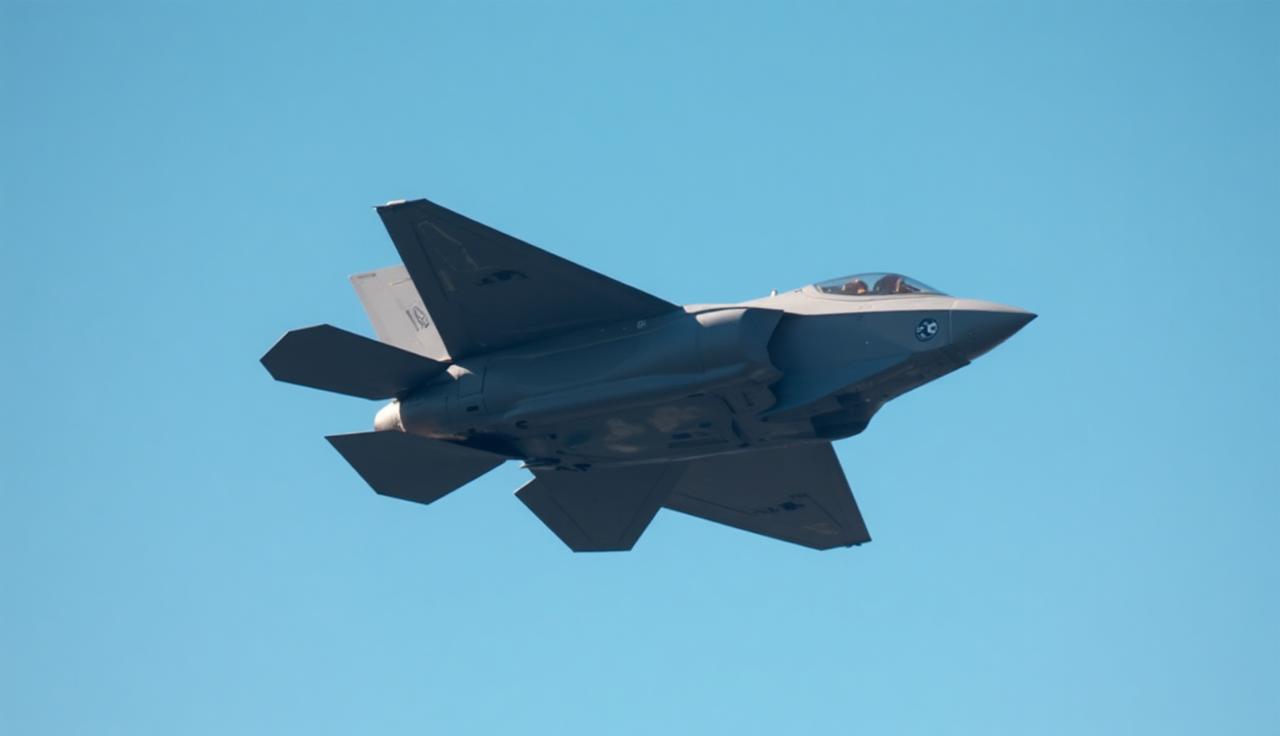
The F-35A Lightning II on the flight line. The aircraft's angular design reflects its low-observable stealth characteristics (U.S. Air Force photo)
Firepower and Air Combat Capability
Both aircraft carry formidable weaponry, but they approach air combat differently.
The F-15 can carry an enormous external weapons load - up to 23,000 pounds across multiple hardpoints. For air-to-air missions, this typically includes medium-range radar-guided missiles and short-range infrared missiles, supplemented by an internal cannon. The F-15's large payload capacity means it can sustain longer engagements or engage more targets before returning to base.
The F-35 carries weapons internally for stealth missions, limiting capacity to four air-to-air missiles in its primary configuration. However, when stealth is not required, external pylons expand capacity significantly. The F-35's weapons are integrated with its sensor suite, enabling launch-and-leave engagements at extended ranges.
Where these aircraft truly differ is in targeting and engagement philosophy.
The F-15 relies on its powerful APG-63/82 radar and pilot skill to detect, track, and engage targets. Success depends heavily on radar performance and pilot workload management.
The F-35's sensor fusion automatically correlates radar, infrared, and electronic intelligence to identify targets and recommend engagement solutions. The pilot manages the tactical picture rather than individual sensor systems.
In beyond-visual-range (BVR) combat, the F-35's advantages in detection and targeting become pronounced. The aircraft can identify and engage threats before they know it's present. In within-visual-range (WVR) combat, the F-15's superior thrust-to-weight ratio and speed provide kinematic advantages, though modern helmet-mounted displays and high-off-boresight missiles have reduced the importance of traditional maneuvering.
Modern air combat increasingly favors the aircraft that detects and engages first - not necessarily the one that flies fastest.
Stealth, Survivability, and Sensors
This is where the philosophical divide becomes most apparent.
The F-15 Approach: Performance as Protection
The F-15 has no stealth characteristics. Its large radar cross section makes it easily detectable by modern radar systems. Survivability comes from speed (outrunning threats), altitude (operating above threat envelopes), electronic countermeasures, and overwhelming firepower to destroy threats before they can engage.
This approach works well in permissive environments or when supported by dedicated electronic warfare aircraft and suppression of enemy air defenses. Against peer adversaries with advanced integrated air defense systems, the F-15 requires significant support to operate effectively.
The F-35 Approach: Signature Management
The F-35's airframe is designed from the ground up to minimize radar reflection. Weapons are carried internally, edges are aligned to redirect radar energy, and special coatings absorb radar waves. The result is a dramatically reduced detection range against threat radars.
This reduced signature changes engagement timelines fundamentally. Where an F-15 might be detected at long range and tracked continuously, the F-35 may remain undetected until much closer - or pass entirely unnoticed. This creates asymmetric engagement opportunities and complicates enemy targeting solutions.
Sensor Comparison
The F-35's sensor suite represents a generational leap:
Distributed Aperture System (DAS): Six infrared cameras providing 360-degree awareness
Electro-Optical Targeting System (EOTS): Long-range detection and targeting
Electronic Warfare Suite: Integrated jamming and threat detection
The F-15's sensors, while continually upgraded, require the pilot to manage multiple systems and mentally integrate information. The F-35 fuses all sensor data automatically, reducing workload and improving reaction time.
The F-35 helmet-mounted display system integrates all sensor data into a unified picture, allowing pilots to "see through" the aircraft (U.S. Air Force photo)
Detection Timeline: Stealth Impact (Conceptual)
Detection Timeline: Stealth Impact (Conceptual)
Time →
F-15 Detected (Long Detection Window)
F-15
F-35 Detected
F-35
Enemy radar
activation
Reduced
detection
Weapon
employment
F-35 engagement advantage window
Conceptual illustration. Actual detection ranges vary by radar type, altitude, aspect, and conditions.
Not to scale.
Conceptual illustration of how reduced radar signature compresses enemy detection and reaction time.
Speed, Range, and Payload Reality
Raw specifications favor the F-15 in traditional performance metrics:
Metric
F-15
F-35
Top Speed
Mach 2.5+
Mach 1.6
Service Ceiling
65,000+ feet
50,000 feet
External Payload
~23,000 lbs
~18,000 lbs (with external stores)
Internal Fuel
~13,000 lbs
~18,500 lbs
However, these numbers require context.
The F-15's speed advantage is most relevant in specific scenarios: intercepting high-speed threats, rapid repositioning, or disengaging from unfavorable situations. In sustained combat operations, fighters rarely operate at maximum speed due to fuel consumption and weapons employment considerations.
The F-35's lower top speed reflects design tradeoffs for stealth - radar-reflective afterburner sections and external weapon pylons were sacrificed for signature reduction. The aircraft's large internal fuel capacity partially compensates, providing excellent range and endurance for its size class.
Payload flexibility is where the F-15 genuinely excels. The aircraft can carry diverse weapon combinations for multiple mission profiles. The F-15EX, in particular, can deliver 24 air-to-air missiles in a single sortie - more than any other U.S. fighter. This makes the F-15 valuable for homeland defense and scenarios where high sortie generation is more important than penetrating enemy defenses.
The F-35's internal payload limitation exists specifically to preserve stealth. When operating in permissive environments, external pylons expand capacity significantly, though at the cost of increased radar signature. Mission planners must balance stealth requirements against payload needs.
Payload vs Survivability Tradeoff (Conceptual)
Payload vs Survivability Tradeoff
Payload Capacity →
Survivability in Contested Environment →
F-35
(stealth)
F-35
(external)
F-15
4 internal missiles
22+ missiles possible
Conceptual representation. Survivability depends on threat environment and support assets.
Conceptual diagram showing how payload configuration affects detectability and survivability.
Crew, Training, and Human Factors
Both aircraft are single-seat fighters (the F-15E is two-seat), placing significant demands on their pilots. However, the nature of those demands differs substantially.
F-15 Pilot Workload
Flying the F-15 effectively requires mastering multiple systems and mentally integrating their outputs. The pilot must manage radar modes, interpret raw sensor data, maintain situational awareness through radio communications and visual scanning, and make tactical decisions - all while flying the aircraft.
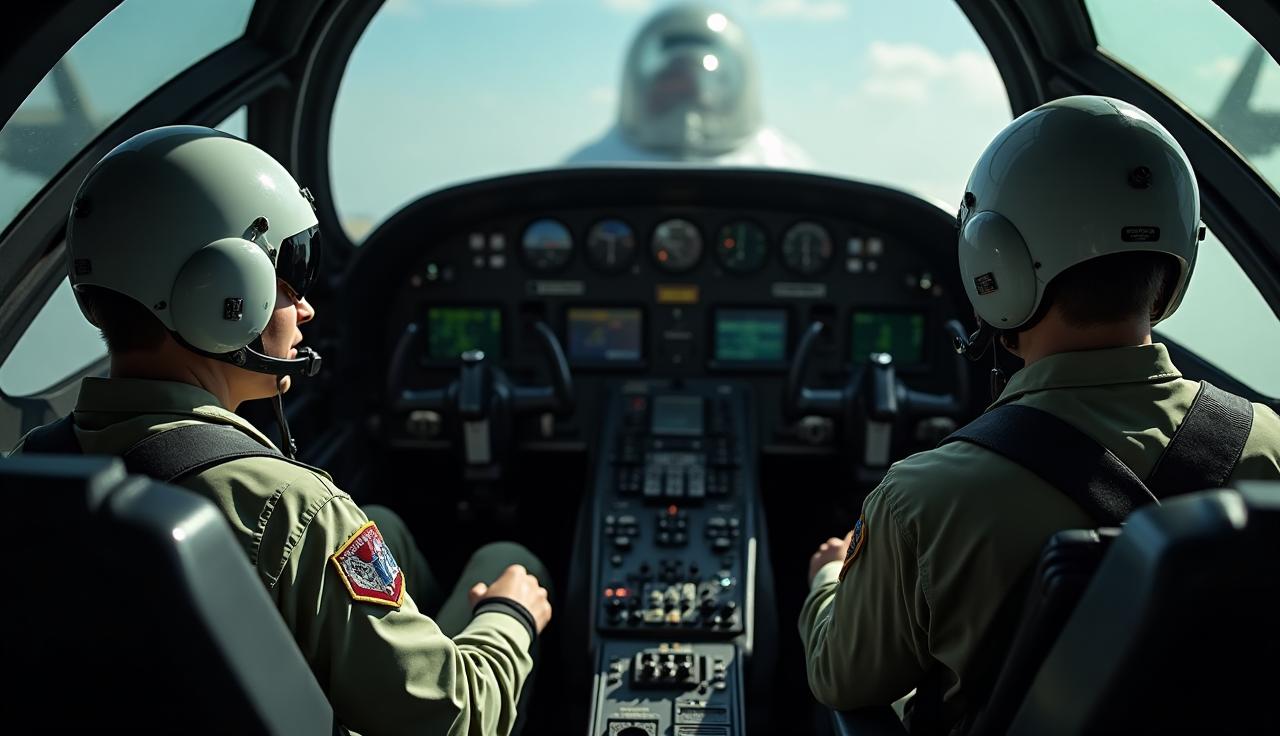
An F-15E Strike Eagle crew member prepares for a mission. The two-seat Strike Eagle variant distributes workload between pilot and weapons systems officer (U.S. Air Force photo)
This high workload demands extensive training and experience. F-15 pilots often require years to reach full combat proficiency. The aircraft rewards skill and punishes mistakes, but a well-trained pilot can extract maximum performance from its capable systems.
F-35 Pilot Workload
The F-35 was designed specifically to reduce pilot workload through automation and sensor fusion. Rather than managing individual systems, the pilot receives a synthesized tactical picture and makes higher-level decisions about engagement priorities and tactics.
This approach changes the nature of training. F-35 pilots must understand how to interpret and act on fused data, manage networked operations, and trust automation while maintaining the judgment to override it when necessary. The learning curve is different but not necessarily shorter.
Fatigue and sustained operations favor the F-35's reduced workload. In extended missions or high-stress combat, cognitive resources are finite. The F-35's automation helps preserve pilot effectiveness over longer durations.
Mission-by-Mission Combat Profile
Understanding which aircraft excels requires examining specific mission profiles.
Air Superiority Patrol
Advantage: Context-dependent
In permissive environments (friendly or neutral airspace), the F-15's superior endurance, payload, and raw performance make it highly effective for air sovereignty and combat air patrol missions. Its ability to carry more missiles means fewer sorties required for continuous coverage.
In contested environments where enemy fighters may have supporting ground-based air defenses, the F-35's stealth and sensor fusion provide survivability advantages that offset its lower payload.
First-Day-of-War Strike
Advantage: F-35
Penetrating integrated air defense systems on the first day of a conflict is the F-35's core design mission. Its low observability allows it to operate in threat envelopes where the F-15 would require extensive support from electronic warfare aircraft, cruise missiles, and suppression assets.
The F-15 can participate in first-day operations but typically in standoff roles or after air defenses have been degraded.
Defensive Counter-Air
Advantage: F-15
Scrambling to intercept incoming threats over friendly territory plays to the F-15's strengths. Its superior climb rate, speed, and payload capacity allow rapid response with multiple engagement opportunities. Stealth is less important when operating within friendly air defense coverage.
Escorting strike packages against well-defended targets favors the F-35, which can provide protection without compromising the package's overall signature. Against lesser threats, the F-15's payload and endurance provide effective escort capability.
Coalition and Networked Operations
Advantage: F-35
The F-35's native datalink architecture and sensor fusion were designed for networked warfare. It can share targeting data, coordinate with multiple platforms, and serve as a sensor node for other shooters. The F-15 can participate in networked operations but was not designed around this concept.
An F-35A Lightning II performs during an airshow demonstration, showcasing its maneuverability (U.S. Air Force photo)
Mission Suitability Matrix
Mission Suitability Matrix
F-15
F-35
Notes
Air Superiority (Permissive)
Speed, payload favor F-15
Air Superiority (Contested)
Stealth, sensors favor F-35
First-Day Strike
Survivability critical
Homeland Defense
Response time, payload matter
Strike Escort (High Threat)
Stealth preserves package
Deep Interdiction
Penetration capability
Networked/Coalition Ops
Native sensor fusion
High-Volume Sortie Ops
Mature logistics chain
Better suited
Capable
Less suited
Suitability varies by specific variant, threat level, and available support.
Mission suitability comparison showing where each aircraft type provides the greatest advantage.
Real-World Operational Use
The F-15's combat record is extensive and unmatched. Since entering service in 1976, F-15s have achieved over 100 air-to-air victories with zero losses in aerial combat. Israeli F-15s demonstrated the aircraft's capabilities in multiple conflicts, while U.S. F-15s dominated Iraqi air forces during Desert Storm.
This combat record establishes the F-15 as one of the most successful fighter designs in history. However, it's important to note that most victories came against opponents with significant training, equipment, or tactical disadvantages. How the F-15 would perform against peer adversaries remains untested.
The F-35's operational history is still developing. The aircraft has seen combat in strike missions over the Middle East and has been deployed by multiple nations. Operators report that its sensor fusion and situational awareness capabilities exceed expectations, fundamentally changing how pilots approach combat.
Export considerations also differ. The F-15 is operated by close U.S. allies including Japan, Saudi Arabia, Israel, Singapore, and others. The F-35's distribution is more restricted due to stealth technology concerns, though it has been exported to numerous NATO allies and Pacific partners.
Both aircraft continue to receive upgrades. The F-15EX brings new production aircraft with advanced avionics to the U.S. Air Force, while continuous F-35 software updates expand capabilities. Neither platform is static.
Cost, Sustainment, and Scale
Cost comparisons are complex and often misleading.
Acquisition cost: The F-35A's unit cost has decreased significantly, now approaching $80 million per aircraft. The F-15EX costs approximately $88-100 million per unit. These figures fluctuate with production rates, contract structures, and included equipment.
Operating cost: The F-35's cost per flight hour historically exceeded the F-15's, though improvements in maintenance processes have narrowed this gap. The F-15's mature logistics chain and simpler maintenance requirements provide advantages in sustained high-tempo operations.
Availability rates: The F-15's decades of operational experience translate to well-understood maintenance procedures and high mission-capable rates. F-35 availability has improved but historically lagged behind mature platforms. This affects force planning and operational flexibility.
Strategic implications: Cost affects force structure. If budgets are fixed, expensive aircraft mean fewer aircraft. The F-15EX's value proposition includes being "good enough" for many missions at potentially lower lifecycle cost, freeing resources for F-35 procurement where stealth is essential.
F-15 vs F-35: Key Comparison Table
Category
F-15
F-35
Why It Matters
Primary Role
Air superiority / multi-role
Multi-role / stealth strike
Design priorities shape capability tradeoffs
Stealth
None
Low observable
Determines where aircraft can operate
Sensors
Powerful but pilot-managed
Fused, automated presentation
Affects pilot workload and decision speed
Speed
Mach 2.5+
Mach 1.6
Less decisive than often assumed
Payload Flexibility
Excellent (22+ missiles possible)
Limited internal, expandable external
Affects sortie requirements and mission flexibility
Survivability Philosophy
Performance and countermeasures
Signature reduction and awareness
Different approaches to the same problem
Sustainment Burden
Mature, well-understood
Improving but more complex
Affects operational tempo and cost
Doctrine Fit
Kinetic dominance
Information dominance
Reflects different theories of victory
F-15 vs F-35: Frequently Asked Questions
These are the most common questions people search when comparing the F-15 and the F-35.
Can an F-15 defeat an F-35 in a dogfight?
In a close-range visual fight, the F-15's superior thrust-to-weight ratio and speed give it advantages. However, modern air combat rarely reaches this phase - the F-35's sensors typically detect and engage threats before visual range.
Is stealth overrated in modern air combat?
Stealth is not invisibility, but it significantly reduces detection range and complicates enemy targeting. This buys time and positioning advantages. Whether it's "worth it" depends on the threat environment and mission.
Why does the U.S. keep upgrading the F-15 if the F-35 is newer?
The F-15EX offers high payload capacity, proven reliability, and lower operating costs for specific missions. It complements rather than competes with the F-35, handling roles where stealth is less critical.
Which is better for air superiority missions?
The F-15 was designed specifically for air superiority and excels in raw performance. The F-35 approaches air superiority differently - through information dominance and first-shot advantage rather than speed.
Which is better in a near-peer conflict?
Against advanced adversaries with modern radar and missiles, the F-35's stealth and sensor fusion provide survivability advantages. The F-15 remains effective but requires more support in contested environments.
Does pilot skill matter more than the aircraft?
Pilot skill remains critical, but the F-35's systems are designed to reduce workload and present a clearer tactical picture. A well-trained pilot in either aircraft will outperform a poorly trained one in the other.
Is the F-35 too expensive?
The F-35's acquisition cost has decreased significantly since early production. Lifecycle costs remain higher than legacy aircraft, but must be weighed against capability gains and survivability improvements.
Can the F-15 carry more weapons than the F-35?
Yes. The F-15 can carry significantly more external ordnance. However, external weapons increase radar signature. The F-35 balances internal payload for stealth with external capacity when stealth is not required.
Which aircraft is faster?
The F-15 is faster, with a higher top speed and better sustained supersonic performance. However, speed is less decisive in modern combat than detection, engagement range, and survivability.
Will the F-35 replace all F-15s?
Not entirely. The U.S. Air Force plans to operate both aircraft, with the F-15EX filling high-capacity strike and homeland defense roles while the F-35 handles contested environment operations.
Which is easier to maintain?
The F-15's mature logistics chain and simpler systems generally make field maintenance easier. The F-35 requires more specialized support, though availability rates have improved significantly.
Which would win in a real war?
This depends entirely on the scenario, threat environment, mission objectives, and supporting assets. Both aircraft are designed to work within larger systems, not fight alone.
Final Verdict: Not a Simple Replacement Story
The F-15 and F-35 are not simply old versus new. They represent different answers to different questions about air combat.
F-15 Eagle
Excels in raw performance, payload capacity, and proven reliability. Ideal for air sovereignty, homeland defense, and high-volume operations where stealth is not essential. Five decades of combat success validate its fundamental design.
F-35 Lightning II
Excels in survivability, situational awareness, and networked operations. Essential for contested environments where legacy aircraft cannot survive. Represents the future of information-centric warfare.
The U.S. Air Force's decision to operate both aircraft is not indecision - it's recognition that different missions demand different capabilities. The F-15EX and F-35 are complementary, not competitive.
Understanding why both aircraft exist is essential to understanding modern air power itself.
Download: F-15 vs F-35 - One-Page Mission Comparison (PDF)
Want a one-page breakdown you can save, share, or print? Download the condensed reference sheet below.