Daniel Mercer writes about military history with a focus on the 20th century, including World War II, the Cold War, and Vietnam. His work looks at how decisions made decades ago still influence doctrine, planning, and assumptions today.
In the summer of 2002, the United States military conducted what was then the largest and most expensive war game in its history. Millennium Challenge 2002, as it was officially designated, cost approximately $250 million and involved 13,500 participants across multiple locations. The exercise was designed to validate revolutionary concepts about network-centric warfare and demonstrate that American technological superiority would prevail against any conceivable adversary. What happened instead sent shockwaves through the Pentagon's corridors and raised questions that defense planners are still grappling with more than two decades later.
The story of Millennium Challenge 2002 is not simply a tale of military embarrassment or institutional failure. It is a story about the tension between assumption and reality, between what institutions want to believe and what rigorous testing can reveal. It illuminates how war games function, what they can and cannot prove, and why their most valuable lessons often come wrapped in uncomfortable outcomes. The controversy that erupted after the exercise, along with the quieter debates that continued for years afterward, reveals as much about how militaries think as it does about the specific tactics employed.
Understanding what actually occurred during Millennium Challenge 2002 requires moving beyond the simplified narratives that have circulated for years. The exercise has become something of a legend in military circles, often invoked to prove various points about American overconfidence, asymmetric warfare, or the limitations of technology. But the real lessons are more nuanced and more relevant to contemporary military challenges than the popular accounts suggest.
This article examines the war game in detail: why it was created, how it was designed, what the Red Team (the opposing force) actually did, how the Pentagon responded, and what the exercise ultimately revealed about American military thinking at a pivotal moment in history. The goal is not to render judgment but to understand what happened and why it mattered, both then and now. As our analysis of how military exercises actually work demonstrates, exercises expose thinking more than they predict outcomes. Millennium Challenge 2002 exposed a great deal.
The story begins not in 2002 but in the years immediately following the Cold War, when American military planners faced a fundamental question: having built the most powerful conventional military in human history to deter and defeat the Soviet Union, what should that force become in a world without a peer competitor? The answer that emerged would shape not only Millennium Challenge 2002 but the trajectory of American military development for decades to come.
Why the War Game Was Created
The collapse of the Soviet Union left the American military establishment without its defining opponent and, consequently, without the organizing principle that had guided force structure, doctrine, and procurement for forty years. The 1990s became a period of intense institutional introspection as the services attempted to define their purpose in a unipolar world. The answers that emerged varied considerably, but one concept gained particular traction: transformation.
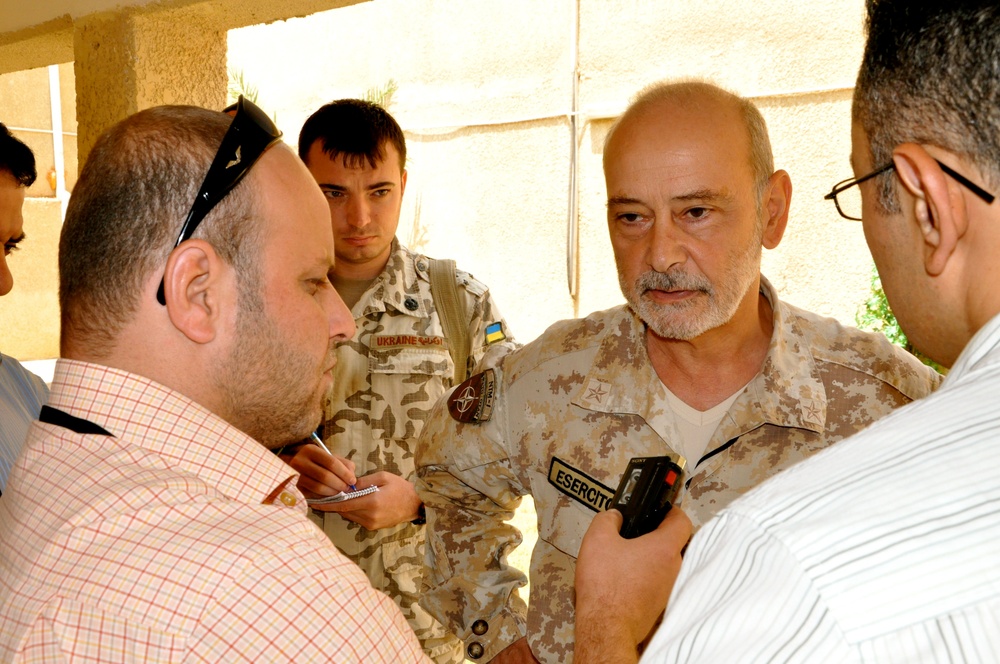
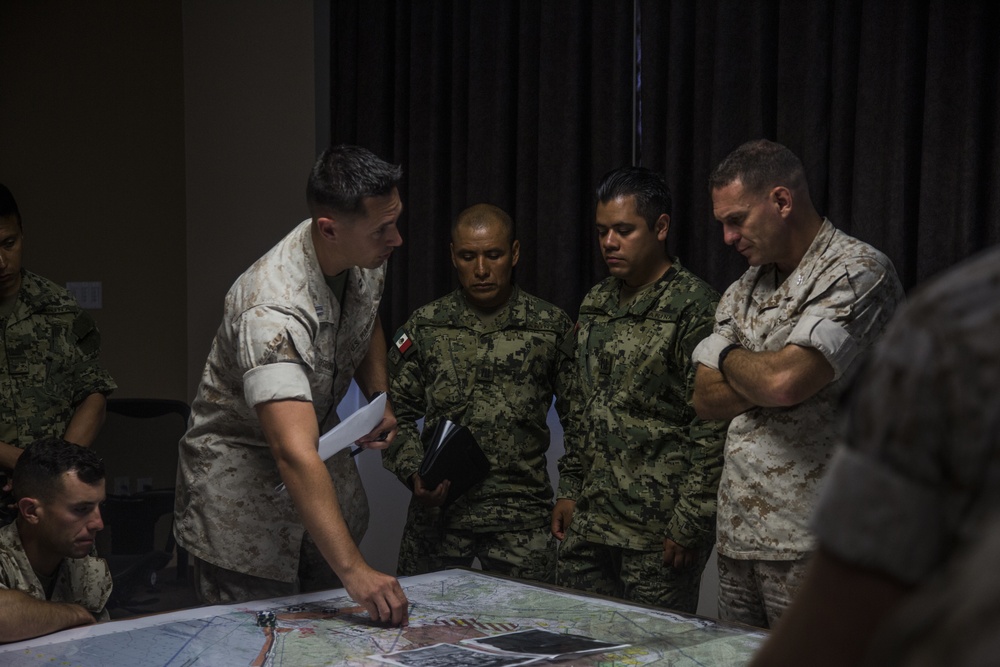
Military officers from multiple nations during a coordination meeting (NATO photo)
Transformation, as understood in the late 1990s and early 2000s, promised that information technology would revolutionize warfare as fundamentally as the machine gun, the tank, and the aircraft had in previous eras. The theory held that networks connecting sensors, shooters, and commanders would create unprecedented situational awareness, enabling American forces to find and destroy enemies faster than those enemies could respond. Speed, precision, and information dominance would substitute for mass. Smaller, lighter, more deployable forces could achieve effects previously requiring heavy divisions because they would know more, decide faster, and strike more accurately.
These ideas had powerful advocates within the Department of Defense and in the new Bush administration. Secretary of Defense Donald Rumsfeld arrived in 2001 determined to transform the military away from Cold War structures toward smaller, more agile forces optimized for rapid deployment and decisive operations. The services, particularly the Army, faced pressure to demonstrate that transformation concepts actually worked, that network-centric warfare was not simply theory but operational reality.
Millennium Challenge 2002 emerged from this institutional context. The Joint Forces Command (JFCOM), the organization responsible for developing joint doctrine and testing new concepts, designed the exercise to validate transformation assumptions against a realistic scenario. The notional setting was the Persian Gulf in 2007, with an adversary clearly modeled on Iran, though officially designated only as a hostile regional power. The exercise would demonstrate that American forces, employing network-centric capabilities, could rapidly defeat this adversary despite its geographic advantages and asymmetric capabilities.
The scale was ambitious. The exercise combined live field activities (actual ships, aircraft, and ground units conducting operations) with computer simulations that modeled aspects impossible to replicate physically. Participants included personnel from all services, distributed across multiple training areas and command centers. The cost reflected both the complexity and the stakes: Millennium Challenge was intended not merely as a training event but as proof of concept for an entire theory of warfare.
The timing was significant. The exercise was conducted in July and August 2002, as the Bush administration debated whether to invade Iraq. The same transformation concepts that Millennium Challenge was designed to validate would soon be tested in actual combat. The exercise's results would either bolster confidence in the planned approach or raise uncomfortable questions about its assumptions. As subsequent events demonstrated, understanding the relationship between military readiness and actual capability requires examining not just what forces possess but how they think.
How the Game Was Designed
War games, like all models, are shaped by the assumptions of their designers. The structure of Millennium Challenge 2002 reflected what its planners believed about modern warfare, beliefs that would be tested, and in some cases challenged, by how the exercise actually unfolded. Understanding the game's design illuminates both what it was intended to prove and the constraints that would later become controversial.
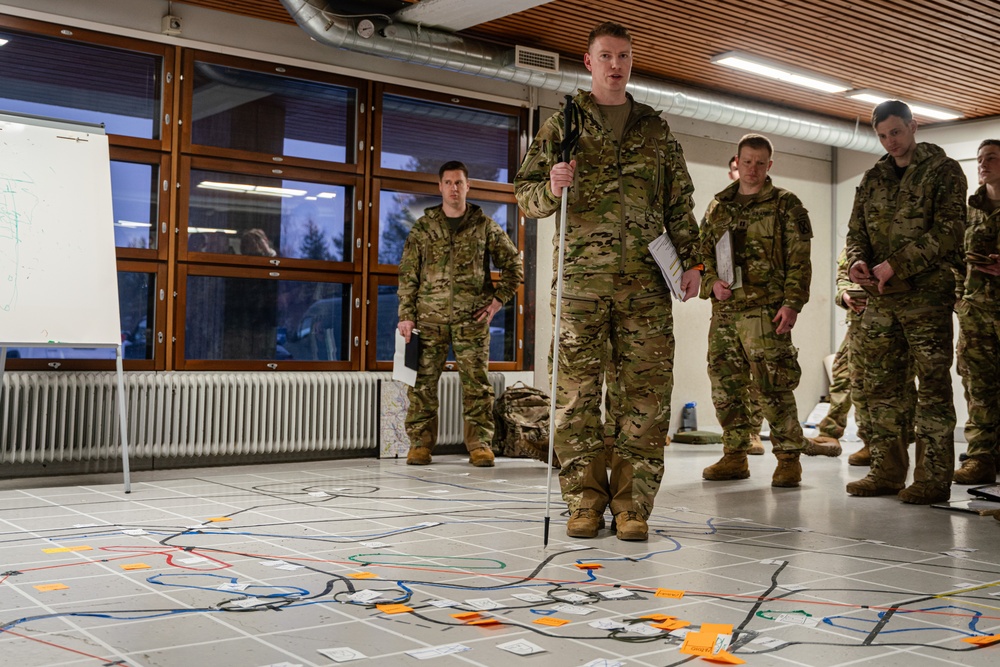
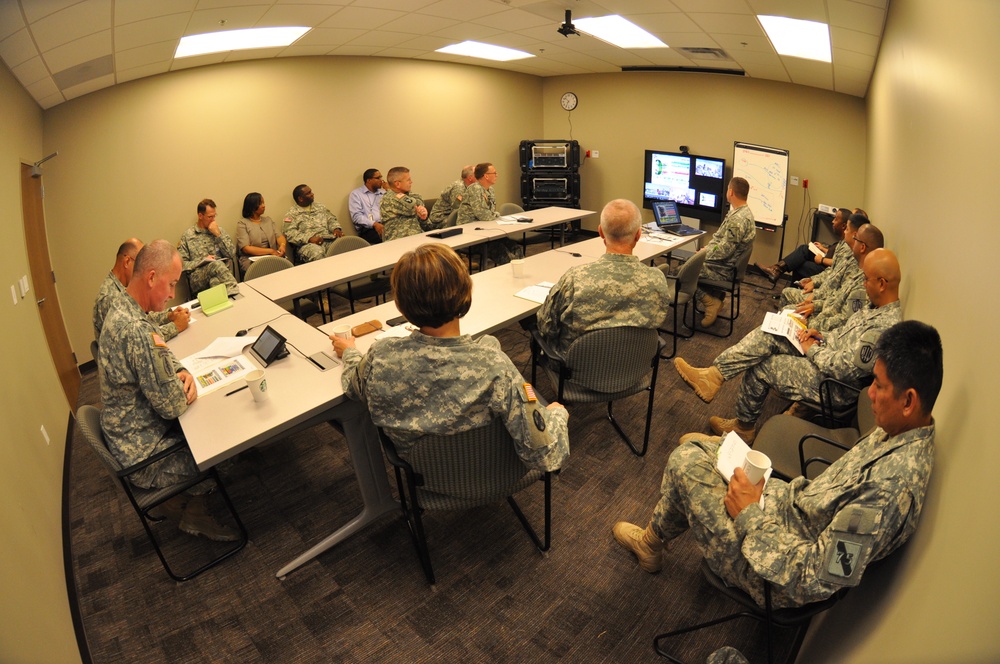
U.S. Army soldiers during a concept briefing rehearsal for a multinational exercise (U.S. Army photo)
The exercise divided participants into three cells. The Blue Team represented American and coalition forces employing the latest transformation concepts. They controlled a carrier battle group, amphibious forces, and substantial air assets, all networked together through cutting-edge command and control systems. The Blue Team's objective was to establish dominance in the exercise area and defeat the adversary's military capabilities while minimizing American casualties.
The Red Team represented the adversary: a regional power with significant conventional military forces, asymmetric capabilities, and geographic advantages. The Red Team controlled land-based anti-ship missiles, small boat swarms, submarines, and ground forces positioned to resist an American intervention. Their objective was to deny the Blue Team access to the region and inflict unacceptable costs on any attempted intervention.
The White Cell served as the exercise control group, managing the simulation, adjudicating combat outcomes, and ensuring the exercise achieved its objectives. The White Cell's role was theoretically neutral, determining what would happen when Blue and Red forces interacted based on established models and professional judgment. In practice, this role would prove more complicated than anticipated.
Exercise Cell
Role
Forces/Capabilities
Objectives
Blue Team
U.S./Coalition Forces
Carrier group, amphibious forces, air assets, network-centric C4ISR
Establish regional dominance, defeat adversary military
Red Team
Regional Adversary
Anti-ship missiles, small boats, submarines, ground forces
Deny access, inflict unacceptable costs
White Cell
Exercise Control
Simulation management, combat adjudication, scenario control
Manage exercise, determine outcomes, achieve training objectives
The exercise design incorporated numerous assumptions about how the conflict would unfold. The Blue Team would achieve information dominance early, using networked sensors to locate and track Red forces. Blue would then use precision strikes to systematically destroy Red's anti-access capabilities, including missiles, radars, and command centers, before committing ground forces. The pace would be rapid, the casualties minimal, and the outcome decisive. This was transformation theory in action.
Several features of the design would prove significant. The exercise assumed Blue would have a period of relatively uncontested buildup before major combat operations began. It assumed Blue's network-centric capabilities would function as advertised, providing a coherent picture of the battlespace. And it assumed Red would fight in ways that allowed Blue to exploit its technological advantages by engaging in conventional military operations where precision weapons could find and destroy targets.
Simulations are never neutral. The models that determine combat outcomes (which missile sinks which ship, which aircraft survives which engagement) embed assumptions about weapon performance, crew proficiency, environmental conditions, and countless other factors. These models had been validated against historical data and professional judgment, but they inevitably reflected the perspectives of their developers. The question was whether those perspectives would prove accurate when tested against an adversary determined to fight differently.
The Red Team's Approach
Lieutenant General Paul Van Riper, a retired Marine Corps officer with extensive combat experience in Vietnam and command experience throughout his career, led the Red Team. Van Riper was known for aggressive, unconventional thinking, qualities that would prove consequential for how Millennium Challenge unfolded. His approach to the exercise reflected not just tactical creativity but a fundamentally different theory of how a weaker power might fight a stronger one.
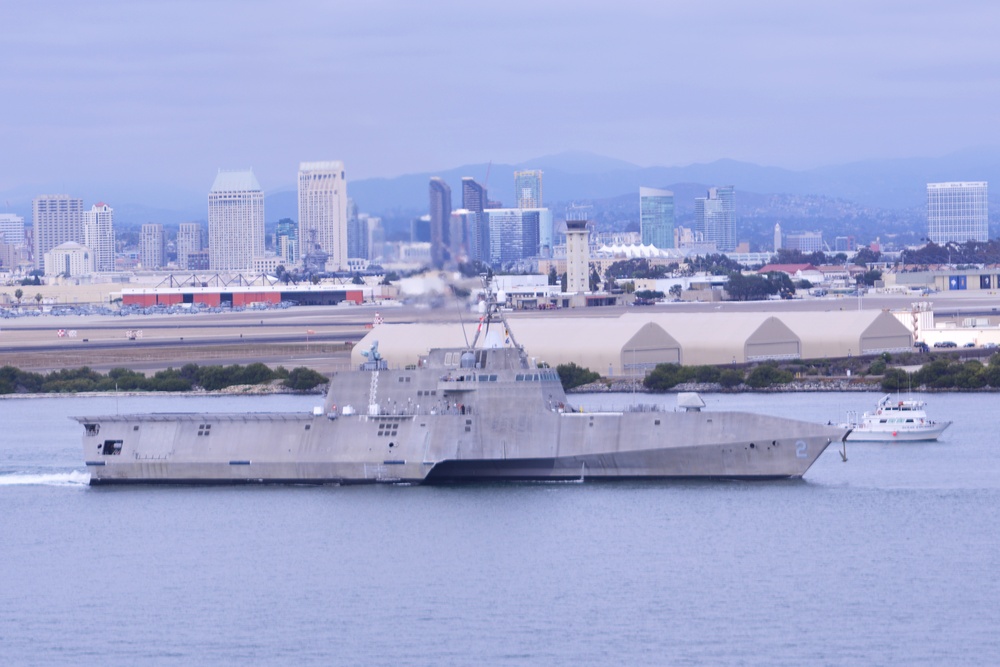
A U.S. Navy Littoral Combat Ship underway near San Diego (U.S. Navy photo)
Van Riper recognized that fighting on Blue Team's terms meant losing. American forces possessed overwhelming advantages in networked sensors, precision weapons, and information systems. Any adversary that engaged in the kind of conventional, stand-off conflict that Blue's capabilities were optimized for would inevitably be detected, tracked, and destroyed. The key insight was that Red did not have to fight that war.
Instead of relying on electronic communications that Blue's signals intelligence could intercept, Van Riper used motorcycle couriers and light signals to coordinate his forces. Instead of activating radars that Blue could detect and target, he relied on visual observers and pre-positioned spotters. Instead of massing his forces where Blue's sensors could find them, he dispersed them among civilian infrastructure where they would be difficult to distinguish from legitimate traffic. This was not high technology; it was asymmetric adaptation.
The tactical approach flowed from this operational concept. Van Riper planned to use his anti-ship cruise missiles, but not in the ways Blue expected. Rather than engaging in a predictable sequence of detection, targeting, and firing that Blue could counter, he intended to launch a massive, coordinated salvo before Blue had achieved the information dominance the exercise assumed. He would supplement this with swarm attacks from small boats (civilian speedboats, fishing vessels, anything that floated) loaded with explosives and volunteers willing to sacrifice themselves. This was the logic of suicide bombing applied at sea.
Van Riper understood that American military culture prioritized minimizing casualties, particularly early in a conflict before public support had solidified. By inflicting significant losses quickly, before the American public fully understood what was at stake, he could potentially undermine the political will necessary to sustain the intervention. This was not about winning in the conventional sense; it was about making victory too costly for the American political system to stomach.
This approach reflected serious study of American vulnerabilities, asymmetric warfare concepts, and historical examples of weaker powers successfully resisting stronger ones. Van Riper was not inventing tactics; he was applying established principles to the specific situation the exercise presented. The question was whether the exercise would allow these tactics to be tested, or whether the game's structure would prevent them from being employed.
The most important Western text on the philosophy of war, written by a Prussian general who fought against Napoleon. Concepts like the "fog of war," "friction," and "war as a continuation of politics" all originate here.
When the exercise began, Van Riper did not wait for Blue Team to complete its buildup and achieve information dominance. As soon as the scenario allowed, he launched his attack. The results, as adjudicated by the White Cell based on the exercise's models, were catastrophic for Blue.
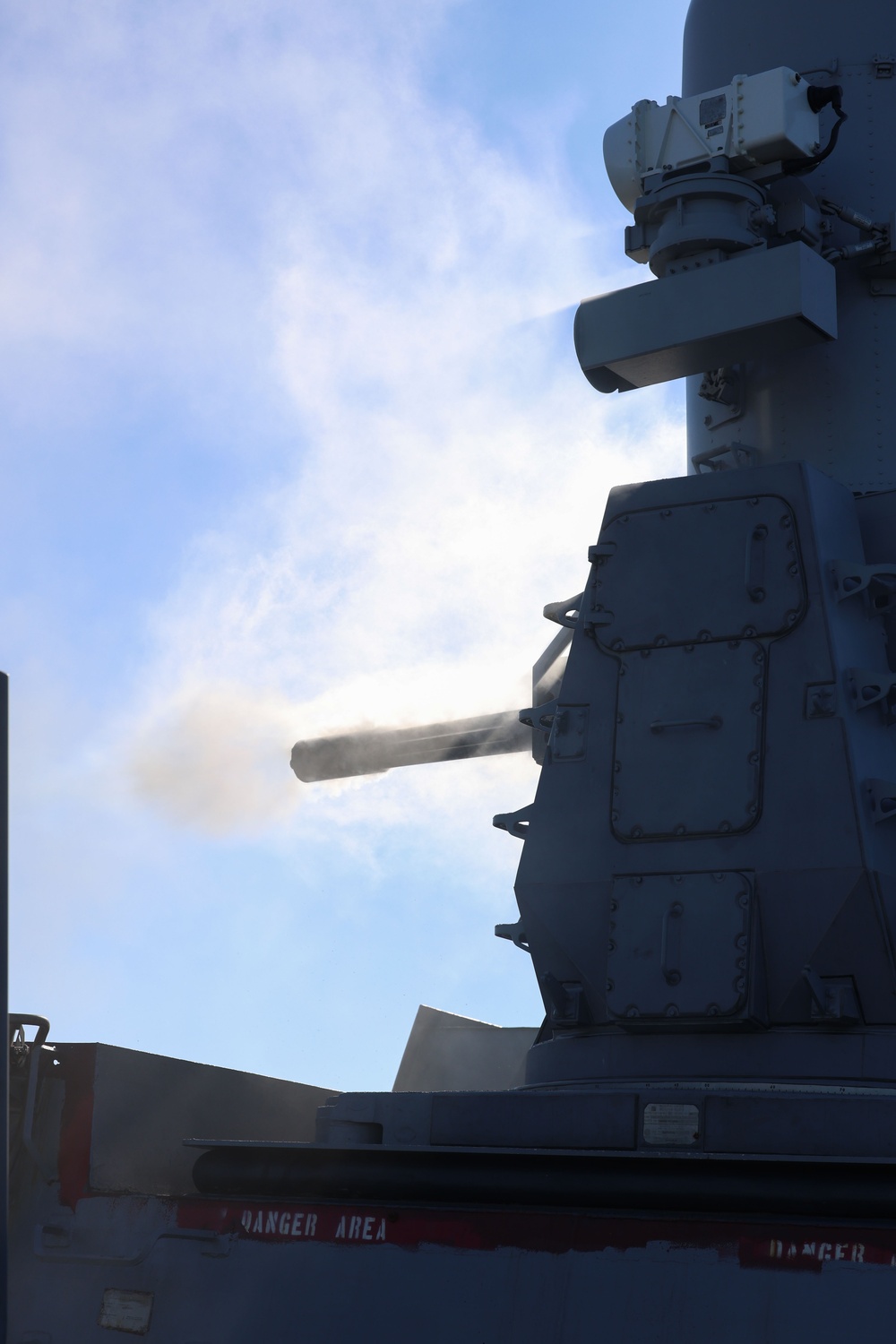
A Phalanx Close-In Weapon System (CIWS) fires during a live exercise aboard a U.S. Navy ship (U.S. Navy photo)
According to reports that emerged after the exercise, the Red Team's coordinated attack sank a substantial portion of the Blue Team's naval force, including an aircraft carrier and several amphibious ships. The exact numbers vary in different accounts, but the scale of simulated losses was significant, potentially representing thousands of casualties had the engagement been real. In a matter of simulated hours, Van Riper had demonstrated that a determined adversary using asymmetric tactics could inflict damage that transformation proponents had assumed impossible.
The mechanism was straightforward. Van Riper's forces had launched their anti-ship missiles and small boat attacks before Blue achieved the sensor coverage and defensive posture that the exercise assumed would be in place. Blue's network-centric systems were optimized to detect and track conventional military activities like radar emissions, electronic communications, and naval formations. Van Riper's low-tech approach denied Blue the signatures these systems were designed to exploit. The small boat swarms, in particular, presented a problem Blue was not configured to solve: dozens of targets appearing suddenly at close range, mixed with civilian traffic, moving too fast for methodical engagement.
The White Cell adjudicated the outcomes based on established models of weapon performance against ship defenses. Those models had not anticipated attacks of this scale and coordination from this vector. The defensive systems that would engage incoming missiles and attacking boats had rate-of-fire limitations, engagement sequence procedures, and ammunition constraints. When confronted with Van Riper's massed attack, the models concluded that significant damage would occur.
This outcome did not prove that American forces would inevitably suffer such losses in an actual conflict. It demonstrated that the assumptions underlying the exercise, and more broadly underlying transformation theory, had not accounted for an adversary who refused to fight as predicted. The model had been stressed in ways its designers had not anticipated, and it had produced results that contradicted the expected narrative.
The reaction within the exercise control group was swift. The exercise was halted for reassessment. What followed would generate controversy that continues to the present day.
The Reset and Controversy
Following the Red Team's unexpected success, exercise controllers made decisions that would generate lasting criticism. The Blue fleet was "refloated" - the simulated losses were reversed, and the exercise continued with Blue forces intact. New rules were imposed that constrained Red Team options. According to Van Riper and other critics, these changes fundamentally altered the character of the exercise from a genuine test of capabilities to a demonstration that the predetermined conclusion - American victory through transformation - would be achieved.
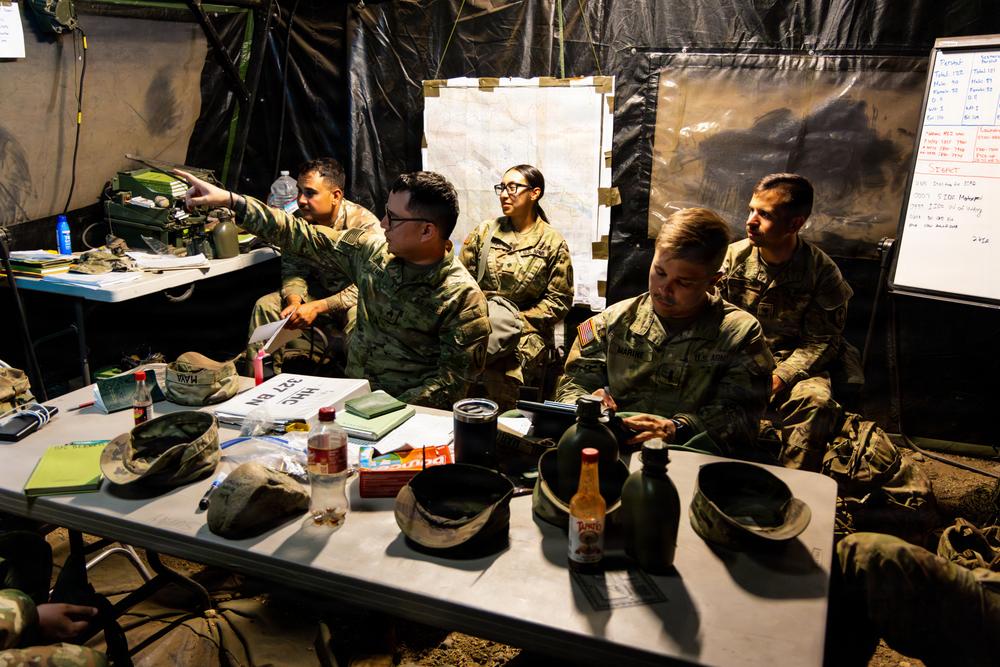
U.S. Army soldiers coordinate operations in a tactical operations center during a training exercise (U.S. Army photo)
The constraints imposed on the Red Team reportedly included requirements that Red forces must keep their radars on (making them detectable), that anti-aircraft systems could not be located near mosques (limiting defensive options), and that Red could not employ chemical weapons. Van Riper was allegedly told where to position his forces and what tactics he could employ. The exercise, in his view, had ceased to be an exercise at all.
Van Riper resigned his position as Red Team commander before the exercise concluded, a dramatic gesture that ensured the controversy would become public. His subsequent interviews and writings provided the primary source for critical accounts of Millennium Challenge 2002. He argued that the exercise's management had prioritized validating transformation concepts over genuinely testing them, rendering the results meaningless as an indicator of actual capabilities.
JFCOM defended its decisions. Officials argued that the exercise was designed to test specific concepts, and that allowing Red Team to employ tactics outside the scenario's scope would have rendered those tests impossible. The $250 million investment was intended to answer particular questions about how networked forces would perform in certain types of engagements; Van Riper's approach, while creative, had prevented those questions from being answered. From this perspective, the reset was not about concealing failure but about returning the exercise to its intended purpose.
The foundational text on strategy, written around 500 BC and still studied at every major military academy in the world. The Shambhala pocket edition uses the Thomas Cleary translation, widely considered the best in English.
The truth likely lies somewhere between these positions. Large-scale military exercises serve multiple purposes simultaneously. They test concepts, but they also train participants. They expose weaknesses, but they also build confidence. They provide data for analysis, but they also demonstrate capabilities to observers. These purposes can conflict, and when they do, choices must be made about priorities. Millennium Challenge 2002 forced those choices into the open in ways that few exercises had before.
The controversy revealed a deeper tension in how the American military approaches war gaming. Exercises are expensive, time-consuming, and politically visible. They involve senior leaders, attract media attention, and generate reports that influence budget decisions and procurement programs. In this environment, "losing" an exercise carries costs that extend beyond the training value of the experience. The incentives do not always favor the kind of rigorous, uncomfortable testing that produces the most valuable lessons.
What the War Game Revealed (And What It Didn't)
Two decades of analysis have not produced consensus about what Millennium Challenge 2002 actually demonstrated. Interpretations range from vindication of Van Riper's critique - proof that American military planning was dangerously complacent - to dismissal of the controversy as much ado about a single exercise with unusual circumstances. The reality is more complicated and more instructive than either extreme suggests.
U.S. Marines and partner nation military personnel review a tactical map during a planning exercise (U.S. Marine Corps photo)
The exercise did reveal genuine vulnerabilities. The assumption that American forces would have time to build up, establish sensor networks, and achieve information dominance before facing serious opposition was an assumption, not a guaranteed fact of future conflicts. Adversaries capable of striking early, before American advantages fully materialized, could potentially inflict significant damage. This insight remains relevant to contemporary discussions about anti-access/area denial (A2/AD) challenges.
The exercise also demonstrated the limitations of models. The simulations that adjudicated combat outcomes had not been designed to evaluate mass small boat attacks or the specific coordination Van Riper employed. This did not mean the models were wrong; it meant they were incomplete. All models are incomplete. The question is whether the incompleteness leads to systematically biased conclusions - and Millennium Challenge suggested it might.
However, the exercise did not prove that American forces would inevitably suffer the losses Van Riper's attack produced. A simulation is not reality. The exercise compressed timelines, simplified command relationships, and abstracted countless variables that would influence actual combat. Van Riper's tactics might work in a simulation while failing in reality, or succeed once while failing when repeated. The exercise raised questions; it did not answer them definitively.
Perhaps most importantly, the exercise exposed assumptions. The belief that network-centric warfare would provide decisive advantage rested on expectations about adversary behavior - that enemies would emit electronic signals, mass detectable forces, and engage in ways that precision weapons could exploit. Van Riper demonstrated that a thoughtful adversary might not cooperate. This insight was not new to military strategists, but Millennium Challenge forced it into institutional visibility in ways that previous theoretical discussions had not.
Understanding these limitations matters for interpreting any war game. As our analysis of military technology failures demonstrates, the gap between theoretical capability and operational performance is where many defense programs stumble. Exercises exist precisely to probe that gap before combat forces it open.
Long-Term Impact on Military Thinking
Tracing Millennium Challenge 2002's influence on subsequent military developments is complicated by the events that followed. Within months of the exercise's conclusion, the United States invaded Iraq. The initial conventional campaign - characterized by rapid advances, networked forces, and precision strikes - seemed to validate transformation concepts. The subsequent insurgency, with its asymmetric tactics and irregular opponents, raised exactly the questions Van Riper had posed. Separating the exercise's lessons from the lessons of actual combat is challenging.
Military tactical planning session - the kind of detailed analysis that informed post-Millennium Challenge doctrine development (U.S. Marine Corps photo)
Nevertheless, certain developments suggest the exercise influenced military thinking. The Navy's interest in littoral combat and small boat threats increased after 2002, though other factors - including the 2000 attack on USS Cole - also drove this attention. The concept of "swarming" attacks entered defense discourse with new urgency, and efforts to develop defenses against mass small boat attacks received additional emphasis.
144 full-page color maps trace the Gettysburg campaign hour by hour, showing unit positions down to the regimental level. The most detailed cartographic treatment of any single battle in print.
The exercise also contributed to ongoing debates about war game methodology. Discussions about the role of Red Teams, the constraints appropriate for exercises, and how to balance testing concepts against achieving training objectives drew on Millennium Challenge as a reference point. The tension Van Riper highlighted - between exercises that genuinely stress assumptions and exercises that validate predetermined conclusions - became a recognized challenge in the war gaming community.
More broadly, Millennium Challenge 2002 became part of a narrative about transformation's limitations. When critics argued that the wars in Iraq and Afghanistan demonstrated the inadequacy of technology-focused solutions, they could point to the exercise as evidence that warnings had been available before the invasions. Whether this represents the exercise's actual influence or retroactive interpretation is debatable, but the exercise entered the institutional memory as a cautionary tale.
The exercise also illustrated a more fundamental point about military institutions: they are better at learning some lessons than others. Technical lessons - how to defend against small boat attacks, how to improve sensor coverage - are relatively easy to absorb. They lead to programs, procurements, and doctrinal changes that can be measured and tracked. Cognitive lessons - how to avoid assumption bias, how to genuinely test rather than validate - are harder. They require cultural changes that institutions resist.
Common Misconceptions About Millennium Challenge 2002
Millennium Challenge 2002 has acquired a mythological quality in defense discourse, invoked to support various arguments about American military capabilities and limitations. Some of these invocations rest on accurate understanding of what occurred; others do not. Clarifying common misconceptions serves both historical accuracy and analytical rigor.
U.S. Army soldiers during a briefing session (U.S. Army photo)
"The exercise proved America would lose a war in the Persian Gulf"
This interpretation overstates what any single exercise can demonstrate. Van Riper's success occurred within specific exercise conditions that may or may not reflect reality. The models used to adjudicate outcomes had limitations. American forces would likely adapt after initial losses in ways a time-compressed exercise could not simulate. The exercise raised questions about specific vulnerabilities; it did not provide definitive predictions about conflict outcomes.
"The results were meaningless because the exercise was rigged"
This dismissal is equally problematic. The constraints imposed after the reset did limit the exercise's value as a test of certain assumptions. However, the initial phase - before the reset - produced genuine insights about vulnerabilities that transformation concepts had not adequately addressed. Dismissing the entire exercise because of the controversy over the reset ignores what the early phases revealed.
"Technology was the problem"
Van Riper's success did not demonstrate that American technology was ineffective; it demonstrated that technology designed for one type of opponent might not work against an adversary who refused to present the expected signatures. The network-centric systems functioned as designed; they simply were not designed for the problem Van Riper posed. This is a lesson about matching capabilities to threats, not about technology's inherent limitations.
"Van Riper used 'game-breaking' tactics that wouldn't work in reality"
Some critics have argued that Van Riper exploited simulation mechanics rather than demonstrating genuinely replicable tactics. The motorcycle couriers and small boat swarms, they suggest, would face practical challenges in reality that the simulation did not model. This critique has merit - simulations always abstract from reality - but it does not eliminate the value of the questions Van Riper's approach raised about assumptions regarding adversary behavior.
"The Pentagon covered up the results"
Van Riper's resignation and subsequent public statements ensured that the controversy became widely known. The exercise results were discussed in professional military education, defense journals, and eventually the popular press. While JFCOM defended its decisions, the debate about what occurred was public and ongoing. The narrative of institutional cover-up is not supported by the evidence.
Why This Story Still Matters Today
More than two decades after Millennium Challenge 2002, the questions it raised remain relevant. Contemporary discussions about great power competition, anti-access/area denial, and the challenges of fighting technologically sophisticated adversaries echo themes the exercise exposed. Understanding why the story endures illuminates both the exercise's significance and persistent challenges in military planning.
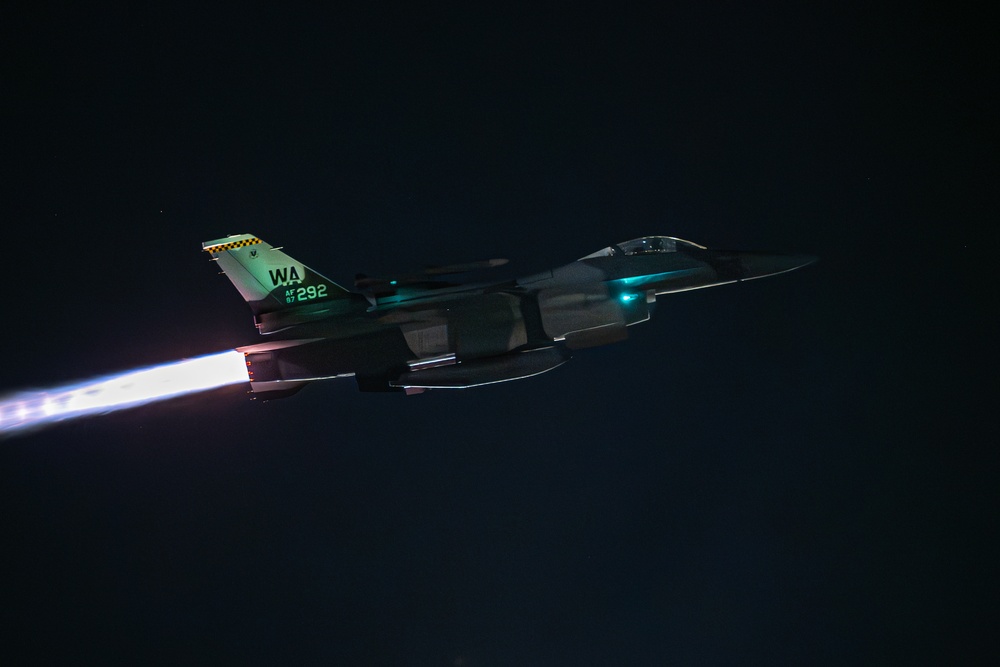
A U.S. Air Force F-16 Fighting Falcon during night operations (U.S. Air Force photo)
The fundamental tension between testing and validation persists. Large exercises remain expensive, visible, and politically consequential. The incentives that discouraged genuine stress-testing in 2002 have not disappeared. Defense institutions continue to struggle with how to create conditions where uncomfortable outcomes produce learning rather than embarrassment. Van Riper's complaint that exercises are designed to confirm rather than challenge remains a live concern.
The problem of assumption bias endures. Military planning necessarily rests on assumptions about how adversaries will fight, what technologies will perform, and how complex systems will interact. These assumptions are rarely examined as rigorously as they should be because challenging them is uncomfortable and disruptive. Millennium Challenge demonstrated what happens when assumptions meet a determined adversary who refuses to conform. Similar surprises remain possible - indeed, probable - in future conflicts.
The relationship between technology and tactics continues to evolve. The specific systems that defined Millennium Challenge - early-2000s networks, the sensor capabilities of that era, the defensive systems then deployed - have all changed. But the underlying dynamic remains: technology shapes what is possible, but adversaries adapt to exploit what technology cannot do. Each generation of capabilities creates new advantages and new vulnerabilities. Understanding this dynamic requires exactly the kind of rigorous, uncomfortable testing that Millennium Challenge attempted but did not fully achieve.
Finally, the exercise illustrates why military logistics and readiness matter as much as technology. Van Riper's approach worked partly because it exploited the gap between American capability as theorized and capability as actually deployable in the scenario's timeframe. That gap - between what forces possess and what they can bring to bear when needed - remains the essential challenge of military readiness. Exercises exist to probe it, but only if they are designed to expose truth rather than confirm hope.
Red Team commander resigns, controversy goes public
Debate enters public discourse
Aftermath
2002-Present
Analysis, debate, lessons incorporated (or not)
Influence on doctrine and war gaming practice
Key Takeaways
▸War games test thinking, not predict outcomes. Millennium Challenge revealed assumptions about adversary behavior that transformation concepts had not adequately examined.
▸Technological superiority is not self-executing. Capabilities designed for one type of opponent may not work against adversaries who refuse to present expected signatures.
▸Asymmetric tactics can offset conventional disadvantages. Van Riper's low-tech approach denied Blue the information dominance that network-centric warfare required.
▸Exercises face inherent tension between testing and validating. Institutional pressures can favor exercises that confirm rather than challenge existing beliefs.
▸The gap between theoretical capability and operational reality is where plans fail. Exercises exist to probe this gap before combat exposes it.
▸Models embed assumptions that may not match adversary behavior. Simulations can produce misleading confidence when opponents refuse to cooperate with modeled expectations.
▸Early losses can have disproportionate strategic impact. Adversaries who can strike before American advantages materialize may undermine political will for sustained operations.
▸Red Teams serve essential functions when genuinely empowered. Constraints that prevent Red from fighting realistically undermine the exercise's value.
▸Technical lessons are easier to learn than cognitive ones. Institutions can improve defenses against small boats more readily than they can overcome assumption bias.
▸The questions Millennium Challenge raised remain relevant. Contemporary challenges with great power competitors echo themes the 2002 exercise exposed.
▸Uncomfortable outcomes produce the most valuable learning. Exercises where everything goes as planned suggest the scenario was too easy, not that forces are ready.
Millennium Challenge 2002 remains one of the most discussed military exercises in American history, not because of what it definitively proved but because of what it revealed about how military institutions think. The controversy over its conduct and conclusions exposed tensions that persist in contemporary defense planning: between technological optimism and operational realism, between validation and testing, between institutional comfort and genuine learning.
The exercise did not prove that American forces cannot prevail against asymmetric adversaries or that transformation concepts are fundamentally flawed. It demonstrated that assumptions about how wars will be fought are just that - assumptions - and that determined adversaries will seek to invalidate them. This insight is neither surprising nor original, but Millennium Challenge forced it into institutional visibility at a moment when confidence in technological solutions was particularly high.
Lieutenant General Van Riper's approach was not magic; it was the application of sound military principles to a specific situation. He studied his opponent, identified vulnerabilities, and developed tactics that exploited those vulnerabilities while negating American strengths. Any competent adversary will attempt the same. The question is whether American military institutions will design exercises that reveal such vulnerabilities before combat does - and whether they will absorb the uncomfortable lessons such exercises produce.
More than two decades later, the answer remains uncertain. The incentives that shaped Millennium Challenge 2002's conduct have not fundamentally changed. Large exercises remain expensive, visible, and politically consequential. The pressure to demonstrate capability rather than expose weakness persists. And the challenge of genuinely testing assumptions against creative opposition continues to strain military institutions that prefer certainty to doubt.
What Millennium Challenge 2002 ultimately teaches is not a specific tactical lesson but a broader truth about military preparation: the most valuable exercises are those that reveal uncomfortable truths, and the most dangerous assumption is that adversaries will cooperate with our plans. Van Riper did not cooperate. Future adversaries will not either. Whether American forces are prepared for that reality depends on whether the lessons of Millennium Challenge 2002 - and exercises like it - have been genuinely absorbed or merely acknowledged and forgotten.