Daniel Mercer writes about military history with a focus on the 20th century, including World War II, the Cold War, and Vietnam. His work looks at how decisions made decades ago still influence doctrine, planning, and assumptions today.
For every military technology that revolutionizes warfare, dozens fail to deliver on their promises. These failures rarely stem from stupidity or corruption (though both occasionally play roles) but more often from the collision between ambitious visions and unforgiving realities. Technologies that worked perfectly in laboratories couldn't survive field conditions. Systems designed for one threat environment became obsolete before fielding as threats evolved. Platforms that met every technical specification proved impossible to maintain or operate in actual military units. Understanding why these technologies failed provides insights more valuable than celebrating successes ever could.
The history of military technology development is littered with projects that consumed billions of dollars, employed thousands of engineers, generated massive hype, and ultimately delivered nothing to the warfighter. These failures share common patterns: requirements that exceeded what technology could deliver, integration challenges that multiplied complexity beyond manageability, logistics burdens that made sustainment impossible, and perhaps most fundamentally, gaps between how planners imagined wars would be fought and how wars actually unfold.
This analysis examines 25 military technologies that failed despite massive investment and expectations. The goal isn't to mock or second-guess, since hindsight always makes failures seem obvious. Instead, the objective is to extract lessons that illuminate how military technology development actually works, why it so often fails, and what these failures teach about the enduring challenges of military modernization. These aren't simply stories of canceled programs; they're windows into the fundamental tensions between ambition and reality that shape every attempt to improve military capability.
Each entry explains not just what failed, but why: the specific combination of technical, doctrinal, logistical, and political factors that doomed the program. Some technologies worked perfectly but didn't fit how the military actually fought. Others never achieved technical maturity despite decades of effort. Still others succeeded technically but proved unsustainable economically. Understanding these distinctions matters because different failure modes require different corrective responses. A technology that failed due to unrealistic requirements differs fundamentally from one that failed due to manufacturing challenges.
The technologies covered span domains (air, land, sea, and support systems) and decades. Some are recent enough that participants still argue about what went wrong. Others have passed into history, their lessons sometimes learned and sometimes repeated. Together, they form a composite portrait of why military modernization remains so challenging, and why healthy skepticism about revolutionary technologies serves military organizations better than uncritical enthusiasm.
Understanding failure doesn't mean opposing innovation. Every technology that eventually succeeded likely went through iterations that failed. The Wright brothers crashed repeatedly before achieving sustained flight. Early tanks broke down constantly before becoming battlefield decisive weapons. What matters is whether organizations learn from failures and apply those lessons to subsequent efforts. These 25 technologies offer opportunities for exactly that kind of learning, if we're willing to examine them honestly rather than simply forgetting them.
Aircraft and Aviation Systems
1. RAH-66 Comanche: The Stealth Helicopter That Never Was
The Boeing-Sikorsky RAH-66 Comanche represented the U.S. Army's vision for a revolutionary reconnaissance and attack helicopter: stealthy, fast, highly networked, and capable of operating deep behind enemy lines. Development began in 1991, with plans to build 1,213 aircraft at an estimated program cost of $34 billion. The program was canceled in 2004 after 22 years and approximately $6.9 billion spent, with only two flyable prototypes ever built.
The Comanche's failure stemmed from multiple converging factors. Most fundamentally, the threat environment changed dramatically between program inception and cancellation. Designed to hunt Soviet armor in a European war, the Comanche lost its primary mission when the Cold War ended. The program struggled to redefine itself for the irregular warfare that dominated the 1990s and early 2000s. Critics questioned whether a stealthy reconnaissance helicopter made sense when unmanned aerial vehicles could perform similar missions at lower cost and risk.
Technical challenges compounded strategic ones. Achieving helicopter stealth proved far more difficult than anticipated, as rotor blades generate noise and radar signatures that are extraordinarily hard to suppress. The aircraft's weight grew repeatedly as requirements expanded, compromising performance. Integration of the advanced sensor suite proved challenging. By 2004, the Army concluded that the money would be better spent upgrading existing AH-64 Apache helicopters and developing unmanned systems. The Comanche's stealth technology did find application in the modified Black Hawks used in the Osama bin Laden raid, suggesting the program wasn't entirely without value, but not $6.9 billion worth.
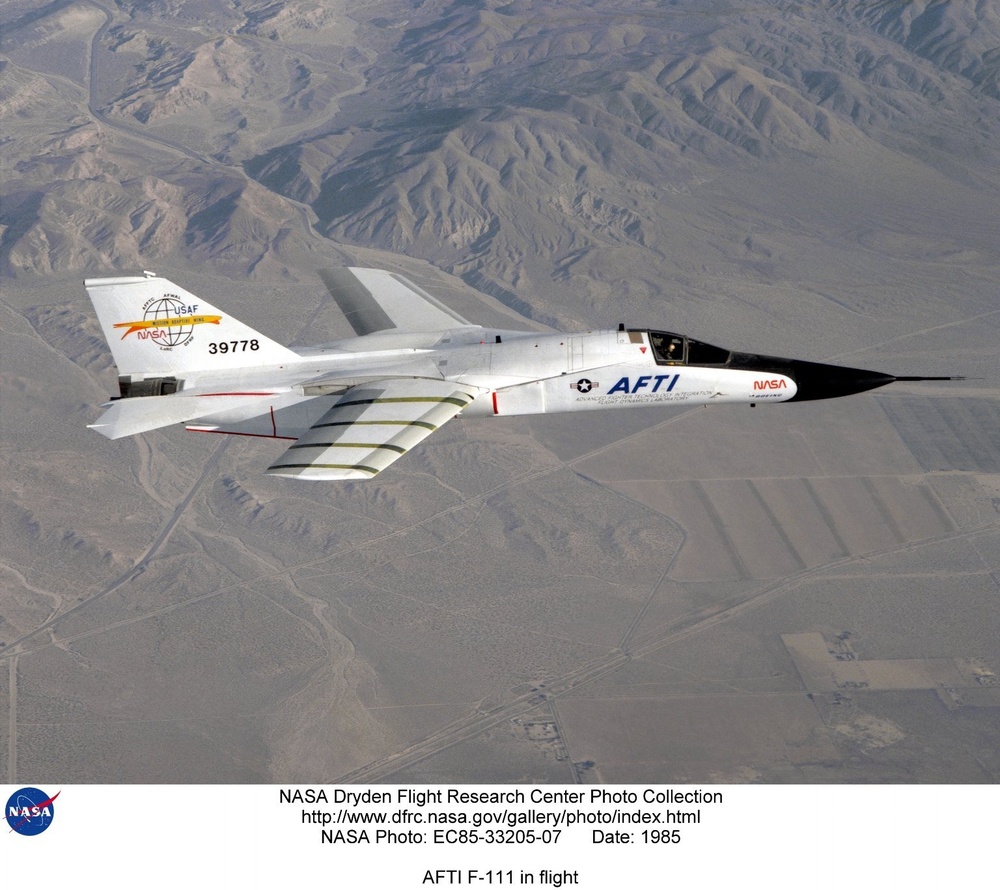
2. F-111 Aardvark: The Multi-Service Compromise That Satisfied No One Initially
The F-111, despite its troubled development and initial failures, eventually proved successful in service, but only after the Navy version was canceled entirely (NASA photo)
The F-111 eventually became an effective strike aircraft, but its development represents one of the most troubled programs in aviation history. Defense Secretary Robert McNamara mandated that a single airframe serve both Air Force strike and Navy fleet defense missions, a requirement that satisfied neither service and nearly doomed the program entirely. The Navy version, the F-111B, was canceled after years of development when it proved too heavy and poorly suited for carrier operations.
The Air Force version suffered its own disasters. Early deployments to Vietnam saw six F-111As lost in 55 missions due to a combination of structural failures and operational challenges. The variable-geometry ("swing wing") design, while innovative, added weight, complexity, and maintenance burden. The aircraft's sophisticated terrain-following radar, essential for low-level penetration, proved unreliable in early service. Unit costs spiraled far beyond initial projections, limiting procurement numbers.
What saved the F-111 was persistence, and the willingness to accept that it couldn't do everything originally promised. Stripped of its multi-service pretensions and refined through hard experience, the F-111 eventually excelled as a deep-strike platform. The 1986 Libya raid demonstrated capabilities that justified years of struggle. But the program's early failures provided lasting lessons about the dangers of forcing incompatible requirements onto single platforms, lessons that defense acquisition would repeatedly need to relearn.
3. A-12 Avenger II: The Stealth Bomber the Navy Couldn't Afford
The A-12 Avenger II was designed to be the Navy's stealthy, carrier-based strike aircraft, replacing the aging A-6 Intruder. Its distinctive triangular "flying wing" shape promised reduced radar signature for attacking heavily defended targets. The program was canceled in 1991 after roughly $5 billion in expenditure, with not a single prototype completed. The cancellation triggered decades of litigation between the Navy and contractors that wasn't fully resolved until 2014.
The A-12's failure illustrated the challenges of applying stealth technology to carrier aviation. Weight growth proved catastrophic; the aircraft was projected to exceed specifications by thousands of pounds, compromising both performance and carrier compatibility. Structural challenges with the composite airframe proved harder to solve than anticipated. Cost overruns reached levels that even the flush-budget era couldn't sustain. The contractors concealed problems from the Navy, leading to a "termination for default" rather than the more typical "termination for convenience."
More fundamentally, the A-12's cancellation reflected changing threat assessments. With the Soviet Union collapsing, the need for stealthy deep-strike aircraft against sophisticated air defenses seemed less urgent. The Navy eventually addressed its strike needs through upgraded F/A-18s and decades later the F-35C, but the gap left by the A-12's failure meant the Intruder soldiered on well past its planned retirement, and the service arguably never fully replaced the deep-strike capability the A-12 was meant to provide.
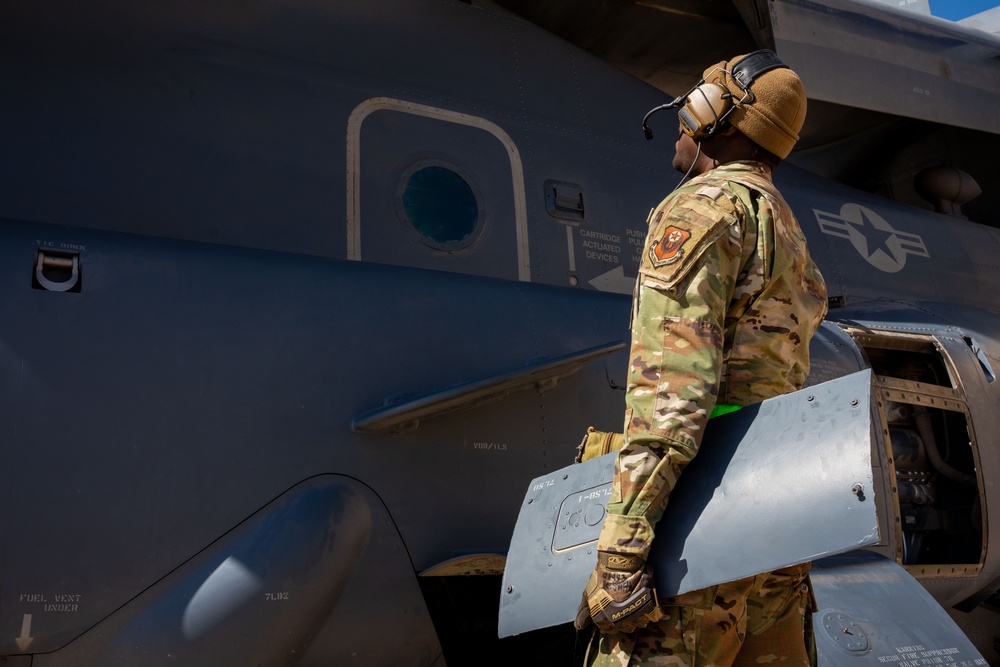
4. V-22 Osprey: Success Achieved Through Persistence and Tragedy
The CV-22 Osprey requires intensive maintenance and specialized procedures, challenges that nearly killed the program multiple times (U.S. Air Force photo)
The V-22 Osprey tiltrotor eventually entered service and has proven operationally useful, but its path there was marked by multiple fatal crashes, repeated calls for cancellation, and fundamental questions about whether the technology was worth the cost. The program consumed approximately $50 billion over more than 30 years of development, with 30 Marines killed in development accidents before the aircraft was declared operational.
The Osprey's troubles stemmed from the fundamental complexity of tiltrotor technology. Transitioning between helicopter and airplane flight modes created aerodynamic challenges that proved deadly. The aircraft suffered from vortex ring state, a condition where the rotors stall during certain descent profiles, that caused fatal crashes. Maintenance requirements exceeded projections significantly, with some reports suggesting the V-22 required 30 maintenance hours per flight hour compared to roughly 5 for conventional helicopters.
Whether the Osprey represents failure or eventual success remains debated. The aircraft does provide capabilities no helicopter can match, combining helicopter-like vertical takeoff with airplane-like speed and range. But whether those capabilities justified the cost in money and lives remains contested. The V-22 stands as a case study in how technological ambition can outpace engineering reality, and how institutional commitment can push a troubled program to eventual operational capability, though at tremendous expense.
5. XB-70 Valkyrie: Speed Exceeded by Missiles
The XB-70 Valkyrie represented the ultimate expression of speed-based survivability: a bomber designed to cruise at Mach 3 at 70,000 feet, outrunning any Soviet interceptor. The aircraft was technically successful: it flew, demonstrated its designed performance, and validated the engineering concepts behind high-speed, high-altitude flight. Yet only two prototypes were built before the program was canceled, the bombers replaced by ICBMs that performed the nuclear strike mission more effectively.
The Valkyrie's failure wasn't technological but strategic. Soviet surface-to-air missile development, particularly the SA-2, demonstrated that altitude and speed couldn't guarantee survivability. The same year the XB-70 first flew, 1964, saw SAMs shooting down high-altitude reconnaissance aircraft over both Cuba and the Soviet Union. If missiles could reach 70,000 feet, speed alone couldn't protect bombers. The strategic calculus shifted toward low-altitude penetration, stealth, and standoff weapons, none of which the Valkyrie was designed to employ.
The XB-70 illustrates how rapidly threat evolution can obsolete even technically successful systems. The aircraft worked exactly as designed; the problem was that the design assumptions proved wrong. This failure mode, technology succeeding against the wrong problem, recurs throughout military history. The Valkyrie's six engines, massive fuel consumption, and specialized maintenance requirements would have made it prohibitively expensive to operate even if the strategic rationale had survived. Sometimes the best technology fails simply because the world changes faster than development cycles allow.
Ground Combat Systems
6. Future Combat Systems: The Army's $18 Billion Learning Experience
Future Combat Systems (FCS) represents the most expensive canceled weapons program in U.S. Army history. Launched in 2003 with plans to develop 14 integrated manned and unmanned systems connected by a revolutionary network, FCS was supposed to transform how the Army fought. When canceled in 2009, the program had consumed approximately $18.1 billion without delivering a single system to field units. The failure profoundly shaped subsequent Army modernization efforts.
FCS collapsed under the weight of its own ambition. Developing 14 systems simultaneously, including manned ground vehicles, unmanned aerial and ground vehicles, and an advanced communications network, created integration challenges that proved unmanageable. Each system depended on others for full effectiveness, meaning delays in any component cascaded across the program. The network that was supposed to connect everything faced fundamental technical challenges that years of development couldn't resolve.
The doctrinal assumptions underlying FCS also proved problematic. The program envisioned a lighter, more networked force that would defeat enemies through information superiority rather than armor protection. Experience in Iraq and Afghanistan demonstrated that soldiers needed protection against IEDs and ambushes more than they needed advanced networks. The 18-ton weight limit for FCS vehicles, necessary for strategic deployability, couldn't accommodate adequate protection for the threat environment soldiers actually faced. FCS ultimately failed not just technologically but conceptually. It was the wrong solution for the wars the Army was actually fighting.
7. Crusader Self-Propelled Howitzer: Canceled on the Eve of Production
The XM2001 Crusader was designed to be the world's most advanced self-propelled howitzer: capable of firing 10-12 rounds per minute (compared to 4 for the M109 Paladin), with automated ammunition handling and advanced fire control. After nearly two decades of development and approximately $2 billion in expenditure, Defense Secretary Donald Rumsfeld canceled the program in 2002, just as it was approaching production.
The Crusader's failure reflected changing priorities rather than technical shortcomings. The system worked - it demonstrated its performance specifications and was ready for production. But at 55 tons, it was too heavy for rapid deployment, requiring multiple C-17 flights to move a single howitzer. In the post-9/11 environment, with emphasis on expeditionary operations and transformation, Rumsfeld concluded that lighter, more deployable alternatives better suited Army needs. The cancellation was explicitly strategic rather than technical.
This decision remained controversial. Critics argued that the Army still needed improved artillery and that canceling a working system to pursue uncertain alternatives was shortsighted. The M109 Paladin, originally fielded in 1963, remained in service for decades after Crusader's cancellation, receiving upgrades but never matching Crusader's planned capabilities. The Extended Range Cannon Artillery program eventually addressed some of the same requirements - but decades later and after the investment in Crusader had been written off entirely.
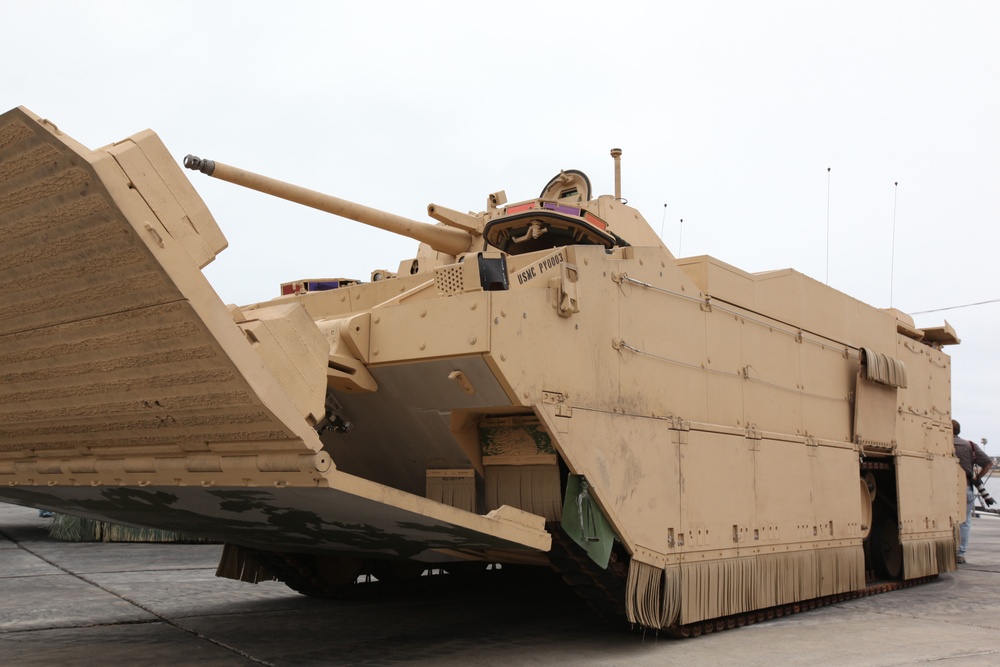
8. Expeditionary Fighting Vehicle - The Marines' $3 Billion Amphibian
The Expeditionary Fighting Vehicle during testing at Camp Pendleton - an ambitious design that never achieved the reliability required for operational service (U.S. Marine Corps photo)
The Expeditionary Fighting Vehicle (EFV) was designed to revolutionize Marine Corps amphibious assault, capable of launching from ships over the horizon and planing across the water at 25+ knots before transitioning to land combat. After more than 20 years of development and approximately $3 billion in expenditure, the program was canceled in 2011 due to reliability problems, cost overruns, and changing strategic priorities.
The EFV's core challenge was reconciling incompatible requirements. High-speed water performance demanded a planing hull and powerful engines; land combat demanded armor protection and tactical mobility. The compromise vehicle was complex, maintenance-intensive, and unreliable. Testing revealed that the EFV averaged only 4.5 hours of operation between breakdowns - far below the 43.5 hours the Marines required. The sophisticated systems needed to achieve water speed created endless maintenance challenges in the corrosive marine environment.
Beyond technical challenges, the EFV's strategic rationale weakened over time. The proliferation of anti-ship missiles and coastal defense systems made the over-the-horizon assault concept increasingly questionable. If ships couldn't safely approach within the EFV's operational range, its high-speed water transit became irrelevant. The Marines eventually fielded the Amphibious Combat Vehicle - a simpler, more reliable design that accepted lower water speed in exchange for better reliability and protection. The EFV's failure demonstrated that sometimes the most ambitious requirement is simply wrong.
9. Stryker Mobile Gun System - The Tank Destroyer That Couldn't Be Sustained
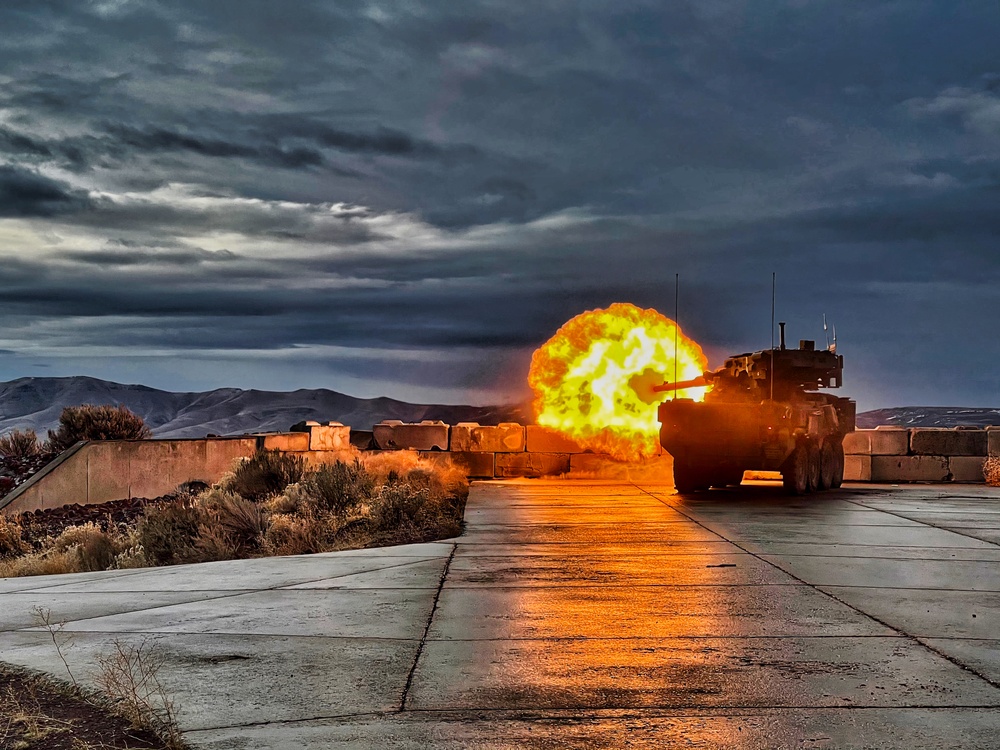
The Stryker M1128 Mobile Gun System demonstrated impressive firepower but proved too complex and maintenance-intensive for sustained operations (U.S. Army photo)
The M1128 Stryker Mobile Gun System (MGS) was supposed to give Stryker Brigade Combat Teams organic fire support with a 105mm cannon mounted on the eight-wheeled Stryker chassis. Unlike many failed systems that never worked technically, the MGS actually entered service and deployed to Iraq. It was retired in 2022, with the Army concluding that the system's maintenance burden and reliability challenges made it unsustainable despite its combat utility.
The MGS suffered from trying to put a tank gun on a vehicle that wasn't designed for one. The 105mm cannon's recoil stressed the chassis beyond design limits. The autoloader, while reducing crew size, proved unreliable in dusty field conditions. Maintenance requirements roughly doubled those of standard Stryker variants. Units reported that MGS vehicles spent excessive time in maintenance rather than available for operations - exactly the opposite of what rapid deployment forces need.
More fundamentally, the MGS illustrated the limits of lightening heavy capabilities. A 105mm gun provides less firepower than main battle tanks and less protection for the crew. In combat, MGS vehicles discovered they couldn't engage targets that tanks could handle easily, while their lack of armor made them vulnerable to weapons that wouldn't threaten tanks. The Army ultimately concluded that if you need tank firepower, you need tanks - and that trying to substitute lighter vehicles creates more problems than it solves. The MGS demonstrated that some military capabilities simply can't be lightened without losing essential effectiveness.
10. M247 Sergeant York - When Tests Don't Match Reality
The M247 Sergeant York Division Air Defense Gun (DIVAD) was designed to provide Army divisions with mobile protection against low-flying aircraft and helicopters. Armed with twin 40mm Bofors guns and sophisticated radar, it was supposed to shoot down Soviet attack helicopters before they could engage American armor. The program was canceled in 1985 after $1.8 billion in expenditure when testing revealed fundamental flaws that couldn't be corrected.
The Sergeant York's failures became legendary. During demonstrations, the radar locked onto a latrine fan instead of target drones. The system couldn't track helicopters hovering behind trees. Its radar had difficulty distinguishing targets from ground clutter. The 40mm guns, chosen to save development time, couldn't reach aircraft at the altitudes Soviet helicopters would actually fly. Each "fix" created new problems, and the system never achieved reliable target engagement even under controlled test conditions.
The Sergeant York's cancellation illustrated both the importance of rigorous testing and the dangers of schedule pressure overriding engineering judgment. The Army chose proven guns and modified radar to accelerate fielding, but these compromises created systems that simply couldn't perform the mission. The cheaper, faster approach proved neither cheap nor fast when the fundamental design couldn't work. Sometimes military technology requires doing hard things the hard way - shortcuts that seem expedient during development create failures that no amount of retrofit can fix.
Naval Combat Systems
11. DDG-1000 Zumwalt Class - The Destroyer That Lost Its Mission
The Zumwalt-class destroyer was designed to be the Navy's most advanced surface combatant: featuring revolutionary stealth design, an integrated power system, and advanced gun systems for naval gunfire support. Originally planned for 32 ships, the program was cut to just three due to cost overruns so severe that each destroyer cost approximately $4.4 billion - more than twice the original estimate. The ships entered service with their primary gun system non-functional because ammunition was too expensive to produce.
The Zumwalt's troubles multiplied as requirements and costs spiraled. The Advanced Gun System was designed to fire Long Range Land Attack Projectiles providing precision fire support at 83 nautical miles - revolutionary capability that would have transformed naval gunfire. But with only three ships built, the per-round ammunition cost reached approximately $800,000, making the rounds unaffordable. The guns were eventually deactivated, with the ships being retrofitted for hypersonic missiles instead - a complete mission change from the original design.
Beyond the guns, the Zumwalt's stealth and automation faced their own challenges. The tumblehome hull design, while reducing radar signature, raised concerns about stability in heavy seas. The reduced crew size - approximately 140 versus 330 for Arleigh Burke destroyers - pushed automation to levels that proved challenging to sustain. The integrated power system, while innovative, created complexity that increased maintenance burden. The Zumwalt ultimately represents a cautionary tale about pursuing too many revolutionary technologies simultaneously, and about what happens when production cuts destroy the economies of scale that make advanced systems affordable.
12. Littoral Combat Ship - Fast, Flexible, and Fatally Flawed
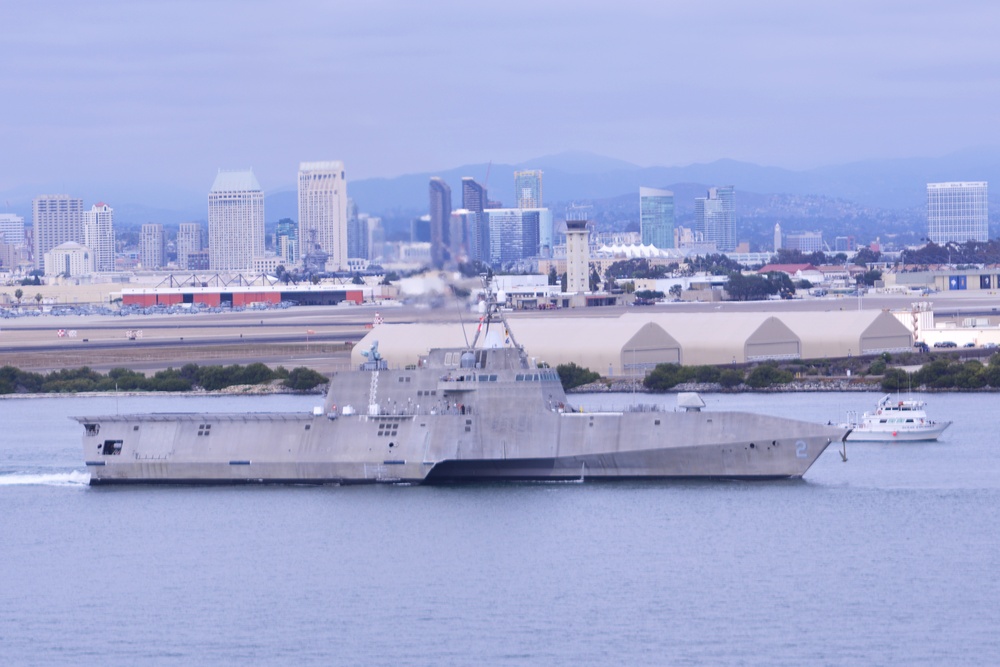
USS Independence (LCS 2) represented one of two hull designs for the troubled LCS program - ships now being decommissioned decades ahead of schedule (U.S. Navy photo)
The Littoral Combat Ship was conceived as a revolutionary approach to surface warfare: small, fast, modular ships that could swap mission packages to perform anti-submarine, mine countermeasures, or surface warfare missions. The Navy planned to build 55 ships at roughly $220 million each. Reality proved different - costs more than doubled, the mission modules never delivered promised capabilities, and the Navy began decommissioning ships less than a decade old, with many never completing their first deployment.
The LCS concept suffered from fundamental contradictions. The "modular" approach assumed mission packages could be swapped quickly based on operational needs. In practice, reconfiguration took weeks rather than days, and the ships typically deployed with a single package rather than flexing between missions. The high speed that was supposed to enable rapid response consumed fuel at rates that limited operational range. Most critically, the ships lacked the combat capability - particularly air defense - to operate in contested waters, limiting them to missions in permissive environments.
Mechanical reliability proved devastating. The Independence-class combining gear failures became chronic, with multiple ships experiencing propulsion casualties. Freedom-class ships had their own reliability challenges. The reduced crew size - approximately 50 sailors versus 180 for frigates - meant inadequate manning for both operations and maintenance. By 2022, the Navy was decommissioning LCS vessels at rates unprecedented for combat ships, essentially admitting that the concept had failed. The planned 55-ship fleet would never materialize, and the ships built would serve far shorter lives than envisioned.
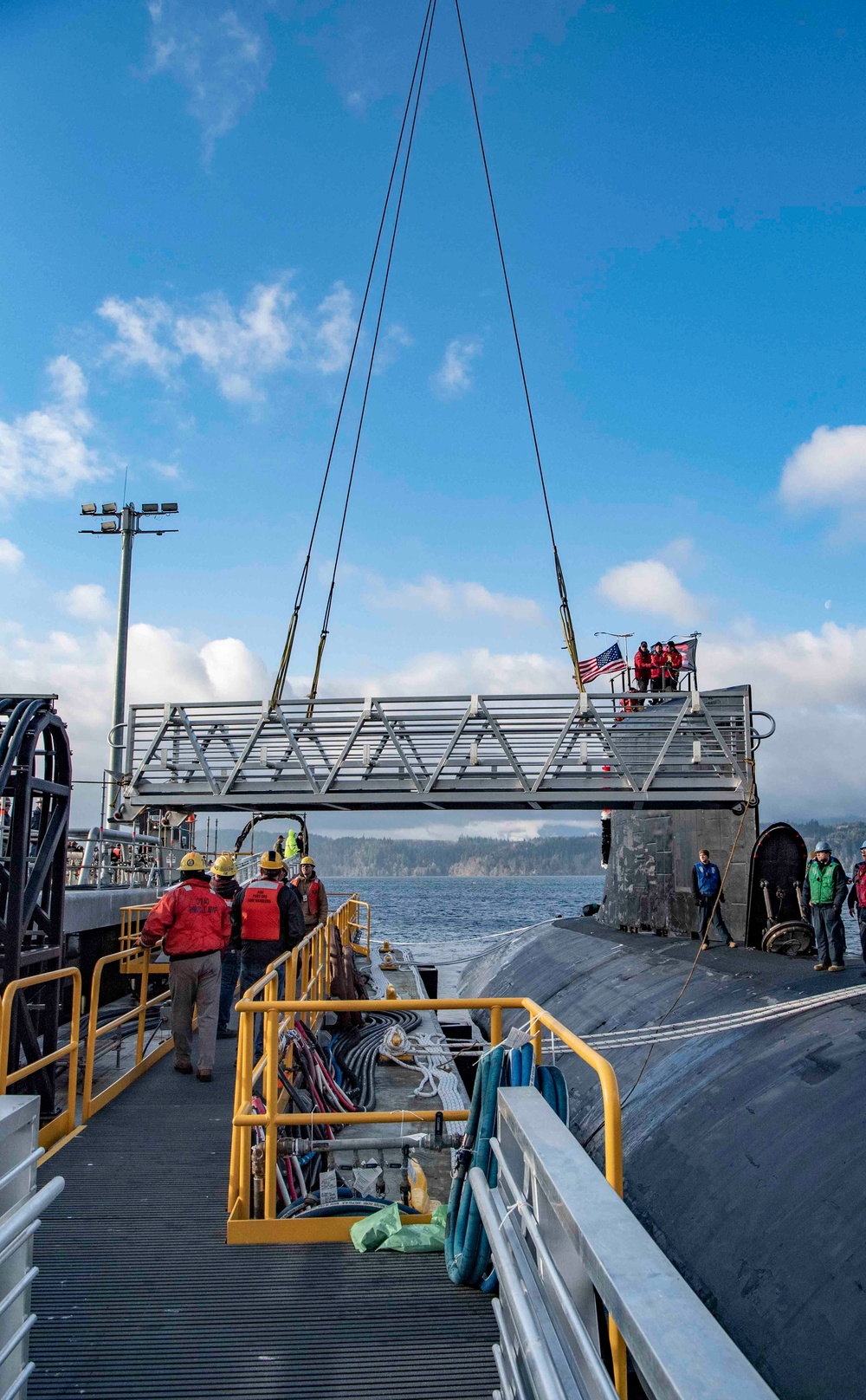
USS Seawolf represents exceptional submarine capability - but at costs that limited production to just three boats instead of the planned 29 (U.S. Navy photo)
The Seawolf class represents a different kind of failure: technical success that proved economically unsustainable. Designed as the ultimate Cold War attack submarine - faster, quieter, and more heavily armed than any predecessor - the Seawolf achieved all its design goals. The three submarines in service remain the most capable in the world. But at approximately $3 billion per boat (in 1990s dollars), the Navy could afford only three instead of the planned 29, fundamentally failing to provide the submarine force the Cold War Navy envisioned.
The Seawolf's cost reflected uncompromising pursuit of every capability advantage. The hull was made of HY-100 steel, stronger and more expensive than standard submarine steel. Eight torpedo tubes rather than four increased firepower but also complexity. Every system was optimized for maximum performance without regard to cost. When the Cold War ended and budgets contracted, the Navy faced a choice between continuing Seawolf production at reduced rates or developing a new, more affordable design. They chose the latter, producing the Virginia class.
The Seawolf demonstrates that in military technology, "best" and "enough" are different concepts. A submarine that's 20% more capable but 100% more expensive doesn't strengthen the fleet if you can only afford a fraction of planned numbers. The Virginia class, while less capable than Seawolf in some respects, proved affordable enough to build in substantial numbers - ultimately a better outcome for naval power than a handful of perfect submarines. Seawolf's excellence became its limitation; sometimes "good enough" at sustainable cost beats perfection at prohibitive expense.
14. Arsenal Ship - The Vessel No Service Wanted
The Arsenal Ship concept proposed in the 1990s envisioned a large, minimally manned vessel carrying 500+ vertical launch cells for cruise missiles and other weapons. It would provide massive firepower while being relatively inexpensive - a floating magazine directed by other platforms. Despite significant interest from defense planners, the program was canceled before any ships were built, victim of inter-service politics and doctrinal uncertainty.
The Arsenal Ship faced opposition from every direction. Surface warfare officers questioned a ship that depended on other platforms for targeting - what happened if those platforms were destroyed? Aviators argued that aircraft carriers could perform the same mission with greater flexibility. Submariners noted that submarines already provided stealthy strike capability. No community wanted to champion a platform that would compete for funding with their preferred programs. Without institutional advocates, the Arsenal Ship concept withered despite theoretical merit.
This failure illuminates how military technology development depends on more than technical feasibility. A system that no service or community owns becomes an orphan in the budget process. The Arsenal Ship might have provided genuine capability - but capability without constituency rarely survives. Similar dynamics have affected other innovative concepts; the military services tend to prefer improving existing platforms over adopting revolutionary alternatives that threaten established programs and career paths. Technical merit alone cannot overcome institutional resistance.
Missiles, Electronics, and Support Systems
15. MIM-104 Patriot PAC-3 Initial Troubles - When Software Kills
The Patriot missile system eventually became highly effective, but its early deployment during the 1991 Gulf War revealed fatal software flaws that caused the system to fail at a critical moment. On February 25, 1991, a Patriot battery in Dhahran, Saudi Arabia, failed to intercept an Iraqi Scud missile that killed 28 American soldiers. Investigation revealed that accumulated timing errors in the system's software had caused it to miscalculate the Scud's position after the battery had been continuously operational for over 100 hours.
The technical cause was a rounding error in how the system calculated time. The Patriot's internal clock used a 24-bit representation that introduced a small error with each tenth-second increment. Over extended operation, these errors accumulated, causing the system to look for targets in the wrong location. The Army knew about this issue and had issued a software patch - but it arrived at the Dhahran battery the day after the fatal failure. The soldiers died because of a software bug and delayed logistics.
This failure transformed how the military approaches software reliability and system availability. Modern weapons systems undergo far more rigorous software testing, and update distribution has been dramatically improved. The Dhahran disaster demonstrated that sophisticated systems can fail in ways that no amount of hardware testing reveals. It also illustrated the critical importance of operational procedures - the Army later mandated that Patriot batteries be regularly restarted to clear accumulated errors. Sometimes the fix isn't technical but procedural.
16. Regulus I Cruise Missile - Submarines Surfacing to Launch
The Regulus cruise missile program of the 1950s attempted to give submarines nuclear strike capability through surface-launched cruise missiles. Several submarines were modified to carry Regulus missiles, which required the submarine to surface, assemble the missile on deck, and launch while exposed on the surface. The system worked technically but was operationally absurd - submarines' greatest advantage is stealth, which surface launching completely negated.
The Regulus represented early thinking about submarine-launched nuclear weapons before technology enabled the Polaris missile. The requirement to surface made the submarine vulnerable for extended periods during what was supposed to be a nuclear strike mission. Recovery procedures after launch were similarly exposed. The concept violated the fundamental logic of submarine operations, trading the platform's greatest strength for a capability that surface ships or aircraft could provide more effectively.
When Polaris demonstrated that missiles could be launched from submerged submarines, Regulus immediately became obsolete. The earlier program wasn't exactly a failure - it provided experience and demonstrated concepts - but it represented a technological dead end that couldn't survive the arrival of a better solution. Sometimes military technology fails not because it doesn't work, but because it's superseded by something that works much better. Regulus worked; Polaris made it irrelevant.
17. Joint Tactical Radio System - The Network That Couldn't Be Built
The Joint Tactical Radio System (JTRS) was supposed to revolutionize military communications through software-defined radios capable of running multiple waveforms and communicating across service boundaries. After approximately $6 billion in development spending, the program was restructured and eventually canceled in 2012, with only limited capabilities ever fielded. The vision of universal interoperability proved far more difficult to achieve than planners anticipated.
JTRS failed for multiple interconnected reasons. The software complexity of running multiple waveforms on a single hardware platform exceeded available computing power and software engineering capabilities. Weight and power requirements for portable radios proved impossible to meet while maintaining the required capabilities. Each service had different priorities and requirements, making "joint" development more an exercise in compromise than optimization. The program became a case study in how software development challenges can defeat hardware ambitions.
The radio program also suffered from requirements creep and integration challenges common to large joint programs. Every stakeholder added requirements, each individually reasonable but collectively impossible. The program tried to solve too many problems simultaneously rather than delivering incremental capability. Eventually, the services accepted that improved conventional radios with gateway devices for interoperability provided "good enough" solutions at achievable cost - less revolutionary but actually deliverable.
18. Future Combat Systems Network - The Backbone That Broke
Within the broader FCS failure, the network component deserves separate examination. The FCS network was supposed to provide seamless connectivity among all systems - manned vehicles, unmanned platforms, soldiers, and higher headquarters. This network-centric warfare concept assumed that information superiority would substitute for traditional mass and protection. The network never achieved required performance, contributing significantly to FCS's overall cancellation.
The FCS network faced fundamental challenges that years of development couldn't overcome. Bandwidth requirements for the envisioned information sharing exceeded what tactical radio systems could provide. Latency issues meant that time-critical information didn't arrive quickly enough to enable the responsive operations the concept required. Cybersecurity concerns multiplied as the network grew more ambitious - a system designed for maximum connectivity inherently created maximum attack surface.
Most fundamentally, the network concept assumed that tactical environments would allow continuous connectivity. Combat experience in Iraq and Afghanistan demonstrated that adversaries could jam, disrupt, or simply avoid areas of network coverage. When the network didn't work - and networks frequently don't work in combat - systems designed to depend on it became ineffective. The Army learned that networks should enhance rather than enable basic capabilities; platforms must be able to fight independently when connectivity fails.
Additional Failed Platforms and Programs
19. B-1A Bomber - Canceled, Then Resurrected as Something Different
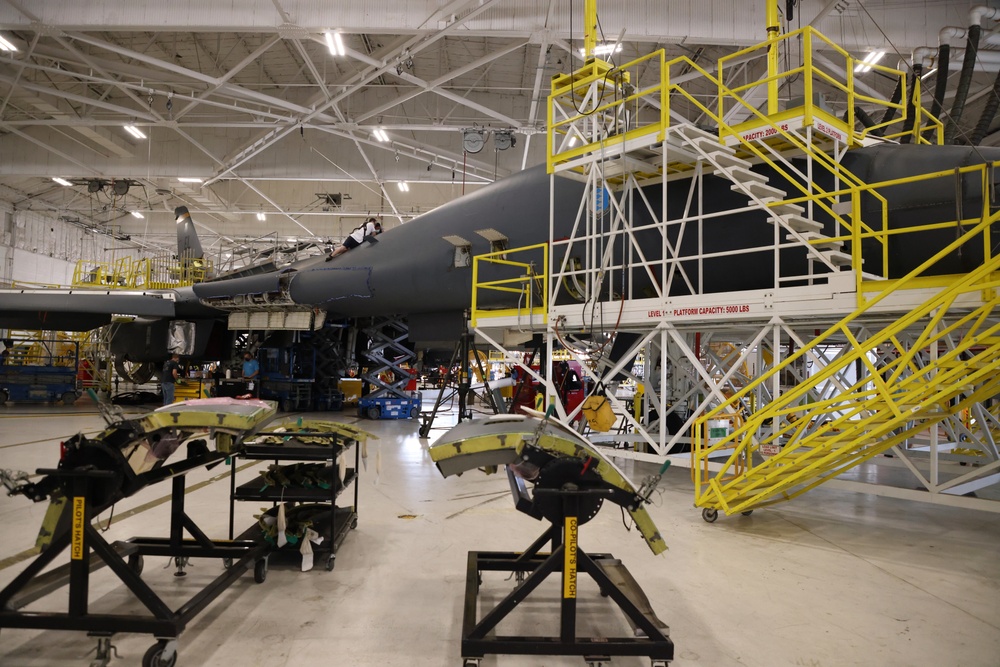
The B-1 Lancer requires extensive depot maintenance - a reality that has shaped the aircraft's operational history since the resurrected B-1B entered service (U.S. Air Force photo)
The B-1A was designed in the 1970s as a supersonic nuclear bomber, successor to the B-52. President Carter canceled the program in 1977, concluding that cruise missiles and the forthcoming stealth bomber (eventually the B-2) made the expensive B-1A unnecessary. The program consumed approximately $4 billion before cancellation, with only four prototypes built. Then President Reagan revived it as the B-1B, which entered service but lost its nuclear mission and has been plagued by maintenance challenges throughout its career.
The B-1B that actually entered service differed significantly from the canceled B-1A. Maximum speed was reduced from Mach 2.2 to Mach 1.25 to save costs and reduce radar signature. The nuclear penetration mission was eventually transferred entirely to the B-2, with the B-1B becoming a conventional bomber. Maintenance requirements proved severe - at various points, substantial portions of the B-1 fleet were non-operational due to structural or systems issues. The aircraft eventually proved valuable for conventional strike, but not as originally designed or intended.
The B-1's convoluted history illustrates how political decisions and changing requirements can transform programs beyond recognition. The aircraft that actually flies bears limited resemblance to what was originally designed. Whether this represents failure or adaptation depends on perspective - but the original B-1A concept, with its supersonic dash to evade Soviet air defenses, definitely failed when strategic realities changed. The B-1B succeeded only by becoming something the B-1A was never meant to be.
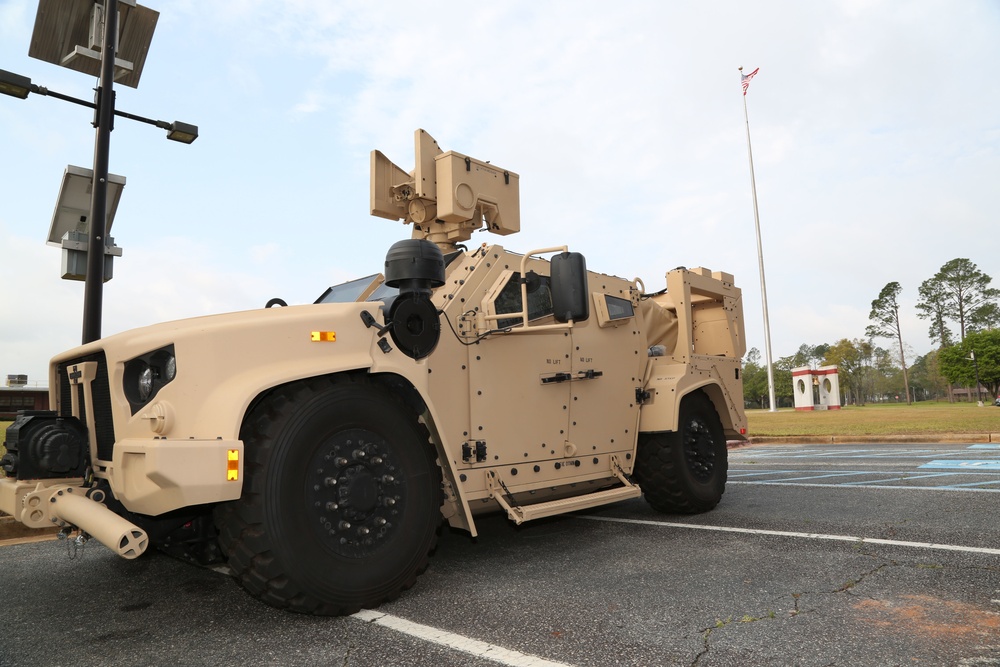
20. JLTV Development - The Humvee Replacement That Took Decades
The Joint Light Tactical Vehicle eventually succeeded - but only after multiple earlier replacement programs failed over decades (U.S. Marine Corps photo)
The Joint Light Tactical Vehicle (JLTV) eventually succeeded where multiple predecessors failed, but the two-decade journey to replace the Humvee consumed several failed programs along the way. The Humvee replacement efforts began in the 1990s, went through multiple program starts and cancellations, and didn't achieve initial operating capability until 2019. The earlier failures - including the Composite Armored Vehicle and Future Tactical Truck System - wasted billions of dollars and left soldiers in inadequate vehicles during the height of IED threats in Iraq.
Each failed predecessor attempted to solve problems that proved more difficult than anticipated. Requirements for protection, mobility, payload, and transportability often conflicted - a vehicle light enough for easy transport couldn't provide adequate protection against IEDs, while heavily protected vehicles were too heavy for the missions they needed to perform. The Composite Armored Vehicle attempted to use advanced materials to reduce weight while maintaining protection; the materials couldn't be manufactured affordably. The Future Tactical Truck System tried to create a family of vehicles from common components; the components couldn't meet divergent requirements.
The JLTV eventually succeeded by accepting tradeoffs that earlier programs refused. It's heavier than the Humvee and can't be transported as easily. It's more expensive, limiting procurement numbers. But it provides protection that soldiers actually need against real threats. The years of failed programs taught painful lessons about what requirements were genuinely essential versus what was merely desirable. Sometimes the path to success requires multiple failures to understand what's actually achievable.
21. XM8 Rifle - The M16 Replacement That Wasn't Needed
The XM8 was developed in the early 2000s as a potential replacement for the M16/M4 family of rifles. It offered improved reliability, reduced maintenance, and modular configuration options. Despite generally positive testing results, the Army canceled the program in 2005 without adopting the weapon. The XM8's failure illustrates that even technically successful systems can fail if they don't offer enough improvement to justify transition costs.
The XM8's fundamental problem was incrementalism. It was better than the M4 - but not dramatically better. The improvements in reliability and maintenance were measurable but not transformational. Against this modest capability gain, the Army weighed the enormous costs of transitioning: new training, new spare parts, new supply chains, new maintenance procedures, new magazines, new accessories. For the M4's known limitations - which soldiers had learned to work around through experience - the XM8 didn't offer enough advantage.
The XM8 experience informed subsequent decisions about small arms. When the Army eventually pursued the Next Generation Squad Weapon, it sought transformational improvements - new calibers, new capabilities, new concepts - rather than incremental refinement. The lesson from the XM8 was that replacing a mature, understood weapon system requires more than modest improvement; it requires capability jumps significant enough to justify the disruption and cost of wholesale replacement. Sometimes "good enough" incumbents are genuinely good enough.
22. SLAMRAAM - The Air Defense System Canceled by Success
Surface Launched AMRAAM (SLAMRAAM) was developed to provide short-range air defense using air-to-air missiles modified for ground launch. The system worked technically and was even exported to allies. Yet the U.S. Army never fully fielded it, canceling plans for widespread deployment. The reason wasn't technical failure but strategic reassessment - the Army concluded that the threat environment didn't require the capability SLAMRAAM provided.
SLAMRAAM was designed to defend against aircraft, helicopters, and cruise missiles at short ranges. In the post-Cold War environment, with American air dominance seemingly assured, the threat seemed manageable through other means. Existing systems like the Avenger and Patriot could address higher-priority threats. SLAMRAAM occupied a capability niche that, while real, wasn't urgent enough to justify the investment required for full fielding. The system sat in development limbo, never quite canceled but never quite fielded.
Recent developments in drone warfare have partially vindicated SLAMRAAM's concept - short-range air defense has become critically important again. But the specific SLAMRAAM system has been superseded by newer alternatives. The program illustrates how threat assessment shapes acquisition decisions, and how systems can "fail" simply by being designed for threats that don't materialize as expected. SLAMRAAM didn't fail technically; it failed strategically, addressing a problem the Army decided it didn't have.
23. Advanced Gun System and LRLAP - Ammunition Too Expensive to Fire
The Advanced Gun System (AGS) installed on Zumwalt-class destroyers represented revolutionary naval gunfire capability: 155mm guns firing Long Range Land Attack Projectiles (LRLAP) to 83 nautical miles with GPS guidance. The system worked - it could hit targets at unprecedented ranges with precision. But when Zumwalt procurement was cut from 32 ships to 3, the per-round ammunition cost exploded to approximately $800,000, making the rounds essentially unaffordable to fire. The guns were deactivated, their mission replaced by hypersonic missiles.
The AGS/LRLAP failure demonstrates how procurement decisions cascade through entire programs. The LRLAP's development costs were fixed regardless of how many rounds were produced. With 32 ships, those costs spread across a large production run, making individual rounds affordable. With only 3 ships requiring far fewer rounds, the same development costs made each round prohibitively expensive. No amount of engineering could fix what was fundamentally an economic problem created by procurement decisions.
The Navy explored alternatives - using different ammunition, modifying the guns, developing new projectiles - but none proved practical. Eventually, the service accepted that the guns' original mission couldn't be fulfilled and repurposed the ships for hypersonic strike. The AGS represents a particularly frustrating failure mode: technology that works perfectly but becomes useless due to decisions made elsewhere in the program. The engineers delivered what was asked; the acquisition system made their work irrelevant.
24. Objective Force Warrior - The Soldier System That Never Was
Objective Force Warrior (OFW) was an early 2000s program to create a comprehensive soldier system integrating communications, sensors, situational awareness displays, protective equipment, and lethality improvements. Envisioned as part of the broader Army Transformation effort, OFW promised revolutionary improvements in individual soldier capability. The program was absorbed into other efforts without ever fielding the integrated system originally envisioned, after consuming several hundred million dollars in development.
OFW faced the classic soldier-system challenge: weight. Every improvement in capability added weight that soldiers had to carry. Advanced communications meant heavier batteries. Better displays meant more electronics. Improved protection meant more armor. The accumulated weight quickly exceeded what soldiers could realistically carry and still remain effective in combat. No amount of engineering could overcome the fundamental constraint that soldiers are human beings with physical limits.
The program also suffered from integration challenges similar to FCS. Developing individual components was relatively straightforward; making them work together reliably proved far harder. The communications system interfered with the sensors. The display was difficult to read in bright sunlight. The batteries couldn't power all systems simultaneously for useful periods. Individual technologies that worked in labs failed when combined in field conditions. OFW's legacy lives on in incremental improvements to soldier equipment, but the integrated system vision was ultimately abandoned as unachievable.
25. AirLand Battle 2000 Systems - The Doctrine Outpaced the Technology
In the 1980s, the Army developed AirLand Battle 2000 doctrine calling for deep attack against Soviet second-echelon forces using advanced sensor-to-shooter systems. Multiple programs were launched to enable this doctrine: the Joint Surveillance Target Attack Radar System (JSTARS) for surveillance, the Army Tactical Missile System (ATACMS) for strike, and various command and control systems to connect them. While JSTARS and ATACMS eventually succeeded, the integrated deep-attack system as originally envisioned never materialized before the Soviet threat disappeared.
The challenge wasn't any individual system but the integration required to make them work together. Sensor data had to flow to shooters in near-real-time - challenging with 1980s technology. Command authorities had to process information and authorize strikes faster than Soviet forces could react. The entire chain had to work reliably under electronic warfare conditions the Soviets were known to employ. Each link was achievable; the chain as a whole proved too complex.
The doctrine ultimately proved more valuable than the specific systems designed to enable it. The concepts of deep attack, integration of air and ground fires, and aggressive engagement of follow-on forces influenced subsequent doctrine and capability development. Individual systems found uses beyond their original concepts. But the specific AirLand Battle 2000 vision - with its precise integration of surveillance, command, and strike - required technological capability that didn't exist in time to address the threat it was designed for. The doctrine failed to achieve its original purpose while contributing to later successes.
What These Failures Have in Common
Examining these 25 failed technologies reveals recurring patterns that transcend specific programs, services, or eras. Understanding these patterns provides insight into why military technology development fails so frequently, and potentially how to reduce future failures.
Over-complexity: Many failed programs attempted too many revolutionary technologies simultaneously. FCS, Zumwalt, and the Comanche all suffered from trying to advance multiple technology fronts at once. When any component failed, the entire integrated system suffered. Programs that succeed more often take incremental approaches, maturing individual technologies before integration.
Doctrine mismatch: Several technologies that worked technically failed because they didn't fit how the military actually fights. The EFV assumed amphibious operations would proceed as planned; they didn't. The Sergeant York assumed helicopters would behave as predicted; they didn't. Technologies must match not just stated doctrine but actual operational reality.
Sustainment burden: The Stryker MGS, LCS, and V-22 all suffered from maintenance requirements that exceeded what units could sustain. A weapon system that spends more time in repair than available for operations doesn't contribute to combat power regardless of how impressive it is when working. Sustainment is as important as capability.
Changing threat environment: The Comanche, XB-70, and AirLand Battle 2000 systems were designed for threats that didn't materialize or changed faster than development cycles could accommodate. Military technology development takes decades; threats can change in years. This mismatch is perhaps the hardest failure mode to prevent.
Economic unsustainability: The Seawolf, Zumwalt, and AGS/LRLAP all demonstrated that capability at prohibitive cost isn't capability at all. If you can only afford three submarines or three destroyers, the theoretical capability of those platforms matters less than what a sustainable fleet could provide. Cost matters as much as performance.
Integration challenges: Nearly every large program - FCS, JTRS, Objective Force Warrior - found that integrating components proved harder than developing them individually. Systems that work in isolation fail when combined. This challenge appears so consistently that assuming integration will succeed seems almost negligent.
Why Failures Still Matter
Failed military technologies provide lessons more valuable than successes. Success can result from luck, favorable circumstances, or factors unrelated to program management. Failure usually has identifiable causes that, once understood, can be avoided in future efforts. The billions spent on these 25 programs weren't entirely wasted if their lessons inform better decisions going forward.
Failed technologies often contribute to eventual successes. The Comanche's stealth research appeared in special operations helicopters. The EFV's failures informed requirements for the Amphibious Combat Vehicle. FCS's network concepts, refined through failure, influenced Army modernization. Technology rarely advances in straight lines; failed programs often provide stepping stones toward eventual success.
Understanding failure also provides perspective on current programs. When defense observers express skepticism about ambitious modernization efforts, they're often drawing on patterns visible in historical failures. Healthy skepticism - not cynicism, but informed questioning - serves military organizations better than uncritical enthusiasm for every promised revolution. Testing in realistic conditions helps identify problems before billions are spent.
Most importantly, failure is inherent to military technology development. Pushing the boundaries of what's possible means some efforts will fail. Risk aversion that prevents any failures also prevents the innovation militaries need to maintain advantage. The goal isn't to eliminate failure but to fail fast, fail cheap, and learn quickly - rather than discovering fundamental problems after decades of investment.
Summary: Failed Military Technologies at a Glance
Technology
Intended Role
Why It Failed
Key Lesson
RAH-66 Comanche
Stealth reconnaissance helicopter
Threat changed; UAVs provided alternative
Validate mission need throughout development
F-111 (early)
Multi-service fighter-bomber
Incompatible requirements
Services need different aircraft
A-12 Avenger II
Carrier-based stealth bomber
Weight growth, structural issues
Stealth adds complexity and weight
XB-70 Valkyrie
High-speed nuclear bomber
SAMs made speed insufficient
Threats evolve during development
Future Combat Systems
Integrated ground combat network
Over-complexity; integration failures
Don't develop everything simultaneously
Crusader
Advanced self-propelled howitzer
Too heavy for expeditionary operations
Strategic priorities can override performance
EFV
High-speed amphibious vehicle
Reliability; conflicting requirements
Water speed and armor don't mix
Stryker MGS
Light tank destroyer
Maintenance burden; chassis limits
Some capabilities require heavy platforms
Sergeant York
Mobile air defense
Couldn't track targets reliably
Shortcuts in development create failures
DDG-1000 Zumwalt
Advanced stealth destroyer
Costs; program cuts; ammunition expense
Scale matters for affordability
LCS
Modular littoral combatant
Reliability; capability gaps; concept flaws
Modularity often disappoints
Seawolf class
Ultimate attack submarine
Cost made fleet-size production impossible
"Best" can be enemy of "enough"
Arsenal Ship
Floating missile magazine
No institutional advocate
Concepts need champions to survive
JTRS
Universal software-defined radio
Software complexity exceeded capability
Software is hard; joint software is harder
AGS/LRLAP
Long-range naval gunfire
Ammunition unaffordable at low volume
Procurement cuts kill dependent systems
Key Takeaways
Failure is normal in military technology development. The examples here represent typical patterns, not aberrations. Expecting every program to succeed sets unrealistic expectations.
Technical success doesn't guarantee program success. Many failed systems worked exactly as designed - the problem was that the design assumptions proved wrong.
Complexity is the enemy of deliverability. Programs that attempt multiple revolutionary advances simultaneously fail at rates far exceeding those with incremental approaches.
Sustainment matters as much as performance. A system that can't be maintained in the field provides no combat power regardless of how impressive its specifications.
Requirements drive failure. Unrealistic or contradictory requirements doom programs before engineers write a line of code or bend a piece of metal.
Threats change faster than development cycles. Systems designed for one threat environment may face completely different challenges by the time they're fielded.
Cost overruns can kill technically successful programs. Capability at unaffordable cost isn't capability - it's a technology demonstration.
Integration is harder than component development. Assume integration will be the hardest part of any complex system; plan and resource accordingly.
Institutional support determines survival. Programs without advocates in military services and Congress rarely survive regardless of technical merit.
Healthy skepticism serves better than enthusiasm. Questioning revolutionary promises isn't pessimism - it's wisdom derived from historical experience.
Failed programs often contribute to eventual successes. Technology development isn't linear; failed programs frequently provide building blocks for later achievements.
The goal is learning, not blame. Understanding why programs fail enables better decisions; assigning blame typically prevents honest assessment and learning.