Michael Trent covers military aircraft, weapons systems, and defense technology with an emphasis on cost, maintenance, and real-world performance. He focuses less on specifications and more on how systems hold up once they are deployed, maintained, and operated at scale.
How much does a fighter jet cost? It seems like a straightforward question with a simple answer. Look up the price, compare it to another aircraft, and draw conclusions about value, affordability, or budget priorities. Yet anyone who has tried to answer this question quickly discovers that the "price" of a fighter jet is one of the most slippery numbers in defense economics, not because the information is classified, but because the question itself contains hidden complexity that most reporting ignores.
The confusion begins with what we mean by "cost." A single modern fighter aircraft might have a flyaway cost, a procurement cost, a unit recurring cost, a program acquisition cost, and a lifecycle cost, each representing a different way of calculating what the aircraft "costs." These numbers can differ by factors of two or three, yet all describe the same airplane. When one source cites a fighter's price at $85 million and another quotes $200 million, both may be technically correct; they are simply measuring different things.
This ambiguity matters beyond academic interest. Defense budget debates, international comparisons, and procurement decisions often hinge on cost figures that, taken out of context, mislead more than they inform. A cheaper aircraft is not necessarily more economical. An expensive program is not necessarily wasteful. A dropping unit price does not automatically signal success, and a rising one does not necessarily indicate failure. Understanding what fighter jet prices actually mean requires looking past headline numbers to the underlying structure of how military aircraft are developed, produced, and sustained.
This article explains why fighter jet prices are so difficult to compare honestly. It breaks down the different types of cost figures and what each includes or excludes. It examines why modern fighters cost more than their predecessors, not as criticism but as explanation of the trade-offs involved. It provides real-world price ranges based on public data while explaining why these ranges shift based on production timing, configuration, and buyer circumstances. And it addresses common misconceptions that lead to flawed conclusions about fighter affordability and value.
For those examining specific aircraft comparisons, the F-15 vs F-35 analysis and F-22 vs Su-57 comparison explore how different design philosophies translate into operational differences. Understanding cost structure adds another dimension to these comparisons, revealing why the "more expensive" option may sometimes represent better value, and why "cheaper" alternatives often prove costlier over time.
What People Mean When They Ask "How Much Does a Fighter Jet Cost?"
When someone asks the price of a fighter jet, they typically imagine a number similar to a car's sticker price: the amount you pay and what you get for it. Military aircraft pricing works nothing like this. The "price" of a combat aircraft depends entirely on what costs you include, when you measure them, how many aircraft you are buying, and what you expect to happen over the aircraft's lifetime.
Understanding fighter jet costs requires distinguishing between several fundamentally different measures. Each has legitimate uses, but mixing them leads to meaningless comparisons. A $85 million aircraft and a $400 million aircraft may be the same airplane; the difference lies entirely in what costs are being counted.
An F-15EX Eagle II arrives at Eglin Air Force Base. The latest variant of a proven design, its "cost" varies dramatically depending on how you measure it (U.S. Air Force photo)
Flyaway cost represents the price of a complete aircraft ready to leave the factory floor. This includes the airframe, engines, avionics, and basic equipment needed for the aircraft to fly and perform its mission. It is the number most commonly quoted in media reports because it feels most like a "sticker price." However, flyaway cost deliberately excludes many expenses, including research and development, spare parts, training systems, ground support equipment, and anything that happens after the aircraft leaves the factory.
Procurement cost adds program-level expenses to flyaway cost. This typically includes research and development amortized across the production run, initial spare parts, and sometimes support equipment. Procurement cost better reflects what a buyer actually pays for the capability, but it varies based on where in the production run you measure, since early aircraft bear more R&D burden than later ones.
Program cost encompasses everything: development, testing, production, modifications, and often decades of sustainment. When critics cite trillion-dollar program costs, they typically include projected expenses stretching 30-50 years into the future. These numbers are useful for understanding long-term budget commitments but tell you little about what any individual aircraft "costs."
Lifecycle cost attempts to capture total ownership expense from acquisition through retirement. This includes maintenance, fuel, training, modifications, and eventual disposal. Lifecycle cost often exceeds purchase price by factors of three to five. An aircraft that costs $100 million to buy may cost $400 million to operate over its service life. This is arguably the most important cost metric but also the most uncertain, depending on assumptions about operating tempo, modification requirements, and service life duration.
Cost Type
What It Includes
What It Excludes
Why It's Misleading Alone
Flyaway Cost
Complete aircraft, engines, avionics
R&D, spares, training, support equipment
Understates true acquisition cost by 30-50%
Procurement Cost
Flyaway + R&D allocation + initial spares
Long-term sustainment, modifications
Varies by production lot timing
Program Cost
Development + production + sustainment
Nothing (but spans decades)
Inflates perceived per-aircraft cost
Lifecycle Cost
Everything from acquisition to retirement
Nothing (but highly uncertain)
Depends on assumptions decades out
The practical effect of these different measures is that honest cost comparisons require specifying exactly what you are comparing. A claim that "Aircraft A costs half as much as Aircraft B" is meaningless without knowing whether both figures use the same cost definition, whether they are measured at comparable production points, and whether the aircraft have comparable capabilities and support packages. Most public discussions fail to meet any of these requirements.
Flyaway Cost: The Number Most People Quote
Flyaway cost dominates public discussion because it appears most like a straightforward price tag. Media reports almost universally use flyaway figures when discussing fighter costs, and manufacturers prefer this metric because it typically produces the lowest number. Yet flyaway cost, while useful for certain purposes, can significantly understate what a buyer actually pays for operational capability.
The definition of flyaway cost varies somewhat between programs and countries, but generally includes the complete aircraft as delivered from the manufacturer: airframe structure, propulsion system, avionics and mission systems, and government-furnished equipment installed at the factory. The aircraft is theoretically ready to fly when it rolls off the production line, hence "flyaway."
F-35 production line showing aircraft in various stages of assembly, where scale and efficiency dramatically affect flyaway cost (U.S. Air Force photo)
What flyaway cost excludes matters as much as what it includes. Research and development costs, which for a modern fighter program can reach $30-60 billion, appear nowhere in flyaway figures. Initial spare parts inventories, without which aircraft cannot be maintained, are excluded. Training systems, simulators, and pilot/maintainer courses are not counted. Ground support equipment, technical documentation, and infrastructure modifications required to operate the aircraft are omitted. All of these represent real expenses that a buyer must incur to achieve operational capability.
Despite these limitations, flyaway cost serves useful purposes. It allows comparison of aircraft at similar production stages. It tracks manufacturing efficiency over time. It provides a baseline for understanding what the physical aircraft costs to produce. For these reasons, flyaway cost remains a standard metric in defense acquisition, but it should never be treated as "the price" of an aircraft without acknowledging what it excludes.
One important characteristic of flyaway cost: it typically decreases over a production run. Early-production aircraft cost more because manufacturing processes have not yet achieved efficiency, tooling and facilities require refinement, suppliers have not optimized their processes, and workforce learning curves have not plateaued. As production matures, all of these factors improve, driving unit costs down. This is why citing a program's flyaway cost requires specifying which production lot you mean, since the first lot may cost 50% more than the hundredth.
Approximate Flyaway Cost Ranges
The following ranges represent approximate flyaway costs for modern fighter aircraft based on publicly available data. These figures shift based on production timing, specific configuration, and contract structure. They are presented as ranges rather than specific numbers because precision would be misleading, as actual prices depend on factors specific to each purchase.
Aircraft Category
Approximate Flyaway Range
Key Cost Drivers
Light Fourth-Generation
$35-65 million
Avionics sophistication, weapons integration
Heavy Fourth-Generation
$70-110 million
Size, engines, sensor suite complexity
Fifth-Generation (Standard)
$80-130 million
Stealth materials, sensor fusion, production maturity
Fifth-Generation (Premium)
$130-200+ million
Limited production, advanced capabilities
These categories overlap significantly because "generation" describes capability rather than cost. A heavily upgraded fourth-generation fighter with advanced avionics and weapons integration may cost as much as a basic fifth-generation variant. The ranges also shift over time; an aircraft that cost $150 million in early production may cost $85 million a decade later after manufacturing has matured.
Procurement and Program Costs: The Bigger Picture
Moving beyond flyaway cost to procurement and program-level figures reveals where the real money goes in fighter acquisition. These broader measures capture expenses that flyaway cost ignores, and they often tell a very different story about what combat capability actually costs.
A pilot prepares for a training sortie. Pilot training, simulation systems, and instructor programs represent significant costs invisible in flyaway figures (U.S. Air Force photo)
Research and development represents the most significant cost invisible in flyaway figures. Developing a modern fighter aircraft requires creating and testing new technologies, building and evaluating prototypes, conducting thousands of flight test hours, developing software containing millions of lines of code, and integrating systems that have never worked together before. This process typically spans 10-20 years and costs $30-60 billion for a major program.
R&D cost must be recovered somewhere, and the mechanism is amortization across the production run. If a program spends $40 billion on development and produces 2,000 aircraft, each unit "carries" $20 million in R&D cost on top of its production cost. If the same development effort produces only 200 aircraft, each unit carries $200 million. This simple arithmetic explains why small production runs, even of proven designs, prove so expensive per unit, and why export sales can significantly reduce costs for all buyers by spreading development expenses across more aircraft.
The relationship between development and production also explains why costs drop as programs mature. Early production aircraft bear not only the manufacturing inefficiencies of new production but also a disproportionate share of ongoing development costs, as testing continues, problems are discovered and corrected, and software is refined. Later production aircraft benefit from completed development and optimized manufacturing.
Production Scale and Unit Cost
Production rate exerts powerful influence on unit cost through mechanisms beyond R&D amortization. Manufacturing efficiency improves with repetition as workers become more skilled, processes are refined, and problems are solved. Higher production rates allow manufacturers to negotiate better prices from suppliers, maintain optimal inventory levels, and avoid the costs of stopping and restarting production lines.
The practical effect is dramatic. An aircraft produced at 20 units per year may cost 30-40% more per unit than the same aircraft produced at 100 units per year. This partly explains why international programs, which pool orders from multiple countries, often achieve lower unit costs than national programs because the combined order volume drives efficiency that no single buyer could achieve alone.
"The unit cost of the 100th aircraft of a type may be half what the 10th unit cost, not because the design changed, but because manufacturing learned how to build it efficiently."
Production efficiency also explains why extending production of existing designs sometimes makes more economic sense than developing new ones. A mature production line building aircraft efficiently may deliver more capability per dollar than a new program in early production, even if the older design is technologically less advanced.
Cost Flow Through Program Lifecycle
R&D Phase (10-20 years): Technology development → Prototype construction → Flight testing → Software development → System integration → Design refinement
Production Phase (20-30+ years): Manufacturing startup → Early production (high cost) → Production maturity (declining cost) → Upgrades and modifications
Sustainment Phase (Concurrent with production + 10-20 years): Maintenance → Training → Spare parts → Software updates → Capability upgrades → Eventually disposal
Lifecycle Cost: Where the Real Money Goes
If flyaway cost misleads by what it excludes, lifecycle cost attempts comprehensiveness, capturing every expense from development through retirement. This perspective reveals an uncomfortable truth: the purchase price of a combat aircraft typically represents only 20-30% of total ownership cost. The remaining 70-80% accumulates over decades of operation, maintenance, and modification.
F-35 maintainers perform scheduled maintenance. Sustainment costs over an aircraft's lifetime typically exceed its purchase price by a factor of three to five (U.S. Air Force photo)
Maintenance represents the largest sustainment expense. Modern fighters require continuous attention: inspections, repairs, component replacements, and preventive maintenance consume thousands of labor hours annually. Maintenance man-hours per flight hour (MMH/FH) varies dramatically between aircraft types. A fighter requiring 30 MMH/FH costs twice as much to maintain as one requiring 15 MMH/FH, all else equal. Over a 30-year service life with thousands of flight hours, this difference compounds into billions of dollars.
Training costs accumulate continuously. Pilots require initial qualification, continuation training, and periodic requalification. Maintainers need schooling on aircraft systems and periodic updates as modifications are made. Simulator time, instructor pilots, training ordnance, and dedicated training aircraft all contribute to training costs. These expenses persist for the aircraft's entire service life and increase if the aircraft is operationally complex.
On September 2, 1945, Japanese officials signed the Instrument of Surrender on Missouri's deck in Tokyo Bay. Iowa-class, nine 16-inch guns in three triple turrets, roughly 30 inches long at 1/350 scale. 291 reviews at 4.5 stars.
Fuel consumption scales with operating tempo and aircraft characteristics. A thirsty engine or high-drag airframe costs more to operate over time. While fuel costs fluctuate with petroleum prices, the underlying consumption rate is fixed by design. For high-tempo operations, fuel can represent a significant fraction of annual operating costs.
Software and systems upgrades have become increasingly important as aircraft have become software-intensive platforms. Modern fighters contain millions of lines of code controlling avionics, weapons, sensors, and flight systems. This software requires continuous development, testing, and fielding of updates. Cybersecurity maintenance adds another layer. For software-intensive fifth-generation fighters, software sustainment represents a substantial and growing cost category.
Modifications and capability upgrades keep aircraft operationally relevant over decades of service. Threats evolve, new weapons become available, and avionics require updating. Each upgrade program adds cost. Some aircraft designs accommodate upgrades more easily than others, a design decision that affects lifecycle cost long after acquisition.
Cost Category
Approximate Share
Why It Grows Over Time
Acquisition
20-30%
Fixed at purchase (but modifications add)
Maintenance & Repair
30-40%
Aircraft age, parts scarcity, structural fatigue
Training
10-15%
Continuous need, increasing complexity
Fuel & Consumables
10-15%
Operating tempo, price fluctuations
Software & Upgrades
10-20%
Continuous development, new threats
The implication is clear: an aircraft that costs more to purchase but less to sustain may prove more economical than a cheaper alternative with higher operating costs. This trade-off is not always straightforward, since sustainability depends on operational tempo, service life expectations, and maintenance infrastructure. But it explains why sophisticated buyers focus on lifecycle cost rather than purchase price when evaluating fighter options.
Why Modern Fighters Cost More Than Older Ones
Each successive generation of fighter aircraft costs substantially more than its predecessor. This pattern prompts regular criticism of defense spending and procurement management. Yet the cost growth reflects real changes in what aircraft are expected to do and how they are expected to survive doing it. Understanding these drivers explains cost growth without necessarily justifying every dollar spent.
An F-22 Raptor demonstrates its capabilities - the combination of stealth, sensors, and supermaneuverability represents decades of development at enormous cost (U.S. Air Force photo)
Sensors and avionics have evolved from electromechanical instruments to integrated digital systems processing vast amounts of data. Modern fighters carry radars that can track dozens of targets while mapping terrain and jamming enemy systems. They carry infrared sensors, electronic warfare suites, and data links that share information across formations. Each of these capabilities requires sophisticated hardware and software. As "First Look, First Shot" explains, these sensors increasingly determine combat outcomes - making them essential despite their cost.
Software complexity has exploded as aircraft have become networked information systems. Early fighters contained thousands of lines of code; modern fighters contain millions. This software controls flight systems, manages weapons, fuses sensor data, enables secure communications, and updates continuously throughout the aircraft's life. Software development now represents a substantial fraction of development cost - and unlike hardware, software never "finishes" development.
Stealth features add cost through exotic materials, precise manufacturing tolerances, and specialized maintenance requirements. Radar-absorbing materials are expensive to produce and apply. The geometric precision required for low observability demands manufacturing capabilities beyond what conventional aircraft require. Maintaining stealth properties requires careful attention that adds to sustainment costs. For countries prioritizing contested airspace operation, these costs may be essential; for others, they may not be justified.
Integration burden has grown as aircraft systems have become more interconnected. Older aircraft had discrete systems that largely operated independently. Modern fighters integrate everything - a change to the radar software may affect the electronic warfare system, which may affect the flight control software. This integration delivers capability through sensor fusion and automated coordination, but it multiplies development complexity and testing requirements.
Survivability requirements have intensified as threats have become more lethal. Surface-to-air missiles are more capable, air-to-air missiles more difficult to evade, and detection systems more sophisticated. Aircraft designed to survive in this environment require capabilities that simply did not exist - and were not needed - for earlier generations. The alternative to paying for survivability is accepting higher losses, which carries its own costs in lives, replacement aircraft, and mission failure.
These cost drivers interact and compound. More capable sensors require more powerful computing, which requires more electrical power, which requires larger generators, which adds weight, which requires more thrust, which increases fuel consumption and cost. Each capability added ripples through the entire design, affecting cost in ways not immediately obvious from examining any single system.
Why "Cheaper" Fighters Are Not Always Cheaper
Faced with rising costs, a seemingly obvious solution is to buy simpler, less expensive aircraft. Several recent programs have attempted this approach - developing "affordable" alternatives to expensive fifth-generation fighters. Yet the experience of these programs illustrates why lower acquisition cost does not guarantee lower total cost.
Availability rates affect effective cost per operational hour. An aircraft that costs half as much but spends twice as much time in maintenance delivers no savings - you need twice as many aircraft to achieve the same operational capacity. Availability depends on design reliability, maintenance accessibility, and spare parts availability. Simpler aircraft may theoretically achieve higher availability, but not all simpler aircraft do so in practice.
The first B-17 kit with a complete interior from nose to tail: bombardier station, cockpit, radio room, bomb bay, waist gunner positions, and tail gunner. 400+ parts, over two feet of finished wingspan at 1/48 scale. This is the premium bomber build.
Engine maintenance requires specialized training and equipment - maintenance burden significantly affects lifecycle cost regardless of purchase price (U.S. Air Force photo)
Maintenance man-hours per flight hour compound over decades. A fighter requiring 50% more maintenance time per sortie will consume 50% more labor over its service life. If that labor costs $100 per hour and the aircraft flies 300 hours annually for 25 years, the difference amounts to millions of dollars per aircraft - potentially exceeding any acquisition savings.
Upgrade paths determine whether aircraft remain relevant as threats evolve. An aircraft designed with growth margins - excess cooling, electrical power, and physical space - can accept new systems without fundamental redesign. An aircraft optimized solely for low initial cost may lack these margins, making future upgrades expensive or impossible. Given that fighters typically serve 30-40 years, upgrade capacity significantly affects total value.
Operational effectiveness per sortie is the metric that ultimately matters. If Aircraft A costs twice as much as Aircraft B but accomplishes three times as much per sortie, Aircraft A is actually more economical for the mission. Effectiveness encompasses weapons capacity, sensor capability, survivability, and range - all of which affect how many sorties are needed to accomplish a given objective. The A-10's persistent effectiveness despite age demonstrates how mission-optimized design can deliver value that unit cost alone does not capture.
Factor
Low-Cost Aircraft Tendency
Long-Term Cost Implication
Availability Rate
Variable - not guaranteed higher
More aircraft needed if availability lower
Maintenance Burden
May be lower or may be higher
Compounds over 30+ year lifecycle
Upgrade Capacity
Often limited by design
May require expensive redesign or early retirement
Mission Effectiveness
Typically lower per sortie
More sorties needed = more total cost
Survivability
Often compromised for cost
Higher attrition = replacement and mission costs
None of this proves that more expensive aircraft are always worth their cost. Some capability investments may not prove valuable. Some procurement programs genuinely fail to deliver value. But the analysis demonstrates that "cheaper" aircraft must be evaluated on lifecycle economics, not just purchase price - and that optimization for low acquisition cost often shifts expenses elsewhere rather than eliminating them.
Real-World Price Ranges: Public Data in Context
Understanding cost structure allows us to place public price data in appropriate context. The following ranges represent approximate flyaway costs for currently produced or recently produced combat aircraft, based on publicly available sources. These figures should be treated as indicative rather than precise - actual prices depend on specific contract terms, configurations, and timing.
Fourth-generation fighters currently in production span a wide range. Light fighters optimized for air defense or training cost $35-65 million depending on avionics sophistication. Multi-role fighters with more capable sensors and weapons integration range from $60-90 million. Heavy strike fighters with large weapon loads and advanced targeting systems approach $90-110 million. These ranges overlap significantly because capability matters more than category.
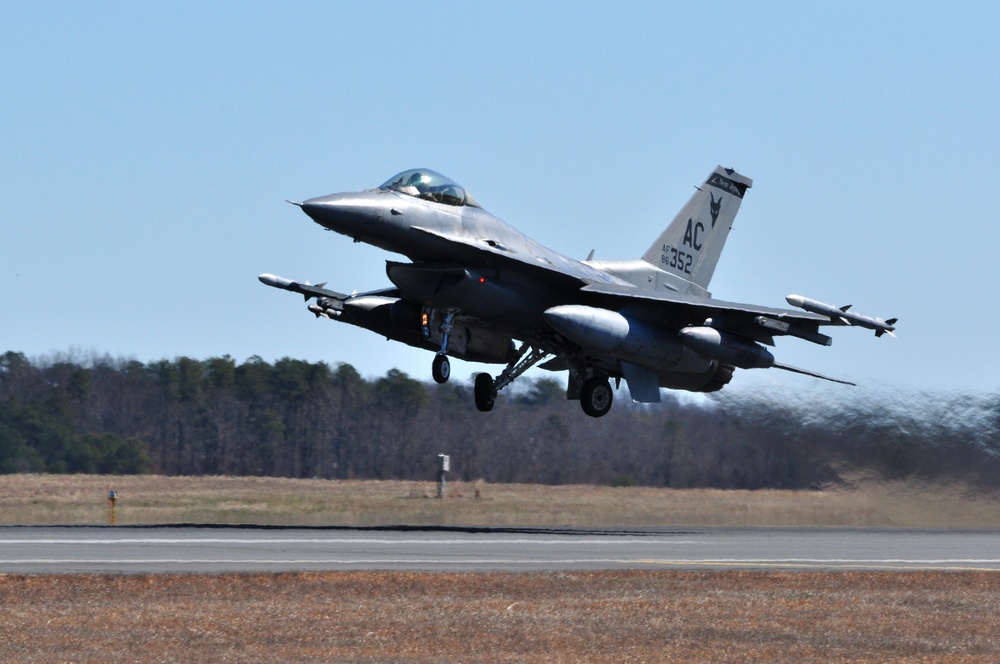
An F-16 Fighting Falcon in flight - decades of production have driven costs down while upgrades have kept the platform capable (U.S. Air Force photo)
Fifth-generation fighters demonstrate how production maturity affects pricing. Early F-35A production units cost over $200 million. Recent lots have achieved flyaway costs around $80 million - a reduction of more than 50% as manufacturing has scaled and matured. This trajectory illustrates how unit cost at any point in production can misrepresent program economics.
Configuration significantly affects price even within the same aircraft type. An aircraft delivered in "clean" configuration with basic avionics costs less than one with full mission systems, targeting pods, electronic warfare suites, and weapons integration. Export configurations often differ from domestic versions, making direct price comparisons misleading.
Time sensitivity matters because costs change. An aircraft that cost $120 million in 2018 may cost $85 million in 2025 due to production learning and efficiency. Inflation adjustments further complicate comparison - a $50 million aircraft in 2005 dollars represents substantially more purchasing power than $50 million today. Most public cost figures do not specify whether they are in current-year or constant-year dollars.
The purpose of understanding these ranges is not to declare one aircraft a better "value" than another, but to illustrate how much context affects any cost comparison. Claims that one fighter "costs twice as much" as another require knowing exactly what costs are being compared, at what point in production, in what configuration, and in what currency terms. Few public discussions meet these requirements.
Export, Customization, and Why Prices Vary by Country
No two countries pay the same price for the same aircraft type. Export pricing incorporates factors that domestic procurement does not, making international comparisons even more complex than domestic analysis. Understanding these factors explains apparent price discrepancies in arms sale announcements.
Aircraft from multiple nations during a multinational exercise - each country's purchase price reflects unique circumstances, not just aircraft capability (U.S. Air Force photo)
Configuration differences drive much of the price variation. Export aircraft may include or exclude specific systems based on technology release approvals. Some buyers want integration with national weapons; others accept off-the-shelf configurations. Avionics may be enhanced or simplified compared to the producer's domestic version. Each variation affects price.
Training and support packages often exceed aircraft cost for new operators. Establishing maintenance capability requires training technicians, instructors, and logistics personnel. Simulators and training aids must be acquired. Technical documentation must be provided. For a country standing up a new aircraft fleet, these support costs may approach or exceed the aircraft acquisition cost.
The twin-boom P-38L in the Pacific Theater livery of the 475th Fighter Group. Features the "Putt Putt Maru" nose art, counter-rotating props, and Corgi's Aviation Archive packaging.
Infrastructure requirements add to total program cost. Hangars, maintenance facilities, fuel systems, and weapons storage may need construction or modification. Communications and data systems may require integration. These costs are specific to each buyer's existing infrastructure and cannot be standardized.
Offset agreements complicate price calculation. Many export contracts require the seller to invest in the buyer's economy - through technology transfer, local production, or unrelated investments. These offsets represent cost to the seller that must be recovered, typically through higher aircraft prices. A $100 million aircraft with 50% offset obligations effectively costs the seller $150 million to provide, which affects what they will accept as payment.
Cost Driver
Domestic Buyer
Export Buyer
Coalition Partner
Configuration
Full capability
May be restricted
Near-full capability
Training Package
Existing infrastructure
Must be established
Shared programs
Support Equipment
Existing inventory
Must be procured
Partially shared
Offset Requirements
None
Often 50%+
Negotiated
R&D Cost Share
Fully amortized
Reduced share
Development partner
When media reports that Country A paid $X billion for Y aircraft, the resulting "per aircraft" calculation typically includes all of these factors bundled together - making it incomparable to domestic flyaway costs or to prices paid by other export customers. Understanding this bundling explains why export "prices" often appear dramatically higher than domestic costs for the same aircraft type.
Why Price Alone Does Not Determine Value
The temptation to judge fighter aircraft primarily by cost metrics is understandable given budget constraints and public accountability requirements. Yet price alone, even properly contextualized lifecycle price, cannot determine whether an aircraft delivers value. Value emerges from the relationship between cost and the capability achieved - and capability assessment is inherently situational.
An F-15E Strike Eagle undergoes weapons loading - mission capability and weapons capacity affect value in ways unit cost cannot capture (U.S. Air Force photo)
Mission fit determines whether capability translates to operational value. An aircraft optimized for one mission may be poorly suited for another, regardless of how capable or expensive it is. The role of speed in air combat illustrates this point - speed matters enormously for some missions and very little for others. An expensive interceptor provides poor value if your primary need is close air support; an inexpensive trainer provides poor value if you need to penetrate contested airspace.
Doctrine shapes requirements in ways that affect which costs are justified. Air forces with different strategic positions, different threat environments, and different operational concepts need different capabilities. What represents excellent value for one air force may represent poor value for another, not because either made an error but because their situations differ. There is no universal "best value" fighter - only fighters more or less suited to specific contexts.
Sustainment capacity affects whether theoretical capability becomes operational reality. An aircraft that delivers outstanding capability on paper but requires maintenance infrastructure the operator cannot provide delivers less actual value than a simpler aircraft the operator can keep flying. This consideration weighs heavily in many export decisions, where lower-capability aircraft may deliver better actual results for countries with developing maintenance capabilities.
Long-term relevance determines whether investment pays off over the aircraft's lifetime. A fighter that remains capable through decades of threat evolution delivers more value than one that becomes obsolete early, even if the latter cost less initially. This is particularly relevant for fifth-generation fighters, whose stealth and sensor fusion may remain decisive advantages for decades, potentially justifying higher upfront costs.
The implication is that procurement decisions cannot be reduced to spreadsheet comparisons of unit costs. Cost matters enormously - no air force has unlimited budgets. But cost decisions require understanding what capability is being purchased, whether that capability fits operational requirements, and whether the purchasing organization can sustain and employ the capability effectively over time.
Common Myths About Fighter Jet Costs
Public discussion of fighter costs is rife with misconceptions that lead to flawed conclusions. Addressing these directly clarifies what cost figures do and do not tell us about fighter programs.
"This Jet Costs X Billion Dollars"
When critics cite multi-billion-dollar costs for individual aircraft, they are almost always describing program costs divided by production numbers - bundling decades of development, production, and projected sustainment into a single shocking figure. No individual aircraft costs billions of dollars. This framing, while useful for understanding total program commitment, misleads about what any single purchase involves. It is akin to saying a car "costs" $500,000 because that includes projected fuel, insurance, and maintenance over 20 years - technically defensible but fundamentally misleading about purchase price.
"New Jets Are Always Overpriced"
New production aircraft cost more than mature production for reasons explained earlier - learning curves, process refinement, and development cost amortization. Judging a program by early production costs ignores the established pattern of cost reduction as production matures. The F-35's cost trajectory - from over $200 million in early lots to approximately $80 million in recent production - exemplifies this pattern. Programs should be judged on mature production costs, not early-lot figures that inevitably start high.
"Cheaper Jets Are Better Value"
As discussed extensively above, lower acquisition cost often shifts rather than eliminates expense. An aircraft may cost less to buy but more to operate, maintain, or upgrade. It may require more units to achieve the same operational capacity. It may become obsolete sooner, requiring expensive replacement. Lifecycle cost analysis frequently reveals that apparently cheaper options prove more expensive over time. Value requires analyzing total cost of ownership, not just purchase price.
"Upgrades Are Optional"
Fighter aircraft serve for 30-40 years in environments where threats evolve continuously. An aircraft that was capable when delivered may be obsolete a decade later if not upgraded. Treating upgrades as optional extras rather than essential sustainment understates lifecycle cost and overstates effective service life. For accurate lifecycle costing, upgrade programs must be treated as expected rather than exceptional expenses.
"Export Prices Prove Domestic Costs"
As detailed earlier, export prices include training, support, infrastructure, and offset costs that domestic purchases avoid. Comparing export package prices to domestic flyaway costs produces meaningless results. Each price must be understood in context of what it includes before comparisons are drawn.
Why This Question Keeps Coming Up
Fighter jet cost generates persistent public interest for reasons beyond idle curiosity. Understanding why people keep asking helps explain why simple answers remain elusive and why the question matters.
Public accountability drives legitimate interest in defense spending. Taxpayers and their representatives want to know whether military expenditures deliver value. Fighter programs, as among the most expensive single procurement efforts, naturally attract scrutiny. This accountability function is healthy and necessary - but it requires analytical framework that simplistic cost citations cannot provide.
Media incentives favor simplified, dramatic cost figures over nuanced analysis. "Fighter costs $400 million" generates more engagement than "Fighter flyaway cost of $85 million reflects mature production, with total ownership cost depending on operational tempo and service life assumptions." The incentive structure that rewards simplification perpetuates misleading cost discussions.
Comparative curiosity motivates many questions about fighter costs. People want to know how their country's fighters compare to potential adversaries, whether allies are contributing fairly to mutual defense, and how current aircraft compare to historical ones. These are legitimate interests, but they require the contextual understanding this article provides to avoid reaching false conclusions.
Budget visibility has increased as defense spending faces greater public scrutiny. Where past generations might have accepted defense procurement as a specialized domain, contemporary publics expect transparency. This expectation is reasonable - but meeting it requires education about the complexity that honest cost accounting involves.
The question "how much does a fighter jet cost?" keeps coming up because it addresses real interests that deserve answers. The challenge is that honest answers require more context than the question implies. This article attempts to provide that context, not to evade the question but to enable meaningful answers.
Key Takeaways
For those seeking the essential points without the full analysis, the following summarizes what understanding fighter jet costs actually requires:
"Cost" has multiple meanings - flyaway, procurement, program, and lifecycle costs each measure different things and can vary by factors of three or more for the same aircraft.
Flyaway cost is the most cited but least complete measure - it excludes R&D, training, support, and sustainment that represent 70-80% of total ownership cost.
Lifecycle cost exceeds purchase price by 3-5x - maintenance, fuel, training, and upgrades over 30-40 years dwarf initial acquisition expense.
Production scale dramatically affects unit cost - early production costs 30-50% more than mature production, making timing essential for any cost comparison.
Modern fighters cost more for real reasons - sensors, software, stealth, and survivability add capability that older aircraft lacked, but at substantial expense.
Cheaper acquisition may mean higher lifecycle cost - maintenance burden, upgrade capacity, and operational effectiveness affect total value more than purchase price.
Export prices are not comparable to domestic costs - training, support, infrastructure, and offsets add expenses unique to each buyer.
Price does not determine value - mission fit, doctrine, sustainment capacity, and long-term relevance shape whether cost translates to capability.
Cost reduction takes time - judging programs by early production costs ignores the established pattern of declining unit prices as manufacturing matures.
Upgrade costs are essential, not optional - aircraft serving 30-40 years require continuous modernization to remain operationally relevant.
Context determines whether comparisons are meaningful - same cost type, same production timing, same configuration, and same currency terms are minimum requirements for honest comparison.
Simplistic cost claims usually mislead - whether arguing an aircraft is "too expensive" or a "bargain," single-number claims without context cannot support the conclusions they imply.
Fighter jet costs matter because they shape defense capabilities, affect taxpayer burden, and influence strategic choices. But understanding what these costs mean requires moving beyond headline numbers to the structural factors that determine real expense. Only then can the question "how much does a fighter jet cost?" receive the answer it deserves: "It depends - and here's why that matters."