Michael Trent covers military aircraft, weapons systems, and defense technology with an emphasis on cost, maintenance, and real-world performance. He focuses less on specifications and more on how systems hold up once they are deployed, maintained, and operated at scale.
"First look, first shot, first kill." The phrase has become one of the most repeated (and most misunderstood) mantras in modern air combat discourse. It appears in procurement documents, pilot interviews, and defense commentary as if it were a universal law of aerial warfare. Yet for all its repetition, the phrase often obscures more than it reveals.
The concept suggests a simple chain: see your enemy first, shoot first, and win. In reality, modern air combat is far more complex. Detection does not guarantee tracking. Tracking does not guarantee identification. Identification does not guarantee a viable engagement opportunity. And even a successful first shot does not guarantee a kill.
What the phrase actually describes is not a guaranteed outcome, but a compressed timeline, a window of advantage that, if properly exploited, can reshape an engagement before the adversary fully understands the situation. The pilot who detects first has more time. More time to assess. More time to position. More time to decide whether to engage, evade, or wait. That time advantage, not any single shot, is what defines modern air superiority.
This matters because how we understand the phrase shapes how we design aircraft, train pilots, and evaluate tactics. If we treat "first look, first shot" as a simple deterministic chain, we might over-invest in raw sensor range while neglecting decision support systems. We might assume stealth alone guarantees victory while underestimating the complexity of the kill chain. We might confuse engagement opportunity with engagement success.
This article explains what "first look, first shot" actually means in contemporary air combat, not as a slogan but as a doctrine rooted in physics, tactics, and human judgment. We will explore where the phrase comes from, what it implies operationally, and why it continues to shape how air forces around the world design, train, and fight.
Where the Phrase Comes From
The concept of gaining advantage through early detection is as old as aerial combat itself. In the skies over France during World War I, pilots quickly learned that the aircraft with better visibility - whether through superior cockpit design, higher altitude, or sun positioning - held a decisive advantage. Many successful aces of that era built their reputations not on superior dogfighting skills, but on disciplined approach tactics that allowed them to attack from unseen positions.
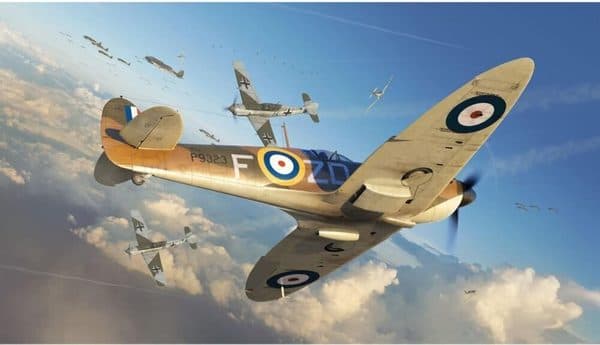
The principle intensified during World War II, where the development of radar fundamentally changed what "first look" meant. Ground-based radar allowed defenders to vector fighters toward incoming bombers before visual contact. Airborne interception radar, though primitive, gave night fighters the ability to find targets in darkness. The Battle of Britain demonstrated that detection - knowing where the enemy was - could be as decisive as the performance of the aircraft themselves.
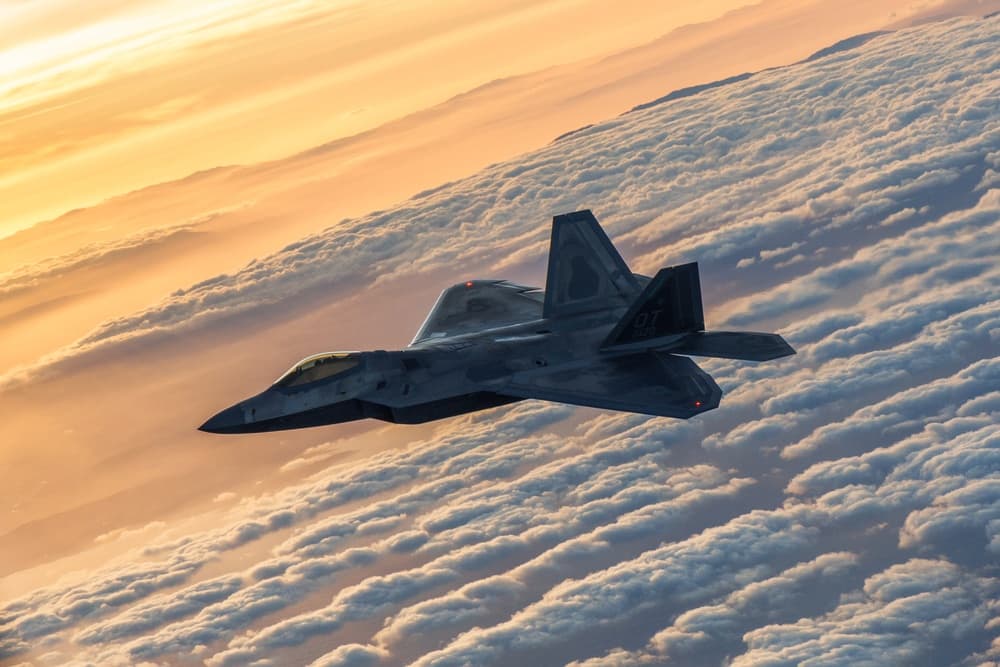
The phrase "first look, first shot, first kill" in its modern form emerged during the development of the F-22 Raptor program in the 1980s. Lockheed engineers and Air Force requirements officers used it to articulate the operational philosophy driving the aircraft's design: combine low observability (stealth) with superior sensors to create an asymmetric information advantage. The F-22 was designed not simply to outmaneuver opponents, but to make maneuvering unnecessary by deciding engagements before they became close-range fights.
This represented a doctrinal shift. Earlier generations of fighters were designed around the assumption that engagements would eventually become visual, close-range affairs. Pilots trained extensively in basic fighter maneuvers - the turning, rolling, and energy management techniques that define within-visual-range combat. The F-22 philosophy challenged this assumption: if you could reliably detect and engage adversaries beyond visual range, why design for a close-range fight you intended to avoid?
The phrase has since become standard terminology across air forces worldwide. It appears in doctrine, training curricula, and manufacturer marketing materials. But its widespread use has also led to oversimplification. Understanding what the phrase actually implies requires examining each component separately.
What "First Look" Actually Means Today
An E-3 Sentry AWACS undergoes pre-flight operations during a Large Force Exercise. Airborne early warning aircraft extend detection range and provide networked situational awareness to fighter aircraft. (U.S. Marine Corps photo by Cpl. Gideon M. Schippers)
In modern air combat, "first look" encompasses far more than simple detection. It represents a hierarchy of information quality, each level providing progressively greater tactical utility.
Detection
At the most basic level, detection means knowing something is out there. A radar might return an intermittent blip. An electronic warfare system might detect an emission. An infrared sensor might note a thermal signature. Detection tells you that you are probably not alone, but it may not tell you where the contact is, what it is, or whether it poses a threat. Detection is necessary but insufficient.
Tracking
Tracking converts detection into continuous, reliable positional information. A tracked target has a known location, heading, speed, and altitude, information that updates over time. Tracking requires sustained sensor performance and sufficient signal quality. A target that flickers in and out of detection is not truly tracked. Only tracked targets can be engaged with guided weapons.
Identification
Identification answers the critical question: is this contact hostile, friendly, or unknown? Modern battlespaces often contain multiple aircraft types from various nations, coalition partners, and civilian traffic. Firing on an unidentified target risks friendly fire or civilian casualties. Identification may come from electronic interrogation systems (IFF), behavioral analysis, or external intelligence. Rules of engagement typically require positive identification before weapons employment.
Sensor Fusion
Contemporary aircraft do not rely on single sensors. Fifth-generation fighters like the F-22 Raptor and Su-57 integrate multiple sensor inputs (radar, infrared, electronic warfare, and datalink information from other platforms) into a unified picture. This sensor fusion approach means that "first look" is increasingly a network phenomenon rather than an individual aircraft capability. A pilot may "see" a target detected by a wingman's sensors or an AWACS aircraft hundreds of miles away.
The practical implication is that "first look" is not simply about raw radar range. It is about information quality: the ability to convert ambiguous signals into actionable intelligence faster than your adversary. A fighter with shorter-range radar but superior fusion and processing might achieve effective "first look" against a platform with greater raw range but slower processing.
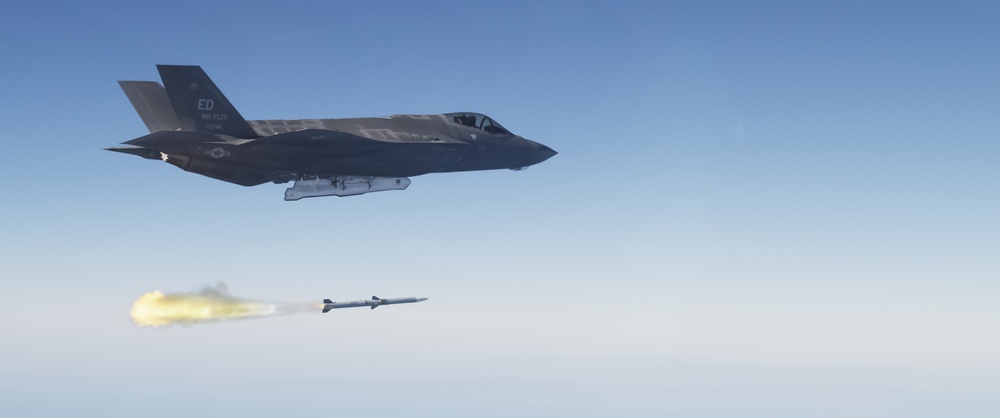
An F-35 Lightning II launches an AIM-120 AMRAAM over a military test range off the California coast. Beyond-visual-range missiles enable engagement before the adversary achieves visual contact. (U.S. Navy photo courtesy of Lockheed Martin by Paul Weatherman)
The ability to shoot first is not simply about launching a weapon before your adversary. It represents the culmination of a complex chain of decisions and capabilities that transform sensor information into engagement opportunity.
Engagement Opportunity vs. Engagement Guarantee
First shot means having the opportunity to engage first, not that the engagement will succeed. Modern beyond-visual-range missiles are sophisticated systems, but they operate against maneuvering targets that may employ countermeasures, terrain masking, or aggressive evasion. Missile probability of kill (Pk) varies with engagement geometry, target behavior, and electronic warfare conditions. A first shot creates advantage; it does not create certainty.
Weapon Employment as Part of a Chain
Firing a missile is not an isolated act. It requires that the target be within weapon engagement envelope, that the weapon be compatible with the engagement geometry, and that the pilot judge the shot to be worth the expenditure of often-limited ammunition. Pilots consider not only the current engagement but potential follow-on threats. Firing all missiles at the first contact may leave the aircraft defenseless against subsequent adversaries.
Timing Over Aggression
First shot is about timing, not aggression. The pilot who shoots first is not necessarily the most aggressive; they are the one whose sensor-to-shooter chain operates most efficiently. This includes having weapons systems primed, target data accurately fed to weapon seekers, and rules of engagement that permit action. First shot advantage can be lost through procedural delays, system malfunctions, or doctrinal constraints as easily as through inferior sensors.
Critically, first shot must be weighed against operational context. In some scenarios, firing first may reveal the shooter's position, eliminating stealth advantage. In coalition operations, firing without coordination may complicate battlespace management. First shot capability is an option, not an obligation.
The Detect → Decide → Engage Timeline
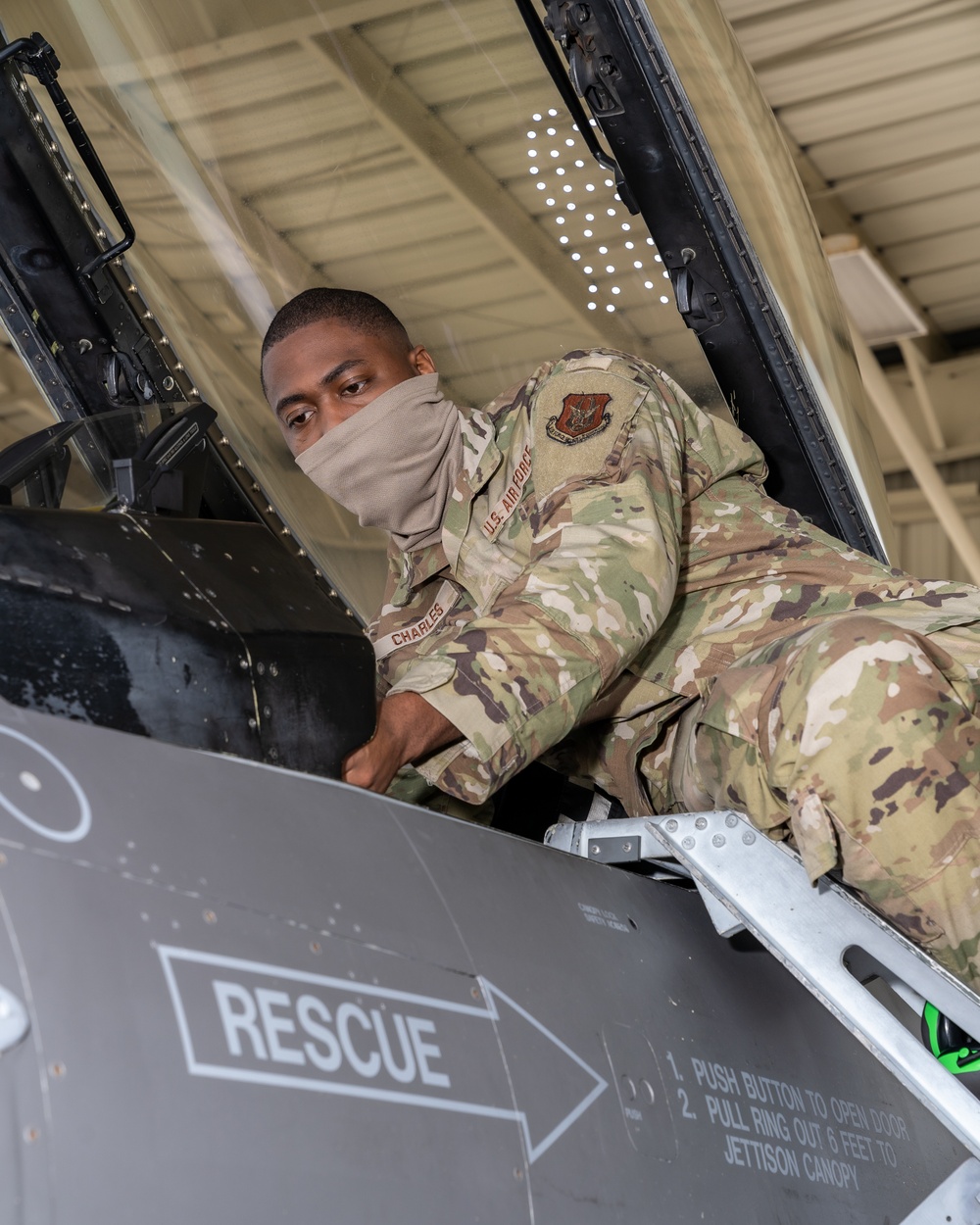
An avionics technician inspects the cockpit of an F-16 Fighting Falcon. Modern cockpit displays must present complex sensor information in formats that support rapid decision-making. (U.S. Air Force photo by Tech. Sgt. Lionel Castellano)
Modern air combat can be understood as a race against time, not a race of speed through the air but a race through the decision cycle. The pilot or system that moves through detect-decide-engage fastest holds the initiative.
How Timelines Decide Advantage
Imagine two fighters closing toward each other at combined speeds exceeding Mach 2. The distance between them shrinks rapidly. The pilot who detects first gains time: time to analyze, time to position, time to decide. If that pilot also processes information faster, the time advantage compounds. By the time the adversary detects the threat, they may already be responding to an inbound missile.
This timeline advantage is why stealth matters. A low-observable aircraft delays adversary detection. If the stealth fighter detects the conventional fighter at 100 miles but is not detected until 30 miles, the stealth fighter has a massive timeline advantage. That advantage can be used to engage, evade, or position for optimal geometry.
Decision Speed vs. Aircraft Performance
Traditional fighter metrics emphasize speed, climb rate, and turn performance. These matter for within-visual-range engagements. But in beyond-visual-range combat, decision speed often matters more than aircraft speed. A slower aircraft with faster decision systems may engage before a faster aircraft with slower processing.
This is why modern fighter development focuses heavily on cockpit interfaces, sensor fusion algorithms, and decision support tools. The goal is to compress the time from detection to decision, allowing pilots to act while adversaries are still assessing.
The Role of Human Judgment
Despite increasing automation, human judgment remains central to the decision cycle. Pilots must interpret sensor returns that may be ambiguous. They must assess whether contacts match intelligence expectations. They must weigh rules of engagement against tactical necessity. Automation can accelerate processing, but the human ultimately authorizes weapons employment.
This introduces cognitive factors into the timeline. A pilot under stress, task-saturated, or uncertain may hesitate. Training, experience, and clear doctrine help minimize decision latency, but human factors remain a variable that cannot be eliminated.
The heaviest bomber in the Postage Stamp line. At 1:155 scale it still spans about 6 inches wingtip to wingtip, making it one of the larger entry-level models despite the compressed scale.
Why This Concept Matters More Than Speed or Maneuverability
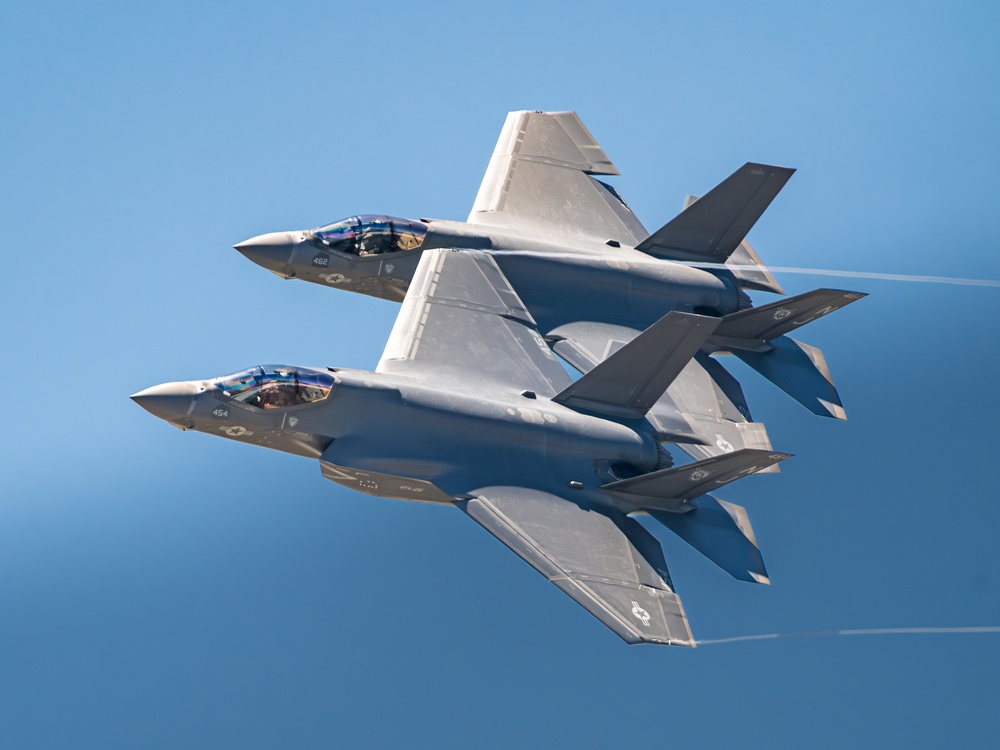
A U.S. Navy F-35C Lightning II performs at an air show. Fifth-generation fighters prioritize sensor capability and information management over traditional performance metrics. (U.S. Navy photo by Ensign Alan Wang)
For decades, fighter design prioritized kinematic performance: maximum speed, sustained turn rate, thrust-to-weight ratio, instantaneous turn capability. These metrics defined aircraft generations and shaped pilot training. Yet the first-look doctrine suggests a fundamental reordering of priorities.
Energy vs. Awareness
Traditional air combat theory emphasizes energy management, the art of maintaining airspeed and altitude advantage to dictate engagement terms. Energy fighters trade altitude for speed and vice versa, seeking positional advantage. This remains important, but the first-look paradigm adds another dimension: information advantage.
An aircraft with superior sensors and processing can "see" the energy state of adversaries, predict their options, and position accordingly. Information about the enemy's energy situation is as valuable as having energy advantage yourself. The combination of information and energy is more powerful than either alone.
Why Maneuverability Still Matters, But Later
Maneuverability has not become irrelevant. If beyond-visual-range engagements fail to decide the fight, aircraft may close to visual range where turning performance, instantaneous nose authority, and sustained energy matter enormously. High off-boresight missiles and helmet-mounted displays have expanded engagement envelopes, but traditional maneuvering remains the foundation of close-range combat.
The first-look doctrine does not eliminate close-range combat; it seeks to avoid it through early engagement. But prudent design and training account for the possibility that early engagement may not succeed. Backup capabilities matter when primary tactics fail.
How Modern Combat Is Often Decided Before Close Range
Analysis of modern air combat exercises and the limited actual combat data available suggests that most engagements are decided before aircraft come within visual range. The combination of beyond-visual-range missiles, improved radar performance, and tactics that emphasize standoff engagement has compressed the window in which close-range maneuvering occurs.
This does not mean all fights end at range. Missed shots, defensive maneuvering, and multi-aircraft melees can force close-range fights. But the statistical center of gravity has shifted toward earlier engagement. Fighters optimized purely for close-range performance may find themselves engaged before they can employ their strengths.
How Different Aircraft Approach This Concept
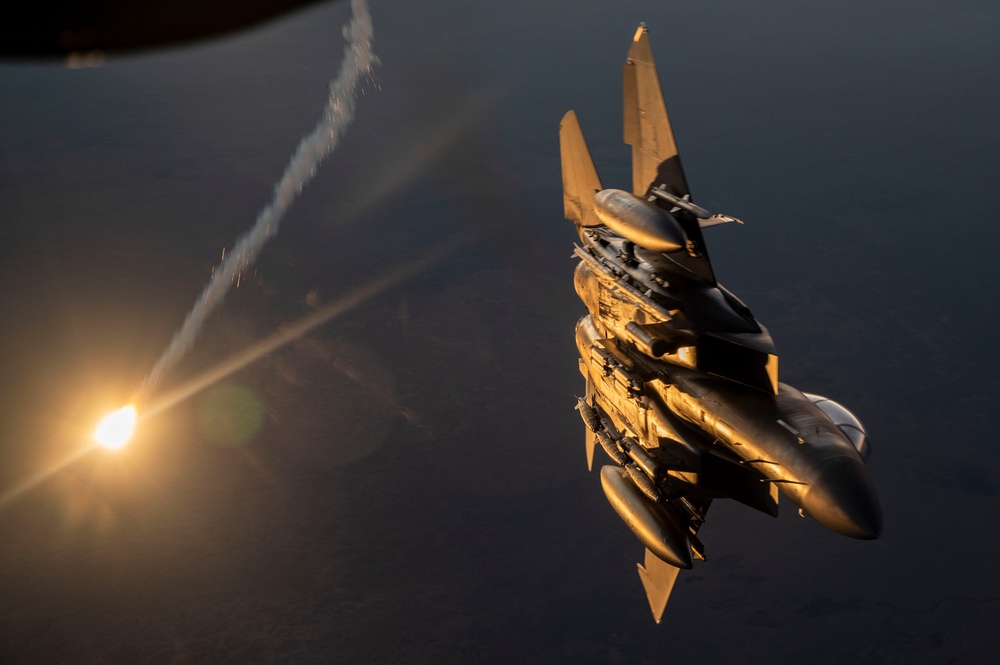
An F-15E Strike Eagle departs after refueling. Fourth-generation fighters rely on powerful radar and kinematic performance to create engagement opportunities. (U.S. Air Force photo by Staff Sgt. William Rio Rosado)
Fourth-Generation Fighters
Aircraft like the F-15 Eagle, F-16 Fighting Falcon, and their international equivalents approach first-look through raw sensor performance and kinematic advantage. They carry large, powerful radars that can detect at extended range. They rely on speed and altitude to extend engagement envelopes. Their approach to first look is direct: bigger radar, more power, greater range.
The limitation is that fourth-generation aircraft are generally not stealthy. Their radar cross-section allows adversary detection at ranges comparable to or exceeding their own detection range. First-look advantage must be created through tactics: operating with AWACS support, using terrain masking, or employing electronic warfare to degrade adversary sensors.
Fifth-Generation Fighters
Aircraft designed from inception for low observability - like the F-22, F-35, and emerging Chinese and Russian designs, approach first look through asymmetry. Their reduced radar cross-section means they detect before being detected. They can operate closer to adversaries before triggering warning systems. First-look advantage is inherent to their design, not dependent on external support.
Fifth-generation aircraft also integrate advanced sensor fusion, combining radar, infrared, electronic warfare, and networked data into unified situational awareness. This accelerates the detect-decide-engage cycle by presenting pilots with processed information rather than raw sensor returns.
Networked Operations
Modern doctrine increasingly treats first-look as a network capability rather than an individual aircraft attribute. Fighters operating within a networked force can share sensor data, meaning that any platform's detection becomes available to all. An F-22 might engage based on target data from an E-3 AWACS, a ground radar, or another fighter's sensors.
Eisenhower said Andrew Higgins was "the man who won the war for us," and this is the boat Higgins built. Italeri's 1/35 kit includes US infantry figures charging out of the dropped bow ramp. 173 reviews at 4.6 stars.
This network-centric approach multiplies the sensors available while distributing the risk. No single platform must achieve first look alone. The system achieves first look through coordinated, distributed sensing.
Why Doctrine Matters as Much as Technology
Technology enables first-look capability, but doctrine determines how it is employed. Air forces with advanced technology but outdated tactics may fail to exploit their advantages. Conversely, forces with older equipment but sophisticated tactics may create local first-look advantages through coordination and discipline.
Training, procedures, and command structures shape how quickly detection translates to decision. Forces that train for beyond-visual-range engagement, that practice distributed operations, and that trust networked data will exploit technology more effectively than those that do not.
Limitations, Uncertainty, and Reality
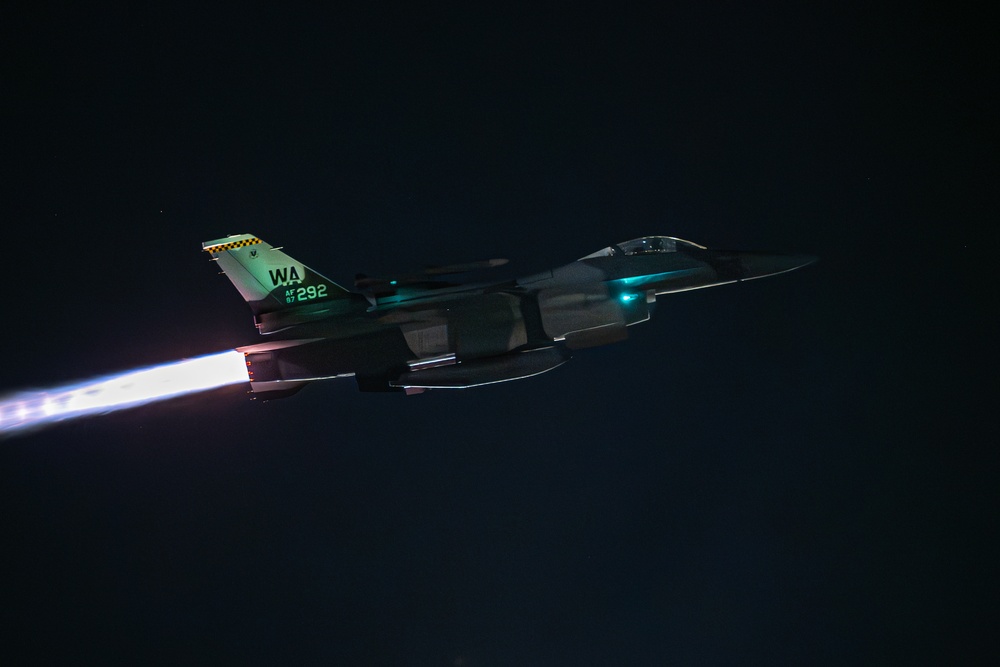
An F-16 from the 64th Aggressor Squadron launches for a Red Flag night mission. Realistic exercises reveal the limitations and uncertainties that theory often overlooks. (U.S. Air Force photo by William R. Lewis)
The first-look doctrine is powerful precisely because it acknowledges uncertainty rather than assuming perfect information. Real-world air combat involves numerous factors that can degrade or negate first-look advantage.
Sensor Errors and False Positives
Radars return clutter (ground reflections, weather, and false targets) that can mask or mimic real aircraft. Electronic warfare can inject false targets or obscure real ones. Pilots must distinguish valid contacts from noise, a task that becomes harder as adversaries employ sophisticated jamming and deception. First look means nothing if the "look" is at a ghost.
Information Overload
Modern sensors can detect more targets than pilots can effectively process. In complex battlespaces with multiple aircraft, the challenge shifts from detection to prioritization. Which contacts matter? Which are threats? Which are friendly? Information overload can paralyze decision-making, eliminating the time advantage that first look should provide.
Misidentification
The history of air combat includes tragic friendly fire incidents where first-look advantage was used against the wrong target. IFF systems can malfunction. Visual identification at range is impossible. Coalition operations with unfamiliar aircraft types increase risk. First shot against an unconfirmed target may result in catastrophic error.
Why First Look Does Not Equal First Kill
Even when detection is accurate, tracking reliable, and identification positive, engagement success is not guaranteed. Missiles can be decoyed, outmaneuvered, or defeated by terrain masking. Multi-shot engagements are common precisely because single shots often miss. First look creates the opportunity for first shot, and first shot creates the opportunity for first kill - but each transition involves probability, not certainty.
This section is critical for honest understanding. The first-look doctrine is not a magic formula. It is a framework for thinking about how information advantage translates to tactical advantage, acknowledging that war remains uncertain and outcomes depend on skill, luck, and circumstances.
How Drones and Unmanned Systems Change the Concept
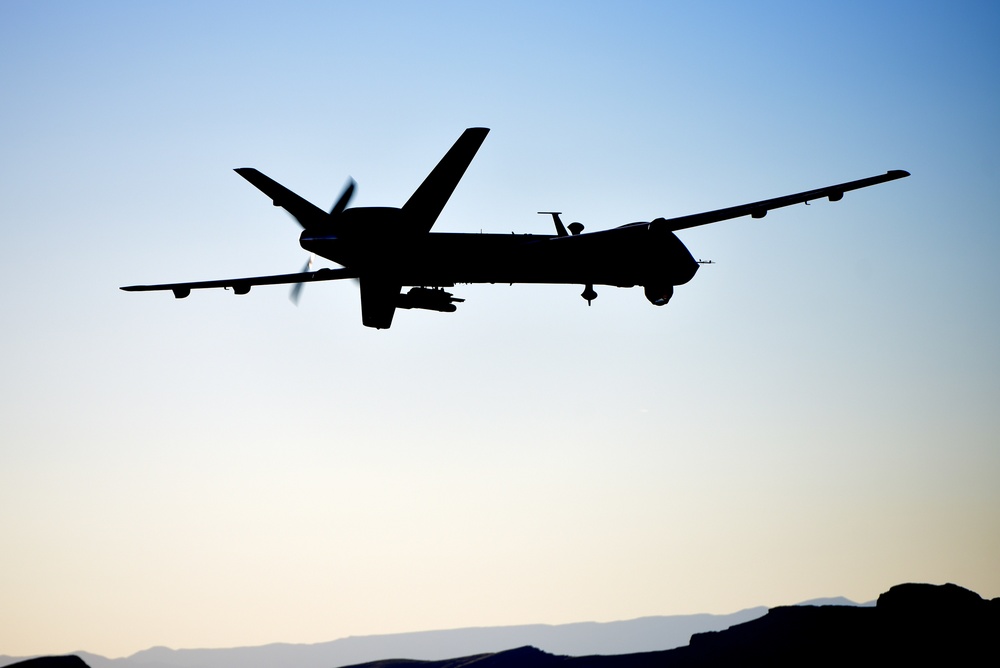
An MQ-9 Reaper flies over the Nevada Test and Training Range. Unmanned systems extend sensing networks and enable persistent surveillance without risking aircrew. (U.S. Air Force photo by Airman 1st Class William Rio Rosado)
The emergence of unmanned aerial systems adds new dimensions to the first-look concept, expanding possibilities while introducing new complexities.
Distributed Sensing
Unmanned systems can operate as forward sensors, extending the detection range of manned formations without risking pilots. A swarm of sensor drones operating ahead of manned fighters can provide early warning and target data, effectively pushing the "first look" line forward. The manned platforms engage based on data from unmanned scouts.
Risk Distribution
One constraint on aggressive first-look tactics is risk to aircrew. Pilots may hesitate to push into uncertain environments. Unmanned systems can operate in high-threat areas where manned aircraft would not venture, gathering intelligence without risking lives. This changes the calculus of acceptable risk in pursuing first-look advantage.
Why Drones Extend Awareness Rather Than Replace Pilots
Current unmanned combat aircraft lack the autonomous judgment to manage complex air-to-air engagements independently. They serve as sensor platforms, weapons carriers, and decoys, but manned aircraft retain command authority over engagement decisions. Drones enhance the first-look network; they do not replace the human decision-makers who exploit that network.
Future autonomous systems may change this balance, but for now, unmanned systems are tools that extend human capability rather than substitutes for human judgment.
Manned-Unmanned Cooperation
Emerging concepts envision manned fighters directing teams of unmanned wingmen. The manned aircraft serves as a command platform while unmanned systems provide sensing, electronic warfare, or weapons carriage. This distributed force structure multiplies first-look capability while concentrating decision authority in trained pilots.
These concepts are still maturing, but they suggest that first-look will increasingly be a team attribute rather than an individual aircraft capability. The question becomes not which aircraft achieves first look, but which force structure achieves first look most reliably.
Why the Concept Still Matters
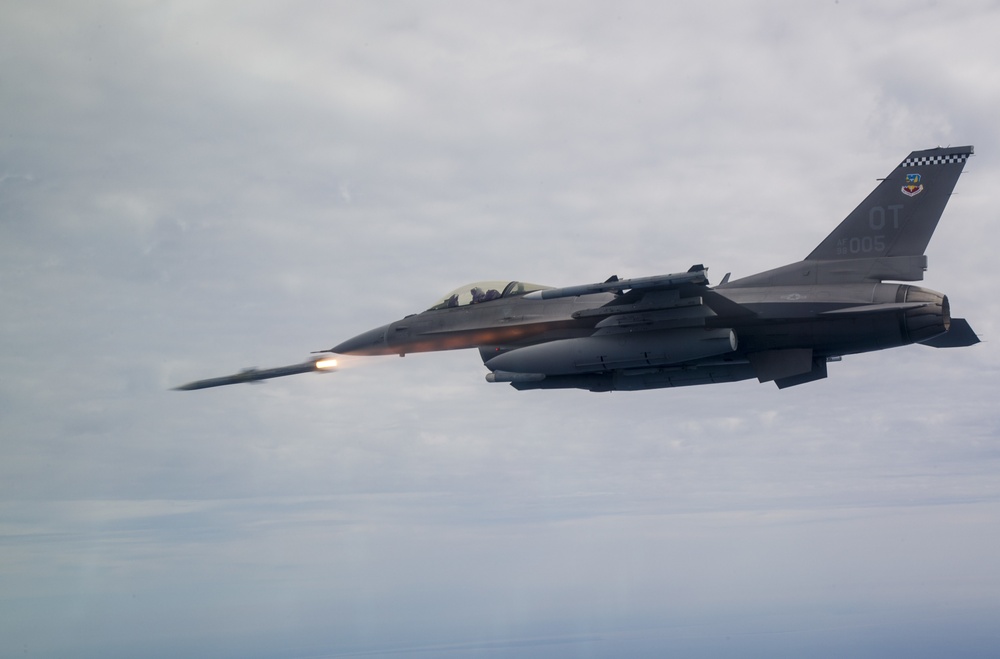
An F-16C fires an AIM-120 AMRAAM during testing. Beyond-visual-range missiles remain the primary tools for exploiting first-look advantage. (U.S. Air Force photo by Senior Airman Joshua Hoskins)
Despite technological change, evolving threats, and shifting strategic priorities, the first-look concept remains foundational to air combat thinking. Understanding why requires examining what the concept actually represents.
A Foundational Principle
First look is not a tactic - it is a principle. The specific sensors, weapons, and platforms may change, but the underlying logic remains: information advantage creates tactical advantage. Whoever understands the battlespace faster can act first, forcing adversaries to react rather than act.
This principle predates radar and will persist beyond current technology. It applies whether detection comes from radar, infrared, signals intelligence, or systems not yet invented. The tools change; the principle endures.
Application Across Conflicts and Eras
The first-look concept applies across the spectrum of conflict. In high-intensity warfare between peer competitors, it determines which side shapes the initial engagement. In counterinsurgency, it might mean detecting insurgent drones before they reach defended areas. In peacetime, it shapes how nations posture forces to deter aggression.
The concept also scales from tactical to strategic. First look at the tactical level means an individual fighter detecting an adversary. At the operational level, it means a force understanding adversary dispositions. At the strategic level, it means a nation understanding adversary capabilities and intentions. The principle applies at every level.
Shaping Future Air Combat Thinking
Future fighter programs continue to prioritize first-look capability. Sixth-generation concepts emphasize networked sensing, advanced processing, and human-machine teaming - all oriented toward accelerating the detect-decide-engage cycle. Investment in space-based sensors, artificial intelligence, and autonomous systems reflects the enduring importance of information advantage.
As long as air combat remains a contest of humans and machines in uncertain environments, first look will matter. The specific expression may evolve, but the underlying competition for information advantage will persist.
Common Misconceptions
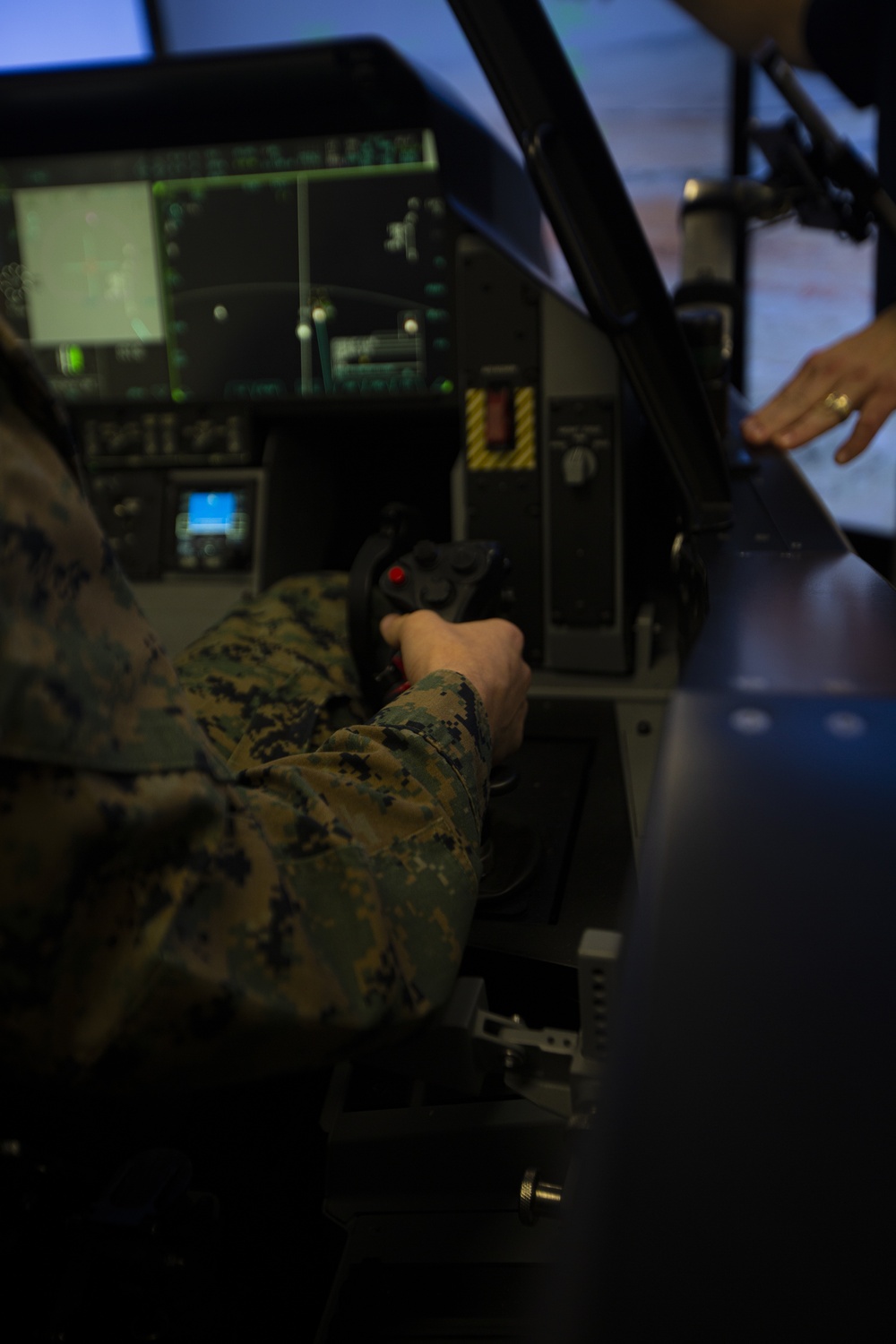
A Marine operates an F-35 cockpit demonstrator. Understanding how sensor fusion actually works - and its limitations - is essential to avoiding misconceptions about first-look capability. (U.S. Marine Corps photo by Lance Cpl. Gerardo W. Cano)
"First Look Guarantees Victory"
This is perhaps the most common oversimplification. First look creates advantage - it does not guarantee success. Missiles miss. Targets maneuver. Electronic warfare degrades sensors. Multi-aircraft engagements create complex dynamics where first-look advantage against one target may create vulnerability to another. Victory requires exploiting advantage; having advantage is not the same as winning.
Tamiya's 1/35 Panther Ausf. G is a traditional styrene kit with excellent fit and clear instructions. At this scale, the finished model is roughly 25cm long with good surface detail and working suspension.
Stealth reduces radar cross-section, but it does not make aircraft invisible. Low-frequency radars, infrared sensors, and passive detection systems can detect stealth aircraft under certain conditions. Stealth aircraft also emit when they use their own radars. First-look advantage from stealth is probabilistic and conditional, not absolute. Stealth aircraft must still operate tactically, using terrain, emissions management, and coordination to maximize advantage.
"It Removes Pilot Skill"
Technology augments pilot skill; it does not replace it. Pilots must interpret sensor data, manage complex systems, make decisions under uncertainty, and execute tactics precisely. The best sensors are useless without trained operators who understand their limitations and can adapt to unexpected situations. Pilot training remains essential, even as the nature of that training evolves.
"It Only Applies to Modern Jets"
The principle of first look applies to any air combat scenario. Legacy aircraft operating with AWACS support can achieve first look through networked information. Older aircraft with inferior sensors can still benefit from favorable geometry, emission control, and tactical discipline. The tools for achieving first look vary, but the principle is universal. Even the A-10 Warthog, optimized for close air support rather than air-to-air combat, benefits from networked awareness when operating in threat environments.
Key Takeaways
"First look, first shot, first kill" describes a timeline advantage, not a guaranteed outcome. Each transition - from detection to decision to engagement to success - involves probability and skill.
First look is about information quality, not just detection range. Tracking, identification, and processing speed matter as much as raw sensor performance.
Modern air combat is increasingly decided by decision speed rather than aircraft speed. The platform that processes information faster can act before adversaries react.
Sensor fusion transforms individual sensors into networked capability. Fifth-generation fighters and networked operations achieve first look as systems, not individual platforms.
Stealth creates asymmetric detection ranges, but does not guarantee invisibility. Low-observable aircraft must still operate tactically to maximize advantage.
First shot creates engagement opportunity, not engagement certainty. Missiles can miss, and multi-shot engagements are common.
Human judgment remains central to the decision cycle. Technology accelerates processing, but pilots authorize weapons employment and manage uncertainty.
Maneuverability still matters for situations where beyond-visual-range engagement fails. Prudent design maintains backup capabilities.
Unmanned systems extend first-look capability without replacing human decision-makers. Drones serve as sensors and weapons carriers within human-commanded structures.
Doctrine and training determine how effectively technology is exploited. Advanced platforms with outdated tactics may fail to achieve their potential.
The first-look principle applies across conflict types and force structures. It is a foundational concept, not a technology-specific tactic.
Common misconceptions - that first look guarantees victory, that stealth is automatic, that pilot skill is obsolete - undermine accurate understanding. Reality is more nuanced than slogans suggest.
Conclusion
"First look, first shot, first kill" endures as a conceptual framework because it captures something true about air combat: information advantage translates to tactical advantage. The side that understands the battlespace faster can act first, shaping the engagement before the adversary fully comprehends the situation.
But the phrase is a starting point for analysis, not a conclusion. Understanding what it actually means - the complexity of detection, the uncertainty of engagement, the role of human judgment, the importance of doctrine - allows for more sophisticated thinking about air power.
Modern air combat is not a simple race to see first and shoot first. It is a competition in information processing, decision-making, and execution under uncertainty. The fighters, pilots, and forces that excel in this competition will dominate future battlespaces. Those that reduce the concept to a slogan may find themselves on the wrong side of the timeline.
As air forces continue developing sixth-generation fighters, autonomous systems, and networked operations, the first-look principle will evolve in expression while remaining constant in importance. The tools change. The competition for information advantage does not.
Frequently Asked Questions
What does "first look, first shot" mean in modern air combat?
First look, first shot describes the tactical advantage of detecting and engaging an adversary before they can do the same to you. It emphasizes that modern air combat is decided by information superiority and engagement timing rather than close-range maneuvering.
Does first look guarantee victory in air combat?
No. First look creates an engagement opportunity, not a guaranteed outcome. Missiles can miss, sensors can be deceived, and the adversary may have countermeasures. The advantage is in timing and positioning, not certainty.
How do fifth-generation fighters achieve first look advantage?
Fifth-generation fighters combine low observable (stealth) design with advanced sensor fusion, allowing them to detect adversaries at greater range while remaining undetected themselves. This creates an asymmetric information advantage.
Is pilot skill still important with modern sensors?
Yes. While sensors provide information, pilots must interpret that information, make decisions under uncertainty, manage workload, and execute tactics. Human judgment remains critical to converting sensor data into effective action.
How do drones change the first look concept?
Unmanned systems extend sensing networks without risking pilots, enable distributed operations, and can operate in high-threat areas. They enhance rather than replace the first look principle by expanding awareness across larger areas.