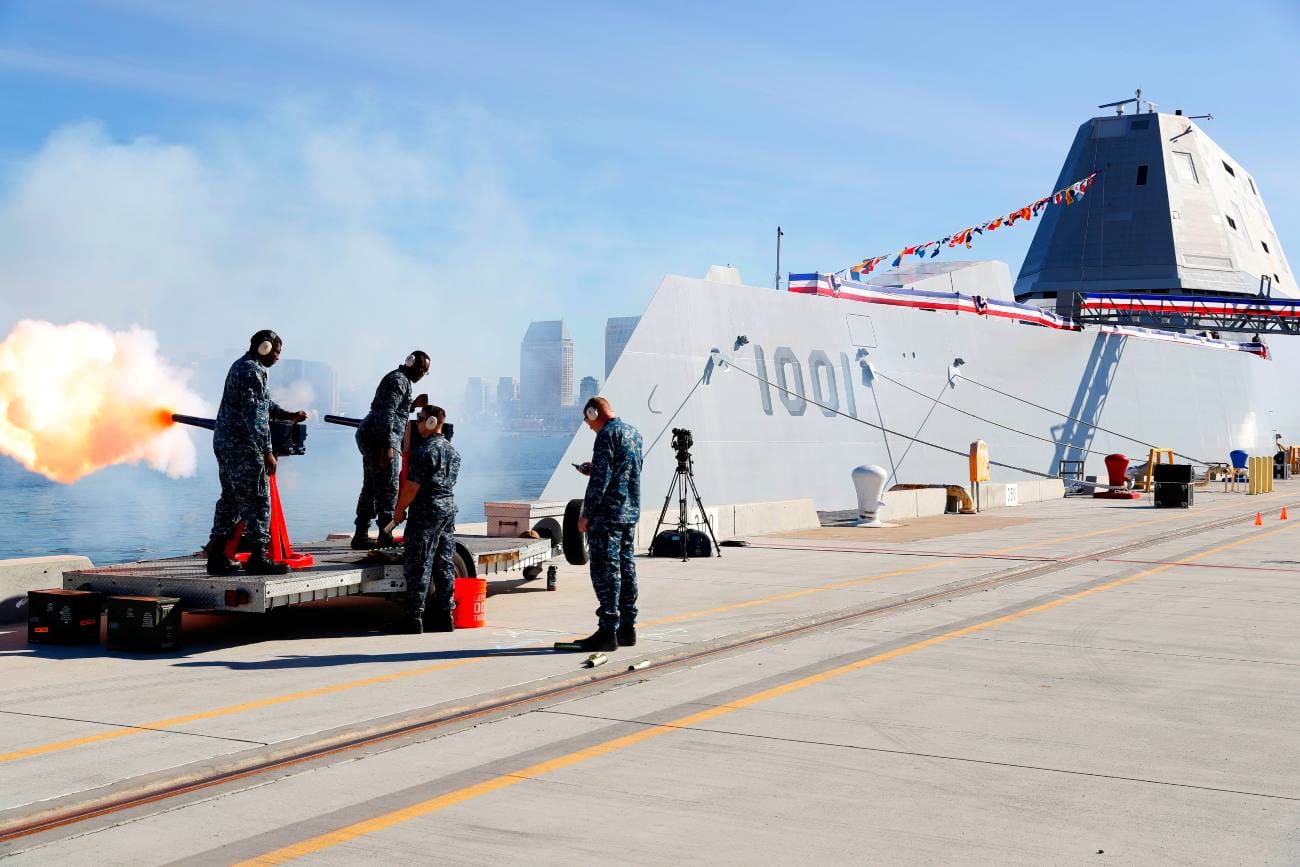
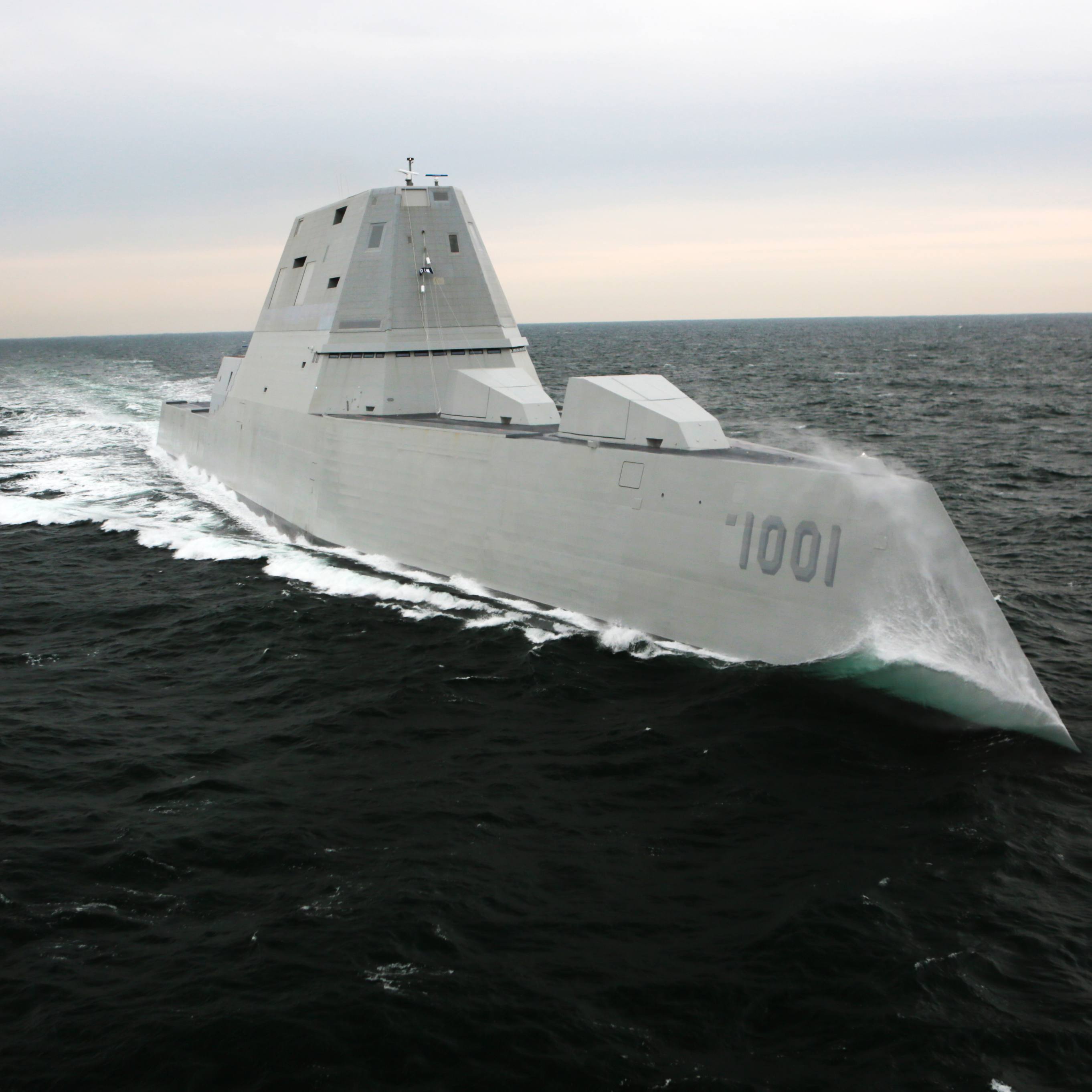
USS Michael Monsoor
Relative to prior destroyer’s before the Zumwalt class, USS Michael Monsoor features a larger flight deck and has capacity for two MH-60R helicopters and three drones. This allows the Zumwalt-class destroyers to execute a wider array of surface, aviation, and undersea missions that deliver elevated manpower, firepower, and computing power. Additionally, USS Michael Monsoor’s Vertical Launch System (VLS) features physically larger cells than similar cells on today’s ships. This allows the destroyer to fire larger and more advanced land and anti-ship missiles.
“Michael Monsoor made the ultimate sacrifice, and he did it for love. But he was not a hero. He is a hero. Because the inspiration he provided to all of us — the guidance he provided to us — as to how we should live our lives is still alive. And it’s going to live as long as this ship sails the seas of the world,” Sen. Angus King, I-Maine, said at the commissioning.
Michael Monsoor’s Sacrifice
In the last few days of his life – he likely thought about home at least a few times. After a six-month deployment in Ramadi, Iraq – SEAL Team 3, Delta Platoon was seeing out its last mission. They were scheduled to head home shortly after, and the thoughts of Southern California suntans flitted through the minds of several men over those last few weeks.
But in the midnight hours of September 29, 2006 – Michael Monsoor was thinking of nothing else but his teammates – his brothers.
Navy SEAL Team 3, Delta Platoon assisted 1st Battalion, 506th Infantry Regiment, 101st Airborne Division in the fight for Ramadi, Iraq – a city constantly under pressure from al-Qaida insurgents. Operation Kentucky Jumper was a volunteer mission at the end of a combat tour, yet Master-at-Arms 2nd Class Michael Monsoor was among the first to raise his hand when asked.
During battle shrouded in darkness of night, insurgents attacked from multiple angles. Monsoor’s Mk48 machine gun pointed over the waist-high barricade on the roof of the building, towards the heaviest enemy fire.
When an enemy grenade thrown from the ground onto the rooftop where Monsoor and his team were positioned bounced off Monsoor’s chest and slowly rattled along the floor in between all three men, Monsoor immediately thought of his brothers and not his own life.
“Of the three of us, Mikey probably had the greatest chance of survival. All he had to do was turn the other direction, jump and he would have lived. … But due to Mikey’s character and his quick train of thought, he knew that if he chose self-preservation, which is sometimes needed on the battlefield, Doug (Wallace) and I would most likely perish, and he was right,” Lt. Cmdr. Michael Sarraille said.
Michael Monsoor made a conscious decision to lay his body down so his brothers would live.
“Being behind Mikey, what I remember hearing was, ‘Grenade!’ and the next thing I knew was the explosion. I got knocked out for a few seconds, and when I came to I had three of my very close friends…wounded…quickly tried to assess the situation….What was kind of going through my mind was, ‘I’m in a really terrible location.’ I took small fragments to my calves, but I’m the most maneuverable, operable out of all four of us that were there,” Chief Warrant Officer 3 Benjamin Oleson said.