Skip to content
April 30:The Fall of Saigon51yr ago

The Challenger 2: Britain's Main Battle Tank

Marcus Webb · · 12 min read
Save
Share:
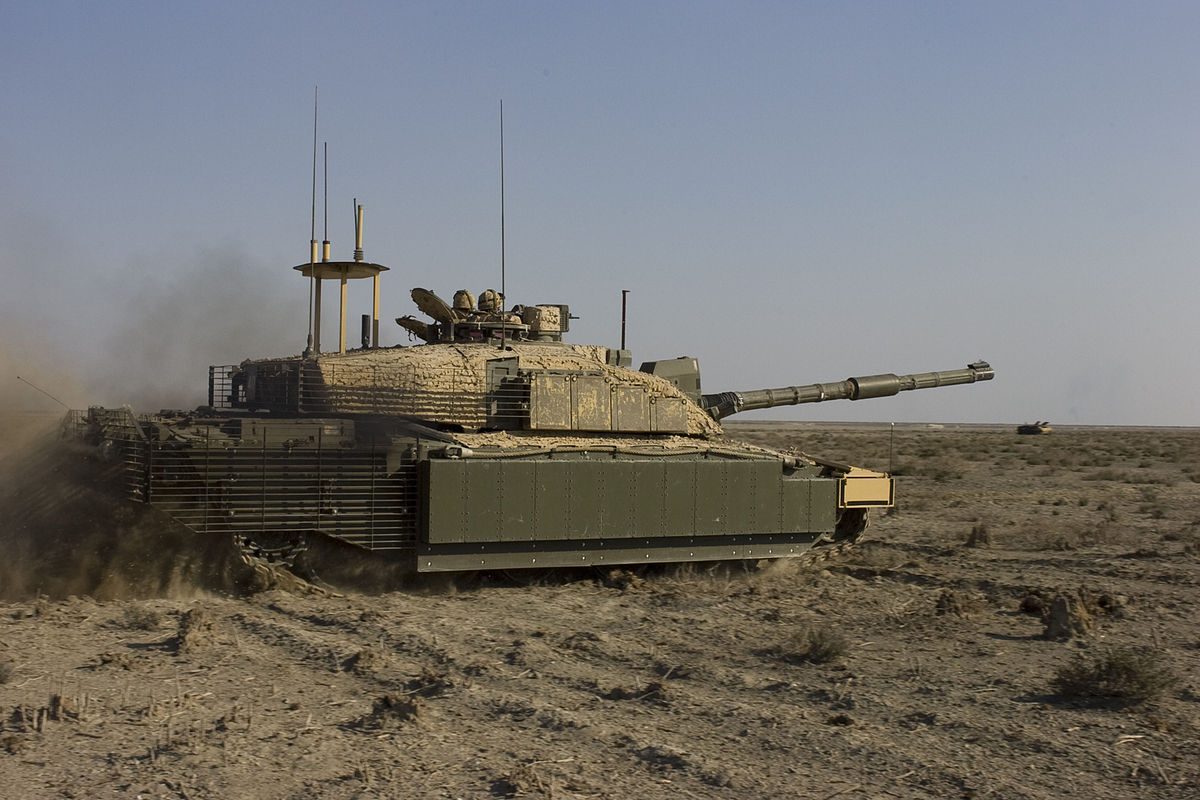
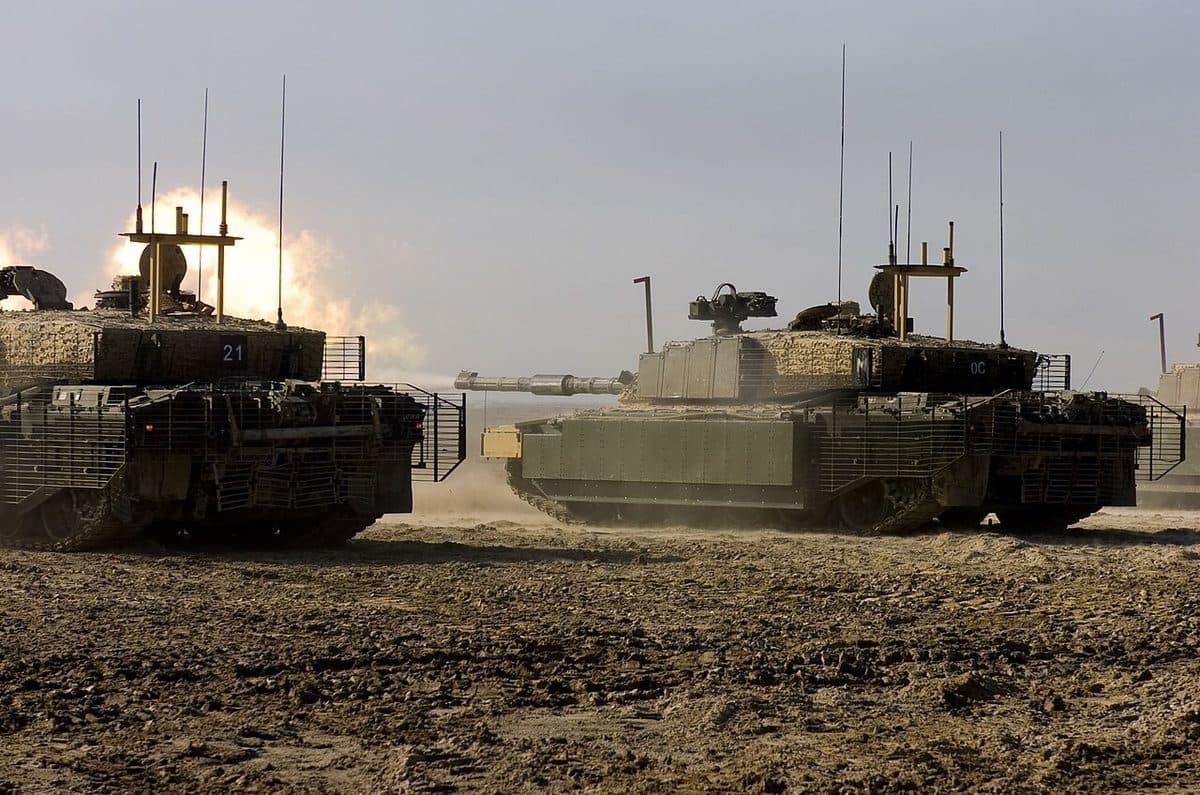
Challenger 2 main battle tank moving across terrain showing its distinctive profile and rifled gun barrel
Marcus Webb
Marcus Webb

Military Vehicles & Ground Systems Contributor

Marcus Webb writes about military ground vehicles, armored platforms, and the logistics of land warfare. His work covers everything from MRAPs and infantry carriers to the training pipelines that keep ground forces operational in contested environments.

The Challenger 2 is an oddity among modern main battle tanks. While every other Western MBT has adopted a smoothbore gun (the Rheinmetall 120mm that arms the Abrams, Leopard 2, and Leclerc), the Challenger 2 retains a rifled 120mm L30A1 gun. While other nations have exported their tanks in large numbers, the Challenger 2 has been sold to exactly one export customer: Oman. And while other tanks have been continuously upgraded with new electronics, engines, and armor packages, the Challenger 2 has received remarkably few major upgrades since entering service in 1998. Despite all this, the Challenger 2 remains one of the best-protected tanks in the world, has a combat record with zero crew fatalities from enemy action, and carries a reputation for armor that even its operators describe with reverence.

The Rifled Gun Debate

The Challenger 2's most controversial feature is its L30A1 120mm rifled gun. By the time the Challenger 2 entered service, every other NATO nation had standardized on smoothbore guns, which are better suited to firing kinetic energy penetrators, the long, dense, dart-like projectiles (called APFSDS) that are the primary anti-armor round for modern tanks. Smoothbore guns allow longer, thinner penetrators that achieve higher velocities and better armor-piercing performance.

Britain retained the rifled gun for several reasons. The rifled barrel provides superior accuracy with HESH (High Explosive Squash Head) rounds, a uniquely British ammunition type that spreads a plastic explosive charge against a surface and detonates it, sending a shockwave through the target that spalls (breaks off) lethal fragments from the interior side. HESH is highly effective against bunkers, buildings, and lighter armored vehicles, making it valuable in the types of operations Britain expected to conduct.

The tradeoff is that the rifled gun's kinetic energy penetrator performance lags behind the best smoothbore ammunition. The Challenger 2 fires the L27A1 CHARM 3 APFSDS round, which is capable but generally considered slightly less effective than the latest rounds fired by the Rheinmetall L55 gun on the Leopard 2A6/7. The rifled barrel also wears faster when firing APFSDS rounds, which are designed for smoothbore barrels.

This debate is now being resolved: the Challenger 3 upgrade program will replace the L30A1 rifled gun with a Rheinmetall L55A1 smoothbore, finally bringing Britain into alignment with NATO ammunition standards.

Chobham Armor: The Original and Still Classified

The Challenger 2's armor is its defining strength. The tank uses a second-generation Chobham armor composite originally developed at the Defence Science and Technology Laboratory (DSTL) at Chobham, Surrey. The exact composition remains classified to this day, but Chobham armor combines layers of ceramic, metal, and other materials in a configuration that defeats both kinetic energy penetrators and shaped charge warheads far more effectively than equivalent thicknesses of steel.

Britain developed Chobham armor in the 1960s and shared the technology with the United States, where it became the basis for the M1 Abrams' armor (known as Burlington in American terminology). The Challenger 2 uses a later generation of this technology, designated Dorchester, which incorporates improvements developed over decades of research.

The Challenger 2's armor protection has been validated in combat. During operations in Iraq in 2003, a single Challenger 2 was hit by 70 RPG rounds and one MILAN anti-tank missile during an engagement in Basra. The tank sustained no penetrations and continued fighting. Another Challenger 2 survived a direct hit from another Challenger 2 in a tragic friendly fire incident. Even the L27A1 APFSDS round from the most powerful gun in the British Army could not fully penetrate the Challenger 2's frontal armor. The gunner was killed when the round partially penetrated an open hatch area, making it the only crew fatality in the Challenger 2's combat history, and notably, it came from friendly fire, not enemy action.

Challenger 2 tank operating in desert conditions during operations in Iraq showing its heavy armor profile
A Challenger 2 during operations in Iraq. In one engagement near Basra, a single Challenger 2 was hit by 70 RPGs and a MILAN missile without suffering a single armor penetration. (UK Ministry of Defence)

Performance and Mobility

The Challenger 2 is powered by a Perkins CV12 diesel engine producing 1,200 horsepower. At 62.5 tonnes (roughly 69 tons), this gives it a power-to-weight ratio of approximately 19 hp/ton, lower than the Abrams (21.6 hp/ton) or Leopard 2 (22 hp/ton). The result is a tank that is noticeably slower and less agile than its NATO counterparts, with a top speed of approximately 37 mph on roads.

This relative lack of mobility has been the Challenger 2's most criticized characteristic. In the maneuver-heavy doctrine that dominates Western tank warfare, the ability to reposition quickly, whether to exploit gaps, outflank enemy positions, or disengage from unfavorable engagements, is considered essential. The Challenger 2's heavier weight and lower power-to-weight ratio make it less responsive in these scenarios.

However, the Challenger 2's designers deliberately accepted reduced mobility in exchange for superior protection. In the British doctrinal context, where the tank is expected to absorb hits while providing fire support to infantry, this trade was considered acceptable. The Challenger 2 may be slower than a Leopard 2, but it is harder to kill.

Export Failure

The Challenger 2's commercial record is stark: aside from Britain's 386 tanks and Oman's 38, the tank has attracted no export orders. The Leopard 2 has sold to 19 countries. The M1 Abrams has sold to nine. The K2 Black Panther and Leclerc have found multiple export customers. The Challenger 2 has found one.

Several factors explain this failure. The rifled gun made the Challenger 2 incompatible with NATO-standard smoothbore ammunition, a significant logistical disadvantage for nations operating alongside other NATO forces. The higher weight and lower mobility made it less attractive than the Leopard 2 for nations prioritizing maneuverability. The classified nature of the Chobham armor complicated technology transfer discussions. And Britain's defense industry was not as aggressive in pursuing export sales as German or American competitors.

Challenger 3: The Upgrade

The British Army has committed to upgrading 148 Challenger 2s to the Challenger 3 standard. The upgrade, performed by Rheinmetall BAE Systems Land (RBSL), replaces the rifled gun with a Rheinmetall L55A1 smoothbore, installs a completely new turret with improved fire control and electronics, adds active protection system provisions, and upgrades the power pack for improved mobility.

The Challenger 3 will effectively be a new tank from the turret ring up, retaining only the Challenger 2's hull and running gear. It will finally bring Britain's main battle tank into full compatibility with NATO ammunition standards while preserving the excellent hull armor protection that has defined the Challenger line.

Legacy

The Challenger 2 is a tank that prioritized one thing above all else: keeping its crew alive. In that mission, it has succeeded absolutely. No Challenger 2 crew member has ever been killed by enemy fire. Its armor has defeated every weapon thrown against it in combat, and its reputation for survivability is matched by few tanks in the world.

Its weaknesses, including the rifled gun, the limited mobility, and the export failure, are real and have limited its broader impact. But in the specific role that Britain designed it for, a heavily protected mobile fortress that can absorb devastating hits and keep fighting, the Challenger 2 has proven itself beyond doubt. It may not be the best tank in the world by every measure. But in the measure that matters most to the four soldiers inside it, it may be the best there has ever been.

Share this article

Share:

Recommended

Ace of The Skies: Can You Identify These Military Aircraft Throughout The Years?
Test Yourself

Ace of The Skies: Can You Identify These Military Aircraft Throughout The Years?

Can you identify these aircraft?

Take the Quiz

On This Day in Military History

March 21

Operation Michael, The Kaiser's Last Gamble (1918)

At 4:40 AM, more than 6,600 German artillery pieces opened fire along a 40-mile front, unleashing over 1,160,000 shells in a five-hour bombardment, the largest barrage of the entire war. Seventy-four German divisions then struck 26 British divisions using infiltration stormtrooper tactics, shattering the British Fifth Army. The first day produced 38,500 British casualties, including 21,000 prisoners, the second-worst day in British military history. The Spring Offensive ultimately failed, costing Germany 239,800 irreplaceable casualties and setting the stage for the Allied victory.

1943, Von Gersdorff's Suicide Bomb Attempt on Hitler

1945, Operation Carthage, RAF Bombs Gestapo HQ in Copenhagen

2003, "Shock and Awe" Bombing Campaign Begins Over Iraq

See all 10 events on March 21

Get Military News & History in Your Inbox

Join thousands of readers receiving our weekly digest of military technology, history, and analysis.

Test Your Knowledge