
Force Projection
The ability of a nation to deploy and sustain military forces in regions distant from its homeland to respond to crises, deter adversaries, or conduct offensive operations.
Force projection is the capacity to send credible military power to distant locations and sustain it there long enough to achieve objectives. It requires not just combat forces but the entire chain of logistics, transportation, basing, and sustainment that allows those forces to operate effectively far from home. Only a handful of nations possess significant force projection capability, with the United States maintaining by far the most extensive global reach.
American force projection rests on several pillars: forward-deployed forces at bases in Japan, Korea, Germany, and the Middle East; carrier strike groups that provide mobile sovereign airfields; strategic airlift provided by C-17 and C-5 aircraft; sealift from Military Sealift Command vessels; and prepositioned equipment stocks stored aboard ships and at bases around the world. This infrastructure allows the U.S. to respond to a crisis anywhere on Earth within days.
The ability to project force is both a military capability and a tool of diplomacy. The movement of a carrier strike group toward a crisis area sends a powerful signal of intent that can deter aggression without a shot being fired. Conversely, adversary strategies like A2/AD are specifically designed to deny force projection by making it too costly or risky to move forces into a contested region.
Related Terms
Carrier Strike Group
A naval formation centered on an aircraft carrier, typically including guided-missile cruisers, destroyers, a submarine, and a supply ship, capable of projecting power anywhere on the globe.
A2/AD
Anti-Access/Area Denial is a military strategy that uses layered defenses to prevent an adversary from entering or operating freely within a contested region.
Deterrence
A strategy of maintaining sufficient military capability and credible willingness to use it so that an adversary is dissuaded from attacking, for fear the costs would outweigh any gains.
Related Articles

How a Carrier Strike Group Defends Itself in Layers: From 1,000 Miles Out to Point-Blank Range
A carrier strike group defends itself through seven overlapping layers of defense. An incoming missile has to survive every single one to reach the carrier. Here's how each layer works, what it's designed to stop, and what happens when a threat gets through.
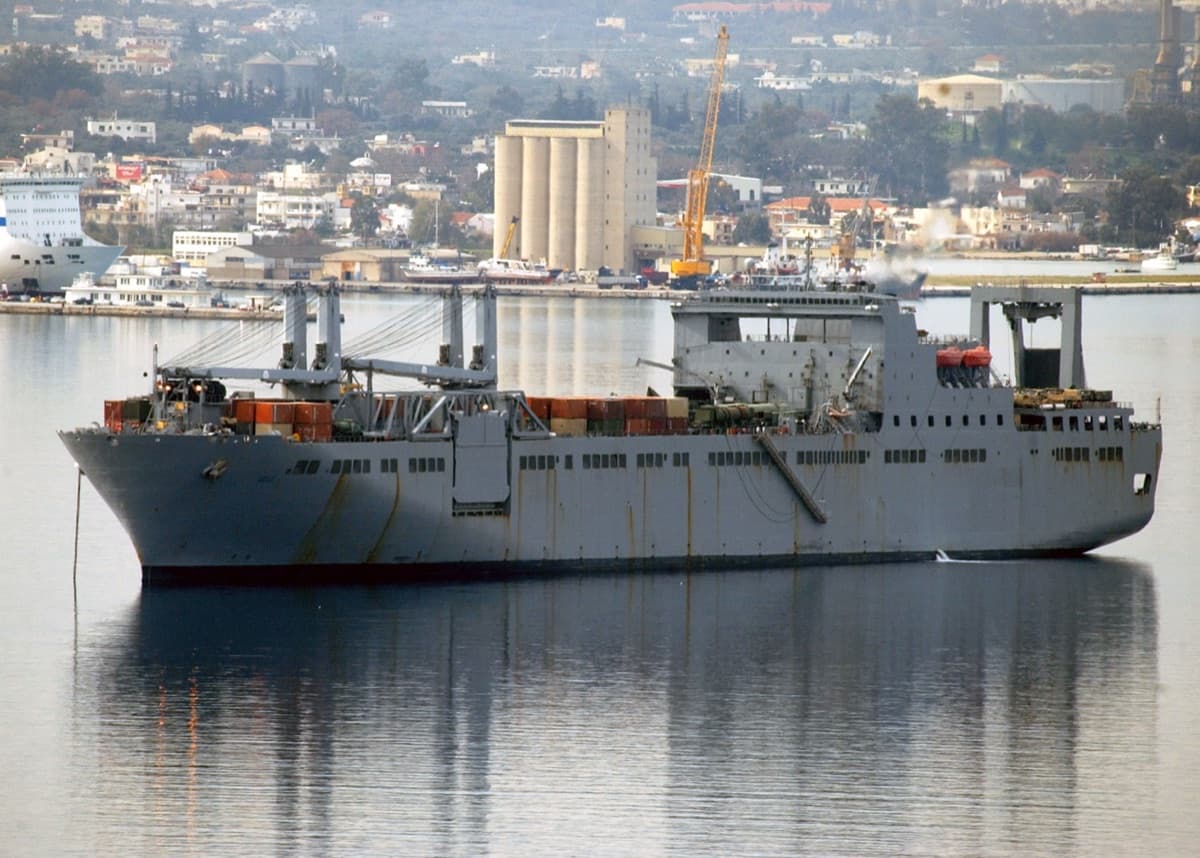
How the US Military Moves an Entire Armored Division Across the Atlantic Ocean in 72 Hours
Moving an armored division to Europe means shipping 15,000 vehicles, 50,000 tons of equipment, and 17,000 soldiers across 3,500 miles of open ocean. The U.S. military can get personnel there in hours by air, but the tanks, Bradleys, and artillery travel by sea. Here's how the least glamorous part of military power actually works, and why America's 50-ship sealift fleet is its most dangerous bottleneck.