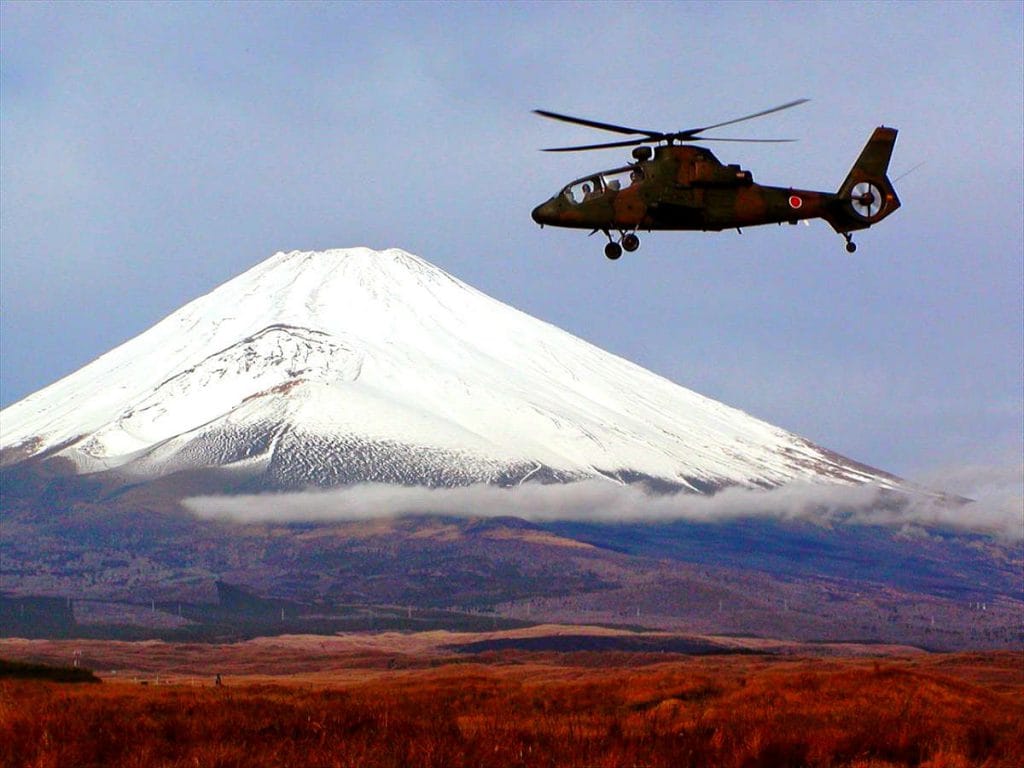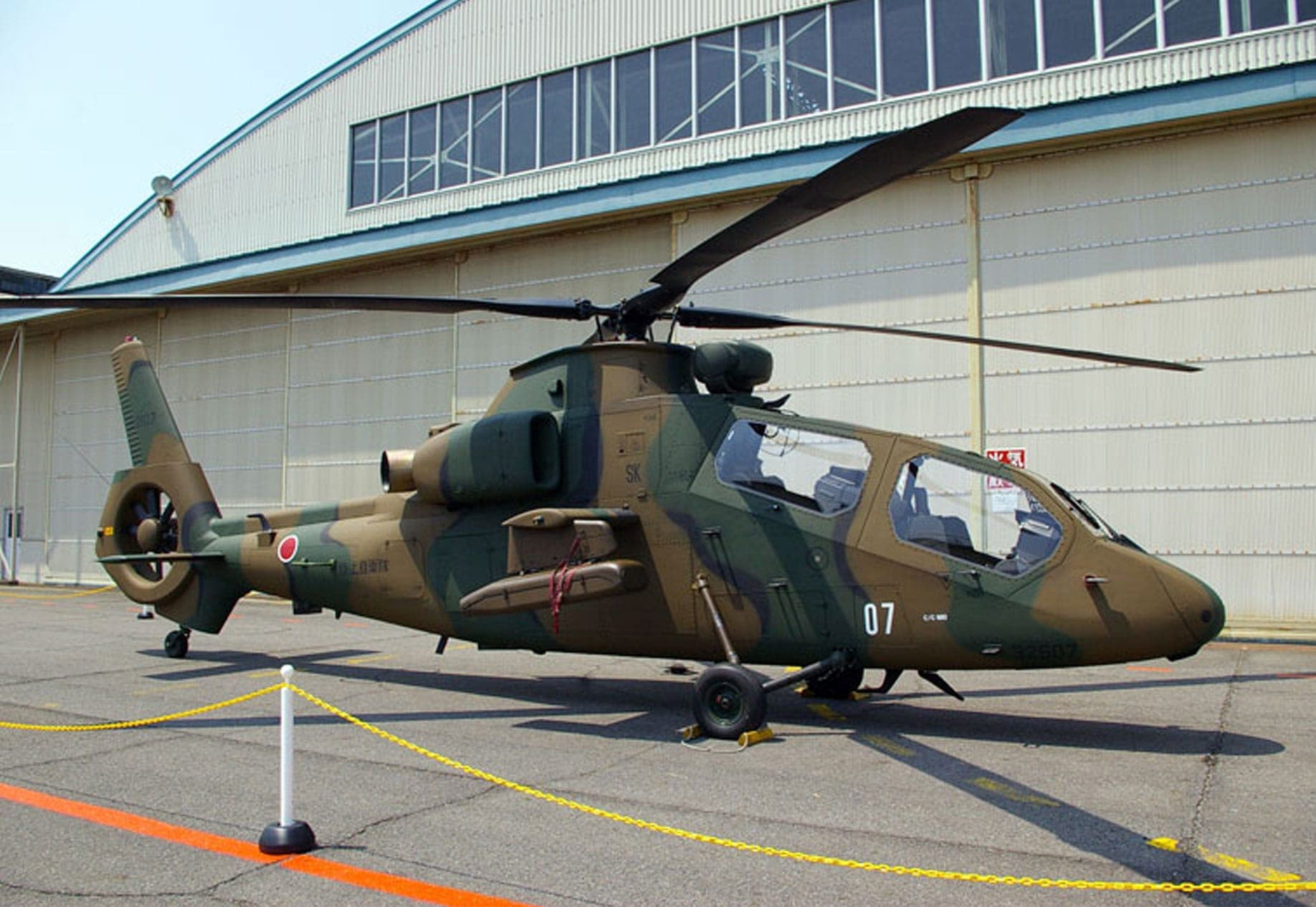

Ever since the end of World War II, Japan has struggled to procure military-grade aircraft and equipment for its relatively small self-defense forces. Tasked with the impossible, guarding nearly 30,000 km of coastline with a force of 150,000 personnel, Japan depended upon technology from the United States to enable its helicopter defense fleet of accomplishing that goal. In 1996, the first OH-1 Ninja flew. But up until 2000, only 38 had actually been delivered to the fleet.
Domestic Design:
The Kawasaki OH-1 Ninja is novel in the sense that it is the first reconnaissance helicopter used by the Japanese Ground Self-Defense Forces made predominantly in Japan. Prior to that, the next capable attack helicopter was the Boeing AH-64 Apache. Japan ordered 50 Apaches but wanted to also have a fleet that it designed, built, and flew. The OH-1 Ninja appears to be that helicopter.
Airframe:
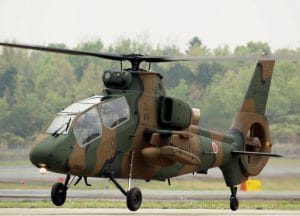
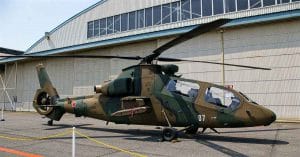
In terms of design and structure, the Japanese Ground Self-Defense Forces (JGSDF) appear to have used a very similar design as the Apache. The OH-1 Ninja is a very sleek, long helicopter powered by two twin Mitsubishi TS1-M-10 engines. It has four hard points which can be used to hold gun pods, rockets, anti-tank and anti-air missiles, or advanced sensor pods. The OH-1 Ninja is drastically underprepared for any direct combat role. However, its primary task is scout surveillance and reconnaissance. The helicopter can be launched from the back of a helicopter carrier or from a ground station. With a range of up to 342 miles, the OH-1 can effectively scout the coastline for littoral enemy vessels.