
Skip to content
May 1:Operation Neptune Spear: U.S. Navy SEALs Kill Osama bin Laden15yr ago

June 6 in Military History

Share:

This Day in Military History: June 6

Go to Today
American troops wading ashore from a landing craft under fire on Omaha Beach, Normandy, June 6, 1944
Defining Moment82 years ago

D-Day: The Allied Invasion of Normandy

ArmyNavyAAFCoast Guard· 1944

The largest amphibious invasion in history landed approximately 156,000 Allied troops on five beaches along the Normandy coast of France, Utah, Omaha, Gold, Juno, and Sword. Supported by 5,000 ships and 13,000 aircraft, the invasion opened the Western Front in Europe and began the liberation of Nazi-occupied France, leading directly to Germany's defeat less than a year later.

Related article
25 events, 3 notable births, 2 notable deaths, and 4 military quotes25events3births2deaths4quotes

1800s

1813RevolutionaryArmy213 years ago

A British force of 700 troops launched a daring night attack on an American encampment of 3,400 soldiers at Stoney Creek, Ontario, during the War of 1812. The British captured two American generals and threw the invasion force into confusion, effectively halting the American advance into the Niagara Peninsula.

1816RevolutionaryArmy210 years ago

Hard frost across New England and parts of the Middle Atlantic on June 6, 1816, killed early crops and prefigured the food crisis that would accompany the "Year Without a Summer," driven by the 1815 eruption of Mount Tambora. US Army garrisons reduced rations and accelerated experiments with food preservation that influenced later military supply doctrine.

1862Civil WarNavyArmy164 years ago

A Union flotilla of ironclad gunboats and ram boats destroyed or captured seven of eight Confederate vessels in a one-sided battle on the Mississippi River at Memphis, Tennessee. The city surrendered the same day, giving the Union control of the Mississippi down to Vicksburg and severing another critical Confederate supply line.

1900s

1918WWIMarines108 years ago

U.S. Marines of the 4th Marine Brigade launched their assault on the German-held Belleau Wood in northern France, beginning a brutal three-week battle that cost the Marines 1,811 dead and nearly 8,000 total casualties. The battle established the Marines' fierce reputation in modern warfare and earned them the German nickname "Teufelshunden" (Devil Dogs).

1918WWIMarines108 years ago

Marine Brigade of the US 2nd Division launched its first counterattack of the Battle of Belleau Wood, advancing across an open wheat field against entrenched German positions. The attack on June 6 cost the Marines 1,087 casualties, the heaviest single day in Marine Corps history until the assault on Tarawa in November 1943.

1942WWIINavy84 years ago

The final phase of the Battle of Midway saw the burning Japanese carrier Hiryu slip beneath the waves, joining Akagi, Kaga, and Soryu. The devastating loss of four fleet carriers and their experienced air groups in a single battle ended Japan's naval supremacy in the Pacific barely six months after Pearl Harbor.

Related article
1942WWIINavy84 years ago

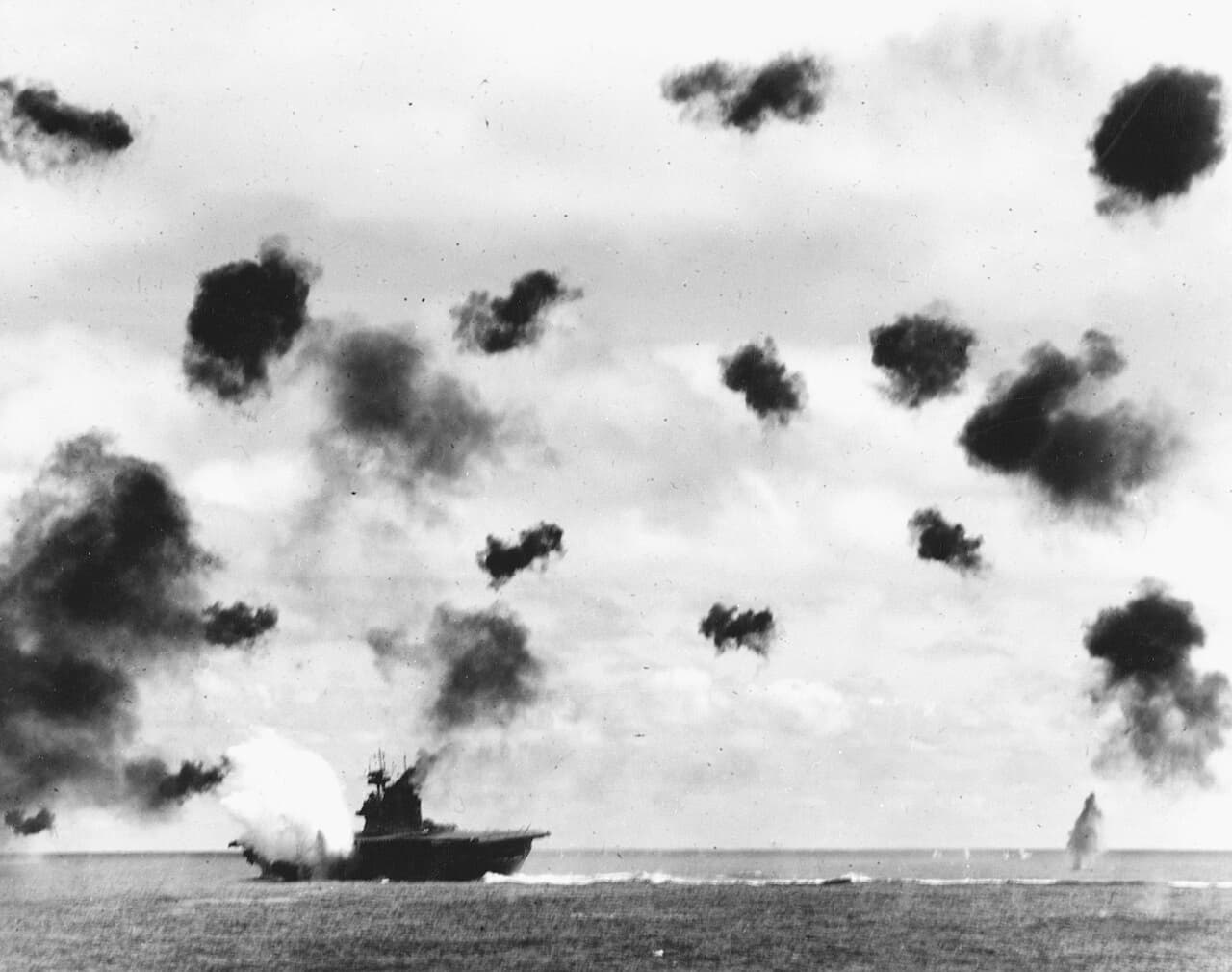
The carrier USS Yorktown (CV-5), heavily damaged by Japanese air attacks during the Battle of Midway and abandoned the previous evening, was reboarded by a salvage party on June 6. The Japanese submarine I-168 then torpedoed her and the destroyer USS Hammann, sinking both ships the following morning.

1944WWIIArmy82 years ago

Over 13,000 American paratroopers of the 82nd and 101st Airborne Divisions jumped into Normandy in the early morning hours of D-Day, along with 8,500 troops of the British 6th Airborne Division. Despite being badly scattered, the airborne forces seized key bridges and crossroads, preventing German reinforcements from reaching the beaches during the critical first hours.

1944WWIICoast Guard82 years ago

U.S. Coast Guard personnel crewed 97 vessels during the Normandy invasion, including landing craft, cutters, and rescue boats. Coast Guardsmen pulled hundreds of soldiers from the water after their landing craft were destroyed by mines, obstacles, and enemy fire, earning the service the D-Day distinction that cemented its wartime reputation.

1944WWIIArmy82 years ago

The 2nd Ranger Battalion, led by Lieutenant Colonel James Rudder, scaled the 100-foot cliffs at Pointe du Hoc under intense enemy fire to destroy a battery of 155mm guns that could have devastated both Utah and Omaha beaches. The Rangers used rocket-propelled grappling hooks and extension ladders to reach the top, only to find the guns had been moved, but they located and destroyed them inland.

1944WWIIArmyNavy82 years ago

Royal Engineers and US Army units began assembling Mulberry A and Mulberry B from prefabricated concrete caissons towed across the Channel under their own ballast power. The artificial harbours allowed Allied logistics to bypass the need to capture a working French port for the first month of the Normandy campaign.

1944WWIINavy82 years ago

The dreadnought USS Texas (BB-35) anchored 12,000 yards off Pointe du Hoc and opened fire at 5:50 AM with her ten 14-inch main guns, contributing some of the heaviest naval gunfire of the Normandy invasion. Her shells flattened German artillery emplacements before the Ranger assault and continued direct support throughout D-Day.

1944WWIIArmy82 years ago

In the opening minutes of D-Day, six Horsa gliders carrying D Company of the 2nd Battalion, Oxfordshire and Buckinghamshire Light Infantry landed within 50 yards of two bridges over the Caen Canal and Orne River. They captured both bridges intact in under ten minutes, securing the eastern flank of the invasion zone.

1944WWIIAAF82 years ago

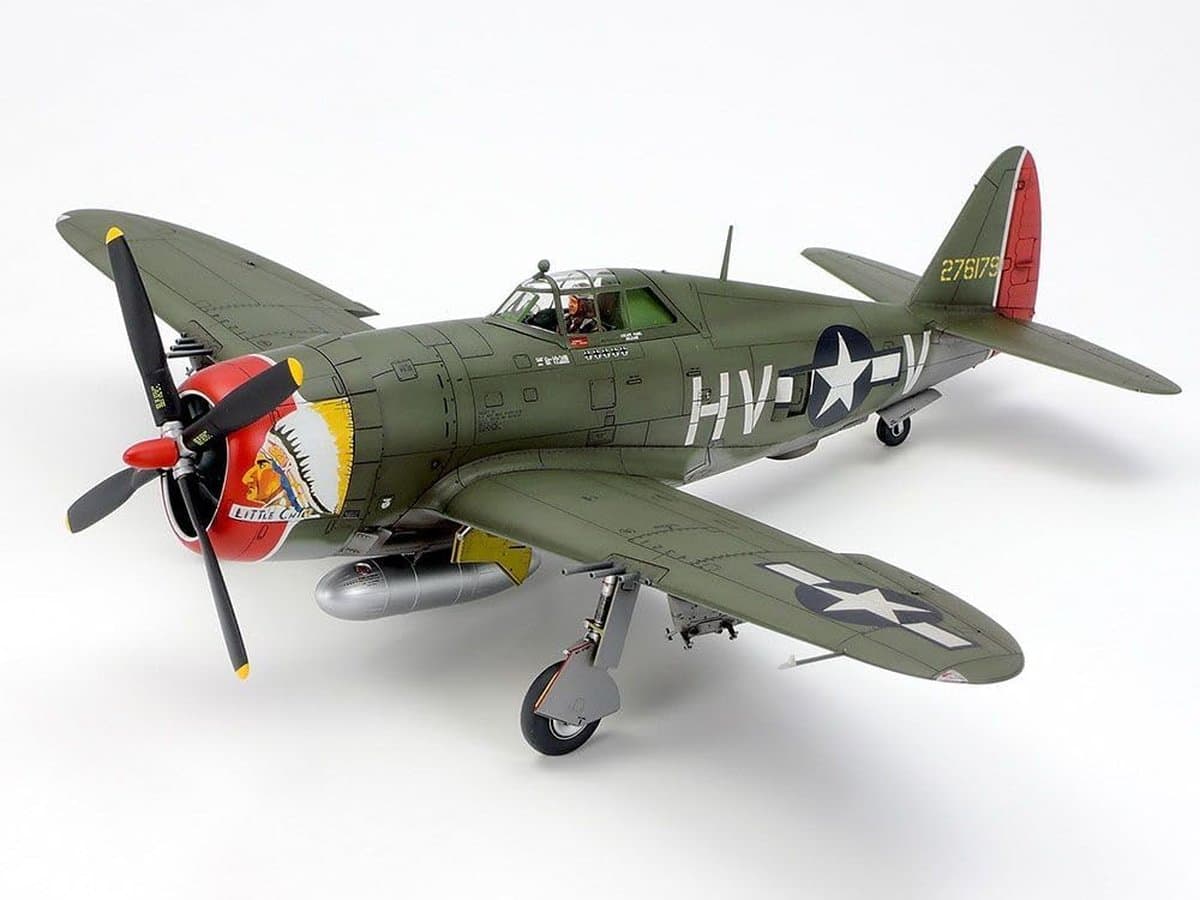
IX Tactical Air Command flew over 1,000 P-47 Thunderbolt sorties on D-Day, with no Luftwaffe opposition above the Normandy beachhead. The Thunderbolt's rugged airframe, eight .50-caliber machine guns, and ability to carry 2,000 pounds of bombs made it the dominant fighter-bomber over the lodgement.

1944WWIIArmy82 years ago

The 1st Battalion South Lancashire Regiment, supported by Sherman Crab flail tanks of the 22nd Dragoons, assaulted the Hillman bunker complex inland from Sword Beach. The position, which contained the headquarters of the German 736th Grenadier Regiment, surrendered after a six-hour engagement and dozens of casualties on both sides.

1944WWIINavy82 years ago

Over 250 Royal Navy and Royal Canadian Navy minesweepers and motor minesweepers cleared 10 channels through the German Channel minefields in the 36 hours before D-Day. The clearance allowed the invasion fleet of nearly 7,000 vessels to reach their assigned beaches without major mine losses.

1944WWIIArmy82 years ago

The German 21st Panzer Division, the only armored unit close enough to react on D-Day itself, launched a counterattack with roughly 100 tanks toward the gap between Sword and Juno beaches. A small reconnaissance element reached the coast at Lion-sur-Mer in the late afternoon, but the main thrust was halted by anti-tank guns and naval gunfire.

1944WWIIArmy82 years ago

Wehrmacht Goliath tracked mines, small remote-controlled demolition vehicles carrying 75 kilograms of high explosive, were positioned at Omaha Beach to attack landing craft and obstacles. Most failed to operate due to control-cable damage from naval bombardment, but a few were detonated against US troops in the surf.

1944WWIIArmy82 years ago

No. 4 Commando, including the 1st Battalion Free French Naval Riflemen under Lieutenant Commander Philippe Kieffer, landed at Sword Beach and assaulted the German strongpoint at the Ouistreham casino. Kieffer's 177 Free French commandos were the only French ground combat unit to participate in the D-Day landings.

1944WWIINavy82 years ago

The heavy cruiser USS Augusta (CA-31) served as flagship for Rear Admiral Don Moon's Force U, the naval force responsible for the Utah Beach landings. From her bridge, generals Omar Bradley and J. Lawton Collins directed the early hours of the US VII Corps assault.

1944WWIINavyArmy82 years ago

US Navy Landing Craft, Tank (LCT) flotillas suffered heavy losses in the first three waves at Omaha Beach as German artillery, mortars, and beach obstacles destroyed dozens of vessels. The combat engineer demolition teams aboard the LCTs took the highest casualty rates of any specialty group on D-Day.

1966Cold WarAir Force60 years ago

James Meredith, the Air Force veteran who had integrated the University of Mississippi in 1962 under armed military escort, was shot by a sniper on the second day of his solo "March Against Fear" from Memphis to Jackson, Mississippi. Meredith survived and the march was completed by thousands of civil rights activists, galvanizing the movement.

1981Cold WarAir Force45 years ago

Eight Israeli Air Force F-16A Fighting Falcons, escorted by six F-15 Eagles, flew 1,100 kilometers from Etzion airbase to destroy the Osirak nuclear reactor near Baghdad. The reactor, a French-supplied research facility nearing operational status, was struck with sixteen 2,000-pound MK-84 unguided bombs in less than two minutes.

1982Modern44 years ago

The Israel Defense Forces launched a full-scale invasion of southern Lebanon with 60,000 troops, ostensibly to create a 40-kilometer buffer zone against PLO rocket attacks on northern Israel. The operation escalated far beyond its stated objectives, reaching Beirut and embroiling Israel in an eighteen-year occupation that cost thousands of lives on all sides.

2000s

2014ModernArmyNavy12 years ago

World leaders and surviving D-Day veterans gathered at Normandy for the 70th anniversary commemoration of the invasion. With the youngest veterans now in their late eighties, the ceremony was recognized as likely one of the last major gatherings of the men who stormed the beaches, lending profound emotional weight to the event.

Enjoyed this page? Share it with someone who loves military history.

Share:

Never Miss a Day in Military History

Get daily military history, analysis, and technology delivered to your inbox.

Born on This Day

Nathan Hale

Nathan Hale

Captain

b. 1755
Continental

Continental Army officer and America's first spy, born June 6, 1755, in Coventry, Connecticut. Hale volunteered to gather intelligence behind British lines during the New York campaign but was captured and hanged on September 22, 1776. His reported last words, "I only regret that I have but one life to lose for my country", became one of the most famous phrases in American patriotic history.

Alexander Pushkin

Alexander Pushkin

b. 1799

Russia's greatest poet, born June 6, 1799. While primarily a literary figure, Pushkin's works profoundly influenced Russian military culture and national identity. His epic poem "Poltava" immortalized Peter the Great's decisive 1709 victory over Sweden, and his works shaped the romantic ideals of honor and sacrifice that permeated the Russian officer corps for generations.

Sukarno

Sukarno

President and Commander-in-Chief

b. 1901

Founding president of Indonesia, born June 6, 1901, who led the Indonesian National Revolution against the Dutch from 1945 to 1949. Sukarno proclaimed independence on August 17, 1945, and served as commander-in-chief during four years of armed struggle that included guerrilla warfare, conventional battles, and diplomatic maneuvering that ultimately secured Indonesian sovereignty.

Died on This Day

Thousands of Allied Soldiers at Normandy

Thousands of Allied Soldiers at Normandy

d. 1944
Army

An estimated 4,414 Allied troops were killed on D-Day, including 2,501 Americans. Many were young men in their teens and early twenties who had never seen combat. They fell on the beaches, in the hedgerows, in flooded fields behind the coast, and in the skies above Normandy. Over 9,386 Americans are buried at the Normandy American Cemetery overlooking Omaha Beach.

Brigadier General Don Pratt

Brigadier General Don Pratt

Brigadier General

d. 1944
Army

Assistant Division Commander of the 101st Airborne Division and the highest-ranking American officer killed on D-Day. Pratt was killed when his CG-4A Waco glider crashed during the pre-dawn landing near Hiesville, France. His death in the first hours of the invasion underscored the extreme risks of the airborne assault that preceded the beach landings.

Military Quotes

You are about to embark upon the Great Crusade, toward which we have striven these many months. The eyes of the world are upon you.

General Dwight D. Eisenhower

Supreme Commander, Allied Expeditionary Force

Order of the Day issued to Allied troops on the eve of D-Day, 1944

Two kinds of people are staying on this beach: the dead and those who are going to die. Now let's get the hell out of here.

Colonel George Taylor

Commander, 16th Infantry Regiment, 1st Infantry Division

Rallying pinned-down troops on Omaha Beach during the D-Day assault, 1944

OK, let's go.

General Dwight D. Eisenhower

Supreme Commander, Allied Expeditionary Force

Authorizing the launch of the Normandy invasion after reviewing the weather forecast, 1944

We'll start the war from right here.

Brigadier General Theodore Roosevelt Jr.

Assistant Division Commander, 4th Infantry Division

Upon realizing the first wave had landed at the wrong beach on Utah Beach, D-Day, 1944

Frequently Asked Questions

What military events happened on June 6?

25 military events occurred on June 6, spanning multiple centuries. Key events include: Battle of Memphis: Union Gunboats Destroy Confederate River Fleet (1862), Battle of Belleau Wood Begins (1918), Airborne Assault: 82nd and 101st Drop Behind Normandy Beaches (1944), Pointe du Hoc: Rangers Scale the Cliffs (1944), Mulberry Harbours: Allies Tow Two Artificial Ports Across the Channel (1944).

What is the most significant military event on June 6?

The most significant military event on June 6 is D-Day: The Allied Invasion of Normandy (1944). The largest amphibious invasion in history landed approximately 156,000 Allied troops on five beaches along the Normandy coast of France, Utah, Omaha, Gold, Juno, and Sword. Supported by 5,000 ships and 13,000 aircraft, the invasion opened the Western Front in Europe and began the liberation of Nazi-occupied France, leading directly to Germany's defeat less than a year later.

What famous military figures were born on June 6?

Notable military figures born on June 6 include Nathan Hale (1755–1776), Alexander Pushkin (1799–1837), Sukarno (1901–1970).

What wars are represented in June 6's military timeline?

Events on June 6 span the Colonial & Revolutionary era, the Civil War, World War I, World War II, the Cold War, the Modern Era, covering 25 events across 3 centuries of military history.

How many military branches are represented on June 6?

Events on June 6 involve 6 branches of the U.S. and allied armed forces, reflecting the global scope of military operations throughout history.

What Happened on Your Birthday?

Explore military history from the day you were born.

Related Days by Era

Explore More Days

Related Articles

SBD Dauntless dive bombers flying over the Pacific during the Battle of Midway in June 1942

The Battle of Midway: Five Minutes That Changed the Pacific War

In June 1942, six months after Pearl Harbor, a handful of American dive bombers caught four Japanese carriers with their flight decks full of armed planes. In roughly five minutes, three of those carriers were fatally hit, and Japan's dominance in the Pacific was broken forever.

daniel-mercer··15 min read