

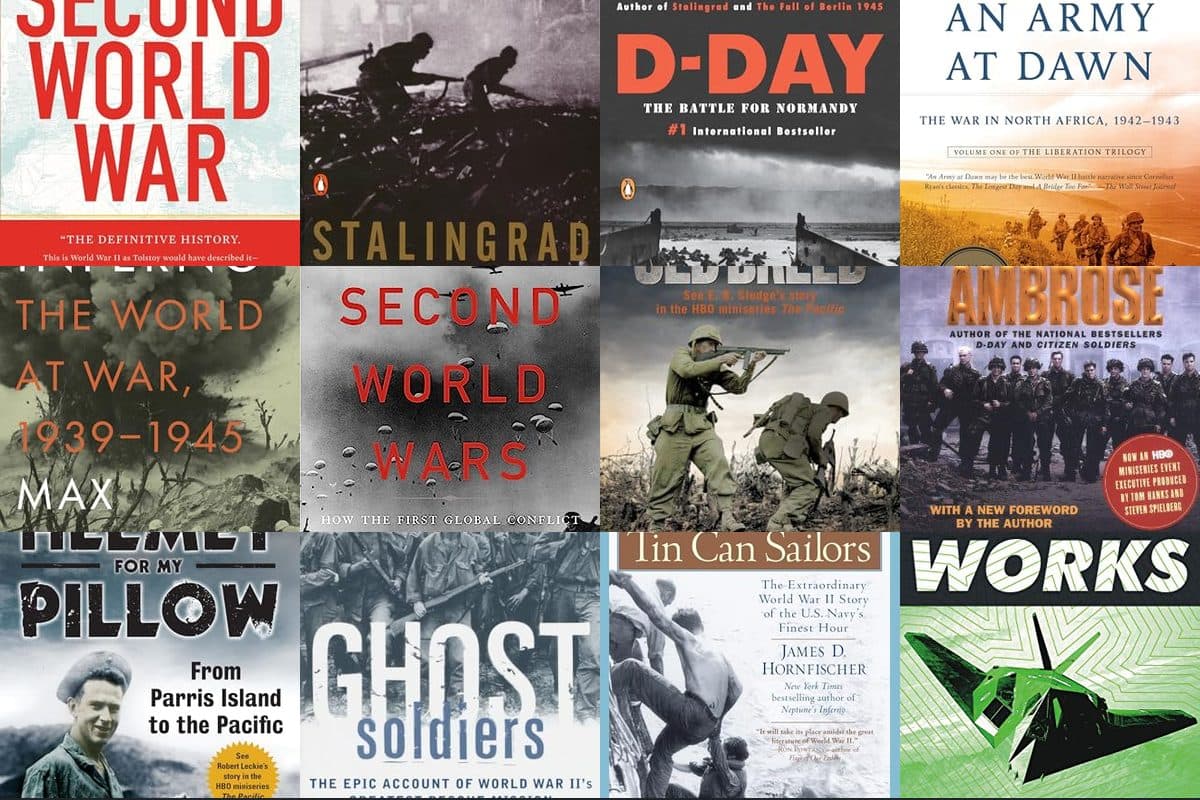
15 Best World War II Books for History Enthusiasts (2026)
15 essential WW2 books covering every theater. Narrative histories, memoirs, and visual references ranked.
daniel-mercer··21 min read

At the eleventh hour of the eleventh day of the eleventh month, the guns fell silent across the Western Front as the Armistice between the Allied Powers and Germany took effect. The ceasefire ended four years and three months of industrialized slaughter that killed approximately 20 million people and wounded 21 million more. The date would become the foundation for Veterans Day in the United States and Remembrance Day across the Commonwealth.
France and Spain signed the secret Treaty of Granada to partition the Kingdom of Naples between them, setting up the Italian Wars phase that would soon pit the two great powers directly against each other. The treaty established the alliance and military arrangements that introduced large gunpowder armies to southern Italy.
Danish astronomer Tycho Brahe observed the supernova in Cassiopeia that bears his name, an event that overturned European astronomical understanding. The ability to measure precise celestial positions, refined in Brahe's work, later underpinned military navigation and artillery ballistics for three centuries.
Forty-one male passengers aboard the Mayflower signed the Mayflower Compact in Provincetown Harbor, Massachusetts, establishing a framework of self-governance for the Plymouth Colony. The document is considered a foundational text of American democracy and established the principle that government derives its authority from the consent of the governed, an idea that would underpin the American Revolution 150 years later.
Colonial militia forces engaged Wampanoag warriors during the early stages of King Philip's War in southern New England. The fighting that took place in the Pocasset swamp area marked one of the early colonial defeats that broadened a regional conflict into the bloodiest war in proportion to population in American history.
A combined force of Loyalists and Seneca warriors under Captain Walter Butler attacked the settlement of Cherry Valley, New York, killing over 30 civilians including women and children. The massacre, one of the bloodiest frontier raids of the Revolutionary War, led directly to the Sullivan Expedition of 1779, in which the Continental Army destroyed over 40 Iroquois villages.
A British and Canadian force defeated a much larger American army at Crysler's Farm on the Saint Lawrence River, halting the American advance on Montreal. The battle ended the most ambitious American invasion attempt of the War of 1812 and helped secure Upper Canada from American occupation.
Major General William Tecumseh Sherman ordered the destruction of military and industrial targets in Atlanta in preparation for his March to the Sea. By November 16 his army would be moving toward Savannah, severing supply lines and applying total war doctrine to the Confederate heartland.
President Andrew Johnson reviewed the sentences of the Lincoln assassination conspirators. Mary Surratt had been executed on July 7, the first woman executed by the U.S. federal government. The military tribunal that convicted her and the other conspirators remained controversial, with critics arguing that civilians should have been tried in civilian courts.
Australian bushranger Ned Kelly was executed at Melbourne Gaol after his capture at the Glenrowan siege earlier that year. His use of homemade plate steel armor against colonial police troopers, fashioned from plough mouldboards, foreshadowed the body armor and improvised armored vehicles that would become characteristic of irregular warfare.
Washington was admitted to the Union as the 42nd state, anchoring American military and economic power in the Pacific Northwest. The new state's deep-water ports at Seattle, Tacoma, and Bremerton would become critical bases for U.S. Navy operations in the Pacific over the following century.
Private Henry Nicholas Gunther of the 313th Infantry Regiment charged a German machine gun position near Meuse, France, at 10:59 AM and was killed, one minute before the Armistice took effect. Gunther, a German-American from Baltimore who had been reduced in rank for writing a letter discouraging a friend from being drafted, is recognized as the last soldier killed in World War I.
Poland regained its independence after 123 years of partition between Russia, Prussia, and Austria. Marshal Jozef Pilsudski took control as the new state's military commander, beginning the rebuilding of a Polish army that would shortly fight a major war with Soviet Russia and that became central to European security between the world wars.
President Warren G. Harding presided over the dedication of the Tomb of the Unknown Soldier at Arlington National Cemetery, interring the remains of an unidentified American soldier killed in France during World War I. The ceremony drew over 100,000 people, and the tomb has been continuously guarded by soldiers of the 3rd U.S. Infantry Regiment (The Old Guard) since 1937.
Twenty-one obsolete Swordfish biplane torpedo bombers from HMS Illustrious attacked the Italian fleet at anchor in Taranto harbor, sinking or crippling three battleships and changing the balance of naval power in the Mediterranean in a single night. The raid demonstrated that carrier-based aircraft could destroy a battle fleet in port, a lesson the Japanese studied carefully before planning their attack on Pearl Harbor thirteen months later.
German forces crossed the demarcation line and occupied the previously unoccupied zone of Vichy France (Case Anton), ending the fiction of French sovereignty under Marshal Petain. The occupation was triggered by the Allied landings in North Africa (Operation Torch) three days earlier. The French fleet at Toulon scuttled itself on November 27 rather than fall into German hands.
Allied forces consolidated control of Casablanca and other ports along the Atlantic coast of Morocco and along the western Algerian coast as Operation Torch concluded its initial assault phase. The landings became the foundation for the long campaign in Tunisia that finally broke Axis power in Africa.
The white-minority government of Rhodesia under Prime Minister Ian Smith issued a Unilateral Declaration of Independence from Britain, sparking a political and military crisis that lasted 15 years. The resulting Bush War (1964-1979) between Rhodesian security forces and Black nationalist guerrillas ended with the creation of Zimbabwe in 1980.
Around November 11, 1965, the 173rd Airborne Brigade engaged the 271st Viet Cong Regiment in Operation Hump in War Zone D, north of Bien Hoa. The action, occurring just before the Battle of the Ia Drang Valley, was an early test of helicopter-borne air mobility tactics in the Vietnam War.
The U.S. Army turned over Long Binh Post, the largest American military installation in Vietnam, to South Vietnamese control as the Vietnamization drawdown approached its final stages. The handover marked one of the symbolic milestones in the withdrawal of American ground forces from the country.
NATO-led peacekeeping forces in Kosovo continued reorganization for sustained stability operations more than a year after the end of major combat operations against Yugoslav forces. The mission, KFOR, became one of the longest-running NATO operations and the model for the alliance's post-Cold War role in peacekeeping.
Palestine Liberation Organization Chairman Yasser Arafat died in a Paris hospital at age 75. A former guerrilla leader who became a statesman, Arafat shaped the Israeli-Palestinian conflict for four decades. His death removed one of the most significant figures in Middle Eastern military and political history and created a power vacuum in Palestinian leadership.
The U.S. military launched Operation Damayan, deploying 13,400 personnel including the aircraft carrier USS George Washington and Marines from III Marine Expeditionary Force to provide humanitarian assistance to the Philippines after Typhoon Haiyan, one of the most powerful tropical cyclones ever recorded. The operation demonstrated the U.S. military's unique capacity for rapid global humanitarian response.
After a 10-year journey aboard the Rosetta spacecraft, the European Space Agency lander Philae touched down on the surface of Comet 67P/Churyumov-Gerasimenko, completing the first soft landing on a comet. The technical achievements influenced subsequent military thinking about long-duration autonomous space operations and precision spacecraft control.

General
One of the most aggressive and successful American commanders of World War II. Patton led the U.S. Seventh Army in the invasion of Sicily and the U.S. Third Army across France after D-Day. His rapid armored advances across Europe became legendary, and his relief of Bastogne during the Battle of the Bulge was one of the war's most remarkable feats. He died in a car accident in Germany in December 1945.

First Lieutenant
The most decorated American combat soldier of World War II. Murphy received every military combat award for valor available from the U.S. Army, including the Medal of Honor for single-handedly holding off an entire German company while standing atop a burning tank destroyer near Holtzwihr, France. He later became a successful actor and advocate for veterans' mental health.

Private First Class
American novelist who served as an infantry scout in the 106th Infantry Division during World War II. Captured during the Battle of the Bulge, he survived the Allied firebombing of Dresden as a prisoner of war in an underground slaughterhouse, an experience that became the basis for his masterpiece Slaughterhouse-Five (1969), one of the most influential anti-war novels ever written.

Australian bushranger and outlaw who led a gang in armed confrontation against the colonial police, including the famous siege at Glenrowan where he wore homemade plate armor. Hanged at Melbourne Gaol on November 11, 1880, Kelly became an enduring symbol of rebellion against authority in Australian culture.

Danish philosopher and theologian considered the father of existentialism. While not a military figure, his writings on anxiety, despair, and the individual's confrontation with crisis profoundly influenced the understanding of combat psychology and the moral dimensions of warfare in the 20th century.
Wear the Timeline
24 military events occurred on November 11, spanning multiple centuries. Key events include: Mayflower Compact Signed (1620), Tomb of the Unknown Soldier Dedicated at Arlington (1921), Battle of Taranto: British Carrier Strike Cripples Italian Fleet (1940), Sherman Begins Atlanta Departure for March to the Sea (1864), Polish Independence Restored (1918).
The most significant military event on November 11 is The Armistice: World War I Ends (1918). At the eleventh hour of the eleventh day of the eleventh month, the guns fell silent across the Western Front as the Armistice between the Allied Powers and Germany took effect. The ceasefire ended four years and three months of industrialized slaughter that killed approximately 20 million people and wounded 21 million more. The date would become the foundation for Veterans Day in the United States and Remembrance Day across the Commonwealth.
Notable military figures born on November 11 include George S. Patton (1885–1945), Audie Murphy (1925–1971), Kurt Vonnegut (1922–2007).
Events on November 11 span the Colonial & Revolutionary era, the Civil War, World War I, World War II, the Cold War, the Modern Era, the Vietnam War, covering 24 events across 6 centuries of military history.
Events on November 11 involve 5 branches of the U.S. and allied armed forces, reflecting the global scope of military operations throughout history.
Explore military history from the day you were born.
June 6
The Allied invasion of Normandy, the largest amphibious assault in history.
December 7
Japan attacks the U.S. Pacific Fleet, bringing America into World War II.
September 11
The deadliest terrorist attack in history transforms U.S. national security.
August 6
The first atomic bomb is dropped on a city, ushering in the nuclear age.
May 8
Nazi Germany surrenders unconditionally, ending World War II in Europe.
June 4
The turning point of the Pacific War as the U.S. Navy destroys four Japanese carriers.
July 4
The Declaration of Independence is adopted, sparking the American Revolution.
15 essential WW2 books covering every theater. Narrative histories, memoirs, and visual references ranked.
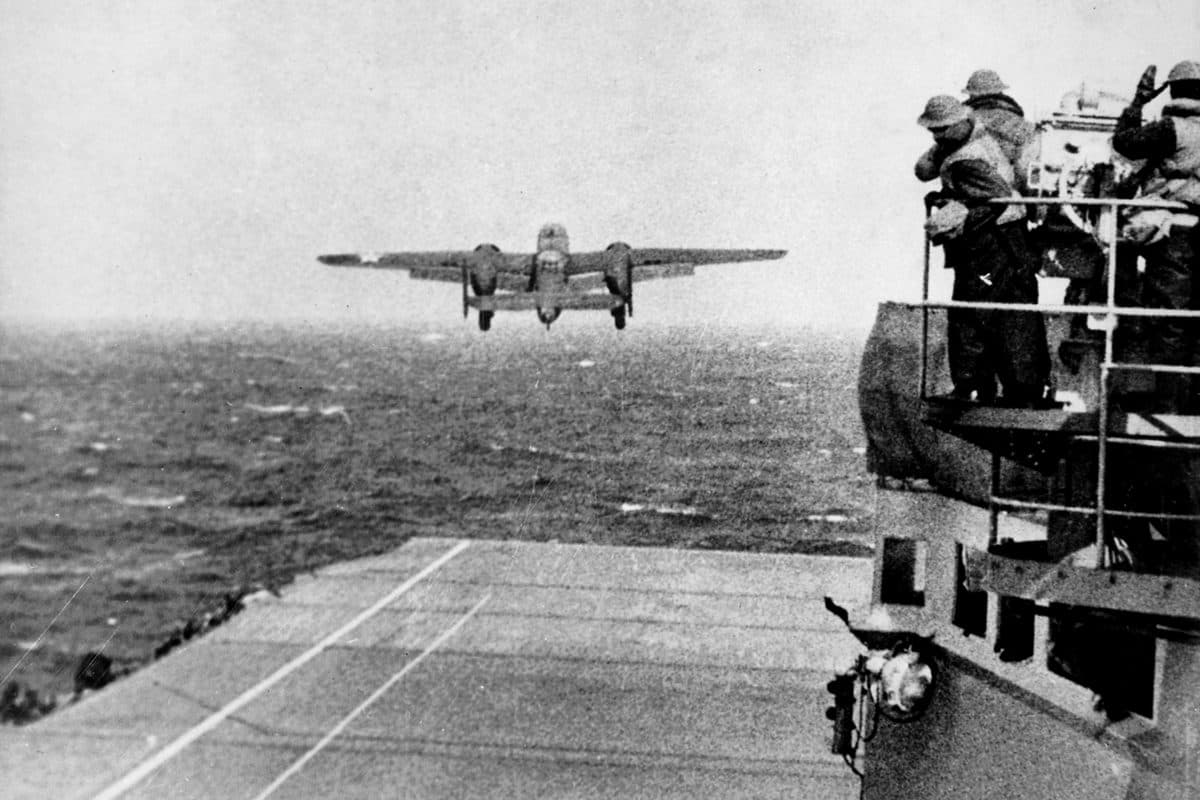
On April 18, 1942, sixteen B-25 Mitchell bombers did something no one thought possible: they launched from the deck of an aircraft carrier, flew 650 miles to Japan, and bombed Tokyo. Every aircraft was lost. The damage was negligible. The consequences changed the war.
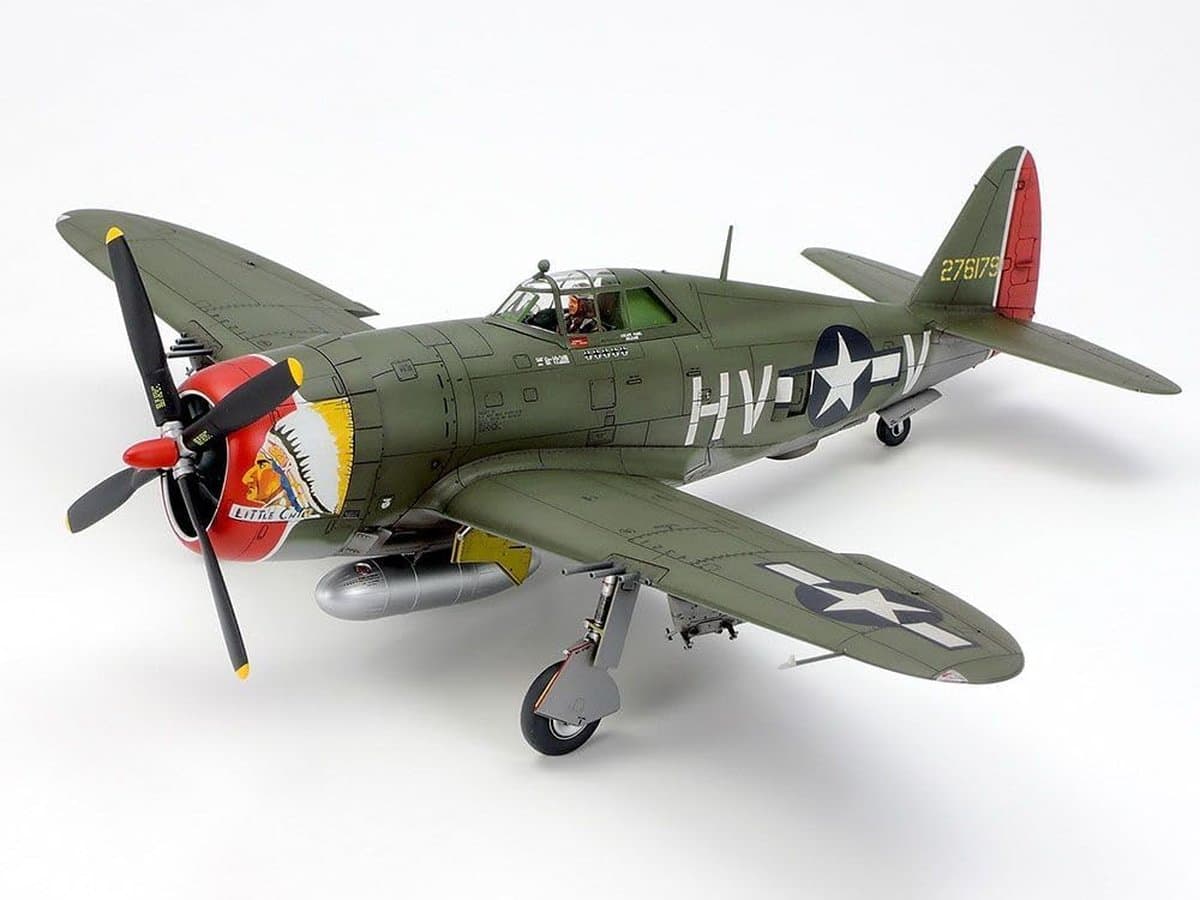
Compare 85+ WW2 scale model kits across aircraft, tanks, and ships. Beginner builds from $9 to museum-grade showpieces at $580. Covers Tamiya, Eduard, HK Models, Trumpeter, and more with honest reviews, trade-offs, and pricing.

On April 7, 1945, the Imperial Japanese Navy sent the largest battleship ever built on a one-way suicide mission to Okinawa. She never arrived. 386 American aircraft found her first, and sank her in under two hours.