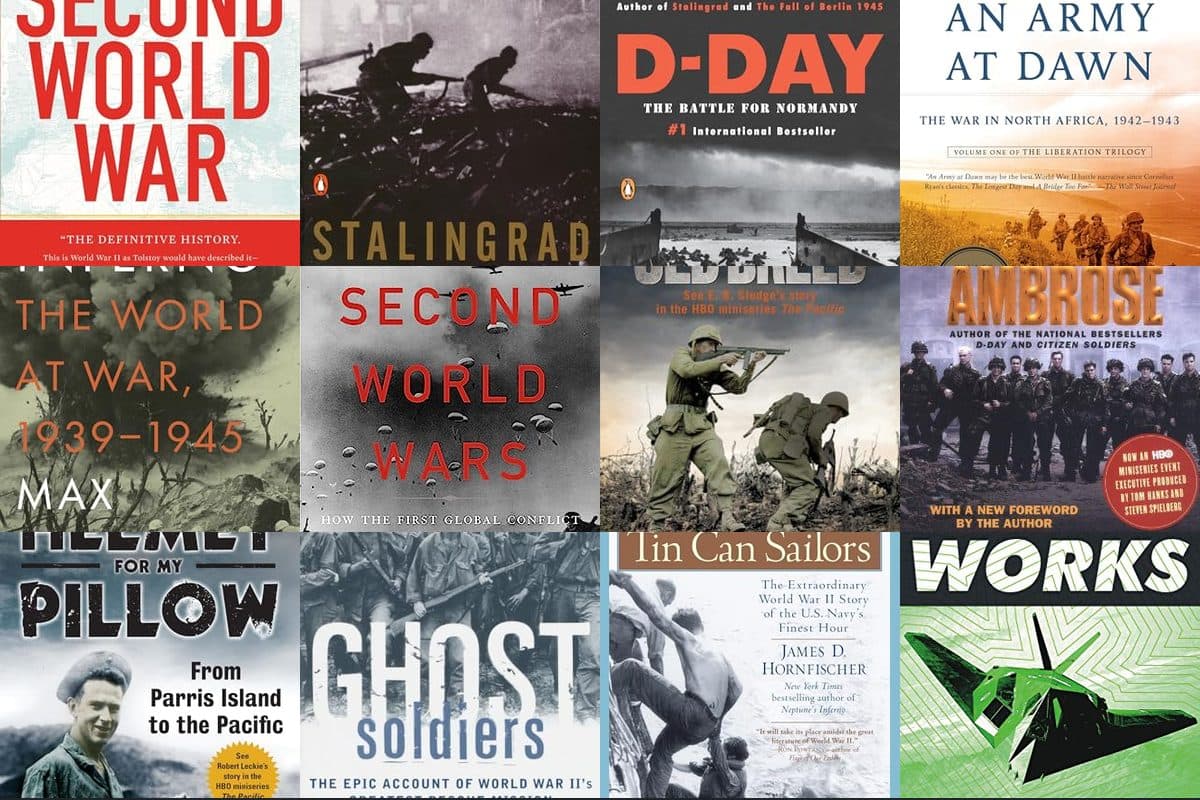

The Second World War generated more written history than any other conflict, and sorting signal from noise takes real effort. Thousands of WW2 titles compete for shelf space, and the gap between a great book and a mediocre one is enormous. A bad WW2 book rehashes the same Wikipedia-level facts. A great one puts you in a specific place and time with enough detail and context to change how you understand the entire war.
These 15 books earned their spots by doing something distinct: telling a story no other book tells as well, drawing on sources others missed, or providing a perspective that shifts how you think about a theater, campaign, or the people who fought. The list covers narrative histories, frontline memoirs, air and naval warfare, and visual references. Every pick includes a realistic assessment of weaknesses so you know what to expect before you buy.
For a broader reading list that extends beyond WW2, see our 27 best military history books guide. Looking for gift ideas? Try our gifts for military history buffs roundup.
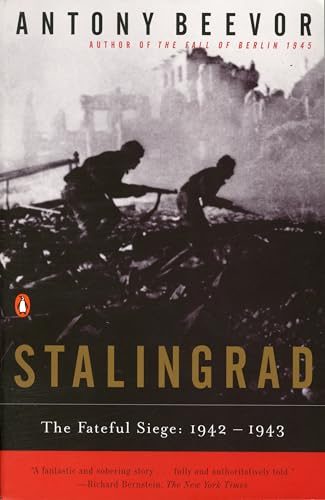
Stalingrad - Beevor
~$18


Band of Brothers by Stephen Ambrose
$14 on Amazon
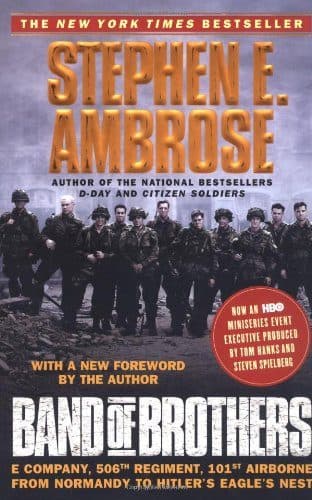
The story of Easy Company, 506th Parachute Infantry Regiment, from training at Camp Toccoa through the end of the war at Hitler's Eagle's Nest. Based on extensive interviews with the men who served.
Narrative Histories (6 Books)
Narrative histories are the backbone of any WW2 library. These books tell the story of campaigns, battles, and strategic decisions through the people who made them. The best narrative historians combine deep archival research with writing that reads like a novel. If you can only pick one category to start with, start here. For more on the broader conflict, visit our World War II hub.
The Second World War by Antony Beevor
~$19 on Amazon
Beevor's single-volume history connects every theater of the war into one coherent narrative, from the invasion of Poland through the fall of Berlin and the atomic strikes on Japan. Drawing on archives from a dozen countries, it remains the best attempt to tell the whole story in one binding.
Best for: Readers who want one comprehensive book covering all of WW2
At 880 pages, Beevor tries to cover everything, and the cost is depth. The China-Burma-India theater gets shortchanged, and the Pacific campaign feels compressed compared to the European sections. The Eastern Front coverage is predictably strong given Beevor's expertise, but readers focused on the Pacific will want dedicated titles. That said, no other single volume connects the global threads of the war this effectively, making it the natural starting point for anyone building a WW2 library from scratch.
Stalingrad by Antony Beevor
~$18 on Amazon
Written after Beevor gained access to newly opened Soviet archives in the early 1990s, this account of the Battle of Stalingrad integrates German and Russian sources in a way no previous history had managed. It follows the battle from the initial German advance to the surrender of Paulus's Sixth Army.
Best for: Anyone who wants the most thoroughly researched account of history's most brutal urban battle
Beevor alternates between command-level decision-making in Berlin and Moscow and the street-by-street combat inside the city, and the contrast is devastating. The weakness is organizational: the density of Soviet unit designations can be disorienting without a map at hand, and readers unfamiliar with the Eastern Front's broader context may struggle with the opening chapters. This is not a beginner's WW2 book. But for anyone already grounded in the basics, it is the single best account of the battle that broke the Wehrmacht.
D-Day: The Battle for Normandy by Antony Beevor
~$18 on Amazon
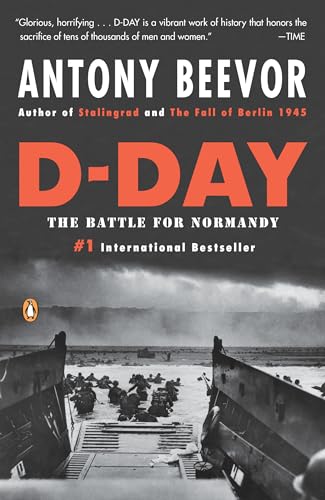
Rather than covering just June 6, Beevor follows the entire Normandy campaign from the airborne drops through the breakout at Falaise. He draws on American, British, Canadian, French, and German sources to present the battle from multiple national perspectives simultaneously.
Best for: Readers who want the full Normandy campaign, not just the beach landings
The strength here is Beevor's refusal to treat D-Day as a purely American story. British, Canadian, and French civilian perspectives get serious attention, which adds dimension that most Normandy books lack. The weakness is that the bocage fighting coverage can feel repetitive, and tactical details sometimes overwhelm the narrative momentum. Readers who want a tighter, more dramatic account of just the landings may prefer Cornelius Ryan's The Longest Day. But for the full campaign from planning through breakout, this is the standard.
An Army at Dawn by Rick Atkinson
~$19 on Amazon
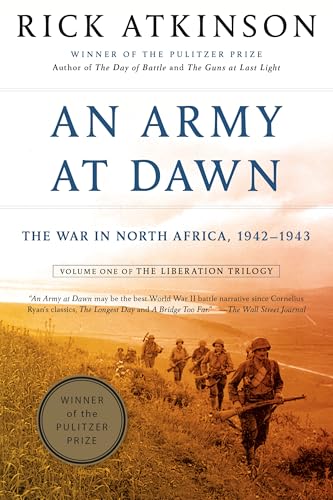
The first volume of Atkinson's Pulitzer Prize-winning Liberation Trilogy covers the North Africa campaign from Operation Torch through the fall of Tunisia. It tracks how an inexperienced American army learned to fight against Rommel's Afrika Korps through painful trial and error.
Best for: Understanding how the U.S. Army transformed from amateur to professional fighting force
Atkinson writes with a novelist's eye for character and scene-setting, and his portrait of the Kasserine Pass disaster is some of the best combat writing in any WW2 book. The weakness is length: 736 pages on North Africa alone demands patience, and the political maneuvering with Vichy French officials in the early chapters can feel slow. If you enjoy this volume, the complete Liberation Trilogy boxed set covers the war through Sicily, Italy, and the final push into Germany. North Africa is the forgotten theater for many American readers, and Atkinson makes a compelling case that it deserves far more attention.
Inferno: The World at War, 1939-1945 by Max Hastings
~$17 on Amazon
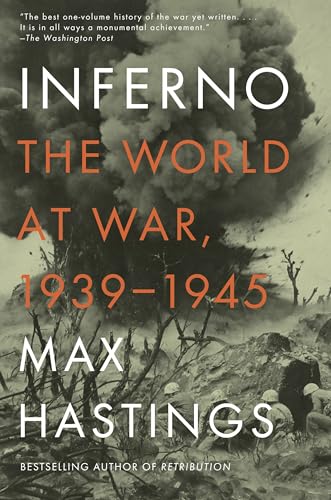
Hastings structures his global history of WW2 around the experiences of ordinary people rather than generals and politicians. Soldiers, civilians, POWs, and resistance fighters from over a dozen countries provide the primary narrative thread, with strategic context woven in around their stories.
Best for: Readers who want the human cost of the war told through individual voices
Hastings is opinionated, and that is both the book's strength and its limitation. His assessments of military competence are sharp and sometimes controversial, particularly his views on the relative fighting quality of British versus American forces. The people-first structure means the strategic narrative can feel fragmented if you are trying to follow a specific campaign chronologically. Readers who want a clean, linear timeline should start with Beevor's single-volume history instead. But for emotional impact and the texture of what the war actually felt like on the ground, Inferno is unmatched.
The Second World Wars by Victor Davis Hanson
~$15 on Amazon
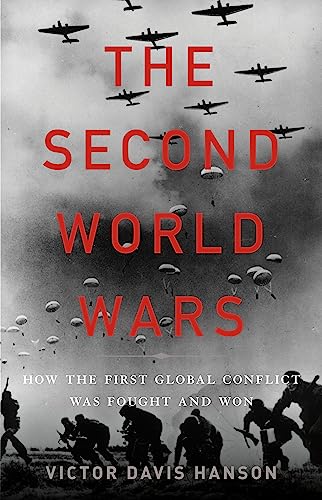
Hanson approaches WW2 thematically rather than chronologically, analyzing the war through lenses like air power, naval warfare, infantry combat, logistics, and leadership. The plural "Wars" in the title reflects his argument that the conflict was actually several overlapping wars fought with different tools and different logic.
Best for: Experienced WW2 readers who want a thematic, analytical perspective
The thematic structure makes this a poor first WW2 book because it assumes you already know the basic chronology. Hanson references events across multiple theaters in rapid succession, and readers without that foundation will get lost. His statistical approach can also feel clinical at times, prioritizing production numbers and logistics data over human stories. But for readers who have already consumed several narrative histories and want to understand why the Allies won at a structural level, this is one of the most thought-provoking books on the list.
Memoirs & First-Person Accounts (4 Books)
Narrative histories tell you what happened. Memoirs tell you what it felt like. These four books were written by men who were there, and they capture details of combat, fear, boredom, and camaraderie that no historian writing decades later can fully reconstruct. If you have only read top-down histories, adding even one memoir to your shelf will change how you understand the war.
With the Old Breed by E.B. Sledge
~$10 on Amazon
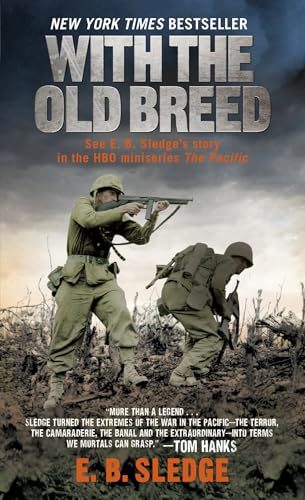
Sledge served as a Marine mortarman at Peleliu and Okinawa, two of the Pacific war's most vicious battles. He kept secret notes on scraps of paper during the fighting and later expanded them into this memoir, which historian Paul Fussell called "one of the finest memoirs to come out of any war."
Best for: Anyone who wants to understand Pacific island combat at ground level
Sledge writes with a directness that makes the Pacific fighting viscerally real in a way polished histories never quite manage. The Peleliu chapters are particularly harrowing. The limitation is scope: Sledge was an enlisted Marine with no visibility into the strategic picture, so you get zero context about why these battles were fought or what they achieved. Pair this with a broader Pacific theater history for the full picture. The prose is plain and unadorned, which some readers find powerful and others find flat. But as a document of what combat actually does to the people who fight it, nothing on this list comes close.
Band of Brothers by Stephen Ambrose
~$12 on Amazon
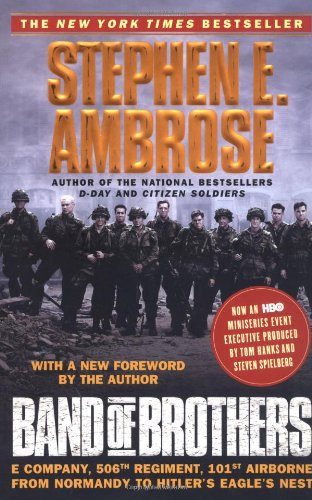
Ambrose follows Easy Company, 506th Parachute Infantry Regiment, 101st Airborne from training at Camp Toccoa through D-Day, Operation Market Garden, the Battle of the Bulge, and the capture of Hitler's Eagle's Nest. Based on extensive interviews with the surviving veterans.
Best for: Readers who want to follow one unit's complete war from start to finish
The HBO miniseries made Easy Company famous, but the book offers details and context the show could not include. Ambrose excels at making you care about individual soldiers, and the training chapters at Toccoa establish relationships that pay off emotionally throughout the rest of the war. The weakness is well-documented: Ambrose has faced credible accusations of exaggeration and loose sourcing in some of his other works, and some historians question specific claims in this book as well. The writing also tends toward hero worship, rarely examining the darker aspects of combat or moral ambiguity. Take the specific quotes and dialogue with a grain of salt, but the overall arc of Easy Company's war is well-supported by multiple sources.
Helmet for My Pillow by Robert Leckie
~$10 on Amazon
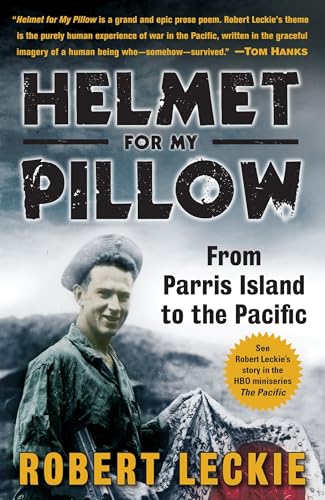
Leckie served as a Marine on Guadalcanal, New Britain, and Peleliu. His memoir is more literary than Sledge's, with a wry humor and self-awareness that captures the absurdity of military life alongside its terrors. Featured prominently in HBO's The Pacific.
Best for: Readers who appreciate literary memoir writing and dark humor alongside combat narrative
Leckie is the better writer of the two Pacific memoirists on this list, and his Guadalcanal chapters are some of the most vivid first-person combat writing in the English language. The weakness is that his literary style sometimes prioritizes storytelling effect over strict accuracy, and some passages feel embellished. Compared to Sledge, Leckie is more entertaining but less raw. The book also loses momentum in the middle sections covering garrison life between campaigns. Read this alongside Sledge rather than instead of it, as the two memoirs complement each other's strengths and gaps perfectly.
Ghost Soldiers by Hampton Sides
~$17 on Amazon
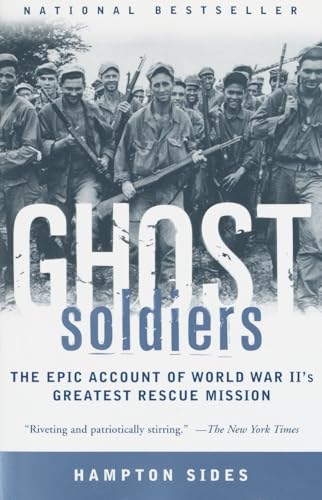
Sides tells the story of the Cabanatuan POW camp rescue in January 1945, when Army Rangers and Filipino guerrillas marched 30 miles behind Japanese lines to liberate over 500 American prisoners. The narrative alternates between the rescue mission and the prisoners' three years of captivity under increasingly brutal conditions.
Best for: Readers who want a fast-paced, mission-focused WW2 narrative
Sides structures Ghost Soldiers like a thriller, and the pacing is relentless once the rescue mission kicks off. The captivity chapters provide the emotional stakes that make the rescue payoff hit hard. The weakness is that the dual-timeline structure means the book keeps cutting away from whichever storyline has momentum, which can feel frustrating in the early chapters before both threads converge. Some readers also find the captivity sections difficult to get through given the graphic descriptions of POW conditions. This is one of the most accessible WW2 books on the list, making it a strong pick for readers who do not typically read military history.
Air & Naval Warfare (3 Books)
The war at sea and in the air operated on different logic than the ground campaigns, and these three books capture the specific challenges of fighting in those domains. From carrier battles to strategic bombing doctrine to Cold War-era aerospace engineering rooted in WW2 lessons, each picks a distinct angle. For related picks, check out our military board games guide, which includes several WW2 naval and air warfare titles.
The Last Stand of the Tin Can Sailors by James Hornfischer
~$17 on Amazon
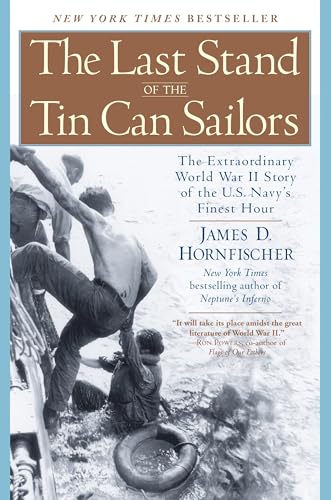
Hornfischer recounts the Battle off Samar in October 1944, when a handful of American destroyers, destroyer escorts, and escort carriers charged a vastly superior Japanese fleet to protect the invasion beaches at Leyte Gulf. It is one of the most lopsided surface engagements in naval history, and the American ships fought anyway.
Best for: Anyone interested in naval warfare, courage under impossible odds, or the Pacific naval campaign
Hornfischer's writing is cinematic without feeling exaggerated, and he manages the difficult task of making a confusing multi-ship naval engagement readable. The individual crew stories are the book's greatest strength. The weakness is that 528 pages on a single engagement can feel long, especially in the middle chapters where the tactical back-and-forth becomes repetitive. Readers unfamiliar with naval terminology will also need to look up some terms. But the Battle off Samar is one of those stories that sounds too dramatic to be true, and Hornfischer proves every detail with meticulous sourcing.
Skunk Works by Ben Rich
~$16 on Amazon
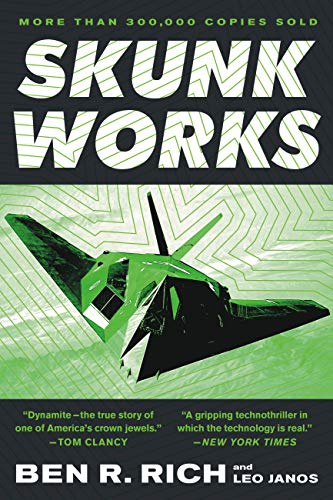
Rich led Lockheed's Skunk Works division after Kelly Johnson, overseeing the development of the F-117 Nighthawk stealth fighter. The book covers the entire history of Skunk Works from the P-80 jet - America's first operational jet fighter, developed during WW2 - through the U-2, SR-71, and the stealth revolution.
Best for: Readers fascinated by aerospace engineering, military aviation, and the culture of innovation
This is technically a Cold War book with WW2 roots, as Skunk Works was born from the wartime need for America's first jet fighter. Rich writes as an engineer, not a historian, which gives the technical details an authority that few aviation books can match. The weakness is self-promotion: Rich rarely acknowledges failures or credits people outside his team, and the book reads at times like a corporate success story rather than an objective history. The Pentagon bureaucracy chapters can also drag. Despite that, Skunk Works remains the best insider account of how classified military aircraft actually get designed and built.
The Bomber Mafia by Malcolm Gladwell
~$15 on Amazon
Gladwell examines the pre-war debate between precision bombing advocates (the "Bomber Mafia" at the Air Corps Tactical School) and the pragmatists who ultimately turned to area bombing and incendiary campaigns against Japan. The book frames Curtis LeMay's firebombing of Tokyo as the resolution of this doctrinal conflict.
Best for: Short, argument-driven reads about strategic bombing doctrine and its moral consequences
At 256 pages, this is the shortest book on the list and the most accessible for casual readers. Gladwell is a gifted storyteller, and the central tension between idealism and pragmatism is compelling. The weakness is significant: serious WW2 historians have criticized the book for oversimplifying the bombing debate, presenting a binary choice that was far more nuanced in practice, and giving LeMay a more sympathetic framing than the evidence supports. It started as an audiobook project, and the written version can feel thin in places. Treat this as an engaging introduction to the strategic bombing question rather than the final word, and follow it with more rigorous histories if the topic interests you.
Visual & Reference (2 Books)
Not every WW2 book needs to be read cover-to-cover. These two reference works are designed for browsing, looking things up, and understanding the war through maps, photographs, and infographics. They serve a different purpose than narrative histories and make excellent coffee-table companions to the rest of this list.
World War II: The Definitive Visual History by DK
~$25 on Amazon
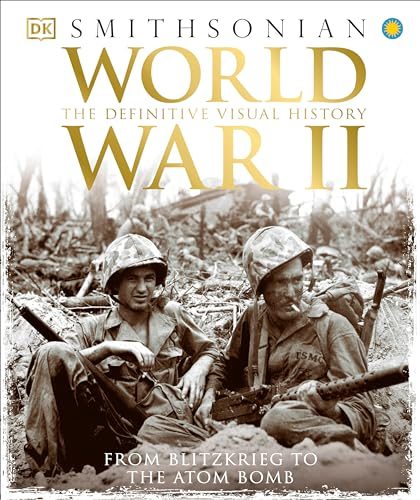
DK's visual history covers the entire war through photographs, maps, timelines, and infographics organized chronologically. Each campaign gets a two-to-four page spread with key facts, dates, and annotated images. It functions as both a standalone introduction and a companion reference for readers of the narrative histories above.
Best for: Visual learners, quick reference, or anyone who wants a high-quality WW2 coffee-table book
DK's visual format is ideal for getting a quick overview of unfamiliar campaigns before diving into a dedicated book. The maps and timelines are particularly well-done and help place events in geographic and chronological context. The weakness is that the text is necessarily shallow, rarely going beyond encyclopedia-level summaries for any single topic. The large-format hardcover is also heavy and not great for reading in bed or on a commute. This is a reference and browsing book, not a reading book, and it excels at that specific job.
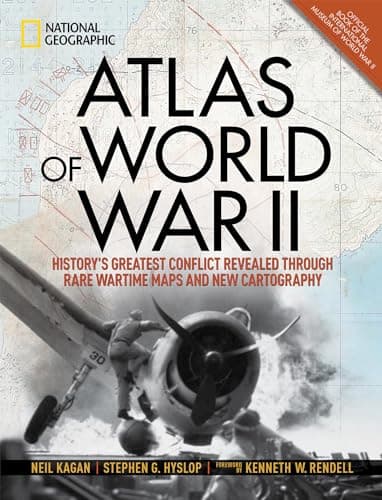
National Geographic Atlas of World War II by Neil Kagan
~$35 on Amazon
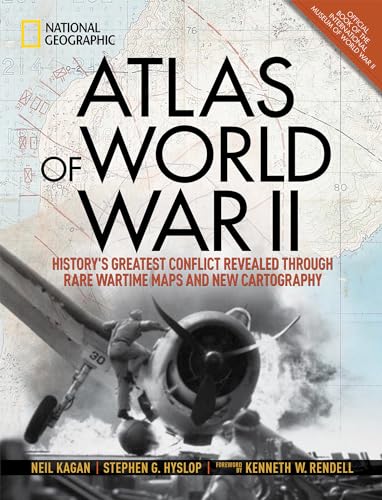
National Geographic brings its cartographic expertise to WW2, with over 50 detailed campaign maps showing troop movements, supply lines, and terrain across every major theater. Supplemented with archival photographs, the atlas turns abstract strategic concepts into something you can see and trace with your finger.
Best for: Map enthusiasts and readers who want to visualize campaigns while reading narrative histories
Keep this atlas next to your reading chair and open it alongside whatever narrative history you are working through. The campaign maps fill in geographic context that text alone cannot convey, especially for theaters like North Africa and the Pacific island chains where distance and terrain drove strategic decisions. The weakness is the price point and the fact that as a standalone book, the text between maps is too thin to tell a complete story. You need context from other books to get full value from the maps. The binding is also tight on some printings, making it hard to lay flat, which is exactly what you want an atlas to do.
How to Read WW2 History
Fifteen books is a lot, and most people will not read them all. Here is a practical approach to building your WW2 knowledge without burning out or reading the same ground twice.
Start with One Theater
Pick the theater that interests you most and read one narrative history focused on it. If you are drawn to the European war, start with Beevor's D-Day or Atkinson's An Army at Dawn. For the Pacific, Hornfischer's Tin Can Sailors or Sides's Ghost Soldiers gives you a focused entry point. For the Eastern Front, go straight to Stalingrad. Single-theater books build a foundation that makes the big comprehensive histories more meaningful when you get to them.
Alternate Narratives with Memoirs
After a narrative history, read a memoir from the same theater. The shift in perspective is valuable. Narrative histories give you the strategic picture and the chain of command. Memoirs give you the sensory reality of what those strategic decisions meant for the people carrying them out. Sledge's With the Old Breed after a Pacific history, or Band of Brothers after a European campaign book, creates a layered understanding that neither type delivers alone.
Use Visual References as Companions
Do not try to read the DK Visual History or the National Geographic Atlas cover-to-cover. Keep them on your desk and open them whenever your current reading mentions a campaign, battle, or geographic area you cannot visualize. Maps transform abstract troop movements into something concrete, and you will retain far more of what you read when you can picture the terrain.
Save Thematic Books for Last
Hanson's The Second World Wars and Gladwell's The Bomber Mafia assume you already know the basic timeline. These books are most rewarding after you have read three or four narrative and memoir titles, because you will have the context to evaluate their arguments critically rather than taking them at face value.
Frequently Asked Questions
What is the best WW2 book for beginners?
Beevor's The Second World War is the best starting point because it covers the entire conflict in a single volume with clear writing and strong sourcing. If 880 pages feels intimidating, start with Sides's Ghost Soldiers, which reads like a thriller and requires no prior WW2 knowledge.
Should I read WW2 books in chronological order?
Not necessarily. A better approach is to start with the theater that interests you most. Reading chronologically across all theaters at once can be confusing because the European, Pacific, and North African campaigns have different rhythms and key players. Pick one theater, build a foundation, then branch out.
Is Antony Beevor reliable as a WW2 historian?
Beevor is widely respected by both academic historians and general readers. His archive research, particularly in post-Soviet sources, is considered rigorous. His books have attracted some criticism from Russian historians over his handling of Soviet military crimes, but his core methodology is sound. He appears three times on this list because his body of WW2 work is consistently high-quality.
What is the difference between Band of Brothers the book and the HBO series?
The book contains significantly more detail about training, individual soldiers' backgrounds, and post-war lives. The HBO series compressed and dramatized events for television, combining some characters and changing timelines. The book is the more complete and accurate version, though the series brings the visual dimension of combat that text alone cannot capture.
Are these WW2 books available as audiobooks?
All 15 books on this list are available as audiobooks through Audible or other platforms. The Bomber Mafia was actually designed as an audiobook first and may be best experienced in that format, since Gladwell incorporates archival audio. With the Old Breed and Band of Brothers also work well in audio form given their personal, narrative styles.
Which WW2 book covers the Pacific theater best?
For a ground-level perspective, Sledge's With the Old Breed is unmatched. For naval combat, Hornfischer's The Last Stand of the Tin Can Sailors is the standard. For a fast-paced narrative, Sides's Ghost Soldiers covers the POW experience and the Philippines campaign. No single book covers the entire Pacific war as comprehensively as Beevor covers the European theater, so combining two or three Pacific-focused titles gives the best overall picture.
Is Skunk Works actually a WW2 book?
Skunk Works originated during WW2 when Kelly Johnson's team built the P-80 Shooting Star jet fighter in 143 days to counter German jet aircraft. The book covers that WW2 origin story before moving into Cold War-era projects like the U-2, SR-71, and F-117. It is included here because the Skunk Works concept was born from a specific WW2 problem, and the engineering philosophy that shaped decades of military aviation traces directly back to that wartime pressure.
How much should I expect to spend building a WW2 book collection?
Most paperbacks on this list cost between $10 and $19, making a core library of five or six books a roughly $75-$100 investment. The two visual reference books are pricier at $25-$35 due to their large-format hardcover production. Buying used copies on eBay or at secondhand bookshops can cut costs significantly, and most of these titles have been in print long enough to be widely available used.
Building a WW2 library is a long-term project, and these 15 books give you a strong foundation across theaters, perspectives, and formats. Start with whichever title matches your current interest, and let each book point you naturally toward the next one. For more military history content, explore our WW2 hub, browse our complete military books guide, or check out military board games for a different way to engage with these campaigns.