Skip to content
April 20:Robert E. Lee Resigns from the US Army165yr ago

Challenger 3: Britain Just Rebuilt Its Tank From Scratch and It Still Only Has 148 of Them

Marcus Webb · · 11 min read
Save
Share:
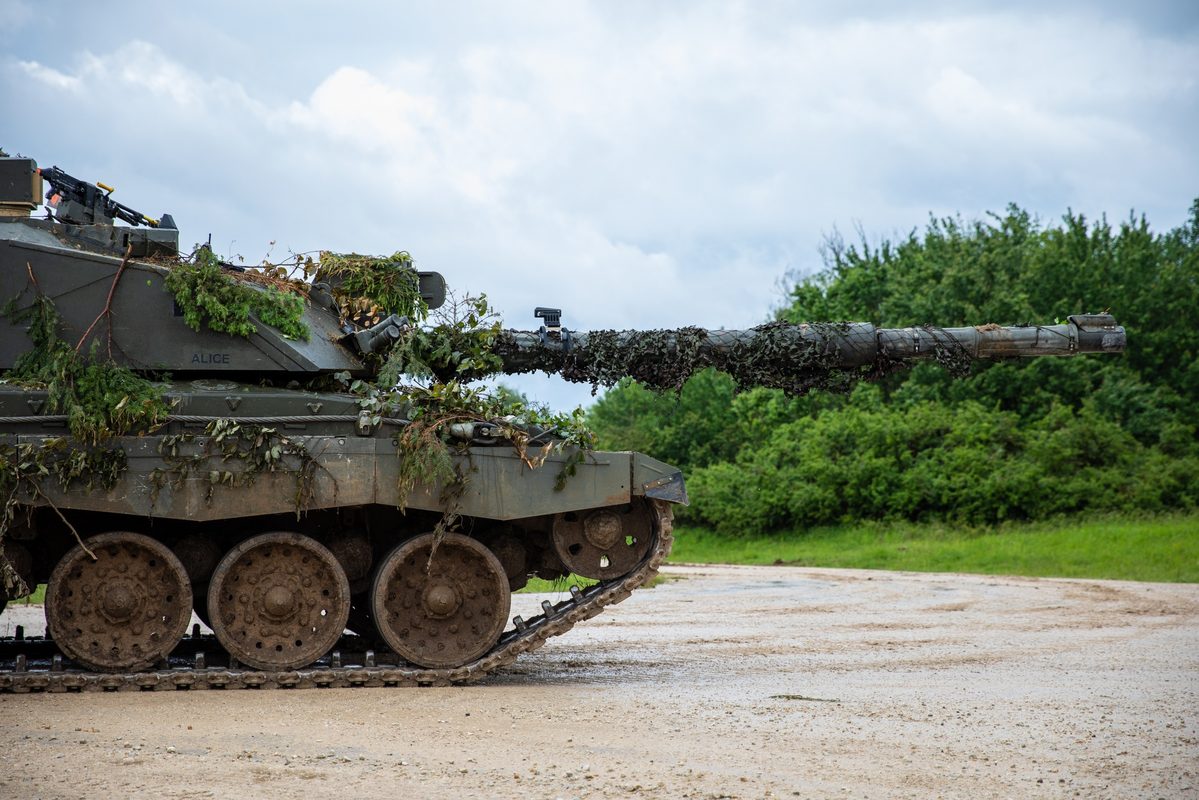
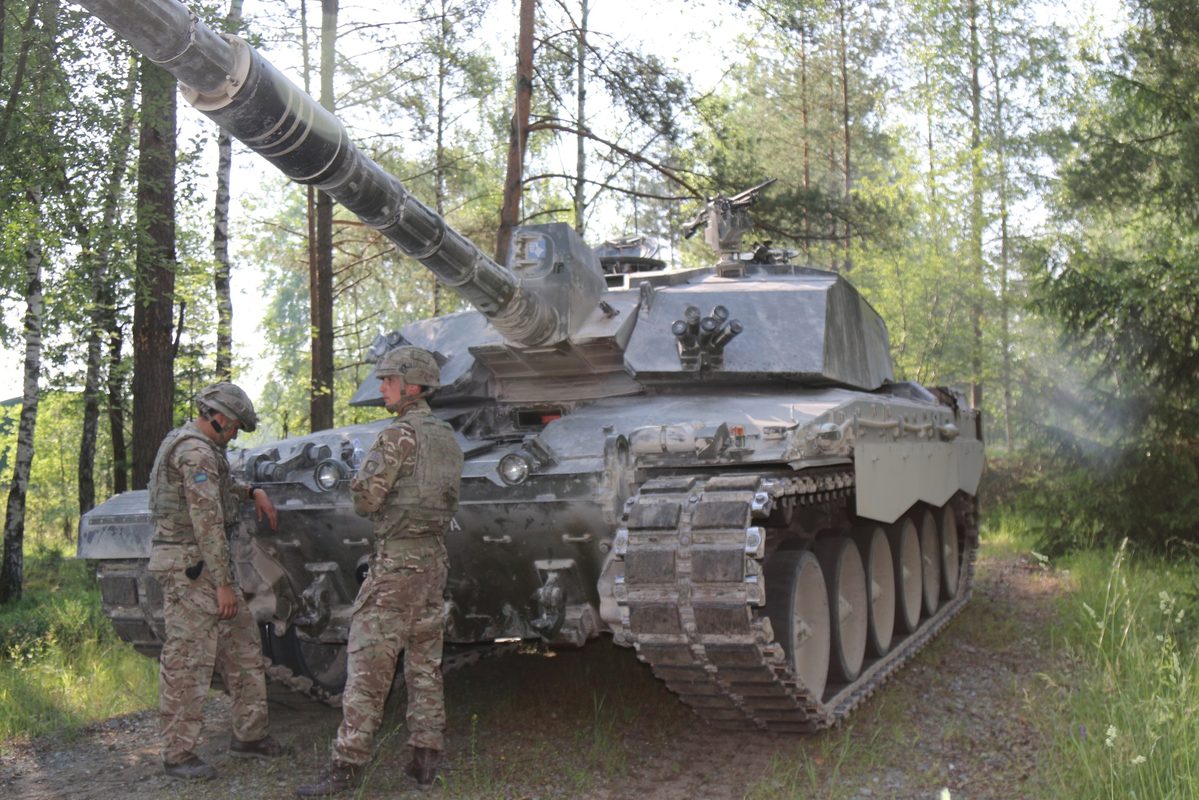
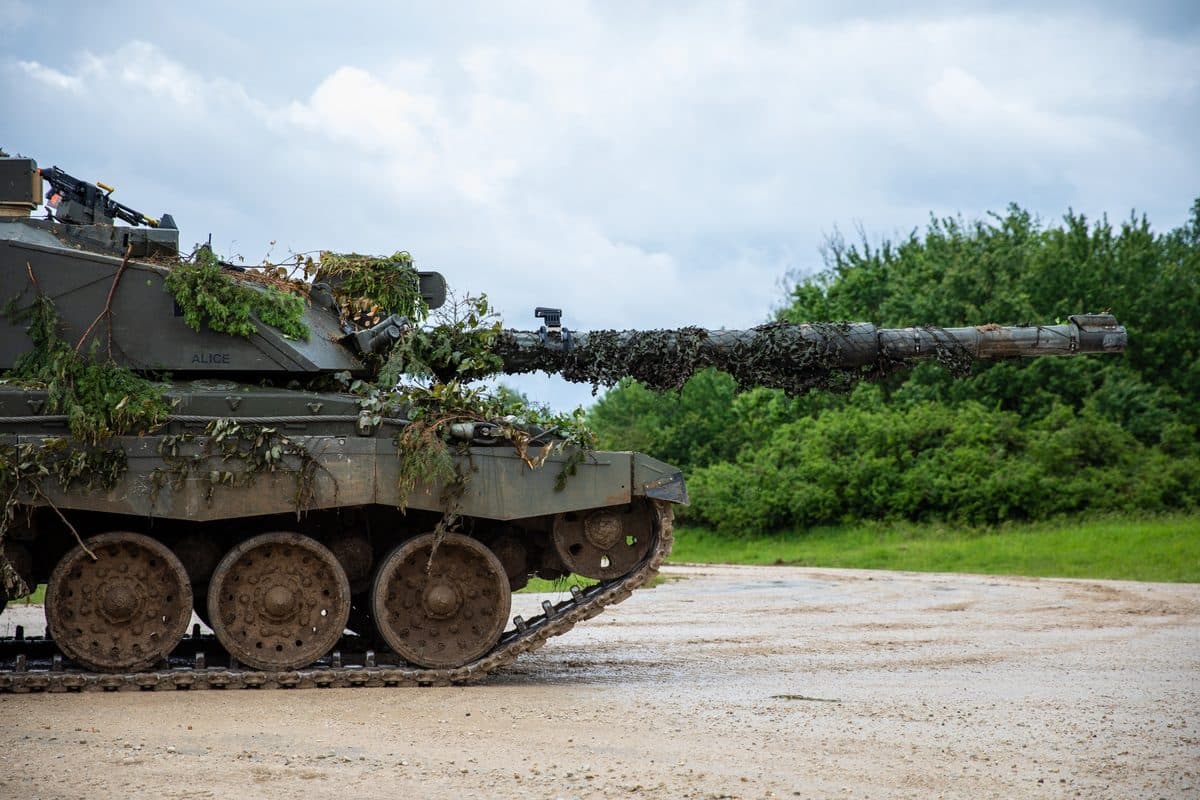
British Army Challenger tank during a military training exercise in Europe
Marcus Webb
Marcus Webb

Military Vehicles & Ground Systems Contributor

Marcus Webb writes about military ground vehicles, armored platforms, and the logistics of land warfare. His work covers everything from MRAPs and infantry carriers to the training pipelines that keep ground forces operational in contested environments.

Britain is rebuilding its main battle tank from the turret up. The Challenger 3 is not a new tank — it is a Challenger 2 hull with an entirely new turret, a new main gun, new fire control, new sights, and new armor. When the program is complete, Britain will have 148 of them. That number is worth sitting with for a moment. Poland is buying 250 M1A2 Abrams in a single order. Germany operates over 300 Leopard 2s. France fields 200 Leclercs. Britain, which once commanded the world's largest armored force, will defend itself with fewer tanks than Belgium has infantry fighting vehicles.

The Challenger 3 program exists because the Challenger 2, while mechanically reliable and well-protected, had become operationally obsolete. Its fire control system dated to the 1990s. Its sights were analog. And its main gun — the L30A1 rifled 120mm — was the last rifled tank gun in NATO service, which meant it could not fire the standardized smoothbore ammunition that every other Western tank uses. The Challenger 2 was not just falling behind. It was falling out of the alliance's logistics ecosystem.

The Rifled Gun Problem

For decades, Britain's insistence on a rifled tank gun was a point of national pride. The L30A1 fired HESH (High Explosive Squash Head) rounds that were devastatingly effective against bunkers and buildings, and British tankers swore by the gun's accuracy. But rifled guns have a fundamental limitation when it comes to anti-armor performance: they cannot effectively fire the long-rod fin-stabilized penetrators (APFSDS) that have become the primary anti-tank round for every other Western army.

APFSDS rounds are designed to fly without spinning. The fins stabilize the dart-like penetrator in flight. A rifled barrel imparts spin, which degrades the performance of these rounds and makes them less effective against modern composite and reactive armor. As peer-level threats fielded increasingly advanced armor — Russia's T-90M, China's Type 99A — the Challenger 2's inability to fire NATO-standard kinetic energy rounds became a tactical liability, not just a logistics inconvenience.

British Challenger 2 tank during operations in Iraq showing the tank's distinctive turret profile
A Challenger 2 during operations in Iraq. The Challenger 2 proved its protection and reliability in combat, but its rifled gun and aging fire control made it increasingly obsolete against modern armored threats (U.S. DoD photo).

Britain was also the sole customer for its own tank ammunition. No other country used the same gun. That meant ammunition production runs were small, expensive, and dependent on a single domestic supplier. If that supplier had capacity issues — or if Britain needed to rapidly scale ammunition production during a conflict — there was no fallback. Every other NATO country could share smoothbore rounds. Britain could not.

The New Turret: Rheinmetall Meets Britain

The Challenger 3's new turret is designed and built by RBSL — Rheinmetall BAE Systems Land, a joint venture between Germany's Rheinmetall and Britain's BAE Systems. The turret is an entirely new design, not a modified Challenger 2 turret. It replaces the L30A1 rifled gun with the Rheinmetall L/55A1 smoothbore — the same 120mm gun used on the Leopard 2A7, widely considered one of the best tank guns in the world.

The L/55A1 is 55 calibers long (6.6 meters), giving it higher muzzle velocity than the L/44 used on earlier Leopard 2 variants and the M1 Abrams. Higher velocity means greater penetration at range, which matters in the open terrain of potential European battlefields. Critically, the gun can fire every NATO-standard 120mm smoothbore round, including the German DM53 and DM63 APFSDS, the American M829 series, and future programmable ammunition. Challenger 3 crews can now draw ammunition from any NATO ally — a fundamental change from the Challenger 2's logistic isolation.

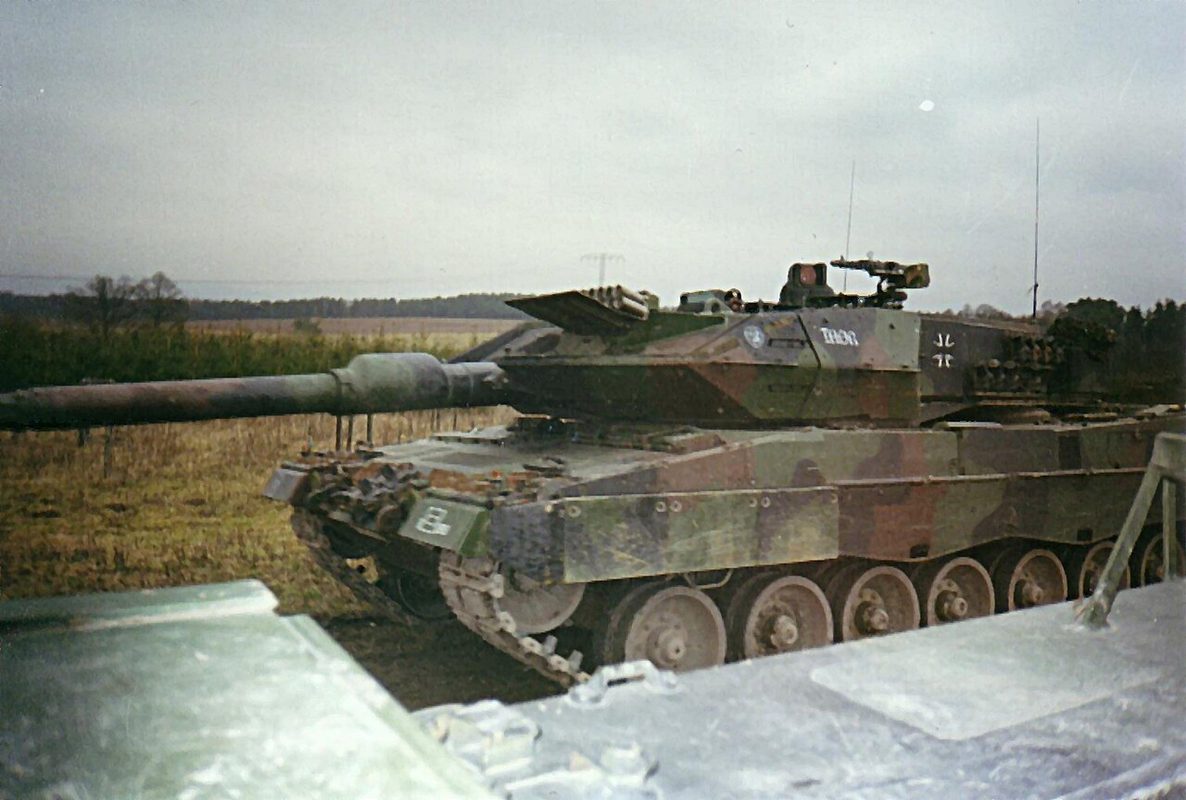
Leopard 2 tank showing the Rheinmetall 120mm smoothbore gun system similar to the one selected for Challenger 3
The Rheinmetall 120mm L/55A1 smoothbore gun — shown here on a Leopard 2 — is the same gun selected for the Challenger 3, ending Britain's decades-long commitment to rifled tank armament (Wikimedia Commons).

The new turret also incorporates a completely modernized fire control system with hunter-killer capability — the commander can independently search for and designate targets while the gunner engages the current one. The sights include third-generation thermal imaging for both commander and gunner, providing day-night capability that far exceeds the Challenger 2's original optics. A battlefield management system integrates the tank into NATO's digital command architecture, allowing real-time data sharing with other vehicles, aircraft, and command posts.

The Hull: If It Ain't Broke

While the turret is entirely new, the Challenger 3 retains the Challenger 2's hull — with modifications. The hull's Dorchester composite armor, a classified layered armor system that has proven its effectiveness in combat (no Challenger 2 crew member has ever been killed by enemy fire), is retained and updated with modular add-on armor packages. The Perkins CV12 diesel engine producing 1,200 horsepower is retained, though upgraded for improved reliability and maintainability.

The hull retention is a cost decision. Designing and manufacturing entirely new hulls for 148 tanks would have dramatically increased the program's budget. By reusing the existing hulls — which are structurally sound and combat-proven — the program keeps costs manageable while focusing investment on the turret and systems that provide the greatest capability improvement. It is a pragmatic choice that reflects Britain's constrained defense budget.

British Challenger 2 tank maneuvering during a NATO exercise in Germany
A Challenger 2 during a NATO exercise. The Challenger 3 program retains the proven hull while replacing everything above it — a pragmatic approach driven by budget constraints (U.S. DoD photo).

148 Tanks: Enough or Not?

The British Army will field 148 Challenger 3 tanks. This represents a continuation of decades of decline in British armored capability. At the height of the Cold War, Britain maintained over 900 main battle tanks. By 2010, the fleet had shrunk to 227 Challenger 2s. The decision to upgrade only 148 means that 79 Challenger 2 hulls will not be converted — they will likely be scrapped, donated, or used for parts.

Whether 148 tanks is sufficient depends on what Britain expects to do with them. For a single armored brigade deployed as part of a NATO coalition — which is the most likely employment scenario — 148 tanks provides enough for approximately three armored regiments with a modest training fleet and reserves. It is not enough for sustained, high-intensity combat against a peer adversary where attrition would rapidly consume the force. In the Russia-Ukraine war, both sides have lost hundreds of tanks. A 148-tank fleet could be functionally depleted in weeks of intense fighting.

The small number also limits Britain's strategic flexibility. An armored force of 148 tanks cannot simultaneously maintain a training pipeline, deploy a combat brigade, and hold a reserve. Something has to give. In practice, this means Britain's armored contribution to any future NATO operation will be modest — a single brigade within a larger coalition force, dependent on allies for the mass that modern armored warfare demands.

British tank crew competing in the Strong Europe Tank Challenge demonstrating tank gunnery skills
British tank crews competing in the Strong Europe Tank Challenge. Despite the small fleet size, British tank crews are among the best trained in NATO — a quality advantage that partially offsets the quantity deficit (U.S. Army photo).

Timeline and Cost

The Challenger 3 program was formally approved in 2021, with RBSL awarded a contract worth approximately 800 million pounds for the turret design, manufacture, and integration. The first prototypes entered testing in 2023, and initial operating capability is planned for 2027. Full operating capability — all 148 tanks delivered and operational — is targeted for the early 2030s.

The per-unit cost works out to roughly 5-6 million pounds per tank when including the full program cost. This is competitive with other Western tank upgrade programs — the German Leopard 2A7 upgrade runs approximately 15 million euros per vehicle, and a new-build M1A2 SEPv3 Abrams costs roughly $10-12 million. The Challenger 3's cost advantage comes from reusing the existing hull, which eliminates the most expensive single component of a new tank build.

How It Compares

On paper, the Challenger 3 will be a competitive peer to the Leopard 2A7, the M1A2 SEPv3, and the French Leclerc upgrade. The L/55A1 gun matches the Leopard 2A7's armament exactly. The fire control and sights are modern and capable. The armor is combat-proven. Where the Challenger 3 falls short is mobility — the CV12 engine is adequate but not exceptional, and the tank's weight (estimated at 66-69 tons with add-on armor) combined with lower horsepower gives it a power-to-weight ratio below the Abrams and Leopard 2.

The more significant comparison, however, is strategic. Germany is upgrading its fleet AND buying new Leopard 2A8s. Poland is building a massive armored force with K2 tanks and Abrams. Britain is upgrading 148 tanks and calling it done. The Challenger 3 may be an excellent tank. But 148 excellent tanks are still only 148 tanks.

Frequently Asked Questions

Is the Challenger 3 a new tank?

No. The Challenger 3 uses the existing Challenger 2 hull with an entirely new turret, gun, fire control system, sights, and electronics. It is a comprehensive rebuild rather than a new-build tank. The hull's composite armor and powertrain are retained with modifications.

Why did Britain switch from a rifled to a smoothbore gun?

The Challenger 2's rifled L30A1 gun could not effectively fire NATO-standard APFSDS kinetic energy rounds, which require a smoothbore barrel to achieve maximum penetration. Britain was the only NATO country using a rifled tank gun, which meant its tanks could not share ammunition with any ally. The switch to the Rheinmetall L/55A1 smoothbore solves both the performance and interoperability problems.

Why only 148 tanks?

The British Army has progressively reduced its armored force over decades of defense budget cuts. The decision to convert 148 of the original 227 Challenger 2 hulls reflects the current defense budget reality and the assessment that Britain's primary armored contribution to NATO will be a single brigade-level force rather than a multi-division armored corps.

Continue Reading

Share this article

Share:

Recommended

Ace of The Skies: Can You Identify These Military Aircraft Throughout The Years?
Test Yourself

Ace of The Skies: Can You Identify These Military Aircraft Throughout The Years?

Can you identify these aircraft?

Take the Quiz

On This Day in Military History

April 20

Robert E. Lee Resigns from the US Army (1861)

Colonel Robert E. Lee resigned his commission in the United States Army, two days after declining an offer to command the Union forces. He joined the Confederacy, becoming its most celebrated general. His decision split the Army's officer corps and prolonged the Civil War.

1861Norfolk Navy Yard Destroyed

See all 4 events on April 20

Get Military News & History in Your Inbox

Join thousands of readers receiving our weekly digest of military technology, history, and analysis.

Test Your Knowledge