Skip to content
April 26:The Bombing of Guernica89yr ago

Active Protection Systems Explained: How Trophy APS Stops Anti-Tank Missiles

James Holloway · · 12 min read
Save
Share:
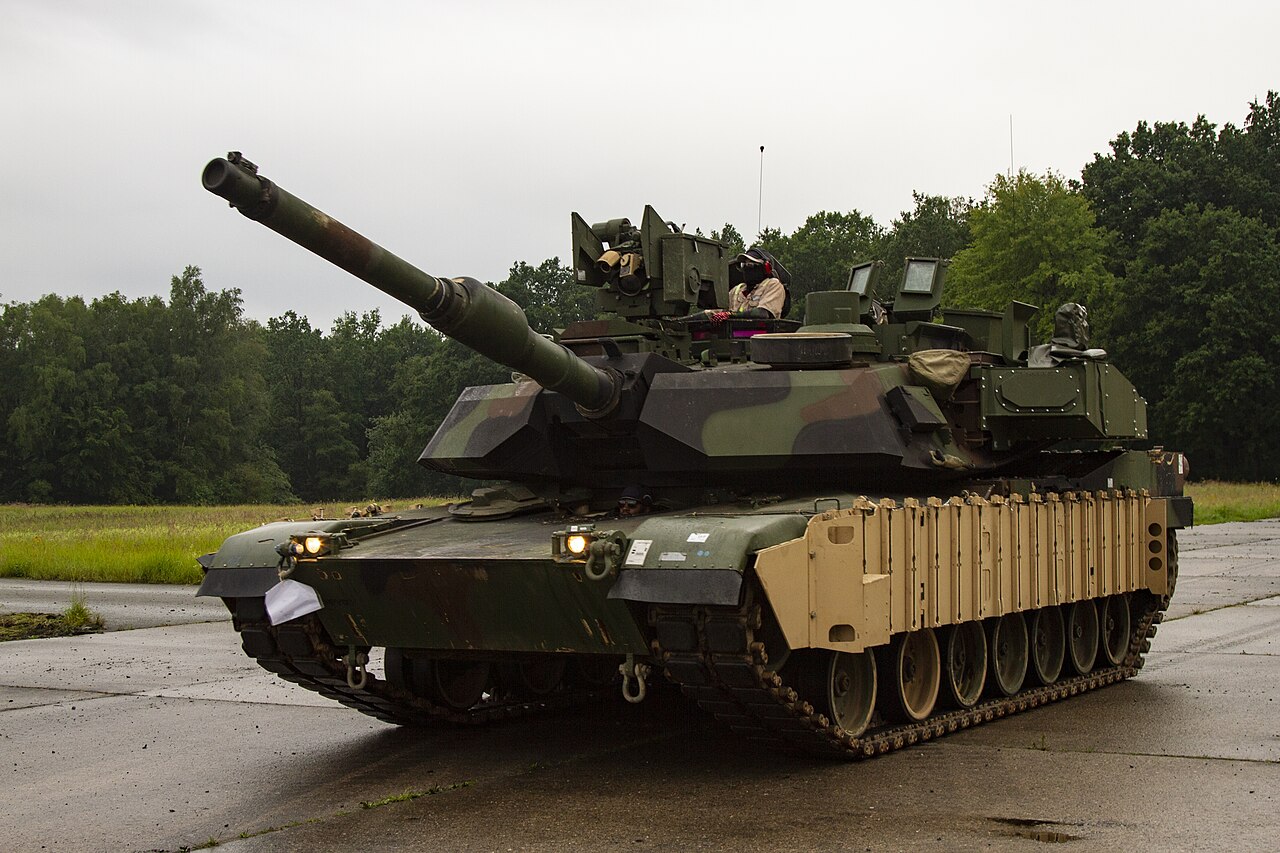
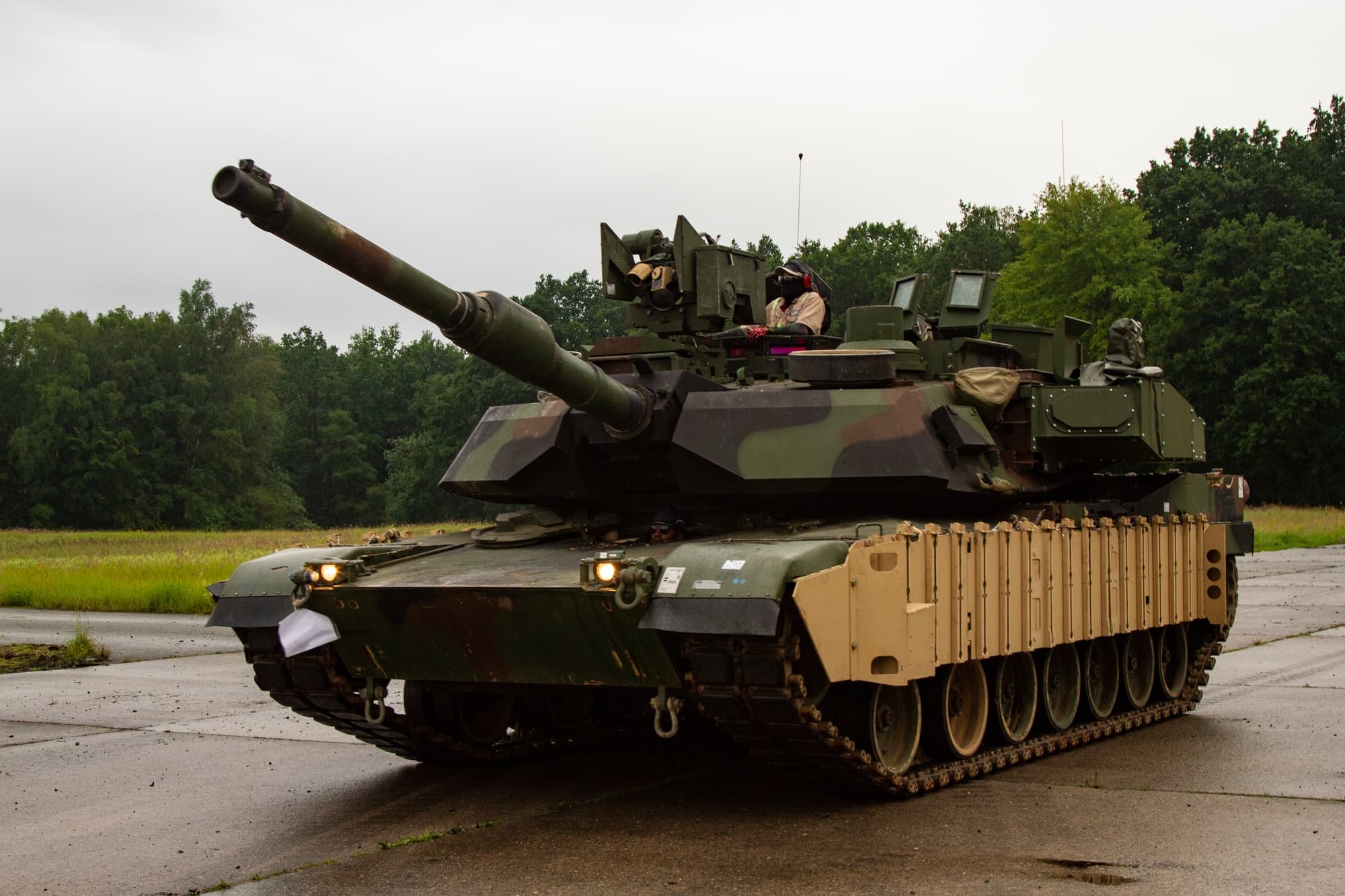
M1A2 Abrams main battle tank equipped with Trophy active protection system and ARAT reactive armor tiles during DEFENDER-Europe 20 exercises in Germany
James Holloway
James Holloway

Military Logistics & Sustainment Analyst

James Holloway writes about military readiness, logistics, and the practical limits of modern forces. His work focuses on how training, sustainment, and organizational decisions shape what militaries can actually do -- not just what they are designed to do on paper.

In 2011, an Israeli Merkava IV tank operating near the Gaza border became the first armored vehicle in history to automatically detect, track, and destroy an incoming anti-tank missile. The Trophy active protection system mounted on the tank's turret identified the threat, calculated an intercept solution, and fired a focused explosive countermeasure, all in a fraction of a second. The crew barely had time to register what happened. The missile was shredded before it reached the armor. The tank kept moving. Trophy worked exactly as designed.

That moment marked a turning point in armored warfare. For decades, the contest between tanks and anti-tank weapons had been tilting steadily against armor. Rocket-propelled grenades, anti-tank guided missiles, and top-attack munitions had become cheaper, more lethal, and more widely available. A single soldier with an RPG-29 or Kornet missile could threaten a vehicle worth millions of dollars. Passive armor alone could no longer guarantee survival.

Active protection systems changed the equation. Instead of relying solely on thicker, heavier armor to absorb incoming rounds, APS detects and destroys threats before they ever reach the vehicle. Since that first combat intercept, Trophy has reportedly never failed to stop an incoming missile in Israeli service. Today, every major Western military is either fielding or acquiring active protection systems. The technology has gone from experimental curiosity to operational necessity in less than fifteen years.
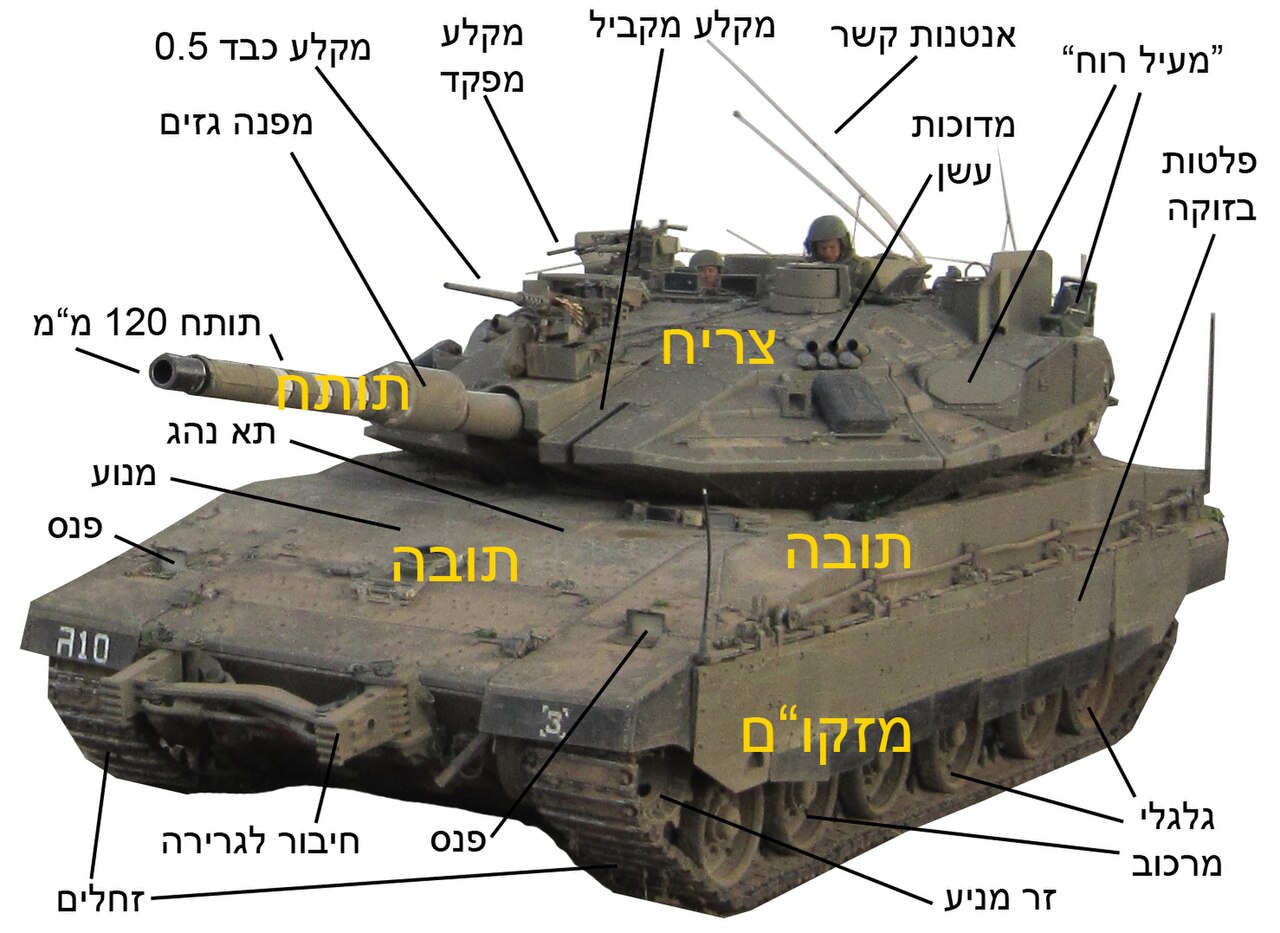
Israeli Merkava Mk IV M tank equipped with Trophy active protection system charging through desert terrain near the Gaza border
A Trophy-equipped Merkava Mk IV M charges through desert terrain near the Gaza border during Operation Protective Edge, July 2014. The Trophy APS radar panels and countermeasure launchers are mounted on either side of the turret. (Photo: Israel Defense Forces / CC BY-SA 2.0)

What Is an Active Protection System?

An active protection system is any vehicle-mounted system designed to detect and defeat incoming threats before they strike the vehicle's armor. The concept is straightforward: rather than passively absorbing an impact, the vehicle actively defends itself. The practical engineering required to make this work at combat speed, however, is extraordinarily demanding.

APS falls into two broad categories: soft-kill and hard-kill.

Soft-kill systems attempt to defeat incoming threats without physically destroying them. They work by disrupting the guidance systems of incoming missiles. Techniques include infrared jammers that confuse heat-seeking missiles, laser dazzlers that blind missile guidance optics, and rapid-deployment smoke or decoy systems that break the missile's lock on the target. The Russian Shtora system, fielded on T-90 tanks, is the best-known example. Shtora uses infrared emitters to jam semi-automatic command to line of sight (SACLOS) guided missiles and can deploy smoke grenades to obscure the tank from laser designators.

Soft-kill systems have limitations. They only work against guided weapons. An unguided RPG warhead flying on a ballistic trajectory has no guidance system to jam. Soft-kill also requires knowing the specific guidance method of the incoming threat in order to select the right countermeasure, which may not always be possible in the fraction of a second available.

Hard-kill systems take a more direct approach: they physically intercept and destroy the incoming projectile before it reaches the vehicle. This works against both guided and unguided threats, from simple RPGs to sophisticated anti-tank guided missiles. Hard-kill APS fires a countermeasure, typically an explosive charge or a blast of projectiles, into the path of the incoming threat, destroying it or deflecting it enough to neutralize the warhead. Trophy is a hard-kill system.

Regardless of type, every APS follows the same basic engagement sequence: detect the incoming threat, track its trajectory, classify it as a genuine threat, and intercept it before impact. The entire sequence, from initial detection to countermeasure launch, happens in milliseconds. There is no time for human decision-making. The system must operate autonomously once activated.

How Trophy Works

Trophy, developed by Israeli defense company Rafael Advanced Defense Systems, is the world's first combat-proven hard-kill active protection system. Officially designated ASPRO-A (Armored Shield - Active) and sometimes called Windbreaker, it was designed specifically to protect main battle tanks against the anti-tank weapons most commonly encountered in modern combat: RPGs, anti-tank guided missiles, and high-explosive anti-tank (HEAT) rounds.

The system consists of three primary components: a radar detection and tracking suite, a fire control computer, and countermeasure launchers.

The radar is the EL/M-2133 flat-panel radar developed by Elta Systems, a subsidiary of Israel Aerospace Industries. Four flat radar panels are mounted around the turret, providing 360-degree coverage. The radar continuously scans for incoming projectiles, capable of detecting threats approaching from any direction. When it identifies an incoming object with the speed and trajectory of an anti-tank weapon, it begins tracking immediately.

Diagram showing the Trophy APS engagement sequence from radar detection through countermeasure intercept
Trophy engagement sequence: the EL/M-2133 radar detects and tracks the incoming threat, the fire control computer calculates the intercept point, and a countermeasure launcher fires a focused explosive charge to destroy the projectile before it reaches the tank.

The fire control computer takes the radar tracking data and performs several calculations simultaneously. It determines the incoming projectile's speed, trajectory, and point of closest approach. It classifies the threat to confirm it is genuinely dangerous and not, for example, a passing bird or friendly fire. It then calculates the precise moment and angle to fire the countermeasure for maximum effect.

The countermeasure launchers are mounted on either side of the turret. When the fire control computer gives the command, a launcher fires a concentrated blast of explosively formed projectiles into the path of the incoming threat. This is not a wide-area explosion. It is a tightly focused shotgun-like blast aimed at a specific point in space where the incoming projectile will be in a few milliseconds. The countermeasure shreds the warhead before it can reach the vehicle's armor.

The entire engagement, from detection to intercept, takes place faster than a human can blink. Trophy can handle RPG-7 rounds, Kornet anti-tank guided missiles, and other HEAT-warhead weapons. It is designed to engage threats arriving from any direction around the vehicle.

One critical limitation: Trophy does not protect against kinetic energy penetrators, specifically armor-piercing fin-stabilized discarding sabot (APFSDS) rounds. These are the long-rod tungsten or depleted uranium darts fired by tank main guns at velocities exceeding 1,500 meters per second. At those speeds, no current hard-kill system can reliably intercept the round. Defeating kinetic penetrators still requires heavy composite or reactive armor. Trophy is designed to handle the chemical energy threats, the shaped-charge warheads, that dominate the threat environment below the level of tank-on-tank combat.

Trophy's Combat Record

Trophy's operational history is the primary reason it has become the benchmark for active protection systems worldwide. No other APS has anything close to its combat record.

Israel first deployed Trophy on Merkava IV tanks in 2009, making the Merkava the first tank in service equipped with an operational hard-kill APS. The system's first confirmed combat intercept came in 2011 during operations near the Gaza border, when it successfully destroyed an incoming anti-tank missile. That engagement validated years of development and testing.

During subsequent operations in and around Gaza, including Operation Protective Edge in 2014 and multiple engagements since, Israeli officials have claimed a 100 percent success rate for Trophy against incoming anti-tank missiles and RPGs. While independent verification of this claim is limited, the Israeli Defense Forces have been transparent about the system's deployment and have not reported any failures in combat. No Merkava IV equipped with Trophy has been penetrated by an anti-tank missile since the system became operational.

This track record attracted global attention and drove international adoption.

The United States selected Trophy for the M1A2 SEPv3 Abrams, making the SEPv3 the first American tank equipped with an active protection system. The U.S. Army's decision followed an accelerated evaluation that concluded Trophy was the only combat-proven system available. American M1A2 SEPv3 tanks began receiving Trophy installations starting in 2019, and the system is now standard on new-production Abrams. For a full breakdown of the latest Abrams capabilities, see our article on why the M1 Abrams is so feared.

U.S. Army M1A2 SEPv3 Abrams tank equipped with the Trophy active protection system during field exercises
A U.S. Army M1A2 SEPv3 Abrams with Trophy APS installed. The Trophy radar panels are visible on the turret sides. The SEPv3 is the first American tank to carry an active protection system as standard equipment.

Germany selected Trophy for integration onto the Leopard 2A8, the latest variant of the Leopard 2 main battle tank. This represents a significant endorsement from Europe's largest tank operator and signals that APS is becoming standard for NATO armor. For more on how the Abrams and Leopard 2 compare, see our M1 Abrams vs Leopard 2 analysis.

In January 2026, four NATO countries signed a joint procurement contract worth approximately 330 million euros for Trophy systems, according to Army Recognition and multiple defense media outlets. The contract covers Trophy integration onto multiple NATO tank fleets, marking the largest multi-national APS acquisition to date. This deal underscores the alliance-wide consensus that active protection is no longer optional for frontline armored vehicles.

Trophy's record has set the standard that all competing systems are now measured against: proven in combat, reliable under fire, and adopted by the world's leading militaries.

Other Active Protection Systems

Trophy is the leader, but it is not the only active protection system in development or service. Several other systems are competing for a share of the rapidly growing APS market.

Iron Fist, developed by Israel Military Industries (now Elbit Systems Land), takes a different approach to hard-kill interception. Instead of using an explosively formed projectile blast like Trophy, Iron Fist fires a small explosive interceptor that detonates near the incoming threat, using the blast wave to destroy or deflect it. Iron Fist has been selected by General Dynamics for integration on the U.S. Army's Armored Multi-Purpose Vehicle (AMPV) and is being evaluated for lighter vehicles where Trophy's weight and blast effects may be problematic.

Arena, developed by Russia's Kolomna-based KBM design bureau, is one of the oldest hard-kill APS concepts. First developed in the 1990s, Arena uses a radar to detect incoming threats and fires explosive countermeasure charges mounted in a ring around the turret. While Arena was offered on export T-80 and T-90 tanks, its adoption has been limited, and its effectiveness remains uncertain. The system's coverage and response time are generally considered inferior to newer Western designs.

Afghanit is the APS reportedly mounted on Russia's T-14 Armata tank. Russian officials have claimed Afghanit can intercept not only ATGMs and RPGs but also kinetic energy penetrators, a capability no other system has demonstrated. However, the T-14 Armata has not seen confirmed combat, and Afghanit's actual performance characteristics remain unverified. Western analysts treat Russian claims about Afghanit with considerable skepticism.

MAPS (Modular Active Protection Systems) is not a specific system but rather a U.S. Army standardization framework. MAPS establishes a common architecture that allows different APS sensors and countermeasures to be integrated onto American vehicles using a shared controller and interface. The goal is to avoid being locked into a single APS vendor and to allow the Army to mix and match the best available components as technology evolves. Trophy's integration onto the Abrams was conducted within the MAPS framework.

Iron Curtain, developed by Artis (now part of the defense company RADA), is designed for overhead protection. Unlike Trophy, which primarily defends against threats approaching from the horizontal plane, Iron Curtain is optimized to defeat top-attack munitions. The system uses a combination of sensors and downward-firing countermeasures to intercept threats arriving at steep angles. It has been evaluated for lighter vehicles and fixed installations.

APS vs. the Drone Threat

The most urgent question facing APS designers today is whether these systems can counter the weapon that has reshaped modern ground combat: the first-person view (FPV) drone.

The war in Ukraine has demonstrated beyond any doubt that small, cheap FPV drones carrying shaped-charge warheads pose a serious threat to armored vehicles. Ukrainian and Russian forces have both lost hundreds of vehicles to drone strikes. An FPV drone carrying a modified RPG warhead can cost as little as $500 and can be operated by a single soldier with a video headset. The economics are devastating for armor: a $500 drone can destroy or disable a vehicle worth millions. For a deeper look at how drones are reshaping armor tactics, read our coverage of military drones and autonomous warfare.

Can Trophy and other APS stop FPV drones? The answer is complicated.

Trophy was designed to intercept projectiles traveling at high speed on relatively predictable ballistic or guided trajectories. An RPG warhead travels at roughly 115 meters per second. A Kornet missile travels at 200 to 300 meters per second. Trophy's radar and fire control algorithms are optimized for these speed and trajectory profiles.

FPV drones present a different challenge. They are slower, typically flying at 30 to 80 meters per second. They have a much smaller radar cross-section than a missile. They can approach from any angle, including steep top-attack profiles that many APS were not designed to cover. And critically, a drone operator can maneuver the drone erratically during its final approach, making trajectory prediction more difficult than with a ballistic or guided projectile.

There have been reports from Ukraine of APS successfully intercepting FPV drones, but these intercepts appear inconsistent rather than reliable. The fundamental issue is that current hard-kill APS was not optimized for this threat profile. The radar may detect the drone, but the fire control algorithms may not classify it correctly or may struggle to calculate an intercept solution against a slow, maneuvering target.

APS manufacturers are actively adapting. Rafael has acknowledged the drone threat and is working on software and sensor updates for Trophy. Other companies are developing APS variants specifically designed to counter small drones alongside traditional anti-tank weapons. The next generation of active protection will almost certainly incorporate counter-drone capability as a core requirement, not an afterthought.

The Limitations of Active Protection

Active protection systems are a genuine breakthrough, but they are not a magic shield. Understanding the limitations is as important as understanding the capabilities.

Cost. Trophy is expensive. Estimates for a single Trophy system range from $100,000 to $500,000 per vehicle, depending on the variant and the integration requirements. For an army equipping hundreds or thousands of vehicles, this adds up to billions of dollars. The countermeasures themselves are consumable: once fired, they must be reloaded, adding recurring costs.

Weight. Trophy adds approximately 800 to 1,000 kilograms to the vehicle. For a 70-ton Abrams, this is manageable. For lighter vehicles like infantry fighting vehicles or armored personnel carriers, the additional weight may require structural modifications or force tradeoffs with other equipment. Lighter APS variants are being developed for these platforms, but they generally offer reduced capability.

No protection against kinetic rounds. As discussed above, hard-kill APS cannot currently intercept APFSDS rounds fired by tank main guns. In a tank-on-tank engagement, traditional armor remains the primary defense. APS protects against the asymmetric threats, RPGs and ATGMs, that are most dangerous in irregular warfare and urban combat.

Danger to nearby infantry. Hard-kill APS fires explosive countermeasures outward from the vehicle. The blast and fragmentation from these countermeasures can injure or kill friendly infantry operating near the tank. This creates a significant tactical problem in combined arms operations where infantry and armor must work closely together. Some armies have established minimum standoff distances between APS-equipped tanks and dismounted troops, which complicates urban operations and close-quarters tactics.

Reload limitations. Trophy and similar systems carry a finite number of countermeasures. Once expended, the system cannot engage additional threats until reloaded, a process that requires the vehicle to withdraw to a logistics point. An adversary who knows this can attempt to exhaust the APS with multiple simultaneous or sequential attacks, a tactic sometimes called "saturation."

Multiple simultaneous threats. Current hard-kill APS can engage one threat at a time per sector. If two or more projectiles arrive simultaneously from the same direction, the system may only intercept one. Sophisticated adversaries are already developing tactics to exploit this, including coordinated volley fire from multiple launchers or combining RPGs with ATGMs to overwhelm the system.

Why Every Tank Will Have APS by 2030

Despite the limitations, the trajectory is clear: active protection systems will become standard equipment on every frontline armored vehicle in NATO and most other advanced militaries within the next several years. The reasons are straightforward.

The cost-benefit equation favors APS. A modern main battle tank costs $10 million or more. Its trained crew is irreplaceable. A Trophy system costing $300,000 to $500,000 that prevents the loss of a $10 million vehicle and its four-person crew pays for itself many times over on the first successful intercept. Armies that fail to equip their vehicles with APS will lose tanks and crews at rates that modern democracies cannot sustain.

NATO is standardizing on APS. The January 2026 multi-national Trophy contract demonstrates that the alliance has moved beyond pilot programs and evaluations. APS is now part of NATO's baseline requirements for modern armored vehicles. The MAPS framework in the United States ensures that American vehicles can accommodate evolving APS technology. European nations are following similar integration standards.

Next-generation vehicles are designed around APS. The M1E3 Abrams, the U.S. Army's planned next-generation main battle tank, is being designed from the outset with APS integration as a core requirement rather than a retrofit. The Leopard 2A8 includes Trophy as part of its standard configuration. The Franco-German Main Ground Combat System (MGCS), intended to replace both the Abrams and Leopard 2 in the 2040s, will incorporate active protection as a fundamental design element. For more on the future of American armor, see our article on the evolution of tanks.

The threat environment demands it. The proliferation of anti-tank missiles and armed drones means that every modern battlefield is saturated with threats to armor. Passive armor alone cannot keep pace with the volume and sophistication of these threats without making vehicles too heavy to deploy. APS provides a weight-efficient additional layer of protection that extends vehicle survivability without requiring ever-thicker armor plate.

The question is no longer whether tanks need active protection. It is how quickly armies can field it, how effectively they can integrate it with counter-drone systems, and how fast the technology can evolve to meet the next generation of threats.

Frequently Asked Questions

What does Trophy APS protect against?

Trophy is designed to intercept and destroy chemical energy warheads including rocket-propelled grenades (RPGs), anti-tank guided missiles (ATGMs), and HEAT rounds. It provides 360-degree coverage and can engage threats arriving from any direction around the vehicle. It does not protect against kinetic energy penetrators (APFSDS tank rounds) or artillery fragments.

Can active protection systems stop FPV drones?

Current APS was not specifically designed for the FPV drone threat, and results against drones have been inconsistent. Drones are slower, smaller, and more maneuverable than the anti-tank missiles APS was built to intercept. Manufacturers including Rafael are actively developing software and hardware updates to address this gap, and next-generation APS will likely include dedicated counter-drone capability.

Why can't Trophy stop tank rounds (APFSDS)?

APFSDS rounds are long-rod kinetic penetrators that travel at speeds exceeding 1,500 meters per second, far faster than any anti-tank missile. At those velocities, no current hard-kill countermeasure can reliably intercept the round. The physics of stopping a dense metal rod traveling at five times the speed of sound require a fundamentally different approach than intercepting a slower-moving shaped-charge warhead. Traditional composite armor remains the primary defense against kinetic penetrators.

Is Trophy APS dangerous to friendly infantry near the tank?

Yes. When Trophy fires its countermeasure, the explosive blast and fragmentation can injure or kill personnel standing near the vehicle. This is a known limitation of all hard-kill active protection systems. Armies using Trophy-equipped tanks must maintain minimum standoff distances between the tank and dismounted infantry, which complicates combined arms tactics, particularly in urban environments where troops and vehicles operate in close proximity.

Related Reading

Share this article

Share:

Recommended

Ace of The Skies: Can You Identify These Military Aircraft Throughout The Years?
Test Yourself

Ace of The Skies: Can You Identify These Military Aircraft Throughout The Years?

Can you identify these aircraft?

Take the Quiz

Get Military News & History in Your Inbox

Join thousands of readers receiving our weekly digest of military technology, history, and analysis.

Test Your Knowledge