Daniel Mercer writes about military history with a focus on the 20th century, including World War II, the Cold War, and Vietnam. His work looks at how decisions made decades ago still influence doctrine, planning, and assumptions today.
The Columbia-class submarine program is the most expensive weapons acquisition effort in United States Navy history. With a projected total cost exceeding $130 billion, the program will replace 14 aging Ohio-class ballistic missile submarines with 12 new boats over the next two decades. The Pentagon has designated it the Department of Defense's number one acquisition priority, a status that has remained unchanged across multiple administrations. The reason is straightforward: Ohio-class submarines carry approximately 70 percent of America's deployed nuclear warheads, and those submarines are running out of service life. If the Columbia-class boats are not delivered on schedule, the United States will face a gap in its sea-based nuclear deterrent for the first time since the Cold War.
That is not a theoretical concern. The first Ohio-class boat, USS Ohio (SSBN-726), was commissioned in 1981 with a designed service life of 30 years. That life has already been extended to 42 years, pushing these submarines well beyond their original engineering limits. Unlike every other class of nuclear submarine in the US fleet, the Ohio-class reactors cannot be refueled. When the reactor fuel is spent, the boat is done. The oldest Ohios will begin mandatory retirement in the early 2030s whether their replacements are ready or not.
The Columbia-class is designed from the keel up to solve this problem. It incorporates a life-of-ship nuclear reactor that will never require refueling, an electric-drive propulsion system that is significantly quieter than anything currently in the fleet, and a common missile compartment designed jointly with the United Kingdom for their Dreadnought-class submarines. Every design decision reflects a single imperative: keep American ballistic missile submarines on deterrent patrol, undetected, for the next half century.
This article compares the Ohio-class and Columbia-class submarines across every major dimension, from displacement and propulsion to cost and strategic role, and explains why this program commands such urgent priority despite its enormous price tag.
The Ohio-class ballistic missile submarine (SSBN) has been the backbone of America's sea-based nuclear deterrent since the early 1980s. Eighteen boats were originally built. Four were later converted to guided-missile submarines (SSGNs) carrying conventional Tomahawk cruise missiles instead of nuclear-armed Trident ballistic missiles. The remaining 14 SSBNs constitute the most survivable leg of the US nuclear triad, conducting continuous deterrent patrols from bases at Naval Submarine Base Kings Bay, Georgia, and Naval Base Kitsap-Bangor, Washington.
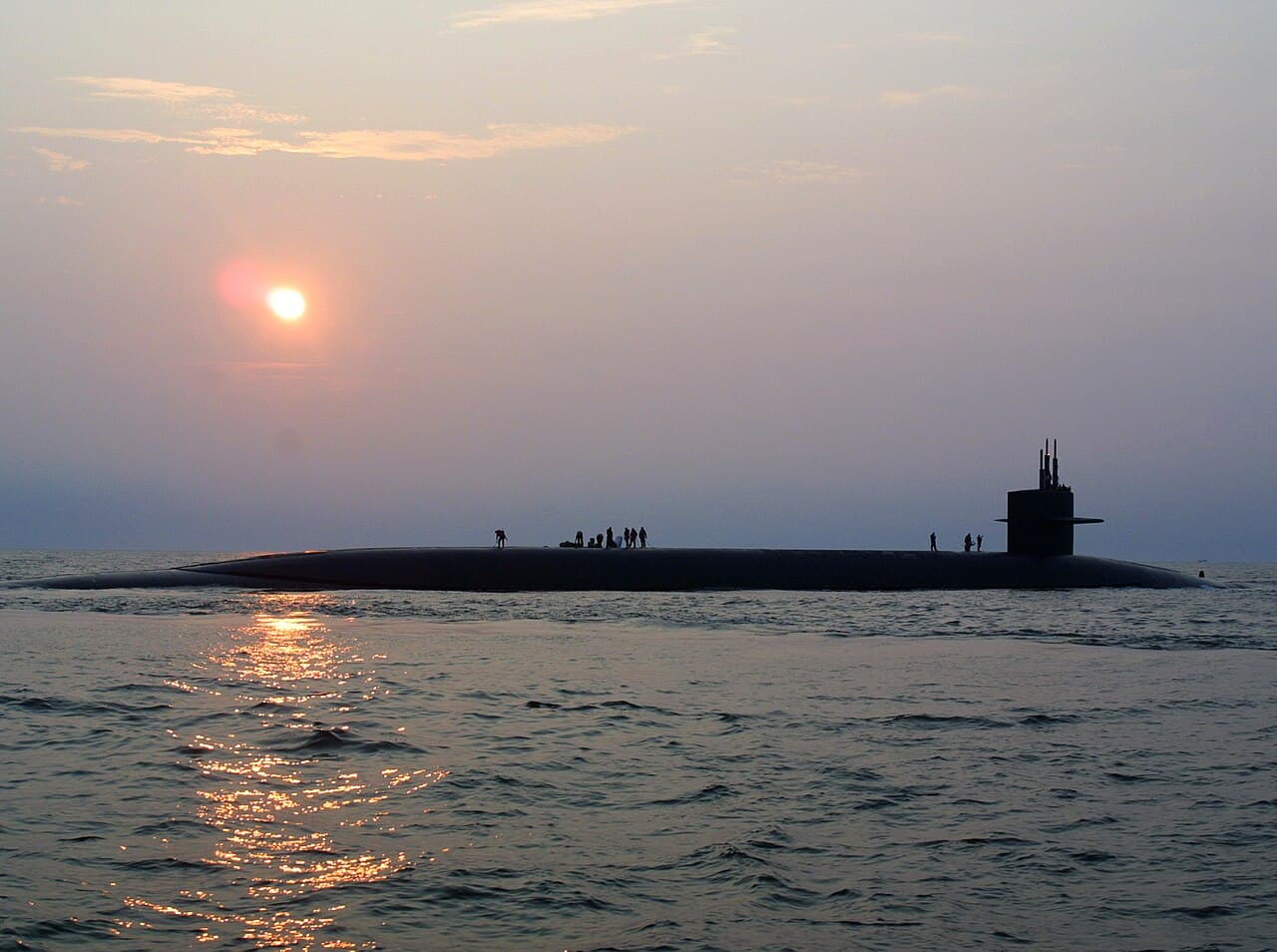
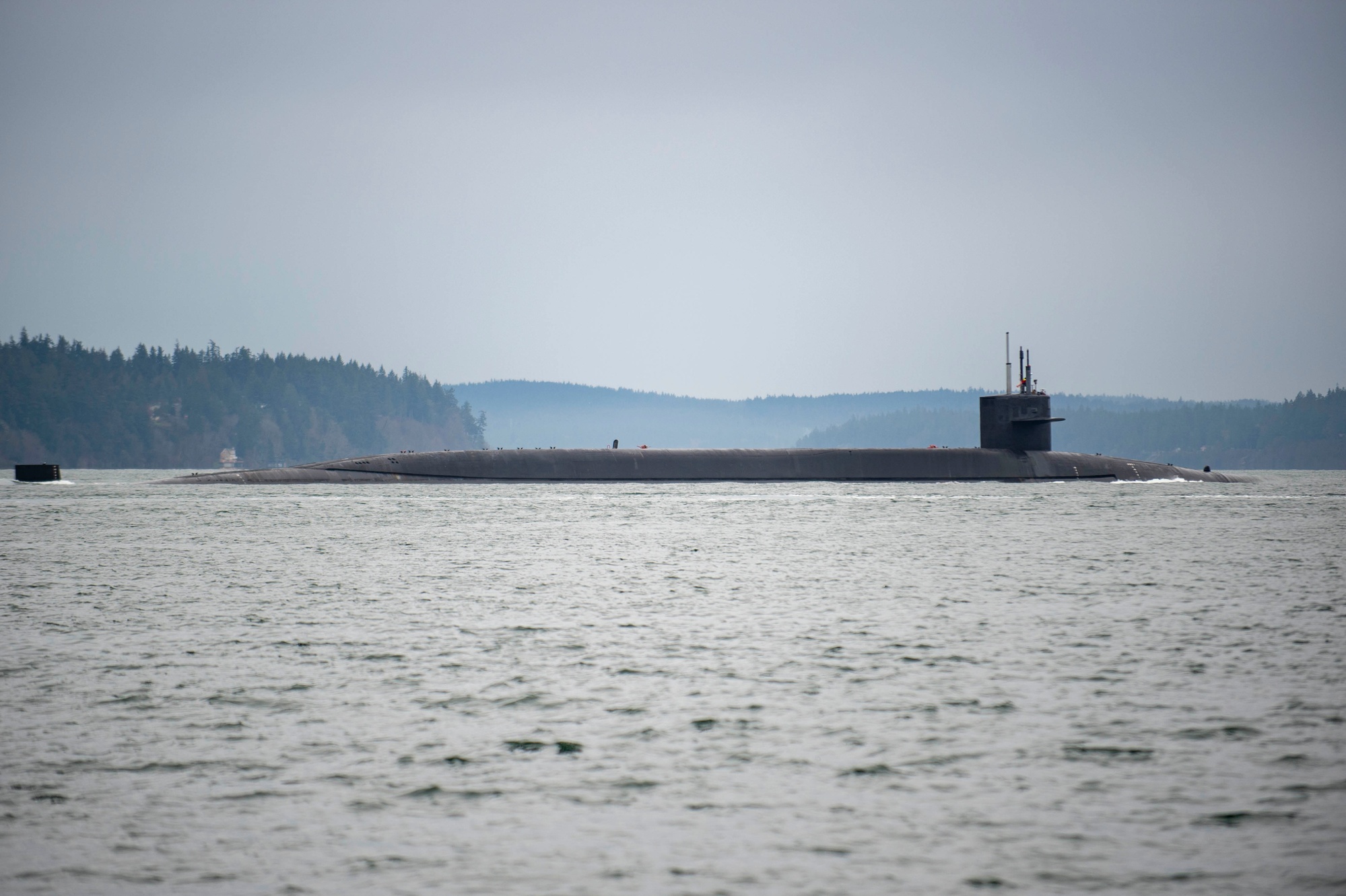
An Ohio-class ballistic missile submarine returns to port following a strategic deterrent patrol. The 14 active Ohio-class SSBNs have maintained an unbroken cycle of patrols since 1982. (Photo: US Navy)
The strategic math is stark. Each Ohio-class SSBN can carry up to 24 Trident II D5 submarine-launched ballistic missiles, though under the New START treaty, 20 tubes per boat are loaded with missiles while four are converted for other uses. Each Trident II D5 can carry multiple independently targetable reentry vehicles (MIRVs). Across the fleet, the 14 Ohio-class SSBNs carry roughly 70 percent of all US deployed strategic nuclear warheads. No other single platform type carries as much of America's nuclear deterrent.
The problem is age. The first Ohio-class boat entered service in 1981, and the last was commissioned in 1997. The original design life was 30 years. The Navy extended this to 42 years after concluding that hull structures and key systems could safely operate that long with appropriate maintenance. But 42 years is the hard limit. The Ohio-class submarines use the S8G pressurized water reactor, and unlike every other US Navy nuclear submarine class, the Ohio-class reactor compartment was designed without provision for mid-life refueling. When the reactor core is depleted, the submarine must be retired. There is no engineering workaround.
Hull fatigue compounds the reactor issue. Decades of deep-ocean patrols subject the pressure hull to repeated stress cycles. The steel and welds that keep seawater out at hundreds of feet of depth gradually degrade. Maintenance can address many problems, but the fundamental metallurgy imposes limits. The Navy has been clear: extending Ohio-class service life beyond 42 years is not a viable option.
The decommissioning timeline is fixed. USS Ohio reaches its 42-year limit in 2023 (it has already been converted to an SSGN and has been decommissioned). The SSBN variants will begin reaching their limits in the early 2030s. By 2040, multiple boats will age out in rapid succession. If Columbia-class submarines are not entering service on a matching schedule, the number of boats available for deterrent patrols will drop below what US Strategic Command considers the minimum acceptable level.
Beyond the mechanical issues, the Ohio-class design reflects 1970s technology. Its mechanical-drive propulsion system, while reliable, is louder than modern alternatives. Its combat systems have been upgraded over the years, but the basic hull form and propulsion architecture cannot match what current engineering makes possible. Potential adversaries, particularly Russia and China, have invested heavily in anti-submarine warfare capabilities. Maintaining a credible deterrent requires submarines that can evade the most advanced detection systems for decades to come.
Columbia-Class: What's New
The Columbia-class represents the most significant advance in US ballistic missile submarine design since the Ohio-class itself. At approximately 20,800 tons submerged displacement, the Columbia will be the largest submarine ever built by the United States. Despite its size, the boat incorporates technologies specifically chosen to make it quieter, more reliable, and more available for deterrent patrols than its predecessor.
An artist rendering of the Columbia-class SSBN. The design features an electric-drive propulsion system, life-of-ship reactor core, and X-shaped stern planes for improved low-speed maneuverability. (Image: General Dynamics Electric Boat)
The single most important innovation is the life-of-ship nuclear reactor. The S1B reactor core is designed to power the submarine for its entire 42-plus-year service life without ever requiring refueling. This eliminates the multi-year, multi-billion-dollar mid-life refueling and complex overhaul (RCOH) that other submarine classes require. For the Ohio-class, the lack of refueling capability was a limitation that capped service life. For the Columbia-class, it is a deliberate design feature. By eliminating the refueling overhaul, each Columbia-class boat will spend approximately 12 additional months on patrol over its lifetime compared to a submarine that required RCOH. In a fleet of only 12 boats that must maintain continuous at-sea deterrent presence, those additional months are strategically significant.
The propulsion system marks another major departure. Ohio-class submarines use a mechanical-drive system in which the reactor generates steam, the steam drives turbines, and the turbines connect through a reduction gear to the propeller shaft. Reduction gears are a significant source of noise. The Columbia-class replaces this with an electric-drive system. The reactor still generates steam and the steam still drives turbines, but the turbines power electric generators, and electric motors turn the propulsor. Eliminating the mechanical gear train substantially reduces the acoustic signature. For a submarine whose survival depends on remaining undetected, quieter propulsion is not an incremental improvement. It is a strategic advantage.
The Columbia-class will carry 16 missile tubes compared to the Ohio-class's 24. This reduction is not a capability downgrade. Under the New START arms control framework, the United States has chosen to optimize its force structure for 16 tubes per boat. Twelve Columbia-class submarines with 16 tubes each provide 192 launch tubes across the fleet. Combined with operational schedules that keep a percentage of boats on patrol at any given time, this configuration meets strategic requirements while reducing the per-boat cost and complexity.
The missile tubes themselves are a notable engineering achievement. The Common Missile Compartment (CMC) was developed jointly by the United States and United Kingdom. The same four-pack missile tube module will be used on both the Columbia-class and the UK's Dreadnought-class submarines. The Columbia will carry four CMC modules (16 tubes total), while the Dreadnought will carry three (12 tubes). This shared design reduces development costs, ensures interoperability of the Trident II D5LE (life-extended) missile, and strengthens the US-UK nuclear partnership.
Other design features include an X-shaped stern plane configuration, replacing the traditional cruciform arrangement. X-planes provide superior maneuverability at low speeds, which is operationally important for a submarine that spends long periods moving slowly and quietly on deterrent patrol. The hull coating, internal sound isolation, and hydrodynamic shaping all reflect decades of acoustic research conducted since the Ohio-class was designed.
Head-to-Head Comparison
Ohio-Class vs. Columbia-Class: Key Specifications
Specification
Ohio-Class (SSBN-726)
Columbia-Class (SSBN-826)
Submerged displacement
18,750 tons
~20,800 tons
Length
560 ft (170.7 m)
~560 ft (170.7 m)
Beam
42 ft (12.8 m)
43 ft (13.1 m)
Missile tubes
24 (20 armed per New START)
16
Missile type
Trident II D5
Trident II D5LE (life-extended)
Reactor
GE S8G pressurized water reactor
S1B reactor (life-of-ship core)
Propulsion
Mechanical drive (geared turbines)
Electric drive (turbo-electric)
Stern planes
Cruciform
X-shaped
Crew
~155 (two crews: Blue and Gold)
~155 (two crews: Blue and Gold)
Design service life
42 years (extended from 30)
42+ years
Mid-life reactor refueling
Not possible (design limitation)
Not needed (life-of-ship core)
First commissioned
1981 (USS Ohio, SSBN-726)
~2031 (USS District of Columbia, SSBN-826)
Total planned/built
18 built (14 SSBN, 4 SSGN)
12 planned
Cost per boat
~$2 billion (1980s dollars)
~$9.4 billion (lead boat: ~$15.2 billion)
Columbia-class specifications are based on publicly available design parameters. Final figures may vary as construction progresses. Cost estimates from Congressional Research Service and Congressional Budget Office reports.
Several comparisons in the table deserve additional context. The reduction from 24 to 16 missile tubes does not mean the Columbia-class is less capable. The Ohio-class was designed during the Cold War when arms control frameworks were different and force structure calculations favored more tubes per boat. Under current and foreseeable strategic requirements, 16 tubes per boat across 12 hulls provides the necessary capacity. Fewer tubes also means a somewhat simpler missile compartment and more internal volume available for other systems.
The cost comparison is particularly striking. In raw dollars, a Columbia-class boat costs roughly five times more than an Ohio-class boat. Adjusted for inflation, the difference narrows but remains significant. The lead boat, USS District of Columbia (SSBN-826), carries a premium because it absorbs first-of-class engineering costs, tooling, and design finalization. Subsequent boats are projected at roughly $9.4 billion each in then-year dollars. These figures make the Columbia-class the most expensive submarine ever built per unit.
The Nuclear Triad's Undersea Leg
The United States maintains a nuclear deterrent across three delivery platforms, known as the nuclear triad: land-based intercontinental ballistic missiles (ICBMs), bomber aircraft, and submarine-launched ballistic missiles (SLBMs). Each leg has distinct advantages and vulnerabilities. The sea-based leg, carried by SSBNs, is widely regarded as the most survivable and therefore the most stabilizing element of the triad.
The logic is rooted in physics and geography. An ICBM sits in a fixed, known location: a hardened silo in Wyoming, Montana, or North Dakota. Adversary satellites can photograph these silos and intelligence services can count them. In a first-strike scenario, each silo's coordinates are known to within meters. The missiles' survival depends on their silos being hard enough to withstand a nearby nuclear detonation or on launching before enemy warheads arrive. This is a race measured in minutes.
Bombers are more flexible but detectable. A B-52 or B-2 on an airfield is vulnerable to a surprise attack. Once airborne, bombers can survive, but getting them airborne requires warning time. In flight, bombers must penetrate enemy air defenses to deliver their weapons.
Submarines operate in a fundamentally different paradigm. A ballistic missile submarine on patrol in the open ocean is, for all practical purposes, invisible. The ocean is vast, opaque to most forms of surveillance, and deep. A submarine running quietly at depth produces almost no detectable signature. No adversary can reliably track a US SSBN on deterrent patrol. This means that even after absorbing a hypothetical first strike that destroyed every ICBM silo and every bomber on the ground, the United States would retain the ability to deliver a devastating retaliatory strike from submarines that were at sea and undetected throughout the attack.
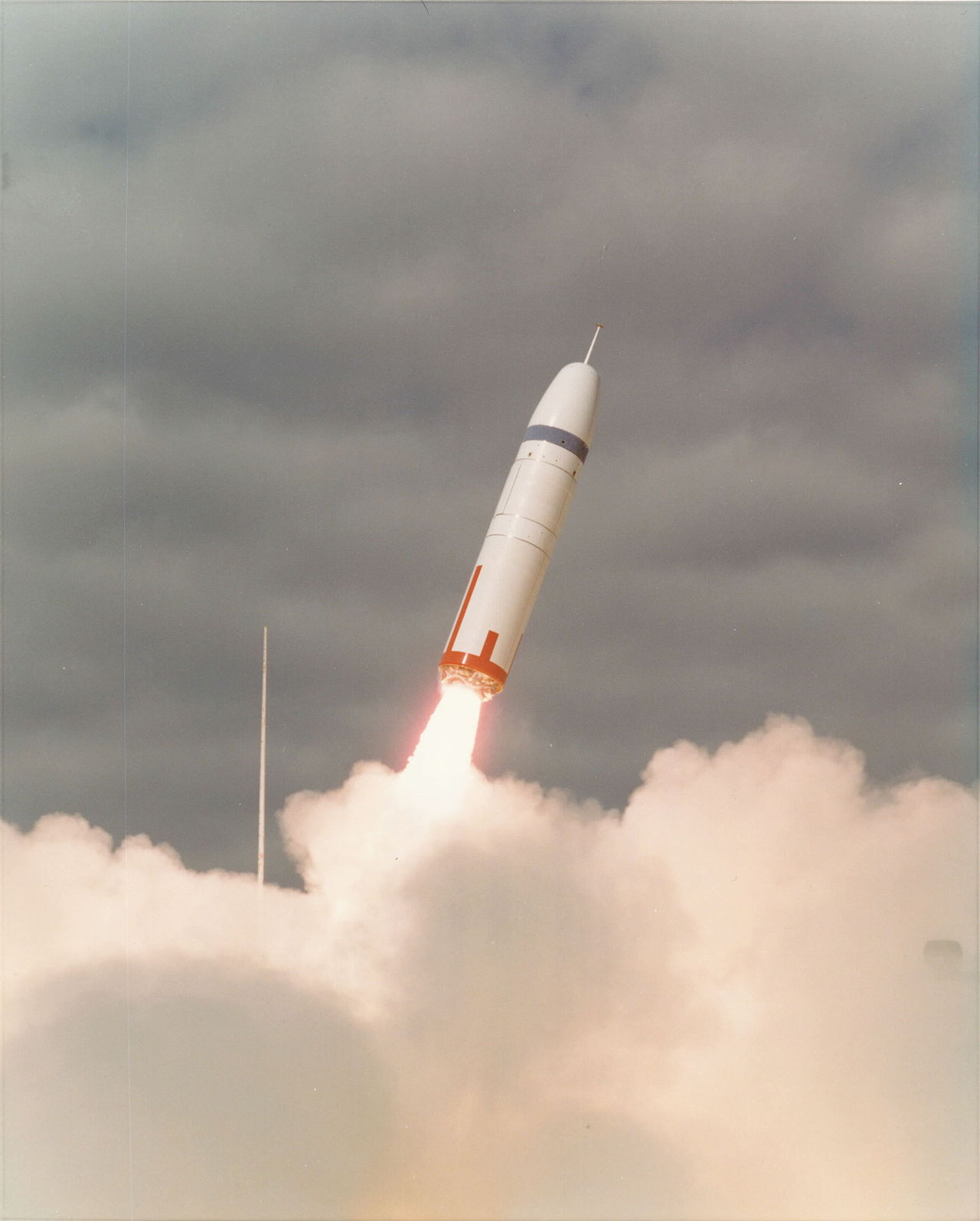
A Trident II D5 missile launches during a scheduled test flight. The Trident system, deployed on Ohio-class and planned for Columbia-class submarines, provides the assured second-strike capability that underpins nuclear deterrence. (Photo: US Navy)
This guaranteed second-strike capability is the foundation of nuclear deterrence. Any rational adversary contemplating a first strike must account for the certainty that multiple SSBNs will survive and retaliate. The impossibility of locating and destroying all submarines simultaneously makes a disarming first strike functionally impossible. This is why strategists describe the SSBN fleet as the ultimate insurance policy, and why its continuity is treated as a national security imperative that transcends normal budget politics.
The Columbia-class program exists to ensure this capability endures without interruption. If the Ohio-class boats retire faster than Columbias enter service, the number of submarines available for deterrent patrol drops. Fewer boats on patrol means reduced coverage of target sets and potentially predictable patrol patterns. Either outcome degrades deterrence. This is the scenario that keeps strategic planners awake at night and explains why Columbia has maintained its top acquisition priority across every defense budget cycle since the program began.
Building Columbia: Schedule and Challenges
General Dynamics Electric Boat (GDEB), headquartered in Groton, Connecticut, is the prime contractor for the Columbia-class program. Electric Boat has built submarines for the US Navy for over a century and is one of only two shipyards in the country capable of constructing nuclear submarines. Huntington Ingalls Industries (HII) Newport News Shipbuilding in Virginia, the other nuclear-capable yard, is responsible for fabricating the missile compartment sections and other major components that are then shipped to Groton for final assembly.
The lead boat, USS District of Columbia (SSBN-826), has been under construction since 2021 when fabrication of the initial hull modules began. The Navy's target is to deliver the boat in 2028, with its first strategic deterrent patrol projected for approximately 2031. This timeline is driven by necessity: the first Ohio-class SSBN retirement will create a gap in the patrol schedule if the lead Columbia is not operationally ready by then.
Subsequent boats are planned at a rate of roughly one per year, though the exact delivery schedule depends on construction performance and funding. The twelfth and final Columbia-class boat is projected for delivery in the early 2040s. By that point, the last Ohio-class SSBNs will have reached the end of their extended service lives, completing the one-for-one (actually 14-to-12) fleet transition.
The program faces significant challenges that have drawn scrutiny from the Government Accountability Office (GAO), the Congressional Budget Office (CBO), and multiple defense oversight bodies.
Workforce shortages are perhaps the most persistent problem. The submarine industrial base contracted sharply after the end of the Cold War. Skilled welders, pipefitters, electricians, and nuclear-qualified technicians take years to train. Electric Boat has been aggressively recruiting and training workers, expanding its Groton and Quonset Point, Rhode Island, facilities, and investing in workforce development programs. HII Newport News faces similar challenges. Both yards are simultaneously building Columbia-class boats and Virginia-class attack submarines, straining capacity.
Supply chain fragility affects schedules across the defense industrial base, and submarines are particularly vulnerable because they require specialized materials and components produced by a limited number of suppliers. Certain valves, castings, and electronic components have single-source suppliers. Delays in any critical-path component can cascade through the construction timeline. The Navy and GDEB have worked to identify and mitigate supply chain risks, but GAO audits have repeatedly flagged this as an area of concern.
Schedule performance on the lead boat has drawn particular attention. As of early 2026, the program has experienced delays in certain construction milestones. These are not uncommon for a first-of-class nuclear submarine, but the margin for delay is thin. Unlike a conventional warship program where a few years of slippage is manageable, the Columbia timeline is locked to the Ohio retirement schedule. Every month of delay on Columbia is a month closer to a potential gap in the deterrent patrol cycle.
$130 Billion and Counting
The Columbia-class program's total estimated cost exceeds $130 billion, making it the most expensive shipbuilding program in US Navy history. Understanding where that money goes requires breaking the figure into its components.
Research and development costs for the Columbia-class have been substantial, covering the design of the new hull, the S1B reactor, the electric-drive propulsion system, the Common Missile Compartment, and integration of all systems. These non-recurring engineering costs are largely front-loaded and have already been incurred.
Columbia-Class Program Cost Breakdown (Estimates)
Cost Category
Estimated Cost
Lead boat (SSBN-826)
~$15.2 billion
Follow-on boats (SSBN-827 through SSBN-837)
~$9.4 billion each (~$103 billion total)
Research and development
~$15 billion
Total program (12 boats + R&D)
$130+ billion (then-year dollars)
Cost figures based on CRS and CBO estimates. "Then-year dollars" means the amounts include projected inflation over the multi-decade procurement period. Actual costs will depend on construction performance, inflation, and congressional appropriations.
The lead boat premium is typical for military shipbuilding programs. The first hull absorbs costs for final design work, tooling, workforce training, initial supply chain establishment, and the inevitable engineering changes that arise when translating a design into a physical submarine. Follow-on boats benefit from learning curves as the workforce gains experience and processes stabilize.
For context, $130 billion is comparable to some of the largest defense programs in American history. The F-35 Joint Strike Fighter program, the most expensive weapons program ever, has a projected lifecycle cost exceeding $1.7 trillion, though that covers over 2,400 aircraft across three services and multiple allied nations. The Gerald R. Ford-class aircraft carrier program, another high-profile Navy acquisition, will cost roughly $120 billion for 10 ships. The ground-based strategic deterrent (Sentinel), the ICBM replacement program, is estimated at over $140 billion.
What distinguishes the Columbia-class program's political position is the rare degree of bipartisan support it commands. Nuclear deterrence is one of the few defense issues where Congressional consensus has held firm across administrations. The Navy established a dedicated National Sea-Based Deterrence Fund (NSBDF) specifically for the Columbia program, insulating it from competition with other shipbuilding accounts. Both the House and Senate Armed Services Committees have consistently funded the program at or above requested levels.
The bipartisan support reflects a pragmatic calculation. The cost of building 12 Columbia-class submarines is enormous. The cost of allowing a gap in the sea-based nuclear deterrent is considered incalculable. No member of Congress wants to be responsible for a period in which the United States cannot maintain continuous at-sea deterrent patrols. That political reality has shielded Columbia from the budget battles that have delayed or reduced other major defense programs, including the DDG-1000 Zumwalt destroyer and the Ford-class carrier.
What Happens to the Ohios?
The transition from Ohio-class to Columbia-class will unfold over approximately 15 years, with the two classes operating concurrently during the overlap period. The decommissioning schedule is driven by the 42-year service life limit on each Ohio-class hull.
The four Ohio-class SSGNs, which were converted from SSBNs in the early 2000s to carry conventional Tomahawk cruise missiles, have already begun leaving service. USS Ohio (SSGN-726) and USS Florida (SSGN-728) were decommissioned in 2026 and their sister ships will follow. The loss of the SSGN capability, which provided a massive conventional cruise missile capacity of up to 154 Tomahawks per boat, is a separate concern for fleet planners, but it does not directly affect the nuclear deterrent mission.
For the 14 SSBNs, retirements will begin when the oldest boats exhaust their reactor cores and reach hull life limits in the early-to-mid 2030s. The Navy has carefully sequenced planned Ohio retirements against projected Columbia deliveries to maintain the minimum number of boats required for the deterrent patrol cycle. Under optimal conditions, each Ohio retirement would coincide roughly with a Columbia commissioning.
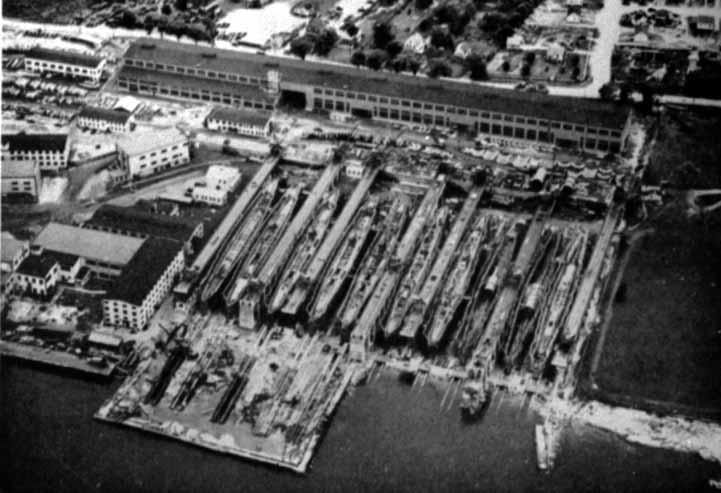
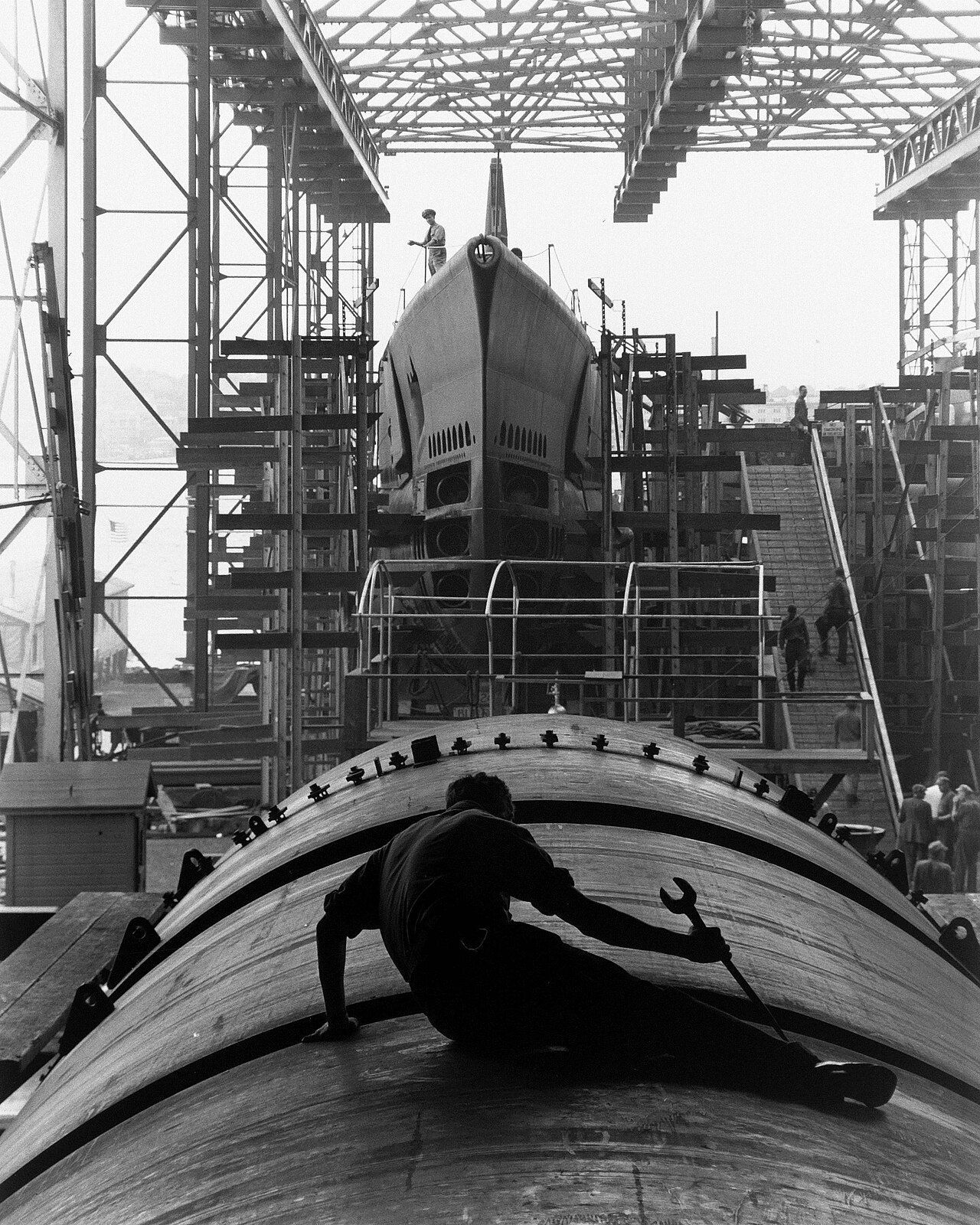
Submarine construction at General Dynamics Electric Boat in Groton, Connecticut. The shipyard is building Columbia-class and Virginia-class submarines simultaneously, creating significant workforce and facility demands. (Photo: General Dynamics)
The math, however, introduces a permanent fleet reduction. The Navy operated 14 Ohio-class SSBNs. Only 12 Columbia-class boats are planned. This means the SSBN fleet will shrink by two boats. The Navy has argued that this reduction is manageable because the Columbia's life-of-ship reactor eliminates the multi-year refueling overhaul period. An Ohio-class boat that spent two or more years in a refueling overhaul was unavailable for patrols during that time, effectively reducing the operational fleet. Since the Columbia will never require that overhaul, each Columbia boat will be operationally available for a greater percentage of its service life. The net effect, the Navy argues, is that 12 Columbias can maintain the same patrol tempo as 14 Ohios.
Not everyone is convinced. Some analysts and members of Congress have questioned whether 12 boats provide sufficient margin against unexpected maintenance issues, construction delays, or an evolving threat environment that might require more submarines at sea simultaneously. The Navy has studied the possibility of a 13th boat but has not formally requested one. Budget realities make it unlikely unless the strategic environment changes dramatically.
The gap risk remains the program's central vulnerability. If Columbia construction falls behind schedule, such that boat deliveries lag Ohio retirements by more than a year or two, the fleet will temporarily fall below the minimum threshold. The Navy has studied mitigation options including further extending select Ohio-class boats, but each additional year of extension pushes aging hulls into uncertain territory. The margin for error is slim, and program managers, shipyard workers, and congressional overseers all understand that the construction schedule is not aspirational. It is a strategic imperative.
Strategic Context and What Comes Next
The Columbia-class program does not exist in isolation. It is one element of a broader modernization of all three legs of the nuclear triad, a recapitalization effort that will cost well over $1 trillion over the coming decades. For how the Columbia-class fits into the wider undersea competition, see our ranking of the most powerful attack submarines in the world. The Air Force is developing the B-21 Raider stealth bomber and the Sentinel ICBM to replace the aging Minuteman III. Together with the Columbia-class, these programs represent the most comprehensive update of the US nuclear arsenal since the Reagan-era buildup of the 1980s.
The strategic rationale has shifted since the Ohio-class was designed. During the Cold War, the primary adversary was the Soviet Union, and the nuclear balance was fundamentally bilateral. Today, the United States faces a more complex landscape. China is rapidly expanding its nuclear arsenal, with the Pentagon estimating that Beijing could field over 1,000 nuclear warheads by 2030 and deploy a significantly larger SSBN fleet of its own. Russia retains a large and modernizing nuclear force. North Korea has developed nuclear-armed ballistic missiles. The sea-based deterrent must remain credible against all of these potential threats simultaneously.
Arms control uncertainty adds another dimension. The New START treaty between the United States and Russia, which limits deployed strategic warheads and delivery vehicles, expired in February 2026 without a replacement. Without a successor agreement, the strategic framework that influenced the Columbia-class's 16-tube configuration could change. If arms control collapses entirely and an arms race accelerates, the pressure to maximize the number of warheads at sea will increase, potentially reigniting debates about fleet size.
Advances in undersea detection technology represent a long-term wild card. The acoustic advantage that SSBNs enjoy today, the ability to disappear into the ocean's background noise, could theoretically erode as adversaries deploy new sensor networks, autonomous underwater vehicles, or non-acoustic detection methods. The Columbia-class is designed to be the quietest submarine ever built, incorporating the latest in acoustic reduction technology. But a submarine designed in the 2020s must remain undetectable into the 2080s. Whether the ocean remains opaque to surveillance for that long is a question that no one can answer with certainty.
The industrial base challenge extends beyond Columbia itself. The US submarine construction enterprise must build Columbia-class boats and Virginia-class attack submarines simultaneously, while also supporting maintenance of the existing fleet. The attack submarine fleet is already below its target of 66 boats and is projected to shrink further before Virginia-class deliveries catch up with Los Angeles-class retirements. Every construction delay on Columbia ripples through to Virginia schedules and vice versa. Strengthening the submarine industrial base, including workforce, supply chain, and facility capacity, is a prerequisite for executing both programs successfully.
For the 155 sailors who will crew each Columbia-class boat, little will change in the fundamental rhythm of deterrent patrol life. Two crews, designated Blue and Gold, will rotate through patrol and maintenance cycles, as they have on Ohio-class boats for over four decades. The boats will operate from the same bases, carry the same Trident missiles (in their life-extended D5LE variant), and execute the same mission: remain hidden, remain ready, and ensure that no adversary ever concludes that a nuclear first strike against the United States could succeed.
The Columbia-class program is not glamorous. Submarines operate in silence and anonymity by design. There are no air shows, no port visits for public tours, no dramatic footage of missiles being fired in anger. The measure of success for a ballistic missile submarine is that nothing happens: no war, no nuclear exchange, no failure of deterrence. The $130 billion question is whether the United States is willing to pay that price for another half century of nothing happening. Every indication is that the answer is yes.
Frequently Asked Questions
What is the Columbia-class submarine and why is it being built?
The Columbia-class is a new class of nuclear-powered ballistic missile submarine (SSBN) being built to replace the aging Ohio-class. Twelve Columbia-class boats will carry Trident II D5LE submarine-launched ballistic missiles as the sea-based leg of the US nuclear triad. The program is necessary because the Ohio-class submarines are reaching the end of their 42-year extended service lives and their reactors cannot be refueled. The lead boat, USS District of Columbia (SSBN-826), is under construction at General Dynamics Electric Boat and is targeted for delivery around 2028, with its first deterrent patrol projected for approximately 2031.
How much does the Columbia-class submarine program cost?
The total Columbia-class program is estimated to cost over $130 billion in then-year dollars. The lead boat costs approximately $15.2 billion, which includes first-of-class engineering and tooling expenses. Follow-on boats are estimated at roughly $9.4 billion each. Research and development costs add approximately $15 billion. The program is funded through a dedicated National Sea-Based Deterrence Fund and has received consistent bipartisan congressional support due to its role as the Pentagon's top acquisition priority.
Why does the Columbia-class have fewer missile tubes than the Ohio-class?
The Columbia-class carries 16 missile tubes compared to the Ohio-class's 24. This reduction reflects changes in arms control frameworks and strategic force structure decisions rather than a loss of capability. Under the New START treaty parameters, the Navy determined that 12 submarines with 16 tubes each (192 total tubes) meets US strategic deterrence requirements. Fewer tubes also reduce per-boat cost and complexity while allowing more internal volume for other systems, including the quieter electric-drive propulsion.
What happens if the Columbia-class submarines are delivered late?
Delays in the Columbia-class program could create a gap in the US sea-based nuclear deterrent. The Ohio-class submarines are on a fixed retirement schedule driven by reactor fuel depletion and hull fatigue limits at 42 years of service. If Columbia deliveries do not keep pace with Ohio retirements, the number of submarines available for deterrent patrols would fall below the minimum level required by US Strategic Command. This is why the program is designated the Department of Defense's number one acquisition priority and why schedule performance is under intense scrutiny from the Navy, Congress, and oversight agencies like the GAO.