Nathan Cole covers naval warfare, maritime strategy, and the ships and submarines that project power across the world's oceans. His work focuses on fleet architecture, carrier operations, and how navies adapt to threats from missiles, drones, and undersea warfare.
April 2026 Update: New Data Forces Us to Rewrite the Rankings
Updated April 15, 2026. Since this article was first published in February, several developments have reshaped the submarine landscape. The original rankings and analysis below remain intact, with this update providing critical new context.
What Changed Since February 2026
Three significant developments in the past eight weeks have altered the competitive picture beneath the world's oceans, and two submarines that were honorable mentions now demand more serious consideration.
Virginia Block V reaches a critical milestone. In early 2026, the future USS Oklahoma (SSN-802), the very first Virginia-class Block V submarine with the Virginia Payload Module, achieved pressure hull complete status at Newport News Shipbuilding. This is the milestone where the boat's hull is fully welded and watertight, and it means the first VPM-equipped Virginia is now on track for delivery. Meanwhile, construction formally began on the future USS Barb (SSN-804) in December 2025, and the Navy has moved into Block VI procurement: SSN-814 and SSN-815 were funded in the FY2026 budget, marking the transition to the next generation of Virginia variants. These boats will incorporate lessons learned from Block V and potentially integrate hypersonic strike capability. The submarine industrial base remains under enormous strain (delivery timelines stretch past 108 months per hull), but the production pipeline is real and moving.
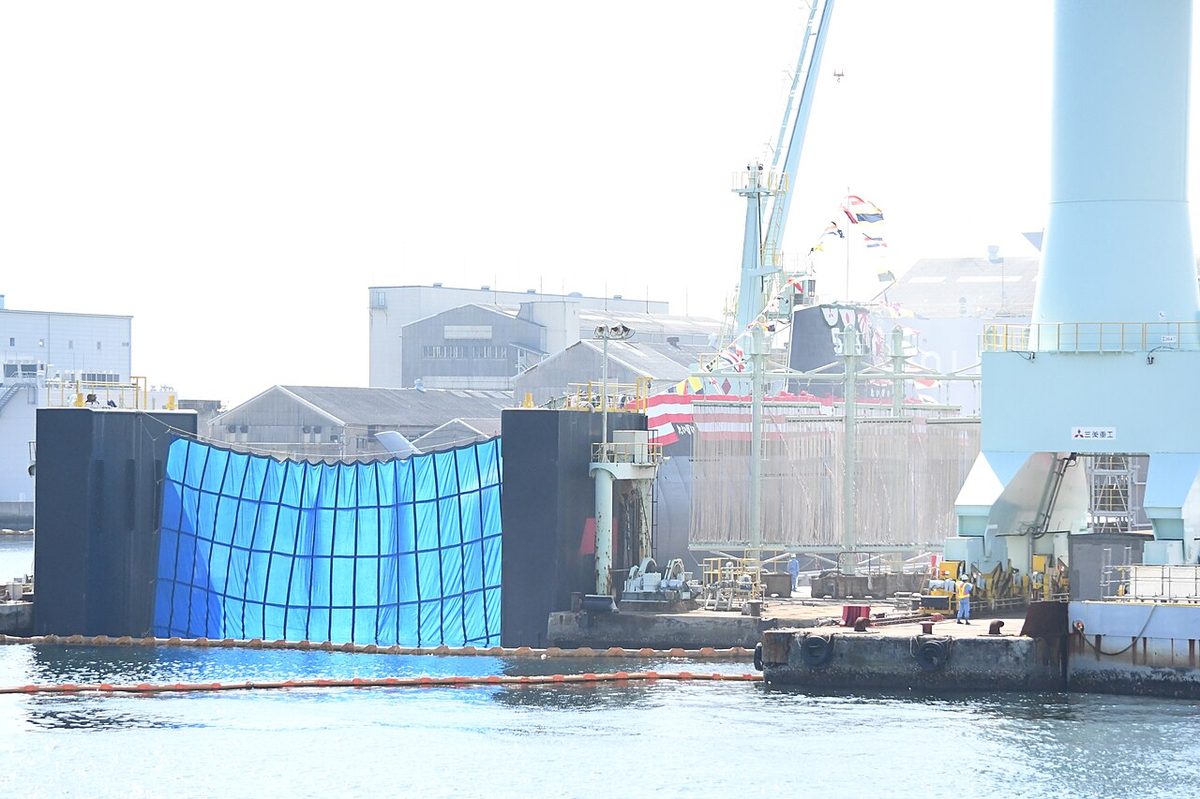
Japan's Taigei-class submarine represents the cutting edge of conventional submarine design, using lithium-ion batteries instead of traditional AIP systems for exceptional submerged endurance.
The Astute-class nears full strength. The Royal Navy commissioned HMS Agamemnon, the sixth Astute-class boat, in September 2025, with King Charles III presiding over the ceremony. Agamemnon completed her first dive in October 2025 and is now working through operational sea trials. The seventh and final boat, HMS Achilles, is expected to complete in late 2026. When she does, the Royal Navy will have its full complement of seven Astute-class submarines for the first time, a fleet that many analysts consider the most acoustically quiet nuclear attack submarines outside the United States. However, a March 2026 report revealed that only one Astute-class boat was fully combat-ready at any given time due to maintenance and refit cycles, a sobering reminder that numbers on paper and operational availability are very different things.
AUKUS accelerates, and the price tag becomes clear. Australia signed the Geelong Treaty with the United Kingdom in July 2025, a 50-year bilateral defense agreement to facilitate construction of SSN-AUKUS submarines. In February 2026, Australia made a A$310 million payment to the UK for long-lead nuclear propulsion components, with Rolls-Royce Submarines producing the reactor systems. The timeline is now firm: Australia will receive three Virginia-class submarines from the United States starting in the early 2030s as an interim capability, while SSN-AUKUS construction begins at Osborne, South Australia by the end of this decade, with the first Australian-built boat targeted for the early 2040s. The UK's own SSN-AUKUS boats, replacements for the Astute-class, are expected to enter service in the late 2030s. An Astute-class submarine will begin rotating through Western Australia as part of Submarine Rotational Force West starting in 2026.
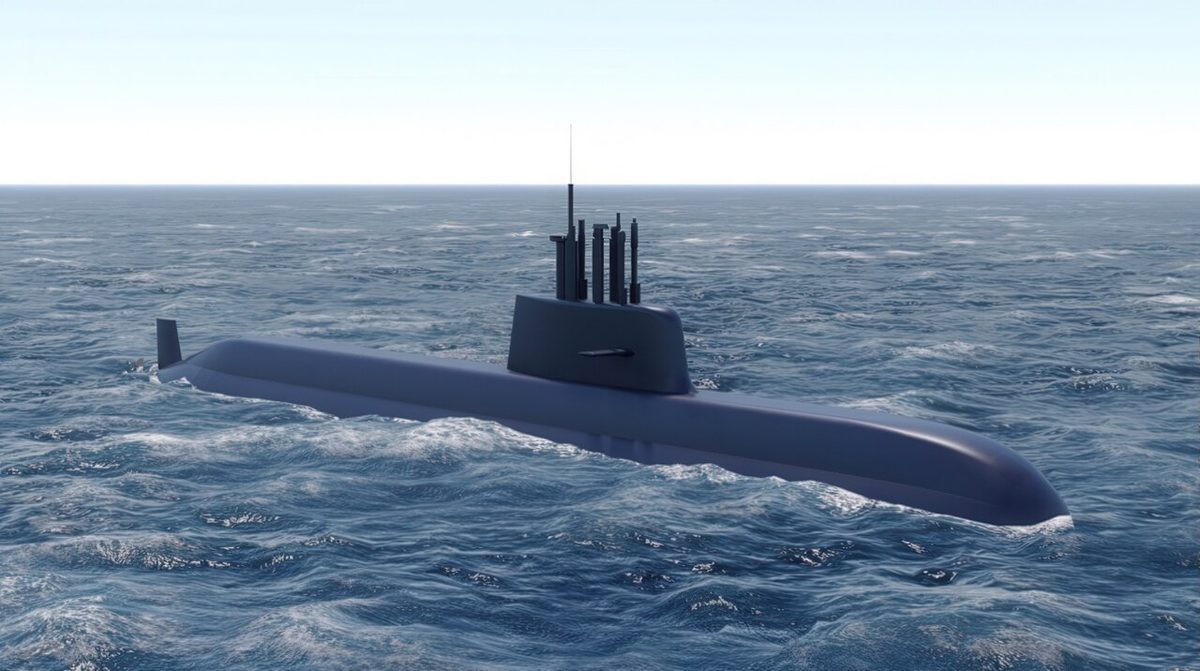
South Korea's KSS-III class is the world's first conventional submarine with vertical launch system cells, giving it a cruise missile capability previously reserved for nuclear boats.
Two Rising Contenders Worth Watching
Our honorable mentions section below highlights Japan's Taigei-class, and that call looks even better now. The Taigei-class has fully committed to lithium-ion battery technology instead of traditional air-independent propulsion, giving these boats exceptional submerged endurance without the mechanical complexity of Stirling engines or fuel cells. Japan plans to build at least seven Taigei-class boats, and in the confined, shallow waters of the East China Sea and Sea of Japan, they represent one of the most serious anti-submarine threats that China's PLAN must contend with.
South Korea's KSS-III Dosan Ahn Changho-class also deserves escalation from a footnote to a genuine contender. At 3,000 tons, this is the world's first conventional submarine equipped with vertical launch system cells: six tubes capable of firing Hyunmoo-3C cruise missiles with ranges exceeding 1,500 kilometers. That gives a diesel-electric submarine a land-attack capability previously reserved for nuclear boats. The second boat in the class, Ahn Mu, was commissioned in 2024, and the Batch-II variant will incorporate further improvements including domestically developed lithium-ion batteries. In a peninsula contingency, these boats would be formidable.
Our top five rankings remain unchanged. The Virginia Block V, Seawolf, Yasen-M, Astute, and Suffren still represent the elite tier of undersea warfare. But the gap between the top five and the next tier is narrowing, and the industrial race to build these extraordinarily complex machines is becoming as strategically important as the boats themselves.
Of all the weapons systems fielded by the world's navies, none carry the same aura of secrecy, dread, and strategic consequence as the nuclear-powered attack submarine. Operating hundreds of meters below the surface for months at a time, these vessels hunt enemy warships, shadow ballistic missile submarines, launch precision strikes against targets deep inland, and gather intelligence in waters where no surface ship would dare to linger. In an era defined by rapidly evolving weapons technology, the attack submarine remains the ultimate apex predator of naval warfare.
Ranking these platforms requires weighing several factors that are, by design, some of the most closely guarded secrets in any nation's defense establishment. Acoustic stealth signature, weapons capacity and variety, onboard sensor suites, the performance characteristics of the nuclear propulsion plant, diving depth, and demonstrated operational record all factor into this list. Where exact specifications remain classified, we have relied on best available estimates from public sources including the U.S. Naval Institute, the Congressional Research Service, Jane's Fighting Ships, and official manufacturer disclosures. Reasonable people can disagree about the precise ordering, but the five submarines below represent the consensus elite of undersea warfare in 2026.
5. Barracuda-class (Suffren-class), France
The Suffren-class represents a generational leap for the French Navy's undersea fleet, replacing the aging Rubis-class boats that served since the 1980s. Photo courtesy of Naval Group.
France's Barracuda-class, officially named the Suffren-class after the lead boat, is the smallest nuclear attack submarine on this list, but size is not the metric that matters most beneath the waves. What makes the Suffren-class exceptional is its combination of a compact, modern hull design with a genuinely versatile weapons suite and outstanding acoustic discretion. The K15 reactor, derived from the plant used in France's Triomphant-class ballistic missile submarines, gives the boat virtually unlimited range and the ability to sustain high speeds without the noise penalty that older French submarines were known for.
The F21 heavyweight torpedo, manufactured by Naval Group, is among the most advanced in any navy's inventory. It uses a lithium-ion battery for a combination of high speed and long range, with fiber-optic wire guidance and active/passive acoustic homing. The SCALP Naval cruise missile, a submarine-launched variant of the Storm Shadow/SCALP EG air-launched weapon, gives the Suffren-class a land-attack capability that previous French attack submarines lacked entirely. This is a significant evolution: France can now conduct precision strikes from beneath the surface, a capability previously limited to the United States and the United Kingdom.
The lead boat, Suffren, was commissioned in 2020 and declared fully operational in 2022. The second boat, Duguay-Trouin, was delivered in 2023. A total of six boats are planned, and they will form the backbone of the French Navy's submarine force through the 2060s. The pump-jet propulsor, the same broad technology used on British and American boats, replaces the traditional propeller and significantly reduces cavitation noise at speed.
The Suffren-class sits at number five not because of any fundamental deficiency, but because of trade-offs inherent in its design. At 5,300 tons, it carries fewer weapons than its larger American, British, and Russian counterparts. The weapons loadout is estimated at around 20 torpedoes and missiles in mixed configurations, which limits the boat's endurance in a sustained combat scenario. France also fields a smaller submarine fleet overall, which means each hull must cover vast operational commitments across the Atlantic, Mediterranean, and Indo-Pacific. Still, the Suffren-class is a first-rate platform that any adversary would take very seriously.
Nation: United Kingdom | Builder: BAE Systems, Barrow-in-Furness | Displacement: ~7,400 tons submerged | Propulsion: Rolls-Royce PWR2 pressurized water reactor, pump-jet propulsor | Key weapons: Tomahawk Block V cruise missiles, Spearfish Mod 1 torpedoes
The Astute-class is the Royal Navy's most capable attack submarine and, by many accounts, one of the quietest nuclear submarines ever put to sea. Its Rolls-Royce PWR2 reactor is a defining feature: it produces enough energy to power a small city and, crucially, never requires refueling during the submarine's entire 25-year operational life. This eliminates the costly and time-consuming mid-life reactor refueling that older submarine designs demand, keeping boats available for operations rather than sitting in dry dock for years.
Armament is formidable. The Astute carries a mix of up to 38 Spearfish torpedoes and Tomahawk cruise missiles, fired from six 533mm torpedo tubes. The Spearfish Mod 1 is an upgraded variant with an insensitive munitions warhead and improved guidance, while the Tomahawk Block V provides precision land-attack capability at ranges exceeding 1,000 miles. The boat's sonar suite, built around the Thales Sonar 2076, is widely regarded as one of the most capable submarine-mounted acoustic systems in the world. It integrates bow, flank, and towed arrays into a single processing architecture that can detect, classify, and track contacts at remarkable distances.
Seven Astute-class boats are planned, with five commissioned as of early 2026. The class has already proven its worth operationally. HMS Astute and her sisters have deployed extensively in the North Atlantic and Mediterranean, and the Royal Navy has been notably reticent about discussing their operational patterns, which is itself a signal of how seriously these boats are used for sensitive intelligence-gathering and deterrence missions.
The program's main limitation has been industrial rather than technical. Construction delays at BAE Systems Barrow pushed deliveries years behind schedule and drove costs significantly over budget. The UK's submarine industrial base has struggled with workforce challenges, and the simultaneous demands of the Astute program and the forthcoming Dreadnought-class ballistic missile submarines have stretched capacity. On a boat-for-boat basis, however, the Astute-class is an outstanding platform. Its combination of acoustic stealth, sensor capability, and weapons versatility places it comfortably among the world's best, and firmly ahead of any submarine that China, India, or any other rising naval power currently operates.
3. Yasen-M class (Severodvinsk-class), Russia
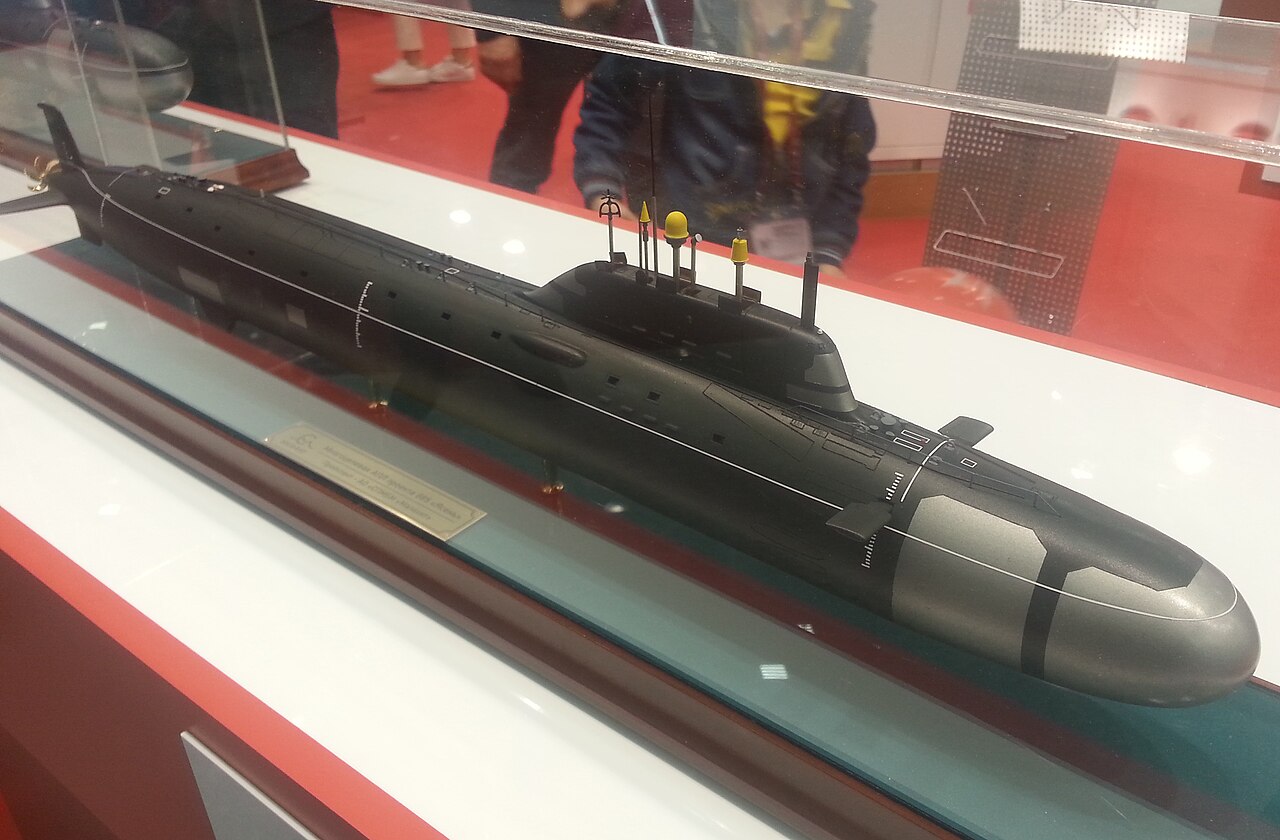
The Yasen-M class carries the heaviest missile armament of any attack submarine in the world, with 32 vertical launch cells capable of firing Kalibr, Oniks, and Zircon missiles. Photo via Russian Ministry of Defence.
Russia's Yasen-M class is, by a considerable margin, the most heavily armed attack submarine in the world. Its 32 vertical launch system cells, arranged in eight banks of four forward of the sail, can carry a devastating mix of Kalibr land-attack cruise missiles, P-800 Oniks supersonic anti-ship missiles, and the 3M22 Zircon hypersonic anti-ship missile. In addition to the VLS, the boat carries ten torpedo tubes (a mix of 533mm and 650mm) capable of launching torpedoes, mines, and additional missiles. No other attack submarine comes close to this sheer volume of firepower.
The Zircon missile, in particular, transforms the Yasen-M into a threat that Western navies take extremely seriously. Capable of speeds reportedly exceeding Mach 8 and maneuvering during its terminal phase, the Zircon is designed to defeat the layered air defense systems that protect carrier strike groups and other high-value surface formations. The combination of a stealthy launch platform and a near-impossible-to-intercept weapon represents one of the most dangerous anti-surface warfare capabilities in existence. Western naval planners must now account for the possibility that a Yasen-M could launch a salvo of Zircons from well outside the detection range of a carrier group's escorts.
The lead boat of the original Yasen design, Severodvinsk (K-560), was commissioned in 2014 after a protracted construction period stretching back to 1993. The improved Yasen-M variant, beginning with Kazan (K-561), commissioned in 2021, features a shorter, more automated hull, improved acoustic coatings, and a modernized reactor. Russia plans to build at least nine Yasen and Yasen-M boats in total, though Western analysts believe production timelines have been impacted by sanctions and industrial constraints.
The Yasen-M's primary limitation is quantity. Russia's submarine industrial base can produce these boats only slowly, and each one is expensive by Russian standards. At nearly 14,000 tons submerged, the Yasen-M is also significantly larger than its Western counterparts, which raises questions about detectability in certain acoustic environments, since bigger boats generate more flow noise at speed. Russian acoustic silencing technology, while vastly improved over Soviet-era designs, is still generally believed to lag behind the best American and British submarines by a measurable margin. Nevertheless, the Yasen-M's raw combat power, particularly its ability to threaten surface fleets with hypersonic weapons, earns it a firm place at number three.
2. Seawolf-class, United States
Nation: United States | Builder: General Dynamics Electric Boat, Groton, CT | Displacement: ~9,100 tons submerged | Propulsion: S6W pressurized water reactor, pump-jet propulsor | Key weapons: Mk 48 ADCAP torpedoes, Tomahawk cruise missiles, Harpoon anti-ship missiles (8 torpedo tubes, 50 weapons)
The Seawolf-class was designed in the late Cold War to be the ultimate submarine killer, a boat built from the keel up to find and destroy the Soviet Union's best nuclear submarines in the deep waters of the North Atlantic and under the Arctic ice cap. More than three decades after the lead boat was laid down, the Seawolf remains arguably the most capable pure combat submarine ever constructed. With eight 660mm torpedo tubes and room for 50 weapons (torpedoes, missiles, and mines in various loadouts), no other attack submarine carries as much ordnance per tube or offers the same rate of fire.
Acoustic stealth was the Seawolf's reason for being. The S6W reactor plant uses natural circulation at patrol speeds, meaning the primary coolant circulates without mechanical pumps, eliminating one of the most significant noise sources on a nuclear submarine. The hull is coated in advanced anechoic tiles, and every piece of machinery aboard is mounted on sound-isolation rafts. The U.S. Navy has never publicly disclosed the Seawolf's acoustic signature, but it is widely understood to be the quietest American submarine ever built, and possibly the quietest nuclear submarine of any nation.
Only three Seawolf-class boats were built: USS Seawolf (SSN-21), USS Connecticut (SSN-22), and USS Jimmy Carter (SSN-23). The class was terminated after three hulls because of its extraordinary cost, approximately $3 billion per boat in 1990s dollars, making it the most expensive attack submarine ever constructed. The end of the Cold War eliminated the strategic rationale for building 29 boats as originally planned, and the Navy pivoted to the more affordable Virginia-class. The third boat, Jimmy Carter, was modified with a 100-foot Multi-Mission Platform hull section that is widely believed to support special operations, undersea cable tapping, and other classified intelligence-gathering missions.
The Seawolf's limitation is simple: there are only three of them, and they are aging. Commissioned between 1997 and 2005, these boats are approaching the midpoint of their service lives, and the Navy has signaled that they will not be replaced on a one-for-one basis. Their operational tempo has been intense. These are the submarines the Navy sends to the most demanding and sensitive missions. USS Connecticut suffered a grounding incident in the South China Sea in 2021 that required extensive repairs, temporarily reducing the class to just two operational boats. Despite these constraints, the Seawolf-class remains the benchmark against which all other attack submarines are measured. On a pure capability-per-hull basis, nothing else afloat matches it.
1. Virginia-class Block V, United States
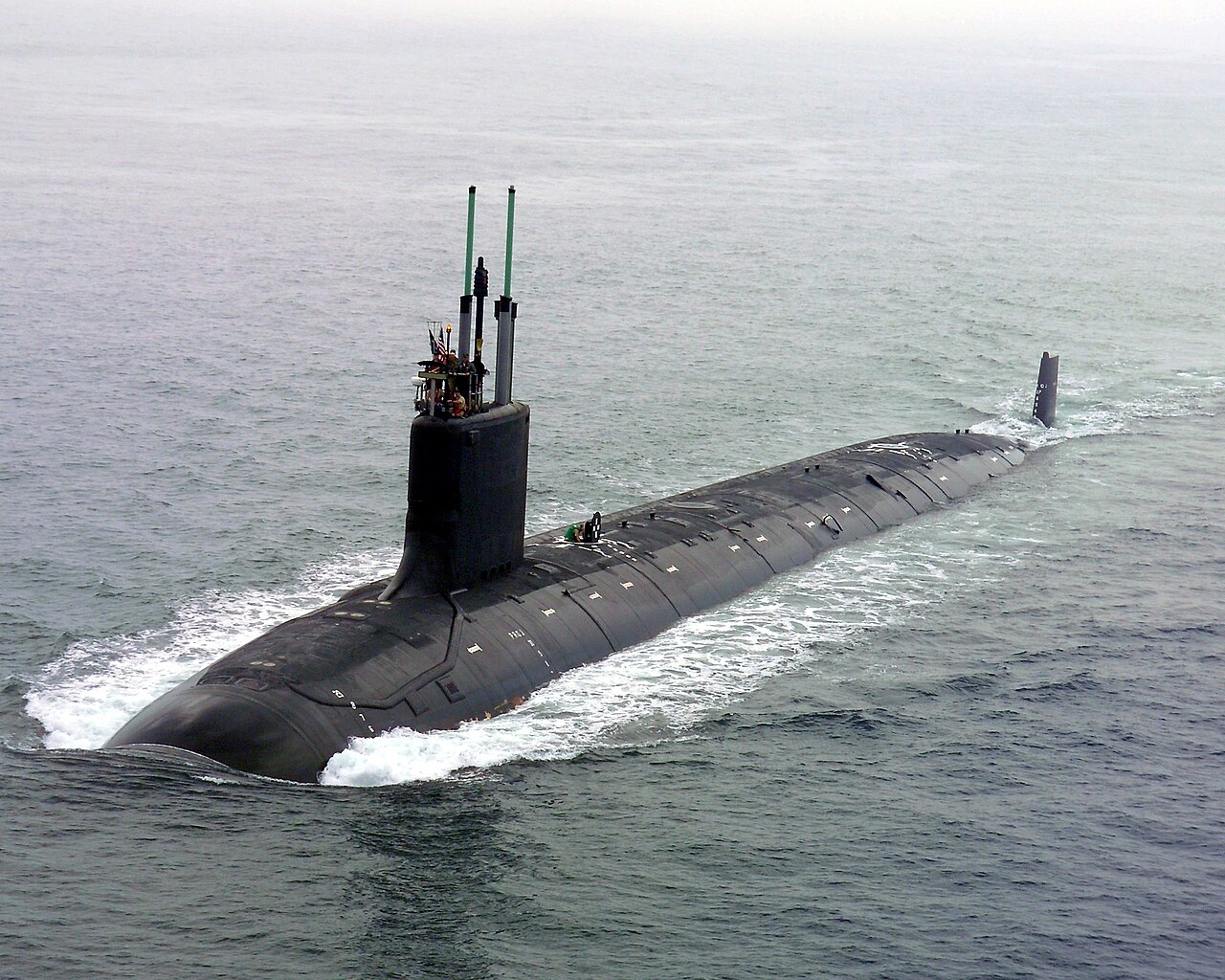
The Virginia-class Block V, with its Virginia Payload Module adding 28 additional Tomahawk missile tubes, represents the most significant increase in submarine strike capacity since the conversion of Ohio-class SSGNs. U.S. Navy photo.
Nation: United States | Builder: General Dynamics Electric Boat & HII Newport News Shipbuilding | Displacement: ~10,200 tons submerged (Block V) | Propulsion: S9G pressurized water reactor, pump-jet propulsor | Key weapons: Mk 48 ADCAP Mod 7 torpedoes, Tomahawk Block V cruise missiles, Virginia Payload Tubes, Virginia Payload Module (Block V)
The Virginia-class is the most produced modern nuclear attack submarine in the world, and its Block V variant represents the pinnacle of undersea combat capability in 2026. What earns the Virginia Block V the top spot on this list is not any single specification (the Seawolf is quieter, the Yasen-M carries more missiles) but the unmatched combination of stealth, lethality, versatility, production numbers, and continuous technological evolution that no other submarine program can match.
The defining feature of Block V is the Virginia Payload Module (VPM), an 84-foot hull section inserted amidships that adds four large-diameter payload tubes, each capable of carrying seven Tomahawk cruise missiles. This gives the Block V a total of 40 Tomahawk missiles (12 in the existing two Virginia Payload Tubes forward, plus 28 in the VPM) on top of the weapons carried in the boat's four torpedo tubes. This massive strike capacity is critical because the U.S. Navy's four Ohio-class guided missile submarines (SSGNs), each carrying 154 Tomahawks, are scheduled to retire in the late 2020s and early 2030s. The Virginia Block V is their replacement for undersea strike volume. The importance of this transition, and the broader strategic context of the Columbia-class replacing the Ohio-class boomers, cannot be overstated.
Beyond raw firepower, the Virginia-class benefits from three decades of iterative improvement. Block I through Block IV boats introduced progressively better sonar arrays, fly-by-wire ship controls, redesigned bow sections (replacing the traditional sphere array with a Large Aperture Bow conformal array in Block III), and reduced construction costs through modular manufacturing. Block V continues this trajectory with improved acoustic coatings, upgraded electronic warfare systems, and enhanced integration with unmanned undersea vehicles, a capability that will become increasingly central to submarine operations in the coming decade.
The Virginia's S9G reactor provides a 33-year core life, meaning the boat will never need refueling, a direct operational advantage that keeps hulls at sea rather than in shipyards. The submarine's acoustic signature, while likely marginally louder than the Seawolf's, is still extraordinarily quiet and represents a generational improvement over the Los Angeles-class boats it is replacing. The U.S. Navy plans to procure at least 66 Virginia-class submarines in total, with two boats delivered per year as the production target. This scale of production is itself a strategic advantage: no other nation can field anything close to this number of modern nuclear attack submarines.
The Virginia Block V's limitations are primarily industrial. The simultaneous production of Virginia-class and Columbia-class submarines at the same two shipyards (Electric Boat and Newport News) has strained the U.S. submarine industrial base. Deliveries have slipped, and the Navy has acknowledged that achieving the two-per-year Virginia production rate while also delivering Columbia boats on schedule is the most significant shipbuilding challenge it faces. Workforce shortages, supply chain disruptions, and the sheer complexity of nuclear submarine construction all contribute to this bottleneck. These are serious issues, but they are problems of success and ambition rather than design or capability. On the merits of what it can do beneath the ocean, the Virginia-class Block V is the most complete attack submarine in the world.
Honorable Mentions
Several other submarines deserve recognition, even though they fall outside the top five:
Los Angeles-class (USA): The workhorse of the U.S. Navy for four decades, with 62 boats built. The later "688 Improved" variants with vertical launch systems remain highly capable, but the oldest boats are being retired and the class as a whole is being replaced by Virginias. Still, any list of the world's most significant warships would be incomplete without them.
Soryu / Taigei-class (Japan): Japan's conventionally powered submarines are among the best diesel-electric boats ever built. The Taigei-class, which began entering service in 2022, features lithium-ion batteries that give it exceptional submerged endurance without the need for air-independent propulsion. In the confined waters of the Western Pacific, these boats are a serious threat to any submarine or surface ship.
Type 039C (China): China's latest conventional attack submarine incorporates a distinctive redesigned sail and is believed to feature significant acoustic improvements over earlier Chinese designs. While details remain scarce, Western intelligence assessments indicate that the Type 039C represents a meaningful step forward for the People's Liberation Army Navy's submarine force, which is growing rapidly in both quantity and quality.
The Undersea Balance of Power in 2026
The attack submarine remains one of the few weapons systems where the United States holds a decisive, generational advantage over all potential adversaries. With the Virginia-class, the Seawolf-class, and the remaining Los Angeles-class boats, the U.S. Navy operates the largest, most capable, and most experienced nuclear submarine force in the world. The Royal Navy's Astute-class and France's Suffren-class ensure that America's closest allies field world-class boats of their own. Russia's Yasen-M is a formidable platform, but it is being produced in small numbers and faces industrial headwinds that limit its strategic impact.
The wild card is China. The PLAN's nuclear submarine program is advancing, and the next-generation Type 09V attack submarine is expected to narrow the gap with Western designs. Meanwhile, anti-submarine warfare platforms like the Boeing P-8 Poseidon and surface combatants such as the USS Zumwalt continue to shape the broader undersea competition. Whether the submarine's dominance endures into the age of autonomous undersea drones, advanced sensors, and artificial intelligence is one of the defining questions in future warfare. For now, the five boats on this list represent the sharpest edge of naval power: invisible, patient, and carrying enough firepower to reshape a conflict in a single salvo.
Frequently Asked Questions
What is the difference between an attack submarine and a ballistic missile submarine?
Attack submarines (designated SSN in the U.S. Navy) are designed to hunt and destroy other submarines and surface ships, conduct intelligence gathering, deploy special operations forces, and launch cruise missiles at land targets. Ballistic missile submarines (SSBN) carry nuclear-armed intercontinental ballistic missiles and serve as the sea-based leg of a nation's nuclear deterrent. SSBNs prioritize stealth and survival above all else, while SSNs are built for a broader range of offensive and defensive missions. The U.S. Navy's Columbia-class SSBN program is the current top priority for the American submarine industrial base.
Why are nuclear-powered submarines considered superior to diesel-electric boats?
Nuclear propulsion provides virtually unlimited range and the ability to operate submerged at high speed for weeks or months without surfacing or snorkeling. Diesel-electric submarines must periodically run their engines or use air-independent propulsion systems to recharge batteries, which limits their range and exposes them to detection. However, modern diesel-electric boats, particularly those with lithium-ion batteries like Japan's Taigei-class, can be extremely quiet on battery power and are well-suited for operations in littoral and confined waters. The choice between nuclear and conventional power depends on a navy's operational requirements, geographic position, and budget.
How many Virginia-class submarines has the U.S. Navy built?
As of early 2026, the U.S. Navy has commissioned over 20 Virginia-class submarines, with additional boats in various stages of construction at Electric Boat in Groton, Connecticut, and HII Newport News Shipbuilding in Virginia. The Navy's long-term plan calls for at least 66 boats in the class. The program is currently in Block V production, which introduces the Virginia Payload Module for significantly increased missile capacity. Block V boats are being delivered alongside the Columbia-class ballistic missile submarines, creating significant demands on the submarine industrial base.
Could a modern attack submarine sink an aircraft carrier?
In theory, yes. A modern nuclear attack submarine armed with heavyweight torpedoes and anti-ship cruise missiles poses one of the most serious threats to aircraft carriers. In exercises, submarines have repeatedly demonstrated the ability to penetrate carrier strike group defenses and achieve simulated kills. However, carrier strike groups are defended by multiple layers of anti-submarine warfare assets, including escort destroyers and frigates with towed sonar arrays, maritime patrol aircraft like the P-8 Poseidon, ship-based and air-dropped sonobuoys, and the carrier's own embarked helicopters. Sinking a carrier in a real-world scenario would require evading all of these defenses, a difficult but not impossible task for a skilled submarine crew in a first-rate boat.