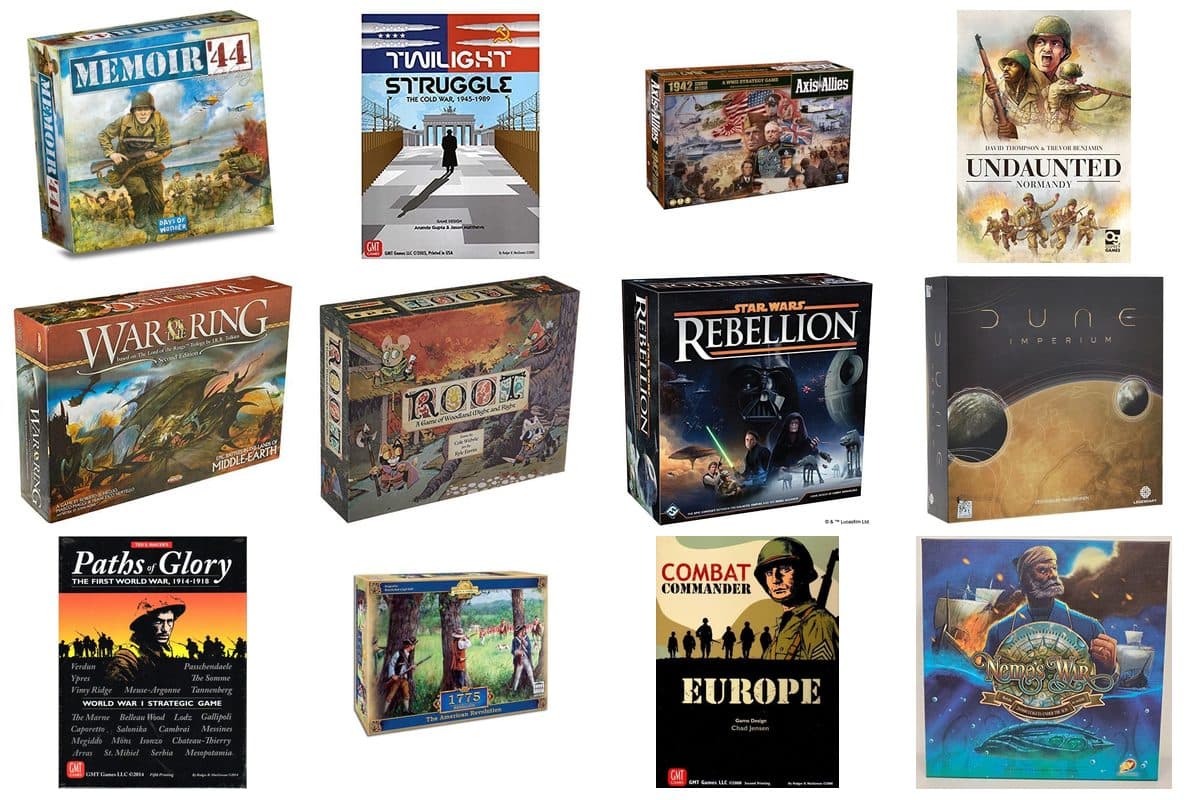

Military board games range from 20-minute card games you can knock out over lunch to all-day campaigns with 600+ miniatures spread across your dining table. The problem is not finding a good one. It is finding the right one for your situation. A game that is perfect for two experienced wargamers on a Saturday afternoon might bore a casual group after 30 minutes, and vice versa.
This guide organizes 22 games by complexity so you can find the right fit, whether you are buying for a casual family game night, a dedicated two-player rivalry, or solo sessions where you command both sides. Every game here has been vetted against BoardGameGeek ratings, community reviews, and years of actual play. We skipped anything out of print or impossible to find at a reasonable price.
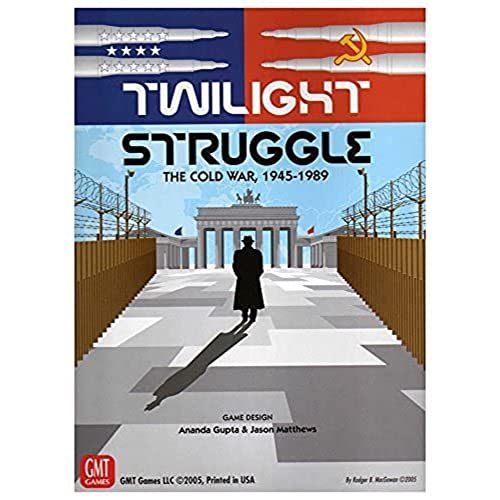
Twilight Struggle
~$45


Labyrinth: The War on Terror
$55 on Amazon
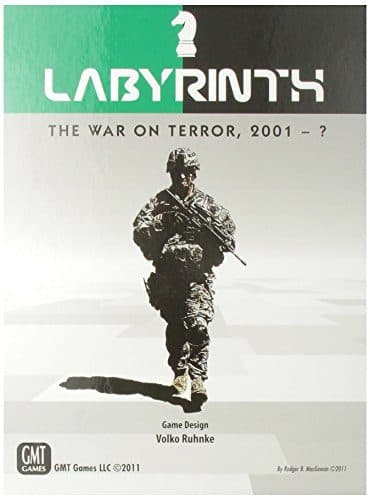
Volko Ruhnke's card-driven simulation of the post-9/11 era, with one of the best solo AI systems (called "bot") in board gaming. Playing as the US, you manage military operations, regime change, diplomatic efforts, and counter-terrorism against an AI-controlled jihadist opponent. BGG 7.6.
How to Choose a Military Board Game
Before you drop $85 on a box the size of a suitcase, four factors will narrow your search faster than anything else.
Weight/complexity. BoardGameGeek rates every game on a 1-5 scale. A 1.0 is Candy Land. A 5.0 is Advanced Squad Leader, a game that ships with a three-ring binder of rules. Most people enjoy the 2.0-3.5 range, and that is where the majority of this list lives. If you have never played a wargame, start at 2.0 or below and work up.
Player count. Most wargames are designed for exactly two players. A few support 3-6, and some are built specifically for solo play. If you are buying for family game night with four or five people, your options narrow significantly. Pay attention to the "best at" player count, not just the range printed on the box. A game listed as "1-5 players" might only shine at two.
Play time. Gateway games run 30-60 minutes. Mid-weight strategy games land around 1-2 hours. Serious wargames can stretch to 3-6 hours or more per session, and some campaign games take multiple sessions to finish. Be honest about how much time you and your opponent will actually commit. A brilliant 4-hour game that never hits the table is worse than a good 45-minute game you play every week.
Theme vs. mechanics. Some games prioritize historical accuracy and simulation. Others use a military theme as a backdrop for tight, abstract strategy. Neither approach is better. Twilight Struggle teaches you about Cold War history almost by accident. Memoir '44 captures the feel of WW2 battles without drowning you in rules about supply chains. Know which type appeals to you, because a simulation fan handed an abstract game (or vice versa) will come away disappointed.
Gateway & Family Games (Weight 1.5-2.5)
These five games can be taught in 10-20 minutes, finish in under an hour (mostly), and work for players who have never touched a wargame. If you are trying to convert a reluctant spouse, teenager, or friend into a wargaming partner, start here.
1. Memoir '44
~$55 on Amazon
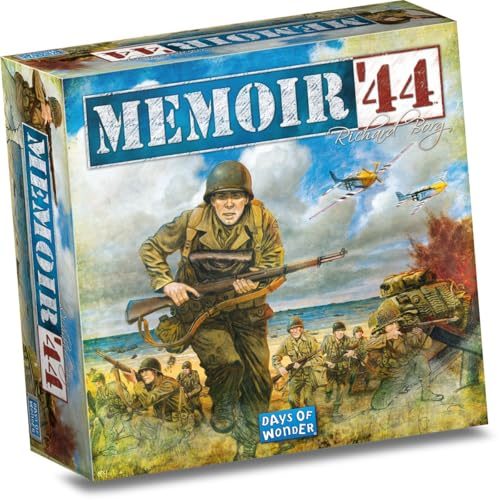
Teach it in 10 minutes, play it in 45. Memoir '44 is the single best entry point into military board gaming, and it has held that position since 2004. Over 140,000 ratings on BGG at a 7.56 average, which is strong for a game this accessible.
Best for: First-time wargamers, couples, parents playing with kids 8+
Designer Richard Borg built Memoir '44 around a simple command card system. You draw cards, play one to activate units in a section of the board, then roll custom dice to resolve combat. The rules fit on a single sheet, but the 16 included scenarios create genuine tactical decisions: when to push an assault, when to pull back, when to sacrifice a unit to hold a bridge. Each scenario recreates a real WW2 battle from D-Day through the liberation of France.
Where it falls short is replayability with only the base set. After you have played through the 16 scenarios a few times, the command card system starts to feel luck-dependent. Experienced players will want the Expansion Pack, which adds new armies, terrain, and the Breakthrough map format. That is another $30-50 per expansion, and the rabbit hole gets deep fast. If you and your opponent are both competitive, the card draw can occasionally produce frustrating situations where one player is locked out of a flank for multiple turns. Accept that randomness is part of the design, not a flaw, and you will enjoy it more.
2. Axis & Allies: 1941
~$32 on Amazon
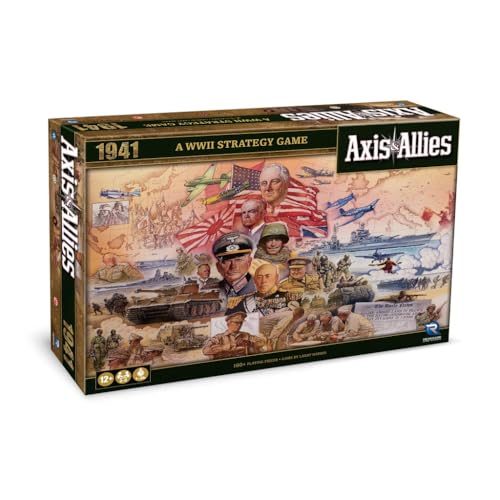
Want to try Axis & Allies without committing an entire Saturday? The 1941 edition strips the formula down to a 2-3 hour game with fewer units, a smaller map, and simplified economics. At $32, it is the cheapest way into the franchise.
Best for: Groups of 2-5 who want the A&A experience in half the time
Axis & Allies 1941 is designed as a gateway to the franchise. Fewer unit types, a streamlined economy, and a smaller board mean you can actually finish a game in a single evening. The core loop is the same as every A&A game: collect income, buy units, move armies, resolve combat with dice. Five nations are represented (US, UK, USSR, Germany, Japan), so up to five players can each control a power.
The trade-off for accessibility is strategic depth. Experienced A&A players will find the 1941 map too constrained, with fewer viable opening strategies and less room for creative play. The reduced unit roster means you lose specialized pieces like cruisers and mechanized infantry. Think of this as a training-wheels version. If your group plays it three times and wants more, graduate to the 1942 Second Edition below. But as a $32 gateway that teaches the fundamentals, 1941 does its job well.
3. 1775: Rebellion
~$45 on Amazon
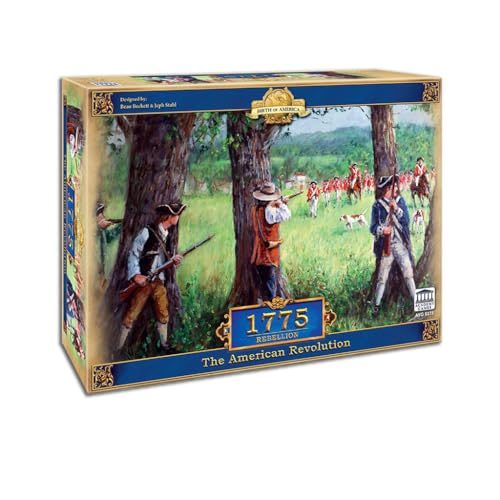
A 2-4 player game covering the American Revolution where each faction has unique custom dice reflecting their fighting capabilities. Militia scatter easily. Regulars hold ground. Native allies are unpredictable. It teaches real history through asymmetric design.
Best for: American history fans, family groups of 2-4, teens and up
Academy Games built 1775: Rebellion around faction-specific dice that capture the character of each fighting force. Continental regulars and British regulars have stronger combat results, while militia on both sides roll dice with "flee" results that force them to retreat. The French and Native American allies each bring their own dice profiles. It is a clever way to model asymmetric warfare without adding rules complexity.
The movement card system keeps turns quick, and controlling territory is intuitive: whoever has the most units in a colony controls it. Victory is determined by who holds more colonies when a truce is called. At 2 players, one person controls both factions on a side. At 4 players, each person gets a single faction, which creates natural team dynamics and table talk.
One weakness: the truce mechanism means games can end abruptly. Both sides have truce cards shuffled into their decks, and the game ends when all truce cards from one side have been played. This can occasionally cut a game short just as momentum shifts, which feels unsatisfying. Experienced players sometimes house-rule the truce timing. Despite this, the game is one of the most elegant introductions to historical wargaming available.
4. Blitzkrieg! Combined Edition
~$30 on Amazon
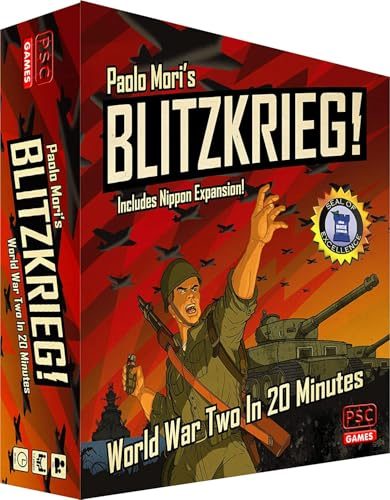
Play through all of WW2 in 20 minutes. Not a typo. You draw military tokens from a bag and place them on theaters of war, trying to dominate enough fronts to win. Zero dice, zero luck, pure strategy in a tiny box.
Best for: Lunch breaks, warm-up games before a longer session, travel
Paolo Mori designed Blitzkrieg! as a bag-building game where you draw military tokens (infantry, armor, naval, air, and special forces) and commit them to five theater boards representing the major fronts of WW2. Each theater has spaces for both players, and whoever commits more strength wins that theater and its associated bonuses. Winning three of five theaters ends the game immediately.
The Combined Edition bundles the base game with the Nippon expansion, adding the Pacific theater and new token types. At 20 minutes per game, you will often play two or three rounds in a sitting. The lack of dice means every decision matters, and experienced players develop meta-strategies around token denial and theater sequencing.
The simplicity that makes it fast also limits depth. After 15-20 plays, you will have explored most of the strategic space, and the game becomes more about reading your opponent's tendencies than discovering new approaches. It works best as a filler between heavier games or a gateway to hook someone who "doesn't have time" for wargames. At $30 for the combined edition, the cost-per-play ratio is excellent.
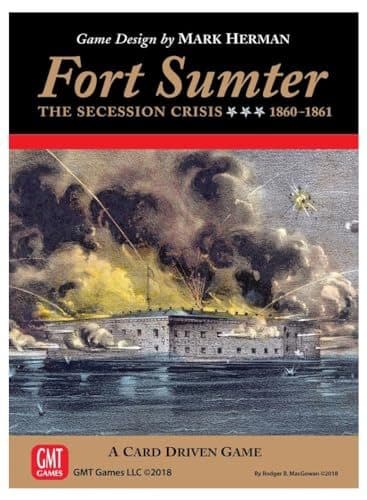
5. Fort Sumter
~$25 on Amazon
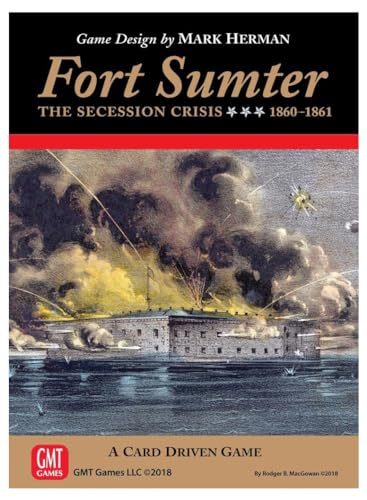
A 25-minute card game simulating the political crisis leading to the American Civil War. Designed by Mark Herman, who also created the Gulf War wargame We the People. This is his design philosophy distilled into a pocket-sized experience.
Best for: Civil War enthusiasts, players who want deep decisions in minimal time
Fort Sumter condenses the card-driven wargame genre into three rounds of four card plays each. You are either the Unionist or Secessionist faction, placing political influence tokens across four crisis dimensions: public opinion, political, secession, and armaments. Each card lets you place tokens, remove your opponent's tokens, or trigger a historical event. After three rounds, a final crisis round determines whether war breaks out and who holds the initiative.
Mark Herman designed this as an intentional gateway to his heavier games like Washington's War and Churchill. The core mechanics (area control, event cards with dual-use effects, crisis resolution) appear in expanded form across dozens of serious wargames. Learning Fort Sumter gives you a vocabulary for the entire card-driven wargame genre.
The criticism is fair: 12 card plays total means individual decisions carry enormous weight, and a single misplay can cost the game. Some players find this stressful rather than satisfying. The learning curve is also steeper than the short play time suggests, since the event cards require familiarity to use effectively. Your first two games will feel random. Your fifth game will feel completely different. Stick with it.
Mid-Weight Strategy (Weight 2.5-3.5)
These seven games require more rules investment up front but reward repeated play with deeper strategy. Most finish in 1-3 hours and offer the best balance between accessibility and meaningful decision-making. If you and a regular opponent are ready to move past gateway games, this is where you want to live.
6. Undaunted: Normandy
~$35 on Amazon
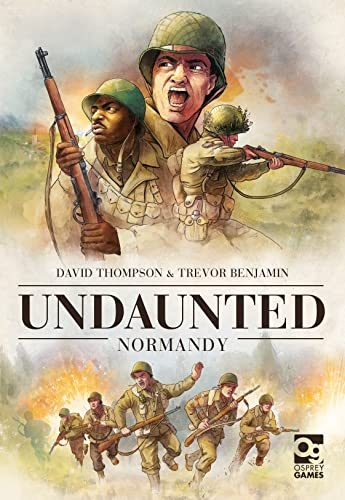
Combines deck-building mechanics with tactical WW2 combat. Each card in your deck represents a soldier, and when that soldier takes casualties, the card is removed from your deck permanently. Losses feel personal in a way that pushing wooden cubes around never achieves.
Best for: Gamers who enjoy deck-builders like Dominion but want a military theme
David Thompson and Trevor Benjamin designed Undaunted as a system where your deck is your platoon. Each turn you draw four cards, and those cards determine which soldiers can move, scout, attack, or bolster your reserves. Adding new recruit cards to your deck represents reinforcements. Losing a soldier removes their card permanently, thinning your deck and limiting your options. The 12 scenarios in the box scale in complexity, making the game its own tutorial.
This sits right at the boundary between gateway and mid-weight. The deck-building is approachable for anyone who has played Dominion or Star Realms, and the tactical movement on modular map tiles adds a spatial dimension that pure card games lack. The system has expanded into Undaunted: North Africa, Undaunted: Stalingrad (a full campaign game), and Undaunted: Battle of Britain.
The base Normandy box runs out of content faster than you might expect. Twelve scenarios sounds like plenty, but dedicated pairs can work through them in 6-8 sessions. At that point you are either replaying scenarios or buying expansions. The card-draw randomness also means that sometimes your riflemen are buried in the deck when you need them most, which can frustrate players who prefer deterministic strategy.
7. Twilight Struggle Deluxe Edition
~$45 on Amazon
Ranked #4 all-time on BoardGameGeek with an 8.33 rating across 60,000+ reviews. Two players wrestle for global influence as the US and USSR from 1945 to 1989. Every card in the deck is a real historical event, and many force you to play your opponent's events to use them. That tension is what makes the game sing.
Best for: Dedicated 2-player partnerships who want a game with years of depth
Ananda Gupta and Jason Matthews designed Twilight Struggle around a card deck where every card has two uses: an operations value (spend it to place influence, make coup attempts, or advance in the space race) or a historical event. The catch is that many cards trigger events favorable to your opponent, and you still have to play them. Managing your hand becomes an exercise in damage control as much as strategic planning. Do you play the Arab-Israeli War card for its 2 ops, knowing it will remove US influence from the Middle East? Or do you burn it on the space race track where the event does not fire?
The Deluxe Edition includes a mounted map board (a major upgrade over the original's paper map), larger cards, and improved graphic design. It is the version to buy.
Fair warning: the learning curve is real. Your first game will take 3-4 hours as you read every card for the first time. Expect to lose badly to anyone who has played before, because card knowledge is a massive advantage. The online community at twilightstrategy.com has analyzed every card and opening strategy in exhaustive detail, which is either a feature or a spoiler depending on your perspective. This is not a casual game. It is a commitment. But for two players willing to invest the time, nothing else in board gaming matches the tension of a close Twilight Struggle endgame.
8. Watergate
~$30 on Amazon
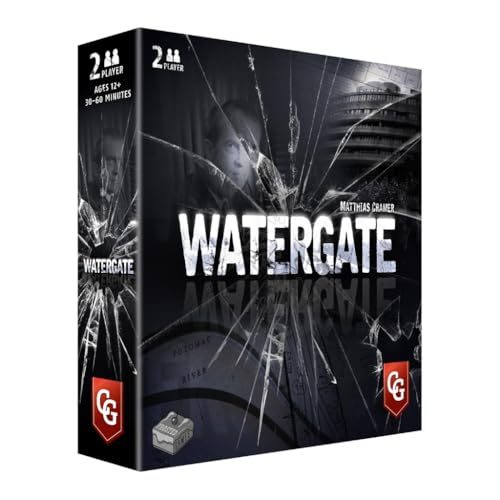
One player is Nixon trying to run out the clock. The other is the Washington Post editor connecting informants to evidence. Plays in 45 minutes with a tug-of-war mechanism that makes every card play feel like a critical decision. BGG 7.7 across 17,000+ ratings.
Best for: Political history fans, couples who want an asymmetric 2-player experience
Matthias Cramer designed Watergate as an asymmetric tug-of-war. The Editor wins by connecting two informants to the central evidence pin-board. Nixon wins by gaining enough momentum tokens to survive five rounds. Cards serve double duty: play them for their value in the tug-of-war, or trigger their event effect. Nixon's cards tend to obstruct and delay. The Editor's cards generate investigative breakthroughs.
The brilliance is how the asymmetry creates different psychological pressures. Nixon always feels like he is barely holding things together. The Editor always feels like the next card will crack the case. Both players are stressed the entire time, which is exactly how a game about Watergate should feel.
It is not technically a military game, but the political-thriller mechanics and Cold War-era setting make it a natural companion to Twilight Struggle for anyone interested in that period. The downside is longevity: both sides' strategies converge after 10-15 plays, and the game loses some tension once you have memorized the event cards. Still, at $30 for a game that delivers reliably for those first 15 plays, the value is there.
9. Root
~$55 on Amazon
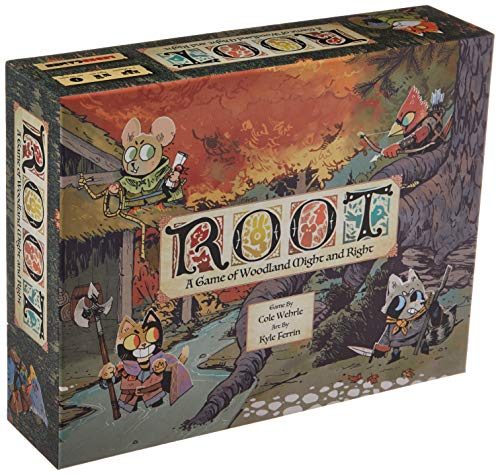
Four completely different factions battling for control of a woodland kingdom. The Marquise de Cat builds and occupies. The Eyrie Dynasty programs actions but collapses if they fail. The Woodland Alliance operates as insurgents. The Vagabond is a lone adventurer. Each faction plays by entirely different rules.
Best for: Groups of 3-4 who want asymmetric warfare with replay value
Cole Wehrle designed Root as a study in asymmetric conflict wrapped in charming woodland art. Do not let the cute animal artwork fool you. This is a proper wargame about territory control, insurgency, and power dynamics. The Marquise de Cat functions as an occupying military force that must defend supply lines. The Eyrie Dynasty is a programmatic war machine that grows more powerful but becomes fragile. The Woodland Alliance recruits sympathizers and stages revolts. Each faction's victory condition is different, which means you need to understand how all four factions work to play any of them well.
Root's biggest barrier is the teach. Because every faction has unique rules, explaining the game to new players takes 30-45 minutes. First games with four beginners can run over 2 hours and will involve frequent rules lookups. The player aids are decent but cannot cover every edge case. Budget two learning games before you judge the experience.
At two players, the game loses significant tension. The faction interactions that make 3-4 player games dynamic simply do not materialize with fewer players on the board. If your primary gaming situation is two-player, look at Twilight Struggle or Undaunted instead. Root shines at 3-4 and rewards groups who commit to multiple sessions.
10. Axis & Allies: 1942 Second Edition
~$55 on Amazon
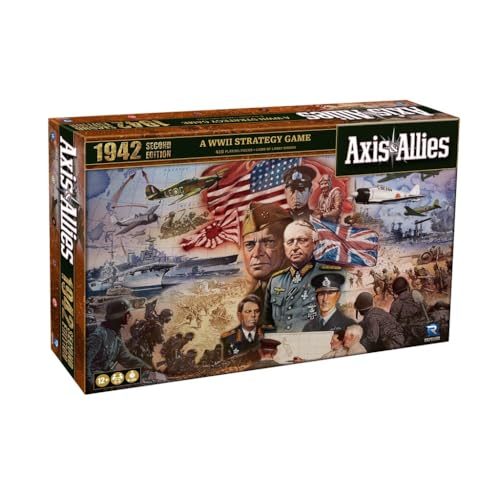
410+ miniatures, a massive board covering both theaters of WW2, and the strategic depth that has kept Axis & Allies relevant since 1981. This is the version most people mean when they say "Axis & Allies," and the Second Edition cleaned up balance issues that plagued the original.
Best for: Groups of 3-5 willing to commit 3-5 hours for full global war
Axis & Allies 1942 2E is the go-to mid-complexity global WW2 game. Five powers (US, UK, USSR, Germany, Japan) each take turns buying units, moving them across a shared world map, and resolving combat with dice. The economic engine underneath drives everything: territories generate income, and more income means more units. Cutting off an opponent's income through strategic territory control is as important as winning individual battles.
The Second Edition rebalanced the map (Russia's starting position was notoriously weak in the first edition), added new sculpts for several unit types, and tweaked setup positions. These are not trivial changes. The game plays significantly better than the original release.
Time commitment is the biggest hurdle. A full game with experienced players runs 3-4 hours. With new players, expect 5-6 hours including setup and rules explanation. Games between mismatched skill levels can spiral into unrecoverable positions by round 3, which means the losing side spends 2+ hours knowing they have already lost. House rules for concession or victory point thresholds help. If your group cannot reliably commit 4+ hours, stick with the 1941 edition above or Quartermaster General below.
11. Quartermaster General
~$45 on Amazon
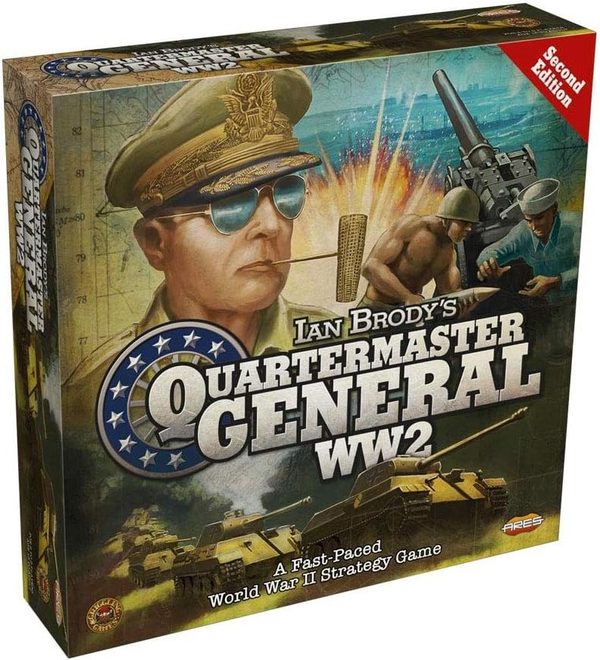
Six players each control a major WW2 power, but instead of buying units with income, you play cards from a unique national deck. Your deck IS your war machine, and when it runs out, your nation is spent. Brilliant design that forces you to think about logistics as much as combat.
Best for: Groups of 6 (ideal) who want WW2 strategy in under 2 hours
Ian Brody designed Quartermaster General around a radical constraint: each nation gets a fixed deck of cards, and you play one card per turn. That is it. No purchasing units, no accumulating resources. Your deck represents your nation's total industrial and military capacity for the entire war. Play aggressively early and you burn through your best cards. Play conservatively and your allies may collapse before you get going.
Supply lines are the key mechanic. Your armies and navies must trace a chain of connected units back to your home territory. One enemy unit in the right place can cut off an entire front, destroying units that lose their supply connection. This creates a game where strategic thinking about positioning matters more than raw combat power.
The downside is player count dependency. At 6 players (one per nation), the game is superb. At 2-3 players, you control multiple nations, which dilutes the team dynamics that make the game special. Some nations also have more interesting decks than others. Italy's deck is notoriously limited, which can make that player feel like a junior partner all game. The 2nd Edition improved balance, but the disparity between nations is a feature of asymmetric design, not a bug to fix.
12. Dune: Imperium
~$50 on Amazon
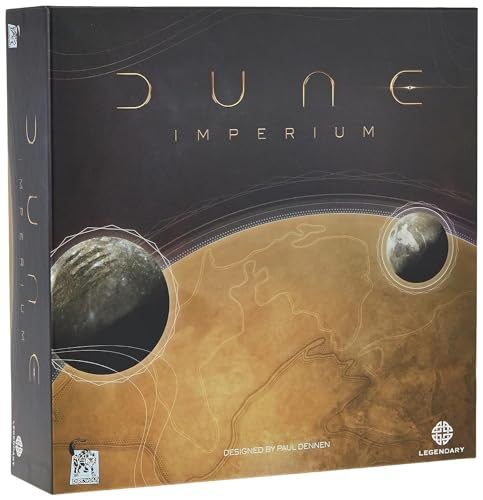
Worker placement meets deck-building meets military conflict, set in Frank Herbert's Dune universe. BGG 8.3 with 60,000+ ratings. You place agents to gain resources and political influence, then commit troops to fight over control of Arrakis. The three interconnected systems create more strategic depth than any single mechanism could deliver alone.
Best for: Fans of worker-placement euros who want combat, Dune fans
Paul Dennen designed Dune: Imperium by combining three mechanisms that usually appear in separate games. You place workers on a shared board to collect resources and curry favor with factions (Fremen, Spacing Guild, Bene Gesserit, Emperor). You build a deck of cards that determines where your workers can go and provides combat bonuses. And each round, you commit military units to a conflict zone where the player with the most strength wins valuable rewards.
The military conflict element is what elevates this above typical worker-placement games. You can play peacefully, focusing on political victory points, but the combat rewards are often too valuable to ignore. Deciding when to invest in troops versus economic development creates a genuine strategic tension that persists across the entire game.
Where it stumbles is the two-player experience. The game includes a well-designed AI opponent (the "House Hagal" system) to fill the third seat, but managing the AI adds overhead and does not fully replicate human unpredictability. At 3-4 players, the game is excellent. At 1 player, the solo mode (discussed in the solo section) is solid. At exactly 2 players, it is the weakest configuration. The Uprising expansion adds a 6th player and new mechanics, but the base game is the right starting point.
Serious Wargames (Weight 3.5+)
These six games demand more time, more rules knowledge, and ideally a dedicated opponent who is willing to invest multiple sessions learning the system. The payoff is strategic depth that lighter games cannot match. If you have played Twilight Struggle 20 times and want more, this is where you graduate.
13. War of the Ring 2nd Edition
~$85 on Amazon
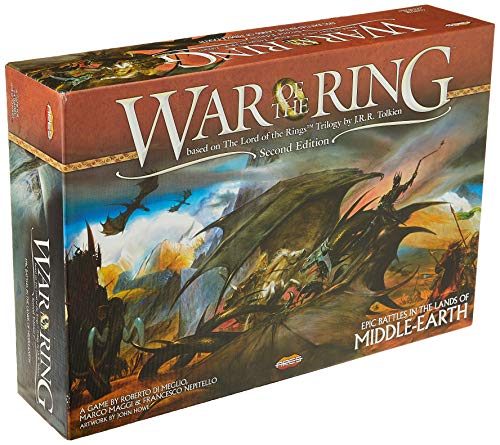
BGG 8.5. #8 all-time. Two players recreate the entire Lord of the Rings saga on a massive map of Middle-earth with over 200 miniatures. The Free Peoples must protect the Fellowship's journey to Mount Doom while Sauron's forces try to conquer militarily. Two completely different victory conditions create asymmetric gameplay that mirrors the source material perfectly.
Best for: Tolkien fans who want a 3-4 hour strategic experience, dedicated 2-player pairs
Roberto Di Meglio, Marco Maggi, and Francesco Nepitello created a game that captures Tolkien's war on two levels simultaneously. The military game plays out across Middle-earth as armies clash at Helm's Deep, Minas Tirith, and the gates of the Shire. The shadow game follows the Fellowship's hidden journey toward Mordor, with the Ring's corruption growing as they travel. The Shadow player must balance military conquest against hunting the Ring. The Free Peoples player must delay the armies of Sauron long enough for Frodo to reach Mount Doom.
Action dice determine what each player can do each turn: move armies, play event cards, muster reinforcements, or hunt for the Ring. The dice introduce controlled randomness that prevents games from becoming scripted, while the event cards (drawn from a deck of moments from the books) create narrative surprises.
This is not a light commitment. The rulebook is 40+ pages, setup takes 20-30 minutes, and first games will run 4-5 hours. The miniatures are unpainted and not the sturdiest plastic, which may disappoint hobbyists used to Games Workshop quality. At $85, it is the most expensive game on this list, and you will want to sleeve the cards (another $15-20) to protect them over repeated plays. Despite all that, if you have a willing partner and love Tolkien, this is the board gaming experience to have.
14. Paths of Glory
~$60 on Amazon
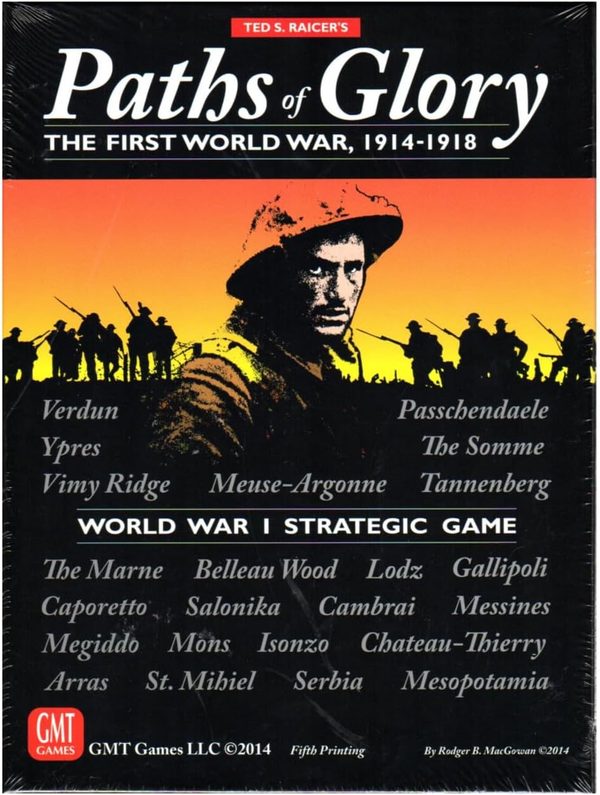
BGG 8.2 and widely considered the best World War I board game ever designed. Ted Raicer's card-driven masterpiece covers the entire Great War from 1914 to 1918. The Central Powers must win quickly before Allied economic power overwhelms them, recreating the strategic pressure that defined the real conflict.
Best for: WWI enthusiasts, experienced wargamers who want a deep 2-player experience
Paths of Glory uses the card-driven system pioneered by We the People, where every card can be played for its operational value (moving and attacking with armies) or its historical event. The Western Front bogs down into trench warfare almost immediately, mirroring history, while the Eastern Front and Middle Eastern theaters offer more room for maneuver. The Central Powers player faces a ticking clock: if the war drags on, American entry and Allied industrial output make victory nearly impossible.
The game models the political dimension of WWI through a war status track. Each side can attempt to bring neutral nations into the war, and maintaining allies' commitment requires strategic attention. Russia can collapse into revolution. Italy can switch sides. The Ottoman Empire can crumble. These political mechanics prevent the game from becoming a pure military slug-fest.
Be honest with yourself about the time commitment. A full game takes 6-8 hours, and competitive play requires knowledge of the entire card deck (110 cards). Most players need 3-5 games before they feel competent, which represents a 20-40 hour investment. VASSAL and Tabletop Simulator modules exist for online play, which helps find opponents. If WWI is not specifically your interest, or if you cannot reliably schedule 6-hour gaming sessions, this is not the right purchase. But for the right audience, it is unmatched.
15. Combat Commander: Europe
~$70 on Amazon
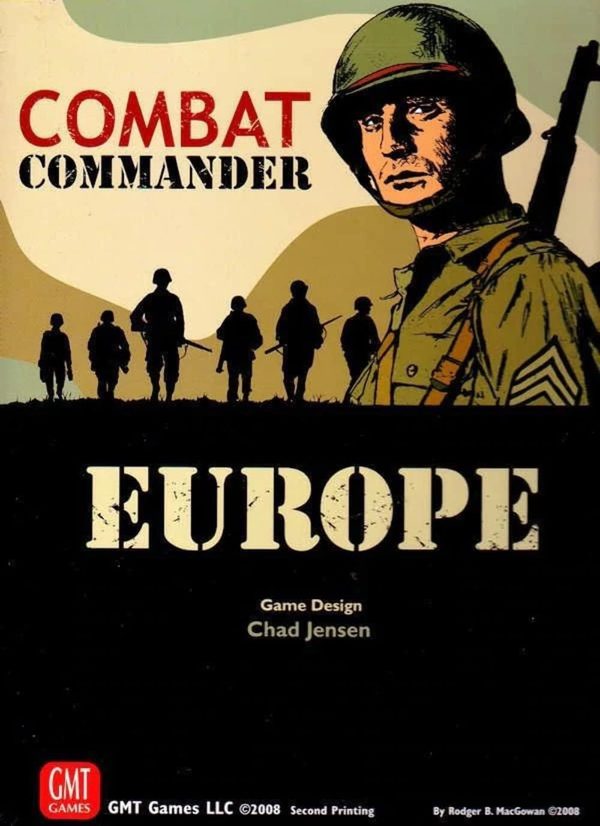
Squad-level WW2 combat driven entirely by cards instead of dice. Your hand of order cards determines what your squads can do: move, fire, advance, rally. Random events trigger unpredictably during play, creating the chaos and friction of real tactical combat. BGG 8.2 across 12,000+ ratings.
Best for: Tactical wargamers who want narrative-generating combat scenarios
Chad Jensen designed Combat Commander to eliminate dice entirely. Every action is resolved by drawing from a fate deck that provides random numbers for combat resolution, triggers events (snipers, heroes emerging, ammunition depletion), and determines when the game ends through sudden-death time triggers. You never know exactly when the scenario will end, which prevents the end-game calculation that plagues many wargames.
The card-driven order system means you cannot always do what you want. If you do not have a "Move" order in hand, your squads stay put. This models the friction and communication breakdowns of real combat, where units do not always respond to commands instantly. Some turns your squad leader rallies broken troops, advances under fire, and captures an objective. Other turns you stare at a hand full of "Fire" orders while your opponent flanks your position.
This randomness is polarizing. Players who want full control over their units will find it frustrating. Players who enjoy the narrative chaos, where a random sniper event kills your best leader at the worst possible moment, will find it thrilling. Combat Commander generates war stories in a way few other games manage. The 12 included scenarios plus a random scenario generator provide almost unlimited replayability. The learning curve is moderate for experienced gamers but steep for newcomers to hex-and-counter wargaming.
16. Sekigahara: The Unification of Japan
~$55 on Amazon
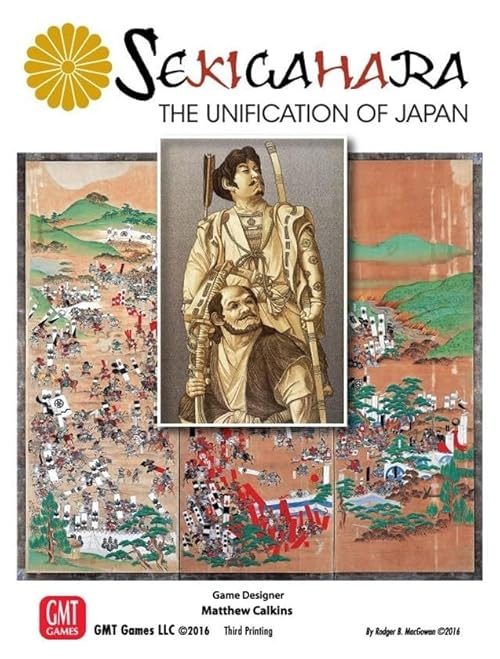
A block wargame covering the 1600 Japanese civil war that established the Tokugawa shogunate. Blocks stand upright so your opponent cannot see your army compositions. Battles are resolved by playing matching clan cards, and units can defect mid-battle if you lack the right cards. BGG 8.0.
Best for: Players who want fog-of-war tension in a clean 3-hour package
Matt Calkins designed Sekigahara with a loyalty mechanic that captures the fractured allegiances of 1600 Japan. Each army block belongs to a specific clan, and to deploy that block in battle, you must play a matching clan card from your hand. If you march an army into battle and lack the right cards, those units sit idle, or worse, defect to your opponent. Every engagement becomes a gamble: is that stack of blocks a real army, or is it a bluff backed by mismatched cards?
The fog of war is constant. Blocks stand upright, hiding their clan affiliation and strength from your opponent. You can see where armies are, but not what they are made of. This creates a game of reading your opponent's movements and managing your own card hand, knowing that one bad battle can cascade into a collapse as defecting units switch sides and join the victor.
Sekigahara is not a wargame about attrition or economics. It is a wargame about loyalty, timing, and bluff. If you want to simulate logistics and production, look elsewhere. If you want tense 2-player sessions where a single battle can flip the entire game, this delivers. The production quality from GMT Games is excellent: wooden blocks, a period-appropriate map, and clean graphic design. The niche historical setting (most Western gamers know nothing about the Sekigahara campaign) can make the theme feel abstract, but the mechanics are so strong it hardly matters.
17. Conflict of Heroes: Awakening the Bear
~$60 on Amazon
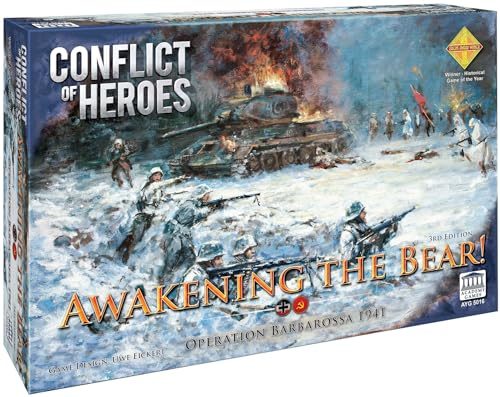
Operation Barbarossa at squad level with an action point system that keeps both players engaged simultaneously. Instead of the traditional I-go-you-go turn structure, players alternate activating individual units, which eliminates downtime and creates a back-and-forth rhythm. BGG 7.8.
Best for: WW2 Eastern Front enthusiasts, players transitioning from lighter wargames
Uwe Eickert designed Conflict of Heroes as a bridge between mainstream board games and traditional hex-and-counter wargames. Each unit has action points that can be spent on movement, firing, or rallying. Players alternate activating single units, so you never sit idle for 15 minutes while your opponent resolves their entire turn. The alternating activation system creates natural tension and forces you to prioritize: which unit needs to act right now?
Awakening the Bear covers the opening months of Operation Barbarossa on the Eastern Front, with scenarios ranging from small firefights (30 minutes) to larger engagements (2-3 hours). The game includes programmed instruction scenarios that teach the rules incrementally, making it one of the most approachable hex-and-counter wargames available.
Component quality is a strong point. The counters are thick and well-printed, the maps are attractive, and the scenario book includes historical context for each engagement. The learning curve is gentler than Combat Commander or ASL, but the game still expects you to track line of sight, terrain modifiers, and unit status. Players coming directly from gateway games may find the rules overhead higher than expected. If Combat Commander's randomness bothers you, Conflict of Heroes' deterministic action point system may be a better fit for your style.
18. Star Wars: Rebellion
~$80 on Amazon
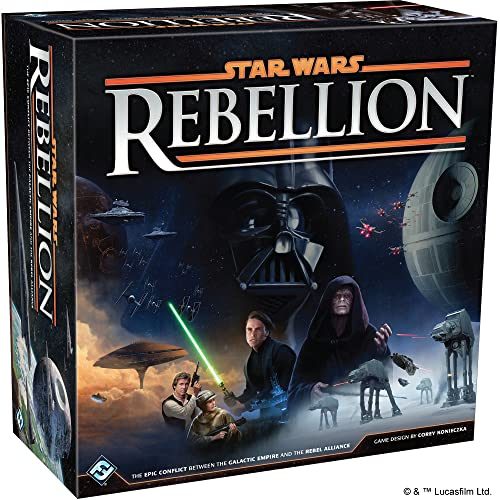
BGG 8.4. The Rebel Alliance hides its base somewhere in the galaxy while the Galactic Empire searches system by system with Star Destroyers and the Death Star. One player builds and conquers. The other runs covert missions and tries to survive long enough for the galaxy to rally. The asymmetry is tremendous.
Best for: Star Wars fans who want a 3-4 hour narrative-driven experience
Corey Konieczka designed Star Wars: Rebellion as a hidden-movement cat-and-mouse game wrapped in a galactic war. The Rebel player secretly places their base on one of 32 systems. The Empire player must find and destroy it before time runs out. Meanwhile, both sides send leaders (Luke, Vader, Leia, Palpatine, Han Solo, Boba Fett) on missions: sabotage, diplomacy, recruitment, and more. Leaders can also command fleets in combat, meaning you constantly face a tension between using a leader for a crucial mission or keeping them available to lead your forces.
The 150+ miniatures are the best in any non-miniatures wargame: detailed sculpts of Star Destroyers, X-Wings, AT-ATs, Mon Calamari cruisers, and the Death Star itself. Setup is involved (30+ minutes), and the first game will run 4+ hours as you learn the mission card system.
At 2 players, Rebellion is a top-tier experience. At 3-4 players (splitting control of each side), it is significantly weaker because shared decision-making dilutes the strategic tension. The Rise of the Empire expansion improves the combat system and adds cinematic mission cards. If you buy this and play it more than twice, that expansion is worth the additional investment. The price point is high at $80, and you are really buying a premium 2-player experience. If your primary gaming is with larger groups, Quartermaster General or Root will see more table time.
Best for Solo Play
Not everyone has a wargaming partner on call. These four games were designed with solo play in mind, either as the primary mode or as a well-developed alternative. If your shelves are full of great games that never hit the table because you cannot coordinate schedules, this section is for you.
19. Nemo's War 2nd Edition
~$55 on Amazon
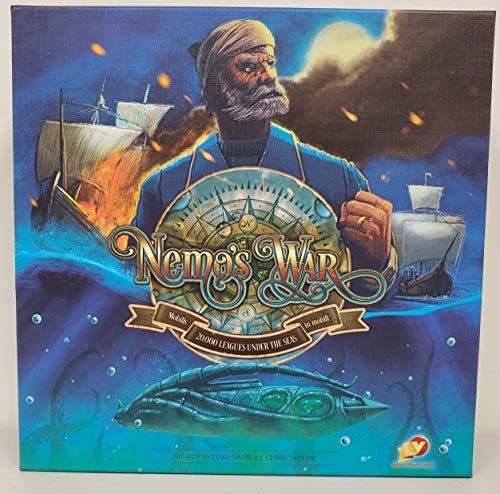
You are Captain Nemo commanding the Nautilus. Four different motivations (War, Explore, Anti-Imperialism, Science) give you four different scoring criteria and play styles in the same game. BGG 8.0 across 9,000+ ratings, designed as a solo experience from the ground up.
Best for: Solo gamers who want a narrative experience with high replayability
Chris Taylor adapted Jules Verne's Twenty Thousand Leagues Under the Sea into a solo board game where you navigate the Nautilus across the world's oceans, managing crew morale, hull integrity, and Nemo's growing notoriety. Ships appear on the map each turn, and you must decide whether to engage, evade, or explore. Combat uses dice modified by upgrades you have installed on the Nautilus, but every engagement risks crew casualties and hull damage.
The four motivation cards fundamentally change how you play. A "War" motivation scores points for sinking warships. "Explore" rewards discovering ocean wonders. "Science" values treasure collection. "Anti-Imperialism" focuses on liberating oppressed peoples. Same game, four different optimal strategies. This alone creates more solo replayability than most games offer.
Setup time is moderate (15-20 minutes), and the game's arc has a natural climax as Nemo's notoriety rises and more powerful ships pursue the Nautilus. The main criticism is the dice dependency in combat. A string of bad rolls can doom a campaign regardless of your strategic choices, which feels unfair in a solo game where you cannot blame your opponent. Some players house-rule re-rolls or modify the combat odds. Despite that, Nemo's War is widely considered one of the best solo board games in any genre.
20. Castle Itter
~$30 on Amazon
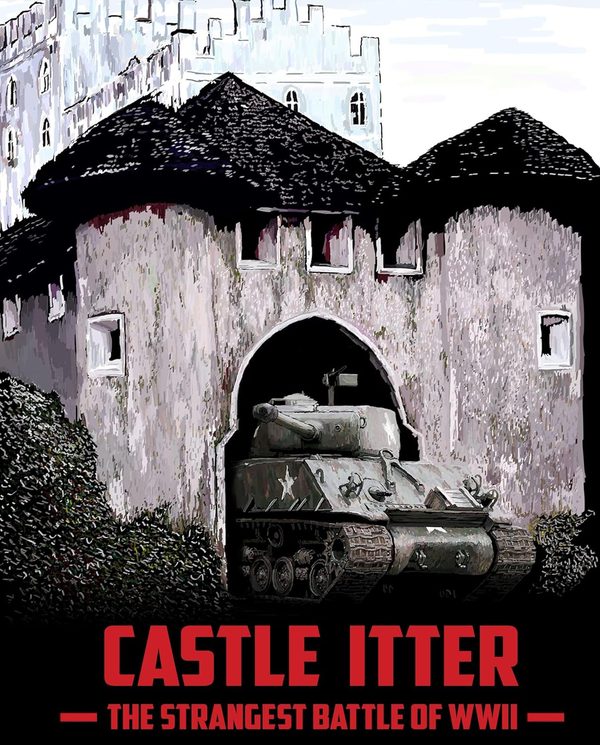
A 20-minute solo game about the real Battle of Castle Itter, where American soldiers, French prisoners, Austrian resistance fighters, and a Wehrmacht defector defended a castle against an SS assault in the final days of WW2. One of history's strangest battles, and a surprisingly tight solo design.
Best for: Solo gamers who want a quick, historically fascinating tactical puzzle
David Thompson designed Castle Itter around one of the most unlikely battles of WW2. On May 5, 1945, a mixed force of American soldiers from the 12th Armored Division, French political prisoners (including former prime ministers), Austrian resistance fighters, and Wehrmacht Major Josef Gangl defended Castle Itter in the Austrian Alps against an SS battalion. It is a real historical event that reads like fiction.
The game plays on a small map of the castle and its approaches. SS units advance from the forest, and you assign your defending characters (each with unique abilities) to positions around the castle walls. Each turn involves drawing cards that activate SS forces and create random events, then choosing how to deploy your defenders. The game captures the desperation of the situation: too many approaches to cover, not enough defenders, and ammunition running low.
Replayability is limited by the small decision space. After 8-10 plays, you will have seen every card combination and developed reliable strategies. At $30, that works out to about $3 per play, which is reasonable. The compact size and 20-minute play time make it ideal for a solo gaming session when you have a short window. Pair it with a longer game like Nemo's War for variety in your solo collection.
21. Labyrinth: The War on Terror
~$55 on Amazon
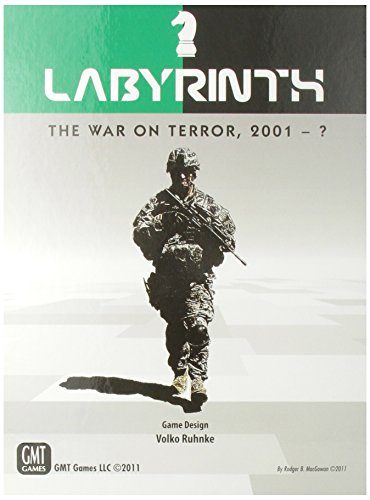
Volko Ruhnke's card-driven simulation of the post-9/11 era, with one of the best solo AI systems (called "bot") in board gaming. Playing as the US, you manage military operations, regime change, diplomatic efforts, and counter-terrorism against an AI-controlled jihadist opponent. BGG 7.6.
Best for: Modern conflict enthusiasts, solo gamers who want a challenging AI opponent
Volko Ruhnke (who later designed the acclaimed COIN series) built Labyrinth as an asymmetric 2-player game that also functions as a solo experience. The bot system for the jihadist side uses a flowchart decision tree that produces surprisingly intelligent and unpredictable play. The AI prioritizes targets based on opportunity, recruits in ungoverned regions, and attempts to shift countries toward Islamic rule through both violence and political influence.
As the US player, you have overwhelming military power but limited political capital. Deploying troops to regime-change a country is easy. Stabilizing it afterward is the hard part, and overextension leads to diminishing support at home. The game captures the strategic dilemma of the War on Terror with uncomfortable accuracy: every intervention has second-order effects, and "winning" requires a nuanced definition.
The subject matter is sensitive and recent. Some players find the clinical gamification of real ongoing conflicts uncomfortable, which is a legitimate concern worth considering before purchasing. The rules are moderately complex, and the solo bot flowchart requires careful attention to execute correctly. Misreading a single branch can throw off the entire AI decision chain. Keep the bot reference card handy and double-check the logic on each AI turn until the process becomes second nature. The game has strong replayability thanks to the card deck and the bot's variable behavior.
22. Dune: Imperium (Solo Mode)
~$50 on Amazon
Already featured as #12 on this list, Dune: Imperium includes a well-designed solo mode against two AI opponents (one "House Hagal" and one automated rival). If you already own it for multiplayer, the solo mode gives you a way to practice strategy or play when your group is unavailable.
Best for: Existing Dune: Imperium owners, solo gamers who also play multiplayer
Unlike games designed solo-first (like Nemo's War), Dune: Imperium's solo mode adapts the multiplayer experience for one player. The House Hagal AI uses a simple card-flip system to determine worker placement and combat commitment. A second automated rival adds the table tension that a single AI would lack. The result is a solo experience that captures about 80% of the multiplayer game's strategic depth.
The solo mode works because Dune: Imperium's core loop (place workers, build deck, fight conflicts) does not rely heavily on player interaction. The AI makes placement decisions that block you from key spots, commits troops to conflicts unpredictably, and accumulates points at a pace that keeps you under pressure. It is not as engaging as playing against two humans, but it is more than enough for a satisfying evening session.
The setup overhead is the main drawback for solo play. Shuffling multiple decks, setting up the board, managing two AI systems, and tracking everything alone takes longer than you might expect. Budget 15 minutes for setup and 10 for teardown on top of the 60-90 minute play time. If you want a dedicated solo experience without the setup burden, Nemo's War or Castle Itter are more streamlined. But if you want one game that serves both your group nights and your solo nights, Dune: Imperium pulls double duty effectively.
Complete Comparison Table
All 22 games at a glance. Sort by whatever matters most to you: price, player count, time commitment, or complexity.
| # | Game | Price | Players | Play Time | BGG | Weight | Era/Theme |
|---|---|---|---|---|---|---|---|
| 1 | Memoir '44 | ~$55 | 2 | 30-60 min | 7.56 | 2.0 | WW2 |
| 2 | Axis & Allies: 1941 | ~$32 | 2-5 | 2-3 hrs | 6.5 | 2.4 | WW2 |
| 3 | 1775: Rebellion | ~$45 | 2-4 | 60-90 min | 7.3 | 2.1 | American Revolution |
| 4 | Blitzkrieg! | ~$30 | 1-2 | 20 min | 7.3 | 1.7 | WW2 |
| 5 | Fort Sumter | ~$25 | 2 | 20-30 min | 7.1 | 1.8 | Civil War |
| 6 | Undaunted: Normandy | ~$35 | 2 | 45-60 min | 7.7 | 2.3 | WW2 |
| 7 | Twilight Struggle | ~$45 | 2 | 2-3 hrs | 8.33 | 3.6 | Cold War |
| 8 | Watergate | ~$30 | 2 | 30-60 min | 7.7 | 2.2 | Cold War / Political |
| 9 | Root | ~$55 | 2-4 | 60-90 min | 8.1 | 3.2 | Asymmetric Warfare |
| 10 | Axis & Allies: 1942 2E | ~$55 | 2-5 | 3-5 hrs | 7.1 | 3.1 | WW2 |
| 11 | Quartermaster General | ~$45 | 2-6 | 90 min | 7.4 | 2.5 | WW2 |
| 12 | Dune: Imperium | ~$50 | 1-4 | 60-120 min | 8.3 | 3.0 | Sci-Fi / Dune |
| 13 | War of the Ring 2E | ~$85 | 2-4 | 2-4 hrs | 8.5 | 4.1 | Fantasy / LotR |
| 14 | Paths of Glory | ~$60 | 2 | 4-8 hrs | 8.2 | 4.1 | WWI |
| 15 | Combat Commander: Europe | ~$70 | 2 | 2-4 hrs | 8.2 | 3.6 | WW2 |
| 16 | Sekigahara | ~$55 | 2 | 2-3 hrs | 8.0 | 3.5 | Feudal Japan |
| 17 | Conflict of Heroes | ~$60 | 1-4 | 1-3 hrs | 7.8 | 3.5 | WW2 Eastern Front |
| 18 | Star Wars: Rebellion | ~$80 | 2-4 | 3-4 hrs | 8.4 | 3.7 | Sci-Fi / Star Wars |
| 19 | Nemo's War 2E | ~$55 | 1-4 | 60-120 min | 8.0 | 3.3 | 19th Century Naval |
| 20 | Castle Itter | ~$30 | 1 | 15-25 min | 7.4 | 2.0 | WW2 |
| 21 | Labyrinth | ~$55 | 1-2 | 2-3 hrs | 7.6 | 3.5 | Modern / War on Terror |
| 22 | Dune: Imperium (Solo) | ~$50 | 1 | 60-90 min | 8.3 | 3.0 | Sci-Fi / Dune |
Frequently Asked Questions
What is the best military board game for beginners?
Memoir '44 is the safest recommendation. You can teach it in 10 minutes, finish a game in 45, and the WW2 theme is immediately engaging. If your group prefers something even lighter, Blitzkrieg! plays in 20 minutes with zero dice and zero luck. For a group of 3-4 who want an introduction to asymmetric warfare, 1775: Rebellion covers the American Revolution with faction-specific dice that are intuitive and fun.
What is the best 2-player wargame?
Twilight Struggle if you want the deepest experience with the most replay value. It is ranked #4 all-time on BoardGameGeek for a reason. If Twilight Struggle's 3-hour play time is too much, Watergate delivers similar card-driven tension in 45 minutes. For tactical WW2 combat, Undaunted: Normandy combines deck-building with miniatures movement in under an hour.
Are Axis & Allies games worth the time investment?
Yes, with the right expectations. Axis & Allies: 1941 at $32 is a manageable 2-3 hour commitment and teaches the core mechanics. The 1942 Second Edition is the sweet spot for most groups: 3-5 hours with enough strategic depth to reward repeated play. The Anniversary and Global 1940 editions push into 8-12 hour territory, which requires a dedicated group. Start with 1941 or 1942 and move up only if your group wants more.
What is the difference between a board game and a wargame?
All wargames are board games, but not all board games are wargames. The term "wargame" typically implies a focus on military conflict with some degree of historical simulation. Traditional wargames use hex maps, cardboard counters, and detailed combat resolution tables. Modern wargames have expanded to include card-driven games (Twilight Struggle), deck-builders (Undaunted), and miniatures games (Memoir '44). The line is blurry. Root is technically a wargame about woodland creatures. If it involves conflict and strategy, someone in the hobby has probably called it a wargame.
Can I play military board games solo?
Absolutely. Nemo's War 2nd Edition was designed solo-first and is one of the best solo board games in any genre. Castle Itter is a 20-minute solo game about a real WW2 battle. Labyrinth: The War on Terror has an excellent AI opponent for solo play. Dune: Imperium includes a solo mode that works surprisingly well. Many other wargames on this list can be played solo by controlling both sides, though purpose-built solo games are more satisfying.
What is the best military board game for families?
Memoir '44 works well with kids 8 and up. 1775: Rebellion supports 2-4 players and has educational value for American history. Axis & Allies: 1941 is the most accessible version of the franchise for family groups. Avoid anything rated above 3.0 on the BGG weight scale for mixed-age groups. The serious wargames section of this list will frustrate younger or casual players.
How long do wargames actually take?
It varies enormously. Blitzkrieg! takes 20 minutes. Castle Itter takes 15-25 minutes. Memoir '44 finishes in 30-60 minutes. Mid-weight games like Twilight Struggle run 2-3 hours. Serious wargames like Paths of Glory can take 4-8 hours. The comparison table above lists play times for all 22 games. As a rule of thumb, add 50% to the listed time for your first play of any game.
What if my gaming partner finds wargames intimidating?
Start with Memoir '44 or Blitzkrieg!, which have the shortest teach times on this list. Play the first game cooperatively, talking through your decisions out loud so your partner sees the logic. Do not start with Twilight Struggle or Paths of Glory. The biggest mistake veteran gamers make is jumping to their personal favorite instead of meeting their partner where they are. A reluctant player who enjoys Memoir '44 three times is far more likely to try Undaunted next month than one who suffered through a 4-hour game they did not understand.
Where can I buy out-of-print wargames?
eBay is the primary secondary market. BoardGameGeek's marketplace (GeekMarket) is another option with lower fees and a community that tends to grade condition honestly. Noble Knight Games specializes in out-of-print hobby games. For GMT Games titles specifically, their P500 preorder system periodically reprints popular games when enough orders accumulate. Check BGG's "Marketplace" tab on any game's page to see current listings and recent sale prices.
Community Resources
Once you find a game you love, these communities will help you find opponents, learn strategies, and discover what to play next:
- BoardGameGeek - The largest board game database and forum in the world. Every game on this list has a dedicated page with reviews, strategy guides, rules clarifications, and file downloads (reference cards, player aids, variant rules). Essential for research before buying.
- r/boardgames - 5+ million members discussing everything from gateway games to heavy euros. Good for general recommendations and "what should I buy" threads.
- r/wargames - Focused specifically on the wargaming hobby, from hex-and-counter classics to modern card-driven designs. Smaller and more specialized than r/boardgames.
- r/hexandcounter - Dedicated to traditional wargaming. If you graduate from this list into GMT Games, Compass Games, or Multi-Man Publishing titles, this is your community.
Final Thoughts
The best military board game is the one that actually gets played. A $25 copy of Fort Sumter that hits the table every week will deliver more enjoyment than an $85 War of the Ring that collects dust because you cannot find a 4-hour window. Match the game to your situation: your available time, your partner's experience level, and your tolerance for rules complexity.
Three picks if you need to decide right now: Memoir '44 for gateway play, Twilight Struggle for the best 2-player experience in board gaming, and Nemo's War if you primarily play solo. All three are in print, reasonably priced, and have thousands of positive reviews backing them up.
For more gift ideas for the military enthusiasts in your life, check out our Father's Day gifts for military enthusiasts guide and our best WW2 model kits roundup. And if these board games spark an interest in World War II history, we have over 100 articles covering every theater and major campaign.