Skip to content
April 27:The Sinking of the SS Sultana161yr ago

The F-22 vs F-35: Why the Air Force Needs Both and Can't Afford Either

Ryan Caldwell · · 12 min read
Save
Share:
F-22 Raptor and F-35 Lightning II flying in formation over Florida's Emerald Coast
Ryan Caldwell
Ryan Caldwell

Defense Analysis Editor

Ryan Caldwell writes about military decision-making, failed programs, and the tradeoffs behind major defense choices. His work is focused on understanding why systems succeed or fail beyond headlines, promises, and initial expectations.

The United States Air Force has a math problem it cannot solve. Service leadership has repeatedly stated the need for roughly 2,000 tactical fighter aircraft to meet global obligations. The current inventory sits around 1,970, but a significant portion of those airframes are aging F-15C/Ds and F-16C/Ds approaching or exceeding their structural lifespans. The money available to replace them buys roughly 1,200 new jets. That gap is not closing.

At the center of this shortfall sit two aircraft that were supposed to form a complementary high-low pair: the F-22 Raptor for air superiority and the F-35 Lightning II for multirole strike. Each was designed to do something the other could not. Together, they represent the most capable fighter combination any air force has ever fielded. The problem is that one barely exists in useful numbers, and the other keeps getting more expensive and further behind schedule.

The Quarterback and the Wide Receiver

The easiest way to understand why the Air Force needs both the F-22 and F-35 is to think of them as filling two fundamentally different roles in the same offensive play. The F-22 is the quarterback, it controls the engagement, sweeps enemy fighters from the sky, and creates the permissive environment in which everything else operates. The F-35 is the wide receiver, it penetrates contested airspace, finds targets, drops precision weapons, and feeds intelligence back to the network.

The F-22 Raptor was purpose-built for air dominance. Its combination of supercruise (sustained supersonic flight without afterburner), thrust-vectoring agility, and all-aspect stealth was designed for one mission: killing other fighters. Lockheed Martin delivered 187 production aircraft before Congress shut the line in 2011. At roughly $150 million per copy in today's dollars, the Raptor was the most expensive fighter the Air Force had ever purchased. But for the mission of sweeping enemy air defenses, nothing else comes close.

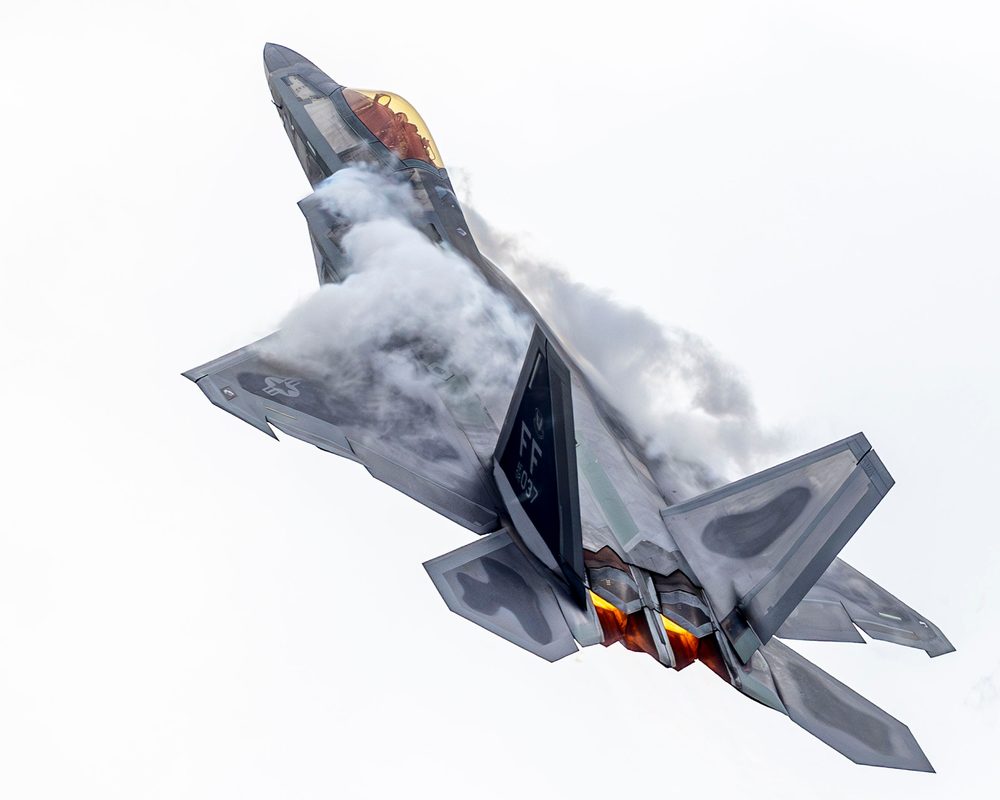
F-22 Raptor performing a high-angle-of-attack maneuver at a New York air show, demonstrating thrust-vectoring agility
An F-22 Raptor demonstrates the thrust-vectoring agility that makes it the world's most capable air superiority fighter. The aircraft's ability to sustain maneuvers at extreme angles of attack gives it a decisive edge in close-in engagements (U.S. Air Force photo).

The F-35 Lightning II was designed for a different war. Where the Raptor dominates the air-to-air fight, the F-35 was built to penetrate sophisticated integrated air defense systems, find and destroy targets on the ground, and share everything it sees with every friendly platform in the battlespace. Its sensor fusion, the ability to combine data from radar, electronic warfare systems, infrared sensors, and datalinks into a single coherent picture, is arguably more revolutionary than its stealth. The F-35 doesn't just drop bombs. It makes every other aircraft, ship, and ground unit around it more effective.

In a major conflict against a peer adversary like China or Russia, the operational concept calls for F-22s to sweep ahead of a strike package, engaging enemy fighters and suppressing air defenses at long range. Once the F-22s have established air superiority, even temporarily, F-35s push through the now-degraded defenses to strike targets deep in enemy territory. Neither aircraft can do the other's job efficiently. An F-35 in a pure air-to-air engagement against a high-end threat lacks the Raptor's speed, altitude, and kinematic advantages. An F-22 trying to conduct precision ground strikes wastes its air superiority capabilities and lacks the F-35's advanced targeting and sensor fusion for that mission.

The F-22's Disappearing Fleet

Of the 187 production F-22s delivered, only about 123 are considered combat-coded, assigned to operational squadrons and available for wartime tasking. The rest serve in training, testing, and backup inventory roles. Several airframes have been lost to accidents, and the fleet's average age is now approaching 20 years. For an aircraft that was supposed to anchor American air superiority for decades, 123 combat-ready jets is a dangerously thin margin.

The original requirement was for 750 F-22s. The Air Force later reduced that to 381, arguing that 381 Raptors could meet the most stressing wartime scenarios. Then budget pressures, the ongoing wars in Iraq and Afghanistan, and the assumption that the F-35 could handle some air superiority tasks pushed the final buy down to 187. Former Defense Secretary Robert Gates made the call in 2009, reasoning that the United States was unlikely to face a peer air threat in the near term.

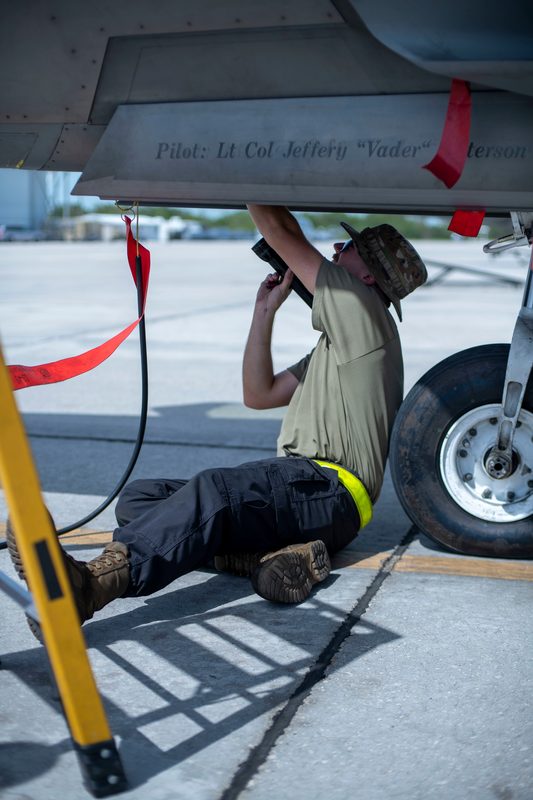
Air Force crew chief inspecting the underside of an F-22 Raptor during maintenance at Naval Air Station Key West
An F-22 crew chief inspects a Raptor's underside at NAS Key West. With only 187 airframes ever built, maintaining each one is critical, and the fleet is aging faster than any replacement can arrive (U.S. Air Force photo).

That assumption aged poorly. China's J-20 stealth fighter entered service around 2017, and production numbers now likely exceed 200 aircraft. Russia's Su-57, while produced in far smaller numbers, represents another fifth-generation threat. The 123 combat-coded F-22s cannot be everywhere at once, and the Air Force's war plans for the Pacific alone demand more Raptors than the entire fleet can provide while maintaining a reserve for other theaters.

Making matters worse, there is no direct replacement available until Boeing's F-47, selected under the Next Generation Air Dominance (NGAD) program, enters service, which is not expected until the mid-2030s at the earliest. That leaves a gap of roughly a decade during which the F-22 fleet will continue to shrink through attrition, structural fatigue, and maintenance limitations while no new air superiority platform arrives to replace it.

The F-35's Cost Spiral

The F-35 was supposed to be the affordable half of the equation. At a planned unit cost of around $50-60 million, the Air Force intended to buy 1,763 F-35As to replace aging F-16s, A-10s, and eventually some F-15E Strike Eagles. The total Department of Defense buy across all three variants (A, B, and C) was set at 2,456 aircraft, with an additional 1,100+ for international partners.

The program has delivered on many of its performance promises. The F-35 is genuinely stealthy, its sensor fusion works as advertised, and international demand remains strong, 17 countries have ordered or are evaluating the aircraft. But cost and schedule overruns have been relentless. The unit price has stabilized at roughly $80 million for the F-35A (the Air Force variant), which is better than early production lots but still significantly above the original target. Over the aircraft's expected 66-year production and sustainment life, total program costs are estimated to exceed $1.7 trillion.

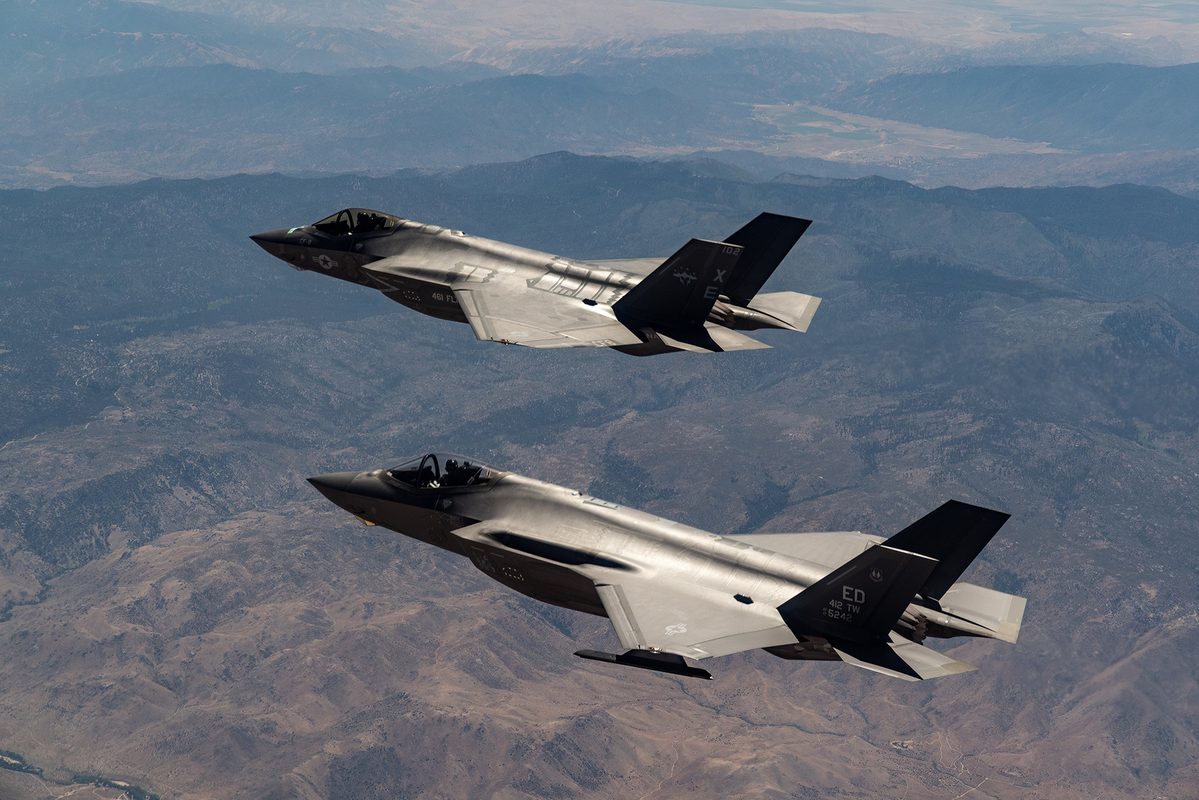
An F-35A and F-35C returning from a TR-3 flight test mission over Edwards Air Force Base, California
An F-35A and F-35C return from a Technology Refresh 3 test mission at Edwards Air Force Base. The TR-3 upgrade has experienced years of delays and billions in cost overruns, slowing deliveries across the entire program (Lockheed Martin photo).

The more immediate problem is the Technology Refresh 3 (TR-3) upgrade. TR-3 is a major hardware and software overhaul that replaces the aircraft's core processor, memory, and cockpit display with modern components. It's a prerequisite for the Block 4 capability package, which adds new weapons, improved electronic warfare capabilities, and enhanced sensor performance. Without TR-3, new F-35s cannot be delivered in their final combat configuration.

TR-3 was originally supposed to be ready by 2023. As of early 2026, the program is approximately three years behind schedule and more than $6 billion over budget. During the delay, Lockheed Martin continued building F-35 airframes on the production line, but could not deliver them to the military in a complete configuration. At one point, over 100 partially finished jets sat in storage awaiting TR-3 software and hardware. This "aircraft on the shelf" problem tied up billions in taxpayer investment while delivering zero additional combat capability.

The Fighter Gap Nobody Wants to Talk About

The Air Force's fighter inventory has been shrinking steadily since the end of the Cold War. In 1991, the service operated over 4,000 tactical fighters. By 2010, that number had dropped below 2,000. Today, the total sits around 1,970, and a significant portion of those are F-16C/Ds and F-15C/Ds that are approaching or past their planned service lives.

The Air Force's own analysis calls for approximately 2,000 fighters to execute the National Defense Strategy, with the ability to surge additional capacity in a major conflict. That number accounts for two near-simultaneous contingencies, the planning standard that has guided American force structure since the Cold War.

Here's where the math breaks down. Even if every planned F-35A is delivered (1,763 aircraft), they don't arrive fast enough to offset the retirement of legacy platforms. Lockheed Martin's current production rate is approximately 135-150 F-35s per year across all variants and all customers. The U.S. Air Force's share of that production typically runs around 48-60 jets per year. At that rate, reaching 1,763 aircraft will take decades, and every year, older F-16s and F-15s age out of the inventory faster than F-35s arrive.

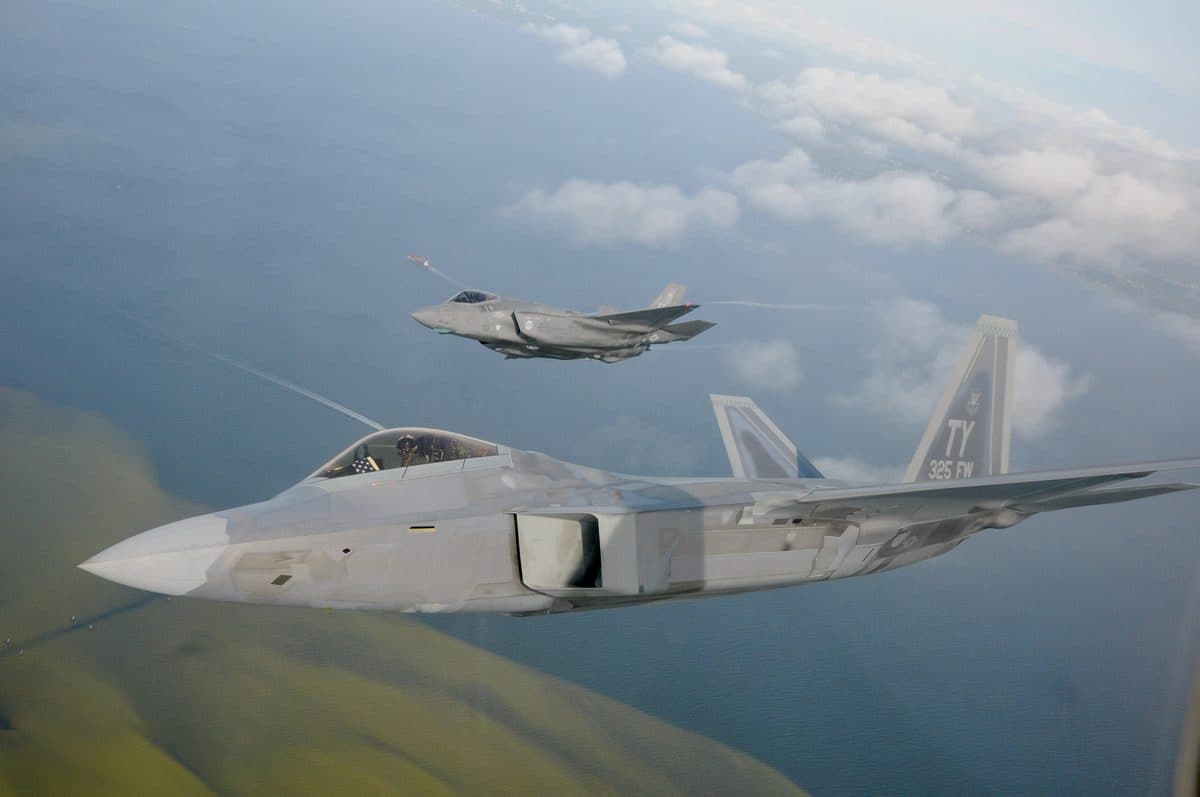
F-35 Lightning II and F-22 Raptor flying side by side over the flight line at Eglin Air Force Base, Florida
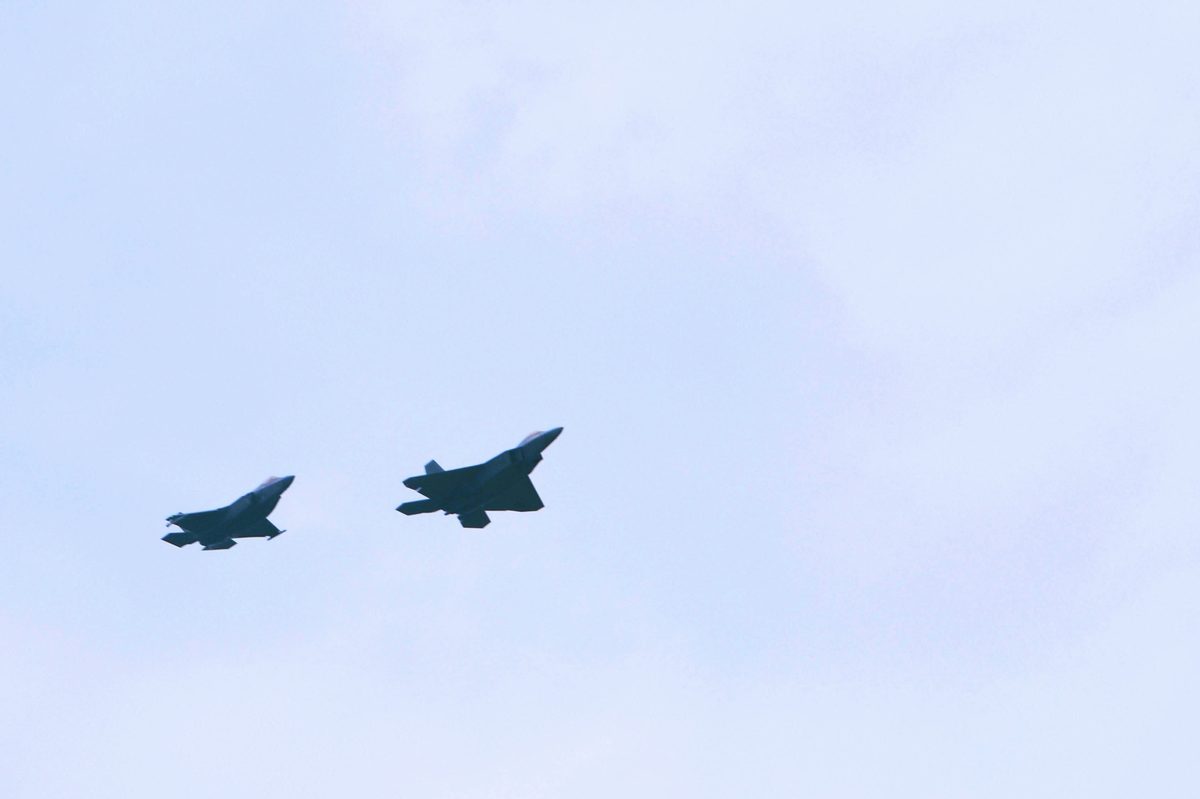
An F-35 Lightning II and F-22 Raptor fly side by side over Eglin Air Force Base. Together they form the most capable fighter combination in history, but the Air Force cannot buy enough of either to meet its commitments (U.S. Air Force photo).

The Congressional Budget Office and several independent defense analyses have estimated that the Air Force can realistically afford to field and sustain approximately 1,100-1,300 total fighters in the 2030s, given current budget trajectories. That's 700-900 aircraft short of the stated requirement.

Why Not Just Build More F-35s?

The intuitive solution, accelerate F-35 production and buy more to fill both the multirole and air superiority gaps, runs into fundamental design constraints. The F-35 was not designed for the air superiority mission. It carries fewer air-to-air missiles internally than the F-22 (four versus six in the standard stealth configuration), lacks supercruise, and has a lower top speed and service ceiling. In a contested air environment against peer-level fighters with advanced radar and long-range missiles, the F-35 must fight at a disadvantage in the kinematic domain.

That doesn't mean the F-35 can't win air-to-air engagements, its stealth, sensors, and situational awareness give it significant advantages, especially at beyond-visual range. But it means the F-35 fights air-to-air the hard way, relying on seeing first and shooting first rather than dominating the engagement envelope. Against a numerically superior adversary, which is the scenario the Pacific theater increasingly presents, seeing first only works if you have enough missiles in the air. Four AIM-120s per jet is half the loadout of an F-22.

There's also the sustainment cost problem. The F-35's cost per flight hour currently runs around $36,000 for the A model, compared to roughly $30,000 for the F-16 it replaces. Across a fleet of 1,763 aircraft, that premium adds up to billions in annual operating costs that squeeze the budget for procurement, training, and readiness. The Air Force is actively working to drive F-35 sustainment costs down, but progress has been slower than planned.

What Comes Next

The Air Force is pursuing several parallel strategies to address the fighter gap, none of which fully solves the problem. The F-47, formerly known as NGAD, is intended as the eventual F-22 replacement, a sixth-generation air superiority platform with advanced capabilities including potentially longer range, greater payload, and the ability to team with autonomous collaborative combat aircraft (CCAs). But the F-47 is still in early development, and the Pentagon's own budget projections don't show significant procurement dollars until the early 2030s.

The CCA program itself, which aims to field relatively inexpensive autonomous drones that fly alongside manned fighters as loyal wingmen, represents a potential force multiplier. If a single F-35 can control two or three CCAs, each carrying weapons and sensors, the effective combat power of the fleet expands without buying more manned fighters. But CCA technology is unproven in combat, and the Air Force is proceeding cautiously with an incremental development approach.

In the near term, the service is extending the life of F-15E Strike Eagles and buying new F-15EX Eagle IIs, a fourth-generation fighter that lacks stealth but carries an enormous weapons payload and is cheaper to operate than the F-35. The F-15EX buy of approximately 104 aircraft provides some near-term capacity but cannot operate in contested airspace the way the F-22 and F-35 can.

The uncomfortable truth is that no combination of current and planned programs fully fills the gap between what the Air Force says it needs and what it can afford. The F-22 fleet is too small and getting smaller. The F-35 program is too slow and too expensive. The F-47 is too far away. And the budget isn't growing fast enough to change the arithmetic. For the first time since the end of the Cold War, the United States Air Force is facing the prospect of being outnumbered in the air, not because it lacks the technology, but because it can't buy enough of its own best weapons.

Share this article

Share:

Recommended

Ace of The Skies: Can You Identify These Military Aircraft Throughout The Years?
Test Yourself

Ace of The Skies: Can You Identify These Military Aircraft Throughout The Years?

Can you identify these aircraft?

Take the Quiz

On This Day in Military History

April 7

Sinking of the Battleship Yamato (1945)

Aircraft from U.S. Task Force 58 sank the Japanese battleship Yamato, the largest and most heavily armed battleship ever built, during a desperate one-way suicide mission toward Okinawa. Hit by at least 10 torpedoes and 7 bombs, Yamato capsized and exploded, killing 2,498 of her 2,700 crew.

1862, Battle of Shiloh Concludes: Union Counterattack

2003, Second Thunder Run Seizes Central Baghdad

See all 11 events on April 7

Get Military News & History in Your Inbox

Join thousands of readers receiving our weekly digest of military technology, history, and analysis.

Test Your Knowledge