Skip to content
April 27:The Sinking of the SS Sultana161yr ago

Ford-Class vs Nimitz-Class: What $13 Billion Extra Buys You in a Supercarrier

Nathan Cole · · 11 min read
Save
Share:
USS Gerald R. Ford (CVN 78) underway in the Adriatic Sea with aircraft on the flight deck
Nathan Cole
Nathan Cole

Naval Warfare & Maritime Systems Analyst

Nathan Cole covers naval warfare, maritime strategy, and the ships and submarines that project power across the world's oceans. His work focuses on fleet architecture, carrier operations, and how navies adapt to threats from missiles, drones, and undersea warfare.

When the USS Gerald R. Ford (CVN 78) was commissioned in July 2017, it became the most expensive warship ever built. The lead ship's final price tag came in around $13.3 billion, roughly $4.5 billion more than the last Nimitz-class carrier, USS George H.W. Bush (CVN 77), which cost about $6.2 billion at completion in 2009 (approximately $8.5 billion in today's inflation-adjusted dollars). That kind of cost overrun would sink most defense programs. But the Ford-class was never meant to be a slightly improved Nimitz. It was meant to be a generational reset: the first clean-sheet carrier design in over 40 years.

The question that has followed the Ford-class since its keel was laid in 2009 is straightforward: what does the Navy actually get for that extra $4.5 billion? The answer involves fundamental changes to how aircraft are launched, recovered, armed, and maintained, changes that accumulate into a ship that can generate significantly more combat power with fewer sailors aboard. Whether that justifies the cost depends on how you measure the value of a warship that will serve for 50 years.

EMALS vs. Steam: A Different Way to Throw an Airplane

The most consequential change on the Ford-class is the Electromagnetic Aircraft Launch System (EMALS), which replaces the steam catapults that have launched carrier aircraft since the 1950s. A Nimitz-class carrier uses four C-13 Mod 2 steam catapults, each powered by high-pressure steam bled from the ship's nuclear reactors. Steam catapults work. They have launched millions of sorties. But they are mechanically complex, maintenance-intensive, and fundamentally limited by the physics of pressurized steam.
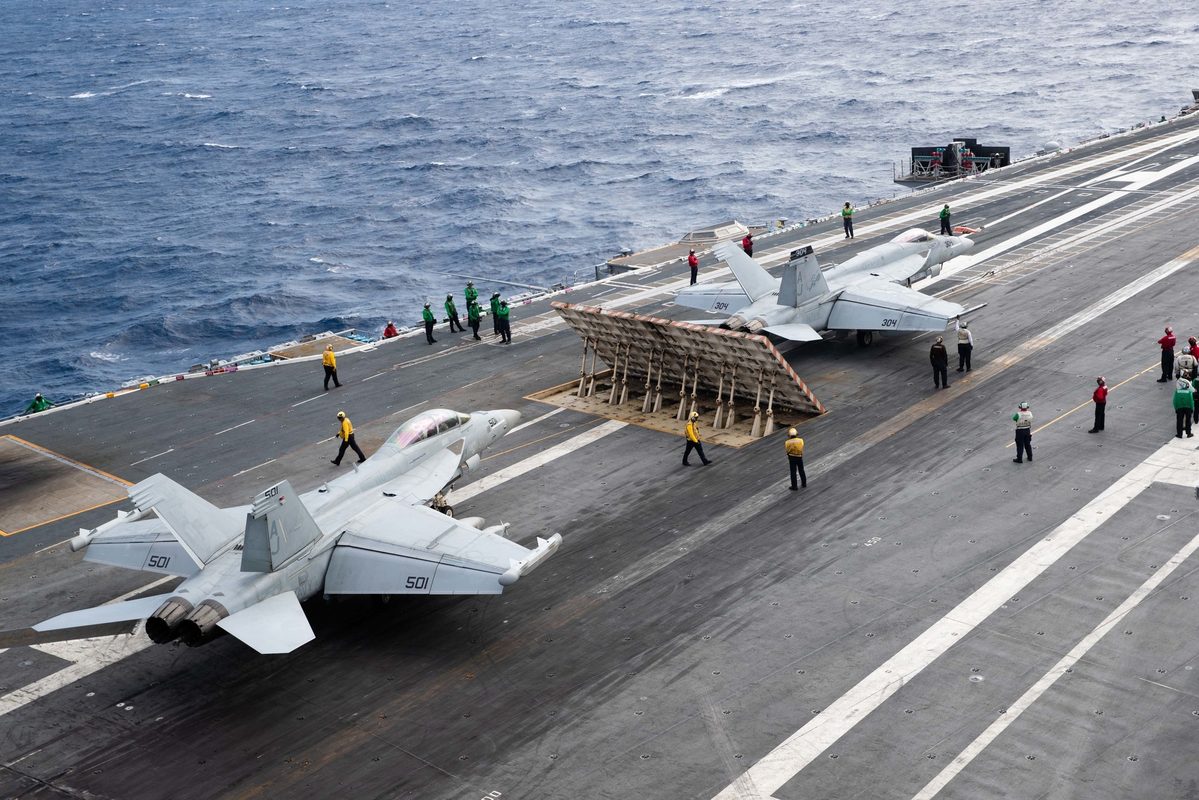
Fighter jets positioned on EMALS catapults on the flight deck of USS Gerald R. Ford, preparing for launch operations
Aircraft prepare for launch from the Electromagnetic Aircraft Launch System (EMALS) aboard USS Gerald R. Ford. EMALS uses electromagnetic energy instead of steam pressure, enabling smoother acceleration and precise control over launch energy (U.S. Navy photo).

A steam catapult accelerates an aircraft by releasing stored steam through a piston-and-cylinder arrangement. The energy transfer is inherently imprecise. The catapult delivers roughly the same force regardless of whether it's launching a 48,000-pound F/A-18E Super Hornet or a 60-pound target drone. The excess energy on lighter aircraft translates into structural stress. Over thousands of launches, that stress accumulates.

EMALS replaces the steam piston with a linear induction motor, essentially a linear electromagnetic rail that accelerates the shuttle smoothly and precisely along the catapult track. The critical advantage is energy control. EMALS can precisely calibrate the launch energy to match the weight and configuration of each aircraft, from a lightweight E-2D Hawkeye to a fully loaded F-35C. That precision reduces stress on airframes, extending their service lives and reducing maintenance requirements. It also means EMALS can launch future unmanned aircraft that might be too light or structurally fragile for a steam catapult's brute-force approach.

There's a practical benefit to removing steam catapults that goes beyond launch performance. A Nimitz-class carrier dedicates significant below-deck space and piping to the steam catapult system, including massive accumulators, valves, and the plumbing that routes reactor steam to the catapults. Removing all of that frees up volume and reduces the ship's maintenance burden. The Ford-class reclaims roughly 200,000 cubic feet of space that was previously consumed by the steam catapult infrastructure.

The Reactor Revolution: 250% More Power

Both the Nimitz and Ford classes are nuclear-powered, but their reactors represent different eras of naval nuclear engineering. The Nimitz class uses two Westinghouse A4W reactors, which generate approximately 190 megawatts of thermal energy total. The Ford class uses two Bechtel A1B reactors that produce roughly the same thermal output but generate approximately 250% more electrical power, roughly three times the electrical capacity of the Nimitz's turbine generators.

That electrical surplus matters because nearly every major system on the Ford class runs on electricity rather than steam or hydraulics. EMALS is electrically powered. The Advanced Arresting Gear (AAG), which replaces the Nimitz's hydraulic Mk 7 Mod 3 arresting gear, is electrically powered. The advanced weapons elevators use electromagnetic linear motors instead of the Nimitz's hydraulic and cable-driven systems. Even the ship's climate control, which on a Nimitz relies partly on steam, is increasingly electric on the Ford.

The real significance of the electrical surplus is future-proofing. The Navy's roadmap includes directed-energy weapons (laser systems), advanced radar suites with electronically scanned arrays that demand enormous power, and potentially electromagnetic railguns, all of which require vastly more electrical power than any steam-based system can provide. A Nimitz-class carrier is essentially maxed out electrically. The Ford class was designed with growth margin for systems that haven't been invented yet.

Sortie Generation: 33% More Strikes Per Day

The ultimate measure of an aircraft carrier's value is sortie generation rate: how many aircraft it can launch, recover, rearm, refuel, and launch again in a 24-hour period. This is the number that determines how much combat power a carrier brings to a fight. And this is where the Ford class makes its strongest case.

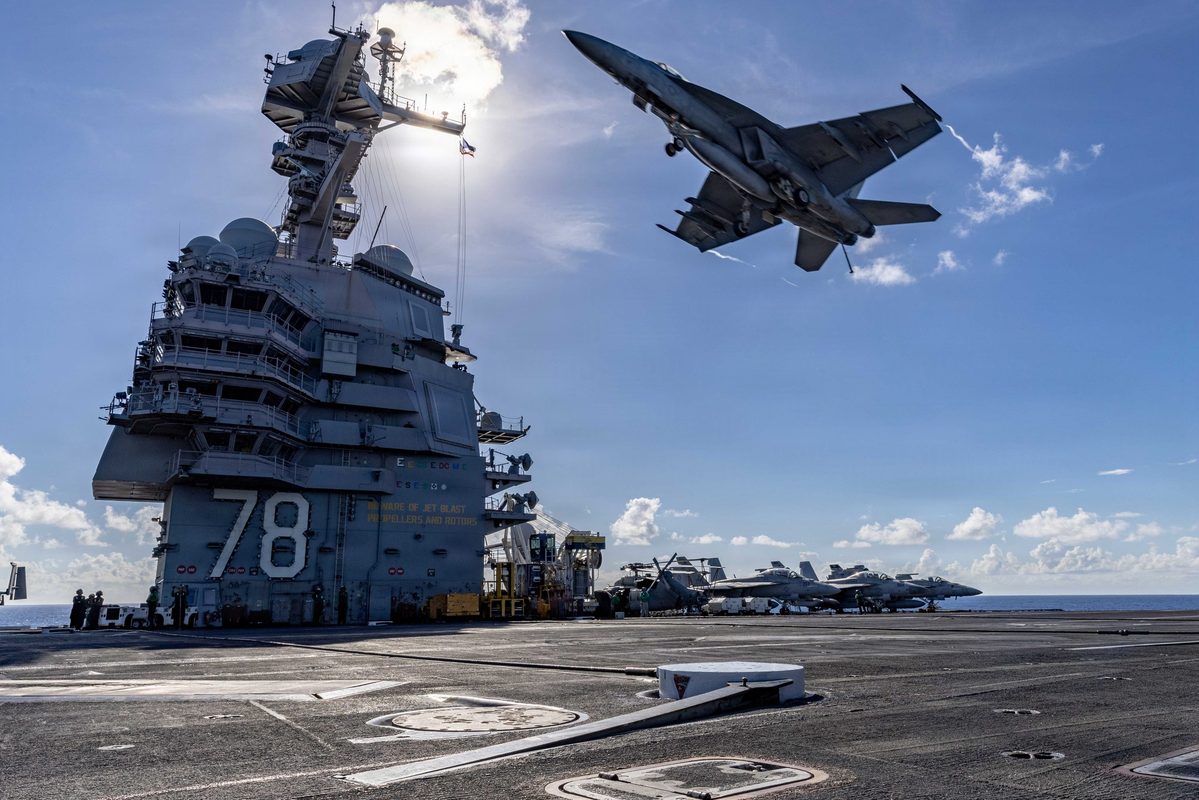
F/A-18E Super Hornet flying over the flight deck of USS Gerald R. Ford during flight operations in the Atlantic Ocean
An F/A-18E Super Hornet overflies the flight deck of USS Gerald R. Ford during flight operations. The Ford class is designed to generate 33% more sorties per day than the Nimitz class, a difference that translates directly into combat power (U.S. Navy photo).

A Nimitz-class carrier can sustain approximately 120 sorties per day in surge operations, with a maximum surge rate of about 180 sorties per day for short periods. The Ford class is designed to sustain 160 sorties per day, with a maximum surge rate of approximately 220-270 per day. That 33% improvement in sustained operations translates directly into more weapons on target, more intelligence collected, more enemy assets engaged per day.

The improvement comes from multiple sources working together. EMALS cycles faster than steam catapults and requires less time between launches. The redesigned flight deck layout optimizes aircraft movement, reducing the time between recoveries and the next launch cycle. The Advanced Weapons Elevators move ordnance from magazines to the flight deck significantly faster than the Nimitz's older systems, at least when they work, which has been a source of considerable frustration during the Ford's early service life.

The flight deck itself was redesigned with input from carrier aviators and flight deck crews. Small changes in the location of fueling stations, ordnance staging areas, and maintenance access points add up to meaningful reductions in aircraft turnaround time. The Ford's island (the superstructure rising above the flight deck) is smaller and positioned farther aft than on a Nimitz, which opens up additional deck space for aircraft operations.

Reduced Manning: 600 Fewer Sailors

A Nimitz-class carrier has a ship's company of approximately 3,200 sailors (plus roughly 2,500 in the embarked air wing, for a total crew of about 5,700). The Ford class was designed to operate with a ship's company of approximately 2,600, about 600 fewer sailors. Over the ship's 50-year service life, that reduction in crew translates into billions of dollars in personnel costs, training, and support.

The manning reduction is possible because the Ford's automated and electrical systems require fewer operators and maintainers than the Nimitz's steam and hydraulic systems. Automated damage control systems, consolidated watchstations, and reduced maintenance requirements all contribute to the lower crew count. The Navy estimates that the Ford's lower manning saves approximately $4 billion over the ship's operational life, which nearly offsets the ship's higher acquisition cost.

The Ford's Troubled Childhood

No discussion of the Ford class is honest without acknowledging its deeply troubled development and early operational history. The Navy made a deliberate and controversial decision to introduce multiple untested technologies simultaneously on a single ship. EMALS, AAG, the advanced weapons elevators, the dual-band radar suite, and the new reactor were all first-of-their-kind systems installed on the lead ship. In shipbuilding, this approach is called "concurrent development," and it has a long history of causing exactly the kind of cost overruns and delays that plagued CVN 78.

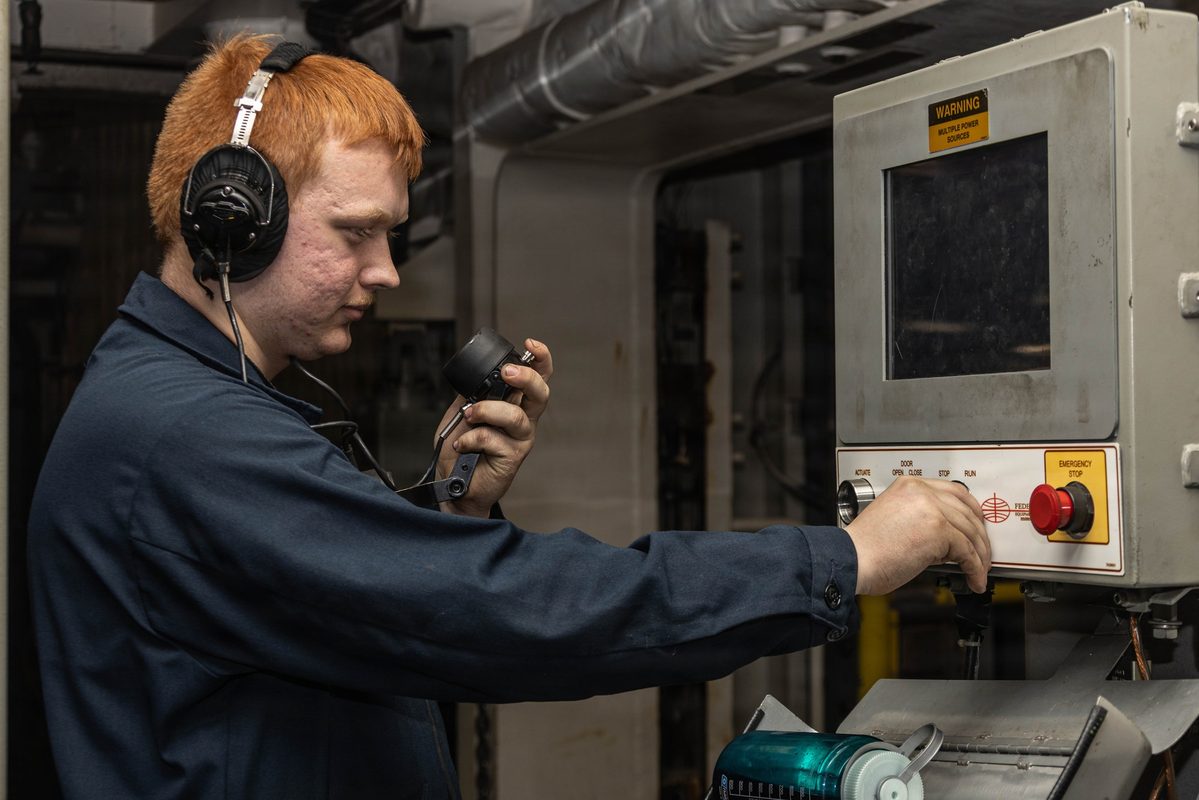
A sailor operating an advanced electromagnetic weapons elevator in the hangar bay of USS Gerald R. Ford
A sailor operates one of the Ford's 11 Advanced Weapons Elevators. The electromagnetic elevators replace the Nimitz's older hydraulic and cable-driven systems, but their development was plagued by years of delays (U.S. Navy photo).

The advanced weapons elevators became a symbol of the program's struggles. The Ford has 11 elevators designed to move ordnance between the ship's magazines and the flight deck. At the time of the ship's commissioning in 2017, none of the 11 elevators were operational. Former Secretary of the Navy Richard V. Spencer publicly promised to resign if all 11 weren't working by the end of 2019. He was asked to resign for other reasons before that deadline, and the elevators continued to be a problem into the early 2020s. As of 2025, all 11 are finally certified for operations.

EMALS reliability was another early concern. During initial testing, the system's mean cycles between operational mission failures (MCBOMF) fell significantly short of the Navy's requirements. The catapults worked, but they broke down far more frequently than the specification demanded. Sustained improvements in reliability have brought EMALS performance closer to requirements, and the system performed well during the Ford's 2023 combat deployment to the Eastern Mediterranean. But the system's early struggles gave critics ample ammunition to question the decision to abandon proven steam technology.

The Nimitz: Proven, Reliable, Running Out of Room

The Nimitz class has earned its reputation through four decades of continuous operations. The 10 ships of the class have collectively deployed to every major conflict since the 1980s, from the Gulf of Sidra to the Persian Gulf to the waters off Syria. The design is mature, well-understood, and beloved by the sailors who serve aboard these ships. Shipyards know how to maintain them. Crews know how to fight them. Supply chains know how to support them.

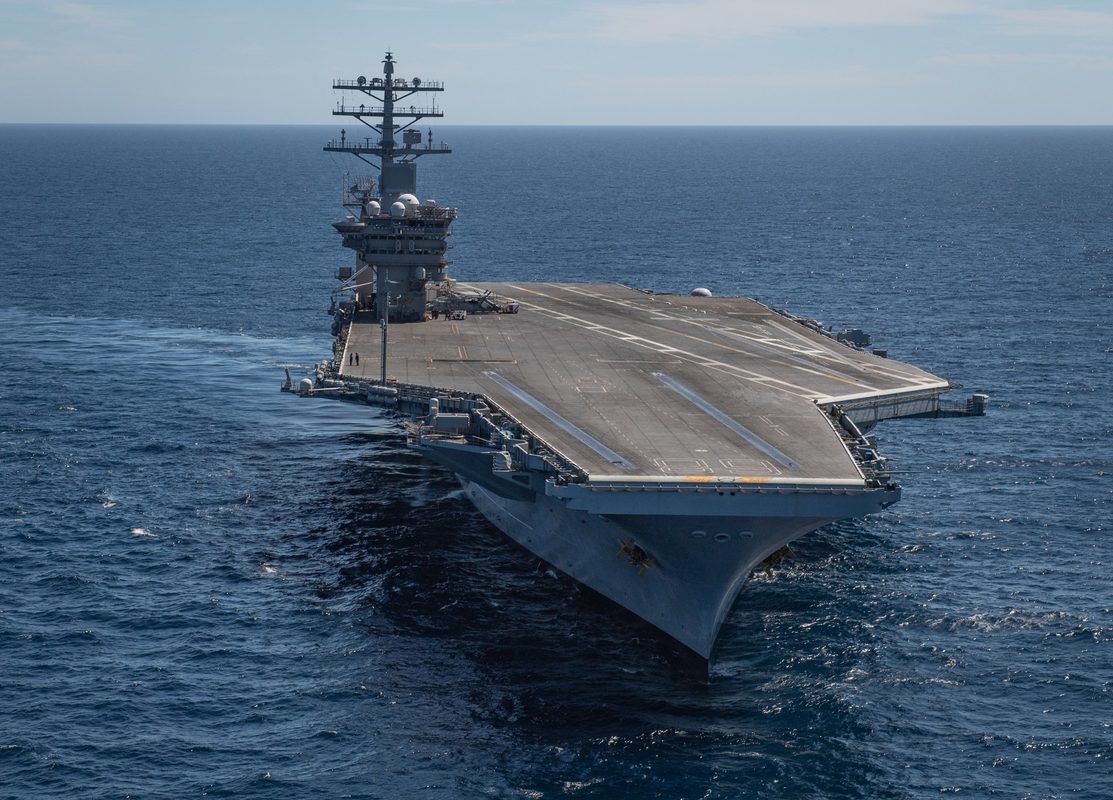
USS Nimitz (CVN 68) underway in the Pacific Ocean, aerial view showing the flight deck and island superstructure
The USS Nimitz (CVN 68), lead ship of her class, underway in the Pacific Ocean. Ten Nimitz-class carriers have served the Navy for over 40 years, providing the backbone of American power projection (U.S. Navy photo).

But the Nimitz class is approaching its limits. The electrical generation capacity cannot support the power-hungry sensors, weapons, and systems the Navy plans to deploy in the 2030s and beyond. The steam catapults cannot be easily adapted to launch lighter unmanned aircraft. The weapons handling systems cannot match the throughput the Navy needs for higher sortie rates. And the crew size demands manning levels the Navy increasingly struggles to fill in a competitive labor market.

The oldest Nimitz-class carriers are entering their refueling and complex overhauls (RCOHs), which take approximately four years and cost around $3-4 billion each. These overhauls are essential to keep the ships operating through their 50-year planned service lives, but they reduce the available carrier force during a period when the Navy is already struggling to meet combatant commander demands for carrier presence.

Is the Ford Worth $13 Billion?

The honest answer is that the lead ship probably wasn't worth $13 billion, because a significant portion of that cost was the price of developing entirely new technologies and absorbing the mistakes of concurrent development. The follow-on ships, USS John F. Kennedy (CVN 79), USS Enterprise (CVN 80), and USS Doris Miller (CVN 81), are expected to cost progressively less as the shipyard learns from the Ford's construction and the new technologies mature. Kennedy's cost is projected at around $11.4 billion, and the Navy awarded a two-ship contract for Enterprise and Doris Miller at a combined price intended to drive per-unit costs below $12 billion.

Over a 50-year service life, the Ford's advantages accumulate. The reduced crew saves $4 billion. The higher sortie rate means each Ford carrier provides roughly 33% more combat power than each Nimitz, or equivalently, the Navy gets the same combat power from fewer ships. The electrical growth margin means the Ford class can accept new weapons and sensors as they become available, while the Nimitz class cannot. And EMALS can launch the future unmanned aircraft that will increasingly comprise the carrier air wing.

The real question isn't whether the Ford is better than the Nimitz, because it clearly is on almost every metric that matters. The question is whether aircraft carriers themselves remain the right answer in an era of long-range anti-ship missiles, hypersonic weapons, and persistent satellite surveillance. The Ford class assumes that getting aircraft close enough to launch strikes will remain a viable strategy. If adversaries can reliably find and target a carrier at ranges beyond 1,000 miles, the $13 billion ship and its 75 aircraft become a $13 billion target. That debate is far from settled, and its resolution will determine whether the Ford class was a visionary investment or the most expensive monument to a fading era of naval warfare.

Share this article

Share:

Recommended

Ace of The Skies: Can You Identify These Military Aircraft Throughout The Years?
Test Yourself

Ace of The Skies: Can You Identify These Military Aircraft Throughout The Years?

Can you identify these aircraft?

Take the Quiz

On This Day in Military History

April 7

Sinking of the Battleship Yamato (1945)

Aircraft from U.S. Task Force 58 sank the Japanese battleship Yamato, the largest and most heavily armed battleship ever built, during a desperate one-way suicide mission toward Okinawa. Hit by at least 10 torpedoes and 7 bombs, Yamato capsized and exploded, killing 2,498 of her 2,700 crew.

1862, Battle of Shiloh Concludes: Union Counterattack

2003, Second Thunder Run Seizes Central Baghdad

See all 11 events on April 7

Get Military News & History in Your Inbox

Join thousands of readers receiving our weekly digest of military technology, history, and analysis.

Test Your Knowledge