

World World 2 Facts: Did You Know These 29 Interesting Details?
Calvin Graham Was Youngest Decorated US Soldier at 12 Pearl Harbor Visitors Bureau “Green Boys” was a term given to soldiers who…
daniel-mercer··27 min read

The United States Navy decisively defeated the Imperial Japanese Navy in a four-day battle near Midway Atoll, sinking four Japanese fleet carriers, Akagi, Kaga, Soryu, and Hiryu, while losing one American carrier, USS Yorktown. The victory permanently shifted the balance of naval power in the Pacific and ended Japan's offensive capability.
Related articleThe Byzantine Emperor Manuel II Palaiologos signed the Treaty of Selymbria with the Republic of Venice, formalizing trading and military assistance arrangements amid Ottoman pressure on Constantinople. The treaty bought the empire decades of additional life by securing Venetian naval support against Ottoman fleets.
Frederick the Great's Prussian army defeated a combined Austrian and Saxon force at Hohenfriedberg in Silesia, one of the decisive battles of the Second Silesian War. The Prussian victory secured Silesia for Prussia and established Frederick's reputation as the era's most innovative military commander.
Joseph-Michel and Jacques-Etienne Montgolfier publicly demonstrated their hot air balloon at Annonay, France, launching an unmanned balloon that flew over a mile. The demonstration, witnessed by officials of the Estates of Vivarais, initiated the age of aerial flight and laid the groundwork for military aerial observation that would first see use in the French Revolutionary Wars and transform warfare in the centuries to come.
The Pasha of Tripoli signed a peace treaty with the United States, ending the First Barbary War. The treaty secured the release of American prisoners and ended Tripoli's piracy against American merchant shipping, marking one of the first overseas military victories for the young United States Navy and Marine Corps.
A French army under Napoleon III defeated Austrian forces at the Battle of Magenta in Lombardy, opening the road to Milan and shifting the strategic balance of the Second Italian War of Independence. The battle's heavy casualties and chaotic fighting also influenced the founding of the International Red Cross.
The day after the catastrophic Union frontal assault at Cold Harbor, Virginia, both armies entrenched in positions they would hold for nine more days. Grant's assault on June 3 had cost approximately 7,000 Union casualties in less than an hour against Lee's fortified lines. The aftermath on June 4 saw neither side willing to request a truce to retrieve the wounded, many of whom died between the lines. Grant later wrote, "I have always regretted that the last assault at Cold Harbor was ever made."
Russian General Aleksei Brusilov launched what became the most successful Russian operation of the First World War, a wide-front offensive against Austro-Hungarian forces in Galicia. The Brusilov Offensive captured hundreds of thousands of prisoners and shattered the Austro-Hungarian army as a credible fighting force, but at staggering cost to Russia.
The first Pulitzer Prizes were awarded in New York, including a journalism prize that would later honor war correspondents whose reporting shaped American understanding of military conflicts from the world wars to Vietnam, Iraq, and Afghanistan. The prizes elevated the standing of war correspondence as a profession.
The U.S. Senate passed the Nineteenth Amendment granting women the right to vote, following the House passage on May 21. Women's contributions during World War I, serving as nurses, telephone operators, and in military auxiliary roles, had significantly strengthened the suffrage movement and helped overcome decades of legislative resistance.
Operation Dynamo, the evacuation of Allied forces from Dunkirk, France, concluded after nine days. A fleet of over 800 vessels, including Royal Navy destroyers, civilian fishing boats, and private yachts, rescued approximately 338,226 British, French, and Belgian troops from the beaches and harbor, saving the core of the British Army from annihilation.
Related articleBritish Prime Minister Winston Churchill delivered one of the most celebrated speeches of the Second World War to the House of Commons, vowing that Britain would fight on after Dunkirk regardless of the cost. The speech rallied British morale at the lowest point of the war and signaled to the United States that Britain would not seek a negotiated peace with Germany.
Japanese carrier aircraft from the light carriers Ryujo and Junyo bombed the U.S. naval base at Dutch Harbor in the Aleutian Islands. The attack was a diversionary operation intended to draw American attention away from Midway, but Nimitz, informed by codebreakers, refused to take the bait and kept his carriers focused on the main Japanese thrust.
Torpedo Squadron 8 (VT-8) from USS Hornet attacked the Japanese carrier fleet at Midway in obsolete TBD Devastator torpedo bombers without fighter escort. All fifteen aircraft were shot down, and of the thirty crew members, only Ensign George Gay survived, floating in the ocean and watching the battle unfold around him. Their sacrifice drew Japanese fighters down to sea level, leaving the carriers vulnerable to the dive bomber attack that followed.
Related articleDuring the climactic carrier engagement at Midway, dive bombers and torpedo bombers from the surviving Japanese carrier Hiryu struck USS Yorktown twice during the day, leaving the carrier dead in the water. Yorktown's damage control parties saved her temporarily, but a Japanese submarine torpedoed her on June 6 and she sank on June 7.
American troops of the Fifth Army under General Mark Clark entered Rome, making it the first Axis capital to fall to the Allies. The liberation came just two days before D-Day would redirect the world's attention to Normandy. Clark controversially diverted forces to capture Rome for its symbolic value rather than pursuing the retreating German Tenth Army, allowing it to escape and fight on for another year.
The U.S. Fifth Army entered the Italian capital, the first Axis capital to fall to the Allies, just two days before the Normandy landings would shift global attention to France. The capture validated the long, costly Italian campaign and freed Allied formations to pursue the German Tenth Army northward.
Late on June 4, 1967, the Israeli cabinet authorized Operation Focus, the preemptive air strike against Egyptian airfields that would open the Six-Day War the following morning. The decision committed Israel to a war on three fronts and shaped the strategic geometry of the Middle East for decades.
The Kingdom of Tonga gained full independence from British protection, ending more than seventy years as a protected state. The transition reshaped Western basing arrangements in the South Pacific and freed Tonga to participate in regional security agreements on its own behalf.
The Chinese People's Liberation Army violently suppressed pro-democracy protests in Beijing's Tiananmen Square, killing hundreds, possibly thousands, of civilians. The military crackdown involved tanks and infantry clearing the square and surrounding streets, and it fundamentally reshaped U.S.-China military relations and global perceptions of the Chinese government.
Poland held its first partially free postwar election on June 4, 1989, the same day Chinese troops were clearing Tiananmen Square. The Solidarity opposition won every contested seat and 99 of 100 in the new Senate, beginning the chain of political collapses that ended communist rule across Eastern Europe within months.
Air France Flight 447, an Airbus A330 flying from Rio de Janeiro to Paris, was lost over the Atlantic with all 228 aboard. The crash, traced to ice crystals fouling pitot tubes and a subsequent stall in turbulence, drove sweeping changes in commercial and military aviation training, sensor design, and crew resource management.
SpaceX successfully launched its Falcon 9 rocket on its maiden flight from Cape Canaveral, demonstrating an alternative to legacy launch vehicles for both commercial and national security payloads. The success opened the path to reusable boosters and reshaped Pentagon thinking about space access and resilience.

Sovereign and Commander-in-Chief
King of Great Britain and Ireland, born June 4, 1738, during whose reign the American colonies declared independence and fought the Revolutionary War. George III's stubborn insistence on subjugating the colonies prolonged the war and shaped British military policy, while his later reign saw Britain's triumph over Napoleon. His birthday was celebrated as a military holiday throughout the British Empire.

Field Marshal
Finnish military leader and statesman, born June 4, 1867, who commanded Finland's defense against the Soviet Union in the Winter War of 1939-40 and the Continuation War of 1941-44. Mannerheim's leadership during the Winter War, in which outnumbered Finnish forces inflicted staggering casualties on the Red Army, became one of the most celebrated defensive campaigns of the 20th century. He served as President of Finland from 1944 to 1946.

Supreme Commander
The last German Emperor and King of Prussia, whose militaristic foreign policy and naval arms race with Britain helped set the conditions for World War I. His decision to support Austria-Hungary's ultimatum to Serbia in 1914 triggered the alliance system that plunged Europe into war. He abdicated in November 1918 and died in exile in the Netherlands on June 4, 1941.
Wear the Timeline
24 military events occurred on June 4, spanning multiple centuries. Key events include: First Barbary War: Treaty of Tripoli Signed (1805), U.S. Senate Passes the 19th Amendment (1919), Dunkirk Evacuation Concludes: 338,000 Allied Troops Rescued (1940), U.S. Navy Captures U-505 off West Africa (1944), Allies Enter Rome: First Axis Capital Liberated (1944).
The most significant military event on June 4 is Battle of Midway: The Turning Point in the Pacific (1942). The United States Navy decisively defeated the Imperial Japanese Navy in a four-day battle near Midway Atoll, sinking four Japanese fleet carriers, Akagi, Kaga, Soryu, and Hiryu, while losing one American carrier, USS Yorktown. The victory permanently shifted the balance of naval power in the Pacific and ended Japan's offensive capability.
Notable military figures born on June 4 include King George III (1738–1820), Carl Gustaf Emil Mannerheim (1867–1951).
Events on June 4 span the Colonial & Revolutionary era, the Civil War, World War I, World War II, the Cold War, the Modern Era, covering 24 events across 5 centuries of military history.
Events on June 4 involve 4 branches of the U.S. and allied armed forces, reflecting the global scope of military operations throughout history.
Explore military history from the day you were born.
June 6
The Allied invasion of Normandy, the largest amphibious assault in history.
December 7
Japan attacks the U.S. Pacific Fleet, bringing America into World War II.
September 11
The deadliest terrorist attack in history transforms U.S. national security.
August 6
The first atomic bomb is dropped on a city, ushering in the nuclear age.
May 8
Nazi Germany surrenders unconditionally, ending World War II in Europe.
November 11
Armistice Day marks the end of World War I and honors all who served.
July 4
The Declaration of Independence is adopted, sparking the American Revolution.
Calvin Graham Was Youngest Decorated US Soldier at 12 Pearl Harbor Visitors Bureau “Green Boys” was a term given to soldiers who…
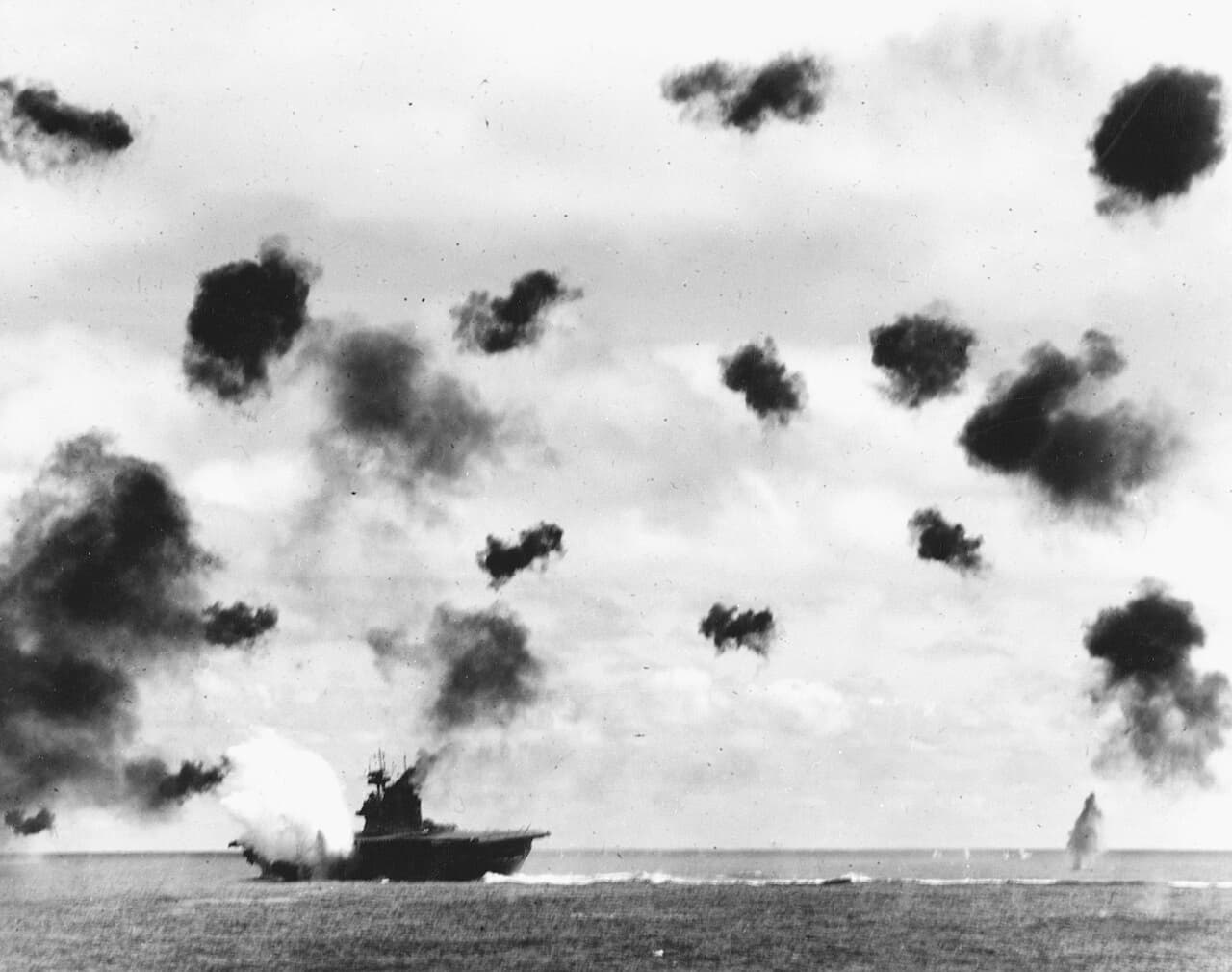
In June 1942, six months after Pearl Harbor, a handful of American dive bombers caught four Japanese carriers with their flight decks full of armed planes. In roughly five minutes, three of those carriers were fatally hit, and Japan's dominance in the Pacific was broken forever.

The Virginia Block V just completed its pressure hull. Australia committed billions to AUKUS submarines. Japan's Taigei-class introduced lithium-ion batteries. And South Korea built a diesel sub with cruise missile VLS tubes. The attack submarine rankings needed rewriting.
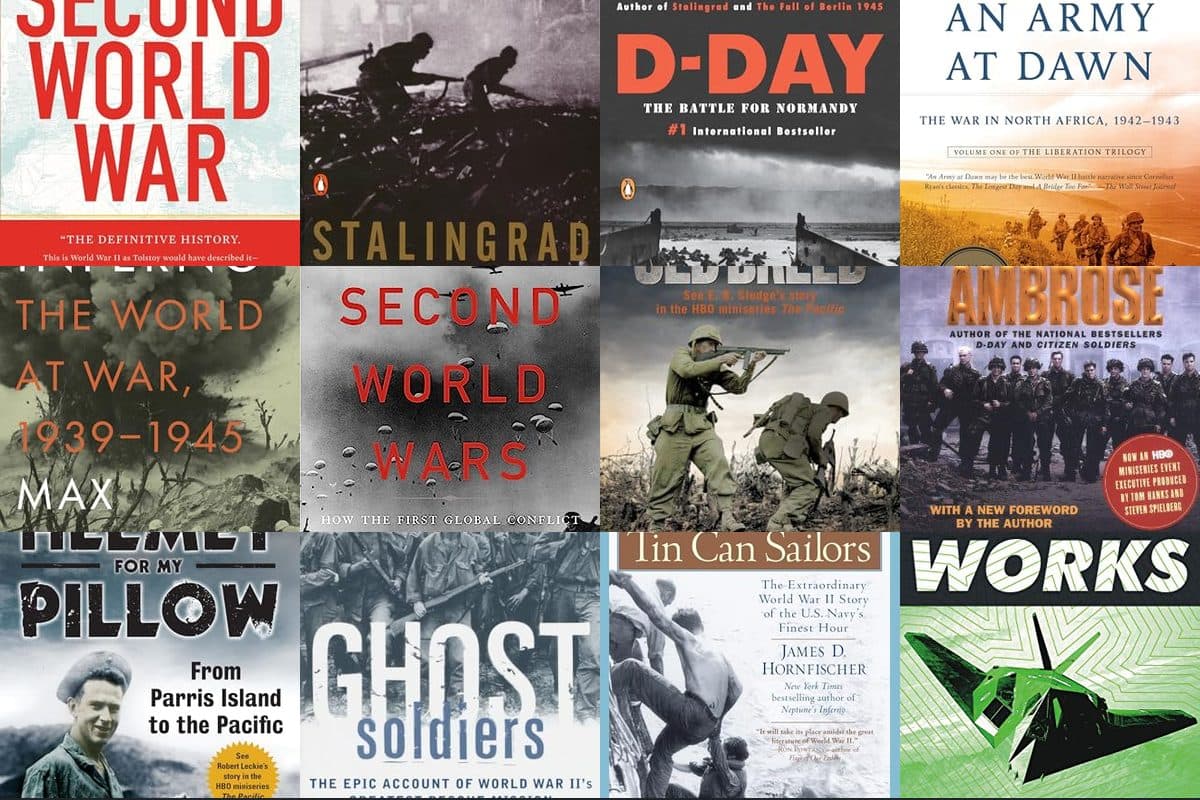
15 essential WW2 books covering every theater. Narrative histories, memoirs, and visual references ranked.