

15 Best World War II Books for History Enthusiasts (2026)
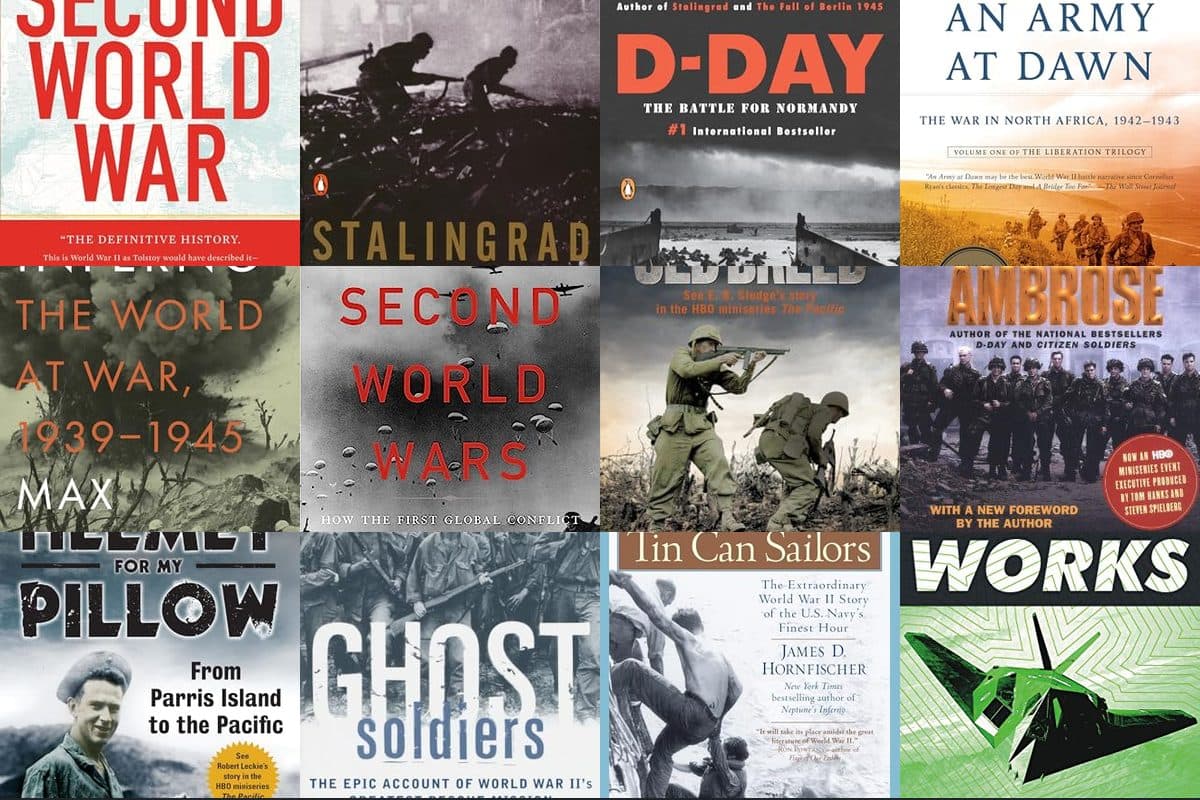
15 essential WW2 books covering every theater. Narrative histories, memoirs, and visual references ranked.
daniel-mercer··21 min read
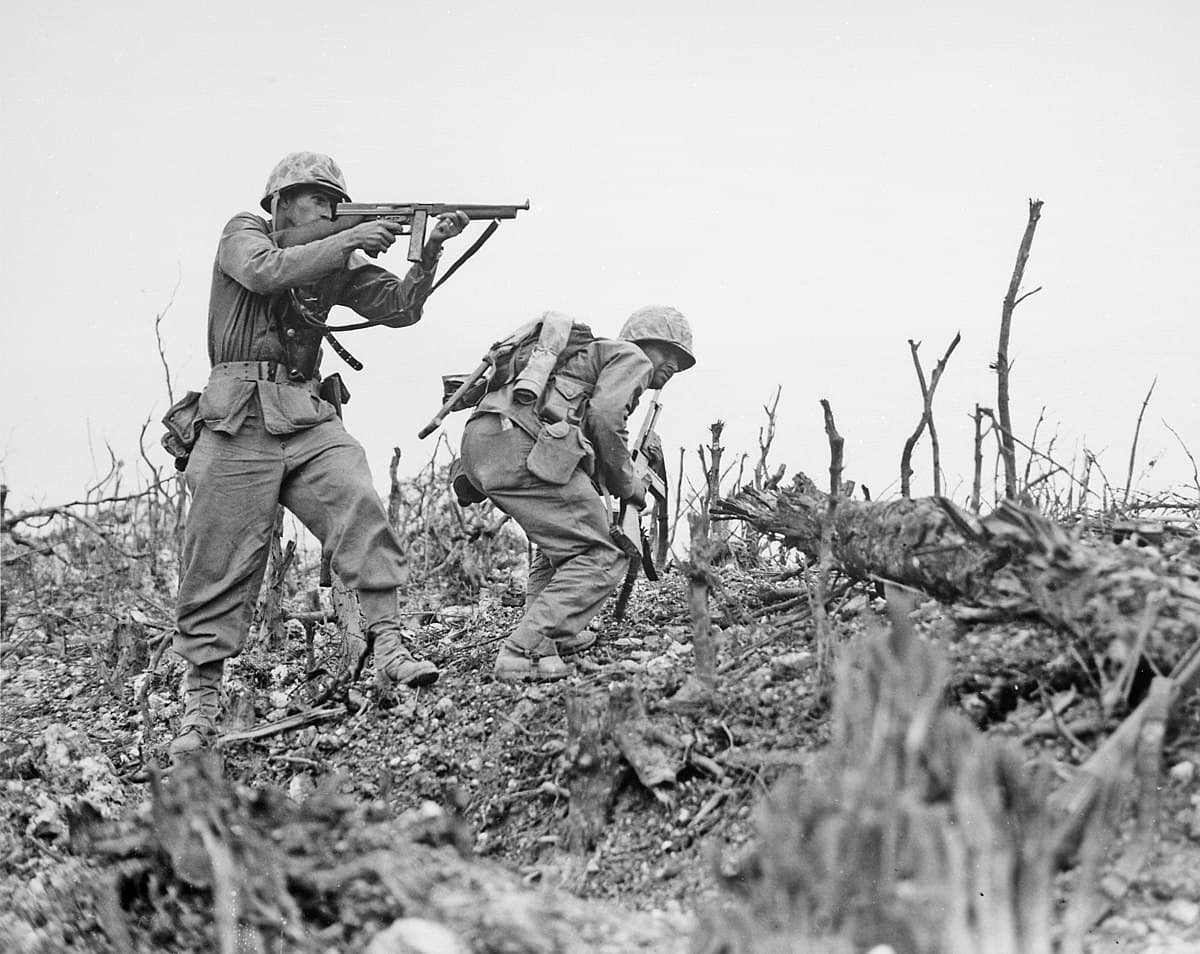
On Easter Sunday, the U.S. 10th Army launched the largest amphibious assault of the Pacific War, landing over 60,000 troops on Okinawa from a fleet of 1,300 ships. The 82-day battle that followed became the bloodiest of the Pacific Theater, killing over 12,000 Americans, 110,000 Japanese defenders, and as many as 100,000 Okinawan civilians.
Union forces under Major General Philip Sheridan defeated Confederate General George Pickett at the critical crossroads of Five Forks, Virginia, capturing over 5,000 prisoners and severing Lee's last supply line into Petersburg. The victory forced the evacuation of Petersburg and Richmond the following day.
French aviator Roland Garros shot down a German aircraft using a Morane-Saulnier Type L fitted with steel deflector wedges on the propeller, allowing him to fire a forward-mounted machine gun through the propeller arc. The improvised system was crude but marked the first practical single-seat fighter, forcing rapid German development of a true interrupter gear.
The Royal Air Force was established through the merger of the Royal Flying Corps and the Royal Naval Air Service, becoming the world's first independent air force. The Women's Royal Air Force was simultaneously created.
The U.S. 10th Army launched the largest amphibious assault of the Pacific War, landing over 60,000 troops on Okinawa from a fleet of 1,300 ships.
The U.S. 1st and 9th Armies linked up at Lippstadt, Germany, trapping approximately 325,000 German troops of Army Group B in the Ruhr industrial region, the largest encirclement of enemy forces by American armies in the entire war.
President Eisenhower signed Public Law 325, formally establishing the U.S. Air Force Academy. The first class of 306 cadets was sworn in at temporary facilities in Denver in July 1955, with Colorado Springs chosen as the permanent home.
NASA and the U.S. Army Signal Corps launched TIROS-1 from Cape Canaveral aboard a Thor-Able rocket, placing the first successful weather satellite into orbit. Its two vidicon cameras returned the first global cloud-cover imagery ever obtained from space, giving military planners and meteorologists a capability that reshaped strategic reconnaissance and forecasting.
The U.S. 1st Cavalry Division and ARVN airborne forces launched Operation Pegasus to reopen the land route to the besieged Marine combat base at Khe Sanh, successfully breaking through North Vietnamese positions and ending the 77-day siege by April 14.
A U.S. Navy EP-3E Aries II surveillance aircraft collided with a Chinese Navy J-8II interceptor over the South China Sea. The Chinese pilot was killed, and the damaged EP-3 made an emergency landing on Hainan Island, where its 24 crew members were detained for 11 days.
U.S. special operations forces rescued PFC Jessica Lynch from an Iraqi hospital in Nasiriyah during Operation Iraqi Freedom, the first successful rescue of an American POW since World War II. Lynch had been captured on March 23 when her convoy was ambushed.

Minister President of Prussia, Chancellor of the German Empire
Prussian statesman who orchestrated three decisive wars against Denmark, Austria, and France to unify Germany under Prussian leadership. Known as the "Iron Chancellor," his military and diplomatic strategies reshaped the European balance of power for half a century.

Colonel, U.S. Army Nurse Corps
Superintendent of the Army Nurse Corps during World War II who oversaw 60,000 nurses serving on every front. She became the first woman to receive a regular commission in the U.S. Army in 1947.

Sergeant, U.S. Marines
Marine who served at Okinawa and was severely wounded in combat. He became a renowned military historian, writing "Goodbye, Darkness" (his Pacific War memoir) and "American Caesar" (a biography of MacArthur).

Lieutenant Commander, U.S. Navy
The last surviving crew member of the USS Arizona from the attack on Pearl Harbor. During the December 7, 1941 attack, he helped rescue wounded shipmates as 1,177 of his fellow crewmen were killed.
Wear the Timeline
11 military events occurred on April 1, spanning multiple centuries. Key events include: Operation Iceberg: The Invasion of Okinawa (1945), Battle of Five Forks (1865), Royal Air Force Formed (1918), Ruhr Pocket Encirclement Completed (1945).
The most significant military event on April 1 is Operation Iceberg: The Invasion of Okinawa (1945). On Easter Sunday, the U.S. 10th Army launched the largest amphibious assault of the Pacific War, landing over 60,000 troops on Okinawa from a fleet of 1,300 ships. The 82-day battle that followed became the bloodiest of the Pacific Theater, killing over 12,000 Americans, 110,000 Japanese defenders, and as many as 100,000 Okinawan civilians.
Notable military figures born on April 1 include Otto von Bismarck (1815–1898), Florence Blanchfield (1884–1971), William Manchester (1922–2004).
Events on April 1 span World War II, the Civil War, World War I, the Cold War, the Vietnam War, the Modern Era, the Interwar Period, covering 11 events across 3 centuries of military history.
Events on April 1 involve 4 branches of the U.S. and allied armed forces, reflecting the global scope of military operations throughout history.
Explore military history from the day you were born.
June 6
The Allied invasion of Normandy, the largest amphibious assault in history.
December 7
Japan attacks the U.S. Pacific Fleet, bringing America into World War II.
September 11
The deadliest terrorist attack in history transforms U.S. national security.
August 6
The first atomic bomb is dropped on a city, ushering in the nuclear age.
May 8
Nazi Germany surrenders unconditionally, ending World War II in Europe.
November 11
Armistice Day marks the end of World War I and honors all who served.
June 4
The turning point of the Pacific War as the U.S. Navy destroys four Japanese carriers.
July 4
The Declaration of Independence is adopted, sparking the American Revolution.
15 essential WW2 books covering every theater. Narrative histories, memoirs, and visual references ranked.
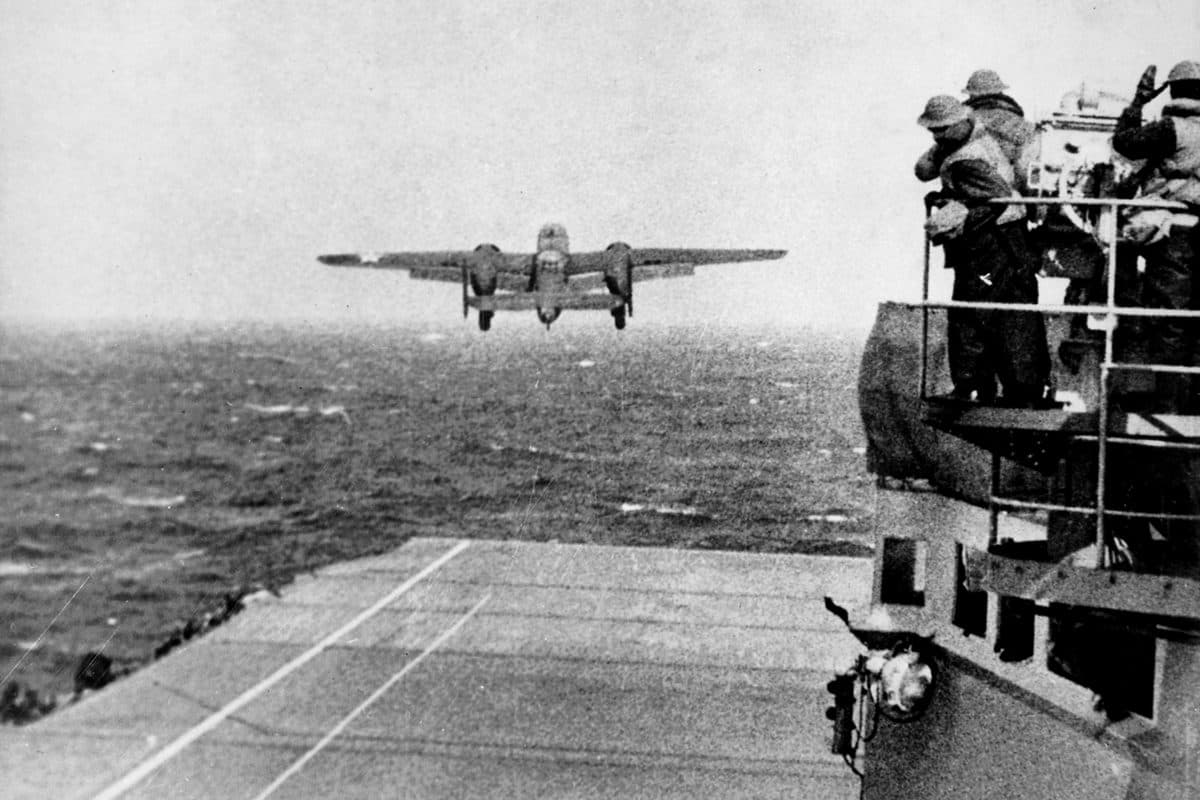
On April 18, 1942, sixteen B-25 Mitchell bombers did something no one thought possible: they launched from the deck of an aircraft carrier, flew 650 miles to Japan, and bombed Tokyo. Every aircraft was lost. The damage was negligible. The consequences changed the war.
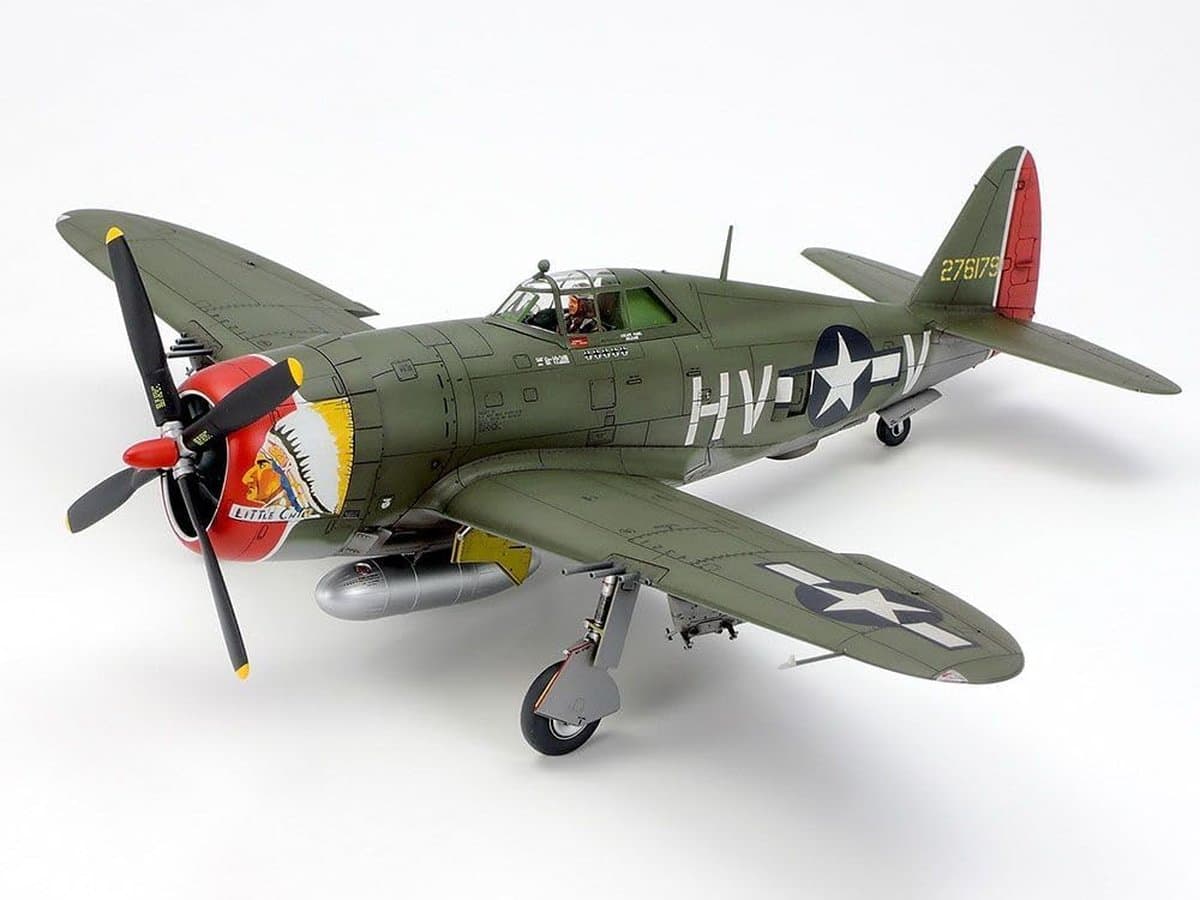
Compare 85+ WW2 scale model kits across aircraft, tanks, and ships. Beginner builds from $9 to museum-grade showpieces at $580. Covers Tamiya, Eduard, HK Models, Trumpeter, and more with honest reviews, trade-offs, and pricing.

On April 7, 1945, the Imperial Japanese Navy sent the largest battleship ever built on a one-way suicide mission to Okinawa. She never arrived. 386 American aircraft found her first, and sank her in under two hours.