

15 Best World War II Books for History Enthusiasts (2026)
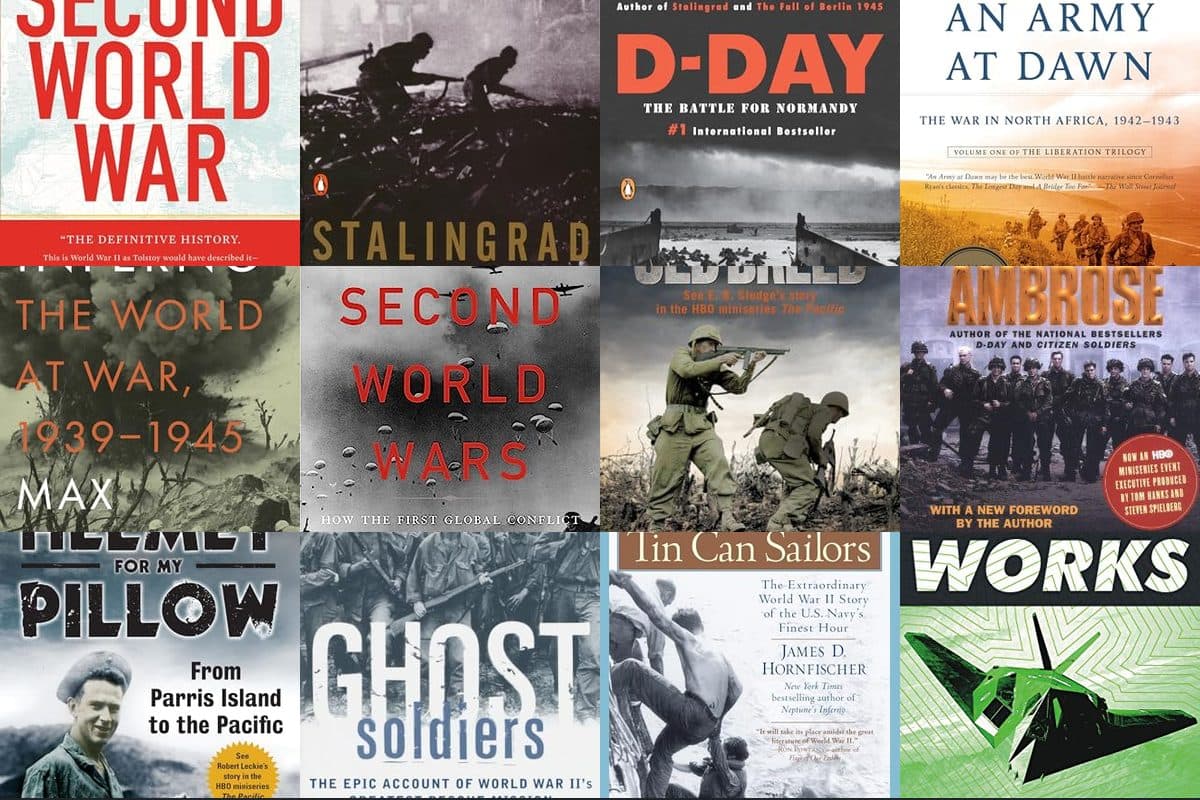
15 essential WW2 books covering every theater. Narrative histories, memoirs, and visual references ranked.
daniel-mercer··21 min read

Nazi Germany's unconditional surrender took effect, ending the war in Europe after nearly six years of conflict that killed an estimated 40 million Europeans. The instrument of surrender had been signed by General Alfred Jodl at Reims, France, on May 7, and was ratified by Field Marshal Wilhelm Keitel in Berlin on May 8. Celebrations erupted across the Allied world as the guns finally fell silent on the Western Front.
English and French negotiators drafted the Treaty of Bretigny near Chartres, ending the first phase of the Hundred Years' War. The treaty ceded vast territories in southwestern France to England in exchange for Edward III's renunciation of his claim to the French throne, a settlement that lasted only nine years before the war resumed.
French forces inspired by Joan of Arc completed the lifting of the seven-month English siege of Orleans, a turning point in the Hundred Years' War. The relief of Orleans broke the momentum of English conquest in France and launched the campaign that led to the coronation of Charles VII at Reims later that year.
Spanish conquistador Hernando de Soto became the first European to document reaching the Mississippi River, near present-day Memphis, Tennessee. His heavily armed expedition of 600 soldiers had spent two years marching through the Southeast, fighting numerous battles with Native American nations. The expedition's route later influenced European claims to the interior of North America.
French chemist Antoine Lavoisier, who had revolutionized chemistry and reorganized the production of gunpowder for the French army, was guillotined during the Reign of Terror. His earlier work as a tax farmer for the royal government condemned him; the loss of his expertise in propellant chemistry and metallurgy set back French military science for years.
U.S. forces under General Zachary Taylor defeated a Mexican army at Palo Alto, Texas, in the first major battle of the Mexican-American War. Taylor's superior artillery, particularly the devastating "flying artillery" batteries using horse-drawn guns that could rapidly reposition, proved decisive against the larger Mexican force, establishing American tactical superiority for the rest of the war.
Confederate forces under Stonewall Jackson repulsed a Union attack at the Battle of McDowell in the Shenandoah Valley, the first engagement of Jackson's legendary Valley Campaign. Over the next month, Jackson's 17,000 troops marched over 400 miles, won five battles, and tied down 60,000 Union soldiers, one of the most brilliant campaigns in military history.
Union and Confederate armies clashed at Spotsylvania Court House, Virginia, in a battle that would last nearly two weeks and produce some of the most savage close-quarters fighting of the Civil War. The Bloody Angle assault on May 12 saw 22 hours of continuous combat in driving rain, with troops piled on bodies in trenches.
Future President Harry S. Truman was born in Lamar, Missouri. Truman served as a captain of an artillery battery in World War I, was elected to the Senate, and as president made the decisions to use atomic weapons against Japan, implement the Marshall Plan, create NATO, and commit U.S. forces to Korea, choices that defined the Cold War era.
The eruption of Mount Pelee on the French Caribbean island of Martinique destroyed the city of Saint-Pierre and killed roughly 30,000 people in moments. Naval vessels in the harbor were burned and capsized. The disaster reshaped French colonial naval doctrine and triggered a wave of expeditionary disaster relief that influenced humanitarian operations.
Polish forces under Jozef Pilsudski captured Kyiv during the Polish-Soviet War, briefly establishing a friendly Ukrainian government. Within weeks a Red Army counteroffensive under Mikhail Tukhachevsky drove the Poles back to the gates of Warsaw before the Polish victory at the Vistula reversed the situation again.
The Battle of the Coral Sea, the first naval engagement in history where the opposing ships never sighted each other, concluded after four days. Although the U.S. lost the carrier USS Lexington, the battle turned back the Japanese invasion force heading for Port Moresby, New Guinea, the first time a Japanese naval offensive had been checked.
German General Erwin Rommel was promoted to Field Marshal following the capture of Tobruk in North Africa. The promotion confirmed Rommel's status as Germany's most celebrated battlefield commander but came at a moment when his Panzer Army Africa was already overextended and unable to push further into Egypt.
Czech resistance fighters launched an armed uprising against the German garrison in Prague as Soviet forces closed in from the east. The uprising, which cost over 1,600 Czech lives, helped liberate the capital before the Red Army arrived on May 9, though the political consequences of Soviet liberation shaped Czechoslovakia's fate for the next four decades.
The Channel Islands of Jersey and Guernsey were liberated from German occupation, the last British territories to be freed. The islands had been occupied since June 1940 and endured five years of German rule, including the deportation of residents and the use of slave labor to build massive fortifications that were part of Hitler's Atlantic Wall.
The German garrison of Norway, more than 350,000 troops still combat-effective, surrendered to Allied forces under the Reims surrender agreement. The largely intact occupation force surrendered without a fight, sparing Norway the destruction visited on other occupied countries and beginning the rapid demobilization that returned Norway to civilian government.
The United States began final preparations at Enewetak Atoll for Operation Ivy, which would test the first thermonuclear weapon in November 1952. The hydrogen bomb program, championed by Edward Teller and opposed by J. Robert Oppenheimer, represented a thousandfold increase in destructive power over the Hiroshima bomb and launched the thermonuclear arms race.
In the days following the surrender of Dien Bien Phu on May 7, the full scope of the French defeat in Indochina became clear to Paris and Washington. The loss of 11,000 French Union prisoners, including elite parachute and Foreign Legion units, ended French ambitions in Indochina and accelerated the partition of Vietnam at the Geneva Conference.
The United States detonated the Lacrosse device at Enewetak Atoll as part of Operation Redwing, a 40 kiloton ground-burst test conducted to evaluate the effects of low-altitude detonation on military targets. The test informed the development of tactical nuclear weapons doctrine for the U.S. Army and the basing of nuclear artillery in Europe.
Construction workers attacked anti-Vietnam War protesters near the New York Stock Exchange in what became known as the Hard Hat Riot. The clash crystallized the cultural divide over the Vietnam War, the Kent State shootings, and the Cambodia incursion, and reshaped American political alignments around national defense for a generation.
President Richard Nixon announced Operation Pocket Money, ordering the mining of Haiphong Harbor and other North Vietnamese ports to cut off the flow of Soviet and Chinese military supplies during the Easter Offensive. The decision represented a dramatic escalation that risked confrontation with the Soviet Union but effectively strangled North Vietnam's logistics.
The World Health Organization formally declared smallpox eradicated, ending a disease that had killed more humans than any other infectious agent. Smallpox's deliberate use as a biological weapon, including by British forces against Native Americans in 1763, had made it a focus of biological defense planning, and the eradication ended one biological threat as bioweapons programs continued.
The Soviet Union officially announced its boycott of the 1984 Summer Olympics in Los Angeles, citing security concerns for its athletes. In reality, the boycott was retaliation for the U.S.-led boycott of the 1980 Moscow Olympics following the Soviet invasion of Afghanistan. The mutual Olympic boycotts became potent symbols of the Cold War's reach into every aspect of international relations.
British Special Air Service troops ambushed and killed eight Provisional IRA members and one civilian during an IRA attack on the Royal Ulster Constabulary station at Loughgall, County Armagh. The Loughgall ambush was the IRA's heaviest single loss of the Troubles and demonstrated the effectiveness of British signals intelligence against the organization.
Russia staged its largest Victory Day parade since the Soviet era, with intercontinental ballistic missiles, T-90 tanks, and strategic bombers passing through Red Square. The parade signaled the resurgence of Russian military display under Vladimir Putin and previewed the heightened East-West tensions that followed the August 2008 war in Georgia.

Captain
The 33rd President of the United States, who served as an artillery captain in World War I. As president, he made the decision to use atomic weapons against Japan, implemented the Truman Doctrine and Marshall Plan, created NATO, and committed U.S. forces to Korea. His decisions shaped the entire architecture of the Cold War.

Austrian-British economist and philosopher who served as an artillery officer in the Austro-Hungarian Army during World War I. His wartime experience and witnessing the collapse of the Austrian empire profoundly shaped his influential writings on the dangers of centralized state power, including The Road to Serfdom (1944).

General
Swiss-born military theorist who served under Napoleon and later the Russian Tsar. His works on strategy, particularly Summary of the Art of War (1838), were enormously influential on both Union and Confederate commanders during the American Civil War and helped establish the formal study of military science.

German Chancellor and Foreign Minister who negotiated the Locarno Treaties (1925) and brought Germany into the League of Nations. His death in 1929 removed one of the few German leaders capable of resisting extremism, contributing to the political instability that allowed Hitler's rise to power.
Wear the Timeline
24 military events occurred on May 8, spanning multiple centuries. Key events include: Battle of Palo Alto: Opening Fight of the Mexican-American War (1846), Battle of the Coral Sea Concludes (1942), President Nixon Orders Mining of Haiphong Harbor (1972), Joan of Arc Lifts the Siege of Orleans (1429), Battle of Spotsylvania Court House Begins (1864).
The most significant military event on May 8 is Victory in Europe Day: Germany Surrenders Unconditionally (1945). Nazi Germany's unconditional surrender took effect, ending the war in Europe after nearly six years of conflict that killed an estimated 40 million Europeans. The instrument of surrender had been signed by General Alfred Jodl at Reims, France, on May 7, and was ratified by Field Marshal Wilhelm Keitel in Berlin on May 8. Celebrations erupted across the Allied world as the guns finally fell silent on the Western Front.
Notable military figures born on May 8 include Harry S. Truman (1884–1972), Friedrich August von Hayek (1899–1992).
Events on May 8 span the Colonial & Revolutionary era, the Civil War, World War I, World War II, the Cold War, the Vietnam War, the Interwar Period, the Modern Era, covering 24 events across 7 centuries of military history.
Events on May 8 involve 3 branches of the U.S. and allied armed forces, reflecting the global scope of military operations throughout history.
Explore military history from the day you were born.
June 6
The Allied invasion of Normandy, the largest amphibious assault in history.
December 7
Japan attacks the U.S. Pacific Fleet, bringing America into World War II.
September 11
The deadliest terrorist attack in history transforms U.S. national security.
August 6
The first atomic bomb is dropped on a city, ushering in the nuclear age.
November 11
Armistice Day marks the end of World War I and honors all who served.
June 4
The turning point of the Pacific War as the U.S. Navy destroys four Japanese carriers.
July 4
The Declaration of Independence is adopted, sparking the American Revolution.
15 essential WW2 books covering every theater. Narrative histories, memoirs, and visual references ranked.
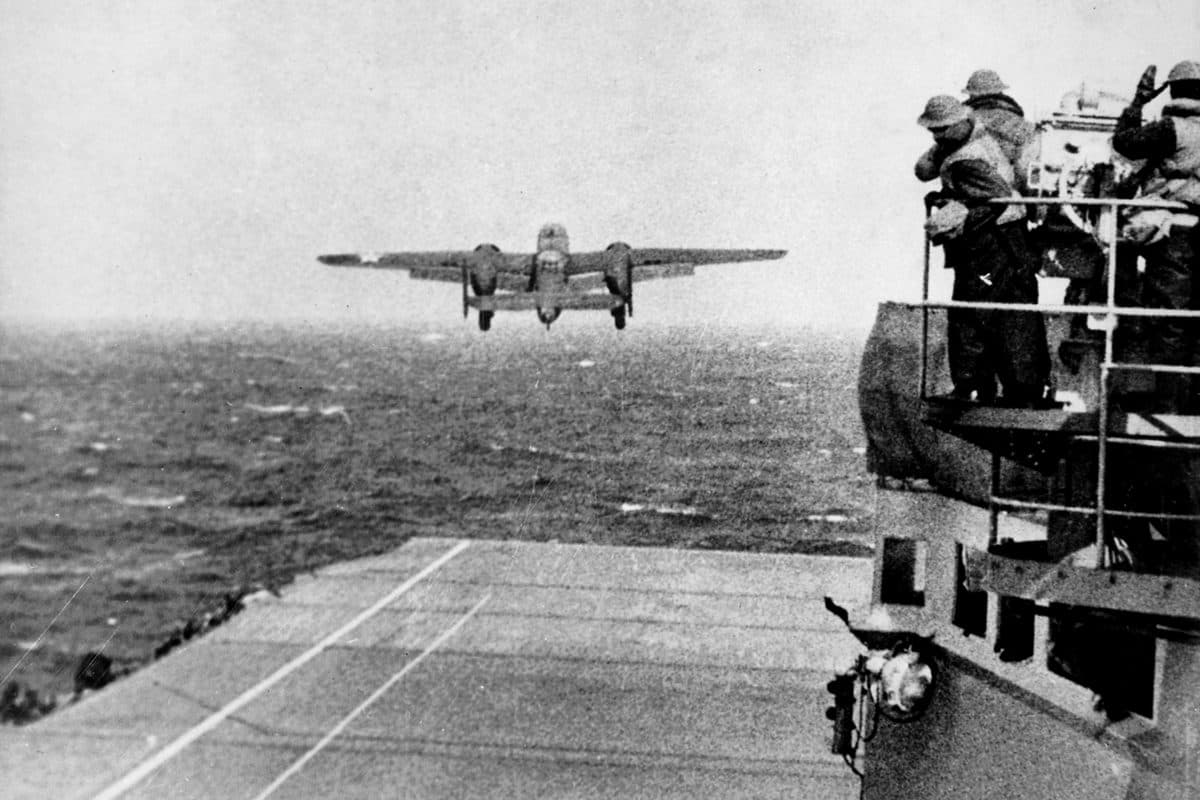
On April 18, 1942, sixteen B-25 Mitchell bombers did something no one thought possible: they launched from the deck of an aircraft carrier, flew 650 miles to Japan, and bombed Tokyo. Every aircraft was lost. The damage was negligible. The consequences changed the war.
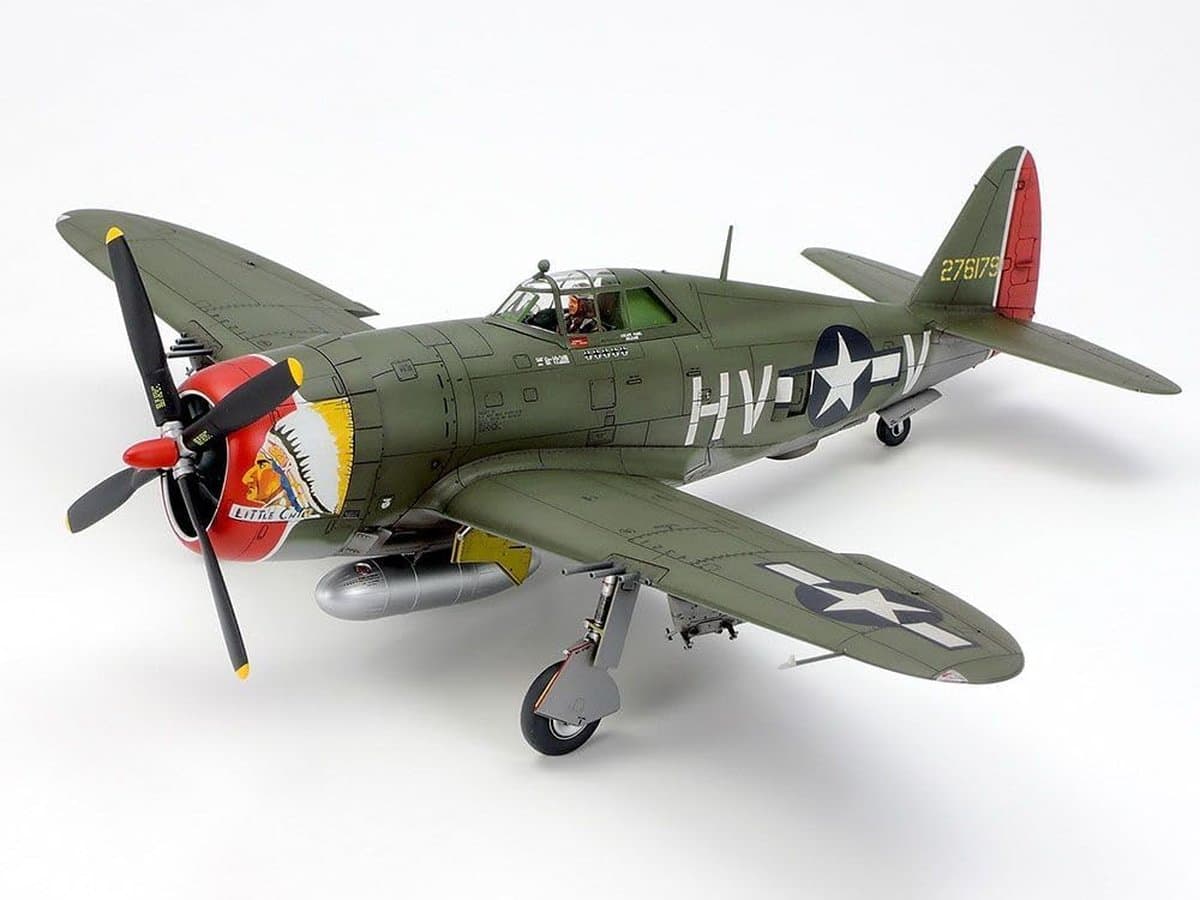
Compare 85+ WW2 scale model kits across aircraft, tanks, and ships. Beginner builds from $9 to museum-grade showpieces at $580. Covers Tamiya, Eduard, HK Models, Trumpeter, and more with honest reviews, trade-offs, and pricing.

On April 7, 1945, the Imperial Japanese Navy sent the largest battleship ever built on a one-way suicide mission to Okinawa. She never arrived. 386 American aircraft found her first, and sank her in under two hours.