

15 Best World War II Books for History Enthusiasts (2026)
15 essential WW2 books covering every theater. Narrative histories, memoirs, and visual references ranked.
daniel-mercer··21 min read

Following Germany's invasion of Poland two days earlier and the failure of ultimatums demanding withdrawal, Great Britain and France declared war on Nazi Germany, transforming a regional conflict into a world war. Britain's declaration came at 11:00 AM, France's at 5:00 PM. The British Empire and Commonwealth nations, including India, Australia, New Zealand, and South Africa, followed within days.
Oliver Cromwell, Lord Protector of the Commonwealth of England, Scotland, and Ireland, died at Whitehall Palace in London. The former commander of the New Model Army had commanded Parliamentary forces at Marston Moor, Naseby, and Dunbar, and presided over the only period of republican rule in British history. His death precipitated a political crisis that ended in the restoration of the monarchy two years later.
American and British forces clashed at Cooch's Bridge in Delaware during the Philadelphia Campaign. It is traditionally considered the first battle in which the Stars and Stripes was carried into combat, though this claim is debated by historians. The American light infantry under Brigadier General William Maxwell delayed but could not stop the British advance toward Philadelphia.
The Treaty of Paris was signed by representatives of King George III and the United States, officially ending the American Revolutionary War. Britain recognized American independence and ceded all territory east of the Mississippi River to the new nation. The treaty was negotiated by Benjamin Franklin, John Adams, and John Jay.
U.S. Army forces under Brevet Brigadier General William S. Harney attacked a Brulé Lakota village at Blue Water Creek in present-day Nebraska in retaliation for the Grattan Massacre of the previous year. The assault killed approximately 86 Lakota, including many women and children, and captured 70. The battle marked a significant escalation in the conflicts between the U.S. Army and the Lakota Sioux on the Great Plains.
Royal Flying Corps pilot Lieutenant William Leefe Robinson shot down the German Schutte-Lanz SL11 airship over Cuffley, north of London, using incendiary ammunition. It was the first German airship destroyed over British soil and earned Robinson the Victoria Cross. The victory broke the psychological hold of the Zeppelin campaign and validated the new incendiary rounds designed specifically for airship hunting.
Following Germany's invasion of Poland two days earlier, Great Britain and France declared war on Nazi Germany, transforming a regional conflict into a world war.
The German submarine U-30 torpedoed the British passenger liner SS Athenia in the North Atlantic, killing 112 of the 1,418 passengers and crew. The sinking, which occurred just hours after Britain's declaration of war, was the opening shot of the Battle of the Atlantic, the longest continuous campaign of World War II. Germany initially denied responsibility, fearing comparison to the Lusitania sinking of 1915.
British and Canadian forces of Montgomery's Eighth Army crossed the Strait of Messina and landed on the toe of mainland Italy in Operation Baytown, the first Allied invasion of Axis-controlled continental Europe. Italian resistance was minimal, as the Badoglio government had secretly signed an armistice five days earlier. The landing began the grueling Italian Campaign that would continue until May 1945.
North Korean forces launched a renewed offensive across the Naktong River against the US 2nd Infantry Division, attempting to break through to Pusan before the planned landing at Inchon. Four NKPA divisions crossed the river under cover of darkness, seizing multiple bridgeheads. The 2nd Division and attached Marine units fought a grinding two-week battle to eliminate the penetration, suffering heavy casualties but destroying the last offensive capability of the NKPA.
General Nguyen Van Thieu won South Vietnam's presidential election in a vote widely criticized as fraudulent. Thieu would rule South Vietnam until its final days in April 1975, overseeing the Vietnamization of the war and the eventual collapse of his government. His authoritarian leadership complicated American efforts to build a legitimate democratic alternative in South Vietnam.

Private
American actor who enlisted in the Army Air Forces during World War II but was medically discharged in 1943. He starred in numerous war films and is best remembered for his role in "Shane" (1953). He used his fame to sell war bonds and support military morale efforts.

Austrian-German automotive engineer who designed the Volkswagen Beetle and, during World War II, the Tiger I and Tiger II heavy tanks, the Elefant tank destroyer, and the Maus super-heavy tank prototype. His tank designs were among the most feared weapons of the war, though many suffered from mechanical unreliability.

Lord Protector of the Commonwealth of England, Scotland, and Ireland. A brilliant military commander who defeated Royalist forces in the English Civil War, Cromwell transformed the Parliamentary army into the New Model Army, one of the first professional standing armies in English history. He won decisive victories at Marston Moor, Naseby, and Dunbar.
Wear the Timeline
10 military events occurred on September 3, spanning multiple centuries. Key events include: Britain and France Declare War on Germany (1939), Treaty of Paris Signed, End of the American Revolution (1783), SS Athenia Torpedoed, First Casualties of the Battle of the Atlantic (1939), Allied Invasion of Italy Begins (Operation Baytown) (1943).
The most significant military event on September 3 is Britain and France Declare War on Germany (1939). Following Germany's invasion of Poland two days earlier and the failure of ultimatums demanding withdrawal, Great Britain and France declared war on Nazi Germany, transforming a regional conflict into a world war. Britain's declaration came at 11:00 AM, France's at 5:00 PM. The British Empire and Commonwealth nations, including India, Australia, New Zealand, and South Africa, followed within days.
Notable military figures born on September 3 include Alan Ladd (1913–1964), Ferdinand Porsche (1875–1951).
Events on September 3 span World War II, the Colonial & Revolutionary era, the Civil War, the Vietnam War, World War I, the Korean War, covering 10 events across 4 centuries of military history.
Events on September 3 involve 5 branches of the U.S. and allied armed forces, reflecting the global scope of military operations throughout history.
Explore military history from the day you were born.
June 6
The Allied invasion of Normandy, the largest amphibious assault in history.
December 7
Japan attacks the U.S. Pacific Fleet, bringing America into World War II.
September 11
The deadliest terrorist attack in history transforms U.S. national security.
August 6
The first atomic bomb is dropped on a city, ushering in the nuclear age.
May 8
Nazi Germany surrenders unconditionally, ending World War II in Europe.
November 11
Armistice Day marks the end of World War I and honors all who served.
June 4
The turning point of the Pacific War as the U.S. Navy destroys four Japanese carriers.
July 4
The Declaration of Independence is adopted, sparking the American Revolution.
15 essential WW2 books covering every theater. Narrative histories, memoirs, and visual references ranked.
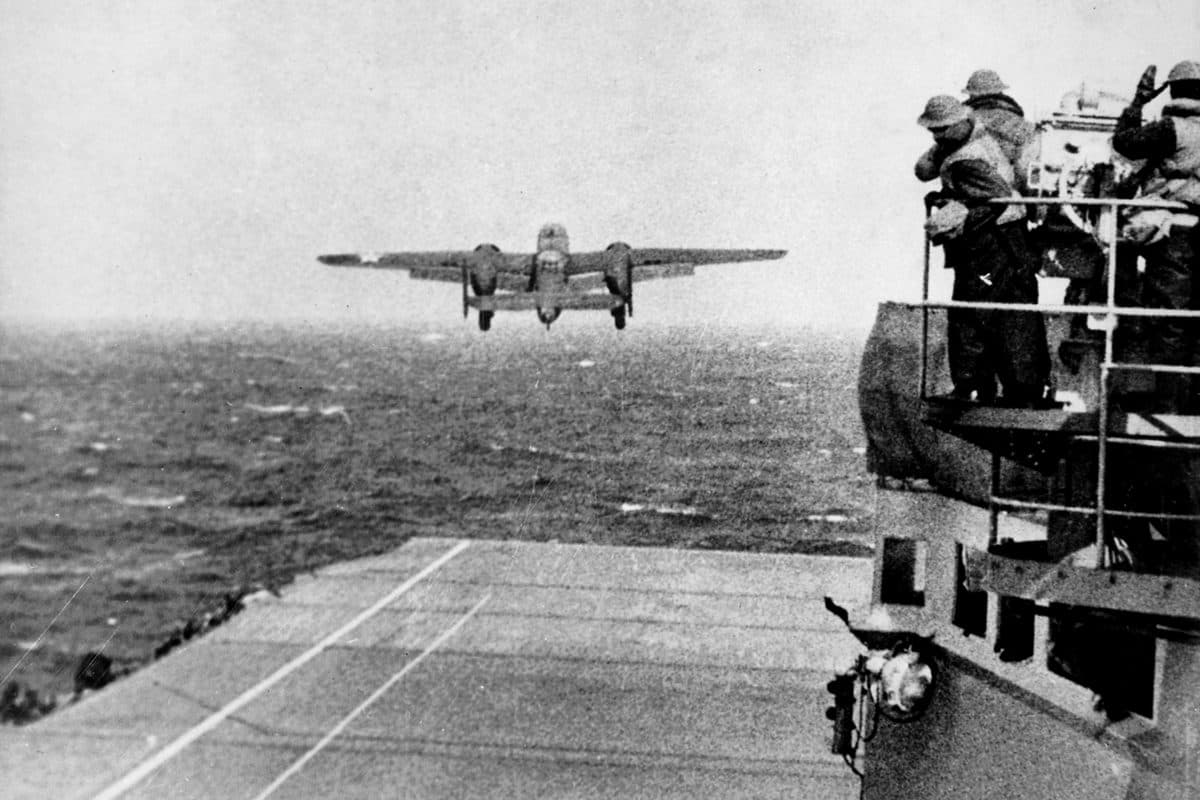
On April 18, 1942, sixteen B-25 Mitchell bombers did something no one thought possible: they launched from the deck of an aircraft carrier, flew 650 miles to Japan, and bombed Tokyo. Every aircraft was lost. The damage was negligible. The consequences changed the war.
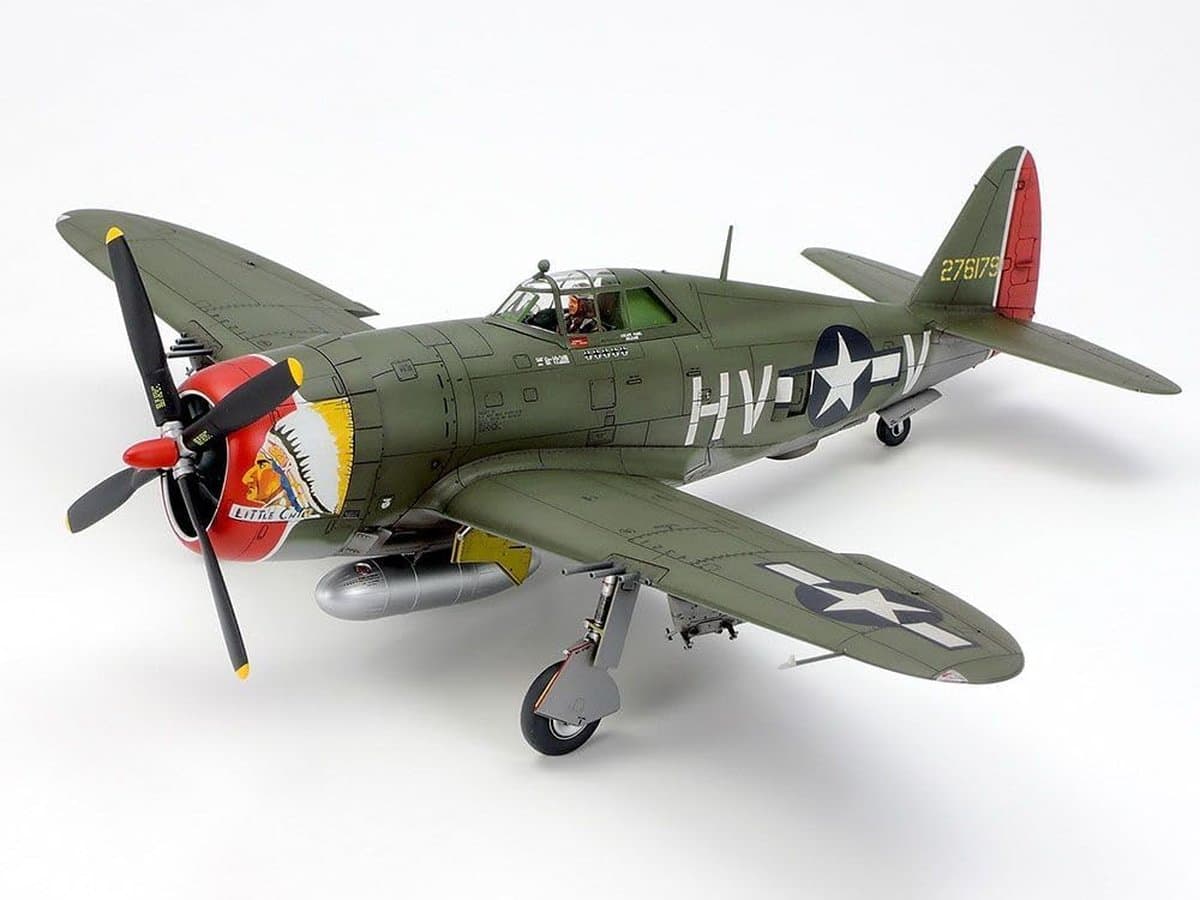
Compare 85+ WW2 scale model kits across aircraft, tanks, and ships. Beginner builds from $9 to museum-grade showpieces at $580. Covers Tamiya, Eduard, HK Models, Trumpeter, and more with honest reviews, trade-offs, and pricing.

On April 7, 1945, the Imperial Japanese Navy sent the largest battleship ever built on a one-way suicide mission to Okinawa. She never arrived. 386 American aircraft found her first, and sank her in under two hours.