

15 Best World War II Books for History Enthusiasts (2026)
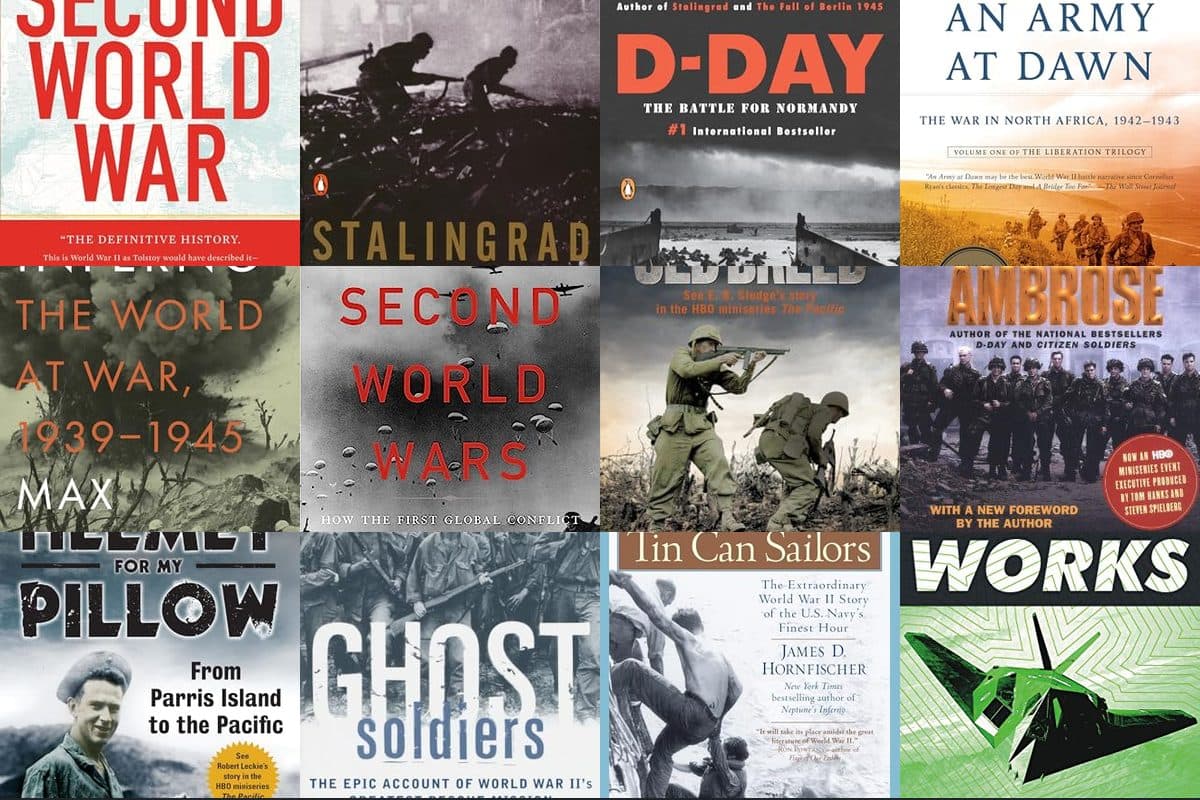
15 essential WW2 books covering every theater. Narrative histories, memoirs, and visual references ranked.
daniel-mercer··21 min read

The Apache war leader Geronimo surrendered to Brigadier General Nelson A. Miles at Skeleton Canyon in southeastern Arizona Territory, ending the last major armed conflict between Native Americans and the United States military. Geronimo's band of 38 Chiricahua Apache, including only 16 warriors, had eluded 5,000 U.S. troops and 3,000 Mexican soldiers for over a year.
Forty-four Spanish settlers, escorted by a military guard from the nearby presidio of San Gabriel, founded El Pueblo de Nuestra Señora la Reina de los Ángeles, the settlement that would become Los Angeles. The founding was part of Spain's military strategy to colonize Alta California and protect its Pacific territories from British and Russian encroachment.
Captain Zachary Taylor, the future twelfth President of the United States, commanded a tiny garrison at Fort Harrison in the Indiana Territory that repulsed a Shawnee and Kickapoo attack led by warriors allied with Tecumseh. Taylor had only 15 effective soldiers, many sick with malaria, when the attackers set fire to a blockhouse. The successful defense was the first US land victory in the War of 1812.
General Robert E. Lee's Army of Northern Virginia began crossing the Potomac River into Maryland, launching the Confederacy's first invasion of the North. Lee hoped a decisive victory on Union soil would encourage European recognition of the Confederacy and demoralize the Northern public before the November elections. The campaign would culminate in the bloodiest single day in American military history at Antietam on September 17.
The Apache war leader Geronimo surrendered to Brigadier General Nelson A. Miles at Skeleton Canyon in southeastern Arizona Territory, ending the last major armed conflict between Native Americans and the United States military.
Twenty nine Royal Air Force Blenheim and Wellington bombers attacked German warships at Wilhelmshaven and Brunsbuttel, the first British air raid on Germany in the Second World War. The attack damaged the pocket battleship Admiral Scheer and the cruiser Emden but cost seven aircraft and revealed serious weaknesses in RAF bombing doctrine. The results shaped the shift to night area bombing over the following year.
President Franklin Roosevelt transferred fifty obsolete U.S. Navy destroyers to the Royal Navy in exchange for 99-year leases on British military bases in the Western Hemisphere. The agreement, made by executive order without Congressional approval, was a crucial step toward American involvement in World War II. It provided desperately needed escorts for Atlantic convoys and gave the U.S. forward bases from Newfoundland to British Guiana.
The destroyer USS Greer exchanged fire with German submarine U-652 south of Iceland, marking the first combat engagement between US and German forces in the Second World War. The Greer had been tracking the U-boat for a British patrol aircraft when U-652 fired two torpedoes at the destroyer, which responded with depth charges. The incident provided President Roosevelt the justification for his shoot on sight order against Axis vessels in US defensive waters.
British forces of the 11th Armoured Division captured the Belgian port city of Antwerp with its vital harbor facilities largely intact. However, the Allies failed to immediately secure the Scheldt Estuary leading to the port, allowing German forces to fortify both banks. This oversight meant Antwerp could not be used as a supply port until late November, contributing to severe logistical shortages that slowed the Allied advance into Germany.
Finland ceased hostilities against the Soviet Union at 7 AM, ending three years of the Continuation War. Under the preliminary terms, Finland had to cede Petsamo and the Karelian Isthmus, pay 300 million dollars in war reparations, and expel all German troops from Finnish territory. The resulting Lapland War pitted former Finnish allies against the Wehrmacht in a hard seven-month winter campaign.
U.S. Marines of the 1st Battalion, 5th Marines launched Operation Swift in the Que Son Valley of South Vietnam after a North Vietnamese regiment ambushed a Marine company. The resulting five-day battle was one of the bloodiest engagements for the Marines in 1967, with 127 Marines killed and 362 wounded against an estimated 571 enemy killed.

Former U.S. Army soldier who served in Germany. Although best known for claiming to be the "Boston Strangler," DeSalvo was also a trained military boxer and served as an Army MP. His case raised questions about the psychological effects of military service.

Grandson of Henry Ford who was released from the Navy in 1943 to take over Ford Motor Company, then the nation's third-largest defense contractor. Under his leadership, Ford produced B-24 Liberator bombers at the Willow Run plant at a rate of one per hour, the most impressive feat of wartime mass production.

German composer whose military-themed works, including "The Two Grenadiers" based on Heinrich Heine's poem about Napoleonic soldiers, captured the martial spirit of the nineteenth century. His "Rhenish" Symphony was inspired by the Cologne Cathedral, a symbol of German national identity.
Wear the Timeline
10 military events occurred on September 4, spanning multiple centuries. Key events include: Geronimo Surrenders, End of the Apache Wars (1886), Lee Invades Maryland, Start of the Antietam Campaign (1862), Destroyers-for-Bases Agreement (1940), Liberation of Antwerp (1944).
The most significant military event on September 4 is Geronimo Surrenders, End of the Apache Wars (1886). The Apache war leader Geronimo surrendered to Brigadier General Nelson A. Miles at Skeleton Canyon in southeastern Arizona Territory, ending the last major armed conflict between Native Americans and the United States military. Geronimo's band of 38 Chiricahua Apache, including only 16 warriors, had eluded 5,000 U.S. troops and 3,000 Mexican soldiers for over a year.
Notable military figures born on September 4 include Albert DeSalvo (1931–1973), Henry Ford II (1917–1987).
Events on September 4 span the Interwar Period, the Colonial & Revolutionary era, the Civil War, World War II, the Vietnam War, covering 10 events across 3 centuries of military history.
Events on September 4 involve 4 branches of the U.S. and allied armed forces, reflecting the global scope of military operations throughout history.
Explore military history from the day you were born.
June 6
The Allied invasion of Normandy, the largest amphibious assault in history.
December 7
Japan attacks the U.S. Pacific Fleet, bringing America into World War II.
September 11
The deadliest terrorist attack in history transforms U.S. national security.
August 6
The first atomic bomb is dropped on a city, ushering in the nuclear age.
May 8
Nazi Germany surrenders unconditionally, ending World War II in Europe.
November 11
Armistice Day marks the end of World War I and honors all who served.
June 4
The turning point of the Pacific War as the U.S. Navy destroys four Japanese carriers.
July 4
The Declaration of Independence is adopted, sparking the American Revolution.
15 essential WW2 books covering every theater. Narrative histories, memoirs, and visual references ranked.
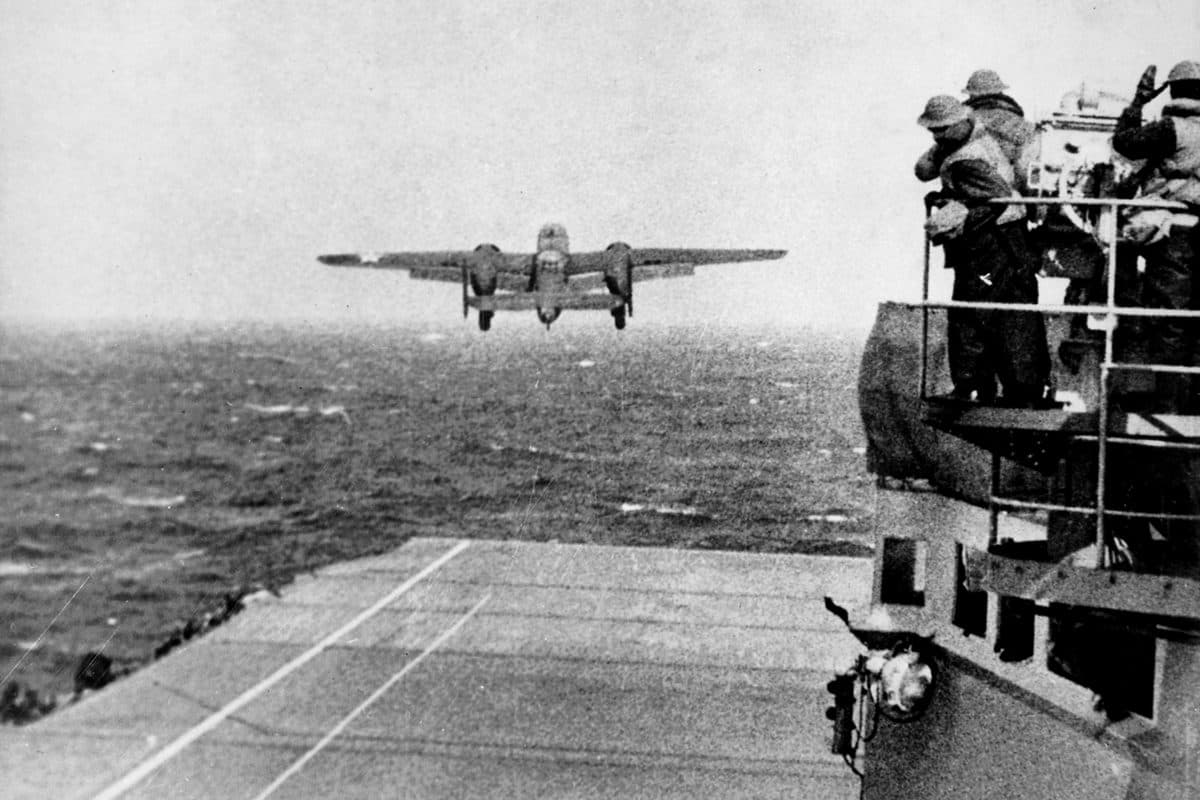
On April 18, 1942, sixteen B-25 Mitchell bombers did something no one thought possible: they launched from the deck of an aircraft carrier, flew 650 miles to Japan, and bombed Tokyo. Every aircraft was lost. The damage was negligible. The consequences changed the war.
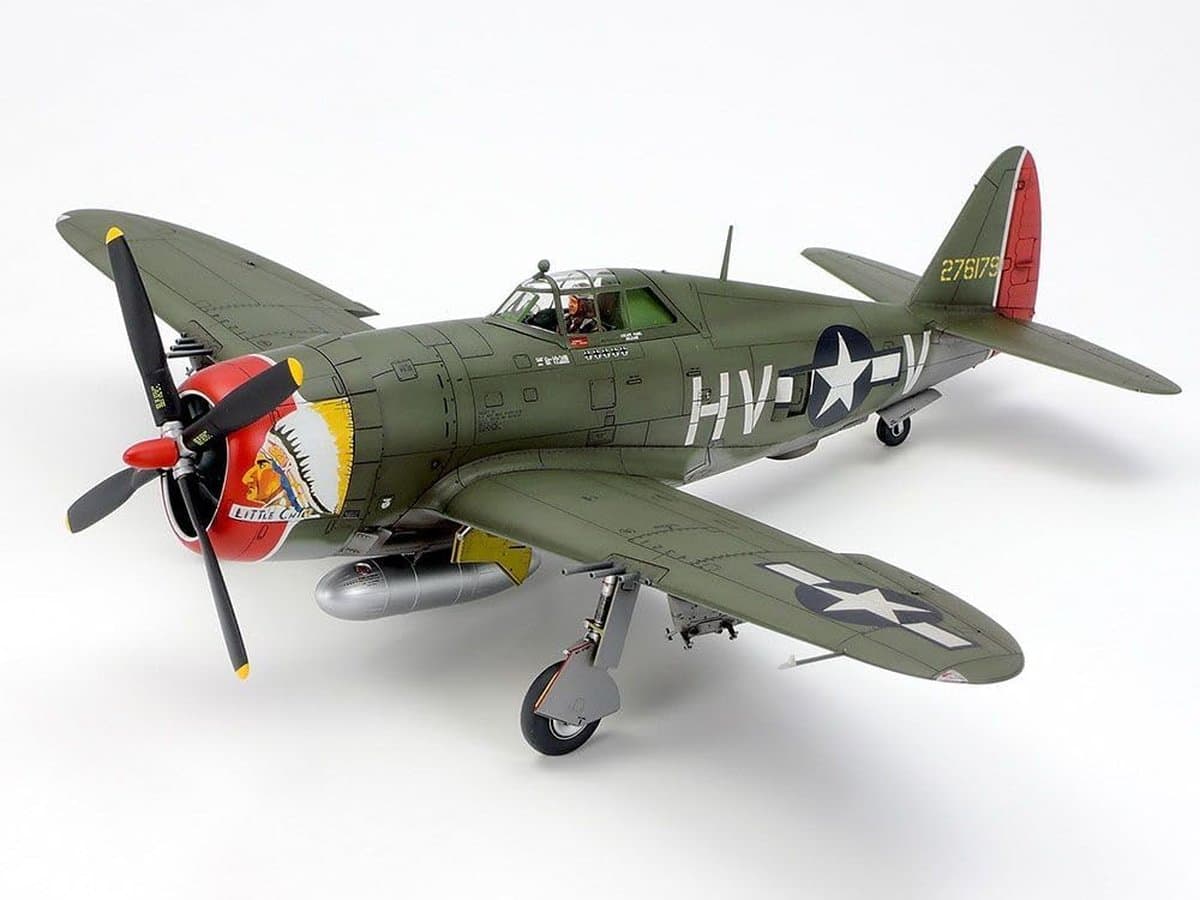
Compare 85+ WW2 scale model kits across aircraft, tanks, and ships. Beginner builds from $9 to museum-grade showpieces at $580. Covers Tamiya, Eduard, HK Models, Trumpeter, and more with honest reviews, trade-offs, and pricing.

On April 7, 1945, the Imperial Japanese Navy sent the largest battleship ever built on a one-way suicide mission to Okinawa. She never arrived. 386 American aircraft found her first, and sank her in under two hours.