


15 Military Mistakes That Accidentally Changed History
From wrong turns to unlocked gates - real mistakes that shaped the course of history.
ryan-caldwell··22 min read

A French fleet of 24 ships of the line under Rear Admiral Comte de Grasse defeated a British fleet of 19 ships under Rear Admiral Thomas Graves off the Virginia Capes at the entrance to Chesapeake Bay. The French victory sealed the fate of Cornwallis's army at Yorktown by preventing British naval reinforcement or evacuation, making the decisive American victory in the Revolutionary War possible.
Fifty-six delegates from twelve of the thirteen American colonies gathered at Carpenters' Hall in Philadelphia for the First Continental Congress. Called in response to the Intolerable Acts, the Congress organized colonial resistance to British policies and established the Continental Association to enforce a trade boycott. The Congress laid the political foundation for the armed resistance that would erupt at Lexington and Concord seven months later.
A French fleet of 24 ships of the line under Rear Admiral Comte de Grasse defeated a British fleet of 19 ships under Rear Admiral Thomas Graves off the Virginia Capes, sealing the fate of Cornwallis's army at Yorktown.
The Oglala Lakota war leader Crazy Horse was fatally bayoneted by a soldier of the 14th Infantry at Camp Robinson, Nebraska Territory, after resisting arrest and confinement in the guardhouse. Crazy Horse had surrendered four months earlier, one of the last major Lakota war leaders to come in from the Powder River country. His death effectively ended organized Lakota resistance on the northern plains.
Russia and Japan signed the Treaty of Portsmouth in New Hampshire, ending 19 months of warfare that had shattered Russian military prestige and announced Japan as a great power. The treaty, mediated by President Theodore Roosevelt, gave Japan control of Korea, the southern half of Sakhalin Island, and a lease on the Liaodong Peninsula. The war had demonstrated the decisive value of naval modernization, machine guns, and trench systems.
French and British forces launched a desperate counterattack against the German armies advancing on Paris, beginning the First Battle of the Marne. General Joseph Gallieni famously requisitioned 600 Parisian taxicabs to rush reinforcements to the front. Over four days of ferocious fighting, the Allies halted the German advance and shattered the Schlieffen Plan, saving Paris and ensuring the war would not end in a quick German victory.
Military Mistakes That Changed HistoryPresident Roosevelt officially declared American neutrality in the European war following the German invasion of Poland and the British and French declarations of war. However, in a fireside chat the following day, Roosevelt acknowledged that "even a neutral cannot be asked to close his mind or his conscience," signaling the administration's sympathy for the Allies and foreshadowing the eventual shift to active support.
The 503rd Parachute Infantry Regiment conducted the first Allied airborne operation in the Pacific theater, parachuting onto the Nadzab airfield in the Markham Valley of New Guinea. General MacArthur personally observed the drop from a B-17. The successful seizure of the airfield allowed Australian troops to be flown in and advance on the Japanese base at Lae.
The Soviet Union declared war on the Kingdom of Bulgaria after years of an anomalous situation in which Bulgaria had been allied with Nazi Germany while maintaining diplomatic relations with the USSR. Red Army units crossed the Romanian border into Bulgaria within days, meeting no resistance. A communist-led coup on September 9 installed the Fatherland Front government, which declared war on Germany and committed Bulgarian forces against the Wehrmacht in Yugoslavia.
Igor Gouzenko, a cipher clerk at the Soviet embassy in Ottawa, defected with 109 classified documents proving that the USSR had run an extensive espionage network against the Manhattan Project and Allied military technology programs. The Canadian government detained him after days of initial dismissal by the RCMP. The documents exposed the atomic spy ring and are widely credited with launching the Cold War intelligence confrontation.
Eight members of the Palestinian militant group Black September took eleven Israeli Olympic team members hostage at the Munich Olympic Village. A botched rescue attempt at Fürstenfeldbruck airfield resulted in the deaths of all eleven hostages, five terrorists, and one German police officer. The massacre led to Israel's covert Operation Wrath of God retaliation campaign and transformed international counterterrorism doctrine.

The "Sun King" of France who reigned for 72 years and transformed France into Europe's dominant military power. He fought four major wars, built the palace of Versailles, established a standing army of 400,000, the largest in European history to that point, and created the model of the modern military state.

Lieutenant
American author and screenwriter who served in World War I as a teenager. He wrote extensively about military themes in his westerns and detective fiction, drawing on his service experience for authenticity.

War Leader
Oglala Lakota war leader who orchestrated the defeat of Custer at the Battle of the Little Bighorn in 1876 and fought with distinction at the Fetterman Fight and the Battle of the Rosebud. He was killed by a bayonet thrust while allegedly resisting imprisonment at Fort Robinson, Nebraska, at approximately age 37.
Wear the Timeline
10 military events occurred on September 5, spanning multiple centuries. Key events include: Battle of the Chesapeake (Battle of the Virginia Capes) (1781), First Continental Congress Convenes (1774), First Battle of the Marne Begins (1914), Munich Olympic Massacre (1972), Treaty of Portsmouth Ends Russo-Japanese War (1905).
The most significant military event on September 5 is Battle of the Chesapeake (Battle of the Virginia Capes) (1781). A French fleet of 24 ships of the line under Rear Admiral Comte de Grasse defeated a British fleet of 19 ships under Rear Admiral Thomas Graves off the Virginia Capes at the entrance to Chesapeake Bay. The French victory sealed the fate of Cornwallis's army at Yorktown by preventing British naval reinforcement or evacuation, making the decisive American victory in the Revolutionary War possible.
Notable military figures born on September 5 include Louis XIV (1638–1715), Frank Gruber (1904–1969).
Events on September 5 span the Colonial & Revolutionary era, World War I, World War II, the Cold War, the Interwar Period, covering 10 events across 3 centuries of military history.
Events on September 5 involve 4 branches of the U.S. and allied armed forces, reflecting the global scope of military operations throughout history.
Explore military history from the day you were born.
June 6
The Allied invasion of Normandy, the largest amphibious assault in history.
December 7
Japan attacks the U.S. Pacific Fleet, bringing America into World War II.
September 11
The deadliest terrorist attack in history transforms U.S. national security.
August 6
The first atomic bomb is dropped on a city, ushering in the nuclear age.
May 8
Nazi Germany surrenders unconditionally, ending World War II in Europe.
November 11
Armistice Day marks the end of World War I and honors all who served.
June 4
The turning point of the Pacific War as the U.S. Navy destroys four Japanese carriers.
July 4
The Declaration of Independence is adopted, sparking the American Revolution.
From wrong turns to unlocked gates - real mistakes that shaped the course of history.
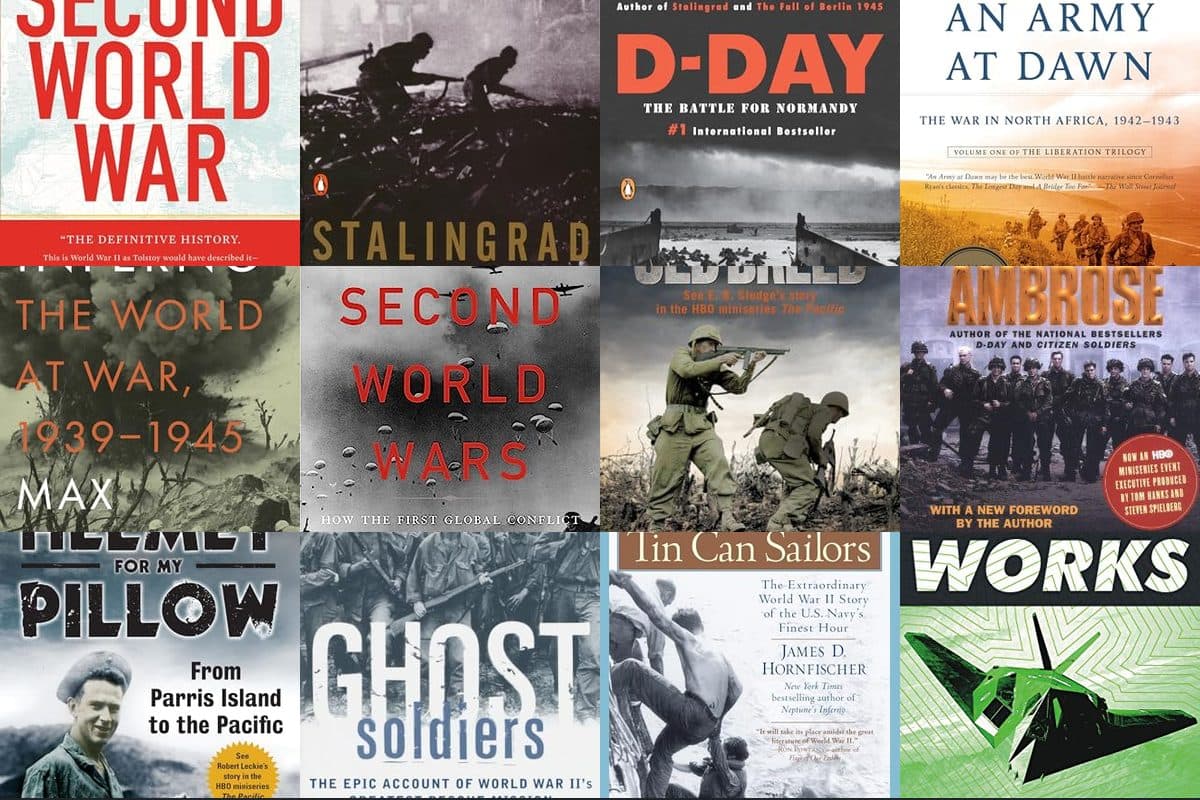
15 essential WW2 books covering every theater. Narrative histories, memoirs, and visual references ranked.
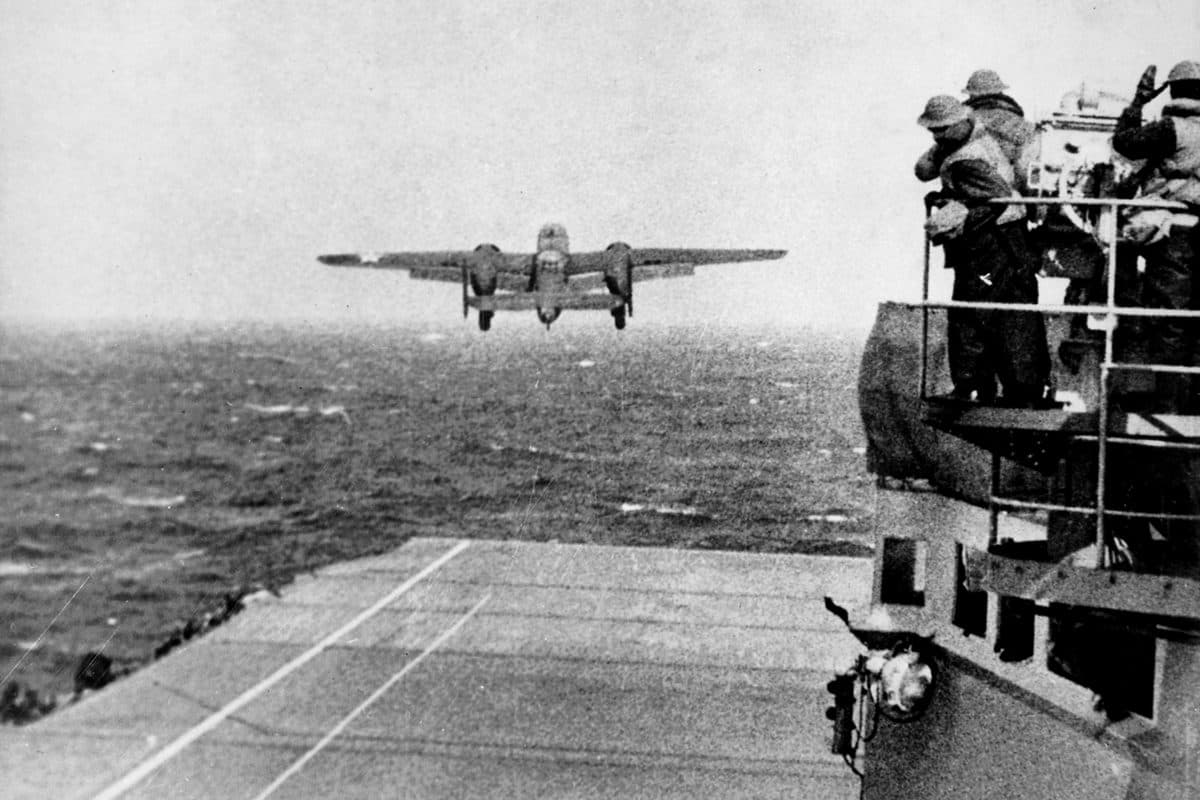
On April 18, 1942, sixteen B-25 Mitchell bombers did something no one thought possible: they launched from the deck of an aircraft carrier, flew 650 miles to Japan, and bombed Tokyo. Every aircraft was lost. The damage was negligible. The consequences changed the war.
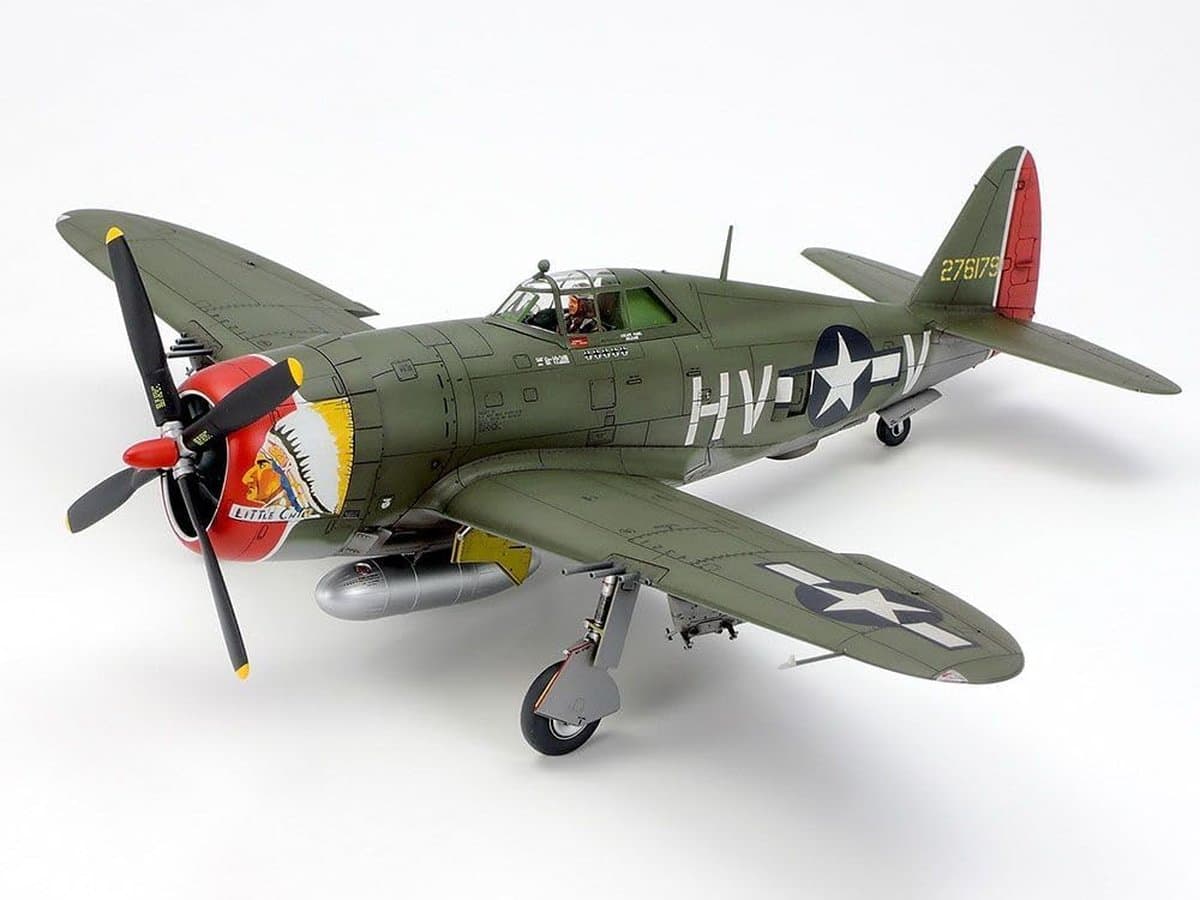
Compare 85+ WW2 scale model kits across aircraft, tanks, and ships. Beginner builds from $9 to museum-grade showpieces at $580. Covers Tamiya, Eduard, HK Models, Trumpeter, and more with honest reviews, trade-offs, and pricing.