

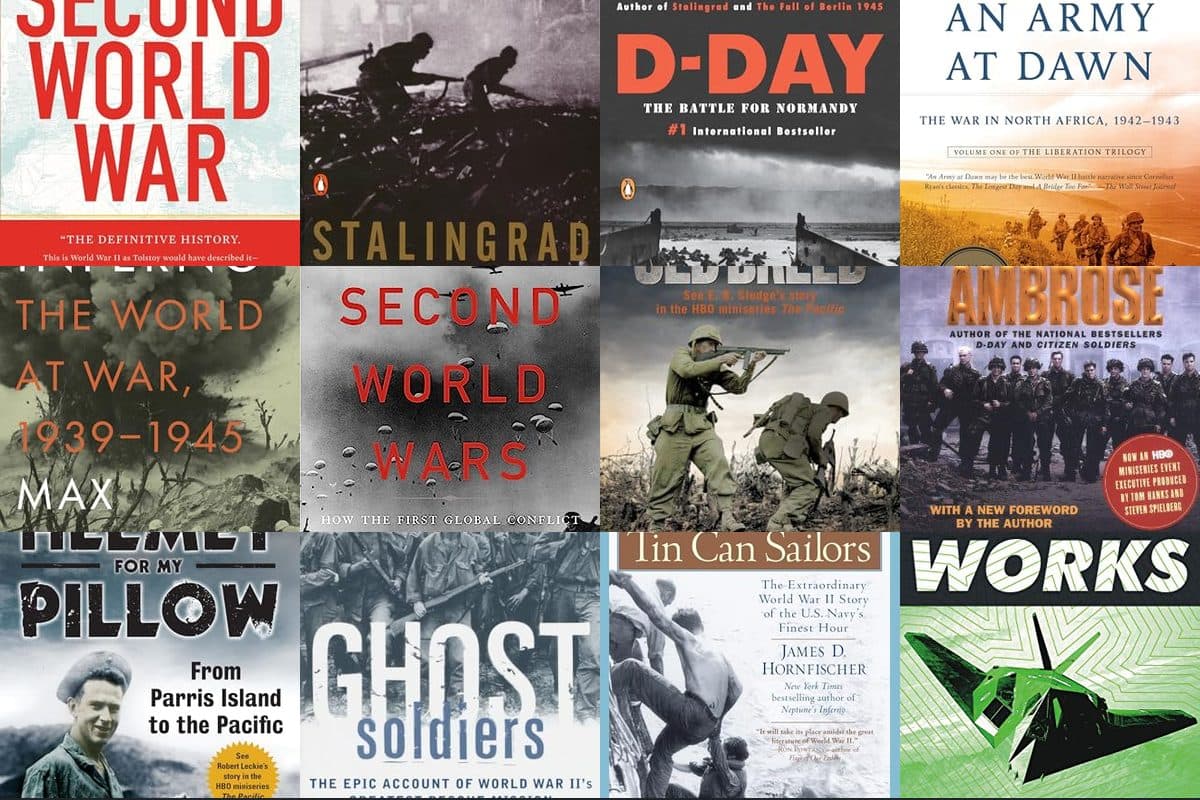
15 Best World War II Books for History Enthusiasts (2026)
15 essential WW2 books covering every theater. Narrative histories, memoirs, and visual references ranked.
daniel-mercer··21 min read

As the First Battle of the Marne reached its crisis point, Military Governor of Paris Joseph Gallieni requisitioned approximately 600 Renault AG1 taxicabs to rush 6,000 reserve troops to the front lines. The "taxis of the Marne" became an enduring symbol of French determination and improvisation. The broader Allied counteroffensive halted the German advance just 30 miles from Paris, shattering the Schlieffen Plan and ensuring the war would not end in a quick German victory.
Benedict Arnold, now fighting for the British, led a raiding force of 1,700 troops against New London and the Groton Heights fort across the Thames River in his native Connecticut. The storming of Fort Griswold by the 40th and 54th Regiments cost 88 defenders killed, including many after surrender, and 35 British casualties. The port of New London and its privateer shipping were burned to ashes.
Brigadier General Ulysses S. Grant, acting on his own initiative, occupied the strategically vital city of Paducah, Kentucky, at the confluence of the Tennessee and Ohio Rivers. The bloodless seizure denied the Confederacy control of critical river access and demonstrated Grant's instinct for seizing the initiative, a quality that would distinguish him throughout the war.
Filipino guerrillas launched a surprise attack on Company C, 9th U.S. Infantry, at Balangiga on the island of Samar, killing 48 of 74 American soldiers. It was the worst U.S. military defeat in the Philippine-American War. In retaliation, Brigadier General Jacob H. Smith ordered his troops to turn Samar into a "howling wilderness," leading to widespread civilian suffering and a Congressional investigation.
Anarchist Leon Czolgosz shot President William McKinley twice at close range during a public reception at the Temple of Music at the Pan-American Exposition in Buffalo, New York. McKinley lingered for eight days before dying on September 14 of gangrene. Vice President Theodore Roosevelt succeeded him, accelerating the expansion of US naval power and the creation of a global military posture.
Military Governor of Paris Joseph Gallieni requisitioned approximately 600 taxicabs to rush reserve troops to the front lines as the First Battle of the Marne reached its crisis point. The Allied counteroffensive halted the German advance just 30 miles from Paris.
The first true tank prototype, nicknamed Little Willie, underwent its first trial at William Foster and Company in Lincoln, England. Designed by William Tritton and Walter Wilson under the direction of the British Landships Committee, the 14-ton tracked vehicle used Bullock Creeping Grip tracks and a 105 horsepower Daimler engine. Development continued and produced the Mark I tanks that went into combat a year later.
The Union of South Africa declared war on Nazi Germany after a heated parliamentary debate in which Prime Minister J.B.M. Hertzog's proposal for neutrality was defeated. Jan Smuts replaced Hertzog as Prime Minister and immediately committed South African forces to the Allied cause. South African troops would fight with distinction in East Africa, North Africa, and Italy.
King Carol II of Romania abdicated under pressure from General Ion Antonescu, who had seized dictatorial powers the day before. Carol fled the country by train with his mistress Elena Lupescu, and his 18-year-old son Michael became king while Antonescu ran a fascist military regime. Romania aligned with Nazi Germany within weeks, committing its army to the invasion of the Soviet Union the following year.
A German decree went into effect requiring all Jews in German-occupied territories over the age of six to wear a yellow Star of David badge on their clothing at all times. The decree, which applied across Nazi-occupied Europe, was a critical step in the systematic persecution that would culminate in the Holocaust, the murder of six million Jews.
Germany launched the first V-2 ballistic missiles in combat, targeting Paris. The V-2, developed by Wernher von Braun at Peenemünde, was the world's first long-range guided ballistic missile, traveling at over 3,500 mph, too fast to intercept. Over the following months, more than 3,000 V-2s would be launched against London, Antwerp, and other Allied targets, killing over 9,000 people.

Major General
French aristocrat who became one of the most important foreign officers in the American Revolution. At just 19, he purchased his own ship to sail to America and was commissioned a major general by Congress. He served at Brandywine, Valley Forge, and Yorktown, and later played a leading role in the early French Revolution.

American social reformer, pacifist, and Nobel Peace Prize laureate who opposed U.S. entry into World War I and founded the Women's International League for Peace and Freedom. Her advocacy for non-violent conflict resolution influenced international peace movements throughout the twentieth century.

Brevet Major
The 25th President of the United States, who served as a Union officer in the Civil War and rose from private to brevet major. As President, he led the nation through the Spanish-American War of 1898, which resulted in the acquisition of the Philippines, Guam, and Puerto Rico. He was shot by an anarchist on September 6, 1901, and died eight days later.
Wear the Timeline
10 military events occurred on September 6, spanning multiple centuries. Key events include: Taxis of the Marne, French Counterattack Saves Paris (1914), Balangiga Massacre, Philippines (1901), Jews Ordered to Wear the Star of David (1941), First V-2 Rocket Strikes Paris (1944).
The most significant military event on September 6 is Taxis of the Marne, French Counterattack Saves Paris (1914). As the First Battle of the Marne reached its crisis point, Military Governor of Paris Joseph Gallieni requisitioned approximately 600 Renault AG1 taxicabs to rush 6,000 reserve troops to the front lines. The "taxis of the Marne" became an enduring symbol of French determination and improvisation. The broader Allied counteroffensive halted the German advance just 30 miles from Paris, shattering the Schlieffen Plan and ensuring the war would not end in a quick German victory.
Notable military figures born on September 6 include Marquis de Lafayette (1757–1834), Jane Addams (1860–1935).
Events on September 6 span World War I, the Civil War, the Interwar Period, World War II, the Colonial & Revolutionary era, covering 10 events across 3 centuries of military history.
Events on September 6 involve 3 branches of the U.S. and allied armed forces, reflecting the global scope of military operations throughout history.
Explore military history from the day you were born.
June 6
The Allied invasion of Normandy, the largest amphibious assault in history.
December 7
Japan attacks the U.S. Pacific Fleet, bringing America into World War II.
September 11
The deadliest terrorist attack in history transforms U.S. national security.
August 6
The first atomic bomb is dropped on a city, ushering in the nuclear age.
May 8
Nazi Germany surrenders unconditionally, ending World War II in Europe.
November 11
Armistice Day marks the end of World War I and honors all who served.
June 4
The turning point of the Pacific War as the U.S. Navy destroys four Japanese carriers.
July 4
The Declaration of Independence is adopted, sparking the American Revolution.
15 essential WW2 books covering every theater. Narrative histories, memoirs, and visual references ranked.
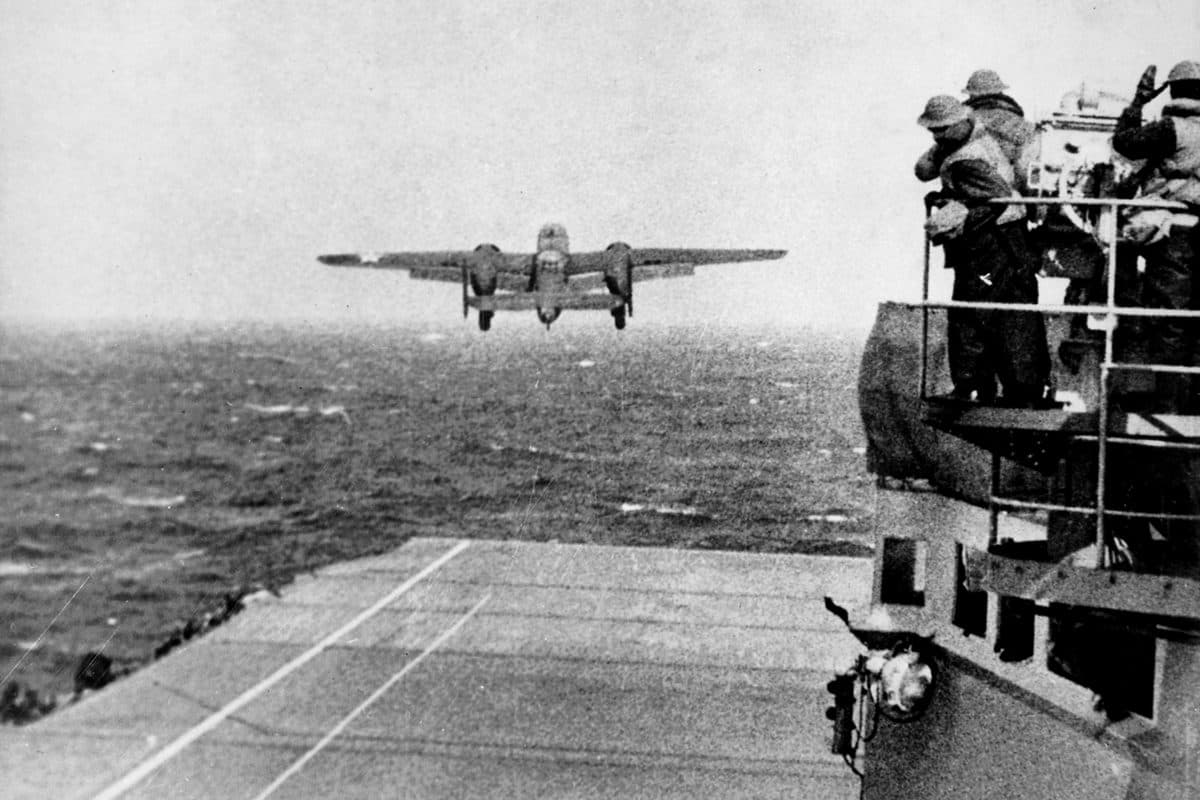
On April 18, 1942, sixteen B-25 Mitchell bombers did something no one thought possible: they launched from the deck of an aircraft carrier, flew 650 miles to Japan, and bombed Tokyo. Every aircraft was lost. The damage was negligible. The consequences changed the war.
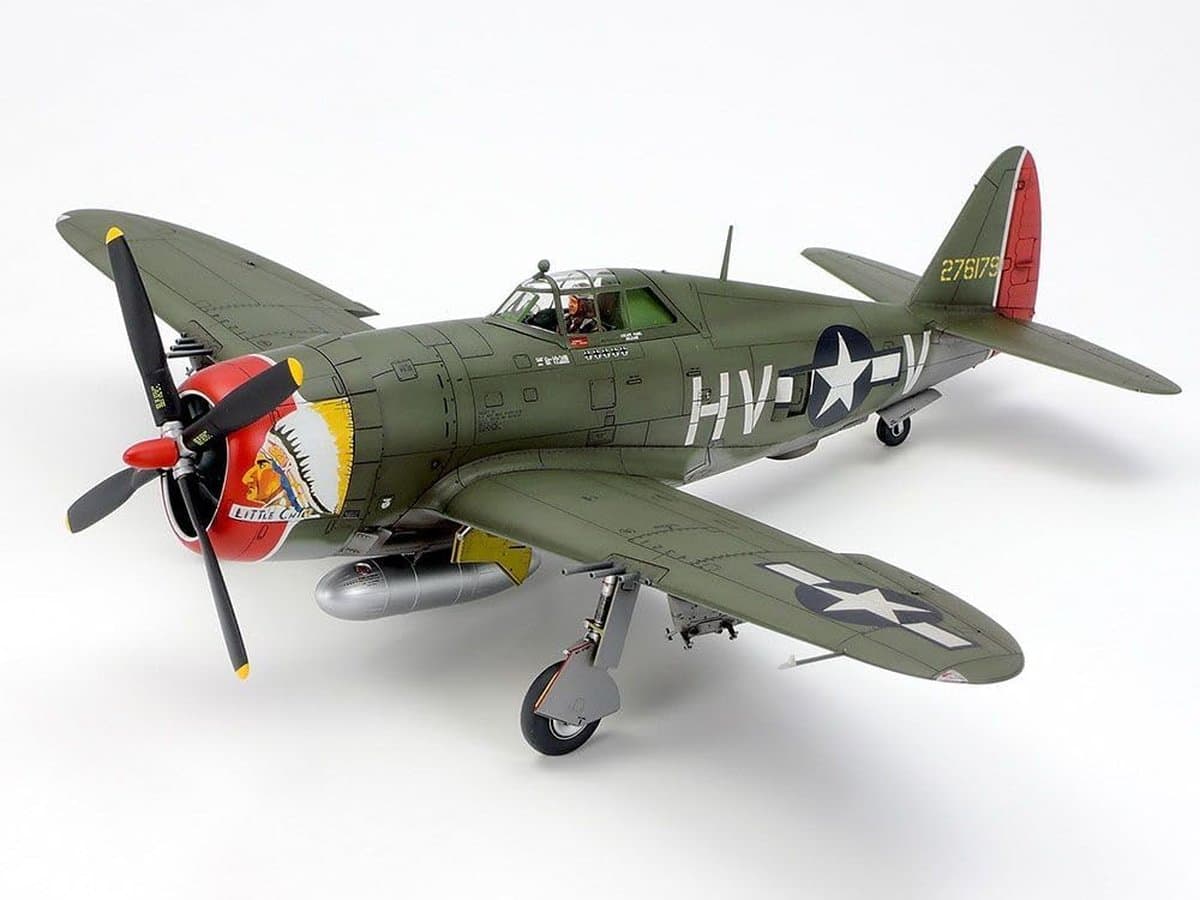
Compare 85+ WW2 scale model kits across aircraft, tanks, and ships. Beginner builds from $9 to museum-grade showpieces at $580. Covers Tamiya, Eduard, HK Models, Trumpeter, and more with honest reviews, trade-offs, and pricing.

On April 7, 1945, the Imperial Japanese Navy sent the largest battleship ever built on a one-way suicide mission to Okinawa. She never arrived. 386 American aircraft found her first, and sank her in under two hours.