

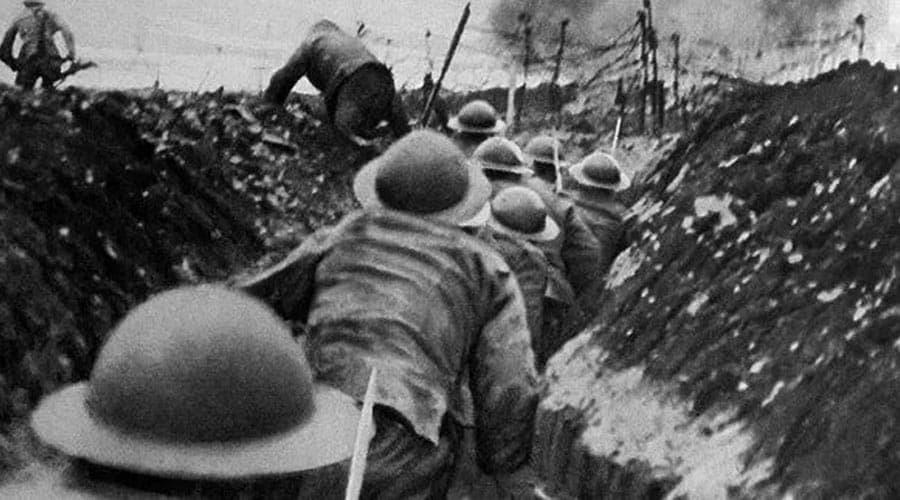
20 Chilling Quotes from the Trenches of World War I
Harrowing first-person accounts from soldiers who endured the mud, gas, and constant shelling of World War I's Western Front.
james-holloway··8 min read

The Canadian Corps under Lieutenant General Arthur Currie captured the village of Passchendaele in Belgium, effectively ending the Third Battle of Ypres, one of the most infamous campaigns of World War I. The broader offensive, which began on July 31, cost the British Empire approximately 275,000 casualties for an advance of barely five miles across a moonscape of mud and flooded trenches.
A French revolutionary army of 40,000 under General Dumouriez defeated an Austrian force at Jemappes in the Austrian Netherlands. The victory, achieved largely by untrained volunteers fired by revolutionary zeal, was the first major field victory of the French Revolutionary Wars and led to the French conquest of Belgium.
Abraham Lincoln won the 1860 presidential election with just 40% of the popular vote, carrying every free state but receiving virtually no votes in the South. His victory on an anti-slavery-expansion platform triggered the secession of seven Southern states before his inauguration, leading directly to the Civil War.
Exactly one year after Lincoln's election, Jefferson Davis was formally elected to a full six-year term as president of the Confederate States of America, running unopposed. Davis had served as provisional president since February 1861 and would lead the Confederacy through its entire existence.
The Confederate commerce raider CSS Shenandoah sailed into Liverpool, England, and Lieutenant James Waddell surrendered the vessel to British authorities, seven months after Appomattox. The Shenandoah had circumnavigated the globe, capturing 38 Union merchant ships, and Waddell lowered the last official Confederate flag.
The Canadian Corps captured the village of Passchendaele, ending the Third Battle of Ypres at a cost of approximately 275,000 British Empire casualties for five miles of mud.
Chilling Quotes from WWI TrenchesRed Army forces of the 1st Ukrainian Front under General Nikolai Vatutin captured Kiev in a surprise attack from the Lyutezh bridgehead north of the city. The liberation of the Ukrainian capital was one of the largest urban operations of 1943 and destroyed the German Fourth Panzer Army's defensive position on the Dnieper.
During the Battle of the Hurtgen Forest, German panzer counterattacks overwhelmed American forces at Kommerscheidt as the 28th Infantry Division's 112th Infantry Regiment fought desperately against superior German armor. The regiment suffered 2,093 casualties, 64% of its assigned strength, in one of the worst American defeats of the European campaign.
US First and Ninth Armies opened Operation Queen with one of the heaviest tactical air bombardments of World War II, 2,807 aircraft dropping 9,700 tons of bombs across the Rur River approaches. The combined-arms offensive attempted to break through the Siegfried Line defenses east of Aachen.
Soviet forces completed the destruction of organized resistance in Budapest, ending the Hungarian Revolution. Imre Nagy took asylum in the Yugoslav embassy, and Janos Kadar's Soviet-installed government consolidated control. The outcome demonstrated the limits of Western rollback rhetoric and the willingness of the USSR to use overwhelming armored force inside the Warsaw Pact.
Lebanese magazine Ash-Shiraa revealed US arms sales to Iran, opening the Iran-Contra affair that would consume the Reagan administration and reshape oversight of US covert action. The scandal prompted reforms in special operations authorities, National Security Council procedures, and congressional intelligence oversight.

Lieutenant Commander
The "March King" who composed the most iconic military marches in American history, including "The Stars and Stripes Forever," "Semper Fidelis" (the official march of the Marine Corps), and "The Washington Post." Sousa led the United States Marine Band from 1880 to 1892 and served as a lieutenant in the Naval Reserve during World War I.

Admiral
Retired four-star admiral who commanded United States Special Operations Command and organized Operation Neptune Spear, the 2011 Navy SEAL raid that killed Osama bin Laden. A career SEAL who served 37 years in uniform, McRaven commanded JSOC, SEAL Team Three, and Special Operations Command Europe.

King of Sweden and one of the greatest military commanders in history, widely regarded as the "Father of Modern Warfare" for revolutionary innovations in combined-arms tactics, mobile artillery, and linear infantry formations. Killed at the Battle of Lützen on November 6, 1632, during the Thirty Years' War when he became separated from his cavalry in dense gunpowder smoke.
Wear the Timeline
10 military events occurred on November 6, spanning multiple centuries. Key events include: The Canadian Corps Captures Passchendaele (1917), Abraham Lincoln Elected President (1860), Soviets Liberate Kiev (1943).
The most significant military event on November 6 is The Canadian Corps Captures Passchendaele (1917). The Canadian Corps under Lieutenant General Arthur Currie captured the village of Passchendaele in Belgium, effectively ending the Third Battle of Ypres, one of the most infamous campaigns of World War I. The broader offensive, which began on July 31, cost the British Empire approximately 275,000 casualties for an advance of barely five miles across a moonscape of mud and flooded trenches.
Notable military figures born on November 6 include John Philip Sousa (1854–1932), William H. McRaven (1955–present).
Events on November 6 span World War I, the Civil War, the Colonial & Revolutionary era, World War II, the Cold War, covering 10 events across 3 centuries of military history.
Events on November 6 involve 3 branches of the U.S. and allied armed forces, reflecting the global scope of military operations throughout history.
Explore military history from the day you were born.
June 6
The Allied invasion of Normandy, the largest amphibious assault in history.
December 7
Japan attacks the U.S. Pacific Fleet, bringing America into World War II.
September 11
The deadliest terrorist attack in history transforms U.S. national security.
August 6
The first atomic bomb is dropped on a city, ushering in the nuclear age.
May 8
Nazi Germany surrenders unconditionally, ending World War II in Europe.
November 11
Armistice Day marks the end of World War I and honors all who served.
June 4
The turning point of the Pacific War as the U.S. Navy destroys four Japanese carriers.
July 4
The Declaration of Independence is adopted, sparking the American Revolution.
Harrowing first-person accounts from soldiers who endured the mud, gas, and constant shelling of World War I's Western Front.
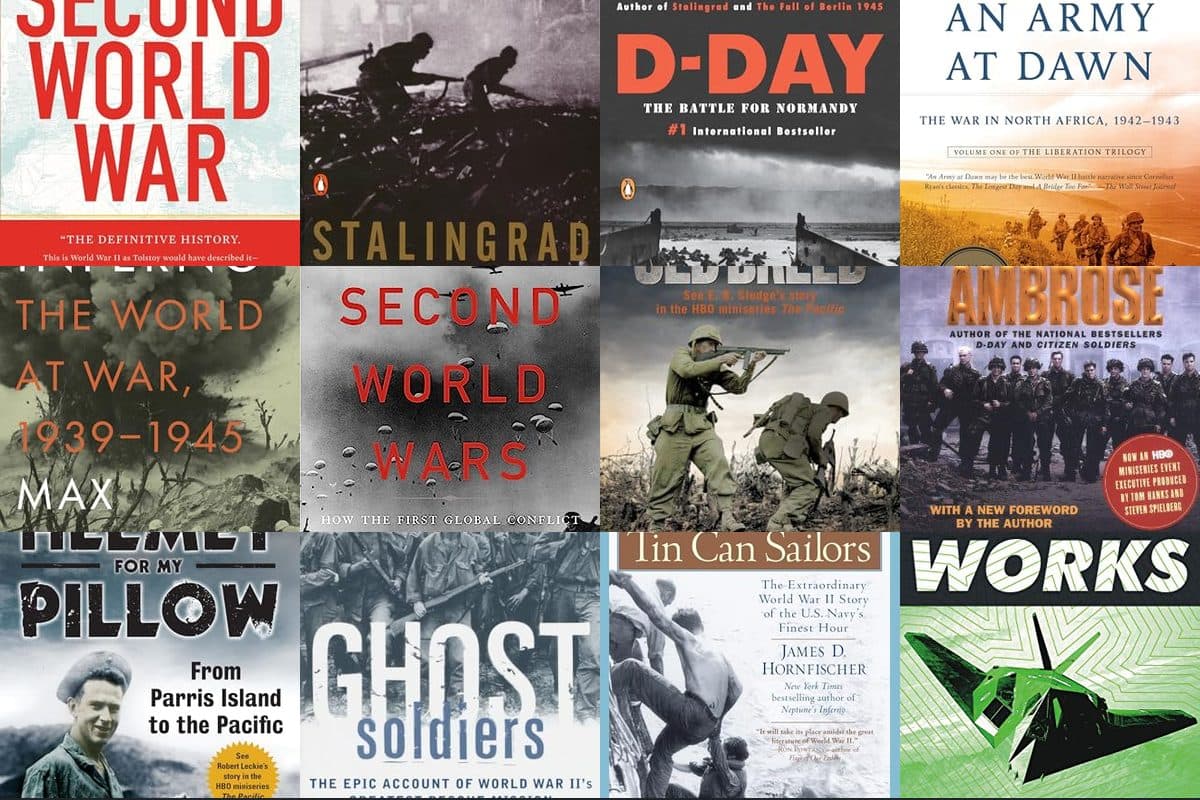
15 essential WW2 books covering every theater. Narrative histories, memoirs, and visual references ranked.
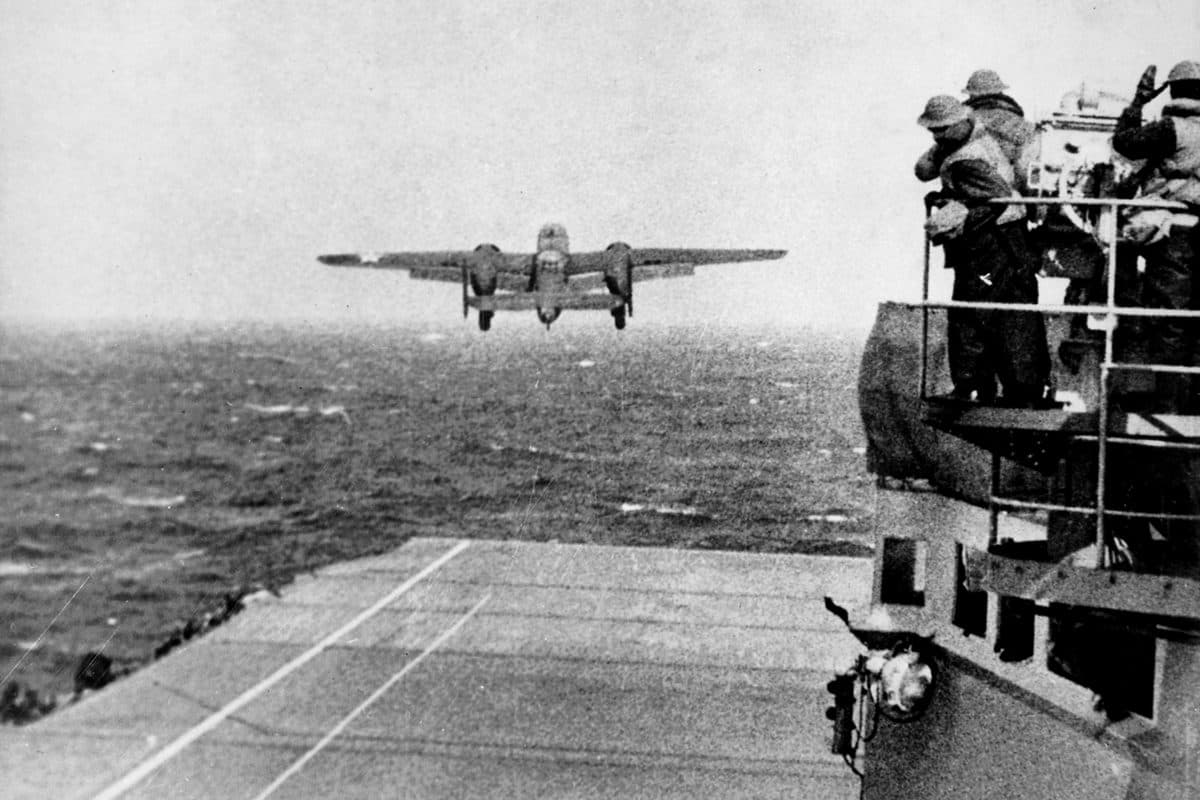
On April 18, 1942, sixteen B-25 Mitchell bombers did something no one thought possible: they launched from the deck of an aircraft carrier, flew 650 miles to Japan, and bombed Tokyo. Every aircraft was lost. The damage was negligible. The consequences changed the war.
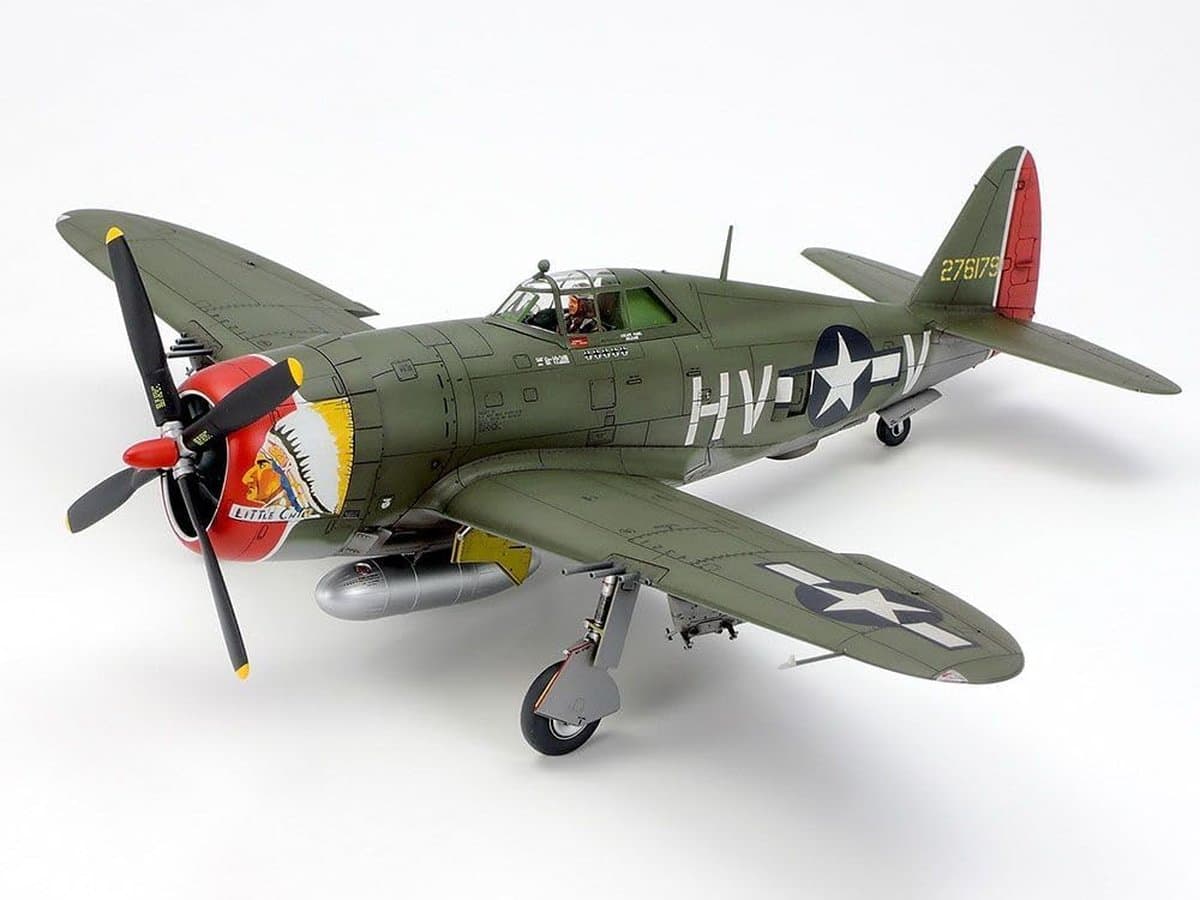
Compare 85+ WW2 scale model kits across aircraft, tanks, and ships. Beginner builds from $9 to museum-grade showpieces at $580. Covers Tamiya, Eduard, HK Models, Trumpeter, and more with honest reviews, trade-offs, and pricing.