

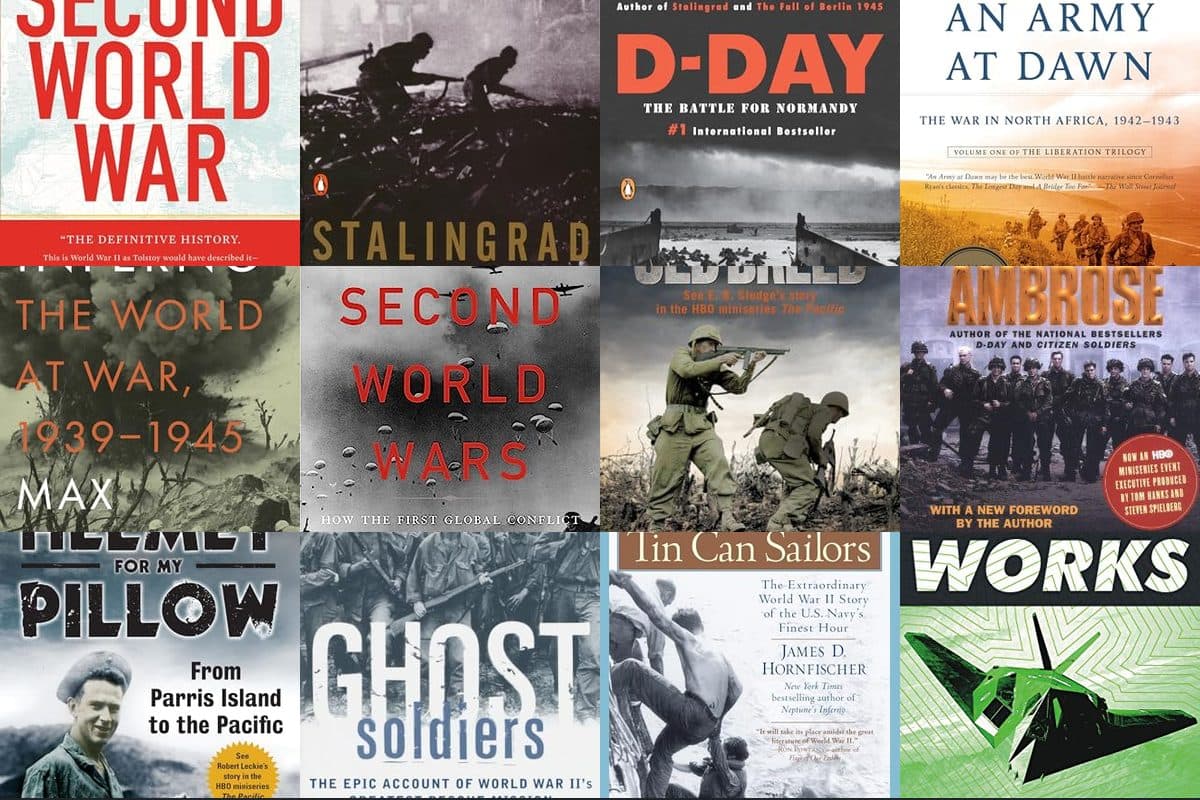
15 Best World War II Books for History Enthusiasts (2026)
15 essential WW2 books covering every theater. Narrative histories, memoirs, and visual references ranked.
daniel-mercer··21 min read

The Imperial Japanese Navy launched a devastating surprise military strike against the United States naval base at Pearl Harbor, Hawaii. Beginning at 7:48 a.m. local time, 353 Japanese aircraft in two waves attacked the Pacific Fleet at anchor, killing 2,403 Americans, wounding 1,178, sinking four battleships, and damaging four more. The attack destroyed 188 aircraft on the ground. Japan's goal was to neutralize the U.S. Pacific Fleet and buy time for its conquests across Southeast Asia. Instead, the attack unified a divided nation and propelled the United States into World War II.
Roman orator and statesman Marcus Tullius Cicero was killed by soldiers of the Second Triumvirate near his villa at Formiae. His death symbolized the fall of the Roman Republic and the rise of the militarized autocracy that would eventually become the Roman Empire.
The first Theatre Royal at Covent Garden in London opened with a performance of Congreve's The Way of the World. Over subsequent centuries the building became a regular venue for state and military commemorations including memorials for fallen British forces.
Delaware became the first state to ratify the United States Constitution, establishing the legal framework that would define civilian control of the military and the power of Congress to raise and support armies. The unanimous 30-0 vote set a precedent for the rapid adoption of the new governing document.
Delaware's ratifying convention voted unanimously to approve the new United States Constitution, becoming the first of the thirteen states to do so. The decision established the legal framework that would define civilian control of the military and congressional war powers for the future republic.
Union forces under Generals James Blunt and Francis Herron defeated Confederate troops commanded by General Thomas Hindman in northwest Arkansas. The hard-fought battle, with roughly 2,700 total casualties, effectively ended major Confederate operations in the region and secured Union control of northwest Arkansas for the remainder of the Civil War.
Around early December 1869, former Confederate guerrilla and bushwhacker Frank James, brother of Jesse James, was reported as moving toward fully transitioning to civilian outlaw activity in Missouri. The transitions of former Civil War irregulars into postwar criminal bands shaped the violence of the American frontier through the 1870s and 1880s.
Following its declaration of war against Germany in April 1917, the United States formally declared war on Austria-Hungary, expanding American involvement in World War I to the Central Powers' second-largest member. The declaration came as American troops were already deploying to the Western Front in France.
The United States Congress declared war on Austria-Hungary, formalizing American belligerency against the second-largest member of the Central Powers. The declaration came as American troops were already deploying to the Western Front in France, completing the alignment of American military power with the Allied war effort.
Simultaneous with Pearl Harbor, Japanese forces launched coordinated attacks across the Pacific, striking the Philippines, Guam, Midway Island, Wake Island, Malaya, and Hong Kong. These operations aimed to establish the Greater East Asia Co-Prosperity Sphere by seizing resource-rich territories while neutralizing Allied military power in the region.
Mess Attendant Second Class Doris Miller of the USS West Virginia distinguished himself by carrying wounded sailors to safety and manning a .50-caliber anti-aircraft machine gun with no prior training, firing at attacking Japanese aircraft. He became the first African American to receive the Navy Cross and a symbol of courage transcending the racial barriers of the era.
The battleship USS Arizona (BB-39) was struck by a 1,760-pound armor-piercing bomb that penetrated the forward deck and detonated the forward ammunition magazine. The resulting explosion killed 1,177 of the 1,512 crewmen aboard, nearly half of all Americans killed in the entire attack. The ship sank in nine minutes and was never raised; her hull remains a memorial at Pearl Harbor to this day.
Several hours before the Pearl Harbor strike, Japanese troops of the 25th Army began amphibious landings on the northeastern coast of British Malaya at Kota Bharu, opening the Malayan campaign that culminated in the fall of Singapore. The landings were the first ground combat of the Pacific War.
About nine hours after the Pearl Harbor strike, Japanese bombers struck Clark Field and other airfields in the Philippines, destroying most of General Douglas MacArthur's Far East Air Force on the ground. The losses crippled American air power in the western Pacific at the moment of greatest need.
Exactly one year after Pearl Harbor, the Iowa-class battleship USS New Jersey was launched at the Philadelphia Naval Shipyard. The 45,000-ton warship would go on to serve in World War II, the Korean War, the Vietnam War, and the Lebanon crisis, becoming the most decorated battleship in U.S. Navy history with a career spanning five decades.
U.S. Army troops of the 77th Infantry Division made an amphibious landing at Ormoc Bay on the western coast of Leyte in the Philippines. Despite fierce kamikaze attacks that sank two destroyers and damaged several transports, the successful landing cut Japanese supply lines and effectively sealed the fate of enemy forces on Leyte.
The destroyer USS Ward, which had fired the first American shots of the Pacific War by sinking a Japanese midget submarine outside Pearl Harbor on December 7, 1941, was struck by a kamikaze and lost off Leyte exactly three years later to the day. The coincidence was one of the haunting symmetries of the Pacific War.
President John F. Kennedy and Prime Minister Harold Macmillan met at Nassau in the Bahamas in late December 1962 in talks framed by the early December American announcement of cancellation of the air launched ballistic missile Skybolt. The cancellation forced a fundamental restructuring of British nuclear deterrent posture and the eventual purchase of American Polaris submarines.
The nuclear-powered aircraft carrier USS Enterprise (CVN-65), the world's first nuclear-powered carrier, launched its first combat missions over Vietnam during Operation Rolling Thunder. The ship's deployment marked a new era in naval power projection, demonstrating that nuclear carriers could sustain prolonged high-tempo operations without the need for conventional refueling.
Apollo 17 launched from the Kennedy Space Center as the sixth and final crewed lunar landing mission. The mission carried Commander Eugene Cernan, Command Module Pilot Ronald Evans, and Lunar Module Pilot Harrison Schmitt, the only professional geologist to walk on the Moon. The Apollo program emerged from technologies originally developed for ballistic missile and reconnaissance applications.
Indonesian military forces launched a full-scale invasion of East Timor just hours after U.S. President Gerald Ford and Secretary of State Henry Kissinger concluded a visit to Jakarta. The invasion, carried out with American-supplied weapons, began a 24-year occupation that would claim an estimated 100,000 to 180,000 lives and raise lasting questions about U.S. complicity in Cold War-era human rights abuses.
A catastrophic 6.8-magnitude earthquake struck northwestern Armenia, killing an estimated 25,000 to 50,000 people. The U.S. military launched a major humanitarian relief operation, with Air Force cargo aircraft delivering medical supplies, rescue equipment, and relief workers. It was one of the first significant U.S.-Soviet cooperative humanitarian missions during the waning years of the Cold War.
NASA's Galileo spacecraft, launched by the Space Shuttle Atlantis in 1989 and powered by technology originally developed for military space applications, entered orbit around Jupiter after a six-year journey. The mission, which involved significant Department of Defense collaboration in deep-space communications and tracking, expanded humanity's understanding of the Jovian system.
NASA's Galileo spacecraft completed orbital insertion at Jupiter, becoming the first spacecraft to orbit a giant outer planet. The mission used radioisotope power supplies developed by the Department of Energy and Air Force launch infrastructure, and its discoveries reshaped scientific understanding of the Jovian system.

Admiral
Commander in Chief of the U.S. Pacific Fleet at the time of the Pearl Harbor attack. Kimmel was relieved of command ten days after the attack and spent the rest of his life seeking to restore his reputation, arguing that he had been denied critical intelligence about the impending Japanese threat.

Lieutenant
Pioneer African American aviator and civil rights activist who co-founded the Coffey School of Aeronautics in Chicago. She became the first African American woman to hold a commercial pilot's license and a private pilot's license simultaneously, and played a pivotal role in lobbying for the integration of African Americans into the U.S. military aviation program, helping pave the way for the Tuskegee Airmen.

American actor known for his role as Robert E. Lee Hodges in the Vietnam War drama "Casualties of War" and various military-themed films. While not a military veteran himself, his body of work brought attention to the experiences of American soldiers in Vietnam.

Marvel Comics writer and editor best known for his decade-long run writing Captain America, the iconic patriotic superhero and World War II veteran. Gruenwald's stories explored themes of American identity, military duty, and the moral complexities of serving one's country.

Rear Admiral
Commander of Battleship Division One, killed aboard the USS Arizona during the Pearl Harbor attack while directing the ship's defense from the bridge. He was the first U.S. flag officer killed in World War II and received the Medal of Honor posthumously for his conspicuous devotion to duty.

Captain
Commanding officer of the USS Arizona who remained on the bridge directing the ship's defense during the Pearl Harbor attack until the ship was destroyed by the catastrophic magazine explosion. He received the Medal of Honor posthumously for his refusal to abandon his post.
Wear the Timeline
24 military events occurred on December 7, spanning multiple centuries. Key events include: Japanese Attacks Across the Pacific (1941), Doris Miller's Heroism at Pearl Harbor (1941), USS Arizona Destroyed (1941), Japanese Forces Land at Kota Bharu in Malaya (1941), Japanese Attack on Clark Field in the Philippines (1941).
The most significant military event on December 7 is Attack on Pearl Harbor (1941). The Imperial Japanese Navy launched a devastating surprise military strike against the United States naval base at Pearl Harbor, Hawaii. Beginning at 7:48 a.m. local time, 353 Japanese aircraft in two waves attacked the Pacific Fleet at anchor, killing 2,403 Americans, wounding 1,178, sinking four battleships, and damaging four more. The attack destroyed 188 aircraft on the ground. Japan's goal was to neutralize the U.S. Pacific Fleet and buy time for its conquests across Southeast Asia. Instead, the attack unified a divided nation and propelled the United States into World War II.
Notable military figures born on December 7 include Husband E. Kimmel (1882–1968), Willa Brown (1906–1992), C. Thomas Howell (1966–present), Mark Gruenwald (1953–1996).
Events on December 7 span the Colonial & Revolutionary era, the Civil War, World War I, World War II, the Vietnam War, the Cold War, the Modern Era, covering 24 events across 4 centuries of military history.
Events on December 7 involve 6 branches of the U.S. and allied armed forces, reflecting the global scope of military operations throughout history.
Explore military history from the day you were born.
June 6
The Allied invasion of Normandy, the largest amphibious assault in history.
September 11
The deadliest terrorist attack in history transforms U.S. national security.
August 6
The first atomic bomb is dropped on a city, ushering in the nuclear age.
May 8
Nazi Germany surrenders unconditionally, ending World War II in Europe.
November 11
Armistice Day marks the end of World War I and honors all who served.
June 4
The turning point of the Pacific War as the U.S. Navy destroys four Japanese carriers.
July 4
The Declaration of Independence is adopted, sparking the American Revolution.
15 essential WW2 books covering every theater. Narrative histories, memoirs, and visual references ranked.
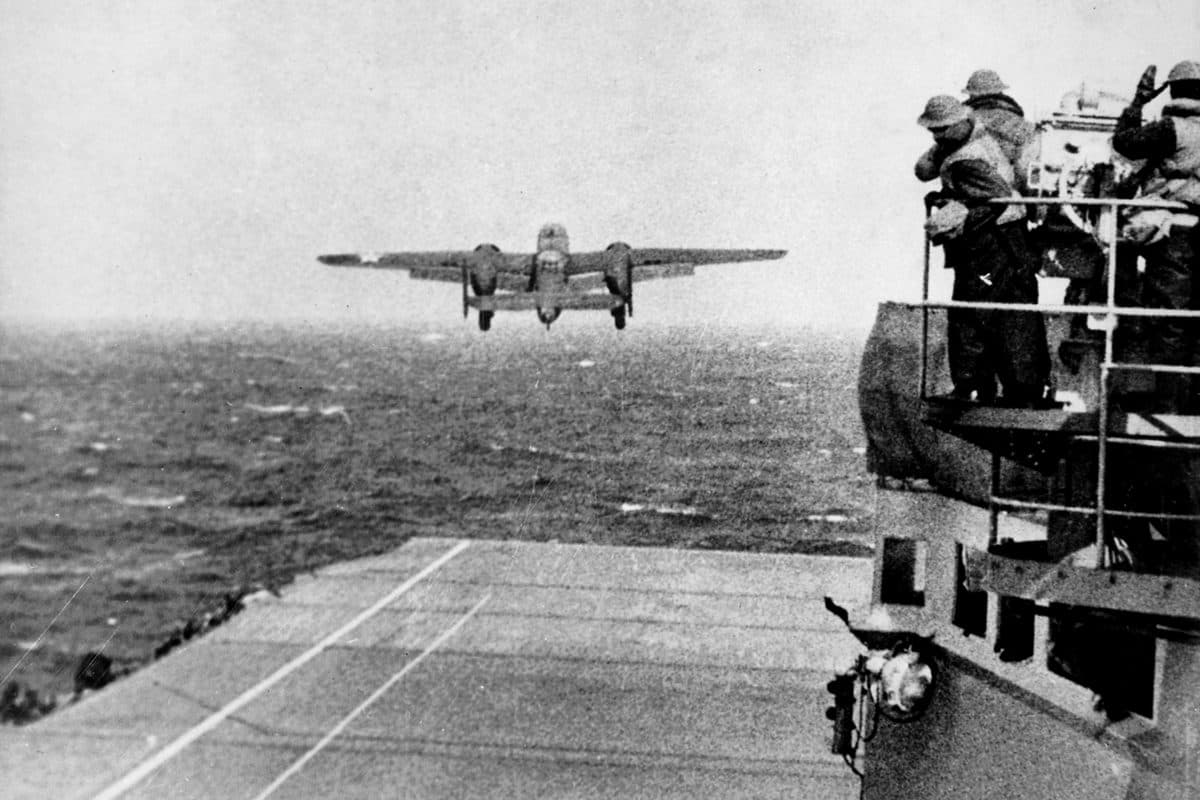
On April 18, 1942, sixteen B-25 Mitchell bombers did something no one thought possible: they launched from the deck of an aircraft carrier, flew 650 miles to Japan, and bombed Tokyo. Every aircraft was lost. The damage was negligible. The consequences changed the war.
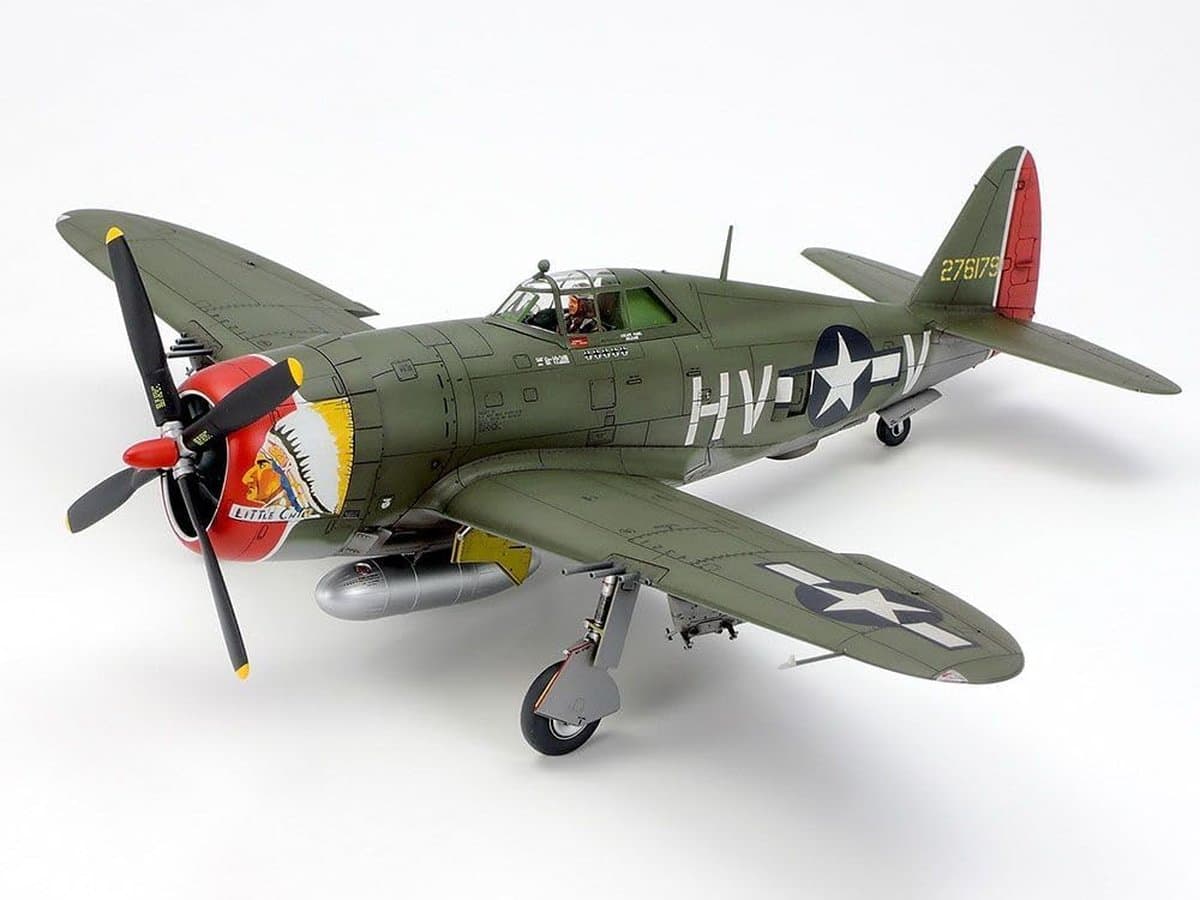
Compare 85+ WW2 scale model kits across aircraft, tanks, and ships. Beginner builds from $9 to museum-grade showpieces at $580. Covers Tamiya, Eduard, HK Models, Trumpeter, and more with honest reviews, trade-offs, and pricing.

On April 7, 1945, the Imperial Japanese Navy sent the largest battleship ever built on a one-way suicide mission to Okinawa. She never arrived. 386 American aircraft found her first, and sank her in under two hours.