

15 Best World War II Books for History Enthusiasts (2026)
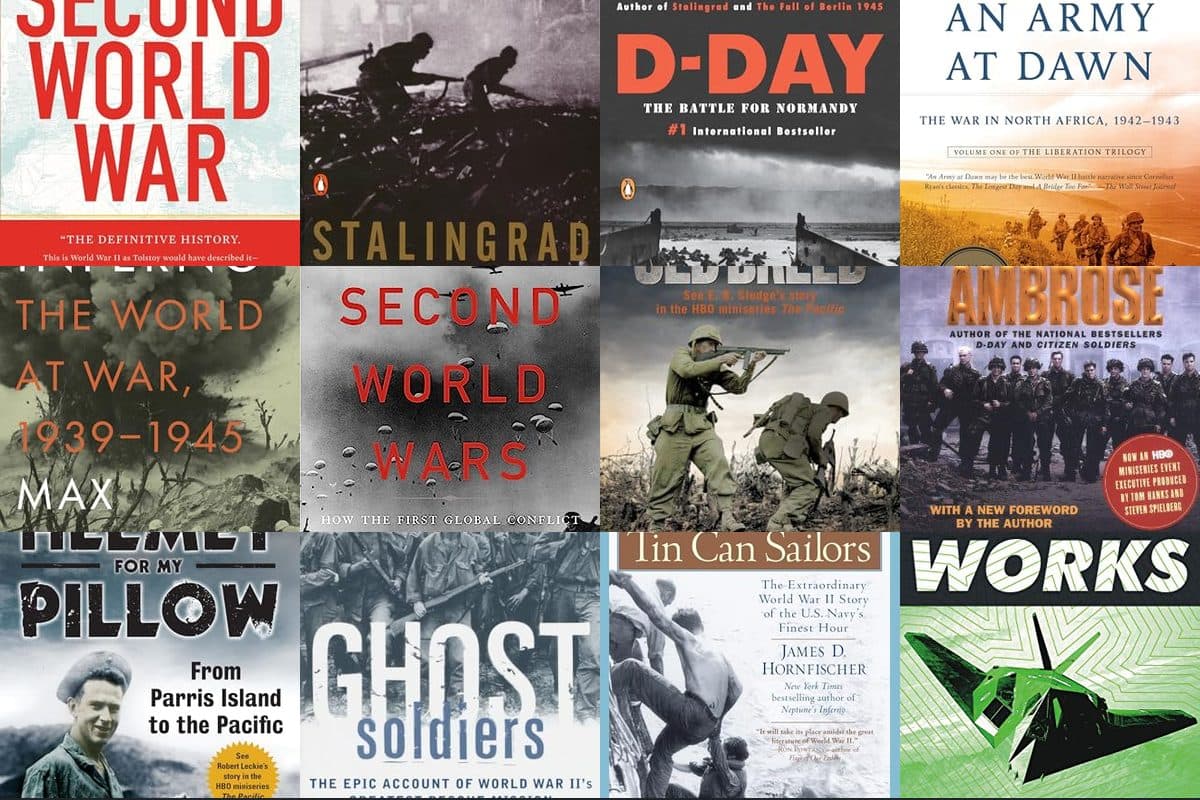
15 essential WW2 books covering every theater. Narrative histories, memoirs, and visual references ranked.
daniel-mercer··21 min read

President Franklin D. Roosevelt appeared before a joint session of Congress and delivered one of the most consequential speeches in American history. Speaking for just six minutes, Roosevelt declared that "yesterday, December 7, 1941, a date which will live in infamy, the United States of America was suddenly and deliberately attacked by naval and air forces of the Empire of Japan." The Senate approved the declaration 82-0 and the House 388-1, with only Jeannette Rankin of Montana, a pacifist who had also voted against entering World War I, casting the sole dissenting vote.
After a disastrous series of defeats in New York and New Jersey, General Washington's badly depleted Continental Army crossed the Delaware River into Pennsylvania, taking or destroying all available boats to prevent British pursuit. Barely 3,000 effective troops remained, many with enlistments expiring in weeks. The desperate crossing set the stage for Washington's famous Christmas night re-crossing that would turn the war's momentum at Trenton.
President Lincoln announced his "Ten Percent Plan" for Reconstruction, offering full pardons to most Confederates who took an oath of allegiance to the United States and accepted the abolition of slavery. When ten percent of a seceded state's 1860 voters took the oath, that state could form a new government and rejoin the Union, a remarkably lenient approach that drew fierce opposition from Radical Republicans in Congress.
A Royal Navy squadron under Vice-Admiral Doveton Sturdee intercepted and destroyed Vice Admiral Maximilian von Spee's German East Asia Squadron off the Falkland Islands, avenging the British defeat at Coronel six weeks earlier. The engagement was the first significant British naval victory of the First World War and shut down surface raiding by German cruisers in the southern oceans.
President Franklin D. Roosevelt appeared before a joint session of Congress and delivered one of the most consequential speeches in American history. Speaking for just six minutes, Roosevelt declared that "yesterday, December 7, 1941, a date which will live in infamy, the United States of America was suddenly and deliberately attacked by naval and air forces of the Empire of Japan." The Senate approved the declaration 82-0 and the House 388-1, with only Jeannette Rankin of Montana, a pacifist who had also voted against entering World War I, casting the sole dissenting vote.
In coordinated strikes across the Western Pacific, Japanese forces landed in Malaya, bombed Clark Air Base in the Philippines, destroying most American aircraft on the ground, and attacked Hong Kong, Guam, and Wake Island. The simultaneous offensives, all occurring on December 8 local time west of the International Date Line, established Japan's bid for the Greater East Asia Co-Prosperity Sphere.
Japanese naval and ground forces began the invasion of Guam just hours after the Pearl Harbor attack. The small US Marine and Navy garrison, lacking heavy weapons or air support, held out for two days before surrendering, losing the first American territory captured in the Pacific War.
Seventh Air Force B-24 Liberators flying from Saipan struck Iwo Jima for the first time, opening a 72-day preparatory bombing campaign that preceded the Marine Corps landings in February 1945. The sustained attacks were intended to soften Japanese defenses but ultimately demonstrated the limits of air interdiction against heavily entrenched positions.
President Ronald Reagan and Soviet General Secretary Mikhail Gorbachev signed the Intermediate-Range Nuclear Forces Treaty at a Washington summit, eliminating an entire class of nuclear weapons, all ground-launched ballistic and cruise missiles with ranges between 500 and 5,500 kilometers. It was the first arms control agreement to reduce, rather than merely limit, nuclear arsenals.
President Ronald Reagan and General Secretary Mikhail Gorbachev signed the Intermediate-Range Nuclear Forces Treaty at the White House, eliminating an entire class of ground-launched ballistic and cruise missiles with ranges between 500 and 5,500 kilometers. It was the first arms control treaty to actually destroy weapons rather than cap their numbers.
The leaders of Russia, Ukraine, and Belarus signed the Belavezha Accords in a hunting lodge in western Belarus, declaring the Soviet Union dissolved and creating the Commonwealth of Independent States. The agreement ended the Cold War adversary that had justified forty-five years of American strategic nuclear planning and conventional force posture.

American inventor who revolutionized military manufacturing by pioneering the concept of interchangeable parts in firearms production. His 1798 musket contract with the U.S. government introduced standardized components to arms manufacturing at his New Haven armory, laying the groundwork for the mass production techniques that would allow the United States to arm itself for every major conflict from the War of 1812 onward, fundamentally reshaping how wars could be fought and won through industrial power.

Lieutenant General
Confederate Lieutenant General who served as Robert E. Lee's senior corps commander and most trusted subordinate throughout the Civil War. Known as "Old Pete" and Lee's "Old War Horse," Longstreet commanded the right wing at Fredericksburg, led the devastating assault at Chickamauga, and controversially delayed the attack at Gettysburg. After the war, he became a Republican and advocated reconciliation with the North, earning the lasting enmity of Lost Cause proponents who blamed him for the defeat at Gettysburg.

Prime Minister of Israel who led the country through the traumatic Yom Kippur War of October 1973, when Egypt and Syria launched a surprise attack that initially overwhelmed Israeli defenses. Though Israel ultimately prevailed, Meir resigned in 1974 amid criticism of the intelligence failures that allowed the surprise attack. She authorized the controversial "Wrath of God" operation to hunt down the perpetrators of the 1972 Munich Olympics massacre, and died of lymphatic cancer on this date in 1978.
Wear the Timeline
10 military events occurred on December 8, spanning multiple centuries. Key events include: United States Declares War on Japan (1941), Washington's Army Retreats Across the Delaware (1776), Lincoln Issues Proclamation of Amnesty and Reconstruction (1863), Japan Simultaneously Invades the Philippines, Malaya, and Hong Kong (1941), Belavezha Accords Dissolve the Soviet Union (1991).
The most significant military event on December 8 is United States Declares War on Japan (1941). President Franklin D. Roosevelt appeared before a joint session of Congress and delivered one of the most consequential speeches in American history. Speaking for just six minutes, Roosevelt declared that "yesterday, December 7, 1941, a date which will live in infamy, the United States of America was suddenly and deliberately attacked by naval and air forces of the Empire of Japan." The Senate approved the declaration 82-0 and the House 388-1, with only Jeannette Rankin of Montana, a pacifist who had also voted against entering World War I, casting the sole dissenting vote.
Notable military figures born on December 8 include Eli Whitney (1765–1825), James Longstreet (1821–1904).
Events on December 8 span World War II, the Colonial & Revolutionary era, the Civil War, the Cold War, World War I, the Modern Era, covering 10 events across 3 centuries of military history.
Events on December 8 involve 6 branches of the U.S. and allied armed forces, reflecting the global scope of military operations throughout history.
Explore military history from the day you were born.
June 6
The Allied invasion of Normandy, the largest amphibious assault in history.
December 7
Japan attacks the U.S. Pacific Fleet, bringing America into World War II.
September 11
The deadliest terrorist attack in history transforms U.S. national security.
August 6
The first atomic bomb is dropped on a city, ushering in the nuclear age.
May 8
Nazi Germany surrenders unconditionally, ending World War II in Europe.
November 11
Armistice Day marks the end of World War I and honors all who served.
June 4
The turning point of the Pacific War as the U.S. Navy destroys four Japanese carriers.
July 4
The Declaration of Independence is adopted, sparking the American Revolution.
15 essential WW2 books covering every theater. Narrative histories, memoirs, and visual references ranked.
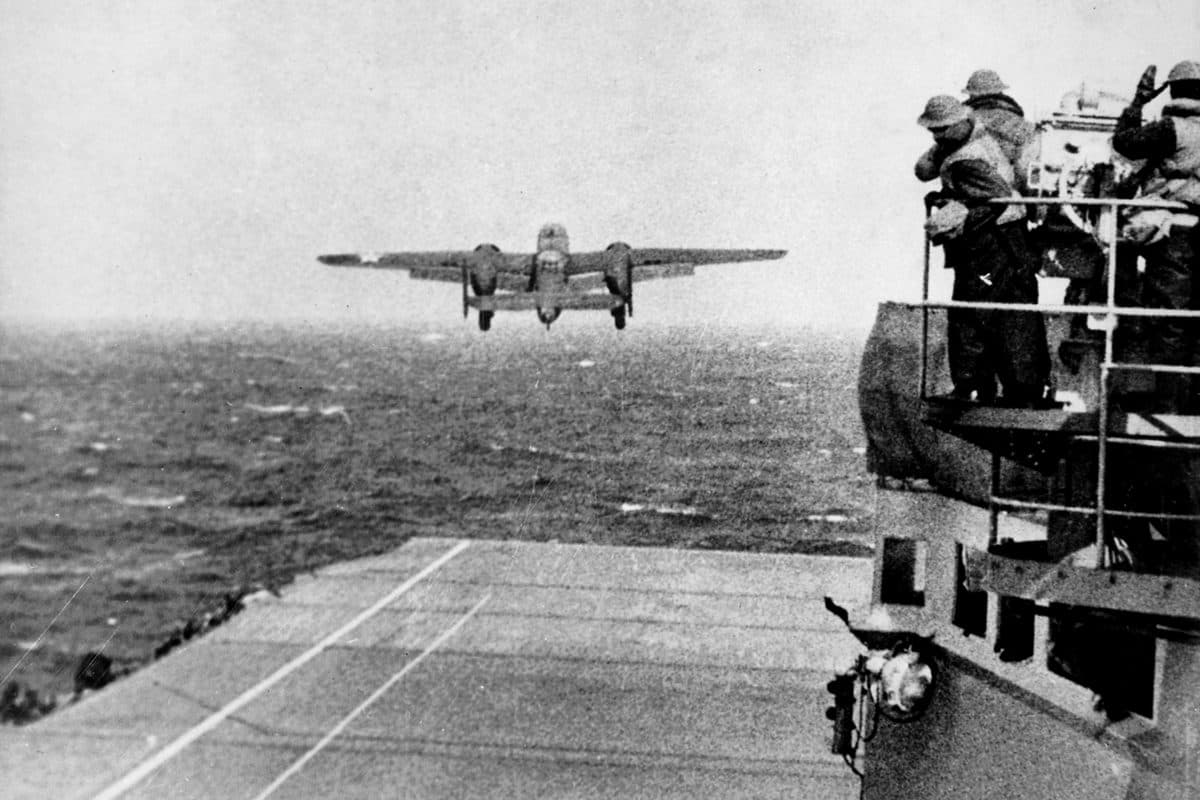
On April 18, 1942, sixteen B-25 Mitchell bombers did something no one thought possible: they launched from the deck of an aircraft carrier, flew 650 miles to Japan, and bombed Tokyo. Every aircraft was lost. The damage was negligible. The consequences changed the war.
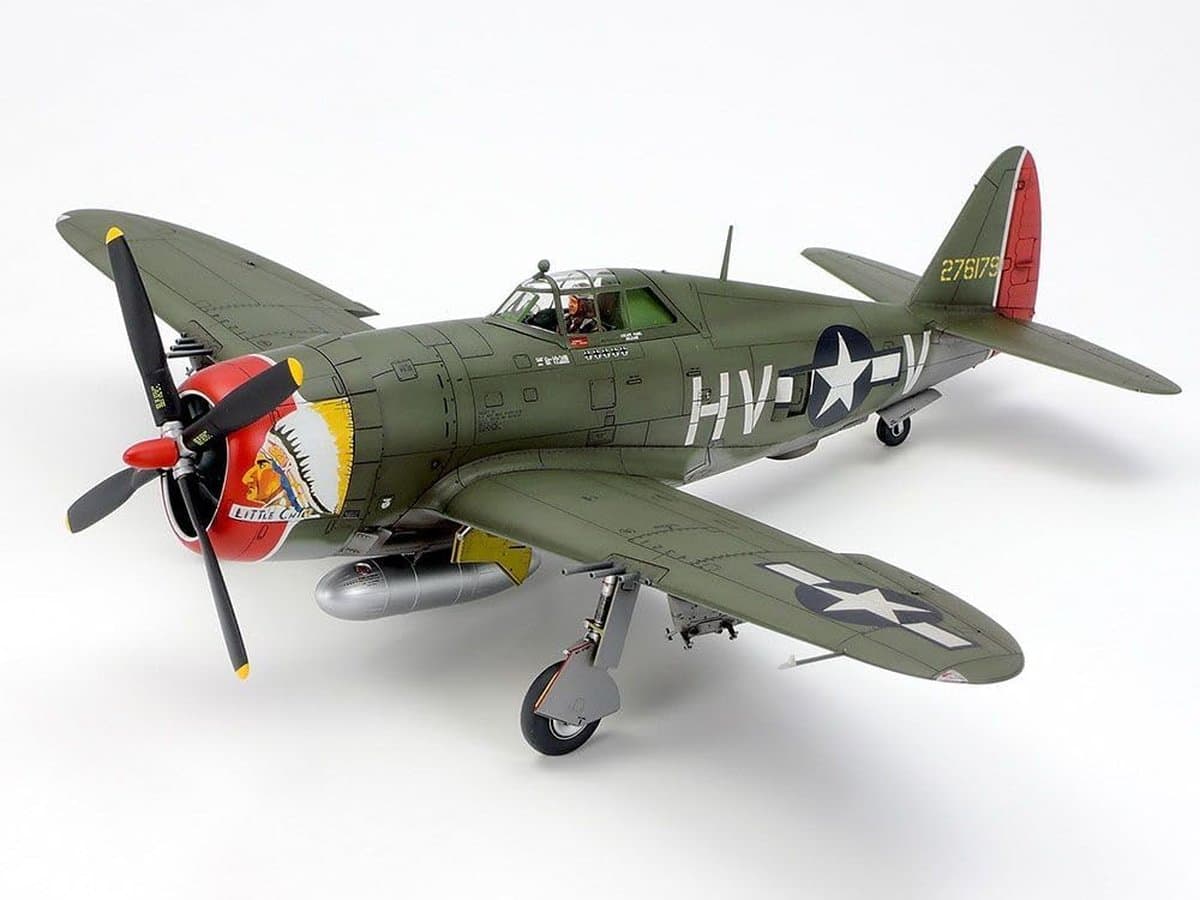
Compare 85+ WW2 scale model kits across aircraft, tanks, and ships. Beginner builds from $9 to museum-grade showpieces at $580. Covers Tamiya, Eduard, HK Models, Trumpeter, and more with honest reviews, trade-offs, and pricing.

On April 7, 1945, the Imperial Japanese Navy sent the largest battleship ever built on a one-way suicide mission to Okinawa. She never arrived. 386 American aircraft found her first, and sank her in under two hours.