



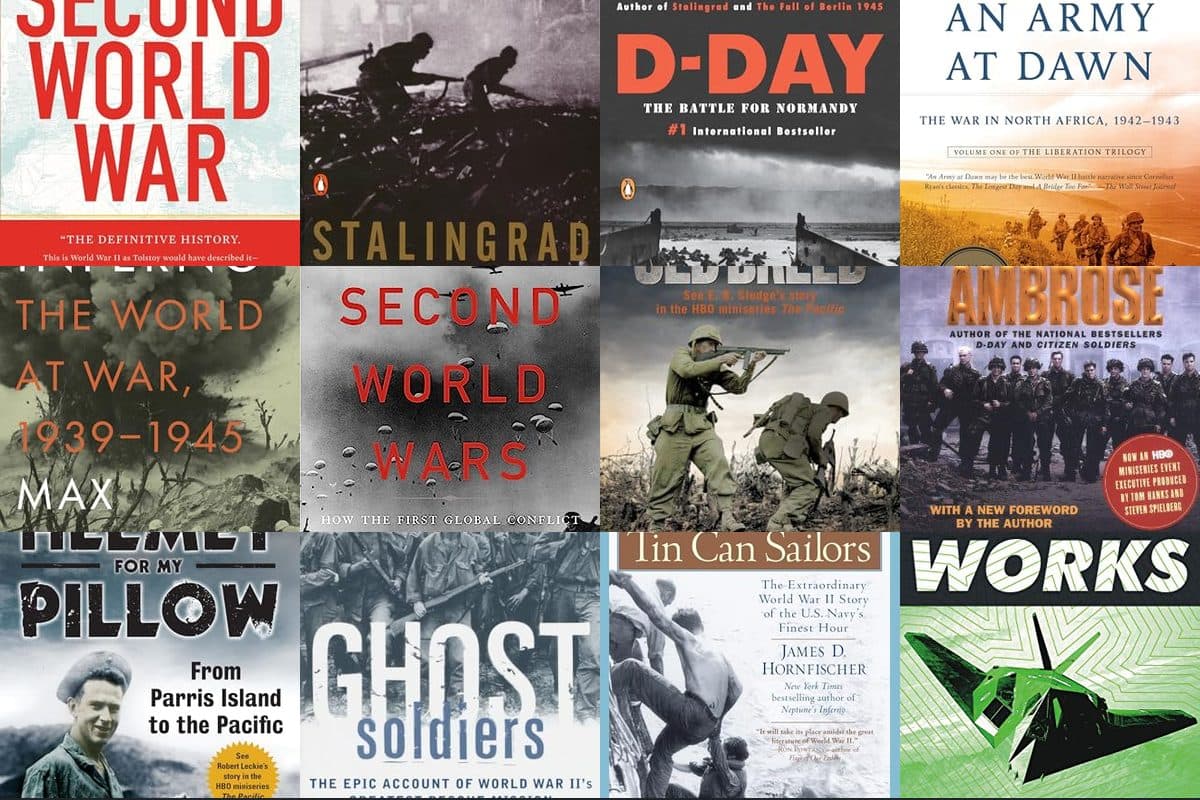
15 Best World War II Books for History Enthusiasts (2026)
15 essential WW2 books covering every theater. Narrative histories, memoirs, and visual references ranked.
daniel-mercer··21 min read

Nineteen al-Qaeda terrorists hijacked four commercial airliners and carried out the deadliest terrorist attack in history on American soil. Two planes struck the twin towers of the World Trade Center in New York City, causing both 110-story buildings to collapse. A third plane hit the Pentagon in Arlington, Virginia. A fourth, United Airlines Flight 93, crashed in a field near Shanksville, Pennsylvania, after passengers and crew fought to retake the aircraft from the hijackers. The attacks killed 2,977 people from 93 nations, injured over 6,000, and launched the United States into a global War on Terror that would reshape American foreign policy, military strategy, and national security for decades.
A Scottish force led by William Wallace and Andrew Moray defeated the English army of John de Warenne at Stirling Bridge in central Scotland. The narrow bridge over the Forth allowed the Scots to destroy the English army piecemeal as it crossed, demonstrating how terrain could neutralize the advantage of professional heavy cavalry.
Dutch East India Company navigator Henry Hudson entered New York Harbor aboard the Halve Maen, opening the route up the river that bears his name. His exploration established Dutch claims to the territory that became New Netherland and the strategic position that would eventually make New York Harbor the most important naval anchorage on the U.S. East Coast.
The Bourbon army of Philip V completed its assault on Barcelona, ending the Catalan resistance against the centralizing Bourbon monarchy. The fall of the city extinguished Catalan privileges and reshaped the legal and military structure of Spain, with consequences that influence Catalan political life to the present day.
Benjamin Franklin, John Adams, and Edward Rutledge met with British Admiral Lord Richard Howe at the Billopp House on Staten Island in an attempt to negotiate an end to the American Revolutionary War. The conference failed after the Americans refused to revoke the Declaration of Independence, and the war continued.
British forces under General William Howe defeated Continental Army troops under George Washington along the Brandywine Creek in southeastern Pennsylvania. The defeat opened the road to Philadelphia and showed the difficulty Continental forces faced when British professionals concentrated against them in open battle.
American naval and land forces under Master Commandant Thomas Macdonough and Brigadier General Alexander Macomb decisively defeated a larger British invasion force at Plattsburgh Bay on Lake Champlain. Macdonough's innovative tactic of using kedge anchors to rotate his flagship mid-battle destroyed the British squadron, forcing the 10,000-strong British army to retreat to Canada. The victory was instrumental in securing favorable terms in the Treaty of Ghent, which ended the War of 1812.
Members of the Utah territorial militia and some Paiute allies attacked and killed approximately 120 members of the Baker-Fancher emigrant wagon train in southern Utah. The massacre, carried out during a period of heightened tensions between the federal government and Mormon settlers known as the Utah War, remains one of the most controversial episodes involving militia forces in American history.
Members of the Utah territorial militia, accompanied by Paiute allies, completed the massacre of the Baker-Fancher emigrant wagon train at Mountain Meadows in southwestern Utah. The massacre, carried out during the Utah War tensions between Mormon settlers and the federal government, killed approximately 120 men, women, and older children.
The League of Nations Mandate for Palestine entered into force, formalizing British administration of the territory after the dissolution of the Ottoman Empire. The military and political arrangements established under the Mandate shaped the subsequent Arab-Jewish conflict, the founding of Israel, and the strategic geometry of the Middle East to the present day.
Construction began on the Pentagon in Arlington, Virginia, exactly sixty years before it would be struck by a hijacked airliner. Designed by architect George Bergstrom, the five-sided building was completed in just sixteen months at a cost of $83 million. It remains the world's largest low-rise office building, housing approximately 23,000 military and civilian employees across 6.5 million square feet.
As part of Operation Avalanche, Allied forces secured the beachhead at Salerno, Italy, after intense fighting against German defenders. The landings, which began on September 9, faced fierce counterattacks that nearly drove the invasion force back into the sea. Naval gunfire and air support proved decisive in holding the position, and German forces began withdrawing toward Naples.
A U.S. First Army patrol from the 5th Armored Division crossed the German border near the village of Stolzembourg, Luxembourg, becoming the first Allied ground forces to set foot on German soil during World War II. The symbolic crossing marked the beginning of the invasion of the German homeland, though months of bitter fighting remained before the war's end.
The Second Quebec Conference (Octagon) opened with President Franklin Roosevelt and Prime Minister Winston Churchill meeting to coordinate strategy for the final phase of the Second World War. The conference addressed European endgame planning, the Pacific strategy, and the economic treatment of postwar Germany.
The U.S. Army's 1st Cavalry Division (Airmobile) completed its deployment to An Khe in the Central Highlands of South Vietnam. The division was the Army's first airmobile division, pioneering the use of helicopters for tactical mobility. Within weeks, it would be tested in the fierce Battle of the Ia Drang Valley, the first major engagement between U.S. and North Vietnamese regular forces.
The Chilean military under Army Commander General Augusto Pinochet overthrew the elected government of President Salvador Allende. Allende died in the Presidential Palace during the assault. The coup, supported clandestinely by elements of the U.S. government, installed a military dictatorship that ruled Chile for seventeen years and reshaped Cold War relationships across Latin America.
Egyptian President Anwar Sadat and Israeli Prime Minister Menachem Begin, brokered by President Jimmy Carter, completed the framework agreements that would lead to the Egypt-Israel peace treaty signed in March 1979. The accords removed Egypt from the Arab military coalition against Israel, transforming the strategic geometry of the Middle East.
A U.S. Air Force F-15A flown by Major Wilbert Pearson launched the ASM-135 ASAT anti-satellite missile and destroyed the orbiting Solwind P78-1 satellite at an altitude of 555 kilometers. The test was the only successful satellite intercept by an air-launched weapon in history and demonstrated American capabilities that influenced Cold War space arms control negotiations.
President George H.W. Bush addressed a joint session of Congress, outlining American objectives following Iraq's invasion of Kuwait on August 2, 1990. He articulated what he called a "new world order" and laid out four goals: Iraq's complete withdrawal from Kuwait, restoration of Kuwait's government, stability in the Persian Gulf, and protection of American citizens abroad. The speech built the political foundation for Operation Desert Shield and the subsequent Desert Storm campaign.
Scottish voters approved the establishment of a devolved Scottish Parliament in a referendum, the first since the Treaty of Union in 1707. The constitutional change reshaped how British defense policy and military recruiting functioned across Scotland and influenced regional questions about military bases, particularly the Trident submarine fleet at Faslane.
American Airlines Flight 77 struck the Pentagon at 9:37 a.m., killing 125 people inside the building and all 64 aboard the aircraft. Despite massive structural damage and fires, the Pentagon was partially operational again within 24 hours. Military personnel and civilian workers rushed toward the impact zone to rescue survivors, with many acts of extraordinary courage. The damaged section, known as Wedge 1, had recently been renovated with blast-resistant windows and reinforced walls, which saved countless lives.
The U.S. Coast Guard coordinated the largest maritime evacuation in history, surpassing the Dunkirk evacuation of 1940 in speed. Within nine hours, a fleet of Coast Guard vessels, ferries, tugboats, and private boats evacuated approximately 500,000 people from lower Manhattan by water after the collapse of the World Trade Center towers blocked road access. Coast Guard cutters also established a security zone around New York Harbor.
In the immediate aftermath of the attacks, the North American Aerospace Defense Command launched Operation Noble Eagle, establishing continuous combat air patrols over major American cities. Fighter jets were scrambled from bases across the country, and for the first time since World War II, armed military aircraft patrolled the skies over the United States. The operation, which continues in modified form to this day, fundamentally changed America's homeland air defense posture.
Armed militants attacked the U.S. diplomatic compound and a nearby CIA annex in Benghazi, Libya, killing U.S. Ambassador J. Christopher Stevens, Information Officer Sean Smith, and CIA contractors Tyrone Woods and Glen Doherty, both former Navy SEALs. Woods and Doherty died defending the annex against mortar fire during a prolonged battle that lasted through the night. The attack exposed vulnerabilities in diplomatic security and became a focal point of intense political debate.
Demonstrators stormed the U.S. Embassy compound in Cairo and tore down the American flag, an event that initially shaped American official statements about the simultaneous Benghazi attack. The protests across the region underscored the volatility of post-Arab Spring politics and the difficulty of protecting American diplomatic infrastructure across multiple unstable environments simultaneously.

Lieutenant General
Danish-born industrialist who served as the only civilian ever to be directly commissioned as a lieutenant general in the U.S. Army. As co-director of the Office of Production Management and later director of war production for the War Department, he oversaw the transformation of American industry into the "Arsenal of Democracy" during World War II.

Admiral
One of the most distinguished naval officers in American history, Burke earned the nickname "31-Knot Burke" for his aggressive destroyer tactics in the Solomon Islands during World War II. He served an unprecedented three terms as Chief of Naval Operations from 1955 to 1961, overseeing the Navy's transition to nuclear power and missile technology. The Arleigh Burke-class guided-missile destroyer, the Navy's most numerous surface combatant, bears his name.

Lieutenant General
Legendary Marine Corps officer nicknamed "Brute" who served in World War II, Korea, and Vietnam. He pioneered amphibious warfare doctrine, helped develop the landing vehicle tracked (LVT), and commanded Fleet Marine Force Pacific during the Vietnam War. His son, Charles Krulak, later became the 31st Commandant of the Marine Corps.

Lieutenant General
The Army's Deputy Chief of Staff for Personnel, killed when American Airlines Flight 77 struck the Pentagon. He was the highest-ranking U.S. military officer killed in a hostile action since Lieutenant General Simon Bolivar Buckner Jr. was killed on Okinawa in June 1945. Maude was posthumously promoted to lieutenant general.

Master Sergeant
Retired Army Master Sergeant who was the last American combat soldier to leave Vietnam in March 1973. He was working as a civilian employee in the Pentagon on September 11, 2001, and was killed when Flight 77 struck the building, making him a casualty of two of America's most defining conflicts.
Wear the Timeline
24 military events occurred on September 11, spanning multiple centuries. Key events include: Battle of Plattsburgh (1814), Groundbreaking for the Pentagon (1941), First Allied Troops Enter Germany (1944), 1st Cavalry Division Deploys to Vietnam (1965), Pentagon Attack and Military Response (2001).
The most significant military event on September 11 is September 11 Terrorist Attacks (2001). Nineteen al-Qaeda terrorists hijacked four commercial airliners and carried out the deadliest terrorist attack in history on American soil. Two planes struck the twin towers of the World Trade Center in New York City, causing both 110-story buildings to collapse. A third plane hit the Pentagon in Arlington, Virginia. A fourth, United Airlines Flight 93, crashed in a field near Shanksville, Pennsylvania, after passengers and crew fought to retake the aircraft from the hijackers. The attacks killed 2,977 people from 93 nations, injured over 6,000, and launched the United States into a global War on Terror that would reshape American foreign policy, military strategy, and national security for decades.
Notable military figures born on September 11 include William S. Knudsen (1879–1948), Arleigh Burke (1901–1996), Victor Krulak (1913–2008).
Events on September 11 span the Colonial & Revolutionary era, the Civil War, World War II, the Vietnam War, the Modern Era, the Interwar Period, the Cold War, covering 24 events across 6 centuries of military history.
Events on September 11 involve 6 branches of the U.S. and allied armed forces, reflecting the global scope of military operations throughout history.
Explore military history from the day you were born.
June 6
The Allied invasion of Normandy, the largest amphibious assault in history.
December 7
Japan attacks the U.S. Pacific Fleet, bringing America into World War II.
August 6
The first atomic bomb is dropped on a city, ushering in the nuclear age.
May 8
Nazi Germany surrenders unconditionally, ending World War II in Europe.
November 11
Armistice Day marks the end of World War I and honors all who served.
June 4
The turning point of the Pacific War as the U.S. Navy destroys four Japanese carriers.
July 4
The Declaration of Independence is adopted, sparking the American Revolution.
15 essential WW2 books covering every theater. Narrative histories, memoirs, and visual references ranked.
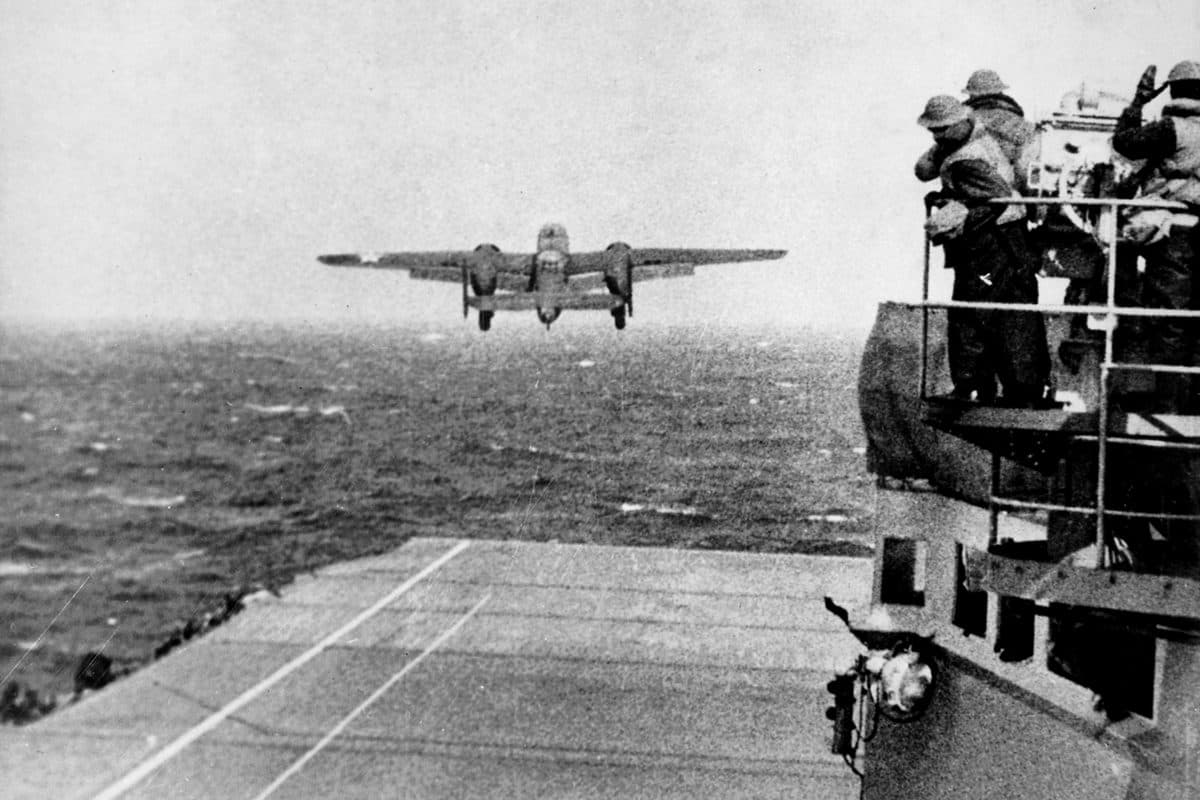
On April 18, 1942, sixteen B-25 Mitchell bombers did something no one thought possible: they launched from the deck of an aircraft carrier, flew 650 miles to Japan, and bombed Tokyo. Every aircraft was lost. The damage was negligible. The consequences changed the war.
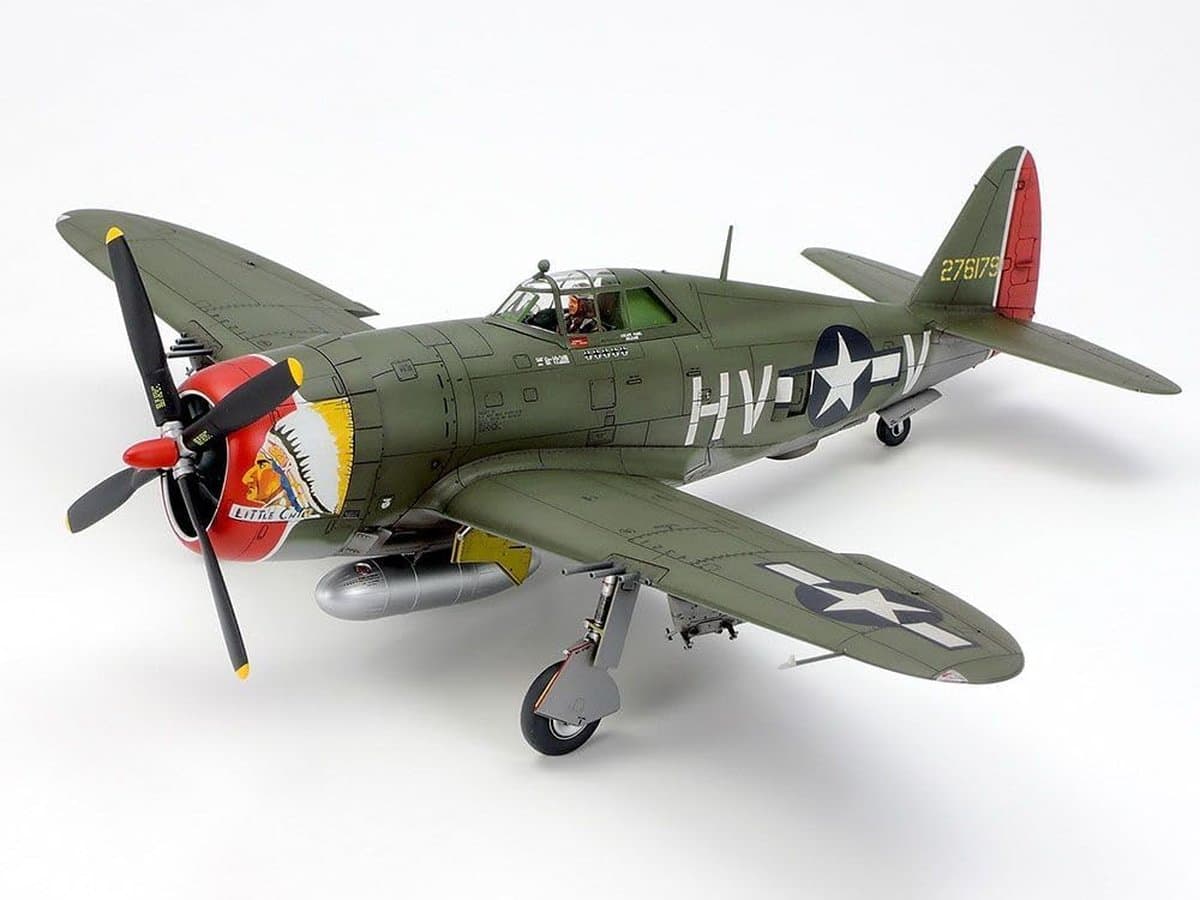
Compare 85+ WW2 scale model kits across aircraft, tanks, and ships. Beginner builds from $9 to museum-grade showpieces at $580. Covers Tamiya, Eduard, HK Models, Trumpeter, and more with honest reviews, trade-offs, and pricing.

On April 7, 1945, the Imperial Japanese Navy sent the largest battleship ever built on a one-way suicide mission to Okinawa. She never arrived. 386 American aircraft found her first, and sank her in under two hours.