


Beautiful Planes of World War I
Fokker D VII Julian Herzog The Fokker D VII aircraft may have made a rather late entry into the war (January 1918)…
daniel-mercer··15 min read

The American Expeditionary Forces under General John J. Pershing launched the Battle of Saint-Mihiel, the first large-scale independent American military operation of World War I. Over 550,000 American troops, supported by French colonial divisions and 1,400 aircraft under Colonel Billy Mitchell, attacked the German-held Saint-Mihiel salient south of Verdun. The salient was reduced in just 36 hours.
WWI AircraftEnglish explorer Henry Hudson, sailing for the Dutch East India Company aboard the Half Moon, entered the river that would bear his name and began sailing upstream toward present-day Albany. His exploration established Dutch claims to the Hudson River Valley and laid the foundation for New Amsterdam, the future New York City.
A combined army of Polish-Lithuanian, Imperial, and German forces under King John III Sobieski of Poland broke the Ottoman siege of Vienna in the largest cavalry charge in history. Roughly 18,000 cavalry, including 3,000 Polish winged hussars, shattered the Ottoman lines in a massed downhill charge from the Kahlenberg heights. The Ottoman Grand Vizier Kara Mustafa was later executed in Belgrade for the defeat.
Over 550,000 American troops attacked the German-held Saint-Mihiel salient, reducing it in just 36 hours in the first large-scale independent American operation of World War I.
WWI AircraftA Japanese force of 3,000 troops launched a ferocious night assault on Henderson Field on Guadalcanal, striking the defensive position held by Colonel Merritt "Red Mike" Edson's 1st Marine Raider Battalion and the 1st Marine Parachute Battalion. The Marines held through two nights of savage hand-to-hand fighting, breaking the Japanese attack and securing Henderson Field. Edson received the Medal of Honor.
U-156 under Korvettenkapitan Werner Hartenstein torpedoed and sank the British troopship Laconia off West Africa, then realized the ship had been carrying 1,800 Italian prisoners of war. Hartenstein surfaced, sent uncoded radio calls for rescue in multiple languages, and began picking up survivors. A US Liberator bomber attacked the U-boats conducting the rescue, prompting Admiral Donitz to issue the Triton Null order that prohibited German submarine rescue operations for the rest of the war.
Troops of the U.S. First Army reached the Siegfried Line near Aachen, the first major German city in the path of the Allied advance. The ensuing Battle of Aachen (October 2-21) would be the first city on German soil to be captured by the Allies and one of the largest urban battles fought by the U.S. Army in the European theater.
British and Canadian forces of the 49th West Riding Division and the 51st Highland Division assaulted the German fortress at Le Havre on the French Channel coast under Operation Astonia. Backed by RAF heavy bombers, naval gunfire from HMS Erebus and HMS Warspite, and specialized armor of the 79th Armoured Division, the attack took the port in 48 hours against 12,000 defenders. The capture opened a deep-water port vital to Allied supply operations.
Senator John F. Kennedy, a decorated World War II Navy veteran who commanded PT-109 in the Solomon Islands, married Jacqueline Lee Bouvier in Newport, Rhode Island. Kennedy's wartime heroism, swimming for hours to save his crew after a Japanese destroyer cut his boat in half, would become a cornerstone of his political identity.
President John F. Kennedy delivered his We Choose the Moon speech at Rice University Stadium in Houston, committing the United States to land a man on the moon before the end of the decade. The speech justified Project Apollo as a Cold War competition with Soviet space capability and as a demonstration of the open, democratic model of scientific organization. The program produced six manned lunar landings between 1969 and 1972.
One day after the September 11 attacks, the North Atlantic Treaty Organization invoked Article 5 of the Washington Treaty for the first and only time in its history, declaring that the attack on the United States was an attack on all nineteen member nations. The invocation activated the collective defense clause, providing the international legal framework for allied participation in the War on Terror.

American inventor who created the Gatling gun in 1861, one of the first successful rapid-fire weapons. Ironically, Gatling believed his invention would reduce the size of armies needed and thus reduce casualties. The weapon saw service in the Civil War and every major American conflict through the Spanish-American War.

Polish science fiction author who survived the German occupation of Lwów during World War II by working as a car mechanic and welding assistant to avoid deportation. His masterwork "Solaris" and other novels explored the military and philosophical implications of contact with alien intelligence.

South African anti-apartheid activist who died from brain injuries sustained during police interrogation in detention. His death galvanized international opposition to the apartheid regime and contributed to the arms embargo and economic sanctions that ultimately pressured South Africa's military government to negotiate.
Wear the Timeline
10 military events occurred on September 12, spanning multiple centuries. Key events include: Battle of Saint-Mihiel, First Independent American Offensive (1918), Battle of Bloody Ridge (Edson's Ridge), Guadalcanal (1942), NATO Invokes Article 5 for the First Time (2001), Battle of Vienna, Relief of the Siege (1683).
The most significant military event on September 12 is Battle of Saint-Mihiel, First Independent American Offensive (1918). The American Expeditionary Forces under General John J. Pershing launched the Battle of Saint-Mihiel, the first large-scale independent American military operation of World War I. Over 550,000 American troops, supported by French colonial divisions and 1,400 aircraft under Colonel Billy Mitchell, attacked the German-held Saint-Mihiel salient south of Verdun. The salient was reduced in just 36 hours.
Notable military figures born on September 12 include Richard Gatling (1818–1903), Stanisław Lem (1921–2006).
Events on September 12 span World War I, the Colonial & Revolutionary era, World War II, the Cold War, the Modern Era, covering 10 events across 3 centuries of military history.
Events on September 12 involve 5 branches of the U.S. and allied armed forces, reflecting the global scope of military operations throughout history.
Explore military history from the day you were born.
June 6
The Allied invasion of Normandy, the largest amphibious assault in history.
December 7
Japan attacks the U.S. Pacific Fleet, bringing America into World War II.
September 11
The deadliest terrorist attack in history transforms U.S. national security.
August 6
The first atomic bomb is dropped on a city, ushering in the nuclear age.
May 8
Nazi Germany surrenders unconditionally, ending World War II in Europe.
November 11
Armistice Day marks the end of World War I and honors all who served.
June 4
The turning point of the Pacific War as the U.S. Navy destroys four Japanese carriers.
July 4
The Declaration of Independence is adopted, sparking the American Revolution.
Fokker D VII Julian Herzog The Fokker D VII aircraft may have made a rather late entry into the war (January 1918)…
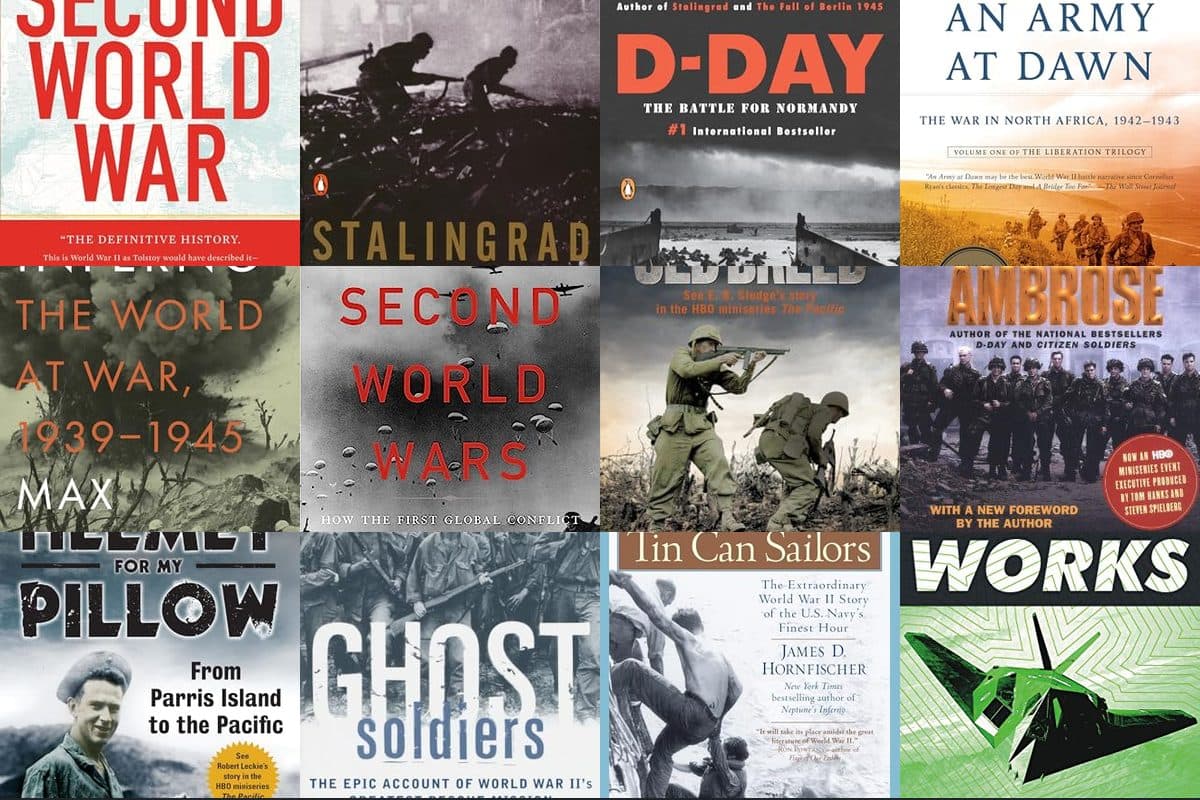
15 essential WW2 books covering every theater. Narrative histories, memoirs, and visual references ranked.
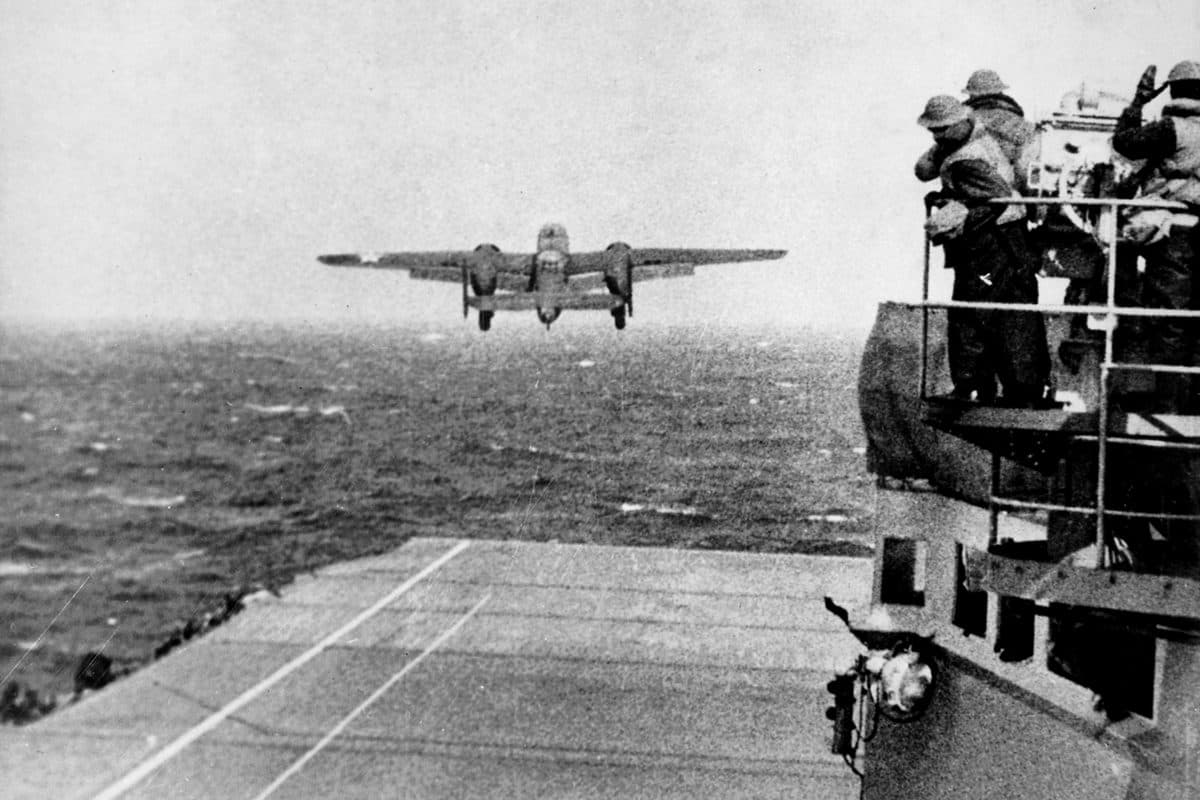
On April 18, 1942, sixteen B-25 Mitchell bombers did something no one thought possible: they launched from the deck of an aircraft carrier, flew 650 miles to Japan, and bombed Tokyo. Every aircraft was lost. The damage was negligible. The consequences changed the war.
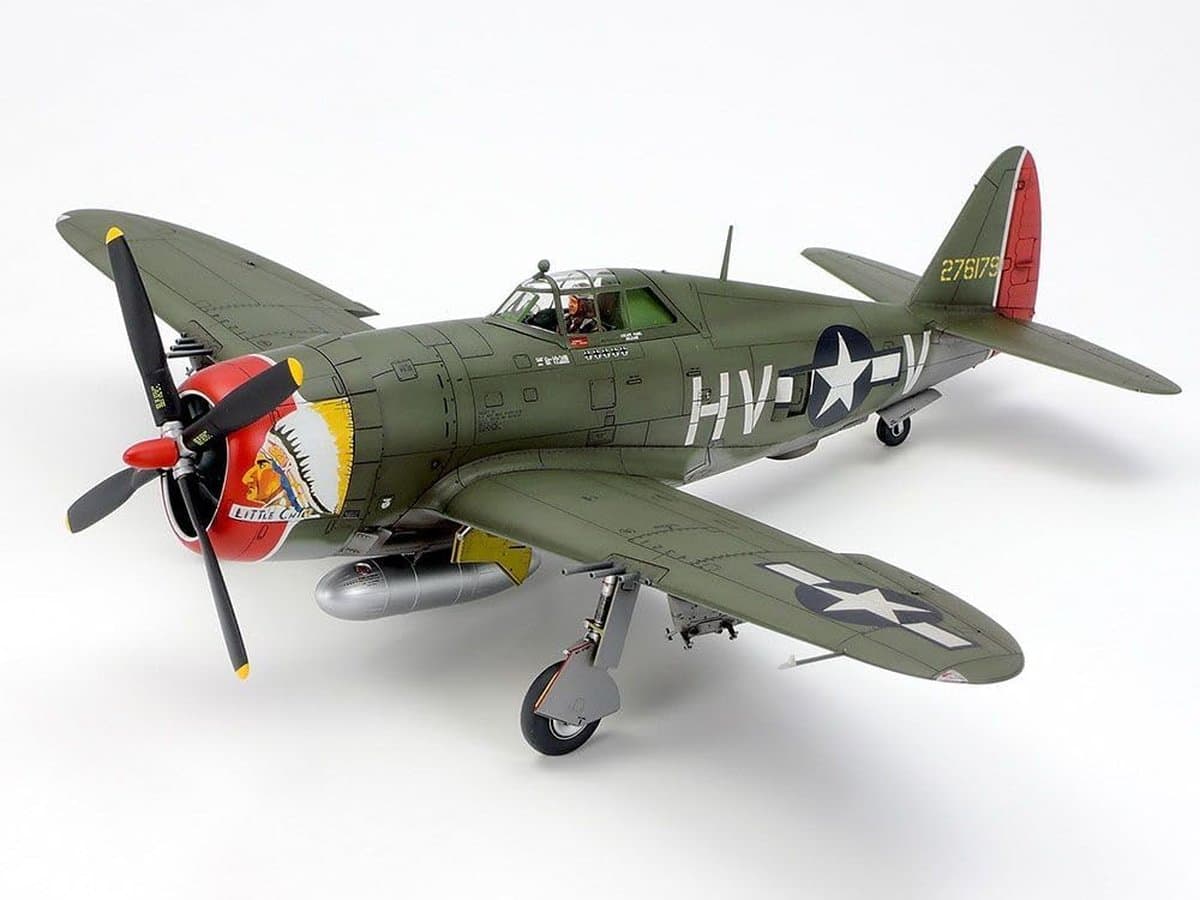
Compare 85+ WW2 scale model kits across aircraft, tanks, and ships. Beginner builds from $9 to museum-grade showpieces at $580. Covers Tamiya, Eduard, HK Models, Trumpeter, and more with honest reviews, trade-offs, and pricing.