

15 Best World War II Books for History Enthusiasts (2026)
15 essential WW2 books covering every theater. Narrative histories, memoirs, and visual references ranked.
daniel-mercer··21 min read

A combined British, Australian, Canadian, and French force launched a surprise offensive near Amiens using massed tanks, aircraft, and innovative tactics. The attack shattered German lines and advanced eight miles on the first day, the greatest single-day advance on the Western Front since 1914. Ludendorff called it "the black day of the German Army."
The English fleet under Lord Howard of Effingham and Sir Francis Drake engaged the Spanish Armada off Gravelines in the decisive battle that ended Spain's invasion attempt. English fireships had scattered the Armada the previous night, and the running battle that followed inflicted heavy damage on the Spanish fleet, which was then driven north by storms.
English fireships broke up the anchored Spanish Armada off Calais during the night, scattering the formation and setting up the Battle of Gravelines the next day. The loss of formation cohesion doomed Philip II's invasion plan and cemented English naval supremacy for the next generation.
General Robert E. Lee wrote to President Jefferson Davis offering his resignation after the devastating defeat at Gettysburg, citing the "growing failure of my bodily strength." Davis refused the resignation, and Lee continued to command the Army of Northern Virginia until Appomattox.
A combined British, Australian, Canadian, and French force launched a surprise offensive near Amiens using massed tanks, aircraft, and innovative tactics. The attack shattered German lines and advanced eight miles on the first day, the greatest single-day advance on the Western Front since 1914. Ludendorff called it "the black day of the German Army."
British, Australian, Canadian, and French forces launched a surprise combined-arms offensive at Amiens, using over 500 tanks, concentrated artillery, and tactical aviation to shatter German lines. General Erich Ludendorff called it "the black day of the German Army," and the offensive that followed led directly to the November armistice.
A Japanese cruiser force under Vice Admiral Gunichi Mikawa surprised and destroyed an Allied screening force off Savo Island near Guadalcanal, sinking four heavy cruisers and killing over 1,000 Allied sailors. It was one of the worst naval defeats in American history and left the Marines on Guadalcanal without naval protection.
The Soviet Union declared war on Japan and launched Operation August Storm, a massive invasion of Japanese-held Manchuria by 1.5 million troops. The Soviet offensive destroyed the Kwantung Army in just two weeks and was a decisive factor in Japan's decision to surrender.
Two days after the atomic bomb at Hiroshima, the Soviet Union declared war on Japan and invaded Japanese-held Manchuria the following day with 1.5 million troops and thousands of tanks. The Manchurian Strategic Offensive crushed the Kwantung Army within two weeks and shaped the political settlement of Northeast Asia.
President Richard Nixon announced in a televised address that he would resign the presidency effective the next day, becoming the only U.S. president to resign from office. The transition during the Watergate crisis raised acute concerns within the Department of Defense about civil-military command authority during the transfer of nuclear release codes.
Russian forces launched a full-scale invasion of Georgia in response to a Georgian military operation in the breakaway region of South Ossetia. The five-day war demonstrated Russia's willingness to use military force against its neighbors and foreshadowed the 2014 invasion of Crimea.

African American explorer who accompanied Robert Peary on seven Arctic expeditions and was likely the first person to reach the geographic North Pole in 1909. His Arctic exploration skills contributed to U.S. Navy understanding of polar conditions that became strategically vital during the Cold War.

Mexican revolutionary leader who commanded the Liberation Army of the South during the Mexican Revolution. His guerrilla warfare tactics and land reform demands made him a legendary figure whose methods influenced insurgent movements throughout Latin America for the next century.

First Lieutenant
U.S. Army veteran of the Korean War who later served as Secretary of Transportation under President Carter and as a U.S. Senator from Washington state, where he championed veterans' affairs and transportation infrastructure critical to military logistics.
Wear the Timeline
10 military events occurred on August 8, spanning multiple centuries. Key events include: Battle of Amiens, "Black Day of the German Army" (1918), Battle of Gravelines, Spanish Armada Defeated (1588), Battle of Savo Island (1942), Soviet Union Declares War on Japan (1945), Battle of Amiens Opens the Hundred Days Offensive (1918).
The most significant military event on August 8 is Battle of Amiens, "Black Day of the German Army" (1918). A combined British, Australian, Canadian, and French force launched a surprise offensive near Amiens using massed tanks, aircraft, and innovative tactics. The attack shattered German lines and advanced eight miles on the first day, the greatest single-day advance on the Western Front since 1914. Ludendorff called it "the black day of the German Army."
Notable military figures born on August 8 include Matthew Henson (1866–1955), Emiliano Zapata (1879–1919).
Events on August 8 span World War I, the Colonial & Revolutionary era, World War II, the Civil War, the Modern Era, the Cold War, covering 10 events across 4 centuries of military history.
Events on August 8 involve 4 branches of the U.S. and allied armed forces, reflecting the global scope of military operations throughout history.
Explore military history from the day you were born.
June 6
The Allied invasion of Normandy, the largest amphibious assault in history.
December 7
Japan attacks the U.S. Pacific Fleet, bringing America into World War II.
September 11
The deadliest terrorist attack in history transforms U.S. national security.
August 6
The first atomic bomb is dropped on a city, ushering in the nuclear age.
May 8
Nazi Germany surrenders unconditionally, ending World War II in Europe.
November 11
Armistice Day marks the end of World War I and honors all who served.
June 4
The turning point of the Pacific War as the U.S. Navy destroys four Japanese carriers.
July 4
The Declaration of Independence is adopted, sparking the American Revolution.
15 essential WW2 books covering every theater. Narrative histories, memoirs, and visual references ranked.
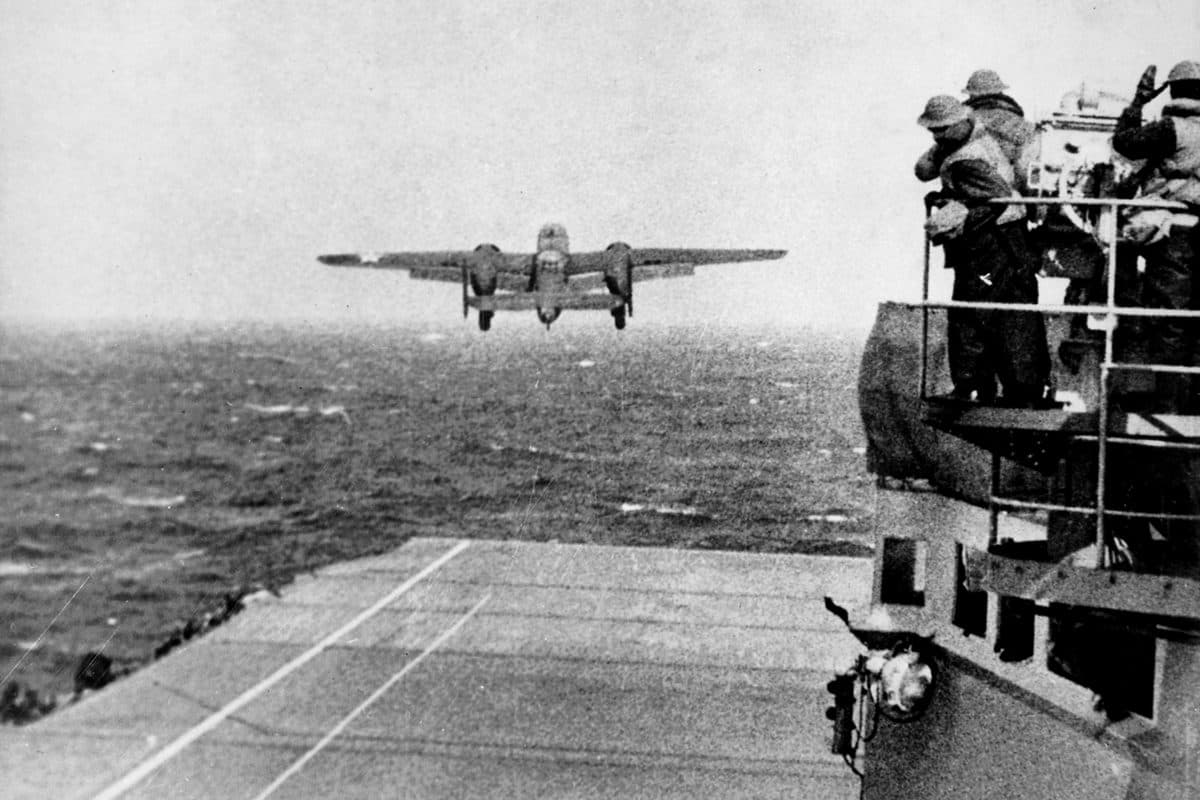
On April 18, 1942, sixteen B-25 Mitchell bombers did something no one thought possible: they launched from the deck of an aircraft carrier, flew 650 miles to Japan, and bombed Tokyo. Every aircraft was lost. The damage was negligible. The consequences changed the war.
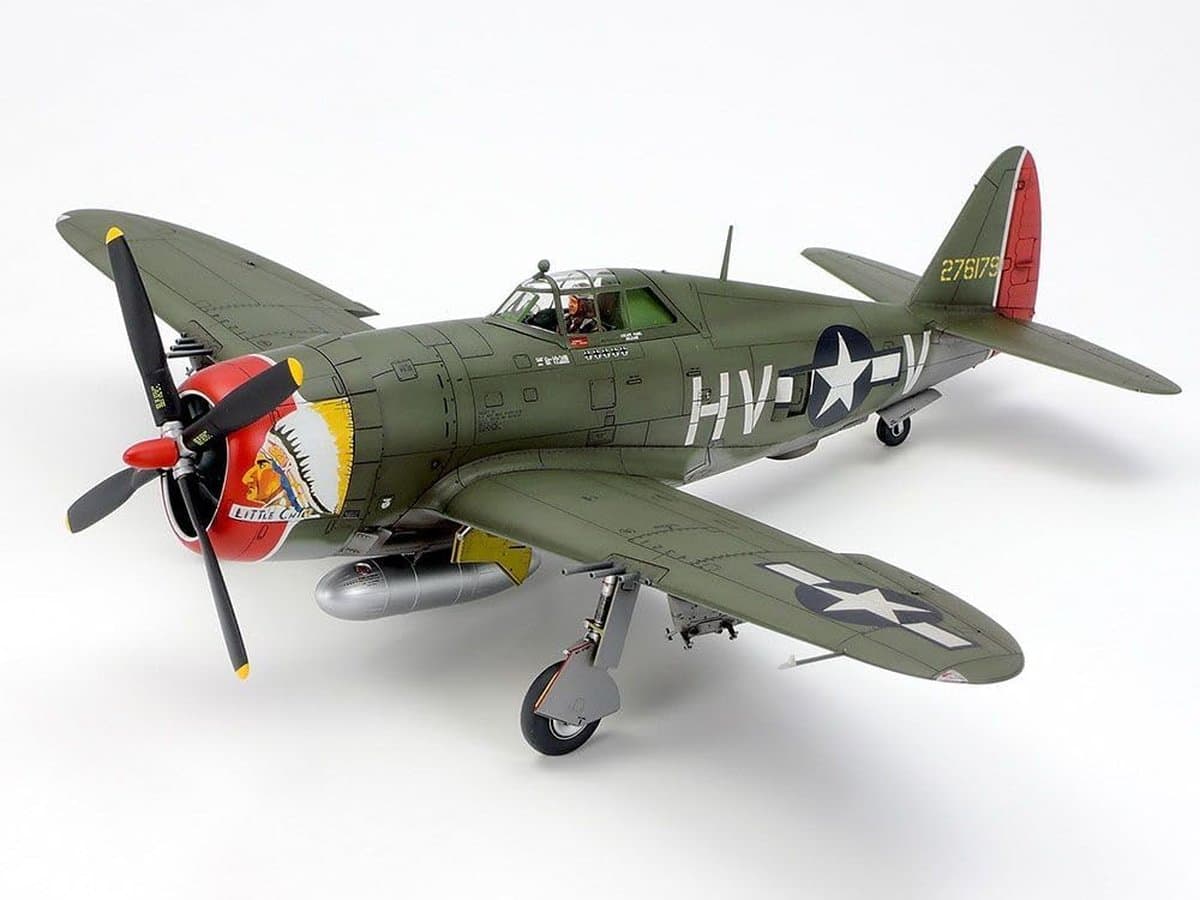
Compare 85+ WW2 scale model kits across aircraft, tanks, and ships. Beginner builds from $9 to museum-grade showpieces at $580. Covers Tamiya, Eduard, HK Models, Trumpeter, and more with honest reviews, trade-offs, and pricing.

On April 7, 1945, the Imperial Japanese Navy sent the largest battleship ever built on a one-way suicide mission to Okinawa. She never arrived. 386 American aircraft found her first, and sank her in under two hours.