



Iconic Planes Of The Second World War
Northrop P-61 Black Widow U.S. Airforce Despite its ominous name, the Northrop P-61 doesn’t get the attention that more iconic American planes…
daniel-mercer··18 min read

The Second Continental Congress formally adopted the Declaration of Independence, severing the thirteen American colonies from Great Britain and establishing the United States of America as a sovereign nation. Written primarily by Thomas Jefferson, the document articulated the revolutionary principle that governments derive their just powers from the consent of the governed, an idea that has inspired liberation movements worldwide for nearly 250 years.
Saladin's Ayyubid army annihilated the main Crusader field force of the Kingdom of Jerusalem at the twin hills called the Horns of Hattin in Galilee. The defeat opened the road to Jerusalem, which fell to Saladin three months later, triggering the Third Crusade and reshaping the medieval Middle East.
A 22-year-old Lieutenant Colonel George Washington surrendered Fort Necessity to French and Canadian forces after a day-long battle in the Pennsylvania wilderness. It was the only time Washington ever surrendered to an enemy, and the skirmish is considered the opening engagement of the French and Indian War, which expanded into the global Seven Years' War.
Admiral Richard Howe's advance squadron arrived at Staten Island the same day Congress voted on the Declaration, beginning the buildup of the largest British expeditionary force ever sent overseas to that point. Within weeks more than 400 ships and 32,000 troops would gather to crush the rebellion in New York.
The United States Military Academy at West Point, New York, officially opened with ten cadets and five faculty members. Established by Congress and signed into law by President Thomas Jefferson, West Point became the nation's first engineering school and has produced generations of military leaders including Grant, Lee, Eisenhower, MacArthur, and Patton.
In a remarkable historical coincidence, both Thomas Jefferson and John Adams, the principal author of the Declaration of Independence and its foremost advocate in Congress, died on July 4, 1826, exactly 50 years after the Declaration's adoption. Adams's last words were reportedly "Thomas Jefferson survives," unaware that Jefferson had died hours earlier at Monticello.
James Monroe, fifth President of the United States and the third Founding Father to die on Independence Day, passed away in New York City. As President he authored the Monroe Doctrine, established the principle that the Western Hemisphere was closed to further European colonization, a doctrine that shaped American naval and military strategy for the next century.
Confederate Lieutenant General John C. Pemberton surrendered the fortress city of Vicksburg, Mississippi, to Major General Ulysses S. Grant after a 47-day siege. The fall of Vicksburg, combined with the Union victory at Gettysburg the previous day, gave the Union control of the entire Mississippi River and split the Confederacy in two. President Lincoln declared, "The Father of Waters again goes unvexed to the sea."
General Robert E. Lee began his retreat from Gettysburg, Pennsylvania, after three days of fighting that cost his Army of Northern Virginia over 23,000 casualties. Lee's defeat, particularly the disastrous frontal assault known as Pickett's Charge on July 3, ended the Confederacy's last major offensive into Northern territory and is widely considered the turning point of the Civil War.
The 54th Massachusetts Volunteer Infantry, the famed African American regiment that had assaulted Battery Wagner two years earlier, paraded through the streets of Charleston, South Carolina, on the first Independence Day after the end of the Civil War. The march through the cradle of secession was a powerful symbol of emancipation and Union victory.
The U.S. Navy completed the destruction of Admiral Pascual Cervera's Spanish squadron after the running battle off Santiago de Cuba that began on July 3. The annihilation of Spain's Caribbean fleet effectively ended Spanish naval power in the New World and established the United States as a Pacific and Caribbean naval power.
Italian naval officer and son of the unification hero, Giuseppe Garibaldi the Younger died after a career spent reorganizing the Regia Marina around modern armored cruisers. His doctrinal writings on coastal defense and the use of fast cruiser squadrons influenced Mediterranean naval thought through the First World War.
Australian and American troops under Lieutenant General John Monash captured the village of Le Hamel on the Western Front in just 93 minutes, a textbook combined-arms operation using infantry, tanks, artillery, and air support. The battle was the first time American troops served under foreign command in the war and demonstrated the coordinated tactics that would break the Hindenburg Line months later.
The 1st Provisional Marine Brigade landed at Reykjavik to relieve British forces occupying Iceland, extending an American defense perimeter into the North Atlantic five months before Pearl Harbor. The deployment let the Royal Navy redeploy escorts to the Battle of the Atlantic and committed the United States to anti-submarine operations against German U-boats.
The American Volunteer Group, the legendary Flying Tigers, was officially disbanded and absorbed into the U.S. Army Air Forces' 23rd Fighter Group. In seven months of combat over Burma and China, fewer than 80 pilots had destroyed an estimated 296 Japanese aircraft while losing only 14 pilots in air combat, compiling one of the most remarkable combat records in aviation history.
Iconic Planes of the Second World WarPolish Prime Minister and Commander in Chief Wladyslaw Sikorski was killed when his B-24 Liberator crashed into the sea seconds after takeoff from Gibraltar. Sikorski had built the largest Allied force fighting outside its own country and his death weakened Polish influence at the moment when decisions about Eastern Europe's future were being made.
The United States formally recognized the independence of the Republic of the Philippines, fulfilling the promise made in the Tydings-McDuffie Act of 1934. The Philippines had been an American territory since the Spanish-American War of 1898 and had suffered devastating Japanese occupation during World War II. July 4 was chosen as the date to symbolize the shared history of the two nations.
The first American ground combat unit committed to the Korean War, Task Force Smith of the 24th Infantry Division, fought a delaying action against advancing North Korean armor near Osan. Outnumbered, lacking effective antitank weapons, and supported by obsolete bazookas, the task force was overrun, an early lesson in the cost of postwar demobilization.
The 49-star American flag was officially raised for the first time at Fort McHenry in Baltimore, recognizing Alaska's admission to the Union earlier that year. The flag flew for only one year before being replaced by the 50-star design when Hawaii joined, but it marked the strategic incorporation of Alaska's arctic geography into the Cold War defense perimeter.
President Lyndon Johnson signed the Freedom of Information Act, establishing the legal mechanism that researchers, journalists, and historians have used ever since to obtain declassified military records, intelligence documents, and operational histories. The law has shaped public understanding of every American conflict since Vietnam.
Israeli commandos flew over 2,500 miles to rescue 102 hostages held by Palestinian and German hijackers at Entebbe Airport in Uganda. The operation, which lasted 90 minutes on the ground, killed all seven hijackers and between 33 and 45 Ugandan soldiers. The raid's sole Israeli military fatality was the assault force commander, Lieutenant Colonel Yonatan Netanyahu, brother of future Prime Minister Benjamin Netanyahu.
How the C-130 Hercules Changed Modern WarfareNASA's Mars Pathfinder spacecraft and its Sojourner rover landed in the Ares Vallis region of Mars, demonstrating airbag landing technology and small mobile rover operations. While a civilian space mission, Pathfinder relied on Defense Department launch infrastructure and produced engineering advances that flowed back into reconnaissance and missile guidance programs.
North Korea publicly confirmed that it had restarted the 5-megawatt graphite-moderated reactor at Yongbyon, reversing the freeze imposed by the 1994 Agreed Framework. The restart marked the start of an open weapons-grade plutonium program that drove successive American military planning cycles in the western Pacific.
Scientists at CERN announced the discovery of the Higgs boson, confirming the existence of the particle that gives mass to all other particles. While a civilian scientific achievement, the discovery was rooted in decades of defense-funded research, the internet itself was invented at CERN, and particle physics has yielded technologies with profound military applications from nuclear weapons to advanced materials.

American novelist and author of The Scarlet Letter and The House of the Seven Gables. A close friend of President Franklin Pierce, Hawthorne wrote Pierce's campaign biography and served as U.S. Consul to Liverpool. His writings explored themes of guilt, sin, and moral ambiguity that resonated with the deepening crisis over slavery that led to the Civil War.

Commander in Chief
The 30th President of the United States (1923-1929), the only president born on Independence Day. Coolidge oversaw a period of relative peace and prosperity between the world wars, signed the Kellogg-Briand Pact outlawing war in 1928, and maintained a policy of military restraint, though the underfunding of defense during his administration left the U.S. unprepared for the conflicts to come.

Commander in Chief
Third President of the United States, principal author of the Declaration of Independence, and the president who authorized the Lewis and Clark Expedition and the Louisiana Purchase. Jefferson died at Monticello on the 50th anniversary of the Declaration's adoption, within hours of his old friend and rival John Adams.

Commander in Chief
Second President of the United States, the foremost advocate for independence in the Continental Congress, and the leader who built the U.S. Navy. Adams championed the Declaration of Independence, served as the first Vice President, and as President established the Department of the Navy in 1798 and oversaw the Quasi-War with France.
Wear the Timeline
24 military events occurred on July 4, spanning multiple centuries. Key events include: George Washington Surrenders Fort Necessity (1754), United States Military Academy Opens at West Point (1802), Deaths of Thomas Jefferson and John Adams (1826), Vicksburg Surrenders to General Grant (1863), Lee Begins Retreat from Gettysburg (1863).
The most significant military event on July 4 is Declaration of Independence Adopted (1776). The Second Continental Congress formally adopted the Declaration of Independence, severing the thirteen American colonies from Great Britain and establishing the United States of America as a sovereign nation. Written primarily by Thomas Jefferson, the document articulated the revolutionary principle that governments derive their just powers from the consent of the governed, an idea that has inspired liberation movements worldwide for nearly 250 years.
Notable military figures born on July 4 include Nathaniel Hawthorne (1804–1864), Calvin Coolidge (1872–1933).
Events on July 4 span the Colonial & Revolutionary era, the Civil War, World War I, World War II, the Cold War, the Modern Era, the Korean War, the Vietnam War, covering 24 events across 5 centuries of military history.
Events on July 4 involve 6 branches of the U.S. and allied armed forces, reflecting the global scope of military operations throughout history.
Explore military history from the day you were born.
June 6
The Allied invasion of Normandy, the largest amphibious assault in history.
December 7
Japan attacks the U.S. Pacific Fleet, bringing America into World War II.
September 11
The deadliest terrorist attack in history transforms U.S. national security.
August 6
The first atomic bomb is dropped on a city, ushering in the nuclear age.
May 8
Nazi Germany surrenders unconditionally, ending World War II in Europe.
November 11
Armistice Day marks the end of World War I and honors all who served.
June 4
The turning point of the Pacific War as the U.S. Navy destroys four Japanese carriers.
Northrop P-61 Black Widow U.S. Airforce Despite its ominous name, the Northrop P-61 doesn’t get the attention that more iconic American planes…

From the original 1956 C-130A to the 2026 C-130J Super Hercules, every variant explained. Specs, combat history, and why no aircraft has replaced the world's most versatile military transport after 70 years.
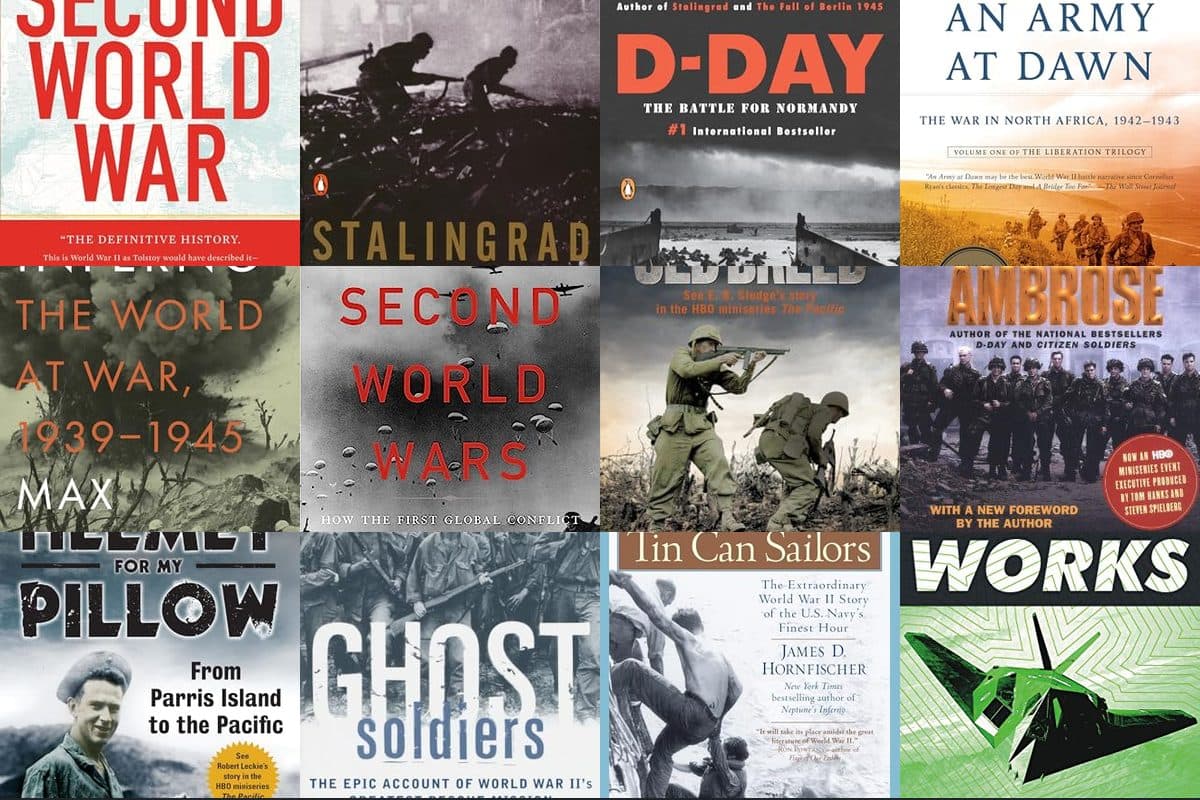
15 essential WW2 books covering every theater. Narrative histories, memoirs, and visual references ranked.
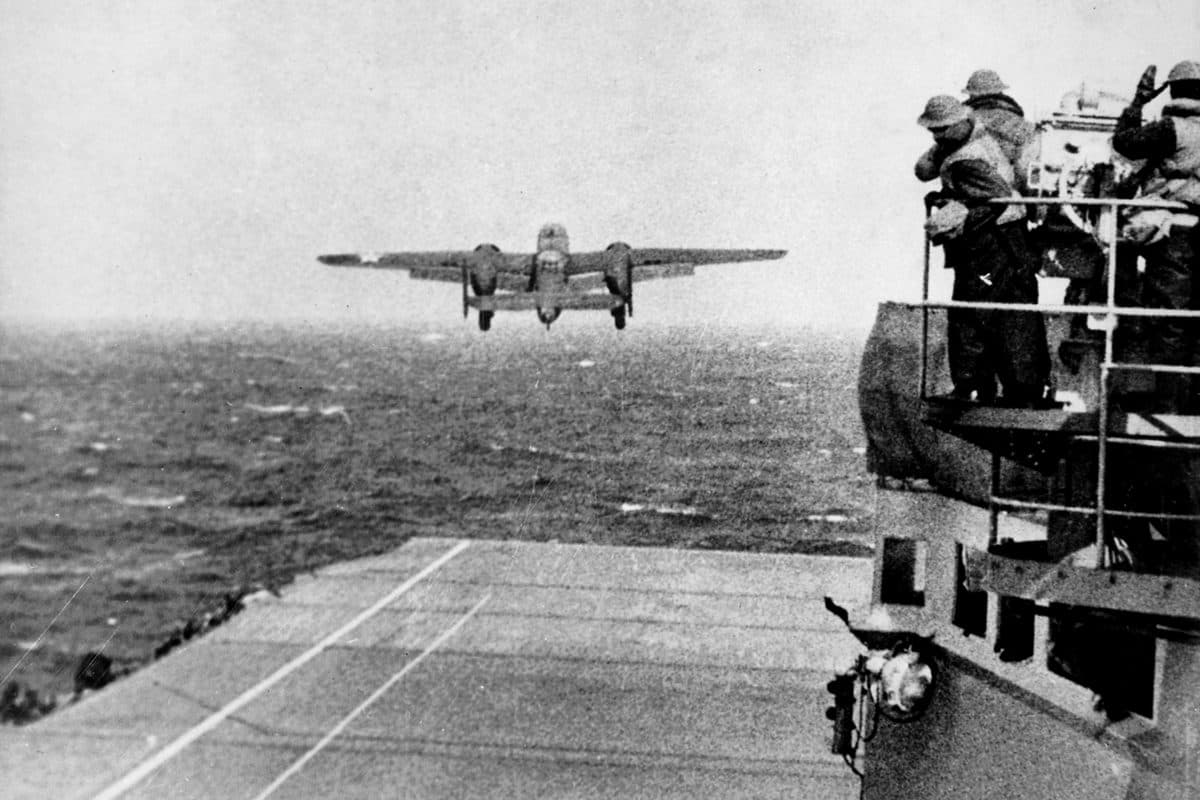
On April 18, 1942, sixteen B-25 Mitchell bombers did something no one thought possible: they launched from the deck of an aircraft carrier, flew 650 miles to Japan, and bombed Tokyo. Every aircraft was lost. The damage was negligible. The consequences changed the war.