

15 Best World War II Books for History Enthusiasts (2026)
15 essential WW2 books covering every theater. Narrative histories, memoirs, and visual references ranked.
daniel-mercer··21 min read

British General Lord Cornwallis, trapped at Yorktown, Virginia, by George Washington's Continental Army and the French fleet of Admiral de Grasse, offered to surrender his army of approximately 8,000 troops. The surrender, formalized on October 19, effectively ended major military operations in the American Revolutionary War. When Lord North, the British Prime Minister, received the news, he reportedly exclaimed: "Oh God, it is all over!"
British General John Burgoyne surrendered his entire army of 5,895 men to American General Horatio Gates at Saratoga, New York. The surrender, the first of a British field army in the war, was the turning point of the American Revolution, directly convincing France to enter the war as America's ally. French military and naval support would prove decisive at Yorktown four years later.
British Lieutenant General John Burgoyne formally surrendered his army of roughly 5,900 men to American Major General Horatio Gates at Saratoga, New York, ending the decisive campaign of the American Revolutionary War. The capitulation convinced France to enter the war as an American ally, transforming a colonial revolt into a global conflict.
Cornwallis offered to surrender his army at Yorktown, effectively ending the American Revolutionary War. The formal surrender took place on October 19.
The Suez Canal, a 120-mile artificial waterway connecting the Mediterranean Sea to the Red Sea, was informally opened for through traffic following ten years of construction under Ferdinand de Lesseps. The formal inauguration came one month later, but October operations proved the canal's viability and began its transformation of global naval strategy by shortening the sea route between Europe and Asia by thousands of miles.
Guglielmo Marconi's company began the first commercial transatlantic wireless telegraph service between Ireland and Nova Scotia. The military implications were immediate and profound, radio would revolutionize naval and military communications, enabling real-time command and control that transformed warfare in the twentieth century.
Soldiers of Battery C, 6th Field Artillery Regiment fired the first American artillery shells of the First World War at German positions near Bathelemont in Lorraine. The 75mm French-pattern gun round marked the combat debut of the American Expeditionary Force and the arrival of a power that would tip the strategic balance against Imperial Germany.
The largest airborne operation in history, Field Marshal Montgomery's Operation Market Garden, officially ended in failure. The plan to seize bridges across the Netherlands and outflank the Siegfried Line had succeeded at Eindhoven and Nijmegen but failed at Arnhem, where the British 1st Airborne Division was destroyed trying to hold "a bridge too far." Over 1,400 British paratroopers were killed and 6,500 captured.
Argentine military officer Juan Domingo Peron was released from detention following mass worker demonstrations at the Plaza de Mayo, beginning the political movement that would reshape Argentine defense policy for decades. Peron's subsequent presidency built a domestic arms industry, launched Latin America's first jet fighter program, and courted German aerospace engineers fleeing postwar Europe.
French police under Prefect Maurice Papon violently suppressed a peaceful protest by 30,000 Algerian demonstrators in Paris, killing an estimated 100 to 300 people. Many victims were beaten unconscious and thrown into the Seine River. The massacre, which occurred during the Algerian War, was covered up by the French government for decades and remains one of the most controversial episodes of post-war French military history.
Members of the Organization of Arab Petroleum Exporting Countries (OAPEC) announced an oil embargo against nations that supported Israel during the Yom Kippur War, including the United States and the Netherlands. The embargo quadrupled oil prices, caused economic chaos across the Western world, and demonstrated that energy security was a critical national security issue, a lesson that reshaped military planning and geopolitics.

Lieutenant General
John Burgoyne, the British general whose surrender at Saratoga in 1777 was the turning point of the American Revolution. Known as "Gentleman Johnny" for his cultured manners, Burgoyne was also a noted playwright. His defeat convinced France to ally with America, ultimately sealing British defeat.

Field Marshal
Bernard Montgomery, Britain's most famous World War II field commander, who defeated Rommel at El Alamein in 1942 and commanded Allied ground forces on D-Day. Known for meticulous planning and caution, his rivalry with Patton and his controversial Operation Market Garden remain subjects of intense debate.

Polish composer and pianist who was deeply affected by the November Uprising of 1830 against Russian rule in Poland. His "Revolutionary Étude" was composed in response to the uprising's failure. Chopin's music became a symbol of Polish national identity during the country's long struggle for independence, sustained through two World Wars.
Wear the Timeline
10 military events occurred on October 17, spanning multiple centuries. Key events include: British Surrender at Yorktown (1781), British Surrender at Saratoga (1777), Operation Market Garden Ends (1944), OPEC Oil Embargo Begins (1973), Burgoyne Surrenders Army at Saratoga (1777).
The most significant military event on October 17 is British Surrender at Yorktown (1781). British General Lord Cornwallis, trapped at Yorktown, Virginia, by George Washington's Continental Army and the French fleet of Admiral de Grasse, offered to surrender his army of approximately 8,000 troops. The surrender, formalized on October 19, effectively ended major military operations in the American Revolutionary War. When Lord North, the British Prime Minister, received the news, he reportedly exclaimed: "Oh God, it is all over!"
Notable military figures born on October 17 include Burgoyne (1722–1792), Montgomery of Alamein (1887–1976).
Events on October 17 span the Colonial & Revolutionary era, World War II, the Cold War, the Interwar Period, World War I, covering 10 events across 3 centuries of military history.
Events on October 17 involve 4 branches of the U.S. and allied armed forces, reflecting the global scope of military operations throughout history.
Explore military history from the day you were born.
June 6
The Allied invasion of Normandy, the largest amphibious assault in history.
December 7
Japan attacks the U.S. Pacific Fleet, bringing America into World War II.
September 11
The deadliest terrorist attack in history transforms U.S. national security.
August 6
The first atomic bomb is dropped on a city, ushering in the nuclear age.
May 8
Nazi Germany surrenders unconditionally, ending World War II in Europe.
November 11
Armistice Day marks the end of World War I and honors all who served.
June 4
The turning point of the Pacific War as the U.S. Navy destroys four Japanese carriers.
July 4
The Declaration of Independence is adopted, sparking the American Revolution.
15 essential WW2 books covering every theater. Narrative histories, memoirs, and visual references ranked.
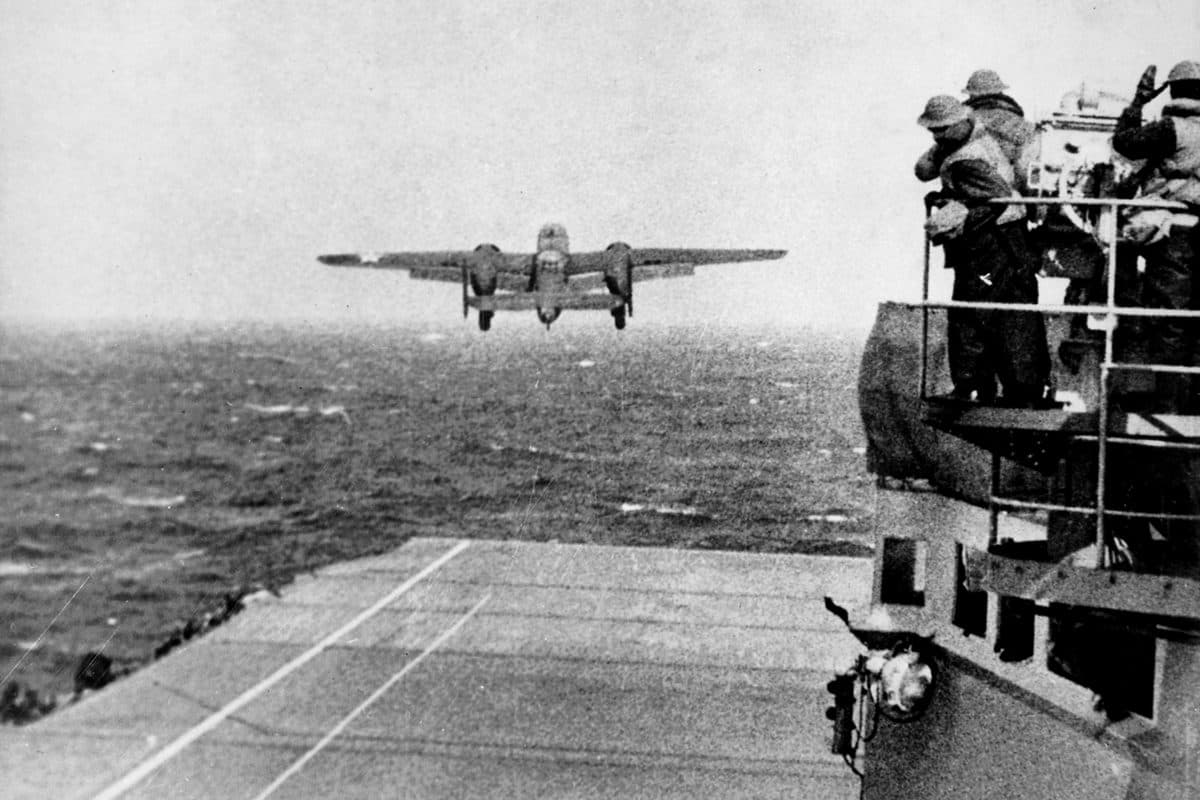
On April 18, 1942, sixteen B-25 Mitchell bombers did something no one thought possible: they launched from the deck of an aircraft carrier, flew 650 miles to Japan, and bombed Tokyo. Every aircraft was lost. The damage was negligible. The consequences changed the war.
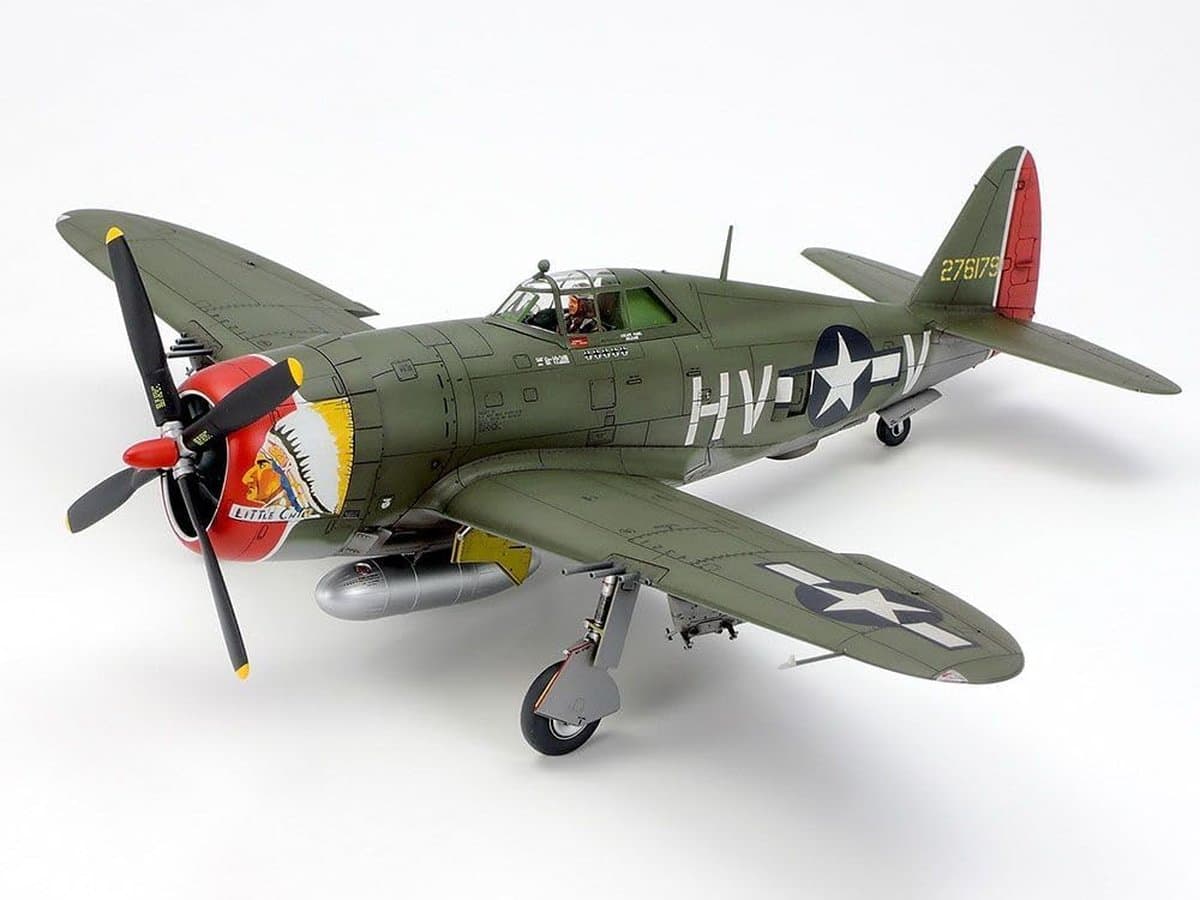
Compare 85+ WW2 scale model kits across aircraft, tanks, and ships. Beginner builds from $9 to museum-grade showpieces at $580. Covers Tamiya, Eduard, HK Models, Trumpeter, and more with honest reviews, trade-offs, and pricing.

On April 7, 1945, the Imperial Japanese Navy sent the largest battleship ever built on a one-way suicide mission to Okinawa. She never arrived. 386 American aircraft found her first, and sank her in under two hours.