


20 Chilling Quotes from the Trenches of World War I
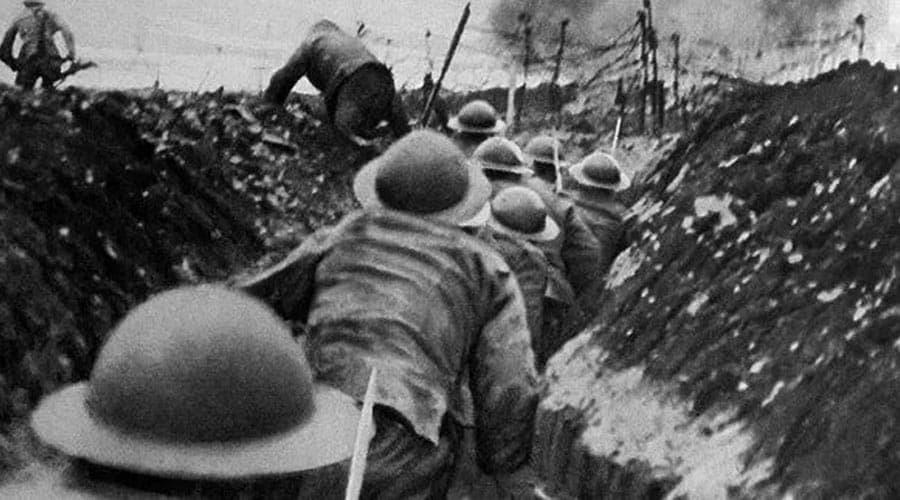
Harrowing first-person accounts from soldiers who endured the mud, gas, and constant shelling of World War I's Western Front.
james-holloway··8 min read

General George Washington gathered his remaining officers at Fraunces Tavern in New York City to bid them farewell before resigning his commission and returning to private life. In one of the most emotional scenes of the American Revolution, Washington embraced each officer individually, tears streaming down his face, then walked silently to the waterfront and boarded a barge for Annapolis. His voluntary relinquishment of military power, when he could have become a king, remains one of the most consequential acts in the history of democratic governance.
General Washington said goodbye to his officers at Fraunces Tavern in New York City, embracing each man with tears in his eyes before departing to resign his commission. His voluntary relinquishment of power, when he could have been king, established the principle of civilian control of the military.
Union cavalry under General Judson Kilpatrick defeated Confederate cavalry under General Joseph Wheeler at Waynesboro, Georgia, during Sherman's March to the Sea. The engagement was the last significant cavalry action of the March, which was rapidly approaching Savannah. Sherman's destruction of Georgia's infrastructure was systematically dismantling the Confederacy's ability to wage war.
President Woodrow Wilson departed New York aboard the USS George Washington, becoming the first sitting American president to visit Europe. Wilson was traveling to the Paris Peace Conference to personally negotiate the Treaty of Versailles, carrying his Fourteen Points and his vision for a League of Nations. The trip marked America's emergence as a dominant voice in global affairs, though the Senate's ultimate rejection of the League would prove a bitter irony.
Chilling Quotes from the TrenchesB-24 Liberators of the Ninth Air Force based in Egypt conducted the first US heavy bomber raid against Naples, attacking harbor facilities and warships in the Italian port. The strike, flown at extreme range, demonstrated the strategic reach of four-engine bombers and prefigured the heavy bomber campaign that would later operate from Italian bases.
President Roosevelt and Prime Minister Churchill reconvened in Cairo following the Tehran Conference with Stalin. The two leaders selected General Dwight D. Eisenhower as Supreme Allied Commander for Operation Overlord, the cross-Channel invasion of France, over the heavily favored British General Sir Alan Brooke. The decision proved to be one of the most consequential command appointments in military history.
100 Facts About World War IIJean-Bédel Bokassa, the military dictator of the Central African Republic, crowned himself Emperor Bokassa I in a lavish $20 million ceremony modeled on Napoleon's 1804 coronation. The former French Army officer had seized power in a 1966 military coup and renamed the country the Central African Empire. The extravagant coronation, in one of the world's poorest nations, epitomized the military dictatorships that plagued post-colonial Africa during the Cold War.
USS Dwight D. Eisenhower, CVN-69, was commissioned at Newport News Shipbuilding, joining her sister USS Nimitz as the second of the Nimitz-class nuclear supercarriers. The class would define American naval power projection for the next four decades, with ten sisters eventually built and continuous forward deployment from the Mediterranean to the western Pacific.
Associated Press journalist Terry Anderson was released after 2,454 days as a hostage of Hezbollah in Lebanon, the longest-held Western hostage in the Lebanese crisis. Anderson's kidnapping in 1985 was part of a broader hostage crisis that entangled the U.S. military and intelligence community in the Iran-Contra scandal, in which the Reagan administration secretly sold weapons to Iran in exchange for hostage releases and diverted the profits to Nicaraguan rebels.
President George H.W. Bush ordered the deployment of US forces to Somalia to support humanitarian relief operations and protect UN aid workers. The Marine landing at Mogadishu on December 9 would begin a 15-month American presence that transitioned into the ill-fated Operation Gothic Serpent and shaped a generation of special operations doctrine.

Generalísimo
Spanish military officer who led the Nationalist forces to victory in the Spanish Civil War (1936-1939) and ruled Spain as dictator for 36 years. Franco became the youngest general in Europe at age 33, led the Spanish Foreign Legion in Morocco, and launched a military coup against the Spanish Republic with the support of Nazi Germany and Fascist Italy. His regime survived World War II through cautious neutrality and later became a Cold War ally of the United States.

Austrian poet who served briefly in the Austro-Hungarian army during World War I, an experience that profoundly shaped his literary work. Though he was discharged after just a few months due to his frail constitution, Rilke's wartime writings captured the spiritual devastation of the conflict. His poem "Archaic Torso of Apollo", ending with the imperative "You must change your life", resonated with soldiers seeking meaning in the destruction.

Field Marshal
Chief of Staff of the Italian Army from 1914 to 1917 who commanded Italian forces through eleven brutal and largely futile battles along the Isonzo River. Cadorna's rigid tactics, disregard for casualties, and practice of decimation, executing soldiers selected by lot from units that retreated, made him one of World War I's most controversial commanders. He was dismissed after the catastrophic Italian defeat at Caporetto in October 1917.
Wear the Timeline
10 military events occurred on December 4, spanning multiple centuries. Key events include: Washington's Farewell to His Officers at Fraunces Tavern (1783), The Second Cairo Conference (1943).
The most significant military event on December 4 is Washington's Farewell to His Officers at Fraunces Tavern (1783). General George Washington gathered his remaining officers at Fraunces Tavern in New York City to bid them farewell before resigning his commission and returning to private life. In one of the most emotional scenes of the American Revolution, Washington embraced each officer individually, tears streaming down his face, then walked silently to the waterfront and boarded a barge for Annapolis. His voluntary relinquishment of military power, when he could have become a king, remains one of the most consequential acts in the history of democratic governance.
Notable military figures born on December 4 include Francisco Franco (1892–1975), Rainer Maria Rilke (1875–1926).
Events on December 4 span the Colonial & Revolutionary era, the Civil War, World War I, World War II, the Cold War, the Modern Era, covering 10 events across 3 centuries of military history.
Events on December 4 involve 5 branches of the U.S. and allied armed forces, reflecting the global scope of military operations throughout history.
Explore military history from the day you were born.
June 6
The Allied invasion of Normandy, the largest amphibious assault in history.
December 7
Japan attacks the U.S. Pacific Fleet, bringing America into World War II.
September 11
The deadliest terrorist attack in history transforms U.S. national security.
August 6
The first atomic bomb is dropped on a city, ushering in the nuclear age.
May 8
Nazi Germany surrenders unconditionally, ending World War II in Europe.
November 11
Armistice Day marks the end of World War I and honors all who served.
June 4
The turning point of the Pacific War as the U.S. Navy destroys four Japanese carriers.
July 4
The Declaration of Independence is adopted, sparking the American Revolution.
Harrowing first-person accounts from soldiers who endured the mud, gas, and constant shelling of World War I's Western Front.
Calvin Graham Was Youngest Decorated US Soldier at 12 Pearl Harbor Visitors Bureau “Green Boys” was a term given to soldiers who…
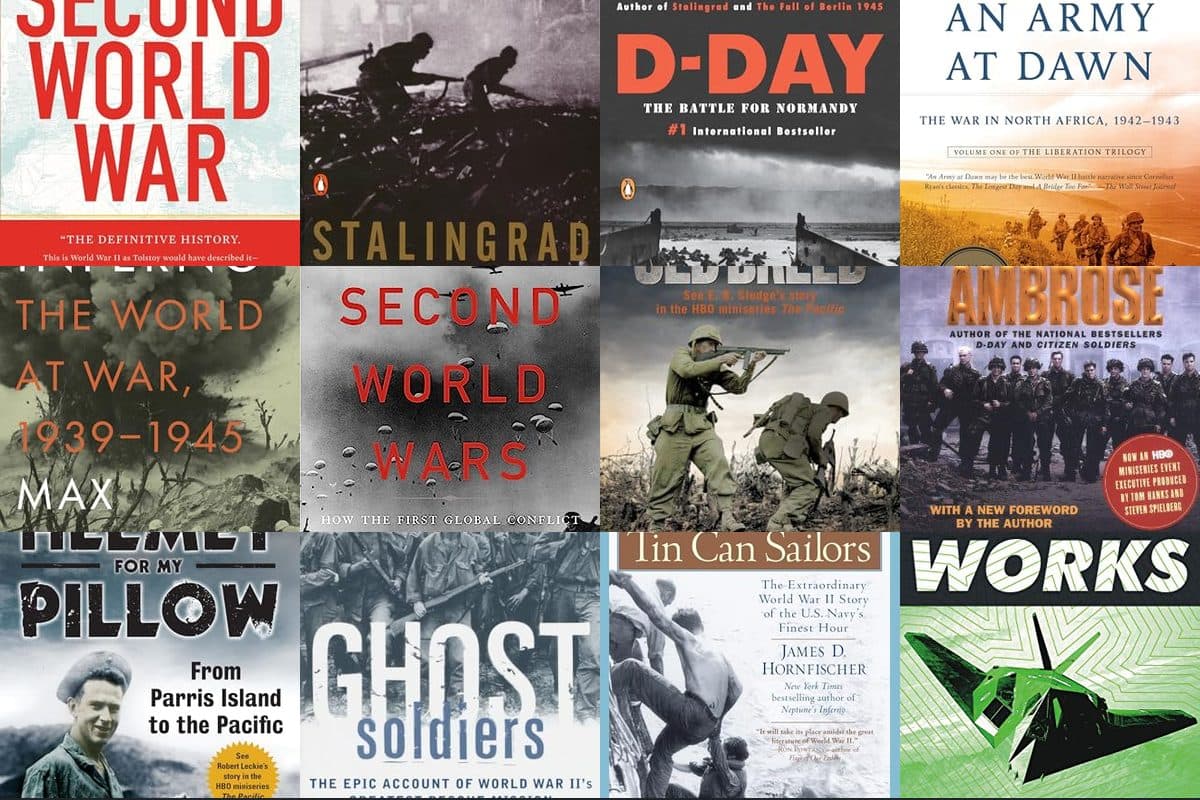
15 essential WW2 books covering every theater. Narrative histories, memoirs, and visual references ranked.
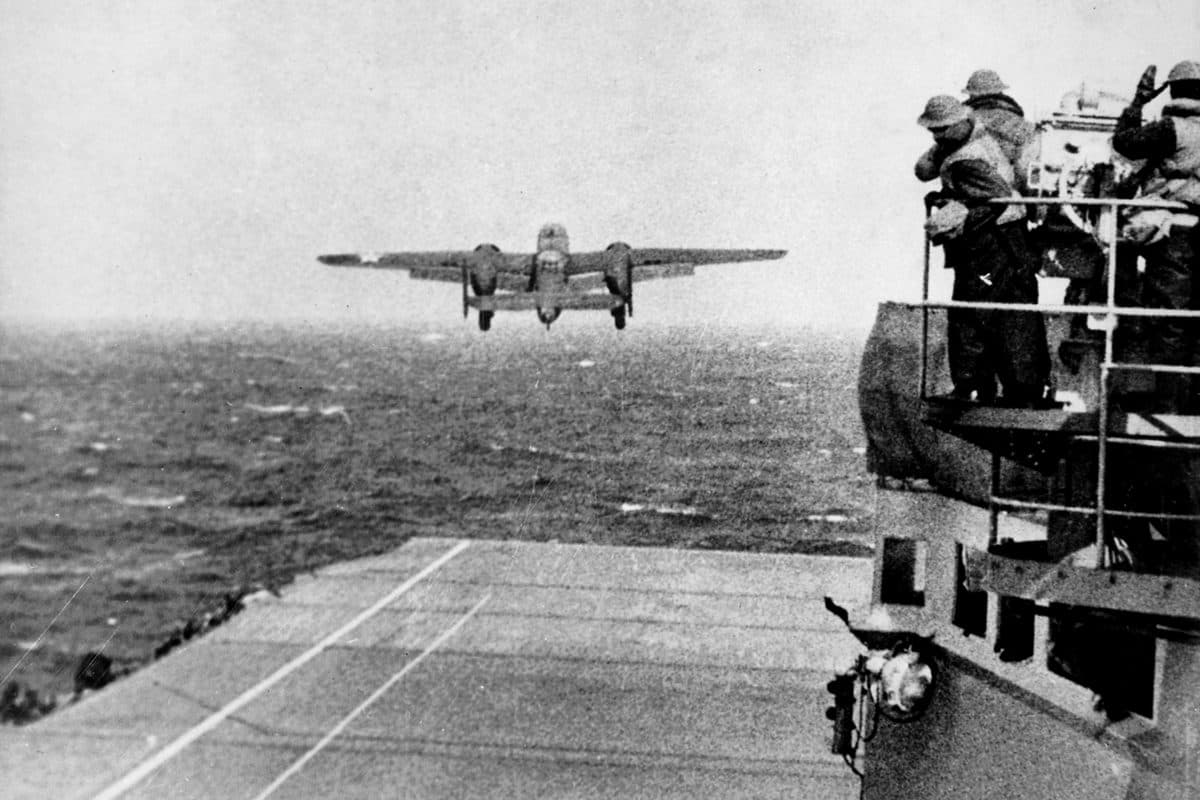
On April 18, 1942, sixteen B-25 Mitchell bombers did something no one thought possible: they launched from the deck of an aircraft carrier, flew 650 miles to Japan, and bombed Tokyo. Every aircraft was lost. The damage was negligible. The consequences changed the war.