

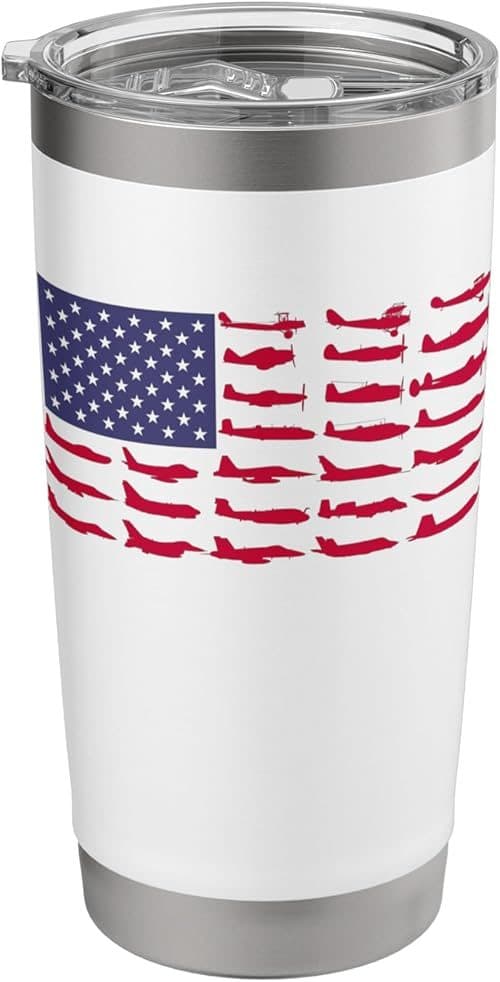


25 Famous Veterans
George H.W. Bush (1924-2018) George Bush Presidential Library and Museum Born in Milton, Massachusetts, George H.W. Bush is one of the most…
michael-trent··15 min read

The Red Army launched a massive counteroffensive against German forces that had advanced to within 19 miles of Moscow's city center. Over one million Soviet soldiers, many of them fresh Siberian divisions transferred from the Far East, struck the exhausted and frozen Wehrmacht along a 600-mile front. The counteroffensive threw the Germans back up to 150 miles from Moscow and shattered the myth of Wehrmacht invincibility, the first major German defeat of World War II.
Frederick the Great of Prussia defeated an Austrian army nearly twice his size at Leuthen in Silesia, using his famous oblique order attack to concentrate overwhelming force against the Austrian left flank while holding back his own left. The maneuver destroyed the Austrian army, inflicting 22,000 casualties and capturing 21,000 prisoners against just 6,400 Prussian losses. Napoleon later called Leuthen "a masterpiece of movements, maneuvers, and resolution."
After an arduous march through the Maine wilderness, Colonel Benedict Arnold's column of the Continental Army reached the heights above Quebec City and linked up with General Richard Montgomery's force from Montreal. The combined force would assault the fortress during a blizzard on December 31, suffering catastrophic casualties in one of the earliest set-piece battles of the American Revolution.
President James K. Polk confirmed the discovery of gold in California in his annual message to Congress, triggering the Gold Rush that would transform the American West. The massive westward migration required military escorts, the construction of frontier forts, and the expansion of Army operations across the continent, reshaping the U.S. military's mission from coastal defense to continental control.
Over one million Red Army soldiers launched a massive counteroffensive against exhausted German forces that had reached the gates of Moscow. Fresh Siberian divisions threw the Wehrmacht back up to 150 miles, delivering the first major German defeat of World War II and shattering the myth of Wehrmacht invincibility.
Soviet forces under General Georgy Zhukov launched a massive counteroffensive in front of Moscow, driving exhausted and frostbitten Wehrmacht units back from the capital's suburbs. The blow shattered the myth of German invincibility and marked the first strategic-level defeat of the Third Reich on land.
Five U.S. Navy TBM Avenger torpedo bombers, Flight 19, vanished during a routine training mission over the Atlantic Ocean east of Florida. The fourteen crew members were never found, nor was any wreckage recovered. A PBM Mariner flying boat sent to search for the missing aircraft also disappeared with its thirteen-man crew. The incident became the most famous mystery associated with the so-called Bermuda Triangle and remains unexplained.
Five US Navy TBM Avenger torpedo bombers of Training Flight 19 disappeared during a routine navigation exercise out of NAS Fort Lauderdale. A PBM Mariner flying boat dispatched to search for them also vanished, taking 14 more airmen. The incident drove major reforms in naval aviation navigation training and search-and-rescue doctrine.
African Americans in Montgomery, Alabama, began a boycott of the city bus system following Rosa Parks's arrest for refusing to give up her seat. The 381-day boycott, led by Dr. Martin Luther King Jr., had profound military implications: it accelerated the desegregation of the armed forces that Truman had ordered in 1948 and inspired civil rights activism among Black military veterans who demanded equal treatment for their service.
Famous VeteransFour days after Rosa Parks' arrest, the Black community of Montgomery, Alabama launched a coordinated boycott of city buses that would last 381 days. The boycott accelerated civil rights reforms in the US military and in federal institutions that had integrated a decade earlier but still operated within a segregated South.
Afghan factions meeting in Bonn, Germany, signed an agreement establishing an interim government under Hamid Karzai, creating the political framework for post-Taliban Afghanistan. The agreement, brokered by the UN just weeks after the fall of Kabul, envisioned a democratic Afghanistan protected by an international security force. The optimism of the Bonn Conference would prove tragically premature as the Taliban insurgency reignited and the war continued for two more decades.

Brevet Major General
Flamboyant Union cavalry commander during the Civil War who graduated last in his West Point class but earned fame for his aggressive charges at Gettysburg, Yellow Tavern, and the Shenandoah Valley. Custer was killed along with 268 men of the 7th Cavalry at the Battle of the Little Bighorn on June 25, 1876, in the most famous military defeat in American frontier history. His "Last Stand" became one of the most iconic and debated events in the American military experience.

Legendary entertainment pioneer who served in the Red Cross Ambulance Corps in France at the end of World War I, driving ambulances decorated with his own cartoons. During World War II, Disney Studios produced military training films, propaganda animations, and over 1,200 insignia designs for military units, including the famous Flying Tigers shark-mouth logo. His studio's contribution to the war effort earned him recognition from the military establishment.

Marshal of the Soviet Union
Chief of the Soviet General Staff during the most critical years of World War II (1942-1945) and Minister of Defence of the Soviet Union, who died on this date in 1977. Vasilevsky coordinated the planning for many of the war's decisive operations, including the counteroffensive at Stalingrad, the Battle of Kursk, and Operation Bagration, the massive 1944 offensive that destroyed German Army Group Centre. He personally commanded the Soviet invasion of Manchuria in August 1945 that crushed the Japanese Kwantung Army in just two weeks.
Wear the Timeline
10 military events occurred on December 5, spanning multiple centuries. Key events include: The Soviet Counteroffensive at Moscow (1941), The Battle of Leuthen: Frederick's Greatest Victory (1757), Soviet Counteroffensive at Moscow Begins (1941).
The most significant military event on December 5 is The Soviet Counteroffensive at Moscow (1941). The Red Army launched a massive counteroffensive against German forces that had advanced to within 19 miles of Moscow's city center. Over one million Soviet soldiers, many of them fresh Siberian divisions transferred from the Far East, struck the exhausted and frozen Wehrmacht along a 600-mile front. The counteroffensive threw the Germans back up to 150 miles from Moscow and shattered the myth of Wehrmacht invincibility, the first major German defeat of World War II.
Notable military figures born on December 5 include George Armstrong Custer (1839–1876), Walt Disney (1901–1966).
Events on December 5 span World War II, the Colonial & Revolutionary era, the Cold War, the Modern Era, covering 10 events across 4 centuries of military history.
Events on December 5 involve 2 branches of the U.S. and allied armed forces, reflecting the global scope of military operations throughout history.
Explore military history from the day you were born.
June 6
The Allied invasion of Normandy, the largest amphibious assault in history.
December 7
Japan attacks the U.S. Pacific Fleet, bringing America into World War II.
September 11
The deadliest terrorist attack in history transforms U.S. national security.
August 6
The first atomic bomb is dropped on a city, ushering in the nuclear age.
May 8
Nazi Germany surrenders unconditionally, ending World War II in Europe.
November 11
Armistice Day marks the end of World War I and honors all who served.
June 4
The turning point of the Pacific War as the U.S. Navy destroys four Japanese carriers.
July 4
The Declaration of Independence is adopted, sparking the American Revolution.
George H.W. Bush (1924-2018) George Bush Presidential Library and Museum Born in Milton, Massachusetts, George H.W. Bush is one of the most…
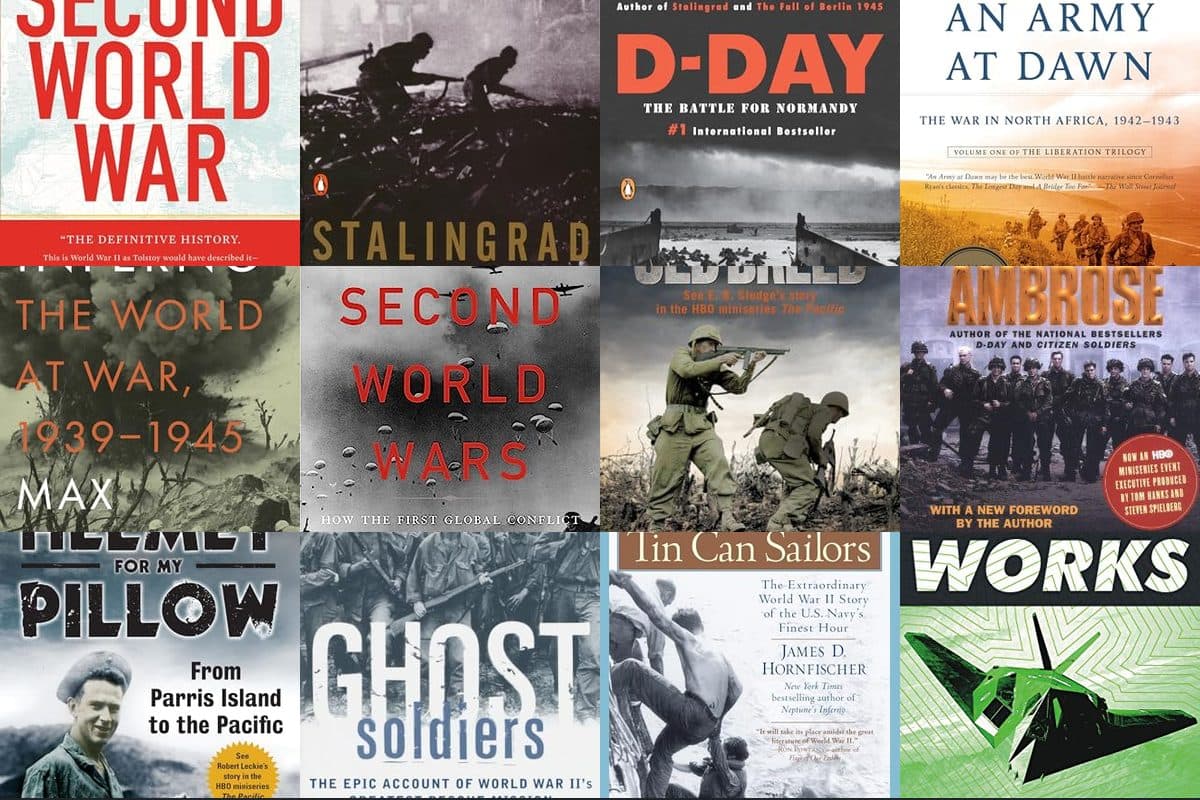
15 essential WW2 books covering every theater. Narrative histories, memoirs, and visual references ranked.
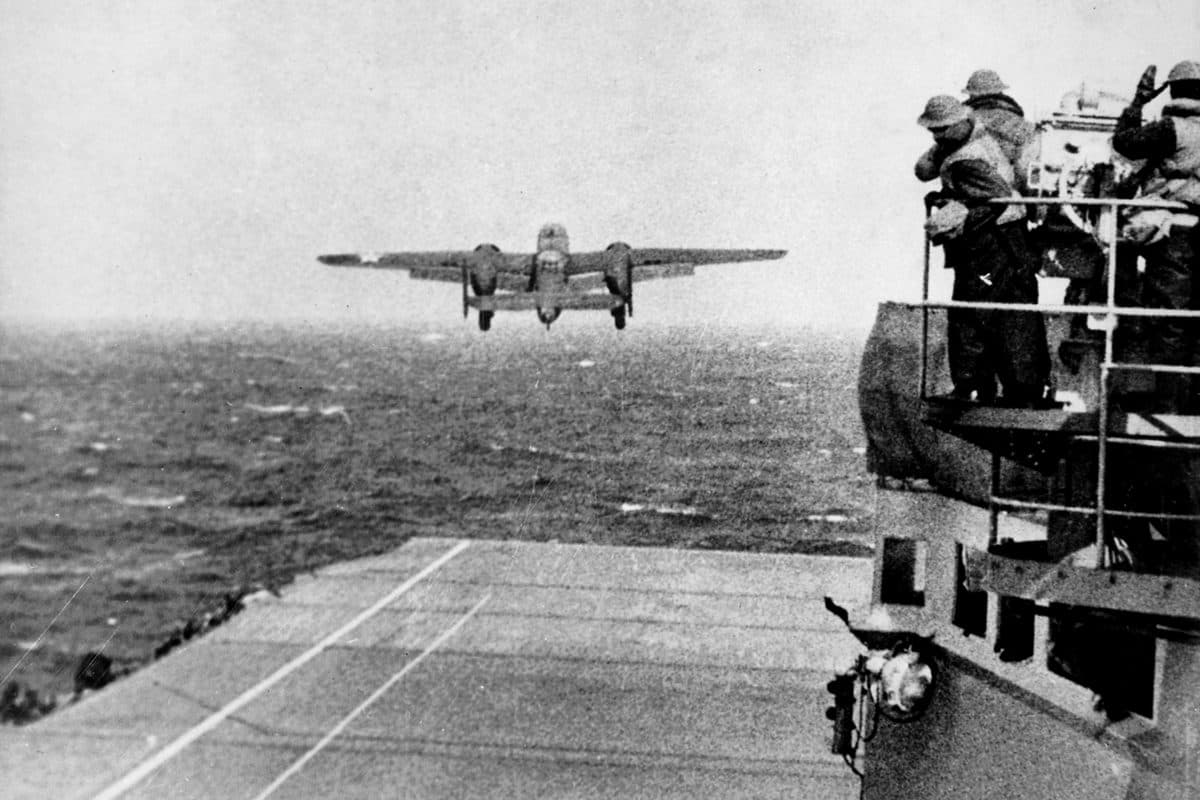
On April 18, 1942, sixteen B-25 Mitchell bombers did something no one thought possible: they launched from the deck of an aircraft carrier, flew 650 miles to Japan, and bombed Tokyo. Every aircraft was lost. The damage was negligible. The consequences changed the war.
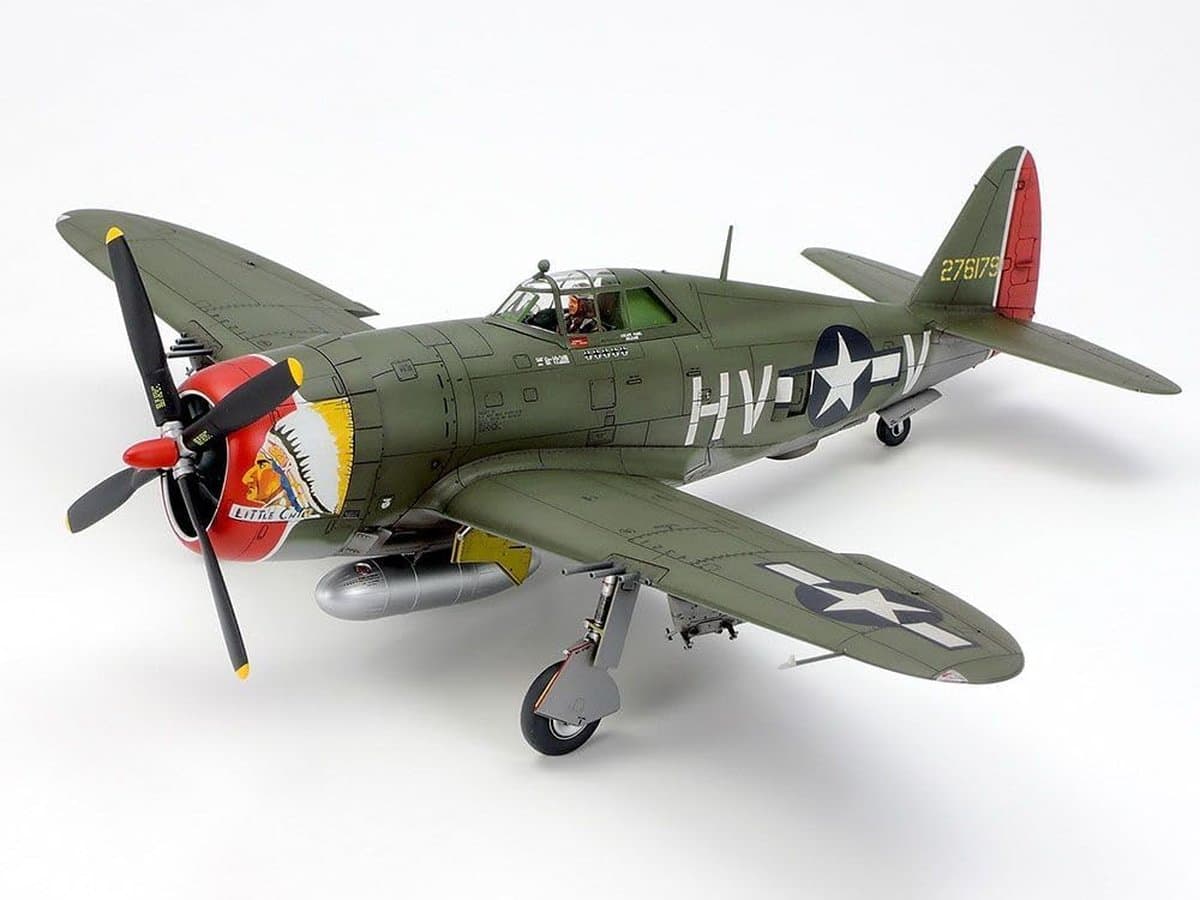
Compare 85+ WW2 scale model kits across aircraft, tanks, and ships. Beginner builds from $9 to museum-grade showpieces at $580. Covers Tamiya, Eduard, HK Models, Trumpeter, and more with honest reviews, trade-offs, and pricing.