


15 Best World War II Books for History Enthusiasts (2026)
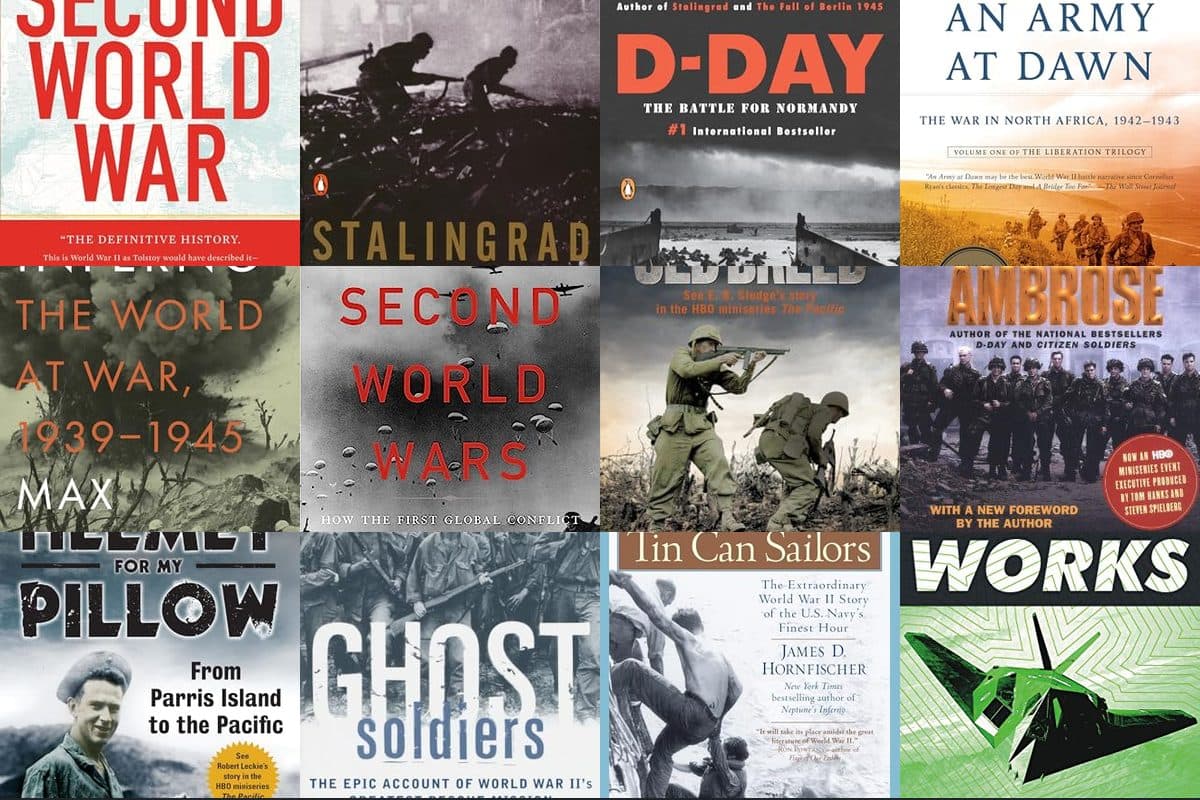
15 essential WW2 books covering every theater. Narrative histories, memoirs, and visual references ranked.
daniel-mercer··21 min read

The fourth carrier battle of the Pacific War was fought between American and Japanese fleets near the Santa Cruz Islands as both sides struggled for control of the waters around Guadalcanal. Japanese aircraft sank the carrier USS Hornet and damaged the USS Enterprise, but the Japanese lost so many irreplaceable experienced pilots that their carrier aviation never recovered. The battle marked the turning point where Japanese naval air power began its irreversible decline.
Seventy-year-old Benjamin Franklin sailed from Philadelphia aboard the armed sloop Reprisal, bound for France to negotiate the alliance that would prove essential to American independence. Franklin's diplomatic mission would secure French military and financial support, including troops, warships, and loans, that proved decisive at Yorktown. His journey across the Atlantic, undertaken at great personal risk during wartime, was one of the most consequential diplomatic missions in history.
Canadian militia and Mohawk warriors under Charles de Salaberry ambushed and defeated a much larger American army advancing toward Montreal during the War of 1812. The successful defense preserved Lower Canada from invasion and validated a doctrine of forest warfare combining regular troops, militia, and indigenous allies that shaped Canadian military identity for generations.
Italian revolutionary general Giuseppe Garibaldi met King Victor Emmanuel II at Teano in southern Italy, ceding his conquests in the south to the Piedmontese monarchy and effectively completing the unification of most of Italy. Garibaldi's extraordinary campaign, conquering the Kingdom of the Two Sicilies with barely a thousand volunteers, remains one of the most remarkable military achievements of the nineteenth century. His meeting with the king symbolized the triumph of Italian nationalism.
American and Japanese carrier forces clashed near the Solomon Islands in the fourth carrier battle of the Pacific War. Japan sank the USS Hornet and damaged the Enterprise but lost irreplaceable veteran pilots, beginning the irreversible decline of Japanese naval air power.
The carrier USS Hornet, which had launched the Doolittle Raid six months earlier, was fatally damaged by Japanese air attack during the Battle of Santa Cruz Islands and abandoned. Repeated attempts to scuttle her failed, and she was finally sunk by Japanese destroyer torpedoes hours later. Her loss left the Pacific Fleet with only one operational fleet carrier for weeks during the critical Guadalcanal campaign.
Pakistani-backed Pashtun tribal militia invaded the princely state of Jammu and Kashmir, beginning the First Kashmir War between India and Pakistan. The Maharaja of Kashmir appealed to India for military assistance and signed the Instrument of Accession to the Indian Union. Indian troops were airlifted to Srinagar and halted the advance, beginning a conflict that created the Line of Control and established Kashmir as one of the world's most dangerous flashpoints, a dispute that persists today between two nuclear-armed nations.
South Korean Sixth Division reconnaissance elements reached the Yalu River at Chosan, becoming the only UN forces to touch the Chinese border during the Korean War. Within hours they were struck by Chinese People's Volunteer Army ambush and destroyed. The engagement marked the effective high water mark of the UN advance into North Korea before massive Chinese intervention reversed the war.
Israel and Jordan signed a formal peace treaty at a ceremony in the Arava Valley near the border between the two countries, making Jordan only the second Arab nation (after Egypt) to establish full diplomatic relations with Israel. The treaty, witnessed by President Bill Clinton, ended 46 years of official hostility and resolved border, water, and security disputes. It represented a rare diplomatic triumph in the Arab-Israeli conflict.
Israeli Prime Minister Yitzhak Rabin and Jordanian Prime Minister Abdelsalam al-Majali signed the Israel-Jordan Peace Treaty at the Wadi Araba border crossing on October 26, 1994, normalizing relations between the two states and establishing military cooperation arrangements that have shaped eastern Mediterranean security for three decades.
President George W. Bush signed the USA PATRIOT Act into law, dramatically expanding the surveillance and investigative powers of American law enforcement and intelligence agencies in response to the September 11 attacks. The act, passed with overwhelming bipartisan support just six weeks after 9/11, authorized roving wiretaps, expanded access to business records, and broke down the "wall" between intelligence and law enforcement, fundamentally reshaping the relationship between national security and civil liberties.

Prussian field marshal and chief of the General Staff who revolutionized military strategy and organization. Moltke's innovative use of railroads for rapid mobilization and his decentralized command philosophy produced stunning victories in the wars against Denmark (1864), Austria (1866), and France (1870-71) that unified Germany under Prussian leadership. His dictum that "no plan survives first contact with the enemy" remains one of the most quoted axioms in military science.

Ukrainian anarchist revolutionary who commanded the Revolutionary Insurrectionary Army of Ukraine during the Russian Civil War, leading a peasant army of up to 100,000 fighters against both the Whites and the Bolsheviks. Makhno pioneered the use of horse-drawn machine gun carts (tachankas) for mobile warfare and created one of the few functioning anarchist societies in history in southeastern Ukraine. Betrayed by the Bolsheviks after helping them defeat the Whites, he fled into exile and died in poverty in Paris.

Union Army officer who commanded Fort Sumter during the Confederate bombardment that began the American Civil War on April 12, 1861. A Kentucky-born veteran of the Mexican-American War, Anderson held the fort for 34 hours under relentless artillery fire before surrendering, making him the first Union hero of the conflict. He returned to Fort Sumter on April 14, 1865, to raise the same flag he had lowered four years earlier, the day Abraham Lincoln was shot.
Wear the Timeline
10 military events occurred on October 26, spanning multiple centuries. Key events include: Battle of the Santa Cruz Islands (1942), Benjamin Franklin Departs for France (1776), First Kashmir War Begins (1947), USS Hornet Lost at Santa Cruz Islands (1942), The Israel-Jordan Peace Treaty Is Signed at Wadi Araba (1994).
The most significant military event on October 26 is Battle of the Santa Cruz Islands (1942). The fourth carrier battle of the Pacific War was fought between American and Japanese fleets near the Santa Cruz Islands as both sides struggled for control of the waters around Guadalcanal. Japanese aircraft sank the carrier USS Hornet and damaged the USS Enterprise, but the Japanese lost so many irreplaceable experienced pilots that their carrier aviation never recovered. The battle marked the turning point where Japanese naval air power began its irreversible decline.
Notable military figures born on October 26 include Helmuth von Moltke the Elder (1800–1891), Nestor Makhno (1888–1934).
Events on October 26 span World War II, the Colonial & Revolutionary era, the Cold War, the Modern Era, the Korean War, covering 10 events across 4 centuries of military history.
Events on October 26 involve 4 branches of the U.S. and allied armed forces, reflecting the global scope of military operations throughout history.
Explore military history from the day you were born.
June 6
The Allied invasion of Normandy, the largest amphibious assault in history.
December 7
Japan attacks the U.S. Pacific Fleet, bringing America into World War II.
September 11
The deadliest terrorist attack in history transforms U.S. national security.
August 6
The first atomic bomb is dropped on a city, ushering in the nuclear age.
May 8
Nazi Germany surrenders unconditionally, ending World War II in Europe.
November 11
Armistice Day marks the end of World War I and honors all who served.
June 4
The turning point of the Pacific War as the U.S. Navy destroys four Japanese carriers.
July 4
The Declaration of Independence is adopted, sparking the American Revolution.
15 essential WW2 books covering every theater. Narrative histories, memoirs, and visual references ranked.
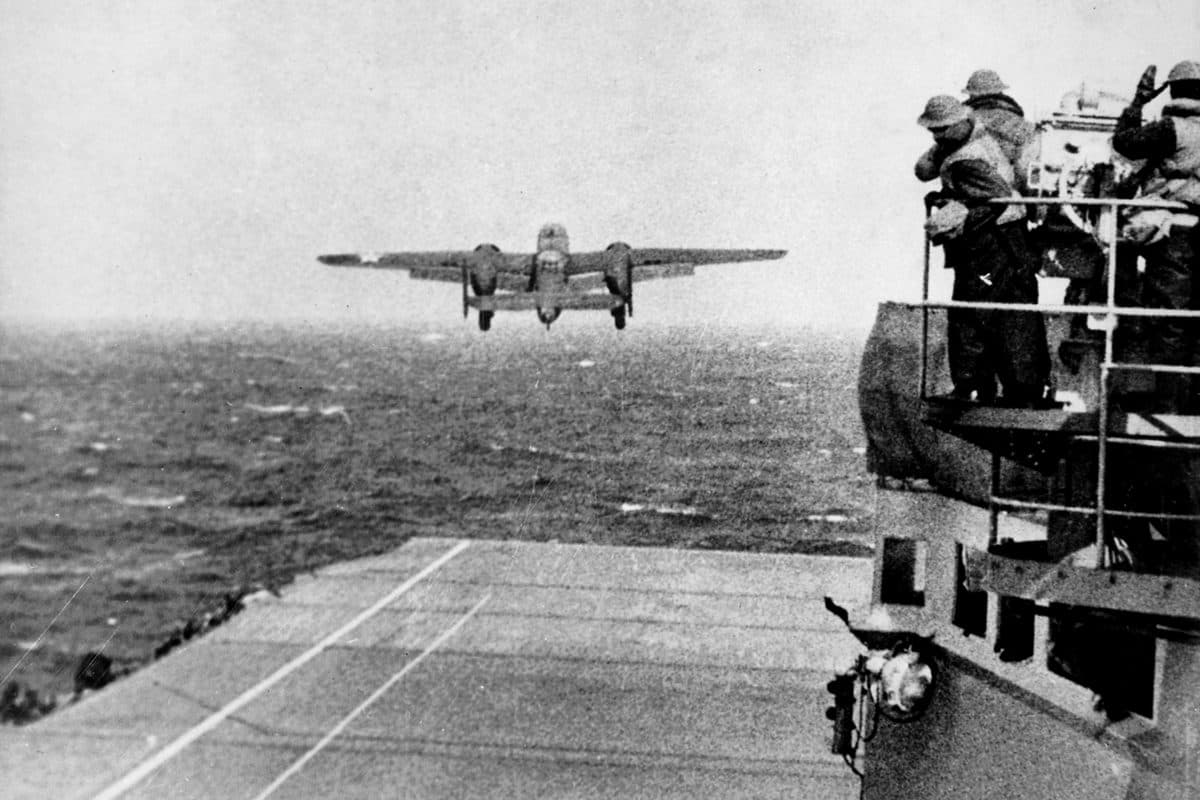
On April 18, 1942, sixteen B-25 Mitchell bombers did something no one thought possible: they launched from the deck of an aircraft carrier, flew 650 miles to Japan, and bombed Tokyo. Every aircraft was lost. The damage was negligible. The consequences changed the war.
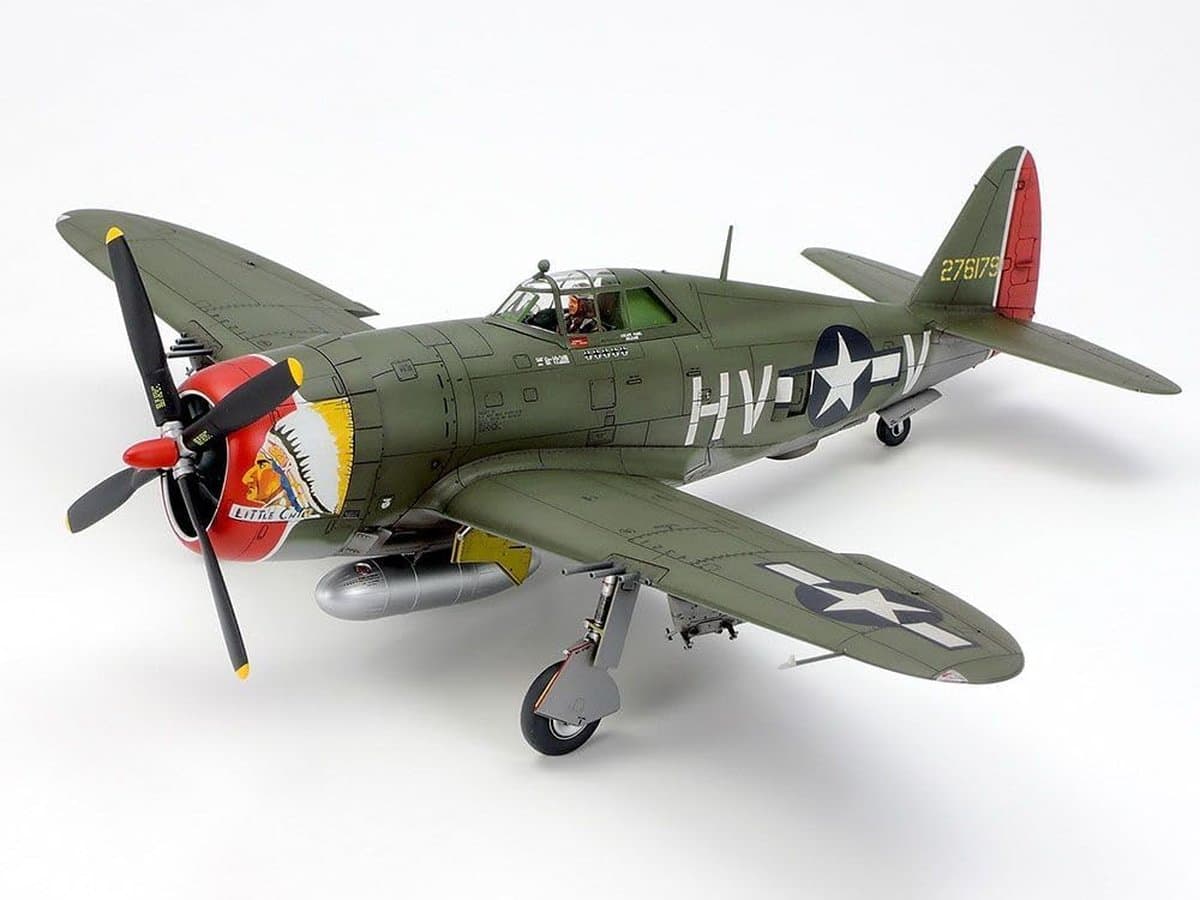
Compare 85+ WW2 scale model kits across aircraft, tanks, and ships. Beginner builds from $9 to museum-grade showpieces at $580. Covers Tamiya, Eduard, HK Models, Trumpeter, and more with honest reviews, trade-offs, and pricing.

On April 7, 1945, the Imperial Japanese Navy sent the largest battleship ever built on a one-way suicide mission to Okinawa. She never arrived. 386 American aircraft found her first, and sank her in under two hours.