
Skip to content
May 3:British Recapture of Rangoon: The Burma Campaign Ends81yr ago

October 27 in Military History

Share:

This Day in Military History: October 27

Go to Today
President Kennedy meeting with his advisors in the White House during the tense climax of the Cuban Missile Crisis, October 1962
Defining Moment64 years ago

Black Saturday: The Cuban Missile Crisis Reaches Its Peak

Air ForceNavy· 1962

The Cuban Missile Crisis reached its most dangerous moment, later called "Black Saturday", when a Soviet surface-to-air missile shot down an American U-2 reconnaissance aircraft over Cuba, killing Major Rudolf Anderson Jr. Simultaneously, a Soviet submarine commander nearly launched a nuclear torpedo at the American naval blockade. The world stood at the very brink of thermonuclear war before Soviet Premier Khrushchev agreed to withdraw missiles from Cuba.

10 events, 2 notable births, 1 notable deaths, and 5 military quotes10events2births1deaths5quotes

1700s

1782RevolutionaryContinental244 years ago

American and British diplomats began the preliminary peace negotiations in Paris that would lead to the Treaty of Paris ending the American Revolutionary War. Benjamin Franklin, John Adams, and John Jay represented the United States in talks with British envoy Richard Oswald. The resulting treaty, signed in September 1783, recognized American independence and established boundaries that doubled the territory of the new nation.

1800s

1806RevolutionaryArmy220 years ago

Napoleon Bonaparte entered Berlin in triumph following his devastating victories over Prussia at the twin battles of Jena and Auerstedt two weeks earlier. The Prussian Army, considered one of Europe's finest, had been shattered in a single day of fighting. Napoleon's occupation of Berlin, during which he issued the Berlin Decree establishing the Continental System to blockade British trade, represented the zenith of French military power in Europe.

1870RevolutionaryArmy156 years ago

Marshal Achille Bazaine surrendered the fortress of Metz to Prussian forces along with 173,000 French troops, one of the largest capitulations in military history. The garrison had been besieged since the Battle of Gravelotte in August, and its fall freed 200,000 Prussian soldiers to march on Paris. Bazaine was later court-martialed and sentenced to death for treason, though the sentence was commuted to imprisonment.

1900s

1904InterwarArmy122 years ago

The Interborough Rapid Transit Company subway opened with an initial line running from City Hall to Harlem, introducing mass underground transit to New York City. The project was driven in part by military logisticians who had studied London's Underground and recognized rail transit as essential infrastructure for moving reservists and war material through major port cities in the event of mobilization.

1941WWIINavy85 years ago

President Franklin Roosevelt delivered a provocative Navy Day address in which he claimed to possess a secret Nazi map showing plans to reorganize South America into five vassal states and eliminate all world religions. The speech, designed to build public support for intervention against Germany, was one of the most inflammatory presidential addresses in American history and brought the United States another step closer to full belligerency, just five weeks before Pearl Harbor.

1949Cold WarArmy77 years ago

The Greek Civil War effectively ended when communist guerrilla forces announced a ceasefire after suffering decisive defeats by the Greek National Army, supported by American military aid under the Truman Doctrine. The conflict, which had raged since 1946, was the first proxy war of the Cold War and the first test of the American policy of containment. Greece's survival as a Western-aligned democracy validated the Truman Doctrine and set the pattern for American Cold War interventions.

1961Cold WarArmy65 years ago

American M48 Patton tanks and Soviet T-54s faced each other at point blank range at the Checkpoint Charlie crossing between East and West Berlin after days of escalating confrontation over access rights. Ten tanks on each side sat with loaded main guns for sixteen hours before a negotiated withdrawal defused the standoff. It was the only direct tank confrontation between American and Soviet forces of the Cold War.

1962Cold WarAir ForceNavy64 years agoDefining Moment

A Soviet missile shot down an American U-2 over Cuba, a Soviet submarine nearly launched a nuclear torpedo, and the world stood at the brink of thermonuclear war. Only the refusal of one Soviet naval officer to authorize a nuclear launch prevented catastrophe. The crisis was resolved the following day.

1962Cold WarNavy64 years ago

Soviet submarine B-59, pinned by American destroyers dropping practice depth charges near Cuba, debated whether to launch its nuclear tipped T-5 torpedo. Captain Valentin Savitsky and political officer Ivan Maslennikov voted to fire. Flotilla commander Vasili Arkhipov, whose concurrence was required under Soviet procedure, refused. His veto very likely prevented a tactical nuclear exchange and escalation to global war.

1971Cold WarArmy55 years ago

The Democratic Republic of the Congo was renamed the Republic of Zaire under President Mobutu Sese Seko on October 27, 1971, beginning a 26-year dictatorship that positioned the country as a major Cold War client of the United States and shaped Central African military geography for the remainder of the twentieth century.

Enjoyed this page? Share it with someone who loves military history.

Share:

Never Miss a Day in Military History

Get daily military history, analysis, and technology delivered to your inbox.

Born on This Day

Theodore Roosevelt

Theodore Roosevelt

b. 1858

Twenty-sixth President of the United States who transformed American military power and foreign policy. Roosevelt resigned as Assistant Secretary of the Navy to lead the Rough Riders in the charge up San Juan Hill during the Spanish-American War, earning the Medal of Honor. As president, he built the Panama Canal, sent the Great White Fleet around the world, modernized the U.S. Navy into a world-class force, and won the Nobel Peace Prize for mediating the Russo-Japanese War.

August Neidhardt von Gneisenau

August Neidhardt von Gneisenau

b. 1760

Prussian field marshal and military reformer who served as chief of staff to Field Marshal Blücher during the Napoleonic Wars. Gneisenau was the strategic brain behind the Prussian march to Waterloo in 1815, making the critical decision to move toward Wellington rather than retreat after the defeat at Ligny. His military reforms, alongside those of Scharnhorst, transformed the Prussian Army from a feudal force into the professional institution that would dominate European warfare for a century.

Died on This Day

Major Rudolf Anderson Jr.

Major Rudolf Anderson Jr.

d. 1962

U.S. Air Force pilot who became the only combat fatality of the Cuban Missile Crisis when his U-2 reconnaissance aircraft was shot down by a Soviet SA-2 surface-to-air missile over Cuba on Black Saturday. Anderson, who had flown some of the first reconnaissance missions over Cuba that confirmed the presence of Soviet missiles, was posthumously awarded the Air Force Cross and the first-ever Air Force Distinguished Service Medal. His death nearly triggered the retaliatory strike that would have escalated to nuclear war.

Military Quotes

We're eyeball to eyeball, and I think the other fellow just blinked.

Dean Rusk

U.S. Secretary of State

Rusk's famous assessment during the Cuban Missile Crisis, spoken when Soviet ships turned away from the American naval blockade, though the most dangerous day was still to come., 1962

I thought it was my last day on earth.

Vasili Arkhipov

Captain, Soviet Navy, Submarine B-59

Arkhipov, whose refusal to authorize a nuclear torpedo launch on Black Saturday may have prevented World War III, later reflected on the terrifying moment aboard the stifling submarine., 1962

Speak softly and carry a big stick; you will go far.

Theodore Roosevelt

26th President of the United States

Roosevelt's famous foreign policy maxim, born on this date in 1858. His philosophy of projecting American power while seeking diplomatic solutions proved prophetic during the Cuban Missile Crisis sixty years later., 1901

The essence of war is violence. Moderation in war is imbecility.

John Arbuthnot Fisher

First Sea Lord, Royal Navy

The terrifying logic of nuclear brinkmanship, that restraint in the face of existential threat seemed irrational, yet total war meant total annihilation, defined the impossible choices of Black Saturday., 1904

In nuclear war, all men are cremated equal.

Dexter Gordon

American jazz musician and veteran

The dark humor of the atomic age, reflecting the terrifying reality that the missiles on Cuba could have destroyed much of the Eastern Seaboard in minutes., 1962

Frequently Asked Questions

What military events happened on October 27?

10 military events occurred on October 27, spanning multiple centuries. Key events include: Black Saturday: The Cuban Missile Crisis Reaches Its Peak (1962), Napoleon Enters Berlin (1806), Fall of Metz: Bazaine Surrenders 173,000 French Troops (1870), Vasili Arkhipov Prevents Nuclear Torpedo Launch (1962).

What is the most significant military event on October 27?

The most significant military event on October 27 is Black Saturday: The Cuban Missile Crisis Reaches Its Peak (1962). The Cuban Missile Crisis reached its most dangerous moment, later called "Black Saturday", when a Soviet surface-to-air missile shot down an American U-2 reconnaissance aircraft over Cuba, killing Major Rudolf Anderson Jr. Simultaneously, a Soviet submarine commander nearly launched a nuclear torpedo at the American naval blockade. The world stood at the very brink of thermonuclear war before Soviet Premier Khrushchev agreed to withdraw missiles from Cuba.

What famous military figures were born on October 27?

Notable military figures born on October 27 include Theodore Roosevelt (1858–1919), August Neidhardt von Gneisenau (1760–1831).

What wars are represented in October 27's military timeline?

Events on October 27 span the Cold War, the Colonial & Revolutionary era, World War II, the Interwar Period, covering 10 events across 3 centuries of military history.

How many military branches are represented on October 27?

Events on October 27 involve 4 branches of the U.S. and allied armed forces, reflecting the global scope of military operations throughout history.

What Happened on Your Birthday?

Explore military history from the day you were born.

Related Days by Era

Explore More Days

Related Articles

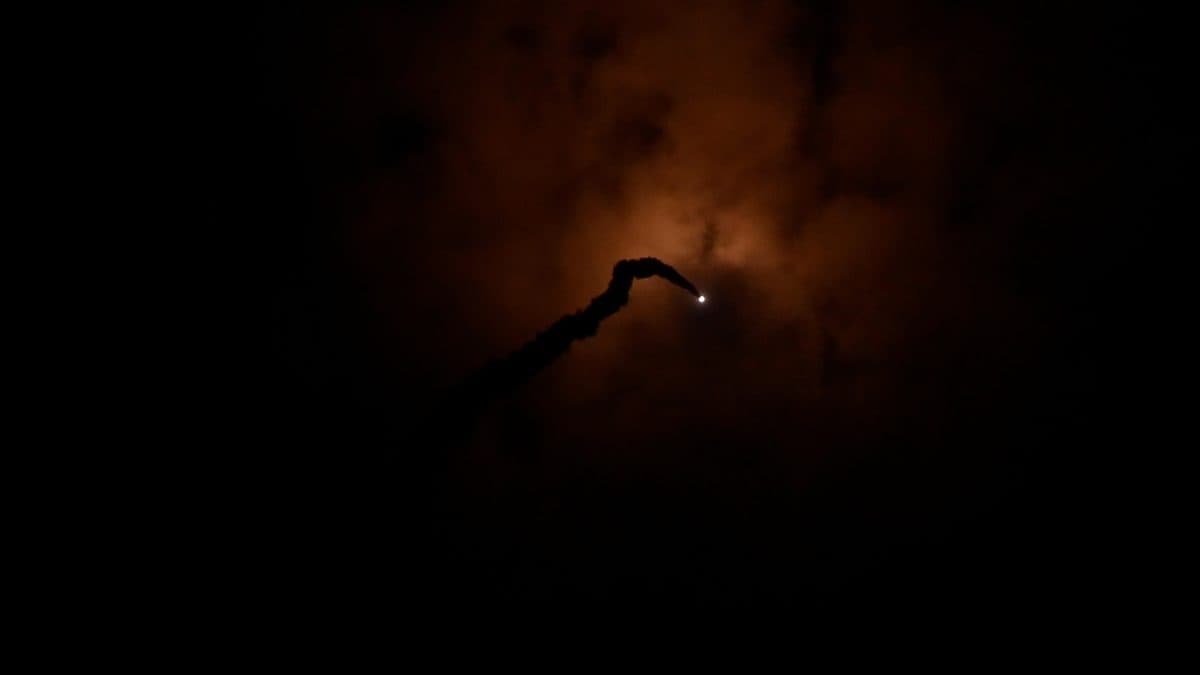
Minuteman III ICBM launching from its silo at Vandenberg Air Force Base with a trail of flame and smoke against a dark sky

10 Cold War Weapons That Were Designed for World War III and Never Fired

These weapons were built to fight a war that everyone prayed would never happen. The Minuteman III has been on alert since 1970. The Typhoon-class carried enough nuclear warheads to destroy a continent. The Davy Crockett could be fired by three soldiers. Most of them have been waiting for 40 years. Here are 10 Cold War weapons built exclusively for World War III.

daniel-mercer··13 min read
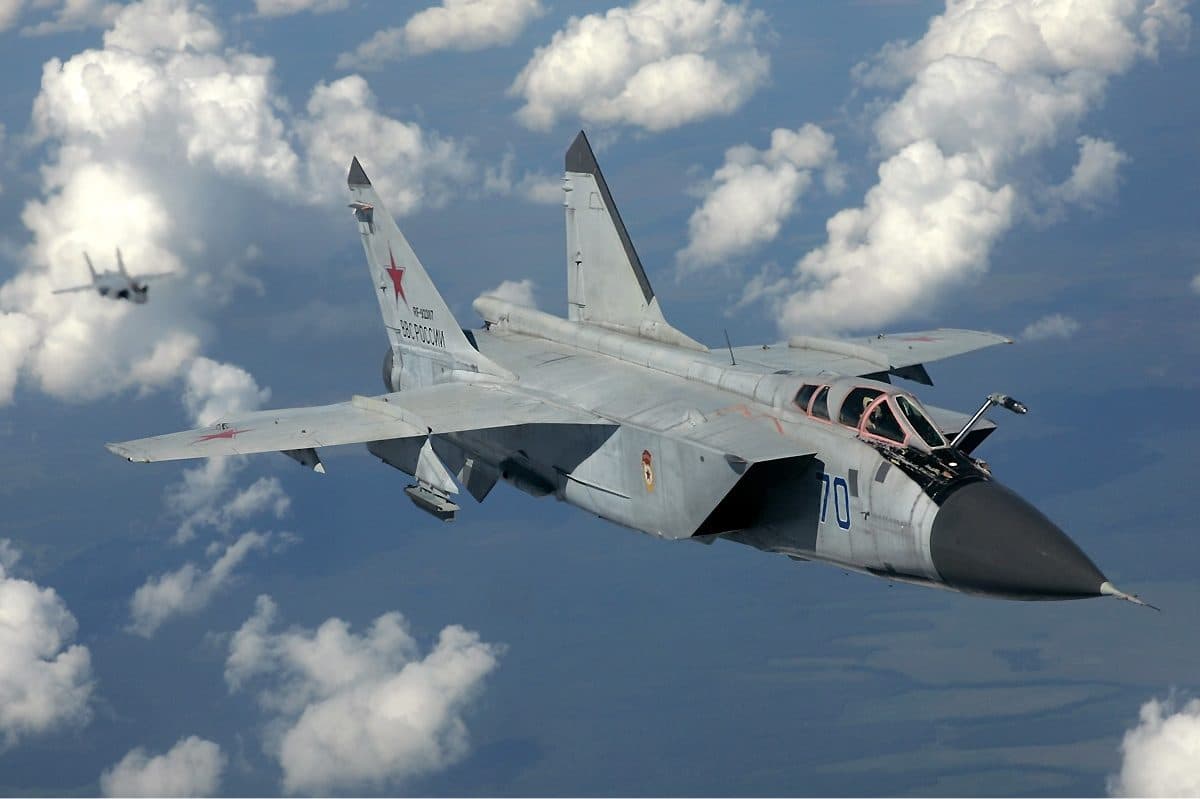
Russian Air Force MiG-31 Foxhound interceptor in flight showing its twin-engine configuration and large airframe

The MiG-31 Foxhound Can Fly Mach 2.83 and Fire Missiles at Targets 200 Miles Away

The MiG-31 was designed to catch the SR-71 Blackbird. It is still the fastest fighter in any air force. The Foxhound's Zaslon phased-array radar, the first ever installed in a fighter, can track 10 targets and engage 4 simultaneously at ranges exceeding 200 miles. Here is why Russia still flies a 1980s interceptor, and why the MiG-31BM carrying a Kinzhal hypersonic missile has changed what the aircraft means to modern warfare.

michael-trent··10 min read