

15 Best World War II Books for History Enthusiasts (2026)
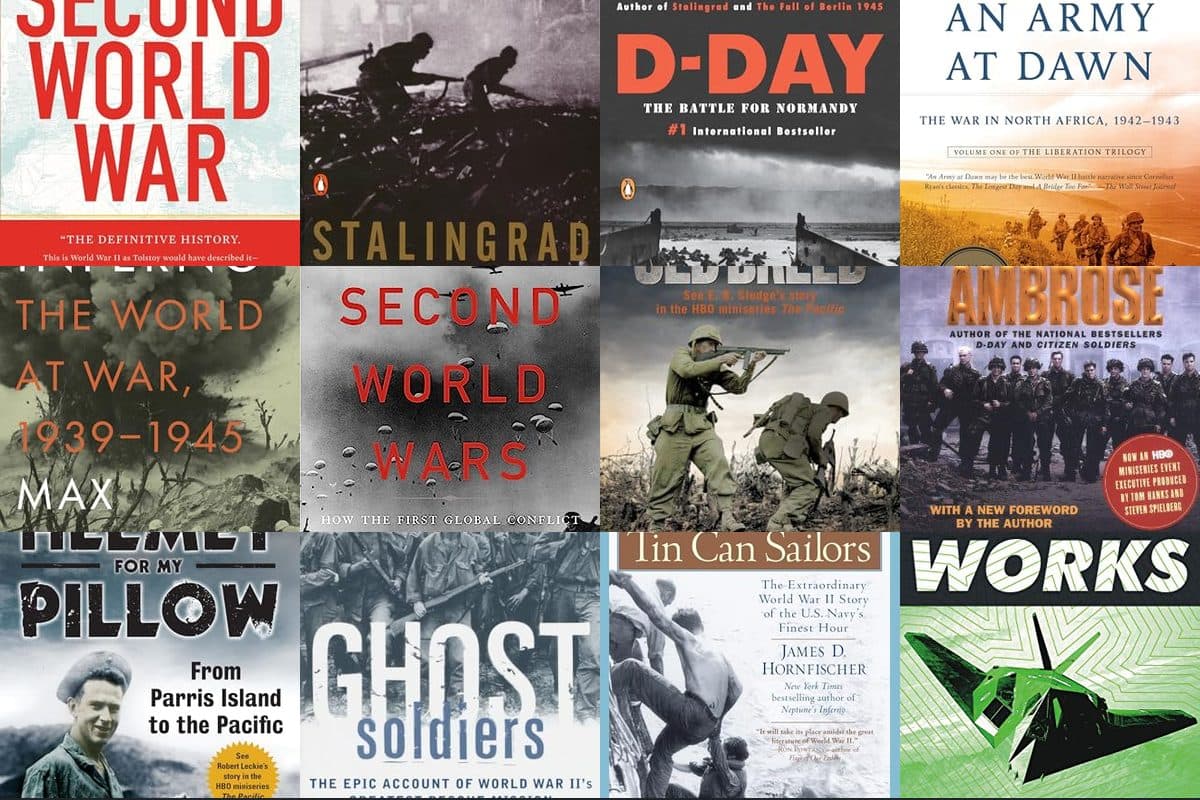
15 essential WW2 books covering every theater. Narrative histories, memoirs, and visual references ranked.
daniel-mercer··21 min read

British General William Howe attacked George Washington's Continental Army at White Plains, New York, driving the Americans from Chatterton Hill after fierce fighting. The defeat forced Washington into a further retreat through New Jersey, but his army survived to fight another day, leading to the surprise victories at Trenton and Princeton that saved the Revolution.
British forces drove Washington's Continental Army from Chatterton Hill at White Plains, forcing another American retreat. Though a tactical defeat, Washington preserved his army, the essential prerequisite for the stunning victories at Trenton and Princeton two months later.
British and Hessian forces under General William Howe attacked American positions on Chatterton's Hill near White Plains, New York, driving Washington's Continental Army from the heights after a sharp engagement. The battle inflicted heavy Continental casualties and forced Washington to continue his long withdrawal through New Jersey, but Howe failed to destroy the American army, preserving the possibility of the December counterstroke at Trenton.
The Statue of Liberty was dedicated by President Grover Cleveland at Bedloe's Island in New York Harbor on October 28, 1886, providing the iconic visual landmark that would subsequently welcome millions of troops and immigrants to the United States across more than a century of military deployments and returns.
Hauptmann Oswald Boelcke, the pioneering German flying ace credited with 40 aerial victories and considered the father of fighter aviation tactics, was killed in a mid-air collision with his wingman during a dogfight over the Somme. Boelcke's "Dicta Boelcke", the first systematic manual of aerial combat tactics, became the foundation of all subsequent fighter doctrine and remains studied at air combat schools today.
Czech politicians in Prague peacefully took control of the city from Austro-Hungarian authorities, establishing the First Czechoslovak Republic as the Habsburg Empire disintegrated in the final weeks of World War I. The new state, carved from the wreckage of Austria-Hungary, combined Czech and Slovak lands into a democratic republic under Tomáš Masaryk. The creation of Czechoslovakia redrew the military map of Central Europe and created borders that would be tested by Hitler twenty years later.
Benito Mussolini's Fascist Blackshirts marched on Rome, forcing King Victor Emmanuel III to invite Mussolini to form a government rather than risk civil war. The March on Rome established the first fascist regime in Europe, creating a model that Hitler and others would later emulate. Mussolini would transform Italy into a one-party state, ally with Nazi Germany, and ultimately drag Italy into World War II with catastrophic consequences.
Greek Prime Minister Ioannis Metaxas rejected Benito Mussolini's ultimatum demanding passage for Italian troops through Greek territory, reportedly responding with the single word "Ohi" (No). Italy invaded from Albania hours later, but the Greek Army halted and then reversed the Italian advance in what became the first Allied land victory of World War II. The Greek resistance forced Hitler to divert forces to the Balkans, potentially delaying Operation Barbarossa by critical weeks.
Benito Mussolini ordered Italian forces to invade Greece from occupied Albania, opening a campaign he expected to conclude in two weeks. Greek Prime Minister Ioannis Metaxas's reply of "Ohi" (No) to the Italian ultimatum entered Greek national memory. Greek forces counterattacked, drove the Italians back into Albania, and inflicted one of the Axis's first major defeats, forcing Germany to rescue Mussolini with its own Balkan invasion in April 1941.
Within days of Italian invasion, Greek Army units in the Pindus Mountains halted the advance of the Italian Alpine Division Julia, surrounded its regiments, and forced its withdrawal. The battle in the Pindus became one of the first clear Allied victories in Europe and reshaped Balkan strategic calculations from London to Berlin as Italian military weakness became undeniable.
Soviet Premier Nikita Khrushchev announced that he had ordered the removal of Soviet nuclear missiles from Cuba, ending the most dangerous thirteen days of the Cold War. The resolution, which included a secret American agreement to remove Jupiter missiles from Turkey, averted what many considered the closest the world ever came to nuclear war. The crisis led directly to the installation of the Washington-Moscow hotline and the Partial Nuclear Test Ban Treaty.

American Revolutionary War officer and aide-de-camp to George Washington who advocated for enlisting enslaved people as soldiers in exchange for their freedom, a radical proposal that the Continental Congress approved but South Carolina's legislature blocked. Laurens fought with distinction at Brandywine, Germantown, and Monmouth, and helped negotiate the British surrender at Yorktown. He was killed in the Battle of the Combahee River in 1782, one of the last casualties of the war.

German general who served as chief of staff to Field Marshal Erwin Rommel and was one of the few participants in the July 20, 1944 plot to assassinate Hitler to survive the war. After the war, Speidel became a key architect of West German rearmament and integration into NATO, serving as Commander of Allied Land Forces Central Europe from 1957 to 1963. His transition from Wehrmacht to NATO exemplified West Germany's remarkable postwar transformation.

The first commander-in-chief of the New England militia forces besieging Boston after the Battles of Lexington and Concord, Ward held overall command during the Battle of Bunker Hill before George Washington assumed command of the Continental Army. A veteran of the French and Indian War, Ward organized the chaotic militia forces surrounding Boston into something resembling an army. His military contributions have been largely overshadowed by Washington's subsequent fame.
Wear the Timeline
10 military events occurred on October 28, spanning multiple centuries. Key events include: Battle of White Plains (1776), Greece Says "No" to Mussolini: Ohi Day (1940), Mussolini's March on Rome (1922), Cuban Missile Crisis Resolved: Khrushchev Orders Withdrawal (1962), Italy Invades Greece (1940).
The most significant military event on October 28 is Battle of White Plains (1776). British General William Howe attacked George Washington's Continental Army at White Plains, New York, driving the Americans from Chatterton Hill after fierce fighting. The defeat forced Washington into a further retreat through New Jersey, but his army survived to fight another day, leading to the surprise victories at Trenton and Princeton that saved the Revolution.
Notable military figures born on October 28 include John Laurens (1754–1782), Hans Speidel (1897–1984).
Events on October 28 span the Colonial & Revolutionary era, World War II, the Interwar Period, the Cold War, World War I, the Civil War, covering 10 events across 3 centuries of military history.
Events on October 28 involve 4 branches of the U.S. and allied armed forces, reflecting the global scope of military operations throughout history.
Explore military history from the day you were born.
February 10
1763
February 22
1732
February 29
1704
March 2
1836
June 6
The Allied invasion of Normandy, the largest amphibious assault in history.
December 7
Japan attacks the U.S. Pacific Fleet, bringing America into World War II.
September 11
The deadliest terrorist attack in history transforms U.S. national security.
August 6
The first atomic bomb is dropped on a city, ushering in the nuclear age.
May 8
Nazi Germany surrenders unconditionally, ending World War II in Europe.
November 11
Armistice Day marks the end of World War I and honors all who served.
June 4
The turning point of the Pacific War as the U.S. Navy destroys four Japanese carriers.
July 4
The Declaration of Independence is adopted, sparking the American Revolution.
15 essential WW2 books covering every theater. Narrative histories, memoirs, and visual references ranked.
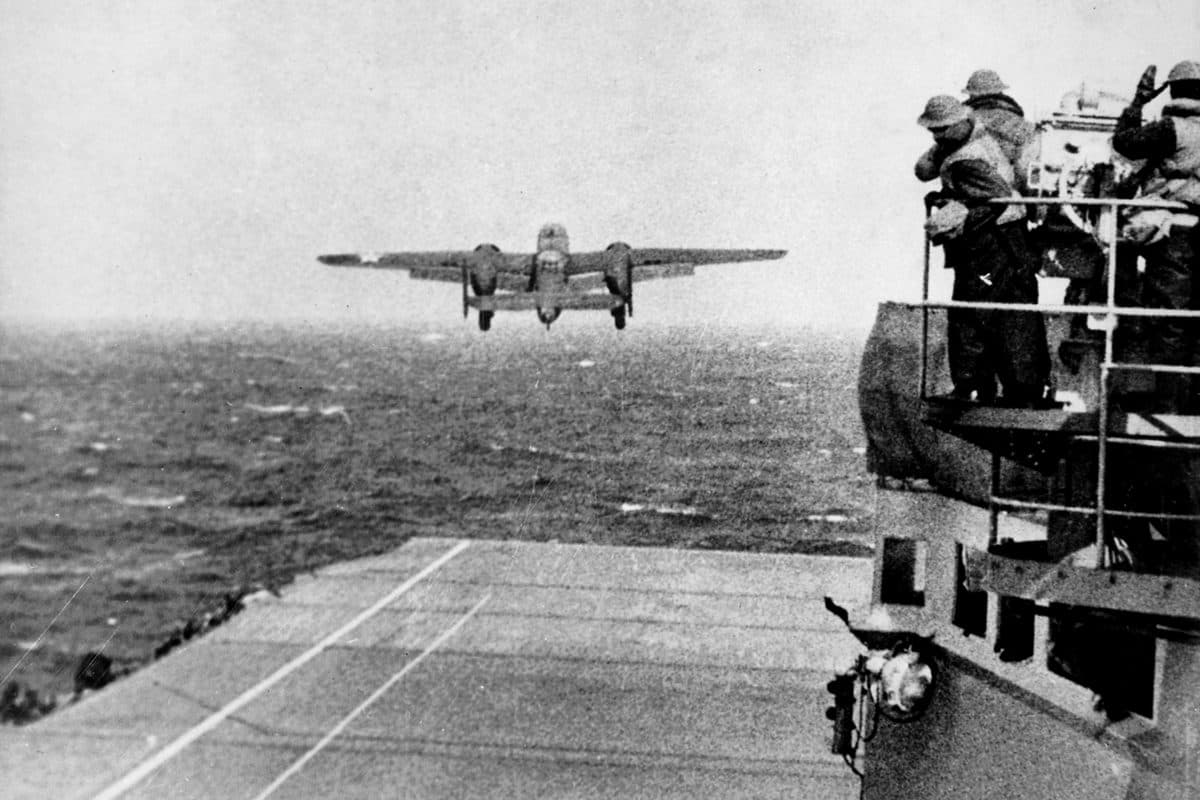
On April 18, 1942, sixteen B-25 Mitchell bombers did something no one thought possible: they launched from the deck of an aircraft carrier, flew 650 miles to Japan, and bombed Tokyo. Every aircraft was lost. The damage was negligible. The consequences changed the war.
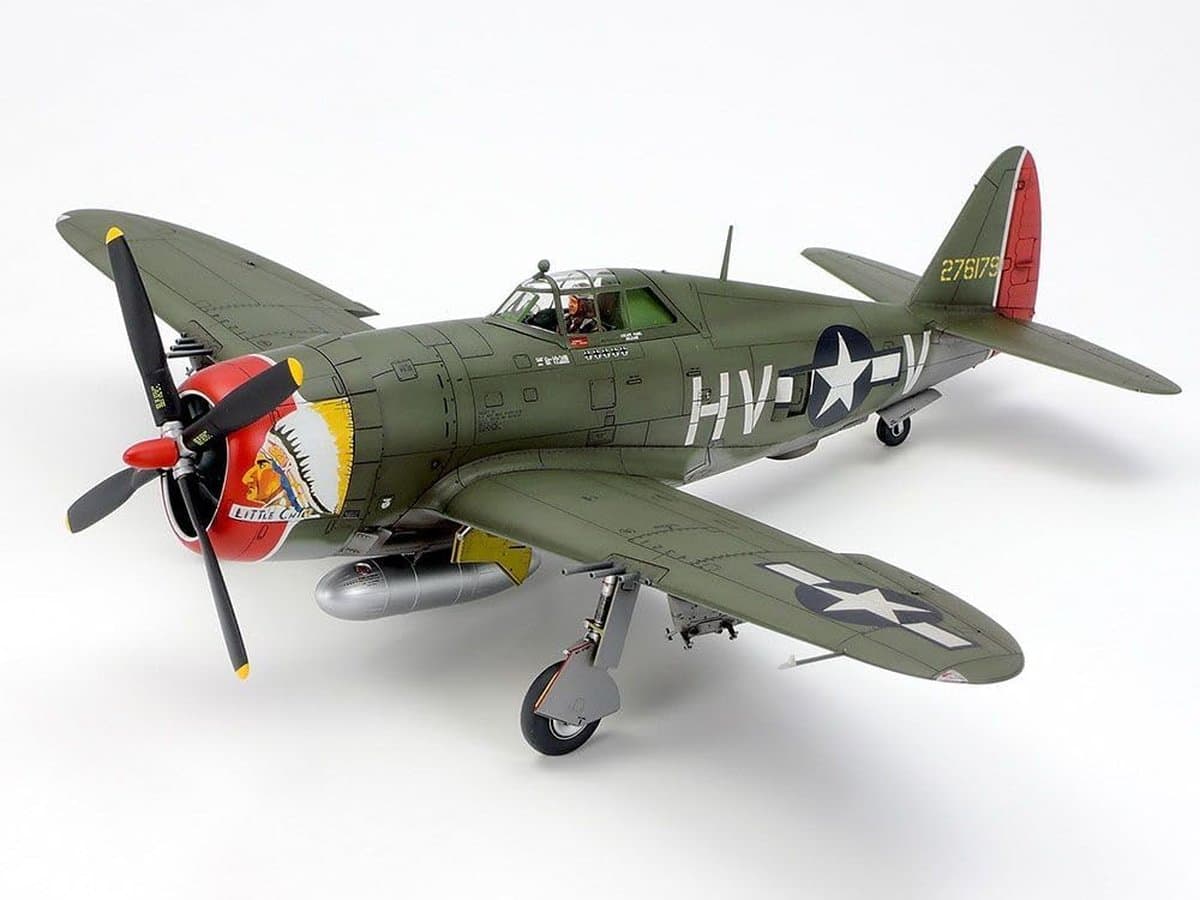
Compare 85+ WW2 scale model kits across aircraft, tanks, and ships. Beginner builds from $9 to museum-grade showpieces at $580. Covers Tamiya, Eduard, HK Models, Trumpeter, and more with honest reviews, trade-offs, and pricing.

On April 7, 1945, the Imperial Japanese Navy sent the largest battleship ever built on a one-way suicide mission to Okinawa. She never arrived. 386 American aircraft found her first, and sank her in under two hours.