

Iconic Aircraft of the Vietnam War
Boeing B-52 Stratofortress US Air Force This American project was first conceived in the immediate wake of the Second World War. The…
michael-trent··19 min read
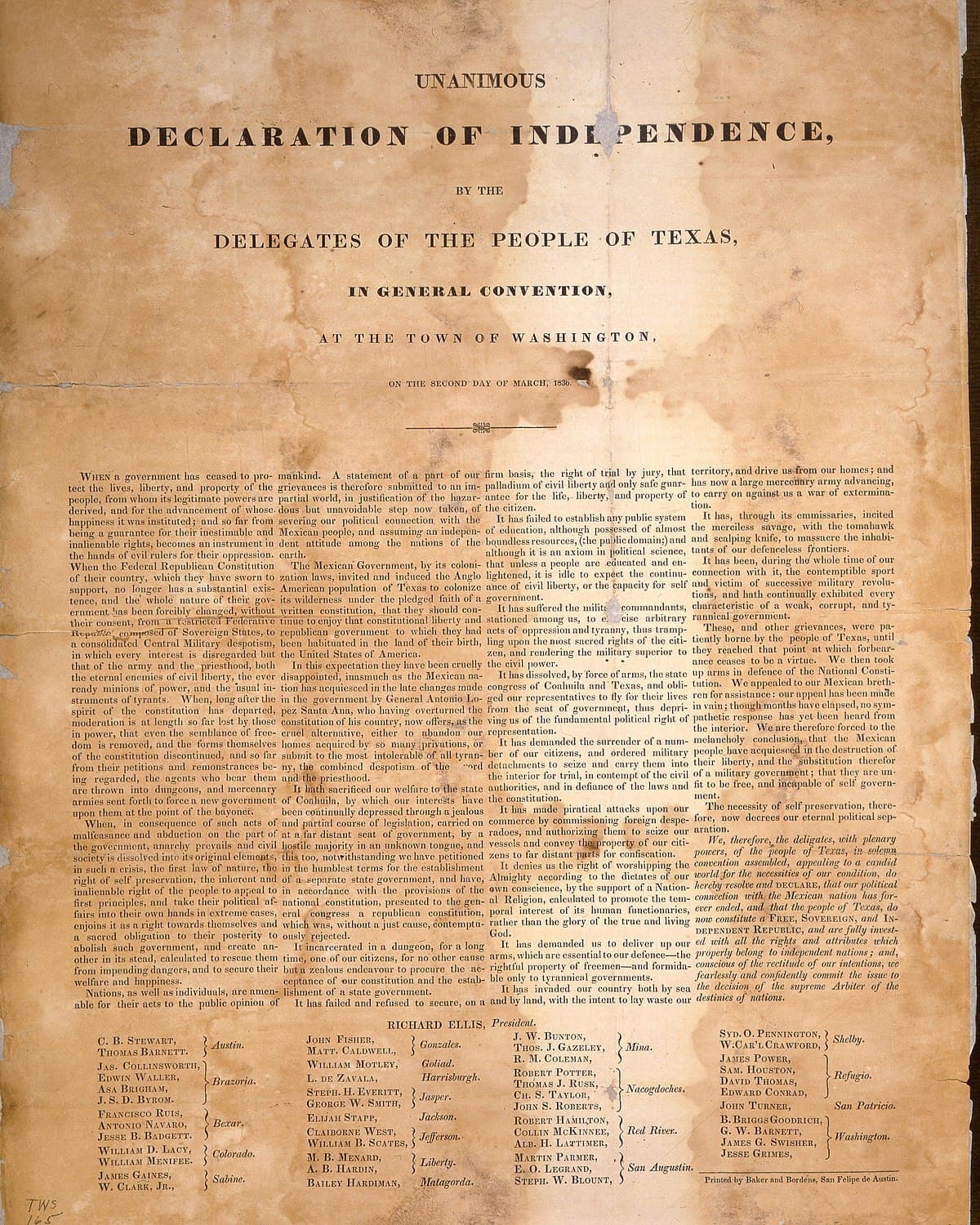
While roughly 200 defenders held the Alamo against thousands of Mexican troops, 59 delegates at Washington-on-the-Brazos signed the Texas Declaration of Independence, creating the Republic of Texas and setting the stage for a revolution that would reshape the American continent. The Alamo fell four days later, but the declaration ensured the cause survived the garrison's destruction.
General George Washington ordered Continental Army artillery to begin bombarding British positions in Boston from Lechmere Point and other positions. Using cannons that Colonel Henry Knox had hauled 300 miles from Fort Ticonderoga through the winter, the three-night bombardment served as a critical diversion for the secret fortification of Dorchester Heights on March 4-5.
President Thomas Jefferson signed the Act Prohibiting Importation of Slaves, banning the Atlantic slave trade effective January 1, 1808, the earliest date permitted by the Constitution. Enforcement was delegated to the U.S. Navy, making it one of the service's earliest law enforcement missions, though enforcement remained chronically underfunded for decades.
While roughly 200 defenders held the Alamo against thousands of Mexican troops, 59 delegates at Washington-on-the-Brazos signed the Texas Declaration of Independence, creating the Republic of Texas. The convention also named Sam Houston, celebrating his 43rd birthday, commander-in-chief of the Texas army.
Brigadier General George Armstrong Custer's cavalry annihilated the remnants of Confederate Lieutenant General Jubal Early's command at Waynesboro, Virginia, capturing over 1,200 prisoners, all of Early's artillery, 17 battle flags, and 150 supply wagons. The victory eliminated the last Confederate presence in the Shenandoah Valley.
Congress overrode President Andrew Johnson's veto to pass the First Reconstruction Act, dividing ten former Confederate states into five military districts governed by Army generals with sweeping authority. The act required new state constitutions guaranteeing Black male suffrage and ratification of the 14th Amendment before readmission to the Union.
President Woodrow Wilson signed the Jones-Shafroth Act, granting U.S. citizenship to all residents of Puerto Rico. The timing, just weeks before the United States entered World War I, was deliberate: as citizens, Puerto Ricans became subject to the military draft, and approximately 20,000 would serve in the war.
In Allied-occupied southern Italy, freight train No. 8017, overloaded with approximately 600 stowaways, stalled inside a two-kilometer tunnel near Balvano. Carbon monoxide from the locomotive's poor-quality wartime coal killed 517 people, the deadliest rail disaster in Italian history, a direct consequence of wartime supply shortages and infrastructure collapse.
The Vietnamese National Assembly elected Ho Chi Minh as President of the Democratic Republic of Vietnam, formalizing the government that would fight two of the twentieth century's most consequential wars, first against France, then against the United States.
Related articleGeneral Ne Win, Chief of Staff of the Burma Defense Forces, overthrew the democratically elected government of Prime Minister U Nu in a swift morning coup, arresting the prime minister and other civilian leaders. The coup established military rule that would persist in various forms for over five decades.
Over 100 U.S. Air Force and South Vietnamese aircraft launched the first strikes of Operation Rolling Thunder, attacking military targets in North Vietnam. The campaign, intended to coerce Hanoi into ceasing support for the Viet Cong, would last three and a half years, drop 864,000 tons of bombs, and become one of the most controversial military operations in American history.
Related articleTwo days after President Bush declared a ceasefire, the U.S. Army's 24th Infantry Division under Major General Barry McCaffrey engaged a large column of retreating Iraqi Republican Guard near the Rumaila oil field. McCaffrey's force destroyed over 180 armored vehicles and 400 trucks in under two hours with no American casualties, one of the most lopsided armored engagements in history and one of the war's most controversial.
Related articleRussian forces completed the capture of Kherson, a Ukrainian regional capital of 290,000 people, making it the only major Ukrainian city to fall during the 2022 invasion. The city controlled access to water supplies for Crimea and was strategically vital for control of southern Ukraine. Ukraine would recapture it eight months later.

Major General, Commander-in-Chief of the Texas Army
Wounded under Andrew Jackson at the Battle of Horseshoe Bend in the War of 1812. Commander-in-chief of the Texas Army, he won the decisive Battle of San Jacinto in 18 minutes. Served as President of the Republic of Texas, U.S. Senator, and Governor of Texas. Removed from office in 1861 for refusing to swear allegiance to the Confederacy.

Major General, U.S. Army
German-born Union Army general who commanded troops at Second Bull Run, Chancellorsville, Gettysburg, and Chattanooga. Before the war, he helped secure Abraham Lincoln's presidential nomination. Later served as U.S. Senator from Missouri and Secretary of the Interior.

Supreme Commander-in-Chief of the Soviet Armed Forces
Last leader of the Soviet Union, who withdrew Soviet troops from Afghanistan, negotiated the INF Treaty with President Reagan, and presided over the peaceful end of the Cold War. His policies of glasnost and perestroika led to the dissolution of the Warsaw Pact and the Soviet Union itself. Awarded the 1990 Nobel Peace Prize.

Staff Sergeant, U.S. Army
Cuban-born entertainer who served in the U.S. Army during World War II. Classified for limited service due to a knee injury, he directed USO entertainment programs for wounded soldiers at military hospitals, organizing morale programs that reached thousands of recovering servicemembers.

Admiral, Imperial Japanese Navy
Japanese Prime Minister (1940) who opposed the Tripartite Pact with Germany and tried to prevent war with the United States. His government fell because of his anti-war stance. Later served as Navy Minister during Japan's surrender in 1945 and oversaw the dissolution of the Imperial Japanese Navy.

Colonel, U.S. Army
Medal of Honor recipient for extraordinary heroism near Carano, Italy, on May 23, 1944. Single-handedly destroyed three German machine gun positions, captured 17 prisoners, disabled a tank with a bazooka, and carried two wounded men to safety. Served in three wars spanning WWII, Korea, and Vietnam. Fort Barfoot, Virginia, is named in his honor.

Private, U.S. Army
Served in the U.S. Army in France during World War I before becoming one of Hollywood's most iconic Western film stars. Appeared in over 100 films, many portraying military and frontier heroes, bringing the experience of American soldiers and cavalrymen to generations of audiences.
Wear the Timeline
13 military events occurred on March 2, spanning multiple centuries. Key events include: Washington Begins Bombardment of British-Held Boston (1776), Texas Declares Independence from Mexico (1836), Battle of Waynesboro: Custer Destroys Early's Last Army (1865), First Reconstruction Act: Military Rule of the South (1867), Operation Rolling Thunder: The Bombing of North Vietnam Begins (1965).
The most significant military event on March 2 is Texas Declares Independence While the Alamo Burns (1836). While roughly 200 defenders held the Alamo against thousands of Mexican troops, 59 delegates at Washington-on-the-Brazos signed the Texas Declaration of Independence, creating the Republic of Texas and setting the stage for a revolution that would reshape the American continent. The Alamo fell four days later, but the declaration ensured the cause survived the garrison's destruction.
Notable military figures born on March 2 include Sam Houston (1793–1863), Carl Schurz (1829–1906), Mikhail Gorbachev (1931–2022), Desi Arnaz (1917–1986), Admiral Mitsumasa Yonai (1880–1948).
Events on March 2 span the Colonial & Revolutionary era, the Civil War, the Interwar Period, World War I, World War II, the Cold War, the Vietnam War, the Modern Era, covering 13 events across 4 centuries of military history.
Events on March 2 involve 4 branches of the U.S. and allied armed forces, reflecting the global scope of military operations throughout history.
Explore military history from the day you were born.
June 6
The Allied invasion of Normandy, the largest amphibious assault in history.
December 7
Japan attacks the U.S. Pacific Fleet, bringing America into World War II.
September 11
The deadliest terrorist attack in history transforms U.S. national security.
August 6
The first atomic bomb is dropped on a city, ushering in the nuclear age.
May 8
Nazi Germany surrenders unconditionally, ending World War II in Europe.
November 11
Armistice Day marks the end of World War I and honors all who served.
June 4
The turning point of the Pacific War as the U.S. Navy destroys four Japanese carriers.
July 4
The Declaration of Independence is adopted, sparking the American Revolution.
Boeing B-52 Stratofortress US Air Force This American project was first conceived in the immediate wake of the Second World War. The…
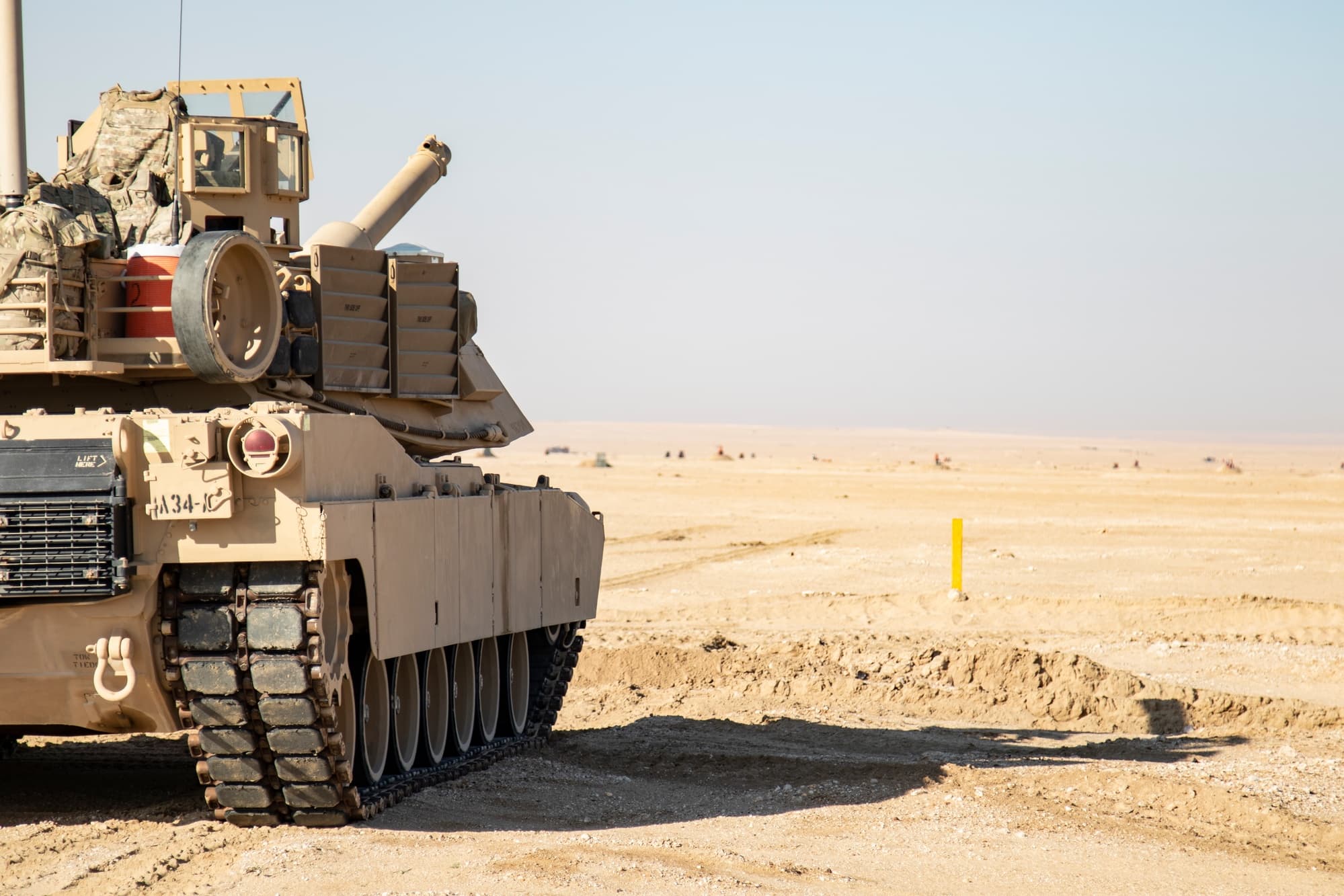
In February 1991, M1A1 Abrams tanks proved themselves in the deserts of Iraq and Kuwait during the 100-hour ground war of Operation Desert Storm. The Battle of 73 Easting became the defining engagement, where American armor destroyed an Iraqi Republican Guard division in under 23 minutes. Here is what the crews experienced and what the machine actually did.
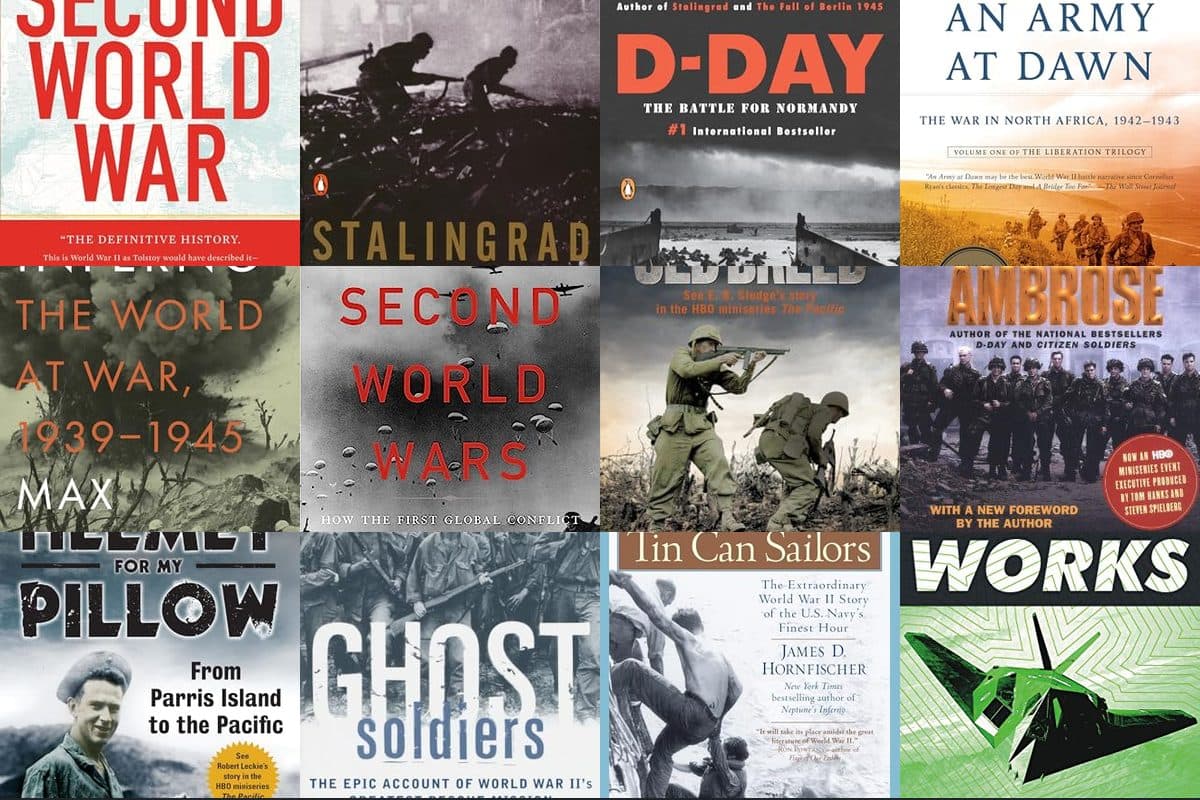
15 essential WW2 books covering every theater. Narrative histories, memoirs, and visual references ranked.
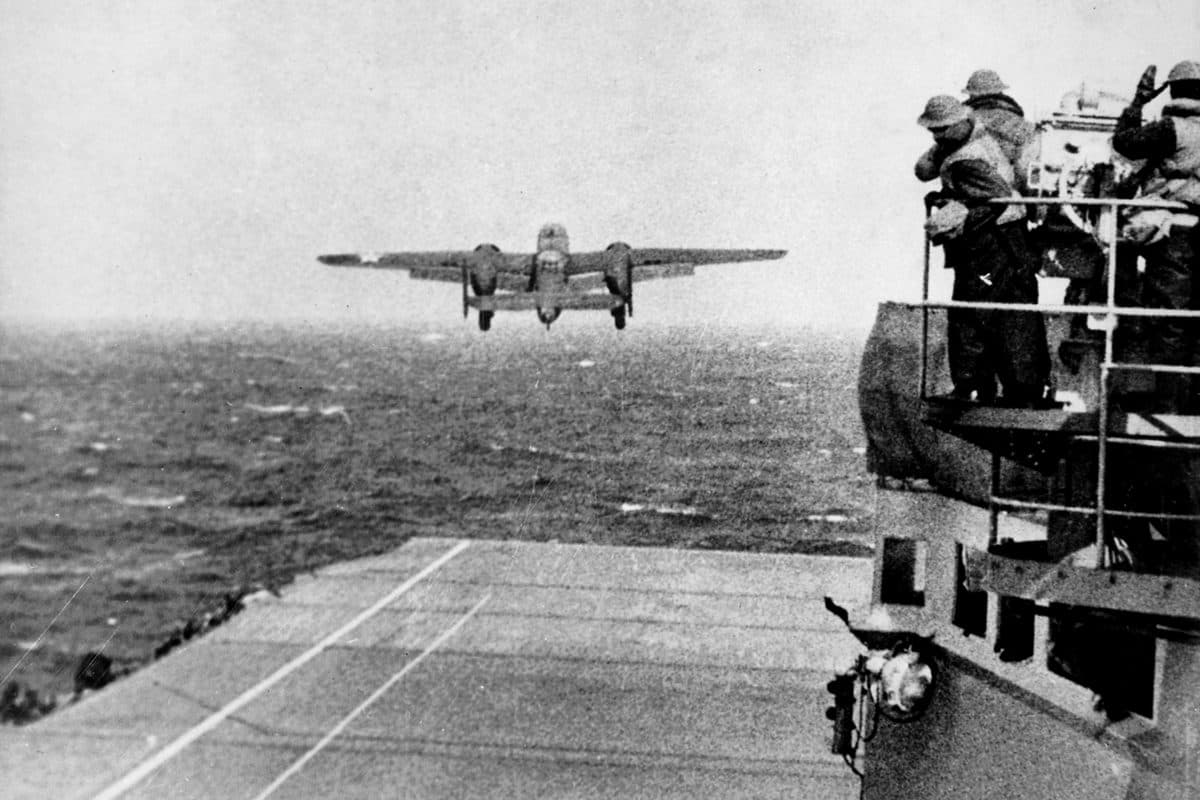
On April 18, 1942, sixteen B-25 Mitchell bombers did something no one thought possible: they launched from the deck of an aircraft carrier, flew 650 miles to Japan, and bombed Tokyo. Every aircraft was lost. The damage was negligible. The consequences changed the war.