

15 Best World War II Books for History Enthusiasts (2026)
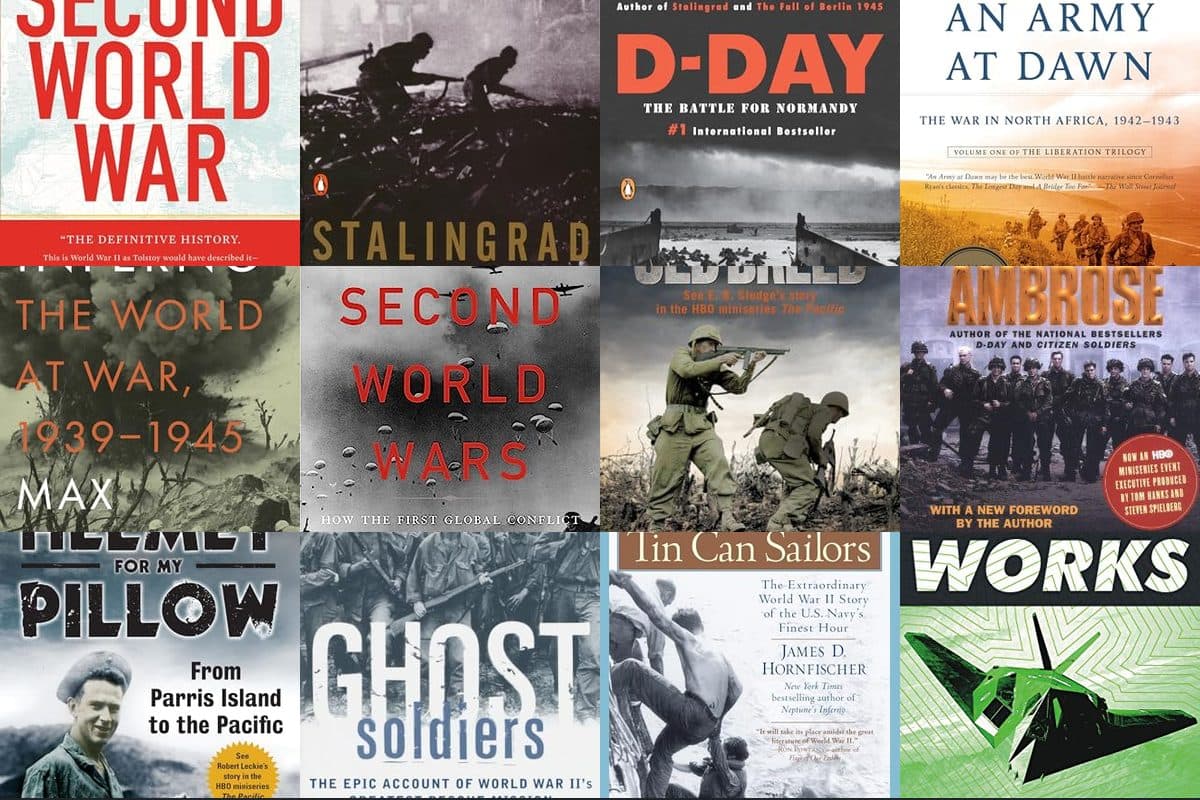
15 essential WW2 books covering every theater. Narrative histories, memoirs, and visual references ranked.
daniel-mercer··21 min read

Rear Admiral Horatio Nelson's Royal Navy fleet destroys the French Mediterranean fleet at anchor in Aboukir Bay, Egypt, severing Napoleon's army from France and establishing British naval supremacy in the Mediterranean for the next century.
Congress authorized Treasury Secretary Alexander Hamilton to build ten armed cutters to enforce tariff laws and suppress smuggling. This Revenue Cutter Service became the oldest continuous seagoing service in the United States and, after merging with the Life-Saving Service in 1915, evolved into the U.S. Coast Guard.
Rear Admiral Horatio Nelson's Royal Navy fleet destroys the French Mediterranean fleet at anchor in Aboukir Bay, Egypt, severing Napoleon's army from France and establishing British naval supremacy in the Mediterranean for the next century.
The Army Signal Corps created the Aeronautical Division, a three-man office responsible for "all matters pertaining to military ballooning, air machines, and kindred subjects." This small bureau was the direct ancestor of the modern United States Air Force, established 40 years and one day before the independent service was born.
Germany declared war on Russia, triggering the alliance system that would engulf all of Europe in conflict within days. The declaration came after Russia refused to halt its mobilization in support of Serbia, transforming a Balkan crisis into a continental war.
A force of 177 B-24 Liberator bombers launched a daring low-level attack against the heavily defended Romanian oil refineries at Ploesti, which supplied a third of the Reich's fuel. Navigation errors scattered the formations and intense flak and fighter opposition destroyed 54 aircraft, with 532 airmen killed. Five Medals of Honor were awarded, three posthumously, making it one of the most decorated single missions of the war.
The Polish Home Army launched a massive uprising against the German occupation of Warsaw, expecting the approaching Soviet Red Army to provide support. The Soviets halted their advance on the east bank of the Vistula and refused to assist. After 63 days of ferocious urban combat, the uprising was crushed. An estimated 200,000 Polish civilians died, and the Germans systematically demolished 85% of Warsaw in retaliation.
President Truman signed the Atomic Energy Act of 1946, transferring control of nuclear weapons from the military to the newly created civilian Atomic Energy Commission. The act established the fundamental principle that nuclear weapons development and policy would be directed by civilian authority, a precedent that shaped the entire Cold War.
UN and South Korean forces continued desperate defensive operations along the Pusan Perimeter as North Korean forces pressed to drive them into the sea. General Walton Walker's "stand or die" order kept the line intact through weeks of bloody fighting that bought time for MacArthur's planned amphibious counterstroke at Inchon.
Strategic Air Command under General Curtis LeMay conducted a major global deployment exercise demonstrating the ability of B-47 Stratojet and B-36 Peacemaker bombers to reach any target on Earth. The exercise validated the doctrine of strategic deterrence that would define the Cold War nuclear standoff.
Iraqi Republican Guard divisions completed their final assembly along the Kuwaiti border as Saddam Hussein finalized plans for the invasion that would begin hours later on August 2. Satellite imagery had tracked the buildup for weeks, but most Western analysts assessed Iraqi intentions as coercive posturing rather than imminent attack.

American lawyer who witnessed the British bombardment of Fort McHenry in Baltimore Harbor on September 13-14, 1814, and was inspired to write "The Star-Spangled Banner," which became the U.S. national anthem in 1931.

Captain
U.S. Army officer who co-led the Lewis and Clark Expedition (1804-1806) across the American West to the Pacific Ocean. The expedition's detailed maps and reports were essential to American westward expansion and military planning.

Huguenot military leader during the French Wars of Religion who was one of the foremost Protestant commanders in Europe. He was killed at the Battle of Jarnac, shot while attempting to surrender after his horse was killed beneath him.
Wear the Timeline
10 military events occurred on August 1, spanning multiple centuries. Key events include: Battle of the Nile (1798), Germany Declares War on Russia (1914), Operation Tidal Wave, Ploesti Oil Refinery Raid (1943), Warsaw Uprising Begins (1944), Iraq Begins Invasion Preparations (1990).
The most significant military event on August 1 is Battle of the Nile (1798). Rear Admiral Horatio Nelson's Royal Navy fleet destroys the French Mediterranean fleet at anchor in Aboukir Bay, Egypt, severing Napoleon's army from France and establishing British naval supremacy in the Mediterranean for the next century.
Notable military figures born on August 1 include Francis Scott Key (1779–1843), William Clark (1770–1838).
Events on August 1 span the Colonial & Revolutionary era, World War I, World War II, the Cold War, the Korean War, the Interwar Period, the Modern Era, covering 10 events across 2 centuries of military history.
Events on August 1 involve 6 branches of the U.S. and allied armed forces, reflecting the global scope of military operations throughout history.
Explore military history from the day you were born.
June 6
The Allied invasion of Normandy, the largest amphibious assault in history.
December 7
Japan attacks the U.S. Pacific Fleet, bringing America into World War II.
September 11
The deadliest terrorist attack in history transforms U.S. national security.
August 6
The first atomic bomb is dropped on a city, ushering in the nuclear age.
May 8
Nazi Germany surrenders unconditionally, ending World War II in Europe.
November 11
Armistice Day marks the end of World War I and honors all who served.
June 4
The turning point of the Pacific War as the U.S. Navy destroys four Japanese carriers.
July 4
The Declaration of Independence is adopted, sparking the American Revolution.
15 essential WW2 books covering every theater. Narrative histories, memoirs, and visual references ranked.
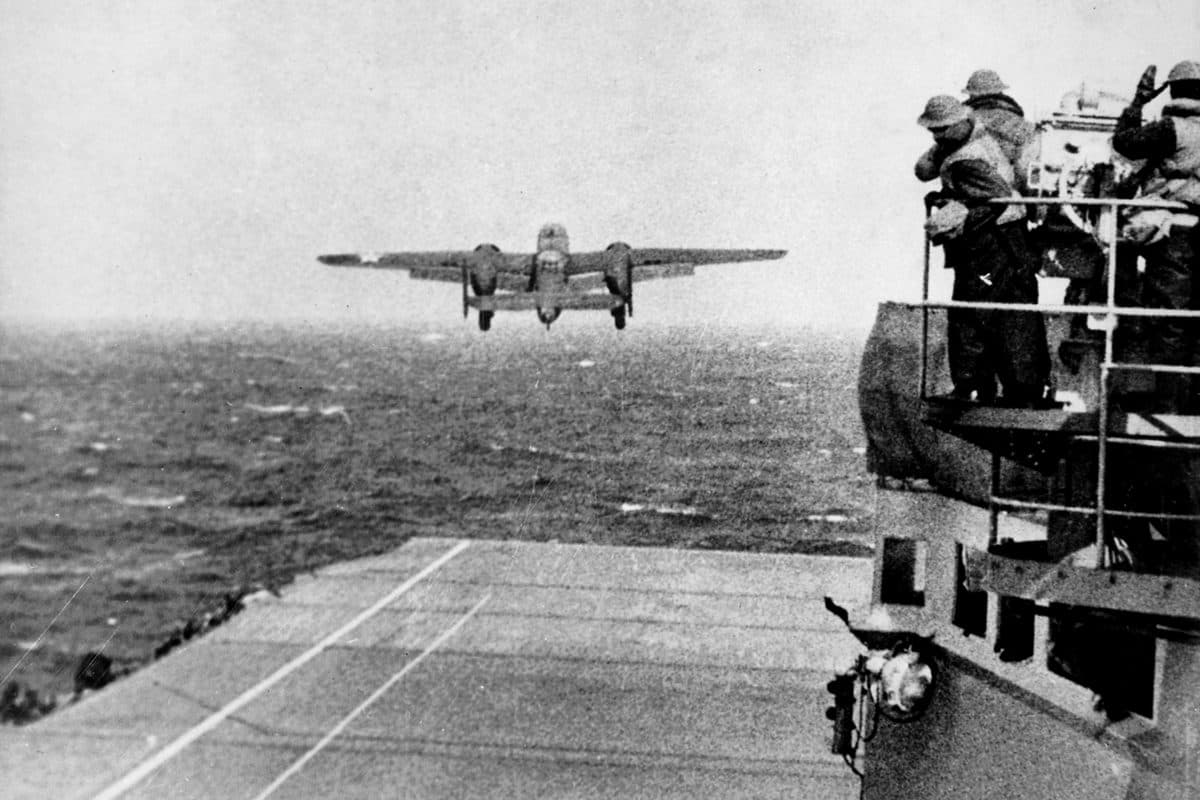
On April 18, 1942, sixteen B-25 Mitchell bombers did something no one thought possible: they launched from the deck of an aircraft carrier, flew 650 miles to Japan, and bombed Tokyo. Every aircraft was lost. The damage was negligible. The consequences changed the war.
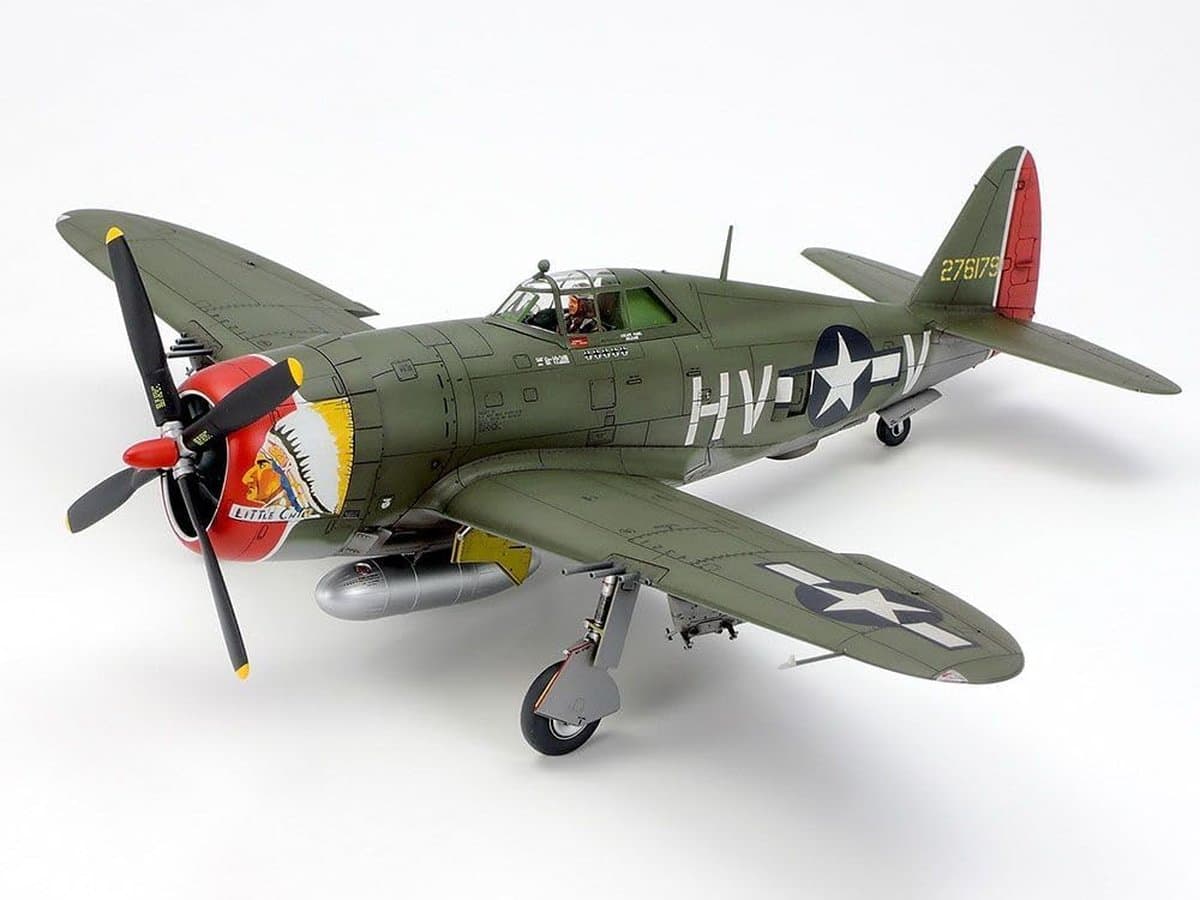
Compare 85+ WW2 scale model kits across aircraft, tanks, and ships. Beginner builds from $9 to museum-grade showpieces at $580. Covers Tamiya, Eduard, HK Models, Trumpeter, and more with honest reviews, trade-offs, and pricing.

On April 7, 1945, the Imperial Japanese Navy sent the largest battleship ever built on a one-way suicide mission to Okinawa. She never arrived. 386 American aircraft found her first, and sank her in under two hours.